Persistent bad breath is more than an unpleasant cuddle companion when it signals a problem in the mouth. The best dog toothpaste can support oral health, but only if your dog accepts it and you can keep using it. Tartar (calculus) is hardened plaque attached to the teeth.
Good dental hygiene is part of everyday pet care, not a quick fix for every mouth problem. A dog who turns away from a flavor or brush can make a routine hard to keep. This roundup compares formulas and formats for different needs, with practical guidance on safe use and veterinary care.
Key Takeaways
- Virbac C.E.T. is the overall pick for its dual-enzyme system and five flavors.
- Petsmile is accepted by the VOHC for plaque control.
- Tartar Shield is accepted by the VOHC for tartar control.
- Use toothpaste made for pets, never human toothpaste.
- Daily brushing is ideal; two to three sessions weekly is the minimum when daily brushing is not possible.
- Brown, hardened tartar needs veterinary assessment, not home scraping.
A useful first choice is one your dog will accept consistently, not simply the one with the most appealing label.
Best Dog Toothpaste for 2026: Which Picks Stand Out?
Virbac C.E.T. is the strongest all-around starting point for owners who want a dog-and-cat formula with multiple flavor choices. Its dual-enzyme system, five flavors, and swallow-safe formula suit homes seeking a flexible daily option.
Petsmile Professional is accepted by the VOHC for plaque control, while Tartar Shield PRO CARE is accepted for tartar control. The VOHC accepted-products list names each product and its specific claim.
Choose by the control goal first: plaque and tartar acceptance are separate claims, not interchangeable promises.
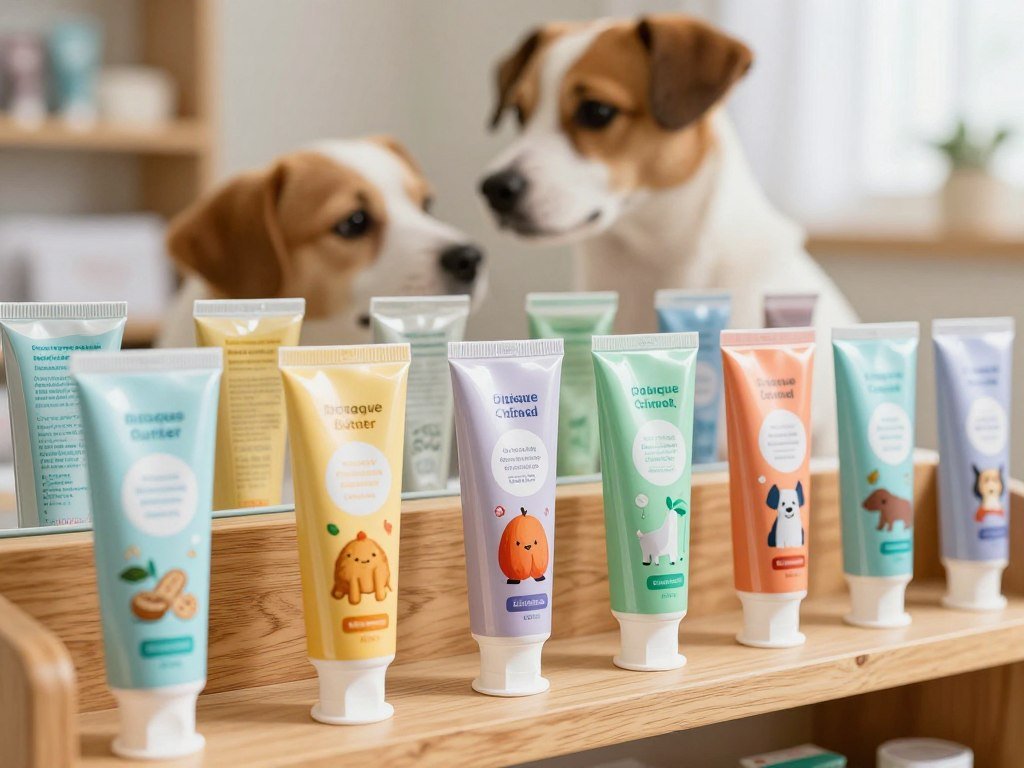
Virbac dog toothpaste and Petsmile Professional dog toothpaste fit different priorities, so neither is right for every dog. Petsmile offers three flavors and costs $20.00 for a small tube and $25.00 for a large tube in 2026.
| Product | Formula or use | Flavors | Format or feature |
|---|---|---|---|
| Virbac C.E.T. | Dual enzyme, dogs and cats | Poultry, malt, vanilla-mint, beef, seafood | 2.5 oz tubes |
| Petsmile | VOHC plaque acceptance | London Broil, Rotisserie Chicken, Say Cheese | $20 small, $25 large tube |
| Petrodex | Enzymatic | Poultry | 6.2 oz tube |
| Arm & Hammer Clinical Gum Health | Baking soda and enzymes | Chicken, fresh-mint scent | 2.5 oz tube |
Virbac has no foaming agents, and its formula is safe for pets to swallow. Poultry also comes in 12 g trial packets, sold in a 25-count dispenser.
The Petsmile Professional Toothbrush has a patented 45-degree dual-ended head and costs $14.00 in 2026. A toothpaste-and-brush set costs $35.00 with a large tube or $30.00 with a small tube.
Tartar Shield earns a place as a fifth pick because the VOHC accepts it for tartar control. Petrodex is the value option among these picks, with a larger 6.2 oz tube.
Match the product to the control goal first, then decide whether flavor or format will make regular use easier.
Which Other Toothpaste Formulas Fit Specific Needs?
A gel or a different flavor may be easier to use when a dog rejects a conventional paste. These products add options for a dog cat household or a pet with a strong taste preference. Flavor and format help with acceptance, but they do not prove clinical effectiveness.
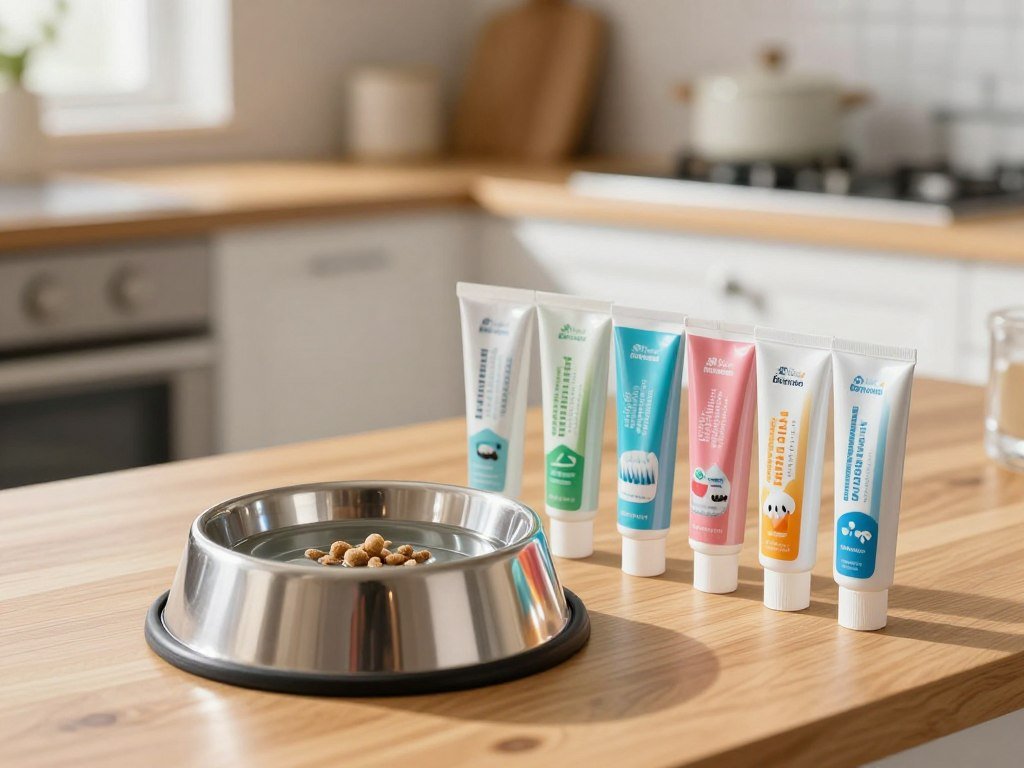
- Vet’s Best Gel Toothpaste comes in a 3.5 oz tube with neem oil, grapefruit seed, and aloe.
- Vetoquinol Enzadent is a triple-enzyme toothpaste for dogs and cats. It comes in a 3.2 oz poultry-flavored tube.
- Oxyfresh Pet Dental Gel offers a gel format for owners who prefer gel over paste.
- TropiClean Fresh Breath Teeth Gel is a brushless gel for dogs and cats. Apply two drops on each side of the mouth daily.
- Nylabone Advanced Oral Care comes in a 2.5 oz tube, with peanut flavor and Denta-C.
These formulas serve different household needs, from a brushless format to a poultry taste. Dogs cats may share some products, but a pet’s flavor preference does not tell you how well a formula controls plaque.
Separate taste and texture from evidence when comparing products. An enzymatic toothpaste, gel, or peanut flavor may make use more comfortable, while acceptance claims require their own support.
Check that the chosen formula is labeled for the animal that will use it, especially in a dog-and-cat household.
What Makes a Dog Toothpaste Safe and Effective?
Human toothpaste is unsafe for dogs because they swallow it, and xylitol can cause a dangerous blood-sugar drop and liver failure. Crest toothpaste is human toothpaste and should not be used on dogs. Choose pet-specific ingredients and check the full label.
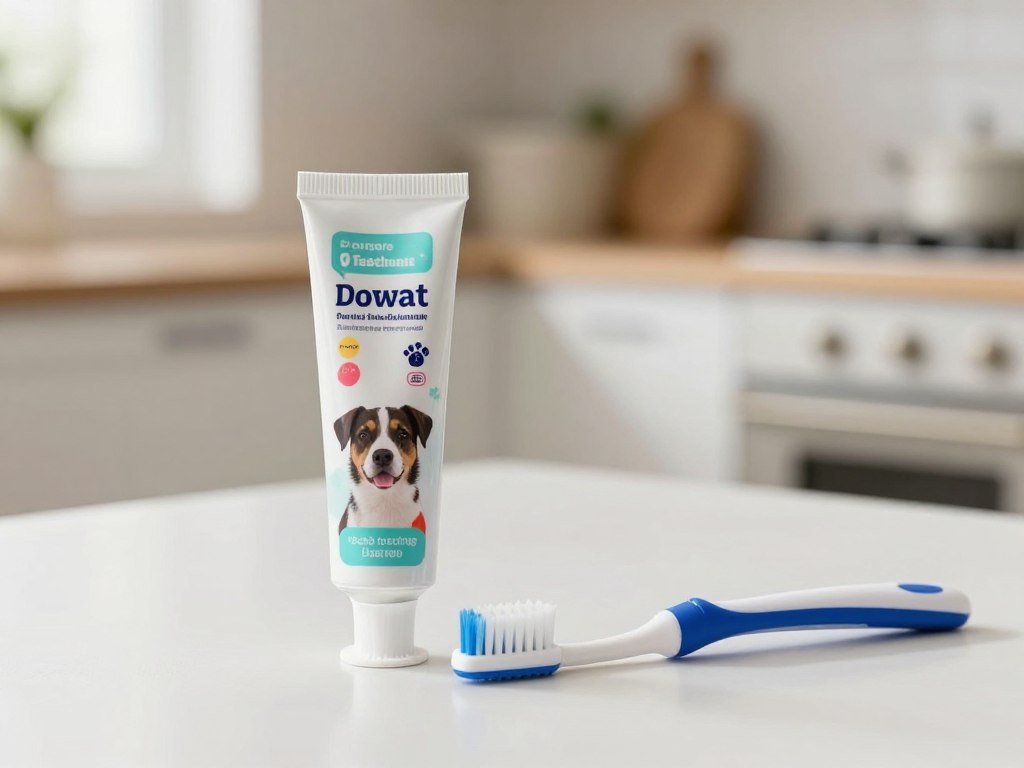
Why human toothpaste is unsafe for dogs
People spit and rinse after brushing, but dogs swallow toothpaste instead. That makes human toothpaste, including formulas with fluoride, a poor fit for canine oral hygiene.
Xylitol can trigger severe harm even in small amounts. Check labels carefully, since ingredient lists can differ across products and flavors.
If you also shop for skin or coat products, read our guide to dog shampoo for sensitive skin. The same habit of checking a pet product’s full label can help you avoid unwanted ingredients.
What the VOHC seal helps you check
The Veterinary Oral Health Council (VOHC) Seal is awarded to products that have scientifically demonstrated plaque or tartar reduction. VOHC seal requirements explain that accepted products meet standards for a stated control claim.
The seal is a useful check, not a promise that every product works for every dog. Look up the exact product and whether its accepted purpose is plaque control or tartar control.
For ordinary pet care, a label should make clear which animal can use the product and how to apply it. Do not assume that a human formula becomes safe because you use only a small amount.
Read the full ingredient label and choose a formula made specifically for pets.
Which Toothbrush Should You Use for Your Dog?
A soft-bristle brush that fits comfortably is a better starting point than a large brush that makes handling difficult. The best dog toothbrush is soft-bristled and sized for your dog’s mouth.
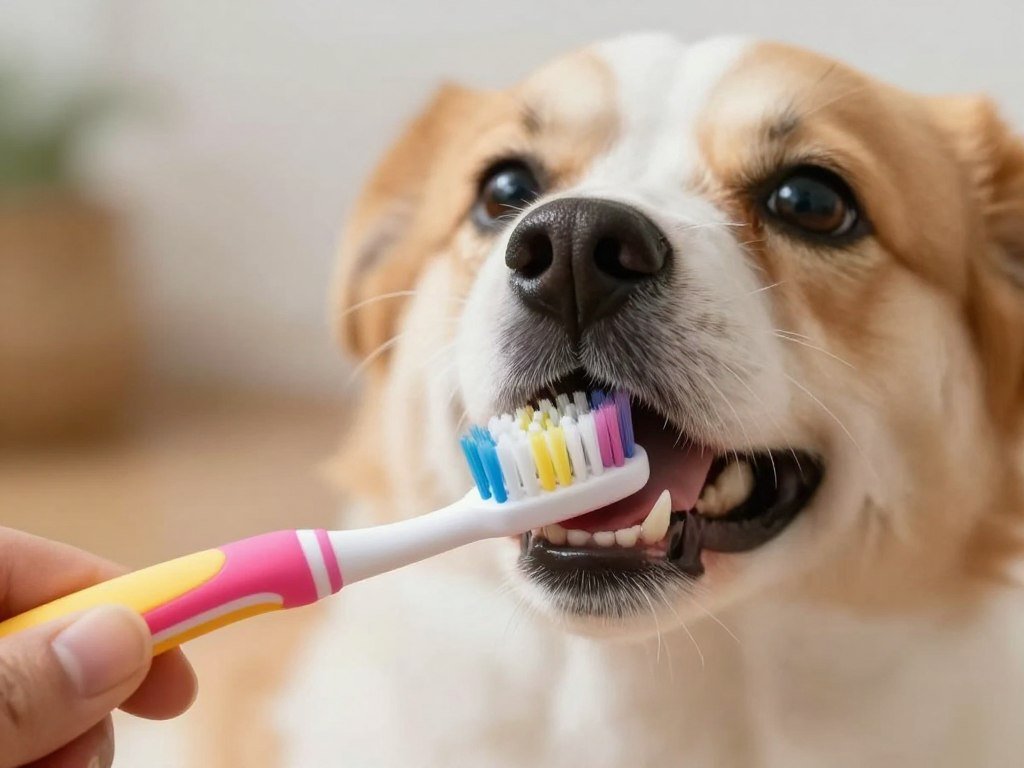
Picking a brush that fits
A small dog may need a compact head, while a larger dog can manage a longer brush. A dog-specific toothbrush is a practical first choice.
If one is unavailable, PetMD’s 2026 guidance says an appropriately sized, soft-bristle, flat-head ADA-approved human toothbrush is an option. The VOHC list includes an ADA-compliant soft-bristle, flat-head brush accepted for plaque and tartar control, with a seal award in 2014.
The soft-bristle, flat-head brush guidance gives a useful standard when you compare toothbrushes. A vet-recommended dog toothbrush and toothpaste setup also depends on keeping each pet’s tools separate.
Keeping brushes separate
Do not let dogs share toothbrushes, finger brushes, or dental wipes. Saliva can transmit bacterial and viral infections between pets.
Introduce mouth handling in small, calm steps as your puppy grows. After weaning, around 6 to 8 weeks of age, you can start brushing gently.
Keep the first handling sessions easy rather than forcing the mouth open. A brush that fits well is easier to control and less likely to make the dog resist.
Label each pet’s brush or store it separately so it is not accidentally shared.
How Often and How Should You Brush?
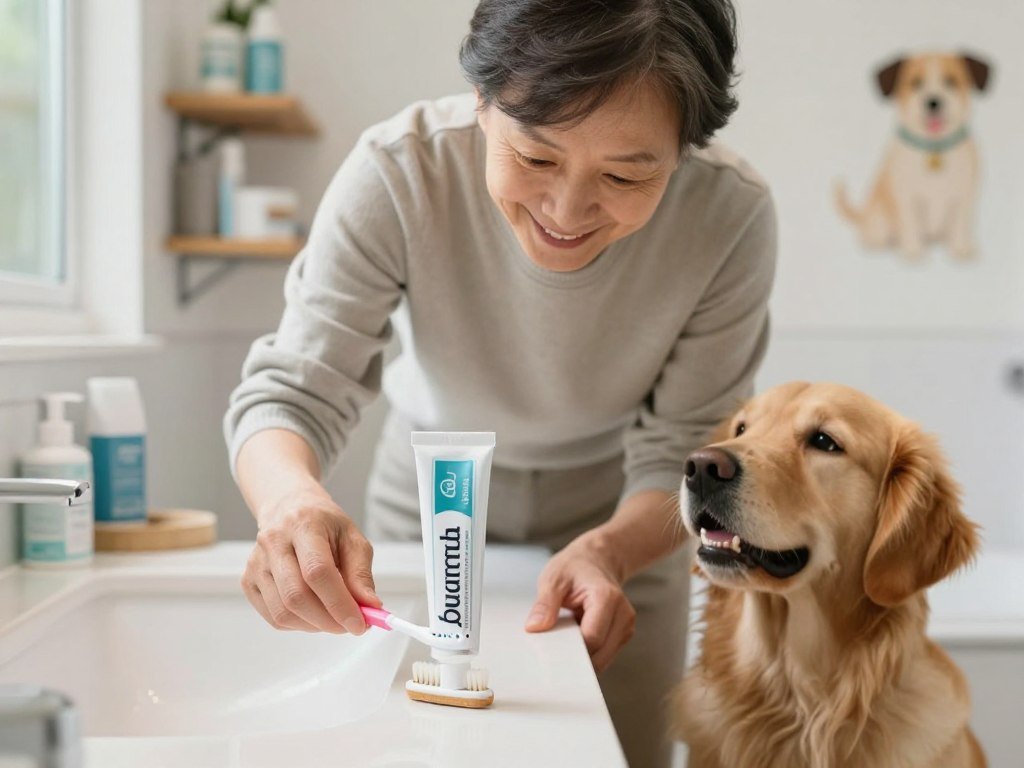
Aim for at least one minute of brushing each day, and treat two to three sessions a week as the minimum when daily brushing is not possible. Daily brushing gives you the best routine for managing plaque and bacteria near the gums.
Set a workable brushing schedule
Pick a time that fits your day, such as after a walk or before bed. A steady schedule helps dental hygiene feel ordinary rather than like a special event.
Use a light touch and focus on the tooth surfaces you can reach without a struggle. Short sessions can still build familiarity when your dog is new to brushing.
VCA’s advice on brushing dogs’ teeth supports regular brushing with pet toothpaste and a suitable soft brush. Keep your dog’s comfort in mind as you work toward a full minute.
Make each session easier
Move through these steps at your dog’s pace:
- Let your dog taste toothpaste from a finger.
- Gently rub the toothpaste along the gumline.
- Introduce the brush, then begin on the outside tooth surfaces.
- Praise and reward your dog after the session.
These small steps help your dog learn what to expect. If your dog pulls away, stop and try a shorter, positive session another time.
Short, pleasant practice can help a reluctant dog accept mouth handling, though each dog adjusts at a different pace. Avoid turning a brushing attempt into a contest.
Keep the same calm routine and reward the dog immediately after brushing.
What Can Support Dental Care Beyond Toothpaste?
If brushing is a struggle, a VOHC-listed dental chew or another accepted product category can add an at-home option. These products can support dental care, but they are not a universal one-for-one replacement for brushing.
The VOHC dog-products list includes these non-toothpaste categories for plaque or tartar control:
- Dental chews
- Water additives
- Gels
- Sprays
- Powders
- Wipes
Acceptance applies to specific products and a stated control purpose. Check whether a product is accepted for plaque or tartar, rather than assuming all pet dental products share the same evidence.
Food choices also fit into a dog’s broader health routine. Our guide to dog food brands and ratings compares options for different needs, including dry kibble.
Use an accepted add-on when it suits your dog, and keep brushing as part of home care when possible. The exact product matters more than its category name.
Check the exact product and control claim rather than assuming every chew or water additive has the same evidence.
When Does Your Dog Need a Professional Dental Cleaning?
At least 80% of dogs over age 3 show signs of periodontal disease, so visible tartar should not be dismissed as a cosmetic problem. Hardened brown tartar needs professional assessment and removal, not home scraping.
What a veterinary dental cleaning includes
A veterinary dental cleaning, or professional cleaning under anesthesia, includes scaling above and below the gumline, followed by polishing. X-rays help the veterinarian find problems hidden beneath the visible tooth surface.
Dental X-rays can reveal bone loss, root abscesses, and retained roots. Without X-rays, 30% of dental disease in a dog’s mouth can be missed.
Visible brown buildup is often hardened plaque, also called tartar or calculus. Home brushing supports routine care, but it cannot remove established deposits below the gumline.
Typical U.S. dental-cleaning costs
In 2026, a routine cleaning at a U.S. general veterinary practice typically costs $300-$700 before X-rays or extractions. Typical cleaning and add-on ranges can help you compare the main line items.
| Procedure or line item | Typical range in 2026 | Condition |
|---|---|---|
| Routine cleaning | $300-$700 | Before X-rays or extractions |
| Cleaning with X-rays and extractions | $500-$1,500 or more | Depends on treatment needed |
| Non-anesthetic cleaning | $100-$300 | Visible surfaces only |
| Full-mouth X-rays | $100-$300 | Often a separate line item |
| Anesthesia and monitoring | $100-$300 | Listed as a separate cost |
A pre-anesthetic exam and bloodwork typically add $80-$200. Extractions typically cost $10-$150 or more per tooth.
Why visible scraping is not a full cleaning
The American Veterinary Dental College (AVDC) strongly opposes anesthesia-free dentistry and calls it inappropriate and malpractice. Scraping without anesthesia removes tartar from visible surfaces but does not clean below the gumline.
Visible scraping is not a full dental exam, and it cannot show disease hidden under the gums.
Without anesthesia-free scraping, a complete examination, dental X-rays, and subgingival cleaning are not provided. Hand scaling without polishing leaves rough surfaces that can hold more plaque and calculus.
Do not scrape brown tartar at home. Elk antlers can also fracture teeth badly enough to require extraction, so hard chews are not risk-free.
Ask your veterinarian whether the dog needs a dental exam, X-rays or a full cleaning based on the mouth’s condition.
Conclusion
The most useful dental-care choice is one your dog will accept as part of an ordinary routine. A pet-safe toothpaste that your dog tolerates is more helpful than a tube that stays unused.
Home brushing supports oral health, but it does not remove hardened tartar or treat disease below the gumline. Watch for persistent bad breath or visible buildup, and include those signs in your dog’s next veterinary conversation.
Choose a pet-specific toothpaste today, set it beside the brush, and make the first session short and positive.
FAQ
What can I use to substitute dog toothpaste?
What do vets recommend for cleaning dogs’ teeth?
How do I get brown plaque off my dog’s teeth?
Is Crest toothpaste ok for dogs?
Is it okay to scrape plaque off dogs’ teeth?
What is the best toothpaste for dogs?
What dissolves plaque on dogs’ teeth?
Which toothpaste should I use for my dog?
Is dog toothpaste necessary?