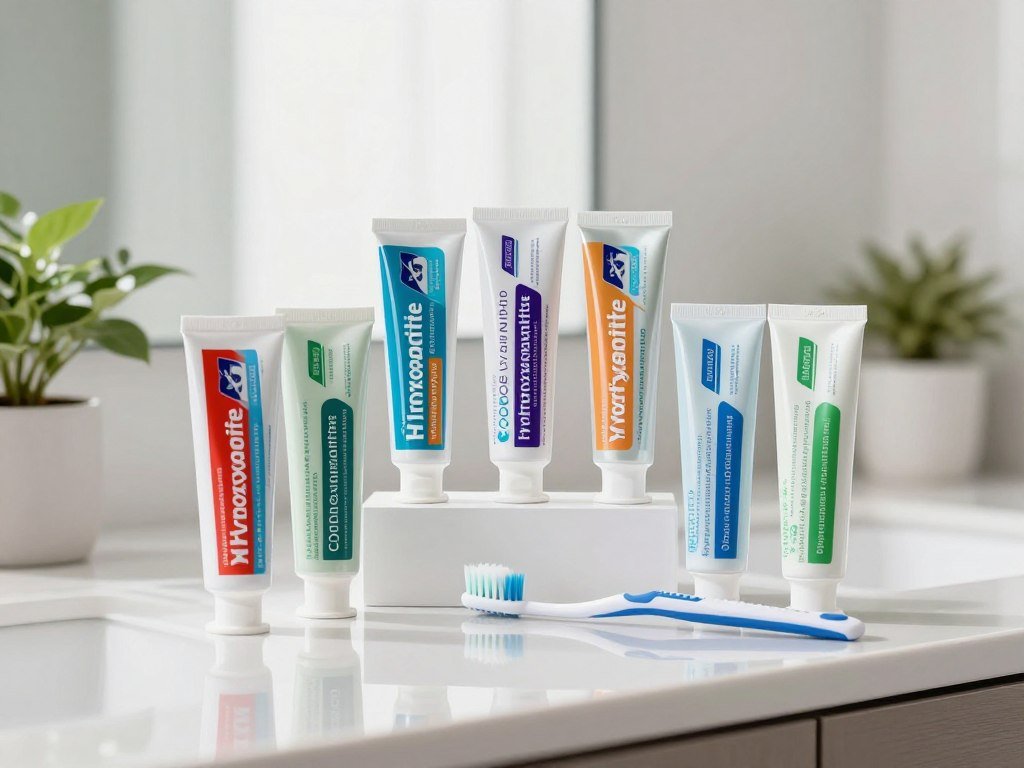
A toothpaste label can look simple, but hydroxyapatite toothpaste formulas differ in ways that matter to your routine. They vary by particle type, concentration, fluoride content, and format, so the front label alone may not tell you how a paste fits your needs. Remineralization means the return of minerals lost from the tooth surface to enamel. It is one way a formula may support tooth enamel, but it does not mean lost tooth structure grows back.
This list compares seven options for adults, including fluoride-free pastes and hybrid toothpaste with both hydroxyapatite and fluoride. Some families also look at products for kids, but a child’s cavity risk and ability to spit matter when choosing a formula. Hydroxyapatite is a naturally occurring mineral, yet a natural-sounding claim does not tell you how well a product matches your dental needs.
Look at the stated ingredients and product features rather than relying on words like “natural” or “remineralizing.” Those details can help you choose a paste you will use each day, while keeping your oral care routine practical. The right starting point is a formula that matches your cavity risk and brushing preferences.
Key Takeaways
- Hydroxyapatite toothpastes differ by particle type, concentration, fluoride content, and format.
- A 10% concentration offers a useful comparison point, not a promise of better results.
- Fluoride remains the established U.S. standard for cavity prevention.
- Some fluoride-free products disclose their nano-hydroxyapatite concentration.
- Ask a dentist before changing fluoride use when your cavity risk is high.
How to Choose the Best Hydroxyapatite Toothpaste
Start by checking whether the label names nano-hydroxyapatite and gives its concentration. Clear labels make it easier to compare products, especially when you want a fluoride-free formula. The ingredient list also shows whether a toothpaste includes other active ingredients.
Use 10% as a comparison point, not as proof that a higher concentration works better. Most nano-hydroxyapatite toothpastes sold today contain 10% or less. An eight-week trial found 10% and 15% formulas helped with dentin hypersensitivity, with no meaningful advantage from the higher concentration for measured outcomes. Read the eight-week sensitivity trial for its methods and results.
Check the particle type and concentration
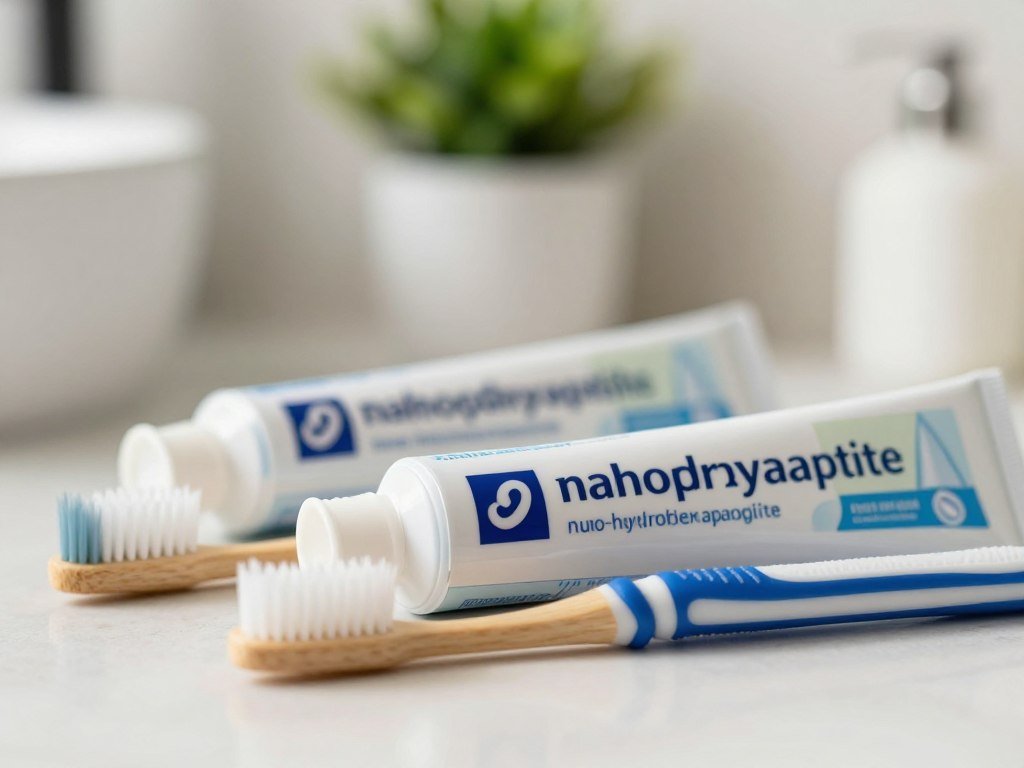
Hydroxyapatite toothpaste comes in microcrystalline and nanocrystalline forms. The label may name nano-hydroxyapatite, while other products list a blend or use a broader term. Concentration is not always disclosed, so avoid guessing based on the order of ingredients.
Use this four-part checklist when comparing hydroxyapatite products:
- Particle type: Look for nano-hydroxyapatite, microcrystalline hydroxyapatite, or a named blend.
- Concentration: Check whether the label gives a percentage.
- Fluoride: Confirm whether the formula contains fluoride as well.
- Full formula: Read the complete ingredient list, not only the front label.
A higher concentration is not automatically a better choice. Compare what the product discloses, then consider the formula as a whole.
Read the full formula, not just the front label
Some toothpastes include ingredients for taste, texture, or sensitivity. Those additions can matter to your routine, but they do not prove a product will prevent cavities or relieve discomfort. Compare the products by what the label states, rather than by claims that sound more advanced.
For adults seeking a fluoride-free nano-hydroxyapatite toothpaste, Dr. Jen Natural Remineralizing Toothpaste is one option to shortlist. It is formulated with 10% nano-hydroxyapatite, a disclosed level that makes side-by-side label checks easier.
If a product hides its particle type or active ingredients, choose a label that makes them clear.
What Hydroxyapatite Toothpaste Does for Enamel
Hydroxyapatite works by supplying calcium phosphate that can bind to damaged enamel and fill small surface irregularities. That surface support may help protect enamel, but it does not rebuild tooth structure already lost to decay or wear. Hydroxyapatite is the mineral building block found in tooth enamel.
Hydroxyapatite may support the enamel surface, but it cannot restore a missing piece of a tooth. Natural enamel contains hydroxyapatite nanoparticles about 20-40 nanometers wide. Toothpaste particles may settle into porous spots and fissures, adding mineral to parts of the surface.
How mineral replacement works
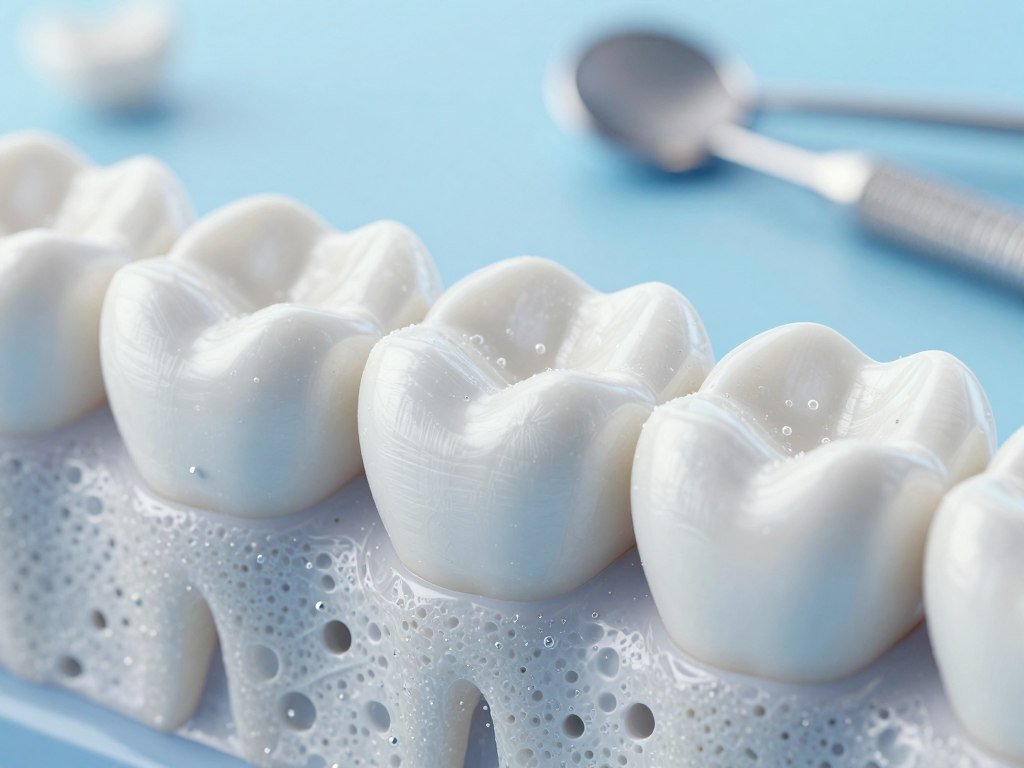
When acids pull minerals from enamel, hydroxyapatite particles may bind to the affected surface. This process is different from repairing a cavity, which needs a dentist to assess the damaged tooth. Think of surface mineral support as a possible aid, not a way to reverse every form of tooth decay.
A review of 28 hydroxyapatite studies found encouraging results across oral-health outcomes. The review also called for more standardized research, since studies may use different formulas and measures. That makes broad claims about all products hard to support.
What the evidence says about sensitivity
Sensitivity research has measured more than one outcome. A meta-analysis of six randomized controlled trials found a significant desensitizing effect from nano-hydroxyapatite in the studies it assessed. That result supports a possible benefit for some people, but it does not promise relief for every person or formula.
Hydroxyapatite has a longer history in oral care than many shoppers may expect. Sangi acquired synthetic hydroxyapatite rights from NASA in 1970. That history offers context, not proof that every current product performs the same way.
Why acids matter
Repeated acid exposure from food and drinks can lower oral pH and damage teeth. Enamel begins to lose mineral when oral pH falls below 5.5. Sipping acidic drinks over long periods can keep exposing the tooth surface to low pH.
Frequent acidic exposure matters because enamel starts losing mineral below an oral pH of 5.5.
Hydroxyapatite vs. Fluoride: Which Fits Your Routine?
Fluoride and hydroxyapatite both support enamel, but they do so through different mechanisms and have different U.S. status. Fluoride toothpaste is the more established U.S. choice for cavity prevention. Hydroxyapatite may suit people who prioritize a fluoride-free formula and want to discuss another option with a dental professional.
Results described as equivalent apply to specific formulas and outcomes, not every patient or product. The comparisons below show what researchers measured, not a guarantee of identical protection in daily use.
Different routes to enamel protection
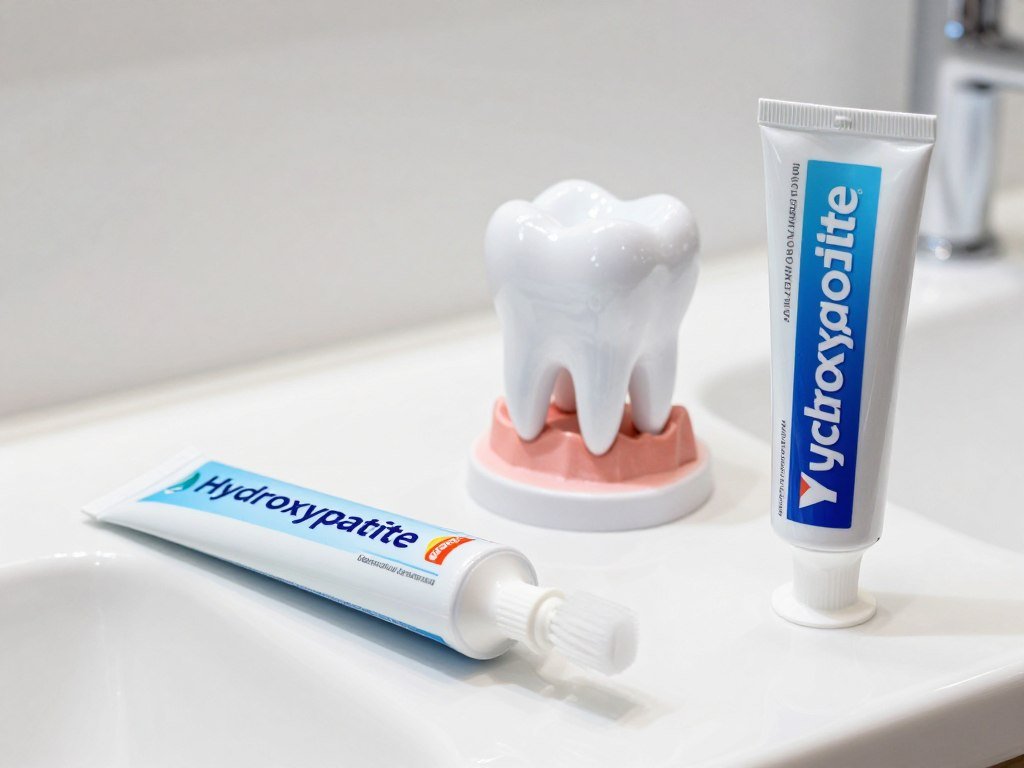
Hydroxyapatite supplies calcium phosphate particles that may deposit on the enamel surface. Fluoride supports enamel through a separate route and has a long-established role in U.S. cavity prevention. The right fit depends in part on your cavity risk and your reason for considering a fluoride-free paste.
| Comparison | Hydroxyapatite | Fluoride | What it shows |
|---|---|---|---|
| Enamel action | Particles may bind to enamel | Supports enamel through a different mechanism | Different routes |
| Comparison result | 10% microcrystalline formula non-inferior for caries progression | Fluoride toothpaste was the comparator | Primary and permanent teeth |
| U.S. acceptance signal | No ADA Seal of Acceptance | ADA Seal given to fluoride toothpaste | U.S. professional signal |
What the comparisons can and cannot show
A review reported that 10% microcrystalline hydroxyapatite toothpaste was non-inferior to fluoride toothpaste for caries progression in primary and permanent teeth. In situ studies found hydroxyapatite equivalent to 500 ppm fluoride toothpaste for dentin remineralization measured by transverse microradiography. Another comparison found similar surface-hardness results with hydroxyapatite and 1450 ppm fluoride toothpaste.
These findings cover specific concentrations and measured outcomes. They do not prove that every hydroxyapatite formula will match every fluoride toothpaste for every person. Japan approved hydroxyapatite toothpaste as an anti-caries agent in 1993, but that does not mean all Japanese consumers use it instead of fluoride.
If you are considering a fluoride-free routine, a dentist who knows your cavity risk can help you weigh the choice. Choose fluoride when you want the established U.S. cavity-prevention standard, and discuss a fluoride-free switch with your dentist if your risk is elevated.
Which Hydroxyapatite Toothpaste Fits Your Needs?
For a fluoride-free formula with a stated 10% nano-hydroxyapatite concentration, Dr. Jen Natural is a clear starting point. Other formulas suit different preferences, such as tablets, added sensitivity ingredients, or a hybrid toothpaste. The ingredient list and concentration describe the formula, not its clinical results.
No ingredient percentage or product feature proves that one toothpaste works better for everyone. These seven picks match stated formulas to common preferences, without treating brand claims as proven outcomes.
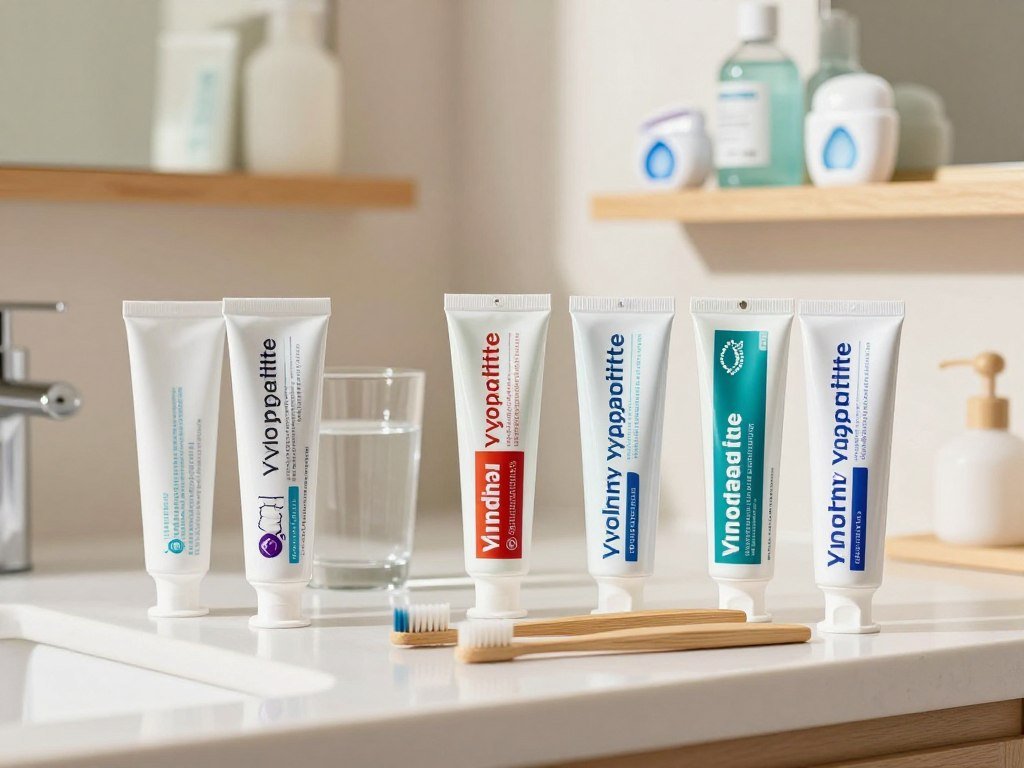
Fluoride-free pastes, including tablets
These options do not contain fluoride according to their stated formulas. Check the package for the current ingredient list, since formulas can change.
- Dr. Jen Natural Remineralizing Toothpaste: This fluoride-free paste states 10% nano-hydroxyapatite, giving adults a clear concentration to compare. Dr. Jen Super Paste is a hybrid alternative with 10% nano-hydroxyapatite, 0.22% fluoride, and xylitol.
- Great Oral Health ProMineralizer: This paste contains an 11% blend of nano and microcrystalline hydroxyapatite. The blend may appeal if you want both particle forms named on the label.
- NOBS tablets: These tablets contain 5% nano-hydroxyapatite. The tablet format may suit someone who prefers a solid alternative to toothpaste in a tube.
- Boka toothpaste: This fluoride-free formula contains hydroxyapatite, potassium chloride, and xylitol. The listed ingredients may interest people who want a paste with added sensitivity-related ingredients.
- FYGG toothpaste: This fluoride-free formula contains nano-hydroxyapatite, L-arginine, xylitol, and chicory root. Review the full formula if you have ingredient preferences or sensitivities.
- RiseWell products: RiseWell products contain hydroxyapatite and may suit readers considering a fluoride-free product. Check each product label for its specific formula.
Nano-hydroxyapatite formulas that also contain fluoride
Hybrid formulas include hydroxyapatite and fluoride, so they may fit readers who prefer both ingredients in one paste. Their listed amounts still do not show which formula will work best for your teeth.
- Ollie toothpaste: This hybrid formula contains 2% hydroxyapatite, 0.24% fluoride, and 5% potassium nitrate. Its listed potassium nitrate may appeal to people looking at formulas for tooth sensitivity.
Early laboratory studies suggest white, opaque hydroxyapatite particles may make teeth appear whiter. That is an early finding, not proof of a whitening result at home. For brighter teeth, compare toothpaste with at-home teeth-whitening kits, which use different methods and can have different results.
Treat a whitening claim as a cosmetic possibility, not a promise that a toothpaste will change intrinsic tooth color.
Is Hydroxyapatite Toothpaste Safe for Adults and Kids?
The available safety evidence is reassuring, but the details of the material and formula matter. Safety findings have limits: an assessment of nano-hydroxyapatite applies to the material it evaluated, not automatically to every product. A review reported no adverse health events from hydroxyapatite toothpaste in the studies it summarized.
No reported adverse events in those studies does not prove zero risk. The European Commission’s Scientific Committee on Consumer Safety concluded that its evaluated nano-hydroxyapatite material was safe in toothpaste at concentrations up to 29.5%, when it met the committee’s specifications.
What the nano safety assessment covers
The European assessment covered specific uncoated, rod-shaped particles. It did not cover needle-shaped nano-hydroxyapatite. The committee adopted its opinion in June 2025, so the result should be read as a finding about that defined material.
That conclusion does not amount to blanket approval for all hydroxyapatite toothpastes. A product’s particle shape, material, and full formula matter when judging whether the assessment applies. The answer to “hydroxyapatite toothpaste dangers” is not simply safe or unsafe: the formula and its match to the evaluated specifications matter.
The European safety opinion sets out those limits for nano-hydroxyapatite in oral-care products. Read its scope carefully rather than assuming every product has the same material.
Choosing a formula for a child
For kids, the main practical question is often whether they can reliably spit out toothpaste. A child who swallows toothpaste may not use a formula in the same way as an adult. Parents should discuss cavity risk and toothpaste choice with the child’s dentist, especially while the child is still learning to spit.
The ADA advises caregivers to supervise brushing and help children spit rather than swallow toothpaste. Its toothpaste guidance for children also gives age-based amounts for fluoride toothpaste. That guidance offers context for brushing habits, not proof about hydroxyapatite safety.
For a child who regularly swallows toothpaste or has elevated cavity risk, confirm the choice with the child’s dentist.
How to Use Hydroxyapatite Toothpaste
Consistent, thorough brushing matters more than adding extra toothpaste or brushing aggressively. Use a gentle touch and spend two minutes brushing twice each day. That routine helps you clean the tooth surfaces and gumline without scrubbing hard.
Brush twice daily for two minutes, then spit out the excess paste. Do not swallow toothpaste. A routine is easier to keep when you use a familiar brush and give each part of your mouth enough attention.
Follow these three steps for daily tooth care:
- Brush gently for two minutes, twice daily.
- Cover all tooth surfaces and the gumline.
- Spit out the excess toothpaste and avoid swallowing it.
Small studies found reduced cold-air and touch sensitivity after two and four weeks of nano-hydroxyapatite toothpaste use. Those time points describe changes in sensitivity, not a fixed schedule for enamel repair. They also do not promise that every person will feel relief on the same timeline.
A gradual change can be hard to judge day to day. Pay attention to whether cold drinks or brushing cause less discomfort over time, but do not treat a short study’s timeline as a personal guarantee. Sensitivity can have causes that toothpaste cannot address, such as a damaged tooth or gum problem.
If sensitivity persists or worsens after several weeks, ask a dental professional to check for another cause.
When to Choose a Fluoride or Prescription Toothpaste
A dentist may recommend prescription fluoride toothpaste when a patient needs more cavity protection than an over-the-counter formula provides. The higher dose is for a specific need, not a routine upgrade for everyone. U.S. over-the-counter toothpaste typically contains 1,000 to 1,500 ppm fluoride.
Prescription toothpaste contains 5,000 ppm sodium fluoride and requires a prescription above the FDA’s 1,500 ppm line. Your dentist can decide whether a higher level fits your cavity risk and treatment plan.
Over-the-counter fluoride levels
Toothpaste can use sodium fluoride, sodium monofluorophosphate, or stannous fluoride as its active ingredient. A review described stannous fluoride as the most effective of the fluoride additives it assessed for caries, biofilm, hypersensitivity, and gum-health outcomes. That finding compares the additives in that review, not every formula or patient.
The FDA’s over-the-counter anticaries monograph lists fluoride actives and product rules. Those standards apply to fluoride products, not hydroxyapatite toothpaste as an anti-cavity product.
Prescription-strength options
Four named products provide 5,000 ppm fluoride. Their associated uses can help you discuss a choice with your dentist, but the best fit depends on your dental needs and the product’s directions.
| Product | Fluoride level | Associated fit |
|---|---|---|
| CariFree Pro Gel 5000 | 5,000 ppm | Reflux |
| Clinpro 5000 | 5,000 ppm | White spots |
| Fluoridex Daily Defense | 5,000 ppm | Value |
| Prevident 5000 | 5,000 ppm | Familiarity |
A higher fluoride level may be useful when a dentist has found a reason for stronger cavity protection. It is not a substitute for an exam or a personal recommendation. Follow the product directions and your dentist’s instructions.
Use 5,000 ppm sodium fluoride only when prescribed and directed by your dental professional.
What to Check Before You Buy
Before ordering, check the active ingredients, the stated concentration, and whether the product is sold in a format you will use consistently. Format matters when a toothpaste needs to fit into your daily brushing routine. Hydroxyapatite toothpaste is not widely available in the United States, but you can order it online.
Hydroxyapatite toothpaste is not FDA-approved as an anti-cavity product and does not carry the ADA Seal of Acceptance. That status is separate from whether a product is sold online or in stores. A product’s availability does not mean the FDA has approved it for cavity prevention.
Hydroxyapatite toothpaste typically costs $5-$25, with an average price of $15. Fluoride toothpaste typically costs $1-$6. Great Oral Health ProMineralizer is listed at $18, which falls within the hydroxyapatite range.
For a final check, make sure the product identifies its active formula details and full ingredients. Avoid toothpaste that does not disclose what is in the formula or which active ingredients it uses. That makes it hard to compare the product with your needs or other options.
Do not treat online availability as proof of FDA anti-cavity approval or an ADA Seal. Those are separate questions from where a product is sold.
Compare current listings before checkout because the general price range does not guarantee the price of a particular tube.
Conclusion
A well-matched toothpaste is one you can use consistently and confidently. Choose based on your cavity risk, ingredient preferences, and comfort with fluoride, rather than a claim that sounds natural or advanced.
If you are unsure about replacing fluoride, ask your dentist before changing your routine. A short conversation can help you weigh your health needs against your brushing preferences.
Take the label of your preferred formula to your next dental visit and ask whether it fits your oral-health needs.
FAQ
Why don’t more dentists recommend hydroxyapatite?
How long does it take for hydroxyapatite toothpaste to remineralize teeth?
What are some popular brands of high-fluoride toothpaste?
Which type of fluoride is most effective in toothpaste?
What do Japanese use instead of fluoride?
What is the #1 recommended toothpaste?