A long session on a sensitive body area can make pain relief feel like an important part of planning. Pain varies with placement, skin sensitivity, and the length of your tattoo session. A hand tattoo, for example, may feel different from one on a fleshier area.
Looking for the best numbing cream for tattoos means weighing comfort against skin safety. Your experience also depends on how your skin responds and whether your tattoo artist is willing to work with the product. A clear label matters more than a bold claim on the package.
This guide helps you compare labeled products and talk with your tattoo artist before your appointment. You can also plan for comfort without relying on a cream. The goal is to make the session more manageable, not guarantee a pain-free tattoo.
Key Takeaways
- Read the active ingredient, concentration, directions, and warnings.
- FDA guidance advises against over-the-counter lidocaine products above 4%.
- Ask your tattoo artist before applying any product.
- Numbing effects are temporary and may not remove all pain.
- Breaks, breathing, and music can support comfort during a session.
How Does Tattoo Numbing Work?
A topical anesthetic works locally, reducing some pain signals from the treated skin before they reach your awareness. A topical anesthetic is a medicine applied to the skin to temporarily reduce sensation in the treated area.
A numbing effect can soften sensation, but it does not stop the tattoo process. The needle still touches the skin, and you may feel pressure, movement, or some pain.
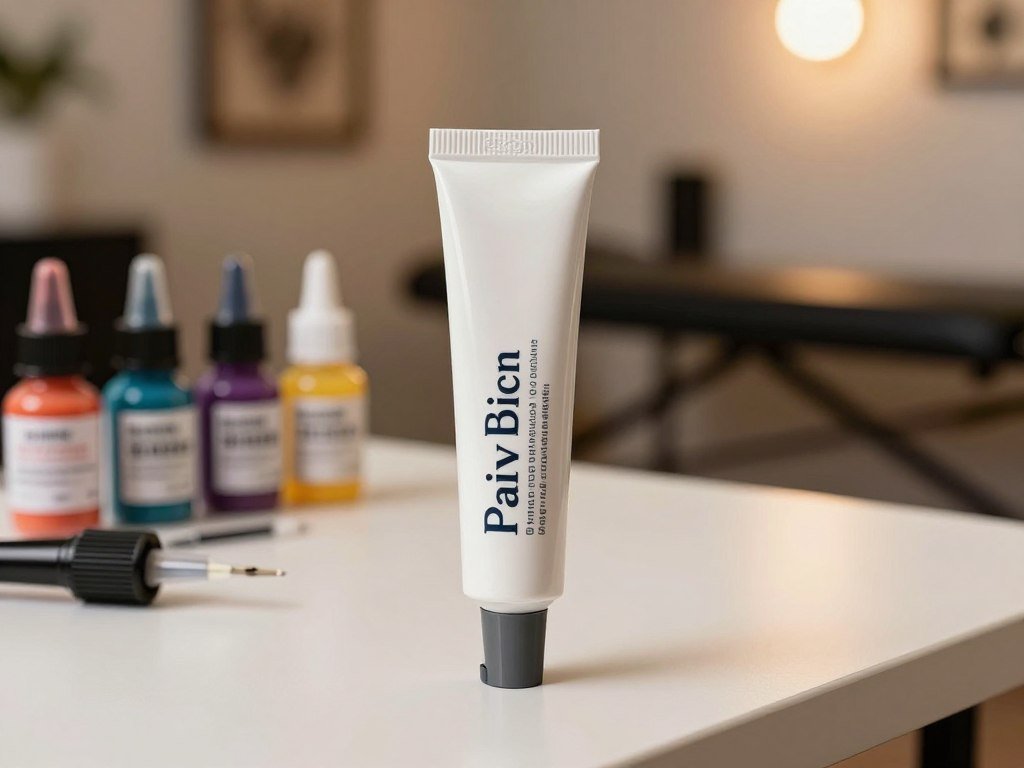
How local anesthetics interrupt pain signals
Lidocaine is a local anesthetic that blocks sodium channels involved in nerve signaling. Those channels help nerves send messages, including pain signals, from the skin.
When lidocaine reduces some of those messages, the treated area may feel less sharp or intense. The numbing effect stays temporary, and it can vary across the application area.
A topical anesthetic acts on the skin where you apply it. It does not remove every sensation or guarantee the same pain relief for every tattoo session.
The cream can dull sensation, but it cannot guarantee that every part of a tattoo will feel painless.
Why different active ingredients behave differently
Lidocaine, benzocaine, and tetracaine are distinct active ingredients used in topical anesthetics. Their products can have different formulas and directions.
A cream’s concentration, added ingredients, and labeled use affect how you should use it. A name or strength claim alone cannot tell you how a specific product will feel.
Some formulas aim to reduce sensation before a session, while others have different labeled uses. Follow the product directions rather than assuming one cream works like another.
A tattoo session may still include areas that feel tender, even when you use a labeled topical product. The cream can dull sensation, but it cannot guarantee that every part of a tattoo will feel painless.
Which Active Ingredients Should You Check?
Start with the active-ingredient panel, not the product name or a strength claim on the front of the package. Active ingredients determine the type of anesthetic action, while inactive ingredients make up the rest of the formula.
Check the exact ingredients and concentration before comparing numbing agents. Lidocaine, benzocaine, and tetracaine are topical anesthetics; epinephrine is different because it narrows blood vessels.
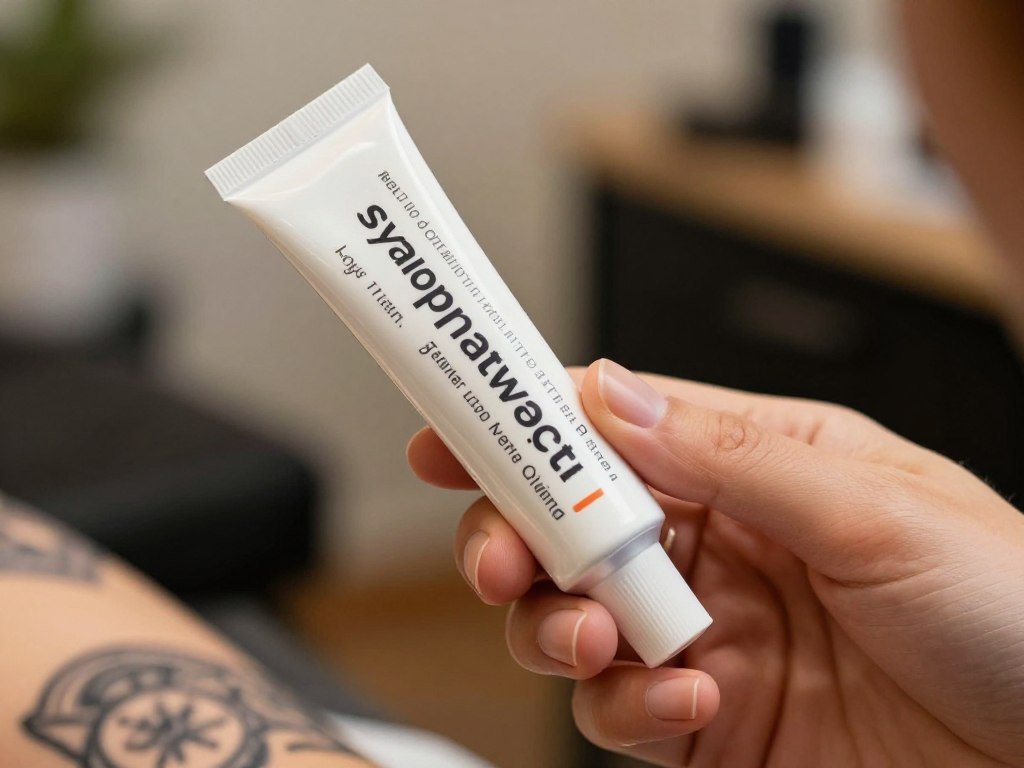
Lidocaine, benzocaine, and tetracaine can appear in products made for different uses. A formula may contain one anesthetic or a blend, but more ingredients do not automatically make it safer or more effective.
Epinephrine is a vasoconstrictor, which means it narrows blood vessels. It is not an anesthetic ingredient, even when it appears beside numbing agents on a label.
The FDA’s over-the-counter external analgesic monograph lists rules for topical ingredients, concentrations, and labeling. You can read the FDA monograph for external analgesics for those product rules.
Use this short label check before you buy or apply a cream:
- Active ingredients: identify each medicine that affects sensation.
- Concentration: note the amount or percentage listed for each active ingredient.
- Inactive ingredients: scan the rest of the formula for ingredients you avoid.
- Directions or warnings: check the intended use, limits, and skin conditions.
Inactive ingredients can affect the feel and spread of a cream. A blend is not automatically safer or more effective than a product with one active ingredient.
Skip a product whose label does not clearly identify its active ingredients and directions.
What Does FDA Safety Guidance Mean for Tattoo Numbing?
FDA guidance puts the emphasis on concentration and how much lidocaine reaches the body, not just the product’s name. How you use it matters because heavy use or certain skin conditions can raise absorption.
The FDA advises consumers not to use over-the-counter topical pain-relief products containing more than 4% lidocaine. The agency also warns against heavy application over large areas, use on irritated or broken skin, prolonged use, and covering treated skin.
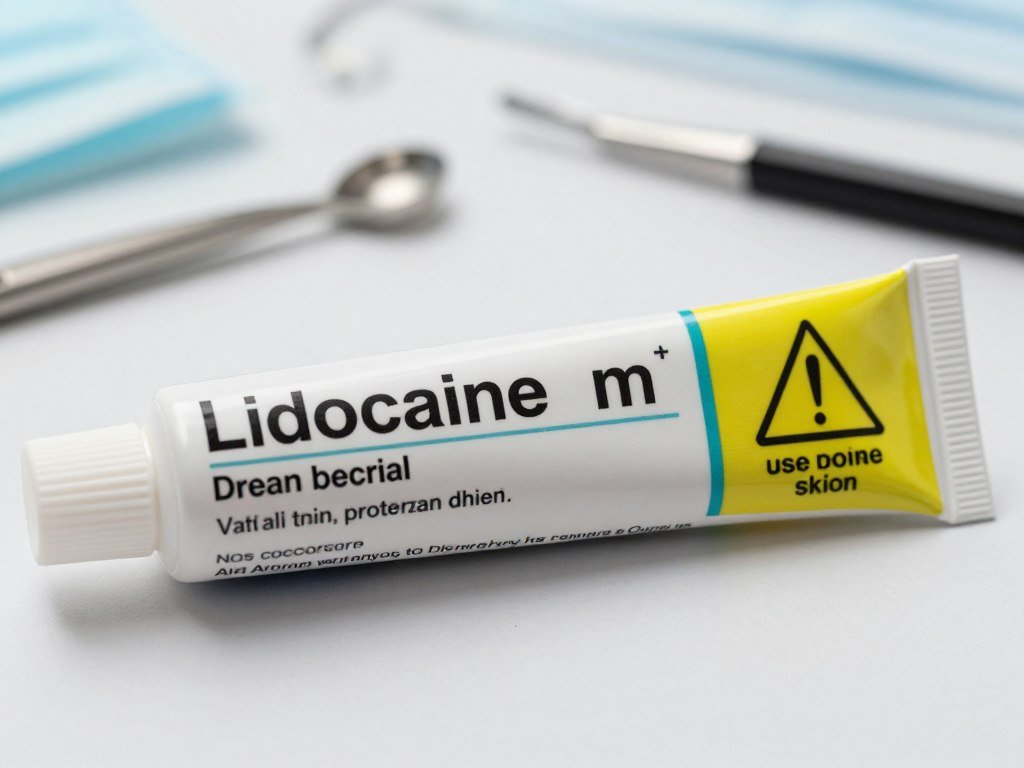
The FDA explains that covering lidocaine-treated skin, including with plastic wrap, can increase the chance of serious side effects. Greater absorption can affect the whole body, not only the application area.
High-concentration products used in ways that increase absorption may cause irregular heartbeat, seizures, and breathing difficulties. Those risks make improvised use a poor trade for a temporary numbing effect.
The FDA’s consumer warning on topical pain-relief products describes these risks and urges caution with products marketed around cosmetic procedures.
| Application situation | FDA-identified risk | Safer rule |
|---|---|---|
| Heavy use over a large area | More lidocaine may enter the body | Do not apply heavily or widely |
| Irritated or broken skin, or prolonged use | Absorption may rise | Use only as the label directs |
| Covering treated skin, including with plastic wrap | Higher chance of serious side effects | Do not cover unless the label directs it |
These cautions apply even when a product is sold without a prescription. The amount, area, skin condition, and length of use all affect exposure.
Do not assume that a stronger dose or a covered application is safer because the cream is sold without a prescription.
How to Choose the Best Numbing Cream for Tattoos
For a practical first choice, favor a clearly labeled formula with a stated concentration and directions over a vague “maximum strength” claim. A clear label helps you compare the medicine, the intended use, and the package warnings.
Start with a labeled product that stays within the FDA guidance discussed earlier. Numbing Cream with Menthol is one example: its label lists 4% lidocaine, 0.5% menthol, and 0.5% camphor as active ingredients.
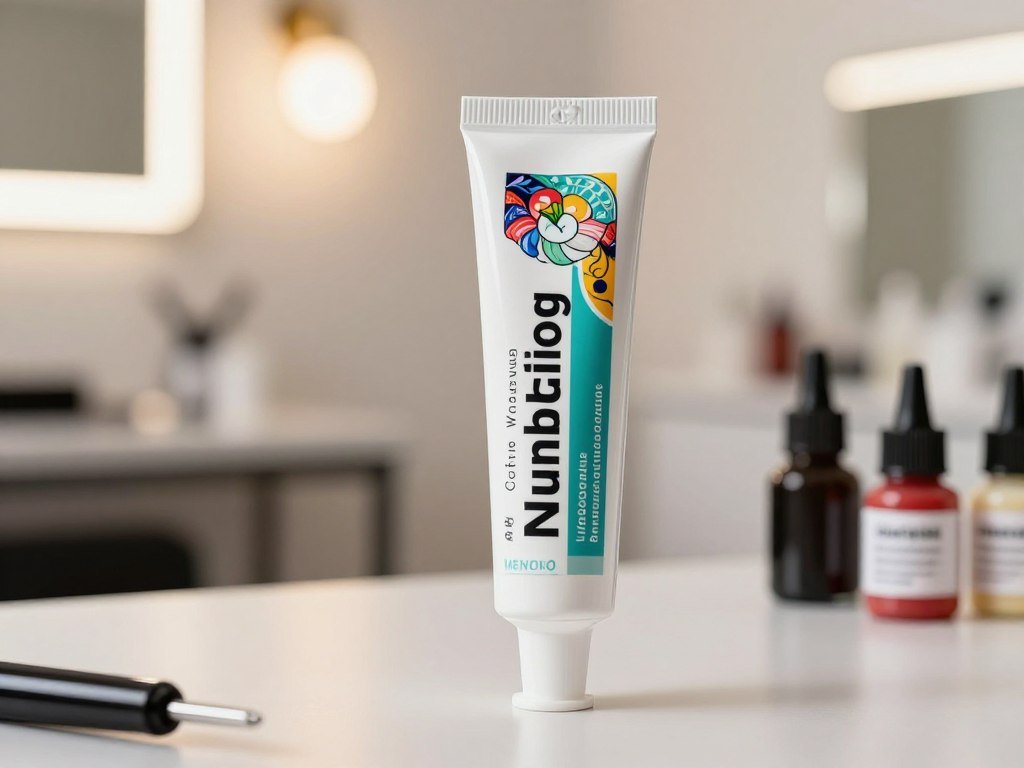
| Ingredient | Concentration in this formula | Label-described role |
|---|---|---|
| Lidocaine | 4% | Topical anesthetic |
| Menthol | 0.5% | Cooling sensation |
| Camphor | 0.5% | Cooling or soothing support |
The package contains 1 ounce, or 30 milliliters. Its label says not to use the cream on open skin, so that restriction matters when you consider any application area.
A usable label names the active ingredients and their concentrations. It also explains how much to apply, when to apply it, and which skin conditions rule out use.
Do not treat a product’s front-panel wording as a substitute for the Drug Facts or directions panel. The intended use should fit the skin condition and timing for your appointment.
Compare the full formula rather than choosing by the word “strength.” Menthol and camphor can change the sensation on skin, but they do not replace the anesthetic information.
Check that the product’s labeled use matches intact skin before considering it for pre-session application.
Which Numbing Creams Are Worth Comparing?
The most useful comparison starts with what the label confirms, not which product makes the boldest promise. Label facts help you weigh a cream without treating marketing claims as proof.
Compare the active ingredient, concentration, price, and stated use before choosing a product. A customer rating can describe buyer feedback, but it cannot show that a cream will work the same way for you.
Zensa Numbing Cream: a clearly labeled 5% option
Zensa Numbing Cream is labeled as containing 5% lidocaine. That concentration needs to be assessed against the FDA guidance already covered, rather than treated as a consumer safety recommendation.
The listed inactive ingredients are benzyl alcohol, carbopol, lecithin, propylene glycol, vitamin E acetate, and purified water. These ingredients make up the rest of the formula, not its listed anesthetic active ingredient.
A 30-gram tube is listed at $44.00. Zensa says the numbing effect lasts 2-3 hours, though a product statement cannot predict how long one person will feel numb.
The stated time is specific to this product, not a promise for every tattoo or application area. The label and directions still matter when you compare it with another cream.
Signature + Numbing Cream: a customer-rated option
Signature + Numbing Cream has a customer rating of 4.5 out of 5 from 571 reviews. That rating reflects customer feedback, not proof of clinical effectiveness.
Reviews may help you learn what buyers liked or disliked, but they cannot confirm that a formula suits your skin or your tattoo artist’s process. Use the product’s own label to understand its active ingredients and directions.
The phrase best numbing cream for tattoos that lasts a long time does not point to one dependable choice for every client. Duration claims are product-specific, and they do not establish how long an individual will feel numb.
For the best numbing cream for tattoos in 2026, favor clear label details over claims that promise a fixed result. A longer stated duration does not remove the need to follow directions.
Keep your tattoo artist in the decision. The artist may have a process that does not work well with a product already on your skin.
Choose only after checking the label and discussing the product with your tattoo artist.
Cream, Gel, or Spray: Which Format Fits Your Session?
The format should match the labeled use and your tattoo artist’s plan, not just the size of the package. Directions decide whether a product suits intact skin or another use.
No format is best for every session; the label must match the intended application area. Creams, gels, and sprays differ in consistency and how you apply them.
| Format | Typical use situation | Practical advantage | Key check |
|---|---|---|---|
| Cream | Pre-session application | Can cover a defined area | Does the label allow use on intact skin? |
| Gel | Product-specific topical application | Its consistency may suit a focused area | Does the label state where and how to use it? |
| Spray | Only where its label permits and the artist agrees | Can reach an area without spreading cream by hand | Does the label allow this skin use? |
A cream may be easier to place over a defined section before an appointment. A gel can feel or spread differently, but the product directions still set its proper use.
A spray is not automatically safe for open skin. Check its label, and do not assume a format can be used during a tattoo just because it comes in a spray bottle.
The tattoo artist may prefer a clean, untreated application area for stencil work or ink. Ask how the product’s texture could fit the artist’s process.
Treat every spray as a separate formula and verify its directions before using it during a session.
How Should You Apply a Numbing Cream?
Start with the product label and your tattoo artist’s instructions rather than a generic timing recipe. The label leads because products differ in amount, timing, and intended use.
Do not improvise with the dose, timing, or a covering. A patch test well before the appointment can help you notice irritation, but it does not replace label directions.
Before the appointment
Read the full product directions and warnings before you use numbing cream. Apply only to the intended area and follow the product’s stated amount and timing.
Check with your tattoo artist before the appointment. Some artists do not want a product on the skin because it may affect stencil transfer or the feel of the area.
If you plan a patch test, do it well before the appointment so you have time to notice a reaction. A patch test can flag irritation, but it cannot make an off-label use safe.
During the session
Tell the tattoo artist which product you used and when you applied it. That detail helps the artist decide whether the skin is ready for the planned work.
Do not add more cream during the session unless the product label and a qualified health professional support that use. Do not apply anything to broken skin unless those same conditions support it.
If your skin feels unusual or the product seems to affect the area, tell the artist before work continues. Clear information helps the artist respond to what they see and feel.
After the product is removed
Remove the cream as its label directs. Then let the tattoo artist prepare the skin using the artist’s normal process.
Do not assume that a product made for pre-session use can be used again after tattooing starts. Freshly treated skin has a different condition from intact skin before an appointment.
If the skin becomes irritated or you feel unwell, stop using the product and seek medical advice.
How Long Does Tattoo Numbing Last?
Expect temporary relief, not a guaranteed pain-free session, and plan around the product’s own directions. As a general guide, topical numbing effects often last roughly 1-2 hours.
A product may take around 30-60 minutes to work when used as directed, but its label controls timing. Formulation and directions affect how quickly sensation changes and how long the effect lasts.
A tattoo can still hurt while you use a numbing cream. Numbing may be partial, and the effect can fade before the tattoo session ends.
Product formulas differ, including formulas with lidocaine or tetracaine. Their labels set the proper timing, so do not use one product’s directions for another.
Several practical factors can shape how long the effect seems to last:
- Product formulation: different formulas can have different effects.
- Application timing: use timing set by that product’s label.
- Size of the treated area: the application area can change the experience.
- How the skin is handled during the session: tattoo work can change sensation.
Placement can shape how painful a tattoo feels, too. Fingers, knuckles, and palms may feel especially uncomfortable compared with fleshier areas, as this hand tattoo placement guide explains.
Arrange a break with your tattoo artist if the numbing effect fades or the discomfort becomes hard to manage.
What Should You Tell Your Tattoo Artist?
Tell your tattoo artist about the product before the appointment, not after the stencil is on. Early disclosure gives the artist time to decide whether the product fits the plan.
Share the product name, active ingredients, application time, and any skin reaction. An artist may decline pre-applied cream because it can change skin feel, affect stencil transfer, or complicate ink application.
Share the product and how you used it
Give the tattoo artist the exact product name and the active ingredients shown on its label. Include when you applied it and whether your skin reacted.
Residue or a change in skin feel may be noticeable to the artist. Being honest helps the artist assess the application area before starting.
A quick conversation can cover four useful details: product name, active ingredients, when you applied it, and any skin reaction. Keep the label or a clear photo available if the artist wants to review it.
Agree on what happens if the skin feels different
The artist may want to clean the area or wait before placing a stencil. That choice depends on the artist’s process and how the skin feels.
Do not hide product use because you worry the artist might say no. An artist can make a safer plan when they know what touched the skin.
Ask what the artist prefers before the session begins. This avoids a last-minute disagreement after the design is ready to transfer.
If the artist is not comfortable working on the treated skin, agree on a different plan before the session begins.
Which Tattoo Numbing Products Received FDA Warning Letters?
FDA warning letters named topical pain-relief products marketed around cosmetic procedures, including tattooing. Being named is a reason to check the exact product, not assume tattoo marketing proves safety.
The letters covered products marketed for use before, during, or after cosmetic procedures. The products below are examples named in the letters, not a complete list of every company or product involved.
Products listed under Tattoo Numbing Cream Co. and TKTX Company
Tattoo Numbing Cream Co. products named in the letters include Signature Tattoo Numbing Cream and Miracle Numb Spray. The FDA issued a warning letter to the company about topical pain-relief products.
TKTX Company products listed include TKTX Numb Maximum Strength Pain Reliever, Mithra+ 10% Lidocaine, TKTX During Procedure Numbing Gel 40%, and J-CAIN cream [LIDOCAINE] 29.9%.
These names and concentrations can help you distinguish products with similar branding. Read the complete label rather than relying on the product name alone.
Products listed under SeeNext Venture, Painless Tattoo Co., and INKEEZE
SeeNext Venture, Ltd. products listed include NumbSkin 5% Lidocaine Numbing Cream in 15-gram and 30-gram sizes, plus NumbSkin 10.56% Lidocaine Numbing Cream.
Painless Tattoo Co. products include Painless Tattoo Numbing Cream and Painless Tattoo Numbing Spray. The listed INKEEZE products are Ink Eeze Original B Numb Numbing Gel, Ink Eeze B Numb Numbing Spray Black Label, and Ink Eeze B Numb Numbing Foam Soap.
The FDA warning letter to Tattoo Numbing Cream Co. names its two products. Inclusion in warning-letter lists is a reason to avoid assuming a product is safe simply because it is marketed for tattoo use.
Similar wording can appear across different products, so check the complete name and label. Marketing aimed at tattoo clients does not replace the product’s directions or safety information.
Check the exact product name and active-ingredient label instead of relying on a tattoo-specific claim.
How Can You Compare Value Without Chasing Strength?
A larger tube is not automatically a better value if the label or intended use does not fit your session. Compare like with like by checking package weight, concentration, directions, and price.
Cost per gram equals the listed price divided by the package weight in grams. That calculation helps compare package prices, but it does not tell you how many applications a tube provides.
Read the active ingredients and their concentrations before comparing prices. Two creams with different formulas or directions may not be equal choices, even when their package sizes match.
Price depends on the package size and the seller. A low price per gram does not make a product a good fit if its label does not suit your planned use.
Before comparing products, check these four details:
- Active ingredient: identify the medicine listed on the label.
- Concentration: compare the stated amount or percentage.
- Net weight: note how many grams the package contains.
- Directions or warnings: check intended use and limits.
Use the same units when you compare package weights. A tube listed in ounces needs conversion to grams before you calculate a cost per gram.
Strength alone does not show how much product a package holds or whether its directions fit your needs. A smaller tube with clearer use information may suit you better than a larger one.
Compare the same package details and labeled use before deciding whether one option is worth more to you.
What Can You Do If You Skip Numbing Cream?
You can make a session more manageable without adding a topical anesthetic. Simple comforts can help you stay settled while the tattoo artist works.
Agree on comfort options with your tattoo artist before the session starts. Some clients can also discuss splitting a large tattoo into multiple sessions.
Non-product ways to manage discomfort
Choose options that fit the artist’s setup and do not interrupt the work:
- Take agreed breaks when you and the artist decide they are needed.
- Use slow breathing to keep your body relaxed during each section.
- Listen to music if headphones are allowed in the studio.
- Hold a stress ball or another comfort item the artist permits.
You can plan these supports before you arrive. Ask the tattoo artist how breaks will work, especially if your design covers a large area.
Keep tattoo aftercare focused on healing
Tattoo aftercare begins once the tattoo is complete. It supports skin healing, not pain relief during the session.
Follow your tattoo artist’s aftercare directions and reputable skin-care guidance. The American Academy of Dermatology also provides tattoo aftercare advice.
Do not apply pre-session numbing cream to a fresh tattoo. Freshly tattooed skin needs care suited to healing, not a product meant for intact skin before an appointment.
For visible placements, care can matter after the session, too. This forearm tattoo guide notes that the artist’s aftercare advice and sun protection matter as a tattoo heals and ages.
For everyday skin comfort, a gentle body wash guide can help you compare cleansers for sensitive skin, though it is not tattoo-specific aftercare advice.
Aftercare supports healing after the tattoo is complete; it does not prevent pain during the session.
Follow your tattoo artist’s aftercare directions and contact a health professional if healing skin becomes concerning.
Conclusion
The best fit is the product your artist is willing to work with and whose label you can verify. A clear label and your tattoo artist’s agreement matter more than an unverified strength claim.
Before your appointment, send the artist the exact product name and a photo of its label. Ask whether it fits the artist’s process, then agree on a comfort plan for the session.
That small conversation can prevent a surprise at the studio and help you decide what to use. Before booking, share the exact product name and label with your tattoo artist and agree on a plan for the session.
FAQ
What numbing cream do tattoo artists recommend?
What is the #1 tattoo numbing cream?
What is the strongest numbing cream available?
Why don’t tattoo artists recommend numbing cream?
Can a tattoo artist tell if you put numbing cream on?
Is there a downside to using numbing cream for tattoos?
How long does numbing cream take to kick in for a tattoo?
Will lidocaine mess up a tattoo?