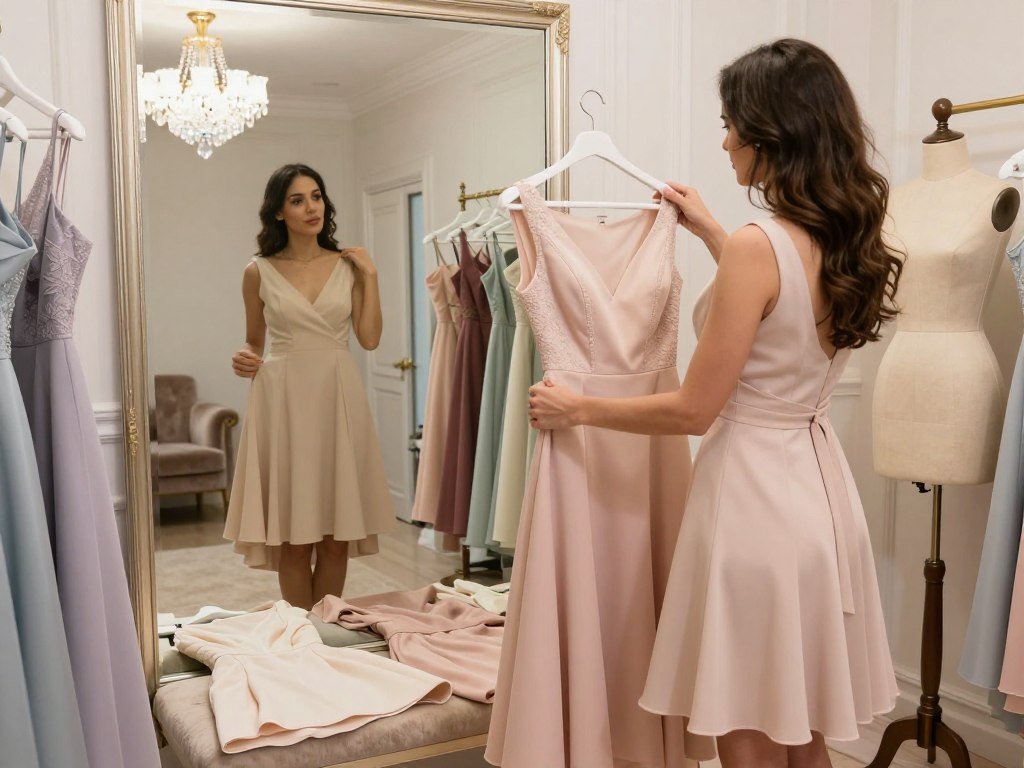
A dress feels flattering when its shape and fit work for you, not because it follows a rule tied to your size. Body shape means the natural relationship among your shoulders, bust, waist, and hips, independent of clothing size or weight. These proportions can help you compare styles, but they cannot tell you what you must wear.
When you are choosing a dress for an occasion, comfort and personal taste matter as much as the outline. You might want a dress to follow your natural lines, add movement, or create contrast. This guide offers practical ways to assess fit and choose a cut for the effect you prefer. Treat every suggestion as a starting point, then keep the choices that feel comfortable and expressive.
Key Takeaways
- Use body shape labels as optional guides, not rules.
- Compare shoulder, bust, waist, and hip proportions.
- Learn how dress cuts differ before choosing a style.
- Pick details for the effect and comfort you want.
- Test movement and fit before deciding a dress works.
How Do You Identify Your Body Shape?
A flexible tape measure and four consistent points give you a clearer starting picture than a label alone. Compare proportions rather than treating a body type as a fixed category.
Measurements offer a more concrete comparison than a quick quiz. A quiz about what dress style suits you can still be a useful first step. The same proportion-based approach to dressing for your body type applies to a male reader, though this guide focuses on dresses and styling for women.
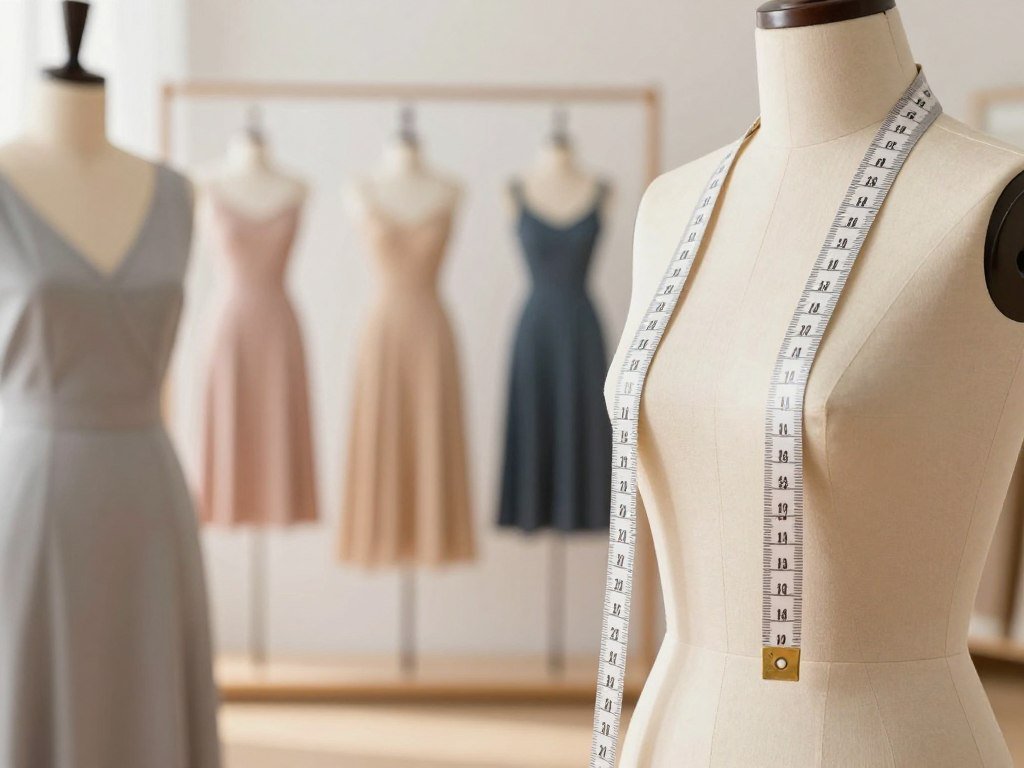
Take four measurements for a clearer comparison
Measure each area with the tape level and comfortably snug. Write down the numbers, then compare them rather than judging one measurement alone.
- Shoulders: measure across your back, from the outer edge of one shoulder bone to the other.
- Bust: measure around the fullest point of your bust.
- Waist: measure the narrowest point, just above your belly button.
- Hips: measure around their fullest part, including your buttocks.
Keep the tape in the same position each time. A small change in placement can affect the comparison, especially around shoulders and hips.
Recognize the common shape categories
Pear shape usually means hips are wider than the bust and shoulders, often with a defined waist. Hourglass means the bust and hips are roughly the same width, with a narrower, defined waist.
A rectangle has fairly uniform bust, waist, and hip measurements, with minimal curves. Apple shape carries more volume around the midsection, often with a fuller bust and narrower hips or shoulders.
Body-shape categories are comparisons, not diagnoses. If your measurements suggest two categories, use both as options rather than forcing one label.
Diamond shape has a fuller midsection, shoulders and hips narrower than the waist, and often a slimmer lower body. Category lists vary, and many people fall between shapes.
Measurements can help you see which proportions stand out, but they do not define your style or limit your choices.
A plus-size dress guide also considers comfort, personal style, and the event, not just a shape label.
What Do A-Line, Fit-and-Flare, and Sheath Mean?
Two dresses labeled “flared” can look quite different because the amount and starting point of the skirt’s flare change the outline. The cut’s construction tells you more than its name alone.
An A-line dress has a fitted top and a skirt that gradually widens from the waist. A sheath dress stays close to the body from shoulders to hem, with little or no flare.
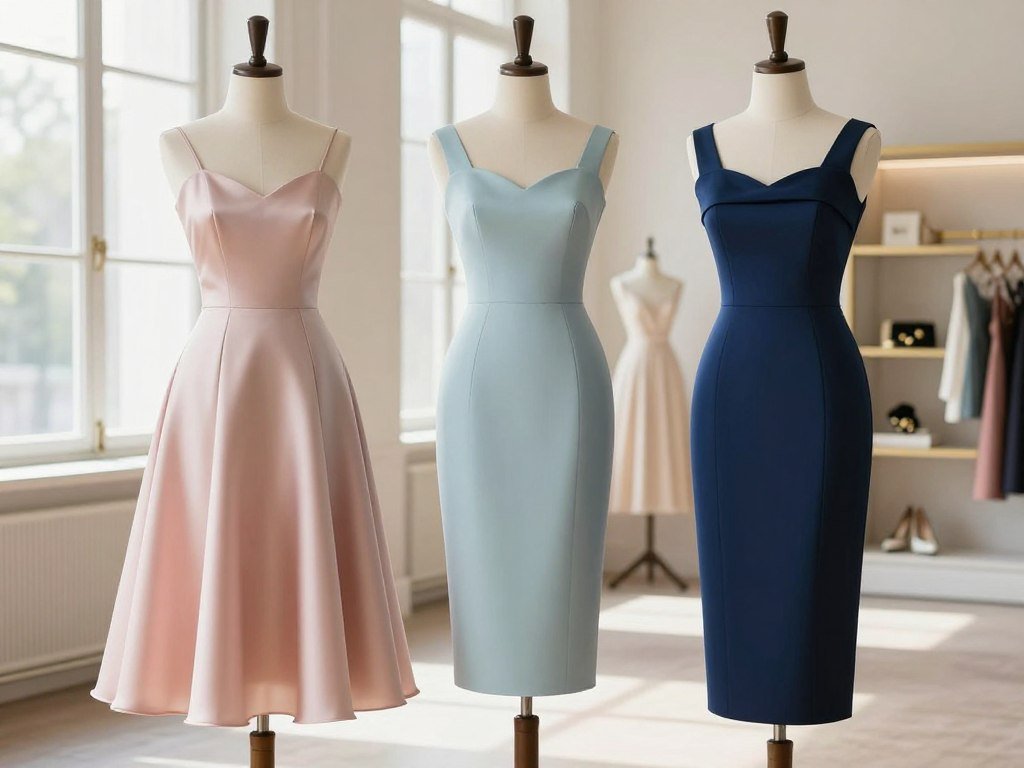
Waistline placement changes the outline
A classic A-line starts to flare at the natural waist and skims the hips. An empire A-line raises the waistline to just below the bust.
A fit-and-flare dress usually has a more dramatic skirt flare than an A-line. A sheath has a closer shape, so its skirt does not open out much.
| Silhouette | Fit through the bodice | Flare or waist placement | How the skirt falls |
|---|---|---|---|
| A-line | Fitted top | Gradual flare from waist | Skims hips, then widens |
| Fit-and-flare | Fitted bodice | More dramatic flare | Opens out from waist |
| Sheath | Close from shoulders to hem | Little or no flare | Follows the body’s line |
Check the fit beyond the silhouette name
A well-fitting A-line sits smoothly at the shoulders and bust. Its waist follows your natural waist without restricting movement.
The skirt should fall without pulling or bunching across the hips and thighs. A sheath can work across many proportions when its seams and fabric allow comfortable movement.
A 2023 analysis of 1,389 wedding dress photos found A-line was the most common silhouette, at 41.3 percent. The wedding-dress design study also counted Bell at 26.2 percent and Mermaid at 16.5 percent.
Judge the cut by how your shoulders, bust, waist, hips, and thighs feel in motion, not by its name alone.
How to Choose a Flattering Dress Silhouette for Each Body Shape
Start by deciding whether you want a dress to follow your natural lines or create a more noticeable contrast. Your preferred effect can guide the first choice.
Women can choose harmony with their proportions or contrast for a deliberate effect. Neither approach is more correct; the best starting point is the one that suits your taste and the event.

Choose the effect you want from the overall outline
For a softer outline, you might choose a dress that follows your waist and curves. A wrap dress or belted style can emphasize a defined waist.
For more movement below the waist, try an A-line skirt, a wide-leg shape, or a flared style. V-neck and scoop necklines can make the torso look longer.
A straighter outline can gain definition from a cinched waist, peplum detail, or textured fabric. These are styling choices, not fixes for a body that needs changing.
Compare starting-point silhouettes by proportion
The options below give you a place to begin when considering how to choose a flattering dress silhouette for a female body. Use them as ideas, not instructions.
| Body shape | Possible styling goal | Starting silhouette | Optional detail |
|---|---|---|---|
| Pear | Skim over hips | A-line | V-neckline |
| Hourglass | Highlight waist | Wrap, fit-and-flare, or belted | Defined waist seam |
| Rectangle | Add waist definition | Cinched-waist style | Peplum detail |
| Apple or oval | Allow room at midsection | Empire-waist or A-line | Broad neckline |
| Inverted triangle | Add movement below waist | A-line or flared skirt | Simple skirt detail |
Someone with pear proportions might choose a V-neck to lengthen the torso while an A-line skirt skims the hips. That detail creates a preferred effect without hiding the body.
Wrap and draped styles can offer another starting point for pear or hourglass proportions. A designer clothing styling guide also discusses waist definition and peplum details for straighter outlines.
Keep the silhouette that supports the effect you want, even when it differs from the category’s usual suggestions.
Which Dress Details Work Well for an Apple Shape?
For an apple shape, a dress that gives the midsection room while creating a comfortable point of definition is a useful place to start. Comfortable drape matters more than trying to conceal your body.
Choose a waistline and fabric that feel good when you move. The best dresses for an apple shape can follow different cuts, as long as the fit feels right to you.
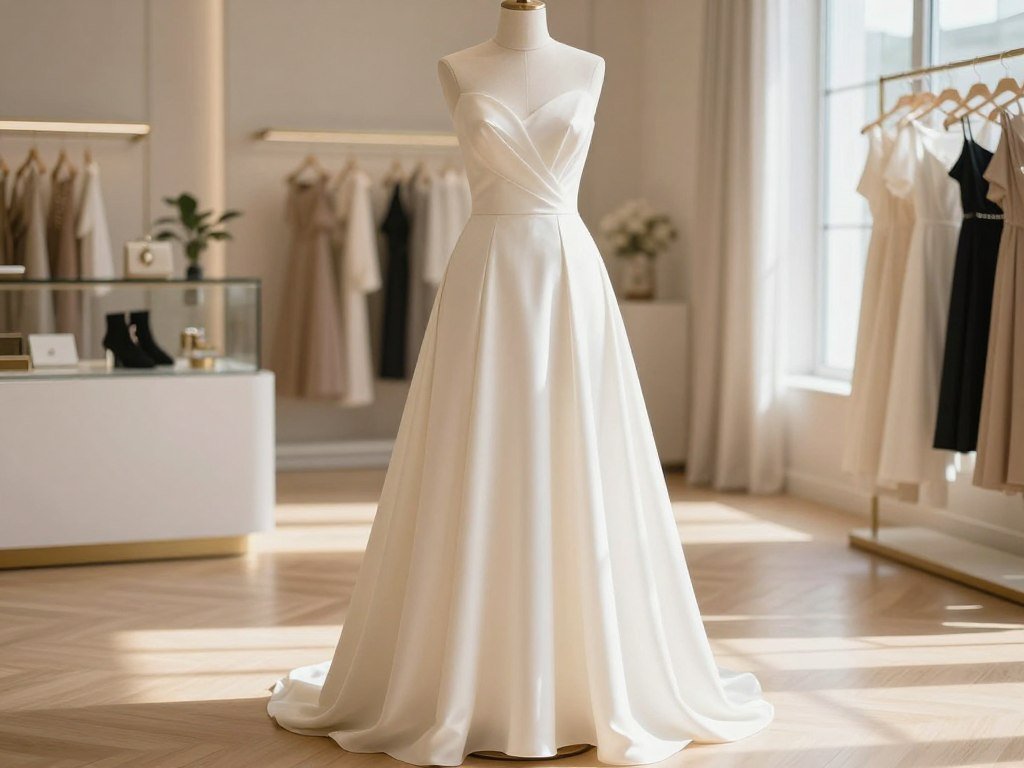
Choose everyday cuts, fabrics, and lengths
A-line dresses add structure without clinging, with the skirt flaring from the waist. Wrap dresses can give you a V-neckline and an adjustable waistline.
The V-neckline can make the torso look longer. Tiered dresses that start flowing just below the bust offer room without clinging to the midsection.
Rayon, jersey, crepe, and chiffon can drape gently. Heavy cotton and brocade can add volume, while vertical prints or diagonal stripes can create a longer visual line.
Knee-length or just-above-the-knee hems are one option. A midi dress with a slight flare is another, and a belt just under the bust can add definition.
Select formal details with attention to waist placement
For formal dresses in 2026, empire or Basque waists, structured shoulders, and matte fabrics such as Mikado silk or matte crepe are options. A broad V-neckline can suit formalwear.
A square neckline can work when it fits properly across the bust and shoulders. Matte formal fabrics and waist details offer a way to add structure without relying on shine.
Dropped waists and bodycon fits can emphasize fullness around the midsection. That may be the effect you want, though another cut may feel more comfortable.
Flattering dresses for a big belly can prioritize ease and drape instead of concealment. Before choosing a formal neckline, check that its edge lies smoothly rather than pulling across the bust or shoulders.
A cocktail dress guide can help you weigh neckline, length, fabric, and formality for an event.
How Can You Test a Dress for Fit and Occasion?
A dress that looks right while standing still still needs to pass a short movement check. Try it in motion before deciding whether the silhouette works.
Test every dress with four movements: sit, raise your arms, walk, and check for pulling or bunching. A smooth standing fit does not always stay smooth when you move.
- Sit down and notice whether the waist or hips feel tight.
- Raise both arms and check whether the shoulders or bust pull.
- Walk a few steps and see whether the skirt moves freely.
- Check for pulling or bunching at the shoulders, bust, waist, hips, and thighs.
The occasion sets the practical needs of the outfit, while your comfort with its neckline, hem, and fabric shapes the final choice.
A wedding, dinner, vacation, or everyday outing may call for different levels of formality and ease. Pair the dress with the shoes you plan to wear, since shoe choice can change the outfit’s mood.
Three dresses described in a June 19, 2025 roundup show different approaches. The J.Crew Floaty Midi Dress in Block-Print Cotton Voile was spacious without feeling tent-like and came in sizes up to 3X.
The Anthropologie Somerset Maxi Dress had a smocked waist and loose maxi skirt, with petite and plus sizes. The J.Crew Maxine Button-back Linen Dress was a shift dress, with sizes up to 3X.
Those details illustrate fit options, not a promise of current stock or size ranges. You can also use this dress fit and comfort advice when comparing options for an event.
For cocktail events, a plus-size cocktail dress guide covers silhouettes, shoes, and occasion needs. An outfit guide to dresses and shoes can help you compare the full look.
Take a front and side photo in the intended shoes to see how the hem and overall outline read together.
Conclusion
The most useful dress choice is the one that feels right on your body and fits the occasion. Your body shape can offer ideas, but it cannot decide what makes you feel confident or express your personal style.
For a practical next step, try one silhouette you already know and one that creates a different outline. Compare how each feels as you move, then notice which one suits the event and feels most like you.
Try on two contrasting cuts the next time you shop, then choose the one you want to wear again.
FAQ
Can I wear an empire-waist dress if I do not have an apple shape?
Can a sheath dress work for a curvy figure?
What should I do if I fit more than one body-shape category?
How can I tell whether a dress is too tight across the hips?
Are vertical prints the only way to create a longer visual line?
Should I choose a dress based on the occasion or my body shape first?