
Most journeys are shaped by the timetable. You choose a destination, then you fit yourself around the flights that serve it: the departure that leaves too early, the connection that eats an afternoon, the arrival that lands after the light has gone. A private jet tour turns that order around.
The journey is planned first, around the places you want to see and the pace you want to keep, and the aircraft follows. It is, in the simplest sense, travel arranged the way travel ought to be arranged with the traveller, rather than the schedule, at the centre.
A private jet tour is not a single charter flight. It is a complete, multi-stop journey made by private aircraft, usually over several days, in which the flying, the hotels, the guides, and the experiences in between are planned as one continuous whole.
The aircraft becomes a private room that moves with you from place to place, and the days in between are spent where you want to spend them, not where the airline network happens to go. For travellers who have tried every other way of seeing the world, it is often the one that finally feels unhurried.
What a Private Jet Tour Actually Is
The idea is older than it sounds. Expedition-style air journeys have existed for decades, carrying small groups across continents in a single aircraft, with the same crew and fellow passengers throughout. What has changed is the range of choice: a small group on a shared itinerary, a family with an aircraft of its own, or a couple joining a themed journey built around food, art, wildlife, or history.
What all of them share is continuity. You board the same aircraft each morning, or most mornings, and you are greeted by a crew that knows your name, your preferences, and the shape of your day. Your luggage travels with you, not ahead of you or behind you.
There is no re-checking in, no new security queue at every stop, no re-learning a new cabin and a new set of rules. The journey acquires a rhythm of its own, and that rhythm is a large part of its pleasure.
The Comfort, Privacy and Exclusivity of a Private Jet Cabin
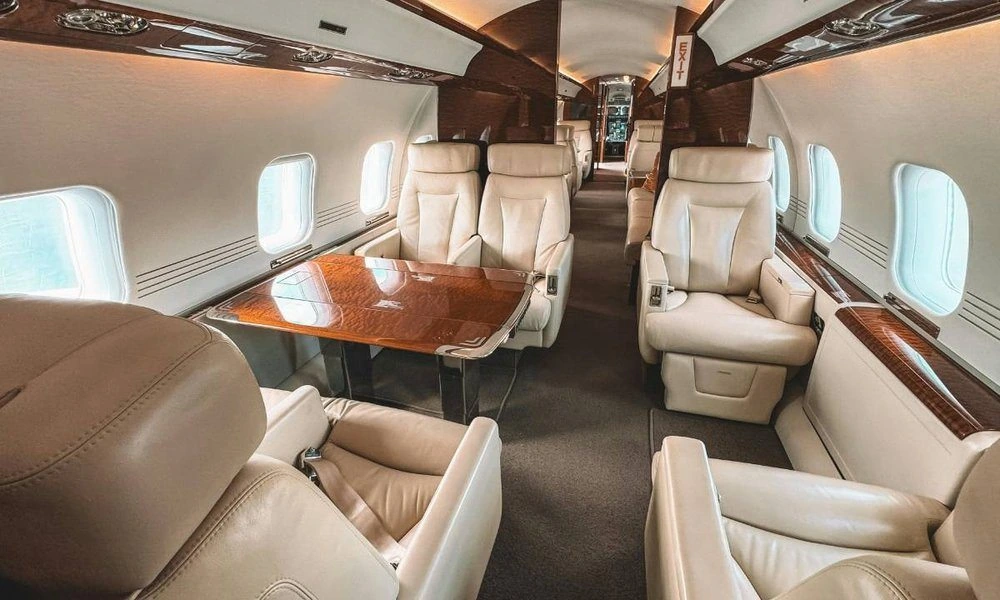
The cabin itself matters more than it first appears. On an ordinary journey, the hours in the air are hours to be endured. On a private jet tour, the cabin is a room of the journey: where a guide briefs you on the afternoon ahead, where a meal is served at a table, where the hours between places become part of the experience rather than an interruption to it.
There is also a quieter benefit that is easy to overlook until you have felt it: privacy. A private jet tour is travelled in your own company, or in the company of a small group you have chosen.
Conversations are not overheard, plans are not discussed in front of strangers, and a family can travel together in the ordinary, unguarded way that families do. For travellers whose working lives are public, or whose holidays are precious precisely because they are private, that discretion is worth a great deal.
Time Is the Real Luxury
Ask anyone who travels by private jet what they value most, and the answer is rarely the leather or the champagne. It is the time: the early arrival at the airport, the queue, the connection, the baggage hall, the long drive from a large airport to the place you actually wanted to visit.
On a journey with five or six stops, that cost becomes the trip itself.
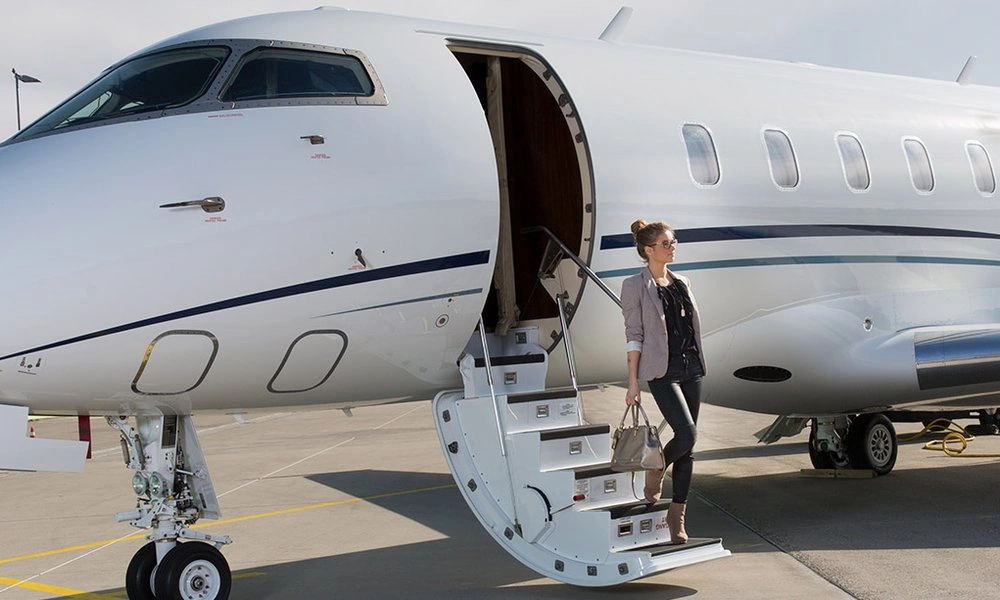
A private jet tour removes most of it. You arrive at a small private terminal a short while before departure, you walk to the aircraft, and you leave. You land at an airfield close to where you are going, and you are on your way within minutes.
A day that would have been spent in transit becomes a day spent somewhere worth being. Over the course of a week or a fortnight, the hours recovered add up to whole days days that can be spent in a place rather than between places.
Time saved is only part of the appeal. Having control over your time matters just as much. A private jet tour lets you choose when the day begins and ends. If a morning at a vineyard takes longer than expected, the departure can be delayed. And if a sunset is worth enjoying a little longer, there is no need to rush away.
If a place disappoints, you leave earlier than planned and give the saved hours to somewhere better. That flexibility is the difference between a journey that is managed and a journey that is lived. Few things in travel are as quietly luxurious as the freedom to change your mind without penalty.
The View From the Window
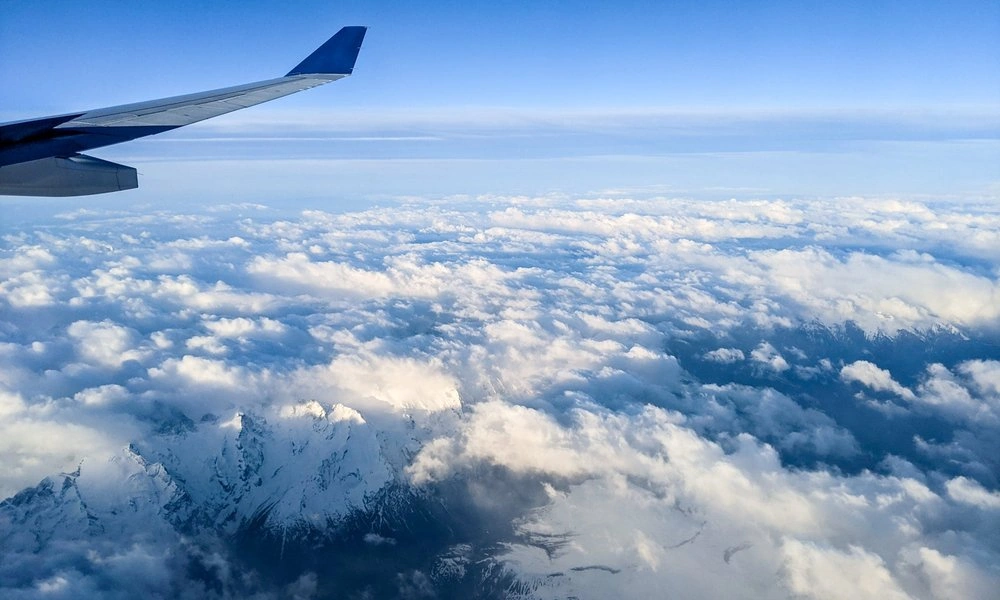
There is a pleasure in private flying that has nothing to do with comfort and everything to do with the window. A private jet flies lower, very often, than a long-haul airliner, and its windows are large and unobstructed.
The ground below is not an abstraction glimpsed through cloud at cruising altitude; it is a landscape, present and detailed, passing slowly enough to be looked at properly. Mountain ranges, coastlines, rivers, deserts, and islands unfold beneath you in a way that commercial flying rarely allows.
On a tour, the flights themselves are chosen with this in mind. A good operator plans routes that pass over something worth seeing, and a good pilot will point it out.
The flight between two stops becomes a sightseeing flight in its own right, and the hours in the air become hours of looking rather than hours of waiting.
The Airport, Reimagined
Much of what people dislike about flying has nothing to do with the aircraft. It is the airport: the crowds, the queues, the announcements, the long walks between gates, the feeling of being processed rather than welcomed.
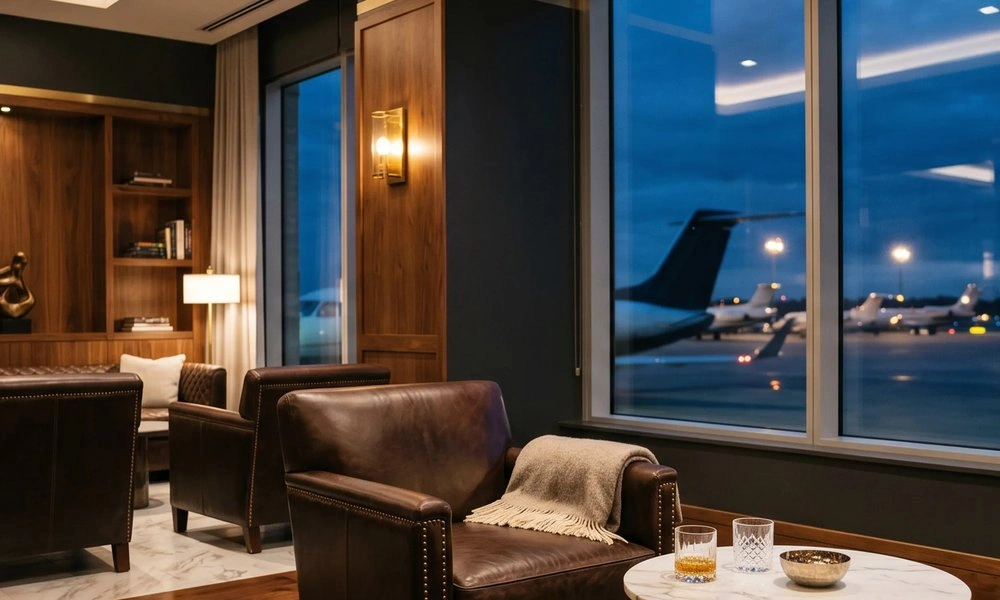
A private jet tour replaces all of that with a private terminal a small, calm building, often called a fixed-base operator, where the whole business of departure takes a few unhurried minutes.
You arrive, you are greeted by name, your bags are taken, and you walk to the aircraft. On arrival, the process runs in reverse, and you are on your way while the passengers of a commercial flight are still waiting at the baggage carousel.
There is no scramble for overhead space, no queue for a bus to a distant stand, no hour spent in a terminal that was designed for thousands. The airport, for once, is a doorway rather than an obstacle.
The scale of this difference is easy to underestimate. Private aviation has its own geography of airports, and some of the busiest of them are places most travellers have never heard of, even though they sit a short drive from the world’s great cities.
Teterboro, America’s busiest private jet airport, is a good example: a dedicated private aviation airport a short distance from Manhattan, built entirely around the needs of private flyers, with none of the congestion of the city’s commercial airports. A tour that begins at an airport like that begins calmly, and that calm sets the tone for everything that follows.
Dining, Rest, and the Cabin as a Room of Its Own
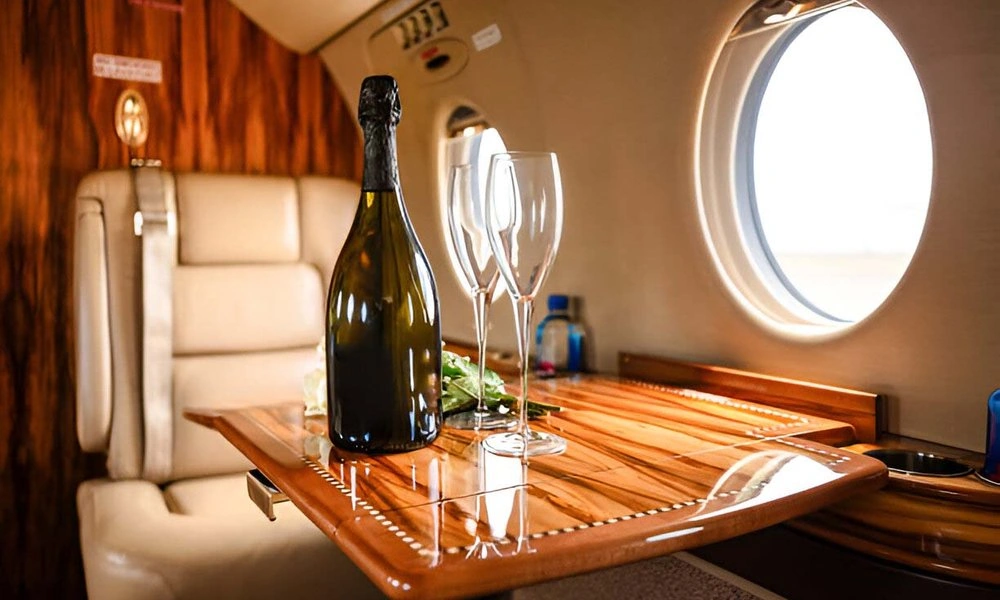
The food on a private jet tour is not an afterthought. Because the aircraft is yours, the menu is yours too planned in advance with the operator, cooked to order, and served when you are hungry rather than when a trolley reaches your row.
A good tour operator treats the meals in the air as part of the journey’s food, not as a break from it: local dishes from the place you have just left, or from the place you are flying towards, served at a proper table with proper glasses.
That continuity extends to the table itself. On a tour built around food and many of the best ones are the cabin becomes a place for tasting and talking, for a glass of something local while the landscape passes below. It is a long way from the reheated tray of a commercial cabin.
Rest matters too, and the cabin of a private jet is a far better place to rest than any commercial seat. On longer legs, the seats recline properly, the cabin is quiet, and there is room to stretch, to read, to sleep, or simply to sit and look out of the window.
A tour is a demanding thing early mornings, long days, new places every day or two and the ability to rest properly between stops is what keeps it enjoyable rather than exhausting. Travellers who arrive at each stop rested arrive curious, and curiosity is the whole point of going.
Reaching the Places Airlines Cannot
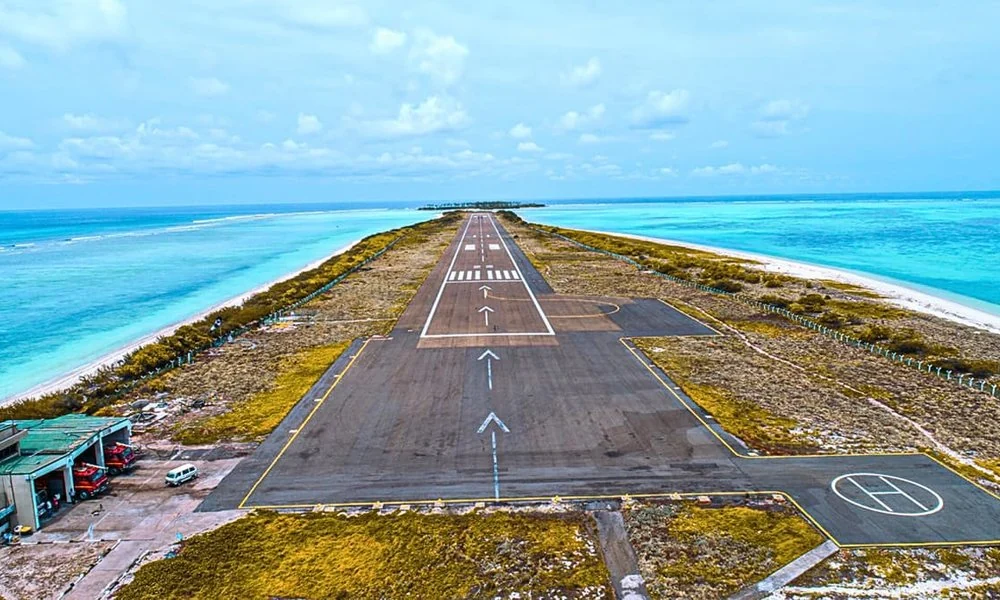
Perhaps the strongest argument for a private jet tour is the simplest one: it goes where the airlines do not go.
The world is full of places that are difficult, slow, or simply impossible to reach by commercial flight small islands with short runways, mountain valleys with a single airstrip, remote lodges and reserves, towns whose nearest commercial airport is hours away by road.
A private jet can land at airfields that a commercial aircraft never visits, and that opens up a map that most travellers never see.
That is not a matter of showing off. It is a matter of access. Some of the world’s most beautiful places are beautiful precisely because they are hard to reach, and the journey to them by road or by boat can consume a day that would be better spent there.
A private jet tour compresses that journey into an hour, and the day is given back to the place itself. An island that would take a day of ferries becomes a morning’s flight. A mountain lodge that would take a day of driving becomes a short hop from the previous stop.

Island-hopping is where this advantage is clearest. A tour of remote islands by boat is a slow and weather-dependent business, and a tour by commercial flight is often impossible — there simply are no scheduled services between small islands.
By private jet, the same islands become a single, flowing journey: a different lagoon each morning, a different beach each afternoon, the aircraft waiting on a short runway while you swim. It is the kind of travel that feels, to those who have done it, like the world was designed for it.
How the Best Tours Are Put Together
A good private jet tour is not a collection of flights with hotels attached. It is a single piece of planning, done by people who understand both aviation and the places being visited.
The aircraft, the route, the hotels, the guides, the restaurants, and the experiences in between are chosen together, so that each day leads naturally into the next.
The best operators employ tour directors who travel with the group throughout, and local guides who join at each stop people who know the place, and who know the group by the second day.
The arrangements behind the scenes are considerable. Landing permissions, fuel, ground handling, customs, and immigration must be organised at every stop, often where the infrastructure is modest. Hotels must be ready for a group that arrives at an unusual hour, and the whole plan must be flexible enough to change when the weather demands it. The traveller sees none of this, which is exactly the point.
There are different ways to arrange the flying itself. Some travellers join a tour on which the aircraft is shared among a small group; others charter an aircraft for their own party, which brings complete control over route and timing.
Choosing the Right Private Jet Tour Operator
Jet cards and charter apps have made the chartering side simpler than it once was. And a few travellers, after years of chartering, begin to weigh ownership including what is involved in buying a pre-owned private jet though for most, a well-run tour remains the simpler way to travel.
What matters, whichever route you take, is the operator’s experience with the places on your itinerary. A company that has flown a route many times knows which airfields handle a jet well, which hotels are worth the stop, which guides are worth the day, and where the plan needs a little slack.
Ask how often they have run your route, who travels with the group, and what happens when the weather closes in. The answers will tell you more about the tour than any brochure.
Journeys That Show the Idea at Its Best

Some kinds of journey suit the private jet tour better than others, and it is worth knowing which they are. The Mediterranean, for instance, is a natural fit: a chain of islands and coastal cities, each a short flight from the last, each with its own character, its own food, and its own light.
A tour that moves from island to island, or from coast to coast, can cover in a week what would take a fortnight by ferry and flight and can do it without ever asking its travellers to queue.
Wildlife journeys are another. The great reserves and wilderness areas of the world are, by their nature, far from commercial airports, and a safari that moves between reserves by road can lose days to driving.
By private jet, the same reserves become a single journey: a morning flight over the landscape you will explore that afternoon, a landing on a strip near the camp, and an evening under skies that have no competition from city light. The aircraft becomes part of the safari, not merely the way to it.
Cultural journeys suit it too. A tour built around art, architecture, or history can follow a theme across borders in a way that commercial flying makes awkward: a morning in one capital, an evening in another, a week spent tracing a single story a painter, a period, a cuisine from city to city.
The jet makes the geography serve the theme, rather than the other way around, and the journey acquires a coherence that a series of disconnected flights can never give it.
Who It Suits and Who It Does Not
A private jet tour suits travellers who value their time and their privacy, who like to travel with people they know, and who would rather see fewer places well than many places in a hurry.
It suits families who want to travel together without the usual airport hassles, groups of friends celebrating a special occasion, and experienced travellers ready to see the world on their own terms.
However, it is not for everyone. Private jet tours are expensive and work best for travellers who are comfortable with a planned itinerary. The freedom is real, but it comes with a degree of structure.
And it uses more fuel per person than a crowded airliner; travellers who weigh that carefully should ask operators what they do about it, and judge the answers for themselves.
What to Ask Before You Book
A few questions will tell you most of what you need to know about any private jet tour. First, what aircraft will you actually fly on, and how old is the cabin — not the airframe, but the interior you will sit in for hours each day.
Second, who travels with the group, and what happens if someone falls ill or a flight cannot operate. Third, how much of the itinerary is fixed and how much can change, and what a change costs in time rather than in money.
Ask, too, about the ground. The flying is only half the journey; the hotels, the guides, the transfers, and the meals are the other half, and they deserve the same scrutiny. Ask for the names of the hotels, not merely their descriptions.
Ask who the guides are and whether they are local. Find out what a typical day looks like, from waking up to bedtime, and whether the itinerary leaves room for doing absolutely nothing, which is often the most valuable time on any journey.
When the wheels touch down for the last time on a tour like this, the journey does not quite end at the steps it stays with you in the quiet that follows, in the places you reached without hurry and the hours you were given back.
We hope, whenever you travel next, the getting there feels as considered as the going, and that the world, seen this way, feels a little closer and a little kinder. Thank you for travelling with us in these pages; we shall be glad to welcome you back whenever the next journey calls.