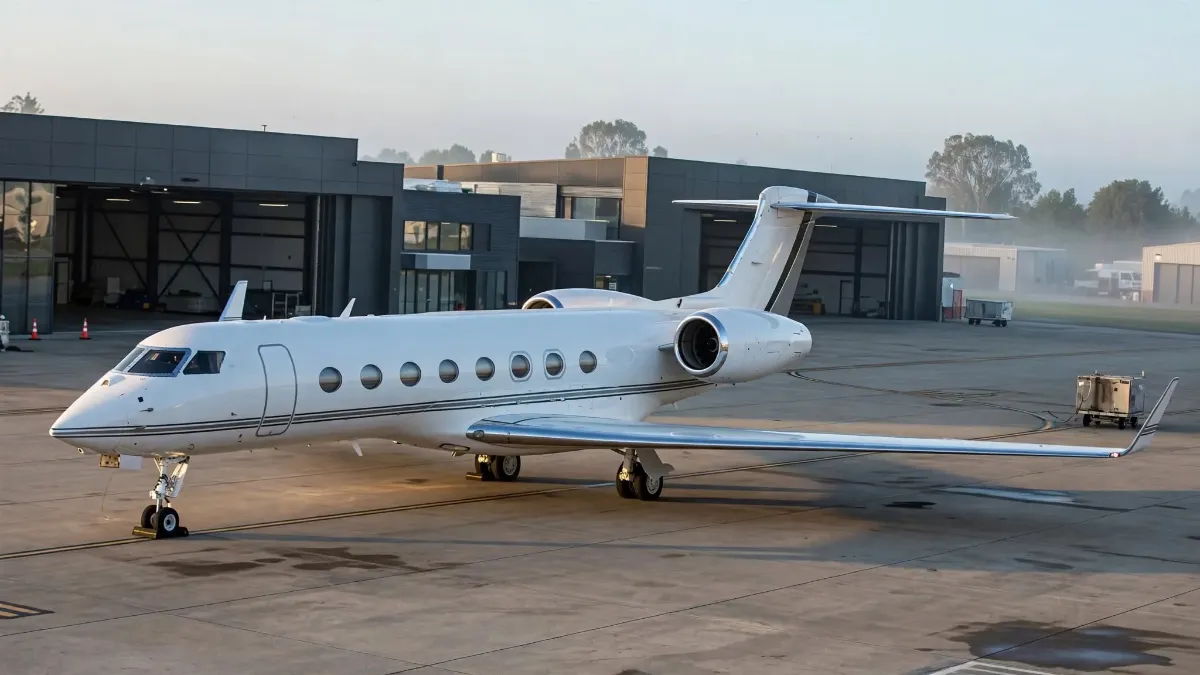
In the spring of 2021, the pre-owned private jet market experienced something unprecedented: it ran out of airplanes. Inventory of quality used jets fell below five percent of the global fleet, a historic low. Buyers with no previous aircraft ownership were bidding sight unseen on twenty-year-old Gulfstreams. Some even paid more than those jets had cost when new.
Brokers reported buyers wiring deposits within hours of a listing. Then, just as quickly, the frenzy cooled.
By 2024 and 2025, inventory had recovered. Prices for many models had corrected by double digits. The market had settled into something more rational, and far more interesting for a disciplined buyer.
That cycle holds the central lesson of the pre-owned jet market: amateurs pay retail, while prepared buyers pay wholesale.
A pre-owned large-cabin jet, such as a Gulfstream G650 or a late-model G550, can now be found at a meaningful discount to its pandemic peak. Meanwhile, newer models like the G700 and Global 8000 are reaching their first owners. Their trade-ins are bringing excellent aircraft into the used market.
But a private jet is not a used car with wings. Its logbooks tell its story. Its maintenance programs can be worth millions. And its paperwork traps have humbled buyers far wealthier than you.
Here is how the market really works, and how to buy well inside it.
What the Market Looks Like Now
The post-pandemic correction has been uneven, and that is where the opportunity lies.
Light and midsize jets, including Phenom 300s, Citations, and Learjets, experienced the sharpest price increases and the steepest declines. Some models are now down fifteen to twenty five percent from their 2022 peaks.
Large-cabin aircraft have held their value much better. Their buyers are less price-sensitive, and supplies of young, well-equipped G650s and Global 7500s remain limited.
Today’s value sweet spot lies in the super-midsize and legacy large-cabin categories. The Challenger 350, Gulfstream G450 and G550, and Dassault Falcon 2000 stand out. These aircraft offer modern capabilities, established support networks, and prices that have returned to more reasonable levels.
Timing also matters at the micro level. The market has a seasonal rhythm, with inventory building in the fourth quarter as corporations clean their balance sheets and a rush of closings in December driven by tax planning. Buyers who can move quickly in November and December, with financing arranged and an inspection slot reserved, routinely buy better than those who shop in the spring.
The Logbook Is the Airplane
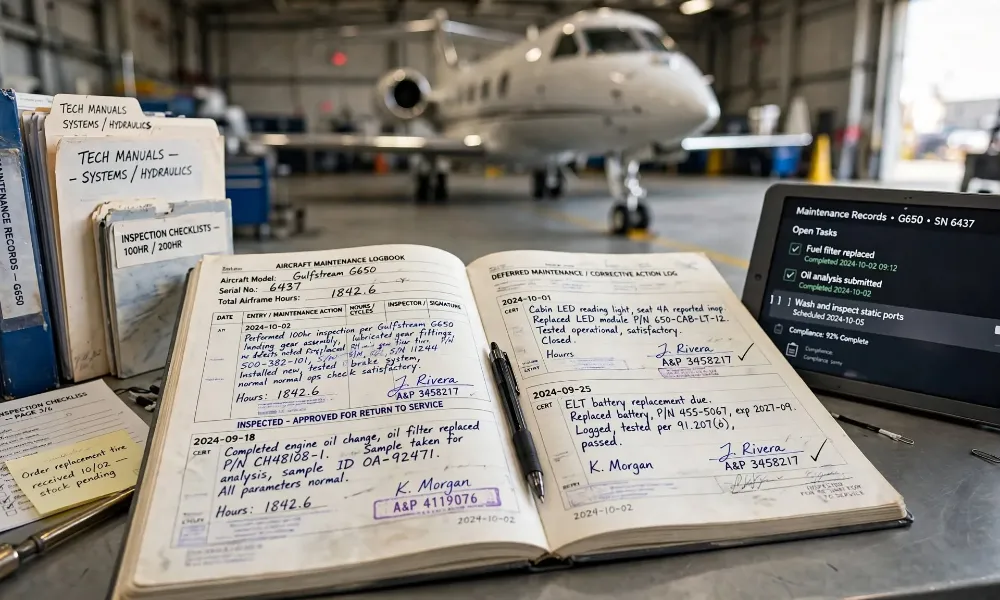
Every experienced buyer will tell you the same thing: you are not buying the airplane. You are buying its records.
A business jet’s logbooks document every inspection, repair, modification, and incident throughout its life. Missing records or damage entries can destroy value faster than any cosmetic flaw.
The most feared phrase in the market is “damage history.” It can describe anything from a hangar door scrape to a gear-up landing. Its impact on value can range from a few percent to a third of the aircraft’s value. The difference depends largely on how well the repair was documented.
The non-negotiable step is the pre-purchase inspection (PPI). It must be conducted by an independent maintenance facility authorized for the aircraft type, never by the seller’s own shop.
A thorough PPI on a large-cabin jet costs $50,000 to $150,000 and takes one to three weeks. It is among the best investments you will make in the transaction.
The inspection routinely uncovers issues that become negotiating leverage. Sometimes, it reveals more serious problems: undisclosed damage, corrosion, or inconsistencies in maintenance records. These findings can be enough to walk away, grateful you paid for the inspection.
Programs, Pedigree, and the Hidden Millions
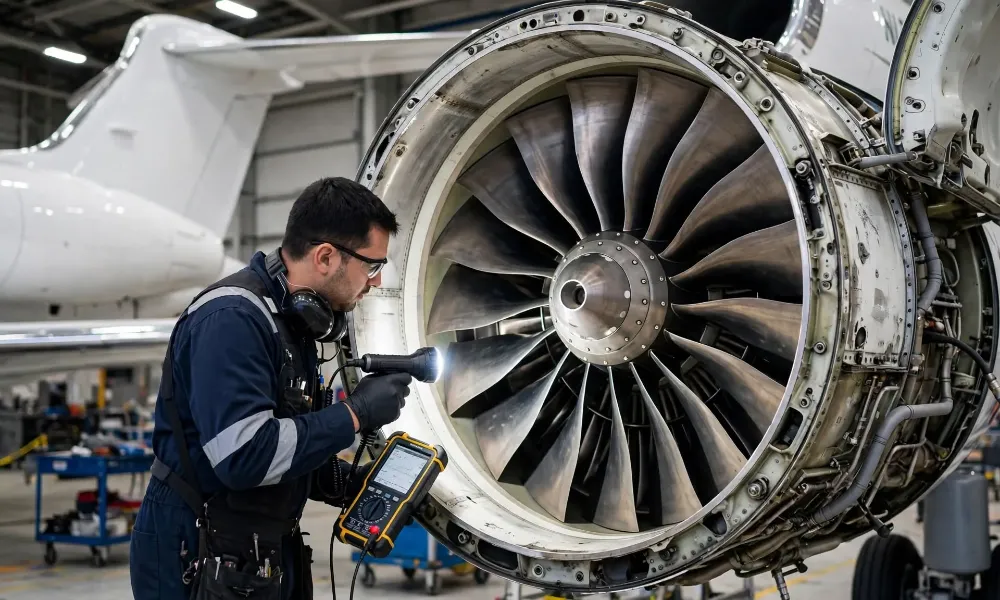
Two aircraft with the same paint and interior can differ in real value by millions, and the difference usually lives in two places. The first is engine and airframe program enrollment. Programs like Rolls-Royce CorporateCare, JSSI, and Gulfstream’s own PlaneParts convert the terrifying unpredictability of maintenance costs into fixed hourly rates.
An aircraft enrolled on full programs is worth a substantial premium, and buying one off program means inheriting every looming inspection and overhaul at full price. When you run the numbers, and you must run the numbers, our breakdown of what it costs to own and operate an aircraft for helicopters has a fixed wing cousin in the same logic of hourly reserves and calendar inspections.
The second is pedigree: how many owners, where it was based, who operated it. A one owner, US based, professionally managed aircraft with full programs and clean records is the market’s blue chip. An aircraft with five owners across three registries, gaps in its records, and time spent outside the manufacturer’s service network is a discount you should demand, not discover.
The Team You Cannot Skip
No one buys well alone. A standard professional acquisition team has four members, and each earns their fee.
An acquisition broker or consultant, paid by you and not sharing the seller’s commission, handles the search and negotiation. Conflicts of interest are common in brokerage, so ask directly how your broker is compensated.
An aviation attorney manages the purchase agreement, title search, escrow, and ownership structure. Registering a jet in your own name is rarely the best option for liability and tax reasons.
A management company operates the aircraft for you. It can also charter the jet when you are not using it, offsetting a meaningful share of fixed costs.
Finally, a tax advisor handles depreciation, state sales and use tax exposure, and bonus depreciation rules. These rules have made year-end closings particularly frantic.
The escrow and closing mechanics deserve respect in their own right. Transactions close through specialized escrow agents in Oklahoma City, home of the FAA registry, and the sequence, deposit into escrow, PPI, technical acceptance, closing documents filed simultaneously with funds release, is designed so that no party is ever exposed. Deviations from that sequence are how buyers get burned.
For context on whether ownership is even the right rung for you, our feature on owning versus chartering versus jet cards lays out the break even math, and our comparison of NetJets and Flexjet fractional programs covers the halfway house many buyers choose instead.
The Bargains and the Traps
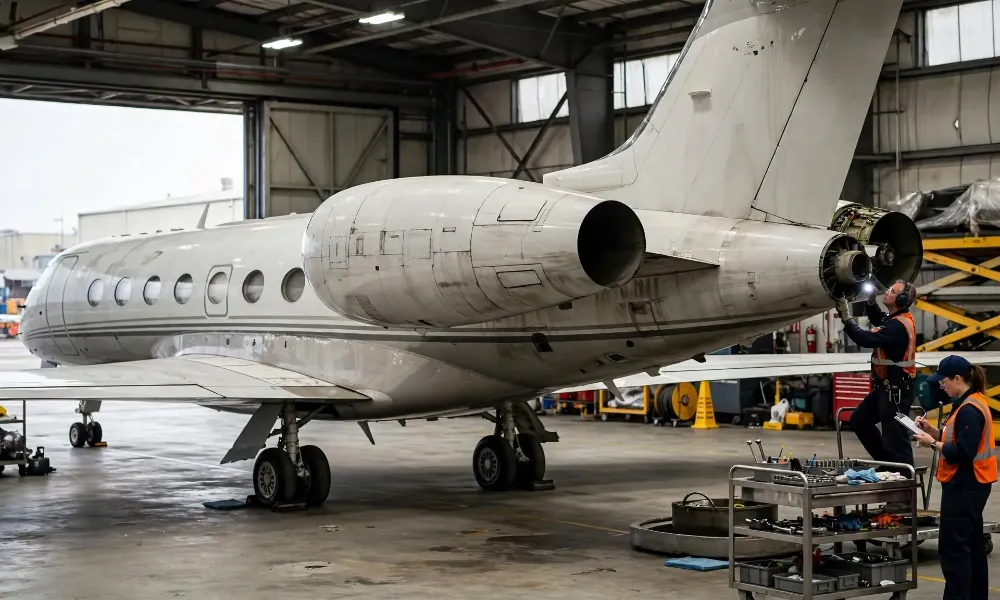
Where is the smart money hunting now? Legacy large cabin aircraft with recent avionics upgrades offer transcontinental and transatlantic capability at a fraction of new prices, and the coming wave of G700 and Global 8000 trade ins should add supply through 2027.
The classic trap is the cheap airplane that is expensive to own: an aging wide body cabin jet with thirsty engines, coming due for a major inspection, priced seductively because the seller knows what you have not yet priced. The rule of thumb veterans repeat is simple: there is no such thing as a cheap Gulfstream, only a Gulfstream whose costs you have not yet met.
Buy the records, buy the programs, buy the pedigree, and buy in the fourth quarter with your team already assembled. Do that, and the pre-owned market stops being a minefield and becomes what it should be for a prepared buyer: the best value in private aviation.
FAQs
1. How much does a pre-owned private jet cost?
The range is enormous. Entry level pre-owned light jets start around $2 to $5 million, super midsize aircraft like a Challenger 350 typically run $12 to $20 million depending on age and condition, and late model large cabin jets such as a Gulfstream G650 can exceed $40 million. Age, total hours, maintenance program enrollment, and records quality matter more than model year alone.
2. Is now a good time to buy a used private jet?
By historical standards, yes for most categories. Prices corrected meaningfully from their 2021 and 2022 peaks, inventory has rebuilt to healthier levels, and deliveries of new flagship models are pushing well kept trade ins into the market. Large cabin pricing remains firmer than light jet pricing, so the best relative value sits in the super midsize and legacy large cabin segments.
3. What is a pre-purchase inspection and do I really need one?
A pre-purchase inspection is a comprehensive evaluation of the aircraft and its records by an independent, manufacturer authorized maintenance facility, commissioned and paid for by the buyer. It typically costs $50,000 to $150,000 on a large cabin jet. It is absolutely non negotiable; it is your only independent look at what you are actually buying, and its findings drive final price negotiations.
4. What are engine programs and why do they matter so much?
Engine programs such as Rolls-Royce CorporateCare or JSSI cover scheduled and unscheduled engine maintenance for a fixed hourly rate. Since a single engine overhaul on a large cabin jet can exceed $1 million per engine, enrollment transfers enormous financial risk away from the owner. Aircraft on full programs command higher prices and are far easier to finance and resell.
5. How much does it cost to operate a pre-owned jet annually?
A rough planning figure for a super midsize jet flown 300 to 400 hours a year is $1.5 to $3 million all in, covering crew, hangar, insurance, fuel, maintenance, and subscriptions. Large cabin aircraft run higher, often $3 to $6 million. Charter revenue from a management company can offset a meaningful portion if you are willing to rent your aircraft out.
6. Should I buy through a broker or directly?
Use an acquisition broker or consultant who represents only you, and confirm in writing how they are paid. The brokerage world has many dual agency arrangements where one firm effectively represents both sides. A buyer’s agent typically charges a flat fee or a small percentage and earns it many times over in sourcing off market aircraft and avoiding bad ones.
7. What ownership structure do most buyers use?
Most owners hold the aircraft in a dedicated limited liability company rather than personally, primarily for liability separation and privacy. The exact structure has significant tax and regulatory implications, including how the aircraft may be used and reimbursed, so this is a decision for your aviation attorney and tax advisor, not your broker.
8. How long does a pre-owned jet purchase take?
From accepted letter of intent to closing, a typical transaction runs 60 to 120 days, driven mostly by pre-purchase inspection scheduling and findings. Cash buyers with a ready maintenance slot can close faster; complex deals with financing, international registries, or disputed inspection findings can take considerably longer. December closings are common because of tax planning deadlines.