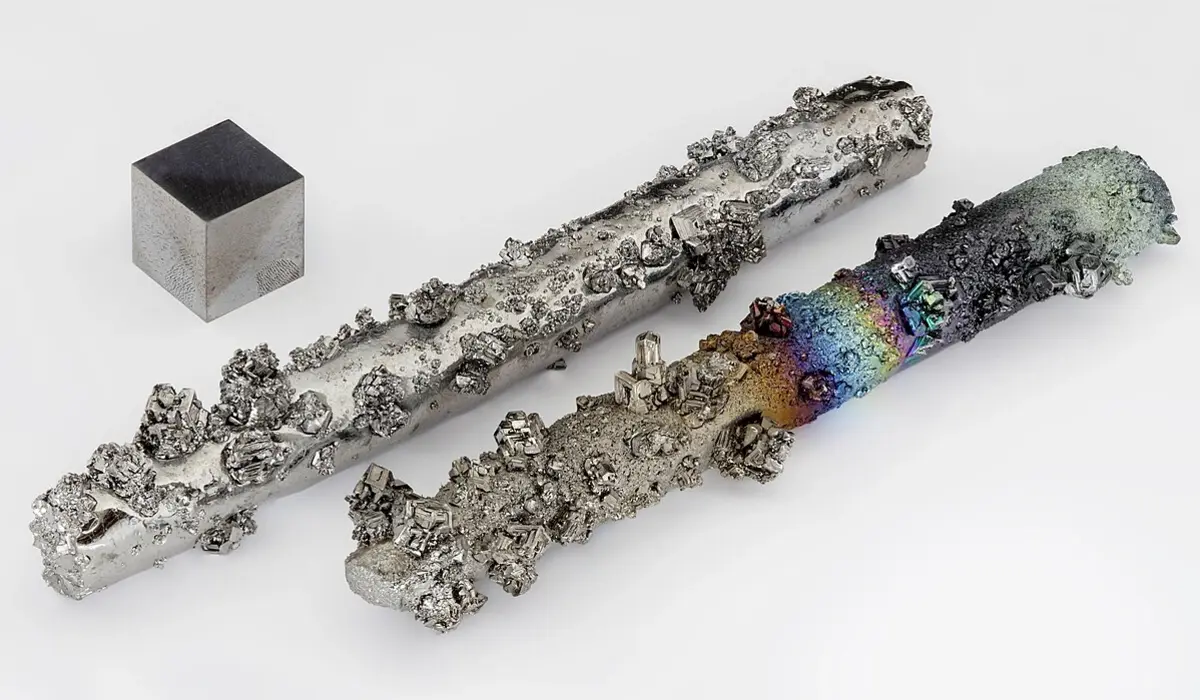
Key Takeaways
- Swedish origin versus German history
- Periodic symbol W explained
- Extreme heat and density profile
- Essential global industrial uses
Have you ever looked at the periodic table and felt completely confused by the letter W?
You scan for the letter T expecting tungsten, but you find a W instead.
Why does this happen, and why do people switch between calling it tungsten or wolfram?
The simple answer comes down to history, regional languages, and a little bit of medieval mining folklore.
English speakers generally prefer the Swedish-derived name, while non-English speaking regions favor the German name.
When looking into the story of tungsten volfram, you quickly realize both terms describe the exact same heavy element.
At PraviCeler, we love breaking down complex technical topics into easy, everyday conversations.
Let’s dive into the fascinating backstory behind this unique element and clear up the confusion once and for all.
AI Overview
Tungsten and wolfram refer to element 74 on the periodic table. The term tungsten comes from Swedish words meaning heavy stone. Wolfram originates from German miners who called the mineral wolf’s foam because it consumed tin during smelting. Both names describe the same dense, heat-resistant metal. Today, English regions use tungsten while many European languages use wolfram, which gives element 74 its chemical symbol W.
The Short Answer: Heavy Stone vs. Wolf Foam
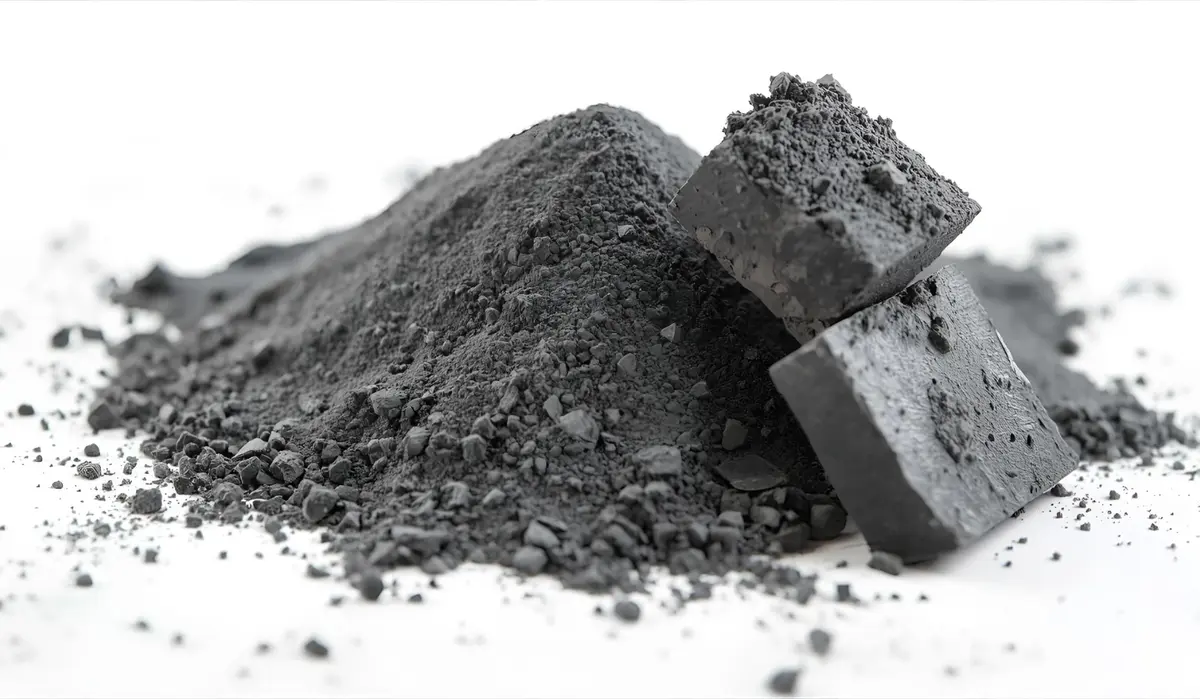
How did one element end up with two entirely different names in modern science?
It turns out two different groups of people discovered pieces of the puzzle around the same time.
Swedish scientists named the mineral based on how remarkably heavy it felt in their hands.
German miners gave it a darker name based on how it ruined their tin smelting processes.
Both names stuck, creating a dual identity that persists in modern science and industry today.
Breaking Down the Swedish Origins
In the eighteenth century, Swedish researchers began studying a unusually heavy white mineral.
They used local vocabulary to describe what they were holding in the lab.
In Swedish, the word “tung” translates directly to heavy, while “sten” means stone.
When you put those two words together, you get the literal tungsten meaning, which simply signifies heavy stone.
It was an easy, descriptive name that caught on quickly across English-speaking scientific circles.
Over time, this descriptive Scandinavian phrasing became the standard everyday name in places like North America and the UK.
The German Story Behind Wolfram
Meanwhile, over in Germany, smelters were dealing with a completely different mining headache.
Miners noticed a strange mineral mixed in with their valuable tin ore deposits.
This mysterious mineral seemed to devour the tin during the smelting process, drastically reducing their final yield.
They joked that the mineral swallowed tin like a ravenous wolf eating livestock.
They began calling the reddish-brown mineral wolf’s foam, which eventually morphed into the single word wolfram.
This dramatic German mining term laid the foundation for recognizing the wolfram element in European laboratories.
Why Is the Chemical Symbol W and Not T?
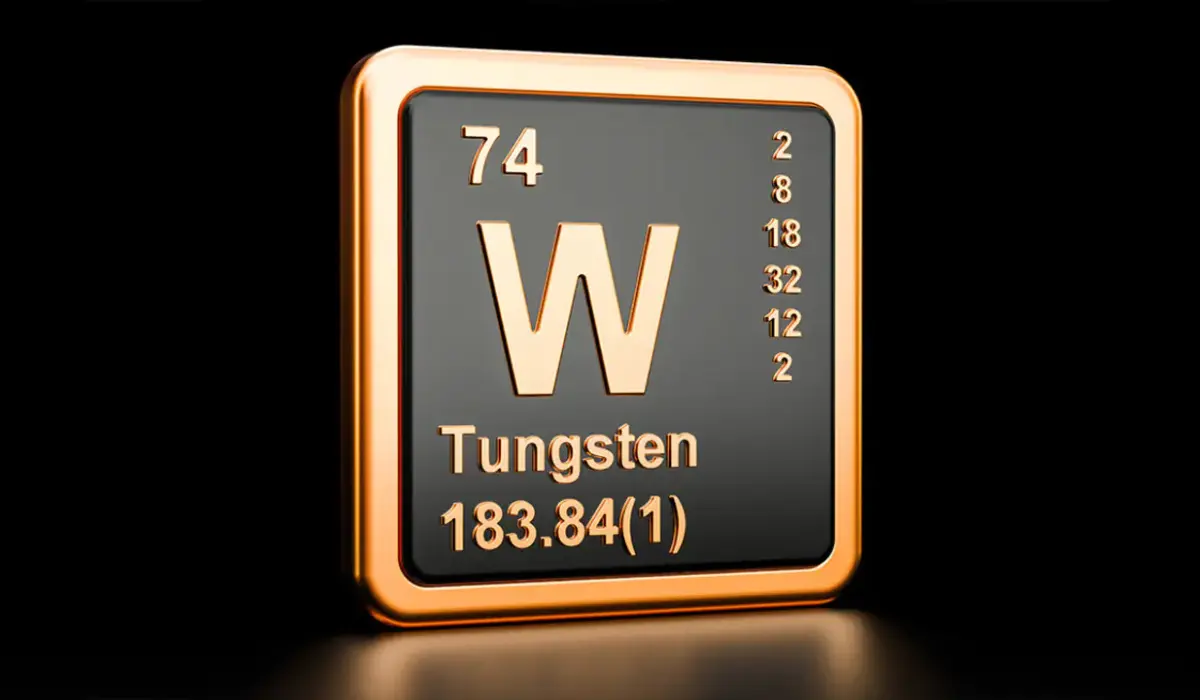
If English speakers call it tungsten, why isn’t the chemical symbol T or Tu?
That question confuses students and chemistry buffs all the time.
The symbol W actually stands as a historical tribute to the original German term wolframite.
When early scientists gathered to standardize chemistry symbols, regional debates broke out over which name was superior.
The compromise was to keep the popular English name for common speech while using the German symbol for chemical notation.
How the Periodic Table Settled the Debate
Setting up a global periodic table required strict consistency across international boundaries.
In most cases, early chemists leaned toward Latin root words or traditional European names for element symbols.
Because German scientific literature was dominant in the nineteenth century, the letter W won the official spot.
So whenever you write out a chemical formula today, you use W to represent the wolfram element.
It serves as a constant reminder of the early German smelters who first wrestled with the ore.
Even if you call it tungsten in conversation, the periodic table keeps its German heritage alive.
IUPAC and International Naming Standards
The International Union of Pure and Applied Chemistry, known as IUPAC, oversees chemical naming rules worldwide.
For decades, IUPAC officially recognized wolfram as the official international scientific name for element 74.
However, English-speaking nations continued using tungsten in everyday trade, academic papers, and manufacturing catalogs.
Eventually, IUPAC adjusted its guidelines to accommodate regional language preferences while keeping the symbol W intact.
Today, based on available data, both terms are considered fully acceptable depending on where you live and work.
Whether you say tungsten or wolfram, any chemist in the world knows exactly what you mean.
Understanding the True Tungsten Meaning
To really grasp why this metal is so special, we have to look deeper into its fundamental definition.
What does the name tell us about how this material behaves in the real world?
The original Swedish definition centered entirely on mass and density.
When you pick up a block of this metal, the sheer weight surprises you immediately.
It feels far heavier than iron, aluminum, or standard steel blocks of the same size.
From Mining Jargon to Modern Science
The tungsten meaning evolved from simple miner jargon into a precise scientific term over two centuries.
Originally, people used the phrase heavy stone to describe any unusually dense mineral crust found in mines.
As chemistry advanced, scientists isolated the pure metallic element hiding inside those heavy stones.
They realized this was not just a heavy rock, but a brand-new metal with incredible physical strength.
The name transitioned from describing raw unrefined ore to defining a refined, high-purity transition metal.
Today, the word represents an entire class of super-alloys used in high-stress engineering environments.
Swedish Linguistic Roots
It is interesting to note that modern Sweden actually uses the word wolfram today instead of tungsten.
Isn’t that a funny historical twist?
While English borrowed the Swedish words “tung sten,” the Swedish scientific community later adopted the German term wolfram.
Language shifts in unpredictable ways over the centuries as trade and research cross national borders.
Our team at PraviCeler finds these linguistic journeys fascinating because they show how connected global science really is.
Even when terminology shifts, the underlying physical reality of the metal remains rock solid.
The Story of the Wolfram Element in Mining
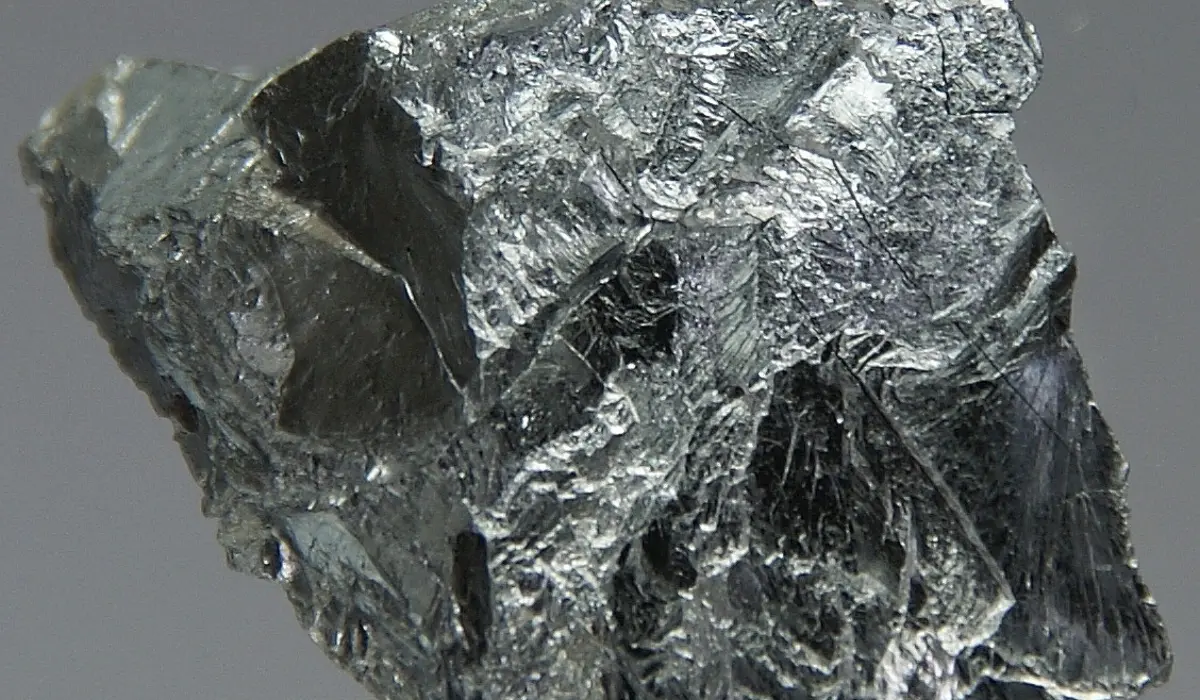
Mining in medieval Europe was often a game of trial, error, and superstition.
Smelters did not have digital tools or modern chemical assays to test their raw ore batches.
When an unknown mineral interfered with their furnaces, they gave it colorful, dramatic names.
Understanding the history of the wolfram element means stepping into the shoes of those early workers.
Tin Miners and “Wolf’s Foam”
Tin was one of the most valuable metals in ancient and medieval manufacturing.
Miners spent long, hard hours digging tin ores out of deep underground vein deposits.
When dark mineral veins showed up alongside tin, furnace workers knew they were in for trouble.
This unwanted mineral caused heavy slag to form on top of the molten tin bath.
The thick, foamy slag trapped the pure tin and burned it away into useless waste products.
Because it voraciously consumed their profits, miners compared the dark mineral to a wild wolf devouring sheep.
The Elhuyar Brothers’ Discovery
The actual isolation of pure metal happened in Spain in the late eighteenth century.
Two brilliant Spanish brothers, Juan José and Fausto Elhuyar, worked tirelessly in their laboratory in 1783.
They managed to extract pure metallic acid from wolframite mineral samples.
By reducing this acid with charcoal, they produced tiny dark grains of pure metal for the very first time.
They initially called their new discovery volfram, honoring the old German mining tradition.
Their groundbreaking laboratory work proved that this nuisance mineral contained one of the strongest metals on Earth.
Core Tungsten Properties That Make It Unique
What makes this metal such a superstar in modern engineering and manufacturing?
It isn’t just the heavy weight that sets it apart from ordinary metals like copper or iron.
The physical tungsten properties are truly extraordinary across almost every measurable category.
It stands as a heavy-duty champion when exposed to extreme heat, pressure, and wear.
Let’s look closely at the mechanical characteristics that make this element so indispensable.
Unmatched Melting Point and Thermal Resistance
Did you know this metal boasts the highest melting point of all known non-alloyed metals?
It resists melting all the way up to an astonishing 3,422 degrees Celsius, which equals 6,192 degrees Fahrenheit.
To put that in perspective, steel melts at roughly half that temperature.
Because of these incredible thermal tungsten properties, it stays completely solid under extreme heat conditions.
It also maintains low thermal expansion, meaning it does not warp or change shape easily when hot.
This thermal stability makes it the go-to material for high-temperature furnace liners and rocket engines.
High Density and Hardness Explained
Density is another area where this element completely outperforms standard industrial metals.
Its density matches gold almost perfectly, coming in at approximately 19.3 grams per cubic centimeter.
When combined with carbon to form carbides, it becomes nearly as hard as natural diamond.
These dense tungsten properties allow manufacturers to create compact counterweights and ultra-tough cutting tools.
It resists scratching, bending, and blunt impact better than almost any traditional alloy on the market.
Engineers rely heavily on this material whenever failure is simply not an option.
| Property Category | Measurement / Value | Comparison to Other Metals |
| Melting Point | 3,422°C (6,192°F) | Highest of all pure metals |
| Density | 19.3 g/cm³ | Almost identical to pure gold |
| Tensile Strength | Up to 1,500 MPa | Far higher than structural steel |
| Thermal Expansion | Very Low (4.5 µm/m·K) | Highly resistant to heat warping |
| Hardness (Carbide) | 9 on Mohs Scale | Second only to natural diamond |
Practical Tungsten Uses Across Industries
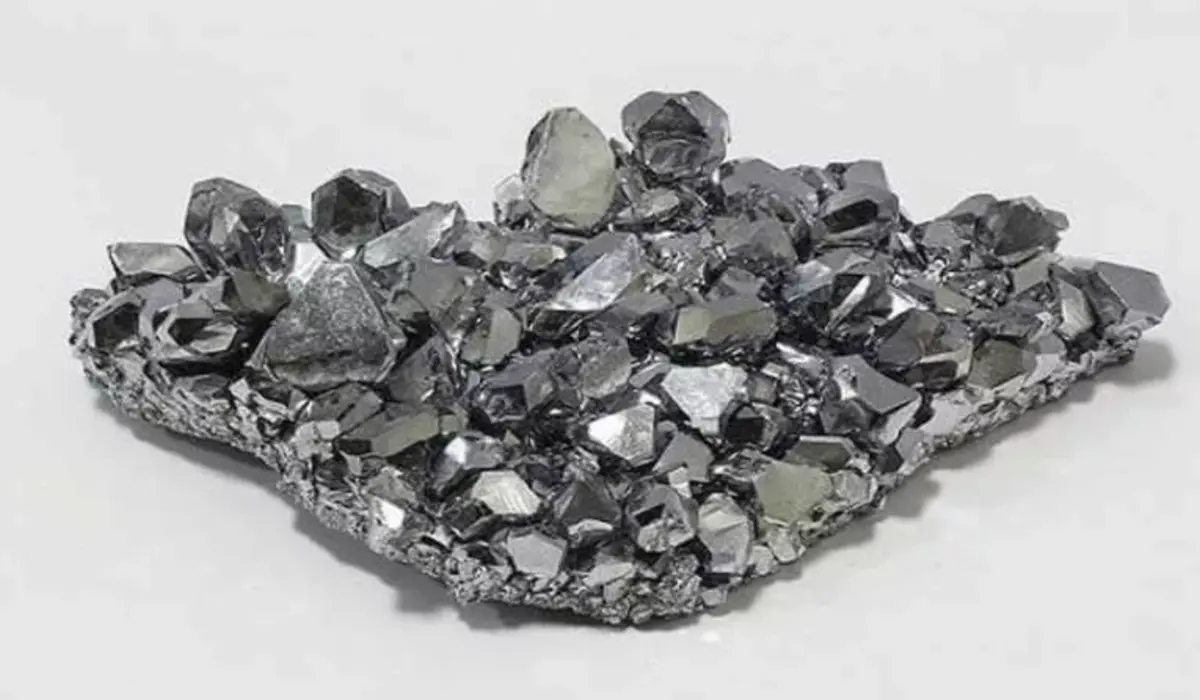
Now that we understand its strength, where do we actually find this material in daily life?
You might be surprised to learn how often you interact with items made from this heavy element.
The range of modern tungsten uses stretches from household electronics to deep-space exploration gear.
Without it, many of our modern manufacturing processes would grind to a sudden halt.
Aerospace, Electronics, and Heavy Manufacturing
In the aerospace sector, engineers require materials that can withstand intense friction and scorching exhaust gases.
Rocket nozzles, turbine blades, and heat shields rely heavily on high-density alloys.
In electronics, micro-wires and electrical contacts depend on the metal’s high conductivity and heat resistance.
Heavy equipment manufacturing uses hardened drill bits to cut through solid rock and reinforced concrete.
These high-stress applications highlight why demand for tungsten uses remains strong around the globe.
At PraviCeler, we frequently track these industrial material trends to help businesses stay ahead of supply chains.
Everyday Tools and Medical Tech
Beyond heavy factories, this metal plays crucial roles in modern medicine and everyday recreation.
X-ray machines and radiation shielding panels use dense blocks of metal to block harmful rays safely.
Medical instruments use micro-blades made from hardened alloys for ultra-precise surgical cuts.
Even high-end sports equipment, like professional darts and golf club weighting inserts, benefit from its density.
The sheer versatility of these practical tungsten uses makes it one of the most valuable metals on Earth.
Here is a quick look at where this versatile metal shows up most frequently in modern industry:
- Metalworking Tools: Carbide inserts, end mills, and heavy-duty lathe cutting tools
- Electronics: Incandescent light filaments, television cathodes, and semiconductor contacts
- Medical Devices: Radiation shielding blocks, collimators, and specialized surgical needles
- Aerospace Components: Engine counterweights, rocket nozzle liners, and balance weights
- Defense Tech: Armor-piercing ammunition cores and heat-resistant kinetic penetrators
Why PraviCeler Tracks High-Performance Materials
You might wonder why a team like PraviCeler spends so much time analyzing industrial materials.
In today’s fast-moving market, understanding raw material science is critical for engineering innovation.
Whether an enterprise designs medical devices or aerospace parts, material selection dictates overall performance.
Our mission at PraviCeler is to deliver clear, actionable insights on high-value industry topics.
By removing jargon, PraviCeler helps readers make sense of complex scientific concepts quickly.
Industrial Insights from PraviCeler Experts
Our research shows that demand for dense, heat-resistant metals continues to grow rapidly.
As renewable energy tech and micro-electronics evolve, factories need stronger components than ever before.
The PraviCeler editorial team closely follows developments in global mining, material refining, and alloy synthesis.
We believe that educating teams on foundational science empowers better decision-making at every level.
Understanding the story behind tungsten volfram is just one example of how history shapes modern technology.
Comparing Tungsten Volfram Terminology Globally
Depending on where you travel or source materials, you will hear different terms used on factory floors.
In North America and Great Britain, saying wolfram in a machine shop might draw confused looks.
Conversely, if you visit a manufacturing facility in Germany, Poland, or Russia, wolfram is the primary standard.
Understanding regional preferences for tungsten volfram vocabulary helps prevent miscommunications in global trade.
| Country / Region | Preferred Term | Common Context |
| United States & UK | Tungsten | Commercial sales, engineering, everyday speech |
| Germany & Austria | Wolfram | Scientific literature, industrial specs, local trade |
| Nordic Countries | Wolfram / Tungsten | Mixed historical usage, modern technical standards |
| Eastern Europe | Wolfram | Standard national chemical dictionaries |
| Global Chemistry (IUPAC) | Symbol W (Both accepted) | International scientific publications |
Key Differences: Is There Any Technical Distinction?
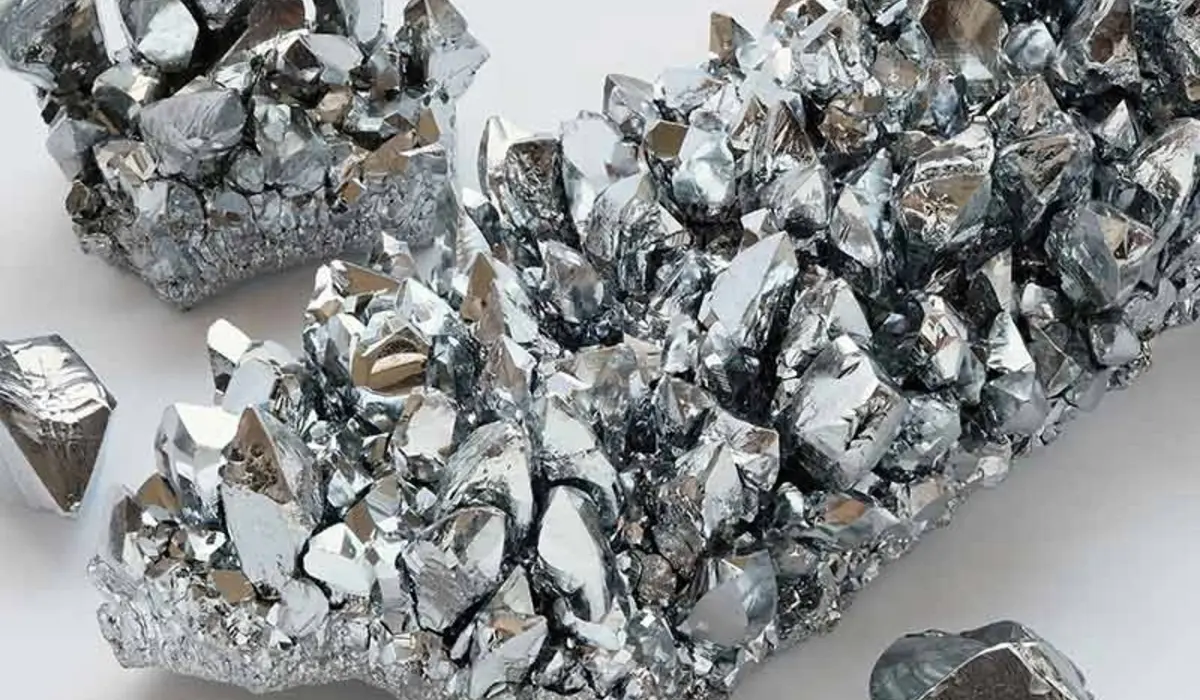
Let’s clear up one of the biggest misconceptions floating around online forums and industrial chat rooms.
Is there any physical or chemical difference between these two names?
The short answer is a definitive no.
They are 100 percent identical in terms of chemical structure, atomic number, and physical behavior.
Atomic number 74 remains atomic number 74 regardless of what label you print on the shipping box.
Here are the key takeaways to remember when comparing these terms:
- Identical Atomic Structure: Both terms refer strictly to element 74 with 74 protons in its nucleus
- Same Physical Properties: Density, melting point, and hardness do not change based on terminology
- Linguistic Preference Only: The choice of word depends entirely on regional language and culture
- Unified Symbol: The symbol W on the periodic table represents both terms universally
Conclusion
Understanding why element 74 carries two distinct names brings us on a journey through history.
From Swedish researchers admiring heavy stones to German smelters battling “wolf’s foam,” both stories shaped modern science.
While English speakers stick with tungsten in daily conversation, the periodic table proudly displays the letter W for wolfram.
Neither term is wrong, and both represent one of the most incredible high-performance metals known to humanity.
Next time you spot that mysterious letter W on a periodic table, you will know the exact history behind it.
Frequently Asked Questions
Why does element 74 have the symbol W?
The symbol W stands for wolfram, derived from historical German mining terms.
Is tungsten expensive compared to steel?
Yes, it is generally much more expensive due to complex mining processes.
Can you melt this metal at home?
No, its melting point is too high for standard home furnaces.
Are tungsten and wolfram the same thing?
Yes, both terms describe the exact same chemical element on the periodic table.