A superyacht can be advertised for tens of millions of dollars and still be worth considerably less or, in the right circumstances, considerably more—to the person actually buying it.
That is because yacht ownership operates in a world where the number on a brokerage listing is only the beginning. Age, builder, gross tonnage, condition, refits, design, equipment, market timing and the quality of comparable sales can all reshape the equation.
For owners, insurers, banks and even courts, determining that number can become surprisingly complicated.
Key Takeaways
- A yacht’s asking price is not necessarily its market value.
- Builder reputation and design can create a lasting premium.
- Condition and refit history can materially change a yacht’s worth.
- Real transaction prices are more useful than optimistic listings.
- Professional valuation is ultimately an informed prediction, not a guaranteed price.
The Price Tag Is Only the Starting Point
Walk through the world’s major yacht marketplaces and the first number you see is usually the asking price.
It feels definitive. It isn’t.
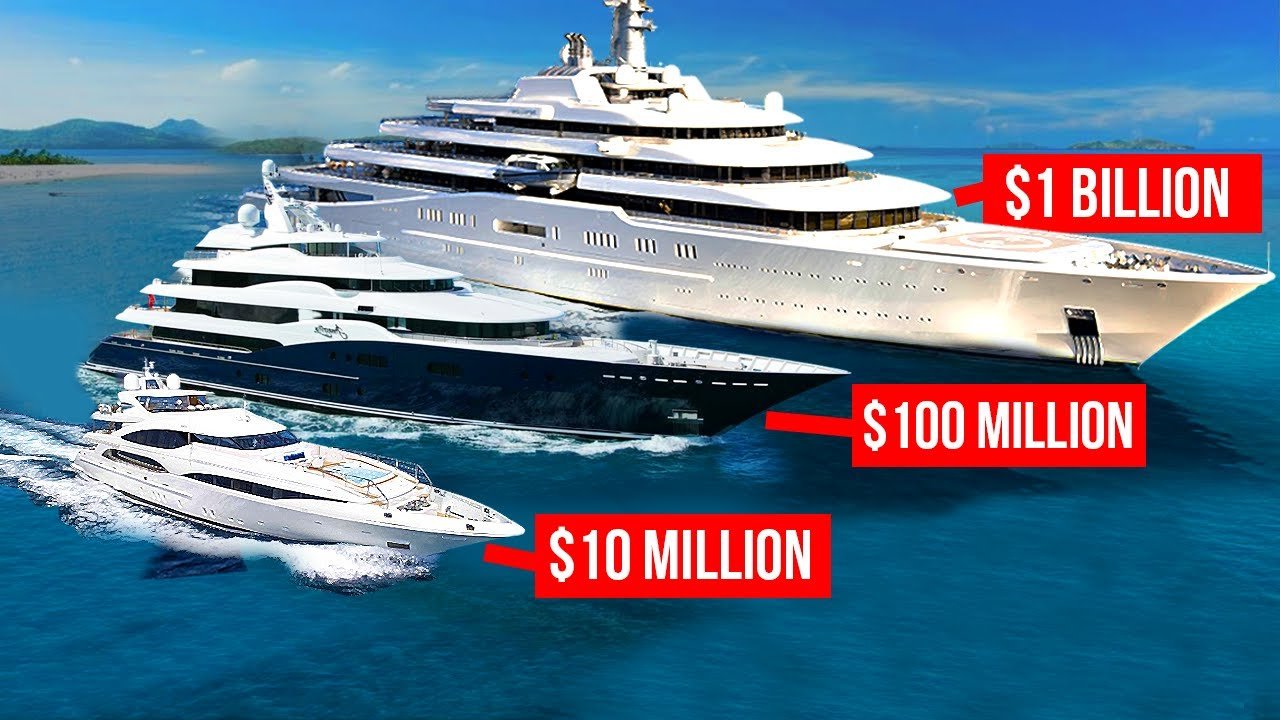
A broker may list a yacht at $40 million, but that figure represents what the seller hopes to achieve in the market. It does not necessarily tell you what a buyer will ultimately pay.
The distinction matters enormously at the upper end of the market.
Two yachts with similar dimensions and similar ages can command dramatically different prices because they are not truly equivalent. One may come from a highly regarded Northern European builder, have a carefully documented refit history and exceptional engineering. Another may have weaker resale demand, outdated interiors or expensive maintenance ahead of it.
On paper, they may look comparable.
In the market, they are not.
What Actually Determines a Superyacht’s Value?

There is no single formula that works for every yacht.
Professional valuations typically bring together several layers of information.
| Factor | Why it matters |
| Builder | Reputation can influence desirability and resale demand |
| Age | Older yachts generally trade differently from newer vessels |
| Gross tonnage | Provides a better sense of usable volume than length alone |
| Condition | Maintenance and technical condition can materially affect value |
| Refit history | A serious, well-executed refit can change the yacht’s market position |
| Design | Architecture, layout and functionality influence buyer appeal |
| Equipment | Engineering systems and specialist equipment add complexity and value |
| Comparable sales | Actual transactions provide evidence of what buyers have paid |
| Market conditions | Supply, demand and buyer sentiment can move valuations |
The important point is that these factors do not operate independently.
A 50-metre yacht is not automatically worth more simply because another 50-metre yacht sold for a particular amount.
The details matter.
Why Gross Tonnage Can Matter More Than Length
Length is one of the easiest specifications to understand, but it does not tell the whole story.
Gross tonnage provides a better indication of the volume available inside a yacht. Two vessels with similar lengths can offer very different amounts of accommodation, entertainment space, crew areas and technical infrastructure.
That difference becomes important when comparing supposedly similar yachts.
For a buyer, the question is not simply:
How long is it?
It is closer to:
How much usable yacht am I actually buying?
That distinction can become particularly important when comparing vessels from different builders or generations.
The Builder’s Name Can Become Part of the Value

In luxury goods, provenance matters.
Yachts are no exception.
Certain builders have established reputations for engineering, craftsmanship, reliability, design and long-term desirability. That reputation can translate into a premium in the resale market.
It also explains why applying a simple depreciation percentage to every yacht can be misleading.
A yacht that cost a significant amount to build does not necessarily lose value at the same rate every year. Some vessels decline rapidly early in their lives before depreciation slows. Others can maintain a meaningful premium because of their builder, specification or scarcity.
The badge on the hull is therefore more than decoration.
It can become part of the asset.
The Refit Paradox
One of the more complicated questions in yacht valuation is the relationship between spending and value.
An owner might spend millions on a refit and transform an ageing yacht into something far more contemporary.
That does not automatically mean the yacht’s market value rises by the same amount.
A refit can improve desirability, extend useful life and eliminate expensive technical problems. But buyers may not value every dollar spent by the previous owner equally.
A highly personalized interior is a good example.
It may have cost a fortune to create. Yet a prospective buyer might prefer a different aesthetic and immediately budget for another transformation.
The money was real.
The resulting market value may not be.
This is one reason valuation requires more than adding up construction costs, upgrades and maintenance bills.
Why Asking Prices Can Be Misleading
The yacht market contains a fundamental information problem: asking prices are visible, while completed transaction prices are often much harder to observe.
A listing might sit at $25 million for months.
That does not mean the market believes the yacht is worth $25 million.
The eventual transaction could happen at a very different figure.
This is why professional valuation increasingly depends on comparable sales rather than simply collecting current listings.
But even comparable sales need to be selected carefully.
A useful comparison should account for differences in size, age, builder, condition, specification and market circumstances.
Choosing one unusually expensive yacht and treating it as evidence for another can produce a very attractive valuation—and a very misleading one.
The Problem With Simple Depreciation
Cars can often be estimated using relatively familiar depreciation curves.
Superyachts are more complicated.
A simple rule such as “the yacht loses X percent every year” can ignore the realities of the market.
Depreciation may slow as a yacht ages. Certain builders may retain a premium. Exceptional design can protect desirability. Major refits can change the vessel’s position in the market. Conversely, neglected engineering systems or an outdated interior can create a discount.
There is no universal percentage that captures all of this.
The yacht is an asset, but it is also a highly individual piece of design and engineering.
A More Sophisticated Approach: Hedonic Valuation
One approach used in asset valuation is known as hedonic analysis.
Instead of treating the yacht as one object with one number, the method attempts to understand how individual characteristics contribute to value.
Size.
Age.
Builder.
Design.
Specification.
Other measurable attributes.
The strength of this approach is that it can identify patterns across a large group of vessels.
Its weakness is equally important: the model is only as good as the information behind it.
A database built primarily from asking prices cannot suddenly become a database of actual market values.
And statistical models can struggle with yachts that have unusual characteristics, highly customized designs or limited comparable sales.
For the most distinctive vessels, human judgment remains important.
Who Actually Cares About the Number?
Yacht valuation may sound like a concern reserved for buyers and sellers.
In reality, the figure can matter to several institutions.
Insurers
Insurance policies may depend on an agreed or assessed value.
If the declared value is materially different from what the market evidence supports, disputes can become serious after a loss.
Banks
Lenders need to understand the value of the asset securing a loan.
A yacht that appears to be worth $30 million on paper may provide a very different level of security if its realistic resale value is significantly lower.
Tax Authorities
For tax purposes, the value assigned to an asset can have financial consequences.
Courts
Yacht valuations can also become relevant in disputes, including ownership and financial proceedings.
At these levels, “What is the yacht worth?” stops being a casual question.
It becomes a financial one.
The Most Expensive Yacht May Not Be the Most Valuable One
There is an important distinction between price and value.
Price is what someone asks.
Value is an informed estimate of what the asset could realistically command.
And the final sale price is what the market ultimately proves.
Those three numbers can be different.
That is why the world’s most expensive yacht listings should not automatically be interpreted as evidence of the world’s most valuable yachts.
A spectacular vessel may command a premium because of its design, pedigree or rarity. Another may look equally impressive but face a smaller buyer pool because of its configuration.
Luxury does not eliminate economics.
It makes the economics more complicated.
A Practical Yacht Valuation Checklist
Before treating a superyacht’s advertised price as its real value, look at five things:
- Comparable sales
What have genuinely similar yachts actually sold for? - Builder pedigree
Does the builder carry a meaningful premium in the resale market? - Condition
What is the yacht’s technical and cosmetic condition today? - Refit history
Which upgrades genuinely improve the vessel, and which are mainly personal choices? - Marketability
How large is the realistic pool of buyers for this particular yacht?
This framework will not produce a perfect number.
It will, however, produce a more intelligent question.
So, What Is a Superyacht Really Worth?
Ultimately, there is no universal answer.
A superyacht is worth more than its construction cost, more complicated than its listing price and more personal than a spreadsheet can fully capture.
Its value emerges from a combination of physical characteristics, reputation, condition, scarcity, market evidence and buyer demand.
That is why valuation should be treated as a prediction rather than a certainty.
The owner may have one number.
The broker may have another.
The insurer may use another.
And the market may ultimately produce a fourth.
For an asset that can cost tens or even hundreds of millions of dollars, the difference between those numbers is not a technical footnote.
It can be the entire deal.