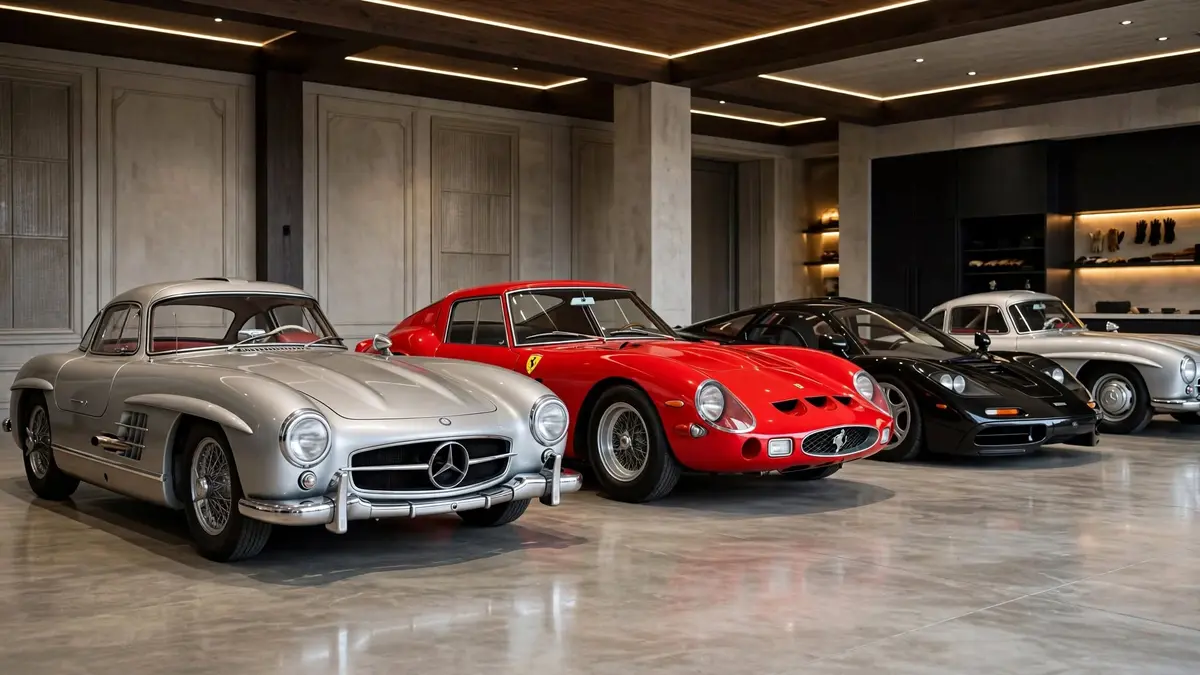
Classic cars that outperform stocks sound like a myth invented at auction houses until you examine the numbers, and then the conversation becomes very quiet. A collector I know keeps a framed page above his desk showing two lines: the S&P 500 since 1990, and the auction value of his Ferrari since the same year.
The car’s line climbs steeper. He is quick to admit that cars pay no dividends, demand insurance and climate controlled storage, and can lose value when fashions shift, which is why his garage is a passion and not a pension plan.
But the top tier of the collector car market has compounded at rates that shame most portfolios, driven by a simple mechanic: the greatest cars exist in fixed, tiny numbers, while the population of wealthy collectors grows every year. These seven machines represent the summit of that market, each with a documented track record of appreciation that turns heads even on Wall Street.
1. Mercedes-Benz 300 SLR Uhlenhaut Coupe, The $142.8 Million King
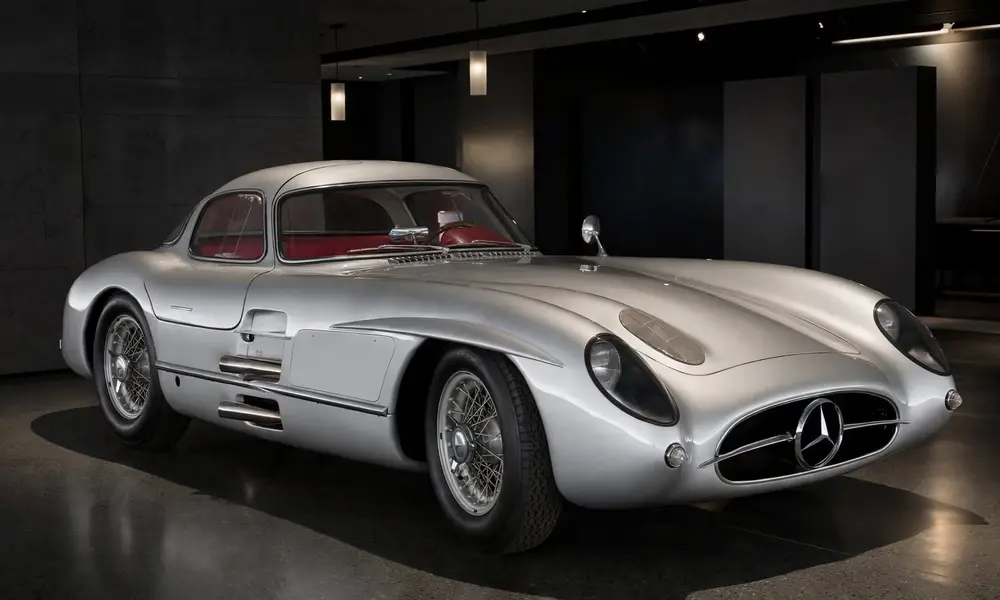
Every discussion of automotive investment begins and ends with the Uhlenhaut Coupe. Only two examples of this road legal version of Mercedes’ 1955 racing car were ever built, and in May 2022, Mercedes-Benz sold one of them at a private auction for 135 million euros, approximately 142.8 million dollars, making it the most expensive car ever sold by a factor of nearly three.
The figure is almost beside the point, because the remaining car will never be sold: it is the crown jewel of the Mercedes-Benz collection, effectively priceless.
The Uhlenhaut teaches the foundational lesson of car investment: ultimate value lives at the intersection of racing history, beauty, and absolute scarcity. Named for Rudolf Uhlenhaut, the engineering genius who created it, the coupe represents the moment when a manufacturer’s heritage becomes an asset class in itself.
2. Ferrari 250 GTO, The Blue Chip Benchmark
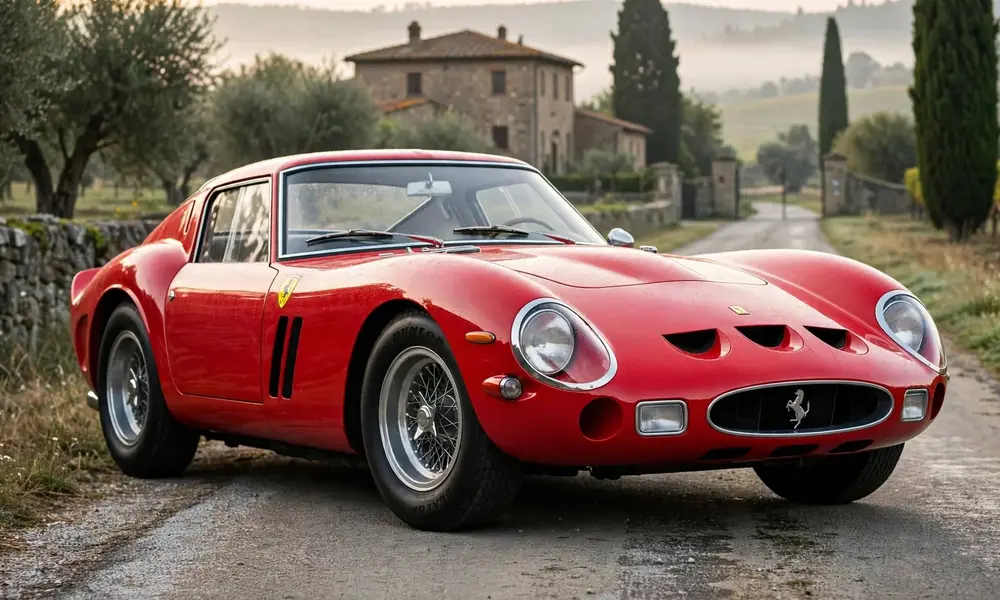
If the Uhlenhaut is the market’s Mona Lisa, the Ferrari 250 GTO is its gold standard. Ferrari built just 36 examples between 1962 and 1964, and the model’s combination of racing dominance, V12 soundtrack, and voluptuous Scaglietti bodywork has made it the most coveted automobile on earth for half a century.
A 250 GTO sold at auction in November 2023 for 51.7 million dollars, while a private transaction in 2018 reportedly reached approximately 70 million dollars.
The GTO’s appreciation curve is the stuff of finance seminars: examples traded for under ten thousand dollars in the 1960s, passed one million in the 1980s, and added a zero roughly every decade since.
Owners describe an additional dividend no stock can pay: membership in the GTO owner’s circle, whose tours and dinners constitute one of the most exclusive networks in the world, a theme explored across our collectible car coverage.
3. McLaren F1, The Modern Masterpiece
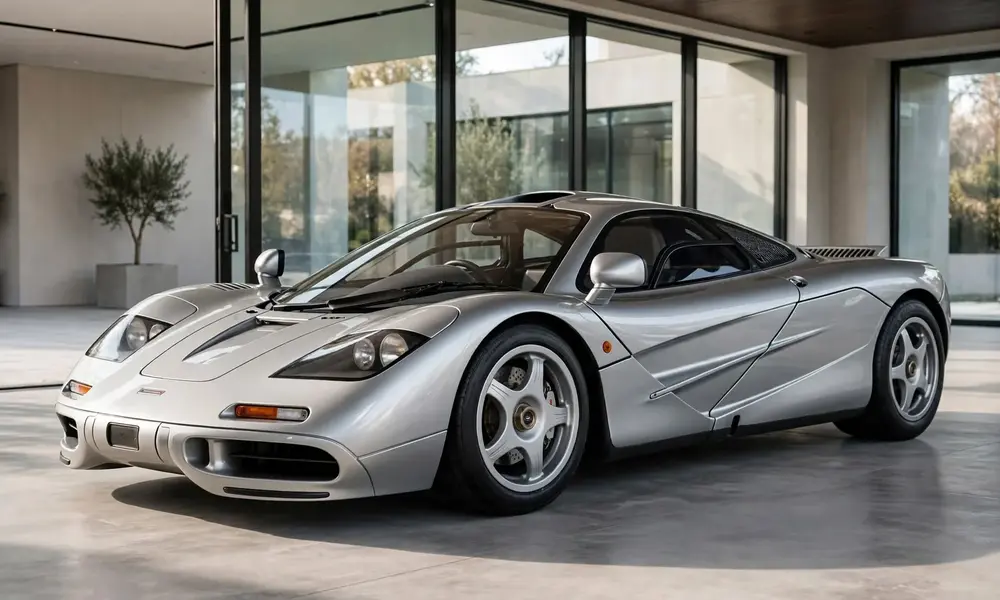
The McLaren F1 proves that investment grade classics are not exclusively silver haired. Built from 1992 to 1998 in a run of just 106 cars, the F1 was designed by Gordon Murray around a gold lined engine bay, a central driving seat, and a naturally aspirated BMW V12, and it held the production car speed record for years.
Examples that sold new for under a million dollars now trade above twenty million, with the finest examples and the ultra rare LM variants commanding substantially more.
The F1’s trajectory has been the steepest in the modern market, multiplying in value several times over within a single decade as a new generation of collectors, many of whom had F1 posters as children, arrived at peak wealth. It demonstrates the market’s great demographic engine: the cars people dreamed about at fifteen become the cars they buy at fifty.
4. Ferrari 250 GT SWB California Spider, The Beautiful One
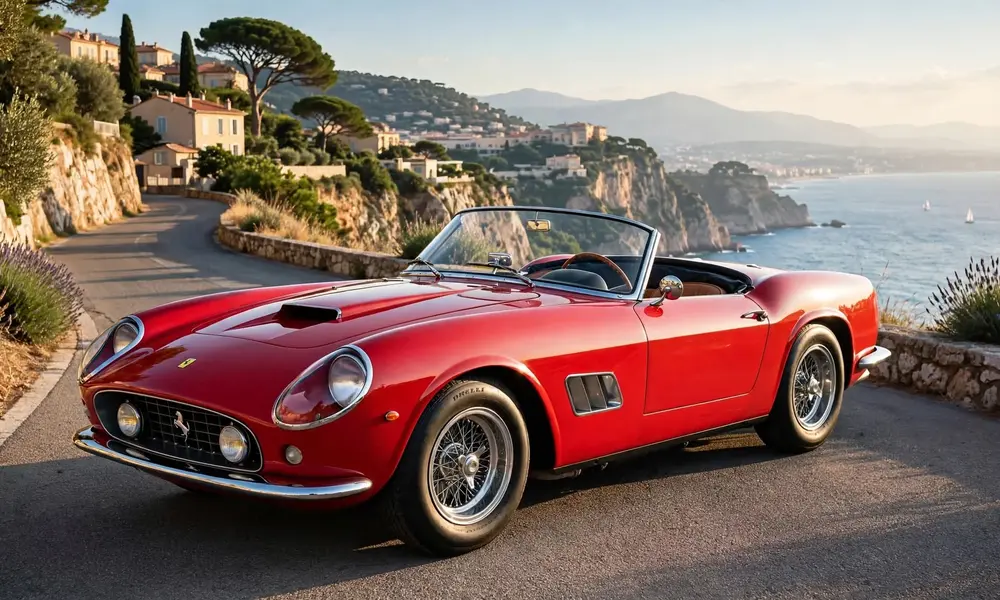
Among Ferrari’s golden era spiders, the short wheelbase California Spider holds a particular throne. Around 56 were built, and the model’s association with the Riviera fantasy, open top, V12, and impossibly elegant, has driven values steadily upward for decades.
The finest examples, particularly those with covered headlights and competition history, have sold at auction for figures exceeding eighteen million dollars.
The California Spider illustrates a subtler investment principle: within great models, the rarest specifications command exponential premiums. Collectors speak of the hierarchy of details, original engines, documented histories, matching numbers, where a few lines in a history file can mean millions at the rostrum.
For investors, the lesson is that connoisseurship is itself the edge, much as it is across the finest grand touring cars ever made.
5. Aston Martin DB5, The Bond Dividend
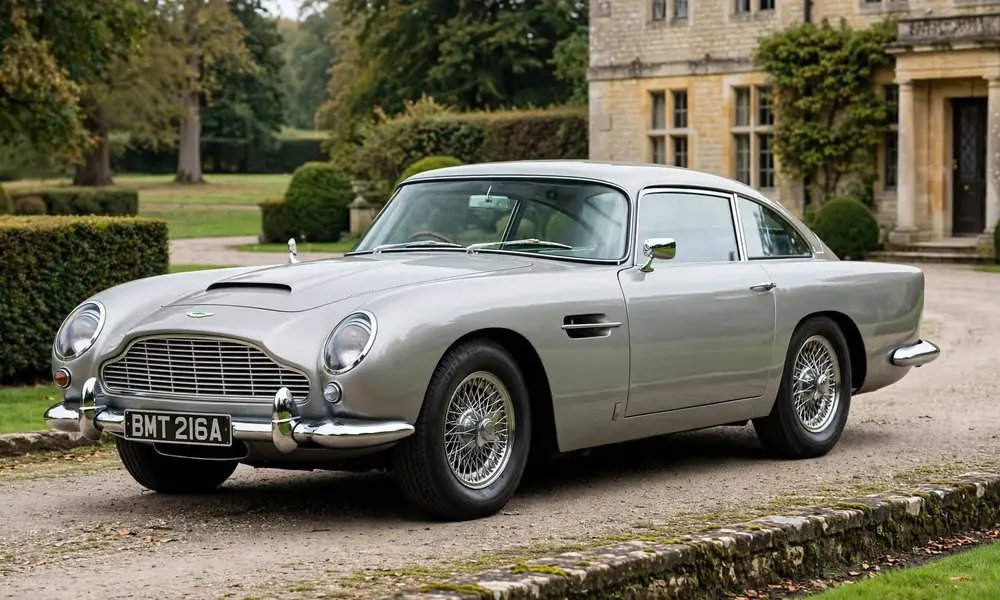
The DB5 occupies a unique position in the investment landscape: it is the car that popular culture will never release.
Immortalized as James Bond’s machine in Goldfinger in 1964, the DB5 has enjoyed six decades of uninterrupted desirability, with values climbing from used car territory in the 1970s to seven figures today for the finest examples. Production of under nine hundred coupes keeps supply tight, and every new Bond film quietly reprices the model.
The DB5’s returns are steadier than explosive, which makes it the collector market’s blue chip income stock equivalent: less dramatic than a GTO, but underwritten by the most durable film franchise in history. Cultural permanence, it turns out, is a form of scarcity no factory can dilute.
6. Porsche 911 Carrera RS 2.7, The Accessible Legend
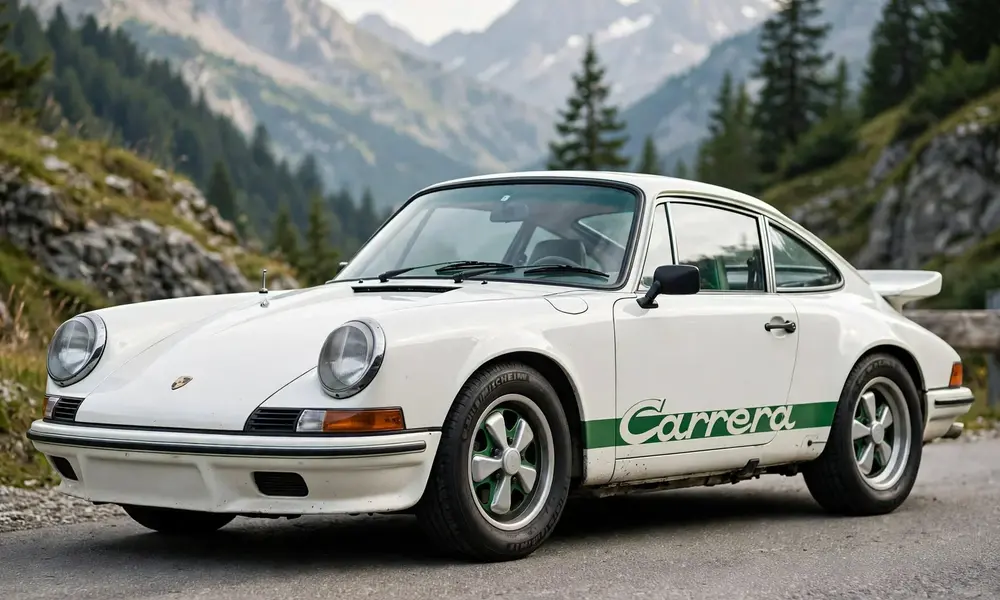
Not every investment grade classic requires eight figures. The 1973 Carrera RS 2.7, the lightweight homologation special that founded the 911 RS bloodline, traded under one hundred thousand dollars within living memory and now commands seven figures for top examples, with the rarest lightweight variants exceeding that comfortably.
Around 1,580 were built, enough to create a liquid market, few enough to guarantee perpetual demand.
The RS 2.7 matters to this list because it proves the model works at attainable levels: a finite, historically significant, deeply loved driver’s car with a global support network. Its decades of compounding have rewarded exactly the qualities investors should seek, mechanical usability, universal recognition, and a story every enthusiast can recite.
7. Mercedes-Benz 300SL Gullwing, The Original Supercar
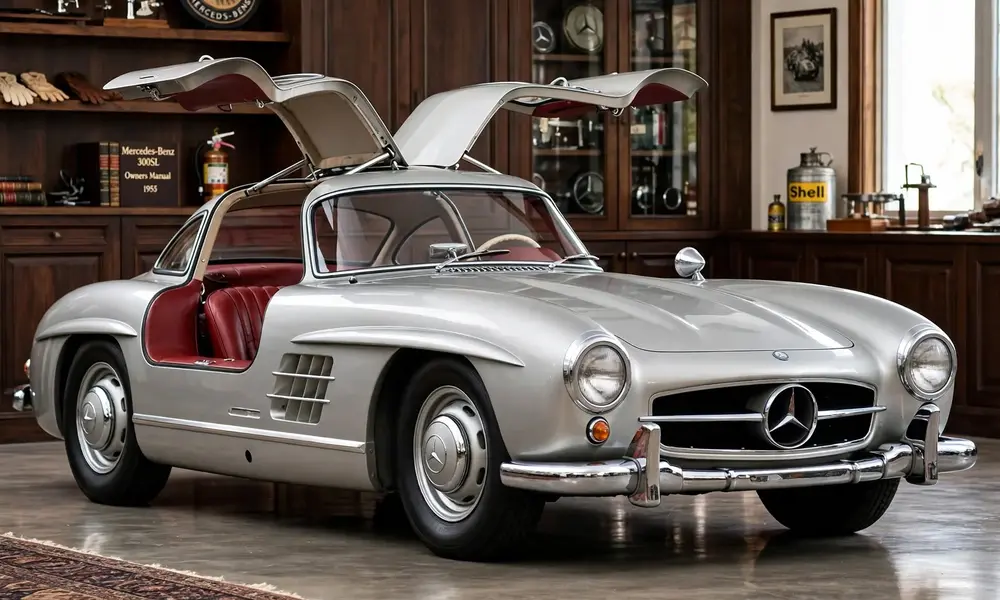
The 300SL Gullwing of 1954 to 1957 was the first true supercar, a road car derived directly from racing machinery, with doors that opened upward into legend.
Roughly 1,400 coupes were built, and values have compounded relentlessly, from ordinary used car prices in the 1960s to well past one and a half million dollars for excellent examples today, with the ultra rare alloy bodied cars trading many times higher.
The Gullwing’s investment case rests on its foundational status: every supercar and hypercar that followed, including the machines in our guide to the world’s hypercars, traces its lineage to this silhouette. Foundational objects in any collecting field, the first, the original, the archetype, historically defend their value through every cycle.
The Honest Arithmetic of Car Investment
These seven stories share a warning label. The returns quoted belong to the finest examples, purchased with expert guidance, maintained at no small expense, and held through market cycles that have included severe corrections.
Transaction costs at auction run to ten percent or more on each side, storage and insurance never stop, and unlike a stock, a car cannot be sold in seconds. The investors who succeed in this market share a common trait: they buy cars they love, because the passion sustains the patience the returns require.
Within those caveats, the structural case remains powerful. The supply of historically important cars is fixed forever, the global collector population expands with every new fortune, and the objects themselves deliver dividends in the form of concours lawns, rally routes, and the simple joy of a V12 at dawn. A stock certificate has never once done that.
FAQs
What is the most expensive classic car ever sold?
The Mercedes-Benz 300 SLR Uhlenhaut Coupe holds the record, selling for approximately 142.8 million dollars in May 2022. Only two were built, and the sale nearly tripled the previous record, establishing the car as the most valuable automobile in history.
How much is a Ferrari 250 GTO worth?
A 250 GTO sold at auction in November 2023 for 51.7 million dollars, while a private sale in 2018 reportedly reached around 70 million dollars. Only 36 were built, and values have compounded across five decades from under ten thousand dollars in the 1960s.
Do classic cars really outperform stocks?
The finest examples of the most coveted models have historically outpaced equity indices over multi decade periods, with indices tracking top tier collector cars showing strong long term compounding. However, transaction costs, maintenance, storage, and market cycles mean results vary enormously by car, condition, and timing.
What classic car is a good first investment?
Historically significant, usable classics with strong club support, such as the Porsche 911 Carrera RS lineage, early Aston Martins, and landmark Mercedes models, have offered the most reliable appreciation. Buy the best documented example you can afford, because condition and provenance drive returns more than the model itself.
Why is the McLaren F1 so valuable?
The F1 combines extreme rarity, 106 cars total, with engineering perfection: a central seat, gold lined bay, and a BMW V12, plus a decade as the world’s fastest production car. Values have multiplied several times within ten years as the generation that idolized it reached peak wealth.
What are the costs of investing in classic cars?
Beyond purchase price, budget for auction premiums of around ten percent on both buying and selling, specialist insurance, climate controlled storage, maintenance by marque experts, and event participation. Annual carrying costs for a seven figure car typically run into five figures.
How do I verify a classic car’s authenticity before investing?
Insist on documented provenance: factory records, matching chassis and engine numbers, continuous ownership history, and inspection by recognized marque specialists. For the highest tier cars, marque certification programs and respected historians provide the authentication the market demands.
Are modern supercars good investments too?
Select limited production models from Ferrari, Porsche, and McLaren have appreciated immediately after allocation, but mass produced supercars typically depreciate first. The reliable investment pattern favors genuinely limited, historically significant cars, and most modern exotics never escape the depreciation curve.