The Rolls-Royce story begins with a lunch at the Midland Hotel in Manchester in May 1904, when two men who could hardly have been more different agreed to build the best car in the world. Charles Rolls was an aristocrat, Cambridge educated, a pioneering aviator and car dealer with a showroom in London.
Henry Royce was a self taught engineer from a family so poor he had sold newspapers as a child, a perfectionist whose factory in Manchester built machinery of obsessive quality. Royce had grown so dissatisfied with his own French motorcar that he built a better one from scratch, and when Rolls drove it, he understood immediately what he had found.
The partnership they formed that day created not merely a company but a standard, the idea that somewhere, in some workshop, someone was refusing to compromise, and that the result would be the finest automobile in existence. One hundred and twenty years later, that promise still rolls silently out of Goodwood.
The Silver Ghost and the Birth of the Legend
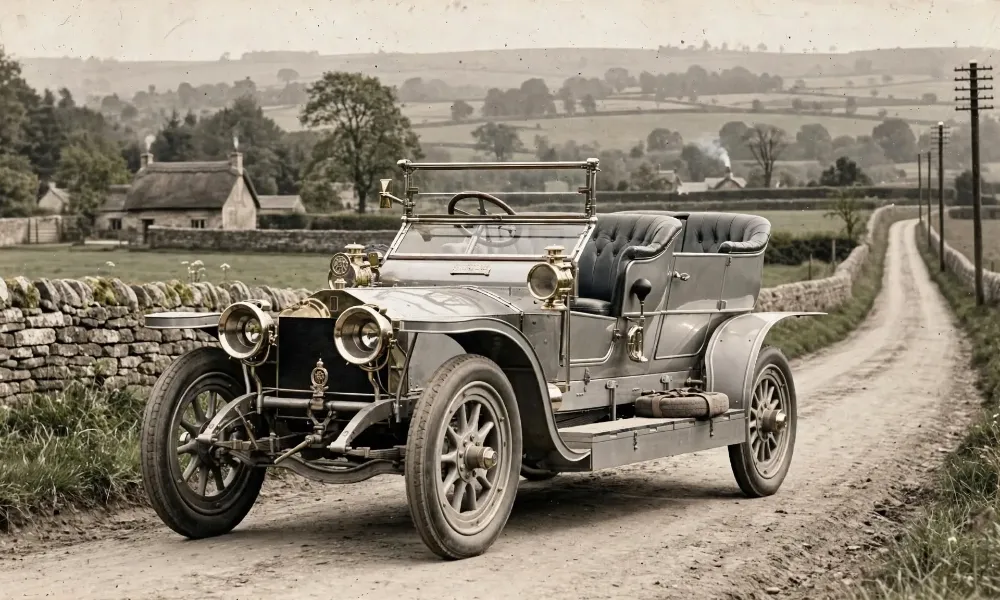
The company’s early years established the template: engineering so far beyond the era’s norms that the product became the benchmark. The 40/50 horsepower model of 1907, christened the Silver Ghost for its silver paint and whisper quiet operation, completed a 15,000 mile reliability trial that stunned the motoring world, earning the famous title of the best car in the world.
The Ghost’s reputation rested on Royce’s fanaticism: components machined to tolerances the industry considered absurd, tested beyond destruction, and assembled by craftsmen who understood that their work would be examined for decades.
The brand’s symbols accumulated around the engineering. The Spirit of Ecstasy, the flying lady on the radiator, arrived in 1911, sculpted by Charles Sykes and modeled, legend holds, on Eleanor Thornton, secretary to a motoring pioneer. The radiator grille’s Greek temple form and the interlocked double R completed an iconography that has survived every design era since.
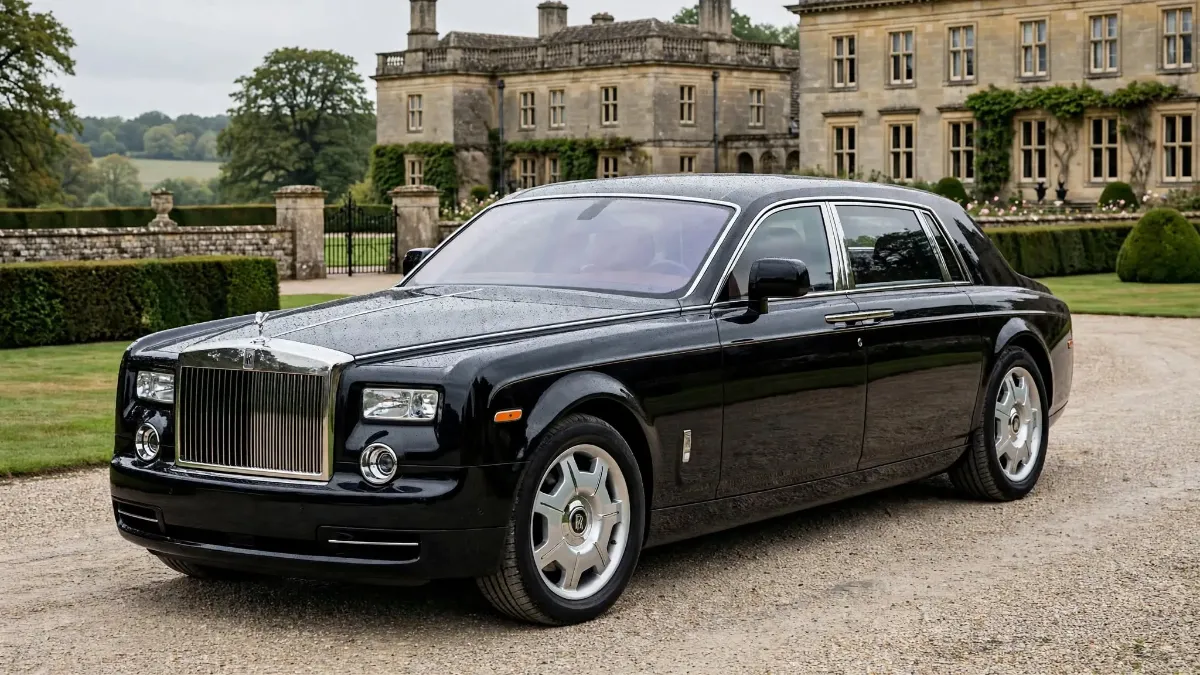
By the 1920s, a Rolls-Royce was no longer a car but a statement of arrival, and the Phantom lineage, launched in 1925, became the chosen conveyance of monarchs, maharajas, and heads of state.
Perfection as a Business Model
The house’s famous claim, attributed to its advertising, that at sixty miles per hour the loudest noise comes from the electric clock, captures the brand’s essential proposition: silence as the sound of quality. Rolls-Royce never sold speed or flash; it sold the absence of vibration, noise, and doubt.
The model survived the company’s troubled decades, including the 1971 bankruptcy of the original Rolls-Royce enterprise over an aero engine project, and the complicated years when the car company and the aero engine company separated into distinct entities that still occasionally confuse.
The modern era began with the 1998 rights settlement that placed the Rolls-Royce motor car marque under BMW’s stewardship and led to the construction of the Goodwood manufacturing plant in West Sussex, opened in 2003.
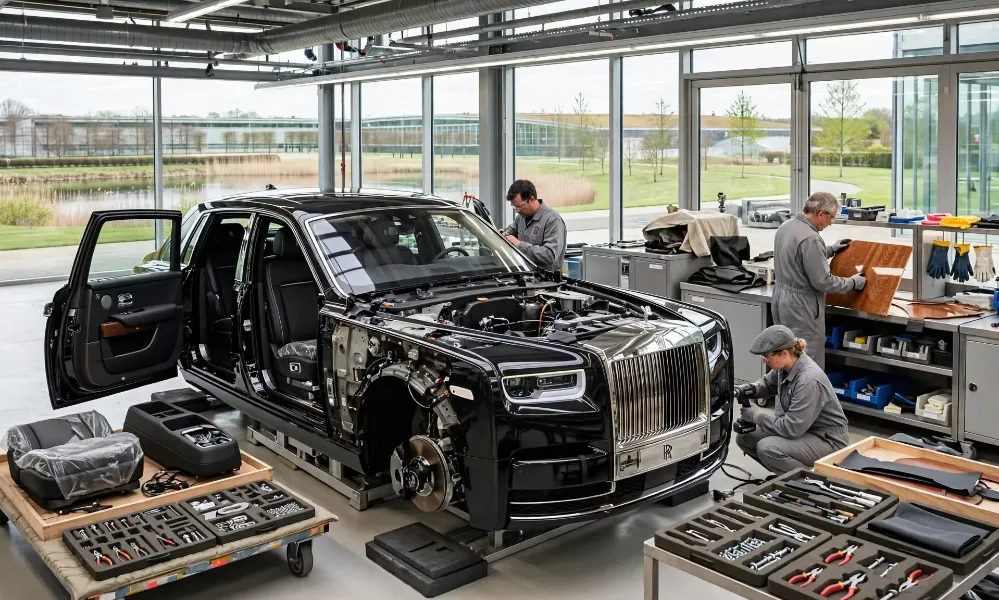
Goodwood is the antithesis of a car factory: a glass walled facility set into landscaped grounds, where each Phantom, Ghost, Cullinan, and Spectre moves through stations of hand assembly, wood veneers are matched like furniture, and leather hides are inspected for imperfections invisible to most eyes.
The reborn Phantom VII of 2003 proved the formula, and the company has grown deliberately since, becoming a pillar of the luxury car landscape we compare in our rankings.
Bespoke: Where Perfection Meets Personality
The contemporary Rolls-Royce is best understood as two companies in one. The first builds the production range to standards that still lead the industry. The second, the Bespoke Collective and its Coachbuild summit, builds dreams, as chronicled in our feature on the bespoke commissions that broke the mold.
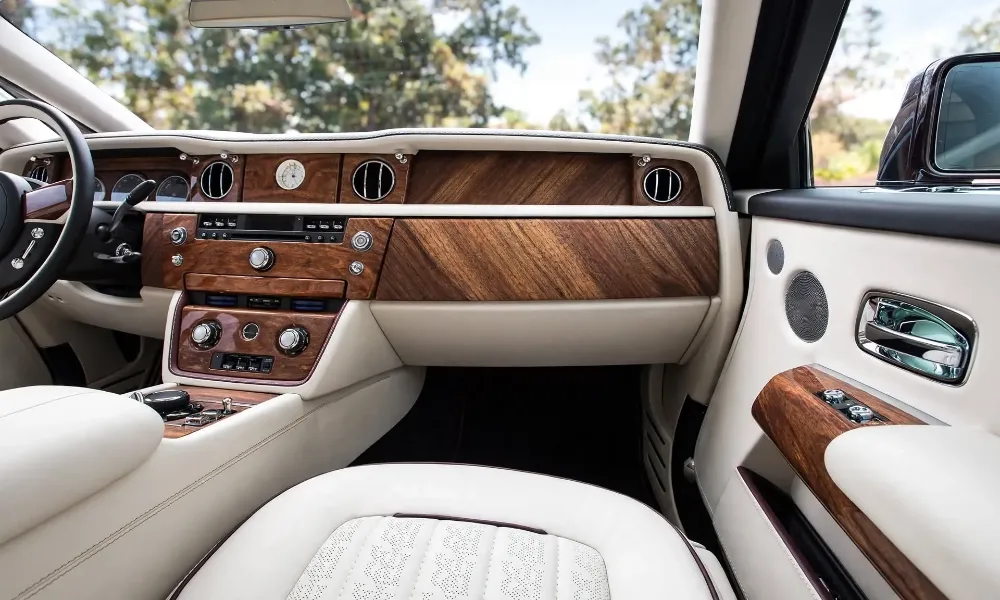
The bespoke operation has grown from an option list into the heart of the business: the average commission now carries personalization deep into five and six figures, from starlight headliners mapping specific nights of sky to picnic hampers engineered like watch movements.
Coachbuild, the one off division behind the Sweptail, Boat Tail, and Droptail, has restored the marque’s pre war tradition of unique coachwork at reported prices up to thirty million dollars, placing Rolls-Royce at the summit of the collectible car world alongside the classics. The strategy is commercially brilliant: every Coachbuild headline lifts the entire marque, reminding the world that at Goodwood, the phrase anything is possible is treated as a job description.
The Electric Dawn and the Eternal Promise
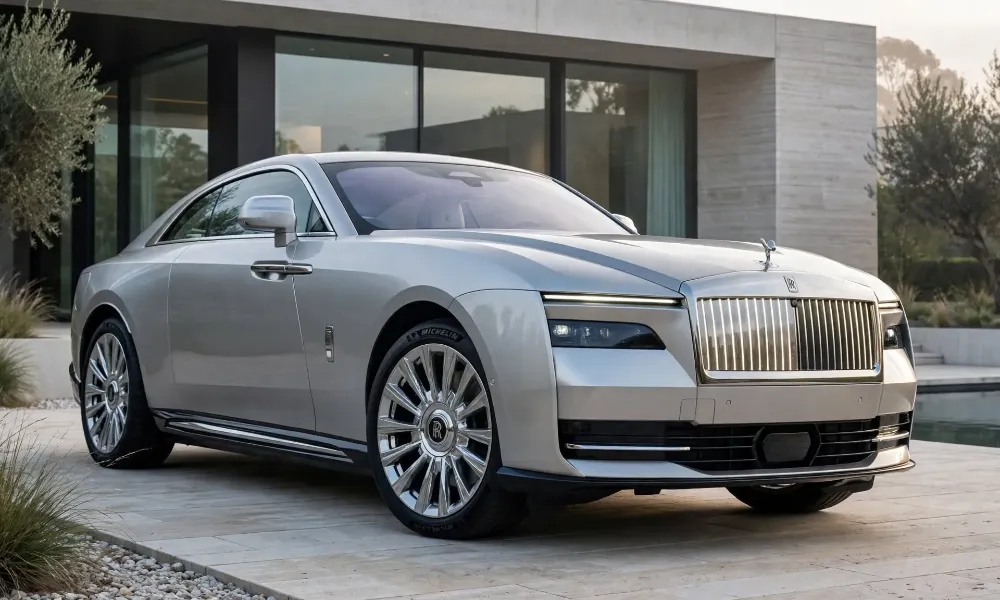
The marque’s newest chapter may be its boldest since 1904. The Spectre, launched in 2023 as Rolls-Royce’s first fully electric production car, translated the brand’s values into the electric era so naturally it seemed predestined: electric propulsion delivers the silence and seamless torque that Rolls-Royce has always pursued, freed at last from combustion entirely. The company has committed to an all electric future, and the Spectre’s order books suggest the clientele agrees.
What will not change is the covenant made in Manchester in 1904. Every generation of the house’s leadership rediscovers the same truth: Rolls-Royce does not compete in the automotive market so much as above it, in the category of objects that define the summit of human craft.
The brand’s presence among the most luxurious cars in New York and every great city is not marketing placement but gravitational law. Perfection, patiently practiced, turned out to be the most durable business model in the history of the automobile.
FAQs
Who founded Rolls-Royce?
Charles Rolls and Henry Royce founded the company following their famous meeting at Manchester’s Midland Hotel in May 1904. Rolls, an aristocratic car dealer and aviation pioneer, agreed to sell every car Royce, the perfectionist engineer, could build, and the company was formally established in 1906.
Why is Rolls-Royce called the best car in the world?
The title dates to the 1907 Silver Ghost, whose 40/50 horsepower chassis completed a 15,000 mile reliability trial with unprecedented smoothness and durability. The motoring press bestowed the phrase, and the company has operated under its burden and benefit ever since.
What is the Spirit of Ecstasy?
The Spirit of Ecstasy is the flying lady mascot adorning every Rolls-Royce radiator since 1911, sculpted by Charles Sykes. Legend holds she was modeled on Eleanor Thornton. The figurine retracts into the grille on modern cars to prevent theft, rising when the car awakens.
Who owns Rolls-Royce Motor Cars today?
Rolls-Royce Motor Cars is a wholly owned subsidiary of BMW, following the 1998 rights settlement between BMW and Volkswagen. The cars are designed and hand built at Goodwood in West Sussex, England. Rolls-Royce plc, the aero engine maker, is a separate company.
Where are Rolls-Royce cars made?
Every Rolls-Royce is built at the company’s manufacturing plant at Goodwood in West Sussex, England, opened in 2003. The facility’s glass walls overlook landscaped grounds, and cars move through stations of hand assembly rather than a conventional production line.
What is the most expensive Rolls-Royce?
The Coachbuild division’s one off commissions hold the records: the La Rose Noire Droptail reportedly approached 30 million dollars in 2023, following the Boat Tail at around 28 million dollars. These unique cars are created with individual clients over approximately four years.
Does Rolls-Royce make an electric car?
Yes. The Spectre, launched in 2023, is the marque’s first fully electric production car, an ultra luxury electric coupe whose silent torque delivery perfectly suits the brand’s philosophy. Rolls-Royce has committed to an all electric model future.
How long does it take to build a Rolls-Royce?
A standard production Rolls-Royce requires weeks of hand assembly at Goodwood, with bespoke commissions adding months depending on complexity. Coachbuild one offs take approximately four years from first conversation to delivery, involving thousands of hours of design and craft.