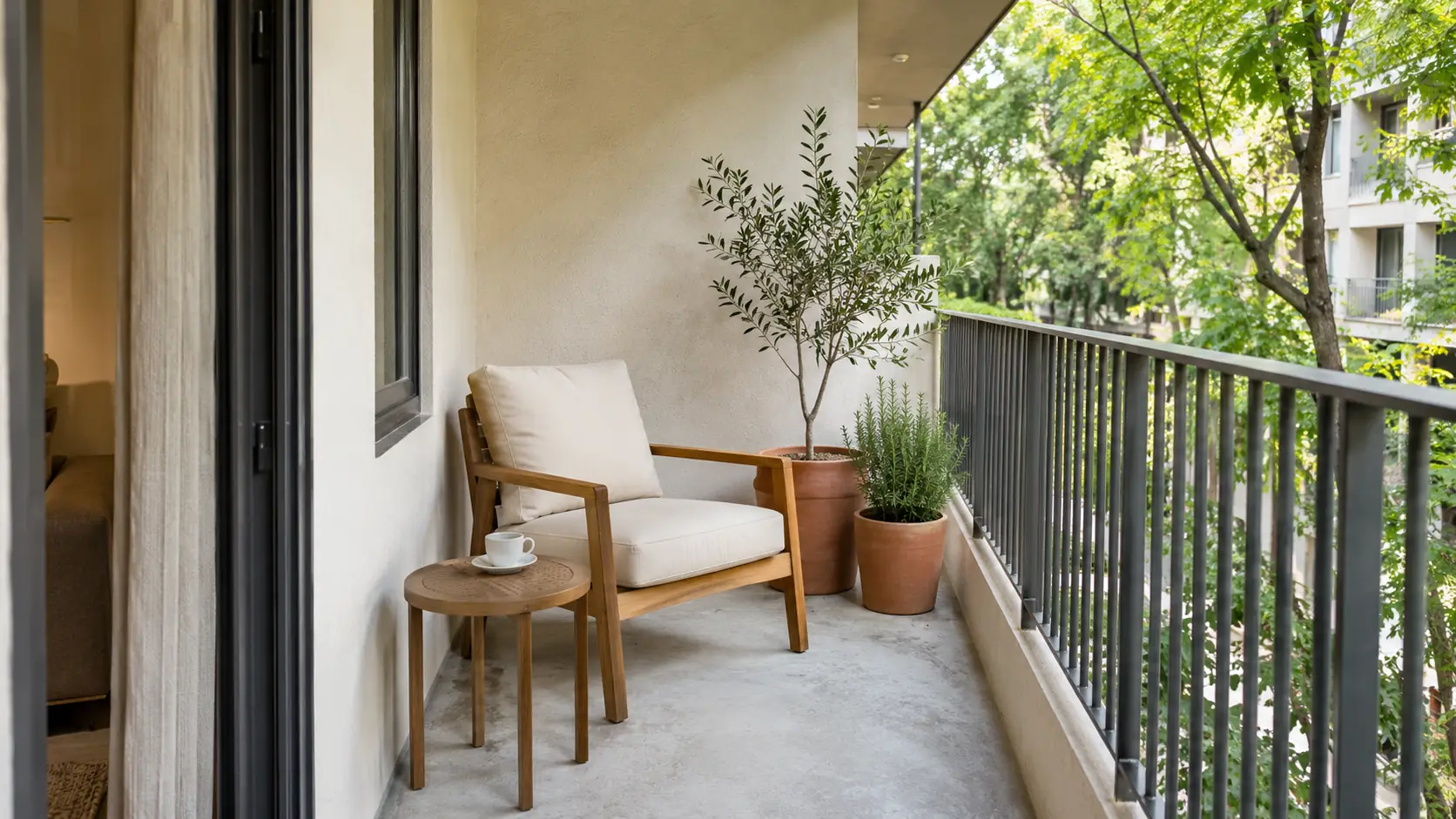
You open the balcony door with a cup of tea, then realize there is nowhere comfortable to sit. A drying rack occupies one corner. Empty pots fill another. The outdoor space exists, but you rarely enjoy it.
A few thoughtful changes can give that balcony a more useful role.
The best small balcony retreat ideas begin with one clear purpose, appropriately sized seating, a place to set down a drink, and planting suited to the conditions. Add privacy and lighting where needed, while keeping access, drainage, and building requirements in mind.
Start with how you want to spend time there. The decoration can follow.
Before Decorating, Understand Your Balcony
Measure the usable floor area and check how the door opens. Note drainage outlets, fixed equipment, and anything that needs to remain accessible.
Spend time outside at different hours. A balcony that feels pleasant at breakfast may become intensely sunny or windy later.
The Royal Horticultural Society identifies strong wind, sunshine, and container weight as important considerations for balcony gardens. It also notes that an overhead balcony can prevent rainfall from reaching plants.
Before adding heavy planters, screens, flooring, or fixed fittings, check the building’s requirements and any relevant permissions. Obtain qualified advice if the balcony’s load capacity or the suitability of an attachment is uncertain.
1. Give the Balcony One Main Purpose
A compact balcony becomes easier to arrange when you choose its main activity.
Perhaps you want somewhere to read alone. Perhaps two people would enjoy breakfast outside. Maybe your priority is tending a few plants.
| Your priority | Start with | Add only if space allows |
| Reading | One supportive chair | Small side table and footstool |
| Tea for two | Two compact chairs | Small bistro table |
| Gardening | Suitable containers | A seat for enjoying the planting |
| Quiet evening time | Comfortable seating | Outdoor light and a cushion |
| Occasional outdoor meals | Compact table and chairs | A serving tray |
You can use the balcony in several ways, but let one purpose guide the layout.
2. Choose Seating Before Accessories
The chair determines whether you will want to stay.
Try seating before buying when possible. Check the back support, seat height, armrests, and ease of getting up. A chair that looks compact online may still be awkward to use in a narrow space.
Measure its full footprint, including any recline or folding mechanism.
Useful Seating Options
- Folding chair: Easy to put away when the balcony serves other purposes.
- Compact upright chair: Suitable for reading, conversation, or meals.
- Small bench: Can work along a wall where depth permits.
- Single lounge chair: Worth considering when solo relaxation is the priority.
Keep seating away from the guardrail, particularly where children could use it to climb. Leave a comfortable route through the balcony and back indoors.
3. Make a Narrow Balcony Work Along Its Length
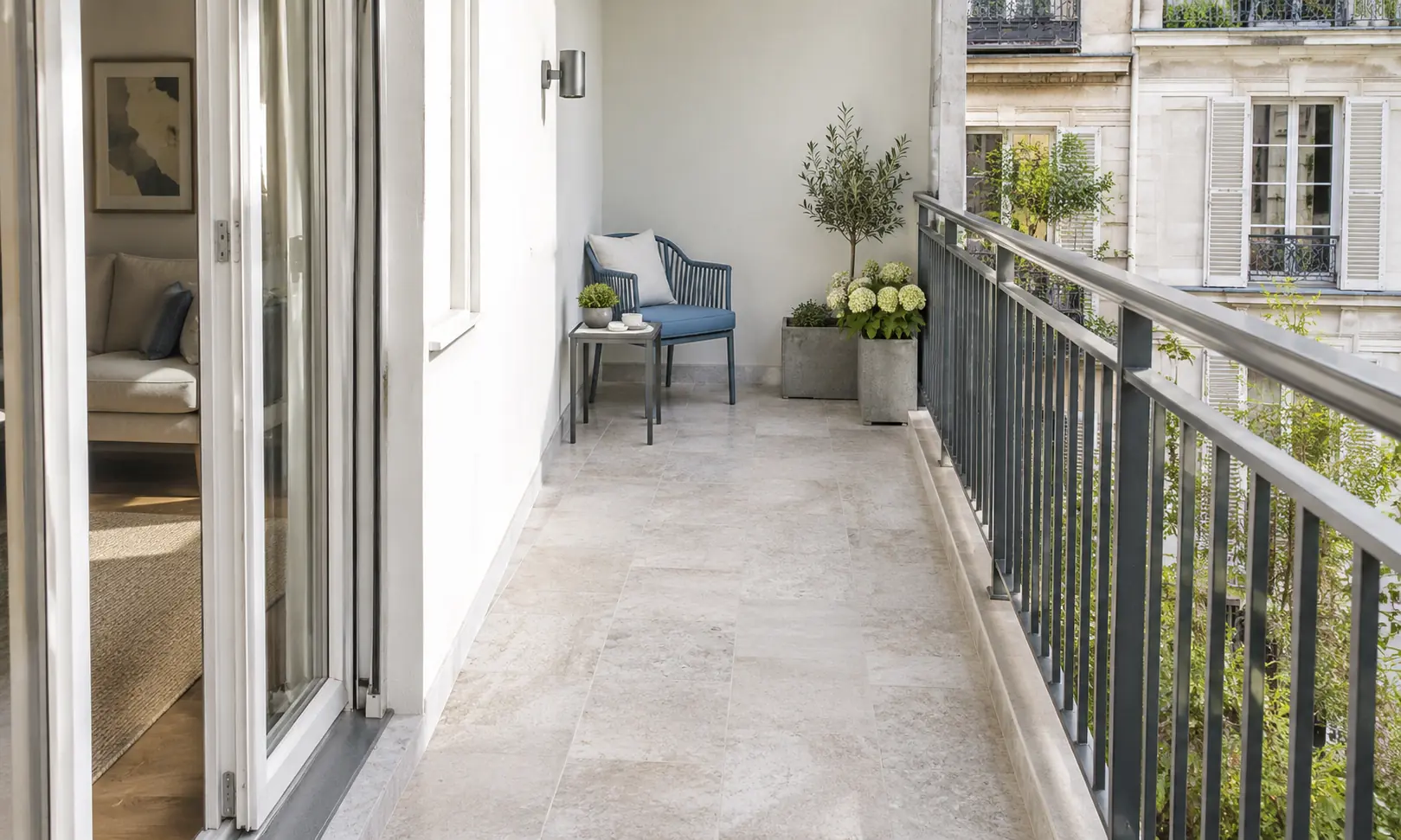
A long, narrow balcony often benefits from a simple arrangement: seating toward one end, a modest table beside it, and a clear route from the door.
Avoid lining both sides with furniture if that leaves only a tight passage.
Try marking furniture footprints on the floor with removable tape before ordering. Walk through the layout and open the door fully.
For more ideas on making limited space useful, explore Pravi Celer’s guide to luxury tiny homes and thoughtful small-space living.
4. Add a Proper Place for Your Cup
A small surface can make a balcony considerably more comfortable.
Choose a side table, compact stool designed for outdoor use, or a folding table that suits the space. Make sure it is stable and easy to reach from your chair.
Rail-mounted tables require particular care: check product compatibility, secure installation, and building permission before considering one. Keep objects within the balcony rather than projecting into space below.
If your table makes it difficult to move, try a smaller surface.
5. Use a Simple Color Palette
Choose a few colors that work with the building’s existing walls, floor, and railing.
Possible combinations include:
| Mood | Color combination |
| Warm and understated | Cream, muted brown, and green |
| Crisp and graphic | Charcoal, white, and olive |
| Soft and colorful | Pale blue, cream, and terracotta tones |
| Rich and sheltered | Burgundy, dark green, and warm neutrals |
Repeat a color through a cushion, planter, or chair rather than adding many unrelated finishes.
Pravi Celer’s warm minimalism interior design guide offers useful inspiration for combining restraint, texture, and everyday comfort.
6. Choose Plants for the Conditions
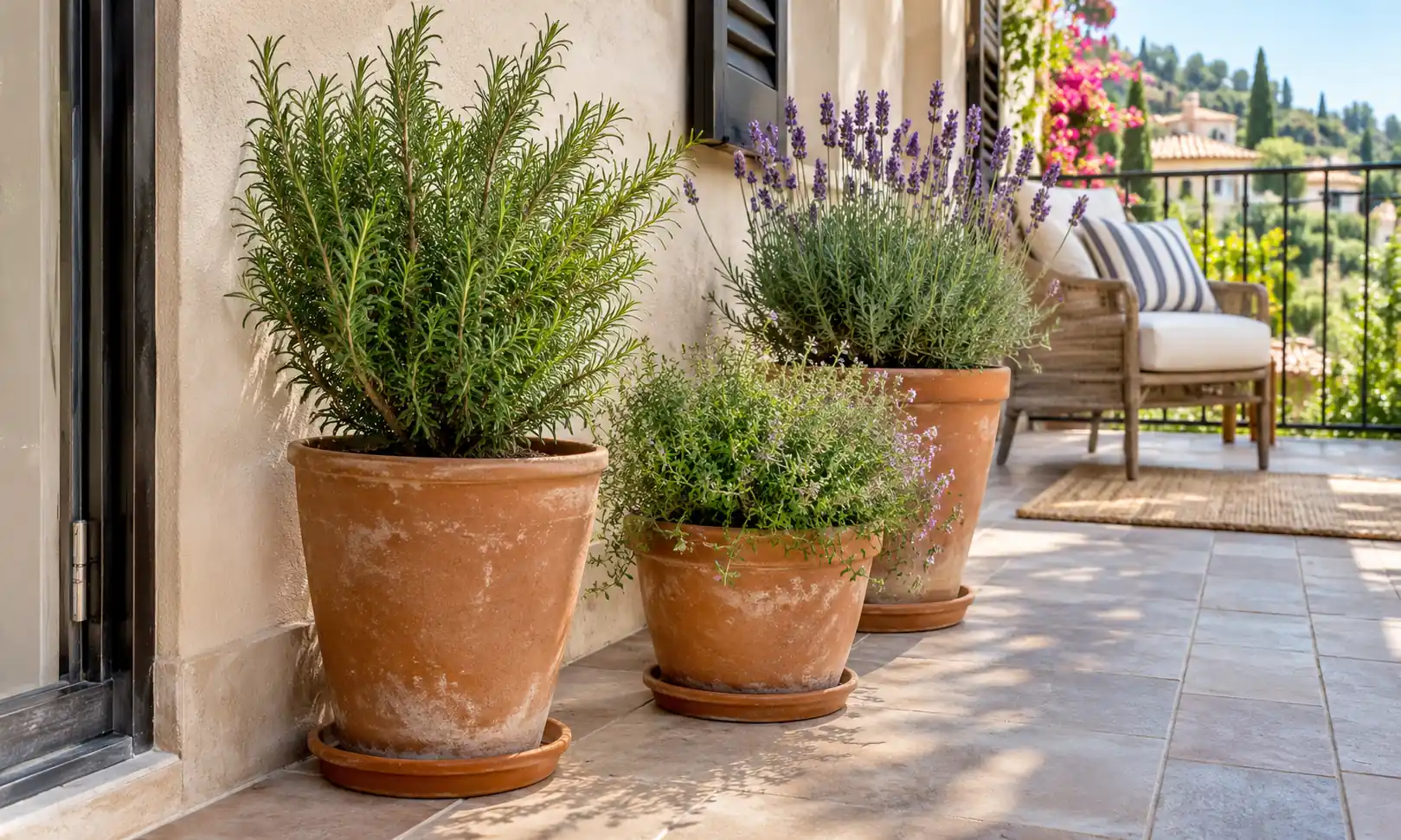
Begin with the balcony’s light, wind, temperature, and your ability to water regularly.
Ask a local nursery for plants suited to those conditions. “Outdoor plant” is too broad a description: a sheltered shaded balcony and an exposed sunny one need different choices.
Start with a manageable number of containers and observe how they perform.
Think About Watering Before Buying
Windy, hot conditions can dry containers quickly. The RHS recommends suitable container depth, drainage holes, and attention to watering; plants under an overhang may receive little rain.
Check where water will drain so it does not create slippery surfaces or spill onto neighboring balconies.
Keep the plants accessible. A container you cannot comfortably reach will be difficult to maintain.
7. Create Privacy Where You Sit
Sit in your intended chair and identify the view you actually want to soften.
You may only need privacy on one side. That can preserve more daylight and openness than enclosing the entire balcony.
Possible approaches include carefully positioned planting or a suitable, approved screen.
Screens and tall planting also interact with wind. The RHS advises secure support for screen fixings and notes that solid barriers can create turbulence.
Check the building’s rules, material restrictions, and installation requirements. Avoid improvised fabric panels or unsecured freestanding screens on exposed balconies.
8. Make Lighting Useful and Gentle
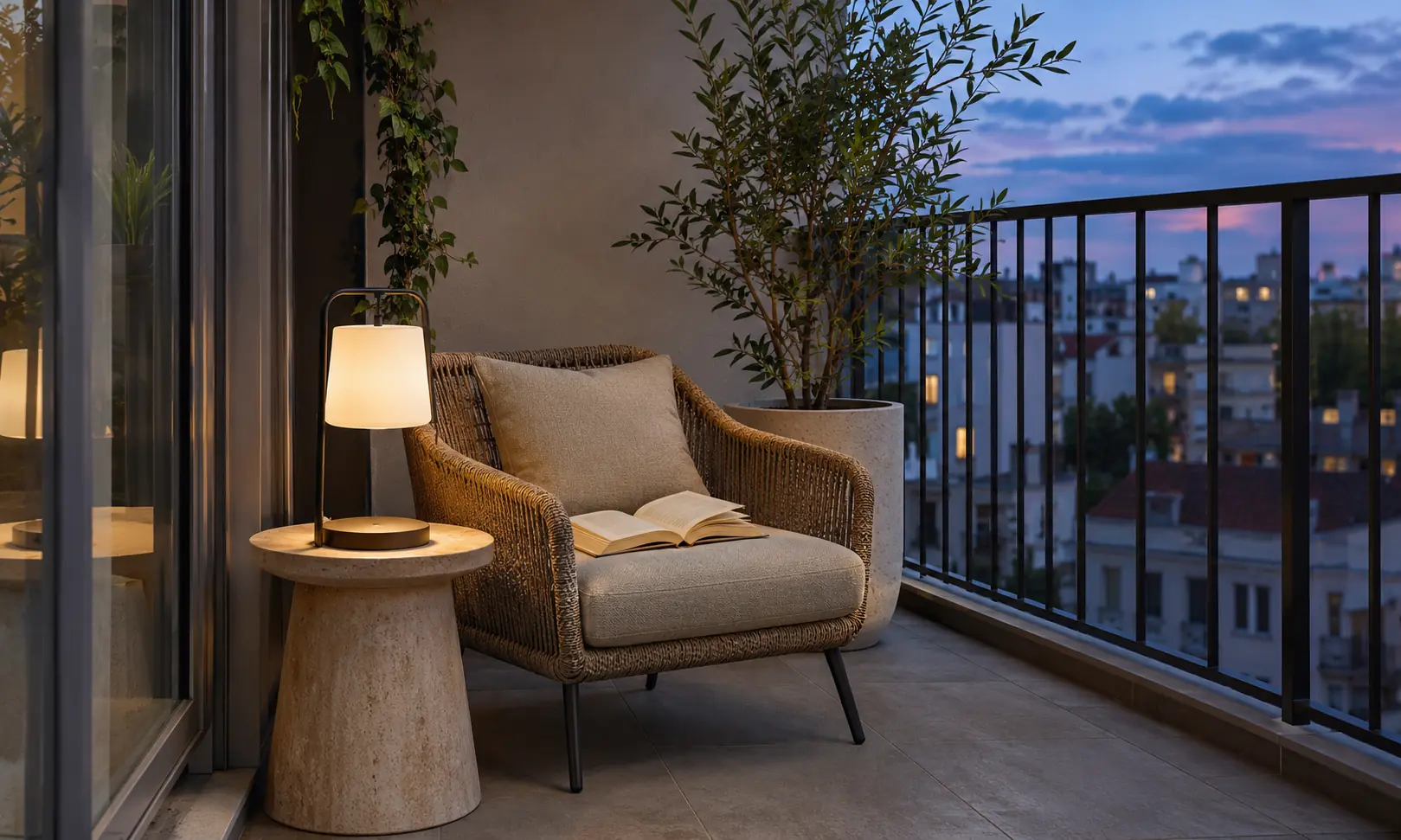
Choose enough light to move comfortably and enjoy the space without illuminating neighboring homes.
A portable outdoor-rated lamp can be convenient where fixed wiring is impractical. Select products rated for the actual exposure and follow their charging, storage, and operating instructions.
If you want to read, check that the light reaches the page. Decorative string lights may create atmosphere without providing useful reading light.
Keep cables out of walking routes and avoid trailing an indoor extension lead through a closing door. Fixed electrical work needs an appropriately qualified professional.
9. Add Textiles You Can Easily Bring Inside
A cushion or throw can make outdoor seating more inviting, but storage matters.
Choose items intended for outdoor use and check their care instructions. Bring them inside when required by the weather or manufacturer.
Before buying several cushions, decide where they will go when wet weather arrives.
An outdoor rug is optional. Check that it suits the balcony surface, stays secure, and does not obstruct drainage or trap persistent moisture. Follow building restrictions on coverings and combustible materials.
10. Leave the Floor Clear Unless a Covering Solves a Problem
A clean, sound balcony floor may need no additional layer.
If you are considering decking tiles or another removable finish, check suitability for the surface, drainage, waterproofing, door clearance, weight, and building requirements.
“Removable” does not automatically mean suitable for every rented balcony.
Avoid drilling into the balcony slab or waterproofing as a casual decorating project. Ask the property manager or an appropriate professional before making changes.
11. Plan for Wind and Changing Weather
Small objects, cushions, screens, and lightweight furniture can become difficult to manage when the weather turns.
Choose furniture suited to the exposure and follow the manufacturer’s securing or storage guidance. Keep portable accessories somewhere you can bring them inside promptly.
Large parasols and shade sails need particular attention because they catch wind. Use only suitable, approved installations rather than improvising attachments to the railing.
For atmosphere, choose an outdoor-rated LED lantern. London Fire Brigade advises against using barbecues on balconies.
- Give Yourself a Reason to Step Outside
Once the basic setup works, connect it to something you already enjoy.
You might use the balcony for:
- A morning drink.
- A few pages of a book.
- An evening conversation.
- A short break between tasks.
- A weekly plant-care session.
Keep the items you need easy to retrieve. A retreat is more useful when sitting down takes little preparation.
Three Small Balcony Layouts to Try
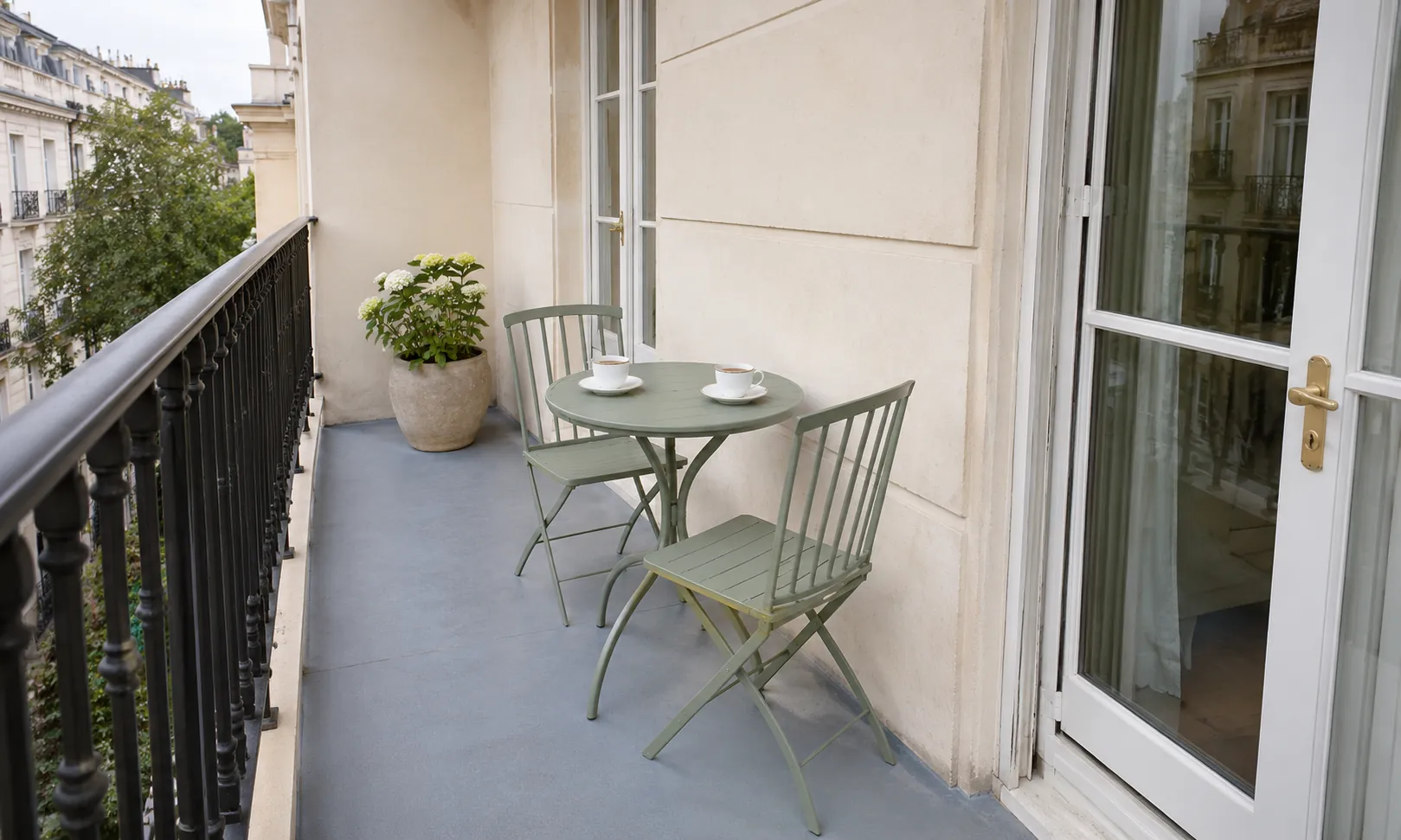
These are adaptable concepts, not measured plans. Check the actual furniture dimensions and available space.
| Layout | Main arrangement | Best suited to |
| Solo reading corner | One chair toward an end, side table beside it, a few nearby plants | Narrow balconies |
| Two-person tea spot | Two compact chairs around a small table | Balconies with enough width for occupied seating |
| Flexible outdoor corner | Folding chair, portable table, containers grouped out of the route | Balconies that also serve practical tasks |
Test the layout with someone sitting in each chair. Furniture needs more room in use than it does when neatly pushed together.
How to Create a Balcony Retreat on a Budget
Spend first on the part that makes the balcony usable.
A sensible order is:
- Clean and assess the space.
- Arrange suitable seating you already own.
- Add a stable surface.
- Try a small amount of planting.
- Add lighting or textiles after using the layout.
Delay decorative purchases until you know what is missing. You may discover that one comfortable chair brings more enjoyment than a collection of accessories.
Common Mistakes to Avoid
| Mistake | Better approach |
| Buying a furniture set before measuring | Test the footprint and door clearance |
| Filling every corner | Preserve room to move and sit |
| Choosing plants only by appearance | Match them to the conditions and care routine |
| Treating the railing as a general fixing point | Check suitability and permissions |
| Adding coverings without checking drainage | Assess the surface and system first |
| Leaving no storage for loose items | Plan where they go during bad weather |
FAQs
How do you make a small balcony feel cozy?
Start with comfortable seating, a reachable table, and lighting suited to the space. Add a small amount of planting or texture while keeping the layout open.
What furniture works best on a tiny balcony?
Choose according to the activity and available clearance. One good chair may suit a reading retreat better than a full bistro set. Folding furniture can help when the balcony has several uses.
Can renters create a balcony retreat?
Yes, often through suitable freestanding furniture and portable accessories. Check the tenancy and building requirements before adding screens, coverings, attachments, or heavy containers.
How can I make a balcony more private?
Identify the specific sightline from your seat, then consider approved screening or planting in that area. Account for wind, secure support, and building restrictions.
Can I hang planters outside the railing?
Do not assume this is permitted or suitable. Check building rules and the railing and planter system. Keeping containers securely within the balcony avoids placing them over people or property below.
Do I need an outdoor rug?
No. Add one only if it suits the surface, drainage, exposure, and building requirements. A clean existing floor can work well.
Start With One Comfortable Place to Sit
Clear the balcony, bring out a suitable chair, and spend a little time there.
Notice the light, breeze, view, and what you reach for. Then add the next useful thing a table, a plant, or a lamp.
Build around those observations, and your balcony can become a small part of home you enjoy using every day.