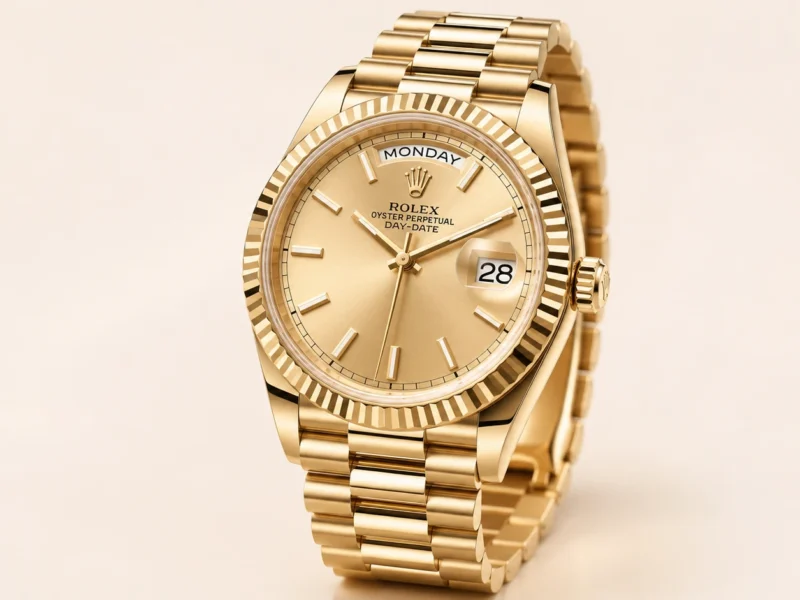
A Rolex watch case size can look perfect on paper and feel quite different when you finally fasten the bracelet. Perhaps the watch you expected to love feels too prominent. Perhaps the smaller one surprises you, settling onto your wrist with an ease you had not imagined.
That moment deserves your attention.
The right Rolex size depends on case diameter, case length, thickness, bracelet fit, wrist shape, and personal preference. Start with the published diameter to narrow your options, then compare the exact watches on your wrist.
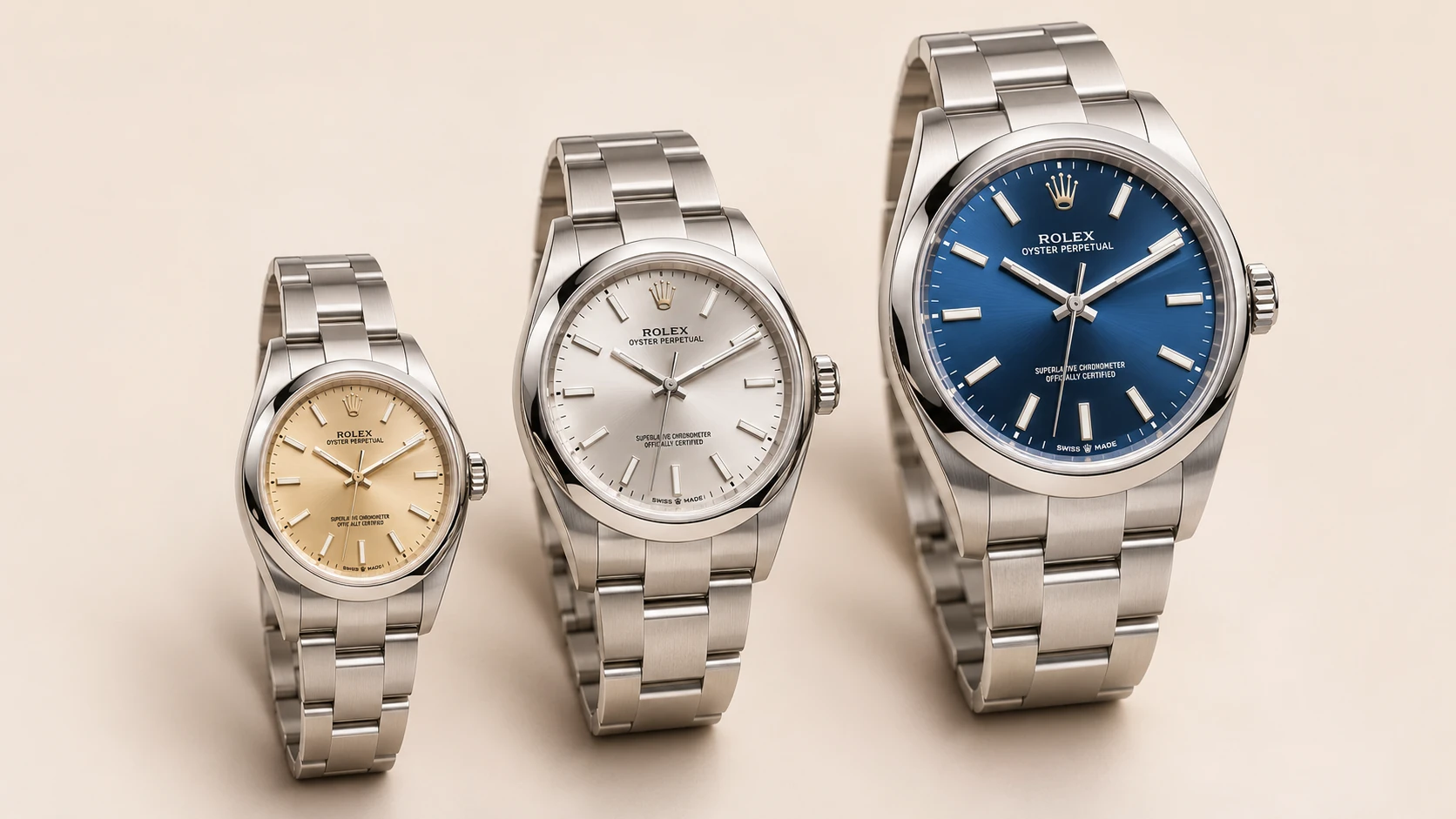
A 36 mm Explorer and a 40 mm Explorer offer an especially useful comparison. So do different Oyster Perpetual sizes. The goal is to find the watch you will enjoy wearing through an ordinary day, long after the excitement of buying it.
Key Takeaways
- Rolex’s stated case diameter is a starting measurement, rather than a complete description of fit.
- Current and older versions of the same collection may have different dimensions.
- Lug-to-lug length, thickness, weight, and bracelet construction affect how a watch wears.
- Wrist circumference cannot tell the whole story.
- Compare watches in a mirror and in normal movement.
- Choose the proportions you enjoy, without treating gender categories as sizing rules.
What Does Rolex Watch Case Size Mean?
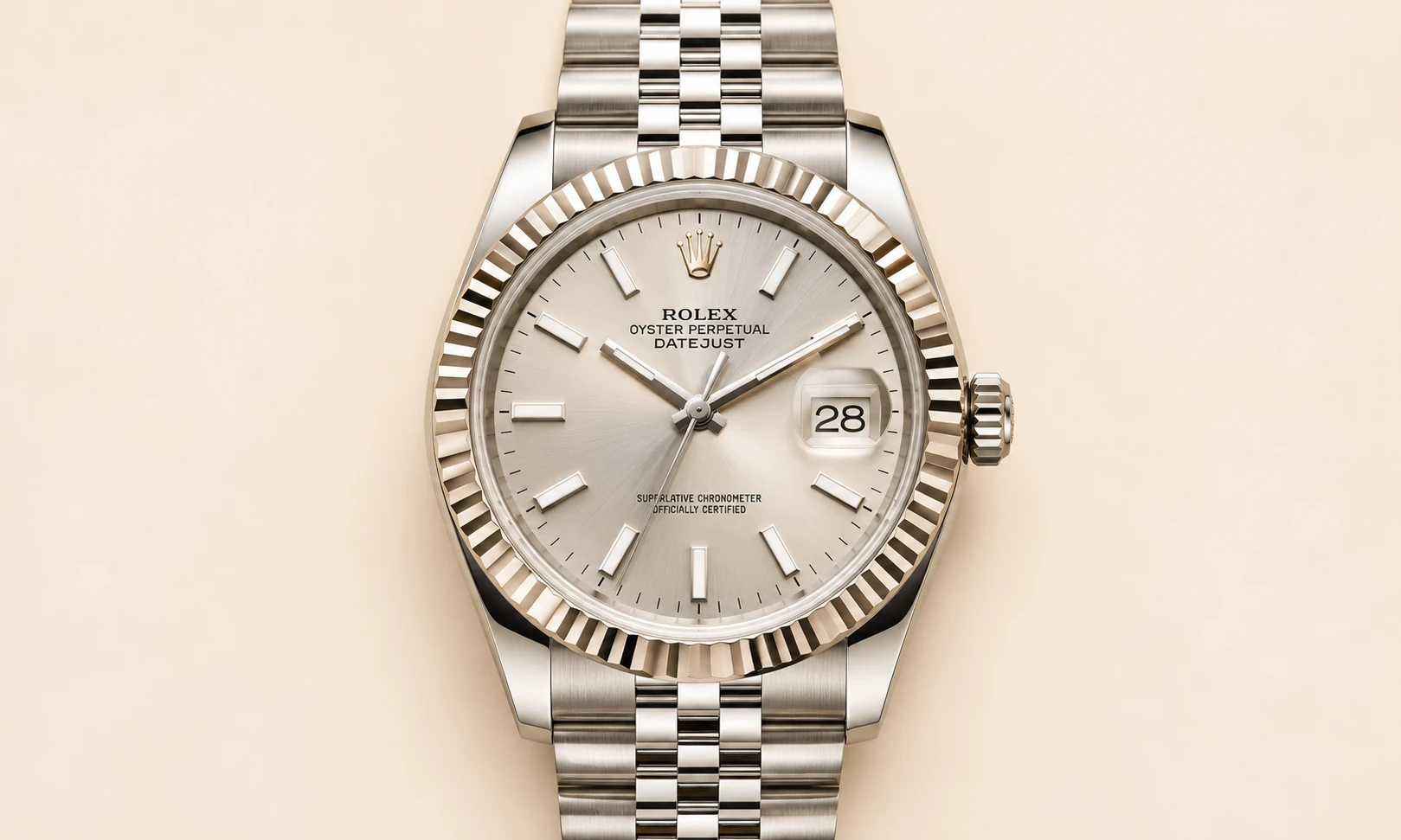
When a Rolex is described as 36 mm or 41 mm, that number refers to its nominal case diameter.
In ordinary watch sizing, diameter is generally discussed without including the winding crown. It does not describe the complete space occupied by the watch and bracelet on your wrist.
Several other measurements deserve attention.
Lug-to-lug length describes the distance from the tip of the upper case lugs to the lower ones.
Thickness describes the watch’s height, which affects its profile and interaction with sleeves.
Lug width concerns the gap between the lugs where the bracelet or strap attaches. It is different from lug-to-lug length.
Weight affects the wearing experience, particularly when comparing different case and bracelet materials.
Together, these details explain why two watches with the same stated diameter may feel noticeably different.
Rolex Case Size Chart: Popular Current Collections
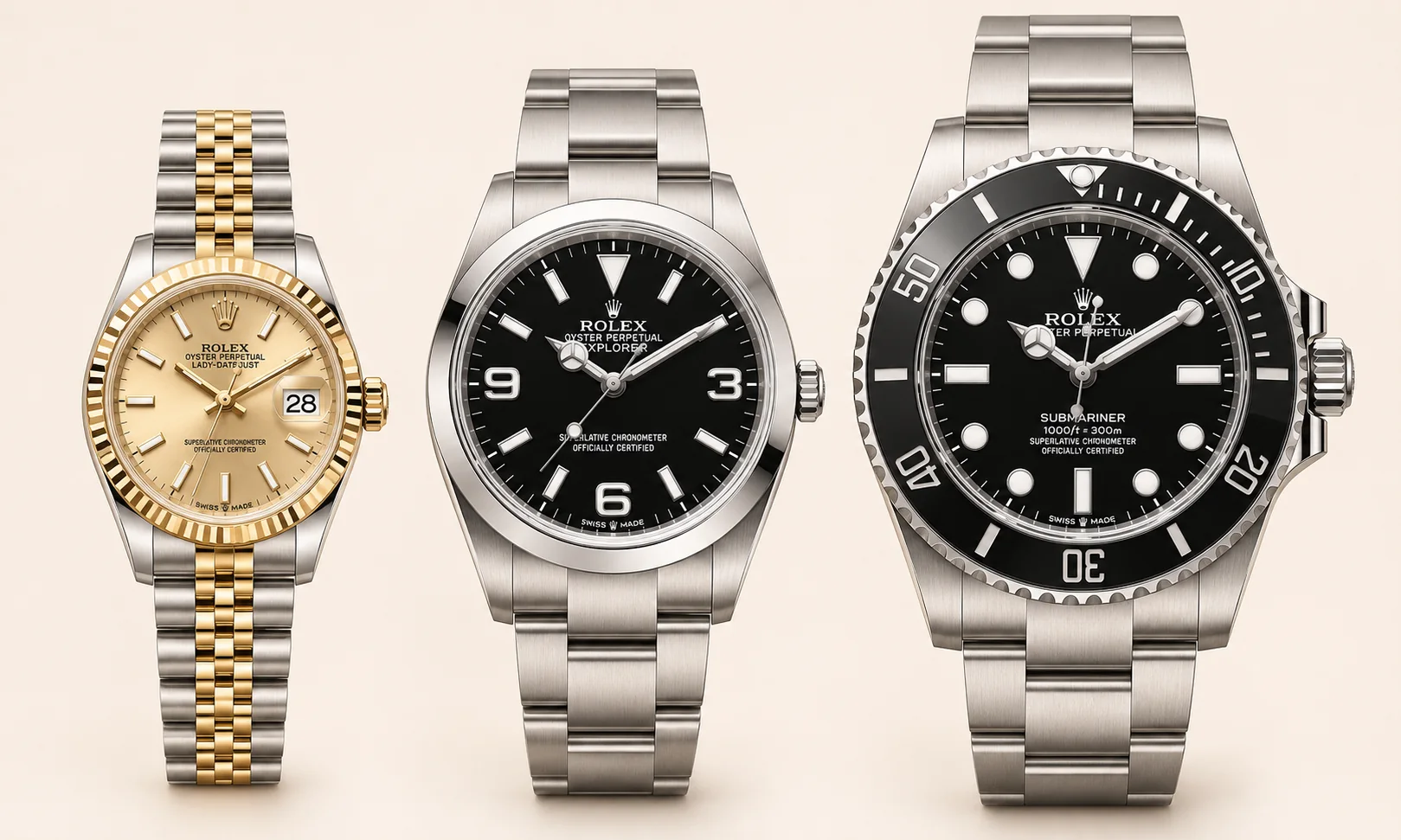
The following chart summarizes selected collection sizes checked against Rolex information in November 2026. It is a starting guide, not a complete catalog of every current or historical reference.
| Rolex collection | Published case diameter | A useful comparison to make |
| Lady-Datejust | 28 mm | Check dial readability and bracelet fit |
| Oyster Perpetual | 28, 31, 34, 36, 41 mm | Compare neighboring sizes within the family |
| Explorer | 36, 40 mm | Assess how much wrist presence you prefer |
| Land-Dweller | 36, 40 mm | Evaluate the case and bracelet together |
| GMT-Master II | 40 mm | Check the full case profile and crown position |
| Cosmograph Daytona | 40 mm | Assess dial readability and pusher clearance |
| Submariner / Submariner Date | 41 mm | Compare its proportions with other sports models |
| Sea-Dweller | 43 mm | Pay close attention to height and balance |
| Rolex Deepsea | 44 mm | Try it on before deciding from diameter alone |
A size appearing in the chart does not establish availability in every material, dial, or bracelet combination. Confirm the exact reference you intend to buy.
Why Can Two Similar-Sized Rolex Watches Feel Different?
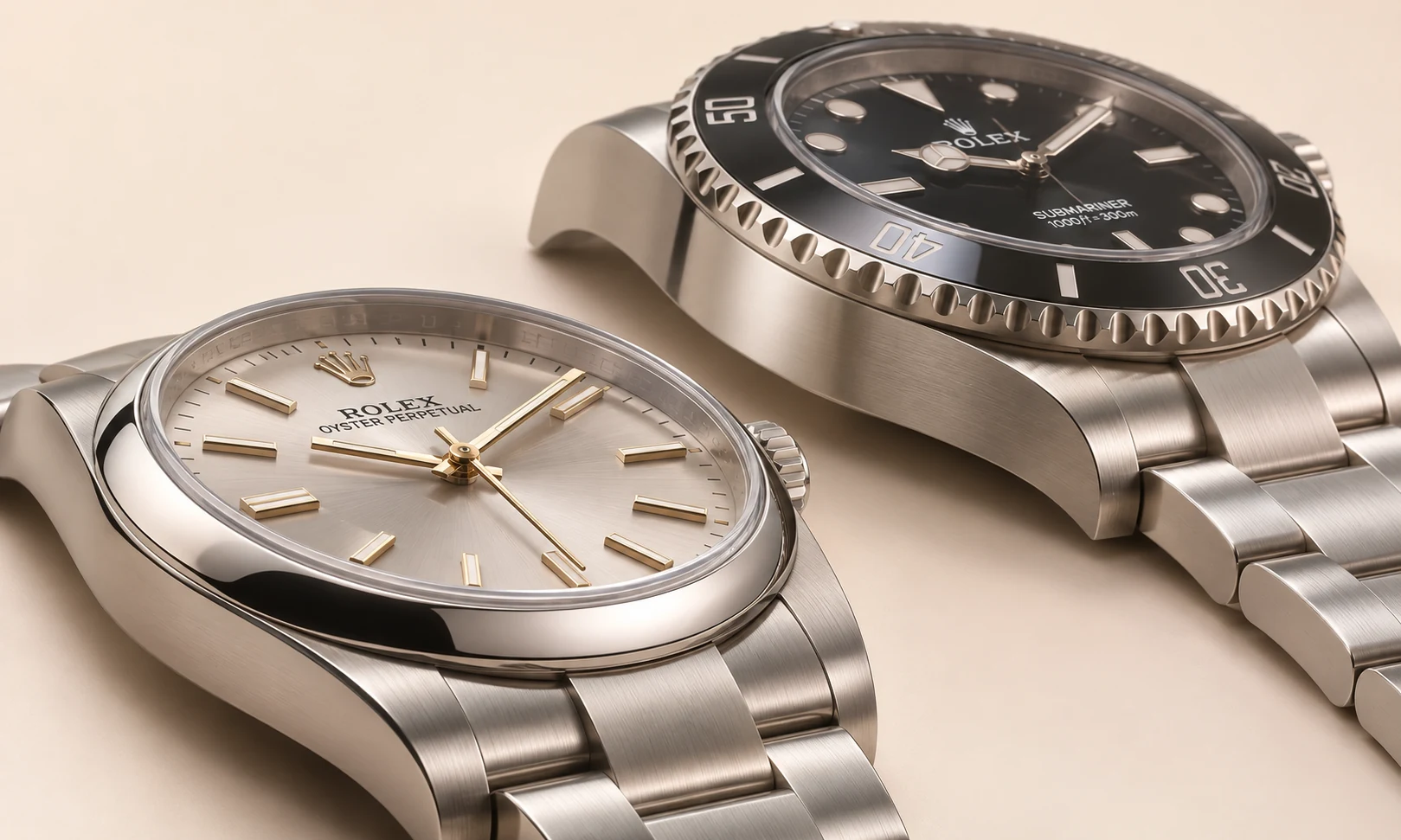
Think about a jacket. Two garments can share a labeled size yet sit differently through the shoulders, sleeves, and body.
Watches behave similarly.
A broad bezel changes the relationship between dial and case. The shape of the lugs affects how the watch meets your wrist. Bracelet end links can influence how quickly the bracelet bends downward.
A taller watch may also feel more noticeable under a cuff, even if its diameter seems manageable.
This is why comparing a 40 mm sports watch with a 41 mm model requires more than deciding whether one extra millimeter matters. You are comparing complete designs.
Japanese luxury watches also demonstrate how case architecture, finishing, and design proportions can influence the overall wearing experience.
A Small Number Can Represe nt a Noticeable Visual Change
Consider a simplified geometric example.
A 41 mm circle is approximately 14% larger in area than a 38.5 mm circle. That follows from comparing the square of each diameter.
This calculation does not measure the visible area of any particular watch. Cases, bezels, and dials are more complicated than two flat circles. It simply illustrates why a modest increase in diameter can create a greater change in visual presence than the numbers suggest.
The fitting appointment is where you discover whether that change appeals to you.
How Should You Measure Your Wrist?
Wrap a flexible tape around the part of your wrist where you normally wear a watch. Keep it comfortably in contact with the skin without pulling it tight.
If you do not have a tape, use a strip of paper, mark the overlap, and measure the length with a ruler.
Record your circumference in millimeters or centimeters. That is useful information when discussing bracelet length with a retailer.
However, avoid turning it into a rigid formula.
Two wrists with the same circumference can have different shapes. One may offer a broader, flatter upper surface; another may be more rounded. The same case can sit differently on each.
Use wrist circumference to prepare for a fitting, rather than to replace one.
Should You Choose a 36 mm or 40–41 mm Rolex?
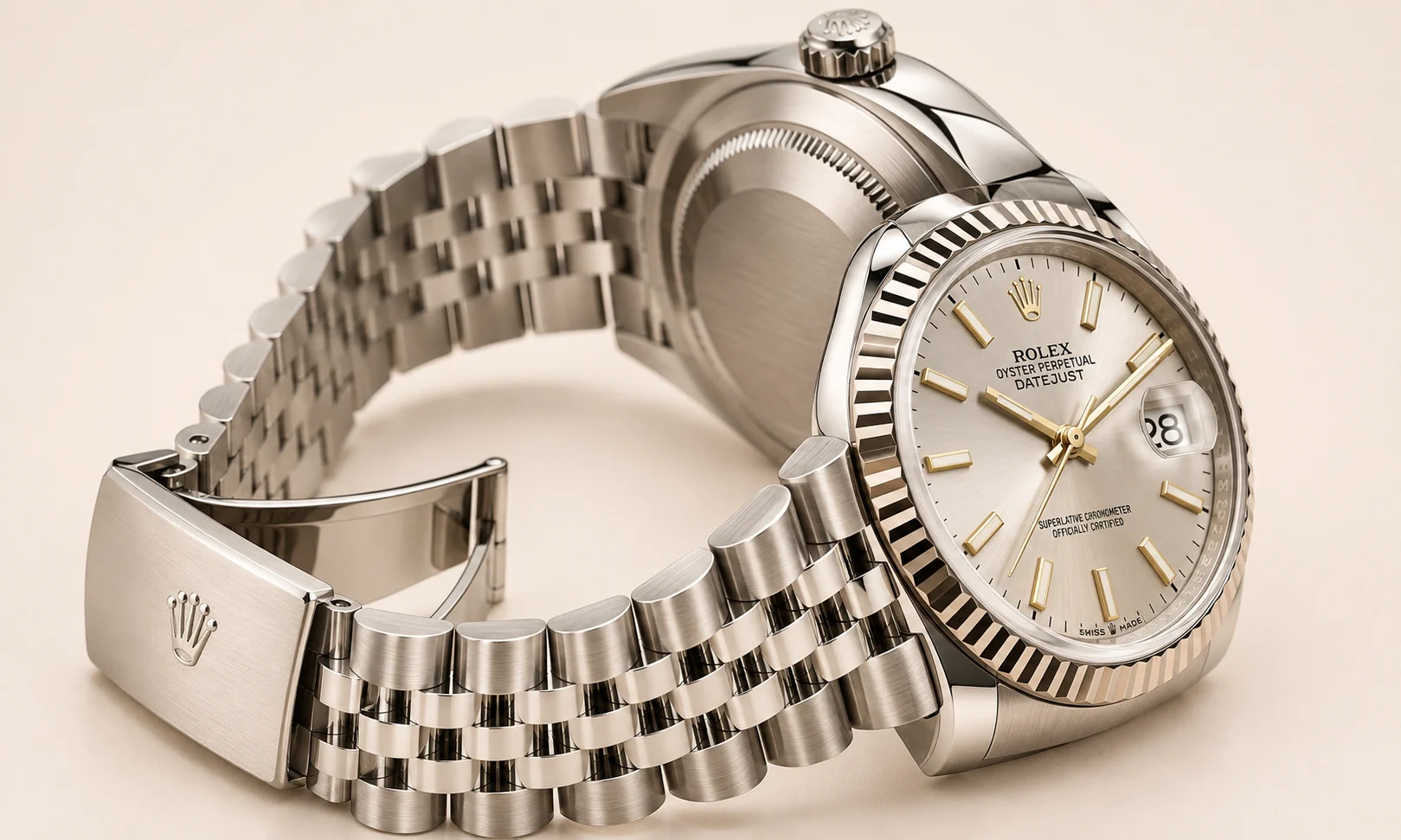
Begin by asking what you want to notice when you look down.
A smaller watch may appeal because it leaves more visible wrist around the case. A larger one may provide the visual presence you enjoy.
Neither preference needs defending.
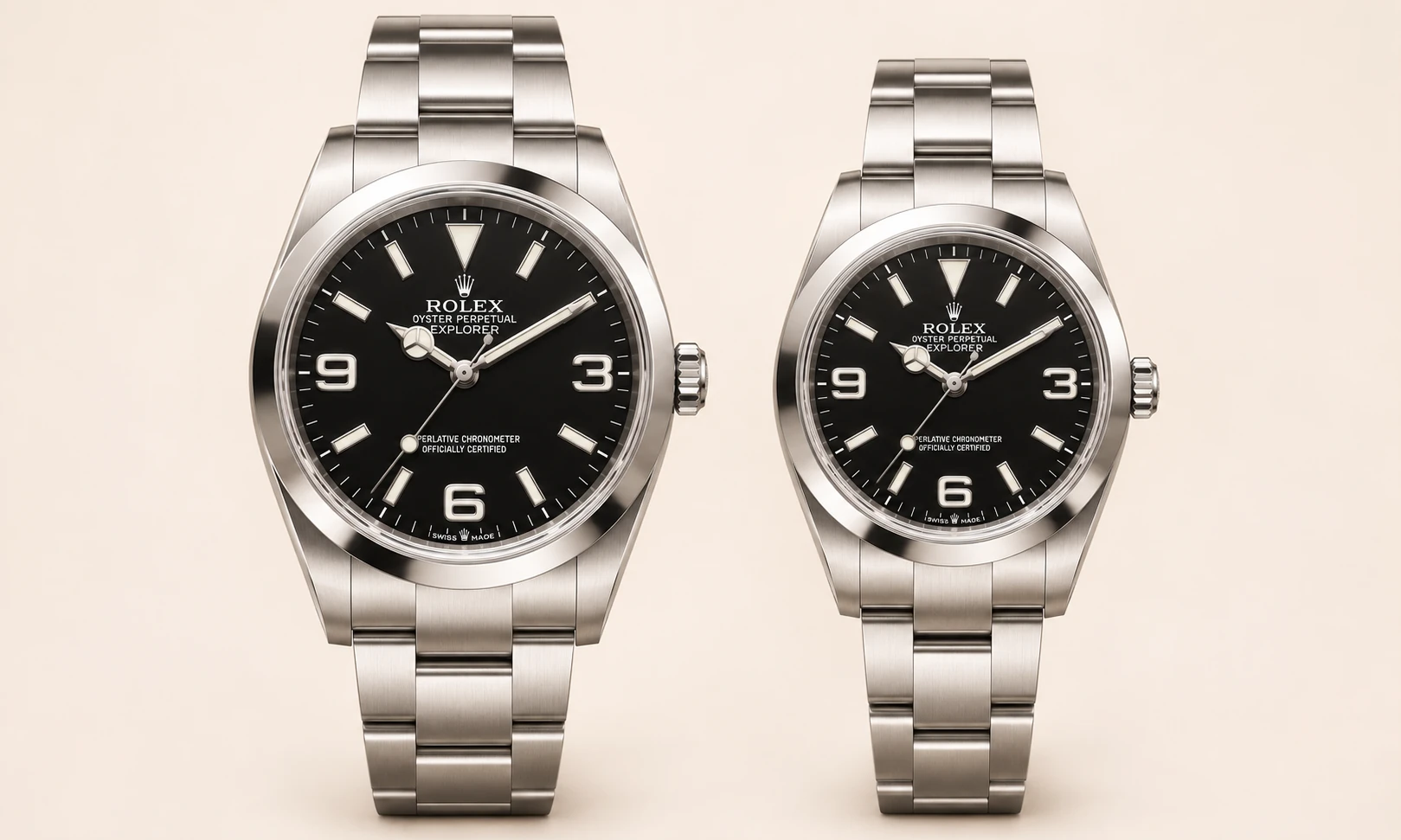
For a useful first comparison, try the Explorer 36 and Explorer 40, or different sizes within the Oyster Perpetual collection. Staying within a family helps you focus on proportion without changing every design element at once.
When comparing different models, exploring other luxury watch brands can also help you understand how case proportions, design philosophies, and craftsmanship vary across the industry.
Then look beyond your wrist. Check the watch in a mirror with your arm hanging naturally. Its relationship with your overall appearance may feel different from an extreme close-up.
A well-proportioned Rolex can also complement a quiet luxury wardrobe, where timeless design and understated details matter more than prominent branding.
Choose the Smaller Option When…
You prefer its proportions, it reads clearly enough for you, and the bracelet sits comfortably.
Choose the Larger Option When…
You enjoy its presence, the case remains comfortably supported, and normal movement does not create pressure or awkwardness.
Those observations are more useful than a rule declaring one size universally correct.
How Do You Know Whether a Rolex Is Too Large?
Look for a combination of fit problems rather than one photograph.
The case lugs may extend beyond the supporting surface of your wrist. The watch may move excessively despite reasonable bracelet adjustment. Its crown or pushers may press into your hand when you bend your wrist.
You might also find yourself changing your movements to accommodate it.
A watch that shifts because the bracelet is loose needs adjustment before you judge the case size. Ask the retailer to help distinguish those issues.
If the watch remains uncomfortable after proper fitting, take that seriously. Admiration does not have to become ownership.
If you are still comparing different models, exploring luxury watches across various collections can help you identify the designs and proportions that suit your everyday preferences.
Can a Rolex Be Too Small?
It can be too small for your needs or preferences.
Perhaps you struggle to read the dial. Perhaps you dislike how little presence it has. Or perhaps the bracelet cannot be adjusted to a comfortable fit in the configuration offered.
Those are valid reasons to explore another option.
But a watch does not fail simply because someone considers its diameter unfashionable. A compact watch that you enjoy wearing is doing its job beautifully.
The important distinction is between your preference and a rule you have absorbed from other people.
Why Bracelet Fit Deserves Its Own Decision
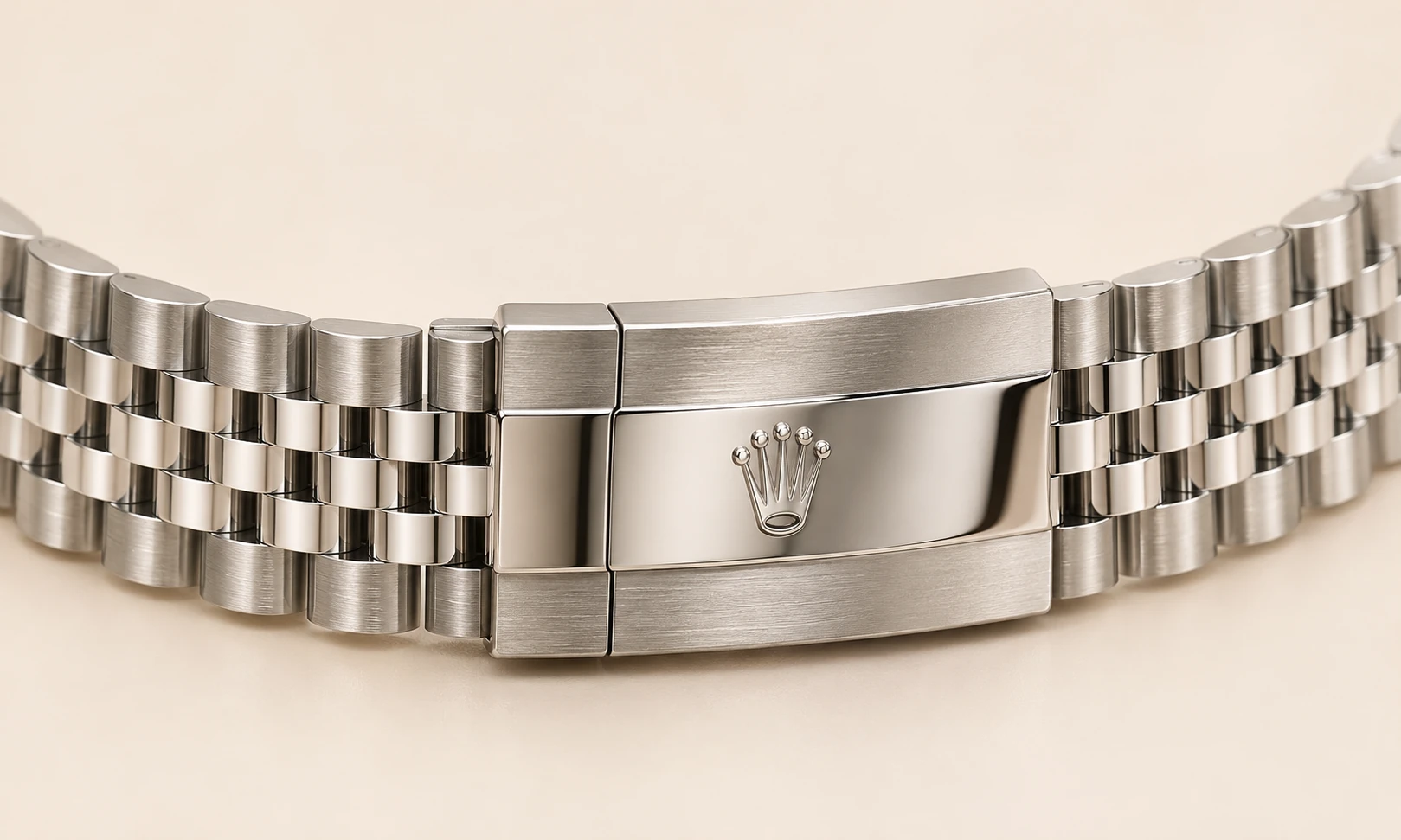
The case gets most of the attention, yet the bracelet is in contact with your wrist throughout the day.
Check the clasp position, the number of removable links, and any adjustment features fitted to the exact reference. Do not assume every Oyster or Jubilee bracelet offers identical adjustment.
For a pre-owned purchase, establish whether all necessary links are included. A watch that looks appealing in a listing may require additional parts to fit you.
Different Rolex materials also change the experience. If you are considering steel and precious-metal versions, try both where possible. Visual similarity does not guarantee a similar feeling on the wrist.
Buying an Older Rolex? Confirm the Reference
A collection name can span decades of design changes.
An older Submariner, Explorer, or Lady-Datejust should not be assigned the dimensions of today’s collection automatically.
Ask the seller for the exact reference, stated case diameter, bracelet details, and relevant measurements. If thickness or lug-to-lug figures are supplied, ask how they were measured.
This is especially important when comparing measurements from different sellers. Figures may include different parts of the case or bracelet, making apparently precise comparisons less dependable.
A clear return policy becomes particularly valuable when you cannot try the watch before buying.
A Better Fitting Appointment: Look, Move, Forget
Give yourself three stages.
Look: Check the dial, proportions, and appearance in a mirror. Take a photograph from a reasonable distance if permitted.
Move: Bend your wrist, sit at a desk, fasten a cuff, and let your arm hang naturally.
Forget: Wear the watch for a few quiet minutes while discussing something else. Notice whether it settles comfortably or keeps demanding an adjustment.
This is an editorial fitting exercise, not a technical test. Its purpose is to bring ordinary life into a purchase that can otherwise become dominated by numbers.
Your Rolex Sizing Checklist
- Confirm the exact model and reference.
- Separate current specifications from older generations.
- Measure your wrist circumference.
- Compare at least two sizes where possible.
- Check lug support, case height, and crown clearance.
- Ask for proper bracelet adjustment.
- View the watch in a mirror.
- Try normal movements and clothing.
- For pre-owned watches, confirm spare links and return terms.
- Choose the fit you want to live with.
Frequently Asked Questions
What is the most versatile Rolex case size?
There is no universal answer. A 36 mm model is a useful starting point for comparison, but your wrist, preferred design, and routine determine suitability.
Does Rolex case diameter include the crown?
Published watch diameter is generally understood to exclude the winding crown. Crown position and projection still affect comfort.
Is a 41 mm Rolex too big for a small wrist?
Not automatically, but it needs an actual fitting. Check case support, bracelet fit, and movement rather than relying only on circumference.
Can women wear 36 mm or larger Rolex watches?
Yes. Choose according to comfort, readability, and personal taste. Gender categories do not establish the right case size.
Does resizing the bracelet change the case fit?
It can improve stability and comfort, but it cannot shorten the case or reduce its thickness. Assess both separately.
Are online wrist photographs reliable for sizing?
They can provide context, but camera distance and perspective can change apparent proportions. A fitting or clear return arrangement is more dependable.
Find the Rolex That Feels at Home on Your Wrist
The right size brings the watch into your life comfortably. You enjoy seeing it, reading it, and wearing it through movements you rarely think about.
Start with the measurements. Let them guide you toward a few sensible comparisons. Then give yourself permission to prefer the watch that feels best even if its number differs from the one you expected.
That is where a researched purchase becomes a personal choice.