There are two different ways to rank the most expensive handbags in the world, and they are worth keeping apart. One is the auction record: what a bag fetched on a given day, in a given room, when two determined bidders met. The other is the subject of this list: what a bag cost to bring into existence.
The nine bags below were not bought at auction and then resold. They were commissioned, designed as one-off pieces, or released in editions so small that they were effectively made for one person at a time, and their prices are the values attached to them at creation reported asking prices, launch valuations, and in one case a Guinness World Record rather than hammer prices.
That distinction matters, because it changes what the money is for. An auction price is a verdict on rarity after the fact. A creation price is a bill for materials and hours: the weight of gold, the carat count of the stones, the number of artisans, and the years a piece spent on a bench.
The most expensive bag here, at a reported value of about $7 million, is a conservation project in the shape of a handbag. The cheapest, at about $42,000, is a collage of fifteen older bags stitched into one. Between them sits a remarkable range of ideas about what a handbag can be: a piece of jewellery, a sculpture, a joke, a protest, and in one case an egg.
A Note on the Prices and Reported Values
A note on the numbers, before the list begins. Prices for pieces like these are reported, not standardised. Some were announced by the maker, some were quoted in press coverage at launch, and some have been repeated so often that the original source is hard to trace.
Where sources disagree, this article says so and gives the range rather than picking the most dramatic figure. Currencies are given in US dollars at the values reported at the time, and a price described as “reported at about” should be read as exactly that: the best-published figure, not a receipt. None of these bags has a boutique price you can look up, and that is rather the point.
1. Boarini Milanesi Parva Mea: About $7 Million
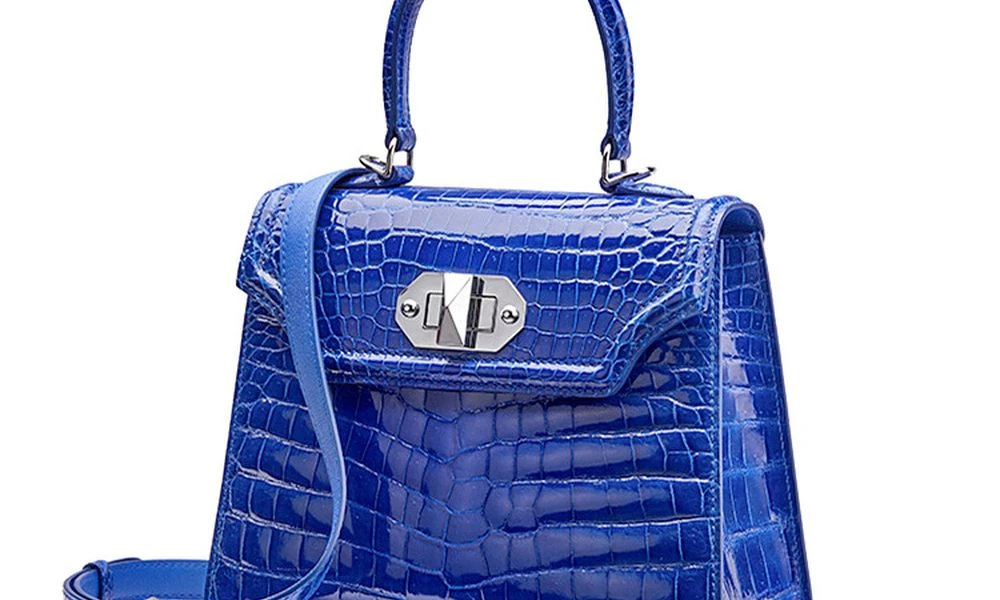
The most valuable handbag ever created, on the figures reported at its launch, does not come from Paris. It comes from Bologna. In November 2020, the Italian house Boarini Milanesi unveiled the Parva Mea, a bag made to raise awareness of ocean pollution, with a reported price of €6 million roughly $7 million at the time, and about $7.2 million on some later lists.
The house undertook to donate €800,000 of the proceeds from each bag to cleaning the seas, which gives the piece an unusual character: it is a luxury object whose price includes a substantial charitable gift.
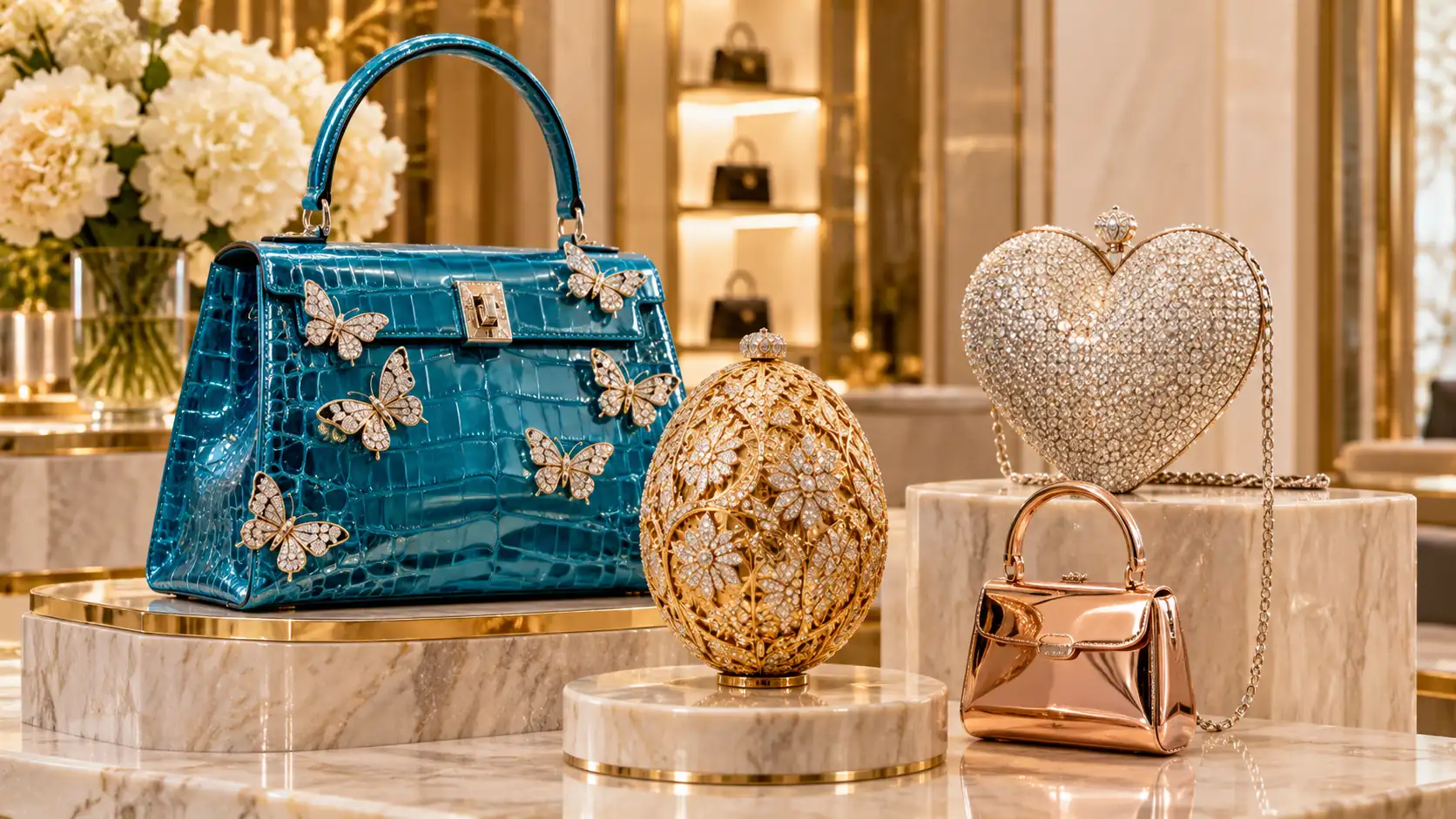
The bag itself is made from semi-shiny alligator skin in an aquamarine blue, and it is decorated with ten white-gold butterflies set with diamonds, blue sapphires and rare Paraíba tourmalines, totalling more than 130 carats of stones, with a diamond-pavé clasp. Only three were made, each reported to have taken more than 1,000 hours of work.
The butterflies are the point of the design as much as the stones: they are the ocean’s creatures, rendered in precious metal, on a bag whose colour is the colour of shallow water. Whether the price is read as a valuation or a donation with a bag attached, nothing else made as a handbag has been reported at a higher figure.
2. Debbie Wingham Upcycled Easter Egg Purse: $6.7 Million
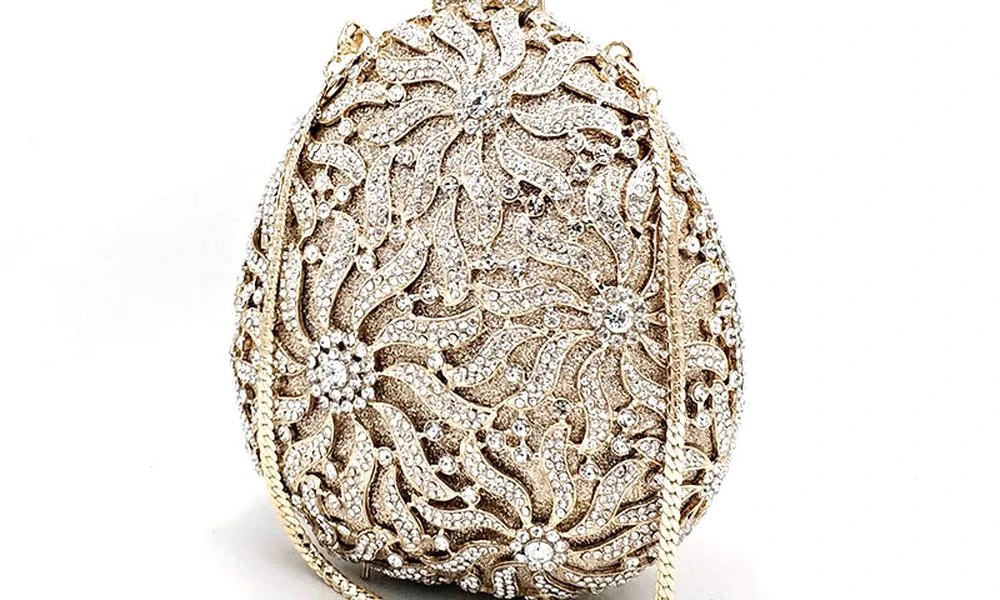
If the Parva Mea is a bag with a cause, the Debbie Wingham egg purse is a bag with a client. In 2019, the British designer Debbie Wingham, known for creating extravagant one-off pieces for very wealthy private clients, revealed a handbag built around a real emu egg, commissioned by an anonymous buyer in the United States.
The client supplied pre-loved designer items for Wingham to work with, and the result was valued at $6.7 million at the time, the highest reported value for any handbag ever created.
The construction is as strange as the premise. The emu egg at the core was strengthened with enamel made from blue diamond dust, then wrapped in a 24-karat gold shell made by the Italian designer Alessandro Galanti.
The surface is set with 8,000 diamonds, including three flawless pink diamonds reported to be worth $1.9 million and two flawless white diamonds worth around $265,000. Inside, the purse is lined with a Hermès silk scarf supplied by the client, and it fastens with a pair of Cartier earrings valued at $40,000.
It is, by any ordinary measure, barely a bag at all: it is an upcycled Fabergé-style object that happens to open. That is also why it belongs at the top of this list rather than in an auction catalogue it was made once, for one person, from things she already owned.
3. Mouawad 1001 Nights Diamond Purse: $3.8 Million
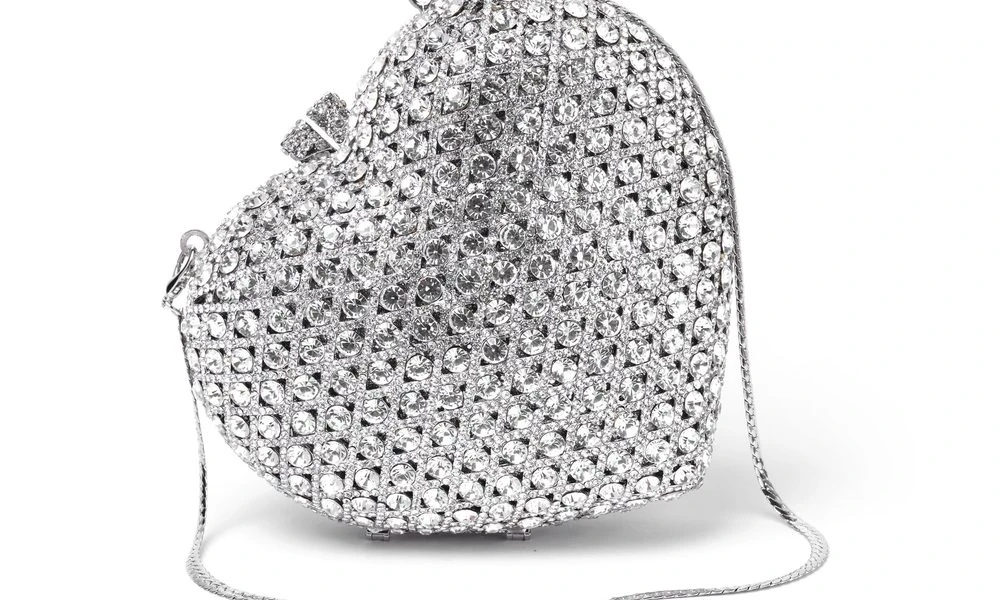
The Mouawad 1001 Nights Diamond Purse is the one entry here with an official title to its name. In 2010, Guinness World Records certified it as the most valuable handbag in the world, with an original price of $3.8 million, and it held that record for a decade until the Parva Mea was reported at a higher figure.
Designed by Robert Mouawad, of the Lebanese jewellery house Mouawad, it is a heart-shaped clutch in 18-karat gold, set with 4,517 diamonds 105 yellow, 56 pink and 4,356 colourless totalling 381.92 carats.
Ten artisans worked on the piece for a reported 8,800 hours, and the result is jewellery in the shape of a bag rather than a bag decorated with jewellery: it was designed to be exhibited, and it has spent much of its life on display, including at Christie’s in Hong Kong, where it was offered through private sale in 2017.
The inspiration was the tales of the Arabian Nights, and the heart shape, the radiating channels of baguette diamonds and the flower-like clusters at their ends all belong to that romantic brief.
It is the most formally beautiful object on this list, and the one whose price is the best documented, because a world record required the paperwork to prove it.
4. Hermès Sac Bijou Birkin: About $2 Million
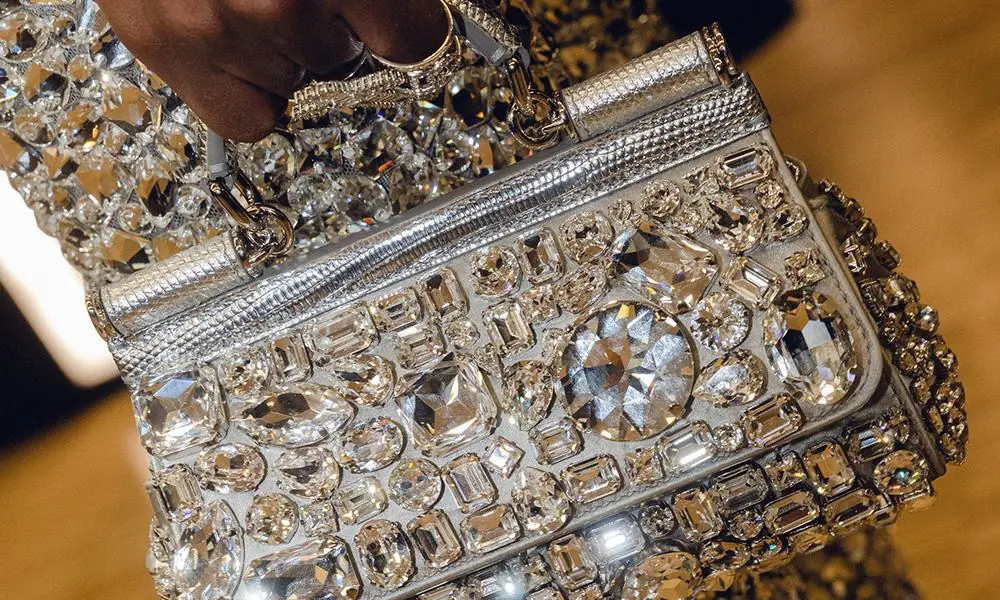
Hermès appears four times in this list, and the Sac Bijou Birkin is the most disarming of the four, because it is not really meant to be carried.
Created in 2012 by Pierre Hardy, Hermès’s creative director of jewellery, as part of the house’s Haute Bijouterie collection, it is a miniature Birkin cast in rose gold and set with 2,712 diamonds totalling about 89 carats, with a reported price of about $2 million.
Only three of the diamond versions were made. The flap is textured to imitate crocodile skin, the handles, lock and clochette are all pavé-set, and the whole piece is fully functional it opens, it closes, it holds a card or two but it was designed to be worn as a bracelet.
That detail is what makes the Sac Bijou interesting beyond its price. It is the Birkin reimagined as high jewellery, a joke told in precious metal: the most recognisable handbag in the world, shrunk until it fits on a wrist.
A white-gold version, set with 3,025 diamonds, has also been seen in public, and a darker 2019 version set with black garnets and spinels shows the design can be reworked without losing its character.
The craftsmanship behind Hermès high jewellery is the same tradition that produces the house’s leather goods, and the Sac Bijou is where the two traditions meet most directly.
5. Hermès Kelly Rose Gold: About $2 Million
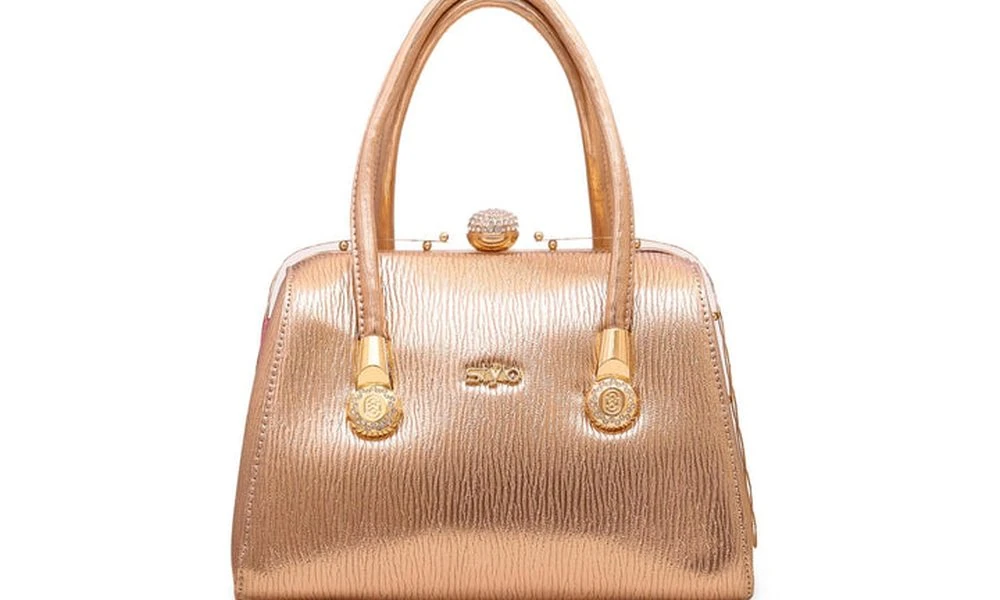
The Kelly Rose Gold is the Sac Bijou’s sister piece, and it shares its maker, its price and its premise.
Also designed with Pierre Hardy, and also reported at about $2 million, it takes the Kelly the structured top-handle bag named for Princess Grace of Monaco and rebuilds it entirely in solid rose gold, sculpted to mimic crocodile leather, and set with 1,160 diamonds.
Twelve were made, in three versions of four styles, and each is reported to have taken about two years to produce.
Like the Sac Bijou, it is too small to be useful in the ordinary sense: it holds a few cards and some cash, and little else. That is not a flaw in the design so much as the design itself.
The Kelly Rose Gold is a piece of sculpture that borrows the shape of a handbag, and its value lies in the casting, the stone-setting and the sheer impracticality of making a working clasp and flap from solid gold.
It is also, of the four Hermès entries here, the one that most clearly shows the house’s instinct for turning an icon into an object of devotion: the Kelly shape is so familiar that even rendered in metal and diamonds, it is recognisable at a glance.
6. Hermès Birkin by Ginza Tanaka: Reported at $1.4 Million to $1.9 Million
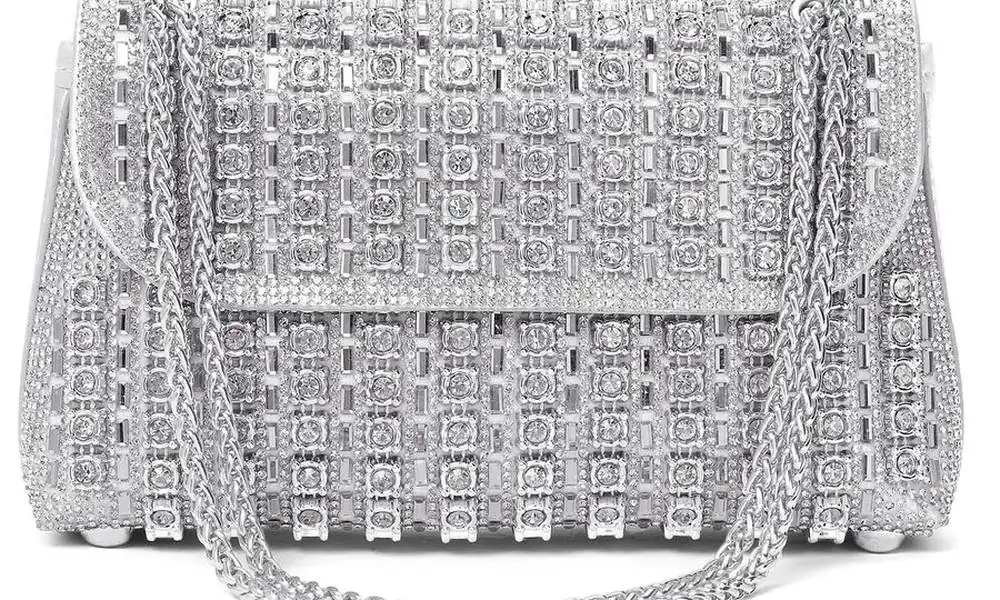
The Ginza Tanaka Birkin is the most honestly uncertain price on this list, and it is worth saying so plainly. Created in 2008 in collaboration between Hermès and the Japanese jeweller Ginza Tanaka, it is a one-of-a-kind Birkin made not from leather but from solid platinum, set with more than 2,000 diamonds.
Published valuations range from about $1.4 million to about $1.9 million, and different sources give different figures with equal confidence, so this article gives the range rather than choosing between them.
What is not in doubt is the ingenuity of the piece. The shoulder strap detaches and can be worn as a necklace, and the large pear-shaped diamond at the centre reported at eight carats can be removed and worn as a brooch or pendant, at which point the bag becomes a clutch.
It is a modular piece of wearable art: a handbag that disassembles into jewellery, and jewellery that reassembles into a handbag. That convertibility is rare even among the pieces on this list, most of which are content to be one thing, expensively. The Ginza Tanaka Birkin wants to be several things, and it is priced accordingly.
7. Hermès Chaîne d’Ancre Bag: Reported at About $1.4 Million
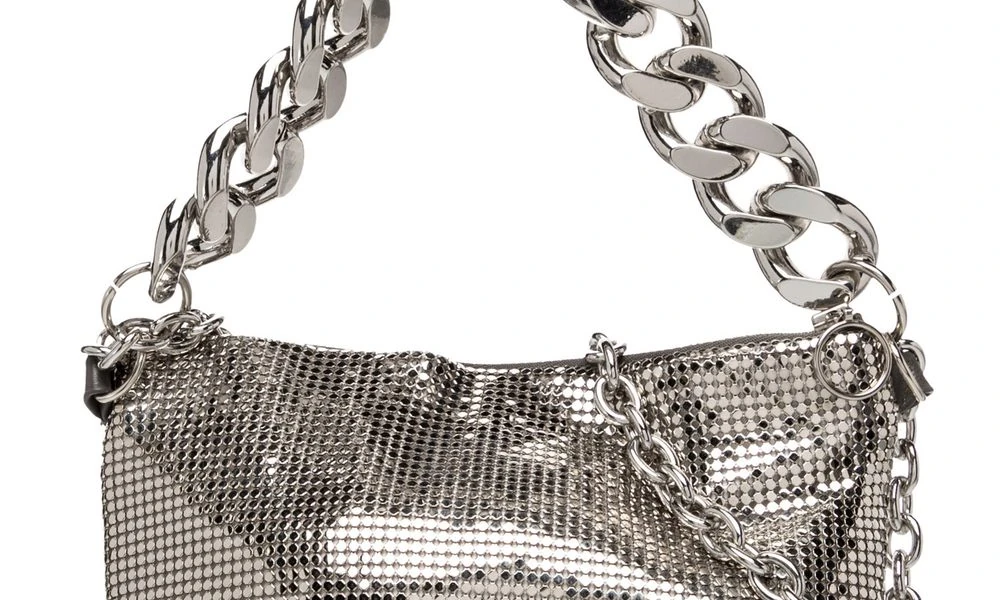
The fourth Hermès entry is also a Pierre Hardy creation, and also from the 2012 Haute Bijouterie collection, but it looks like nothing else on this list.
The Chaîne d’Ancre the name means anchor chain is a bag made from interwoven white-gold chain links, set with 1,160 diamonds totalling 33.94 carats, and it resembles chainmail more than leather goods.
Only three were made, and it is reported at about $1.4 million, although some sources put the figure at $2 million; as with the Ginza Tanaka Birkin, the lower, more widely repeated figure is the one given here, with the disagreement noted.
The design takes its motif from Hermès’s own history: the anchor-chain link is a house signature that appears across its jewellery, and Hardy simply asked what would happen if the hardware became the bag.
The answer is a piece that is at once the most sculptural and the most wearable of the Haute Bijouterie bags it can, like the Sac Bijou, be worn as a bracelet, and its chain construction gives it a flexibility that solid gold cannot. Two years of work are reported to have gone into each one, which is unsurprising: every link had to be made, set and joined by hand.
8. Louis Vuitton Urban Satchel: Reported at About $150,000
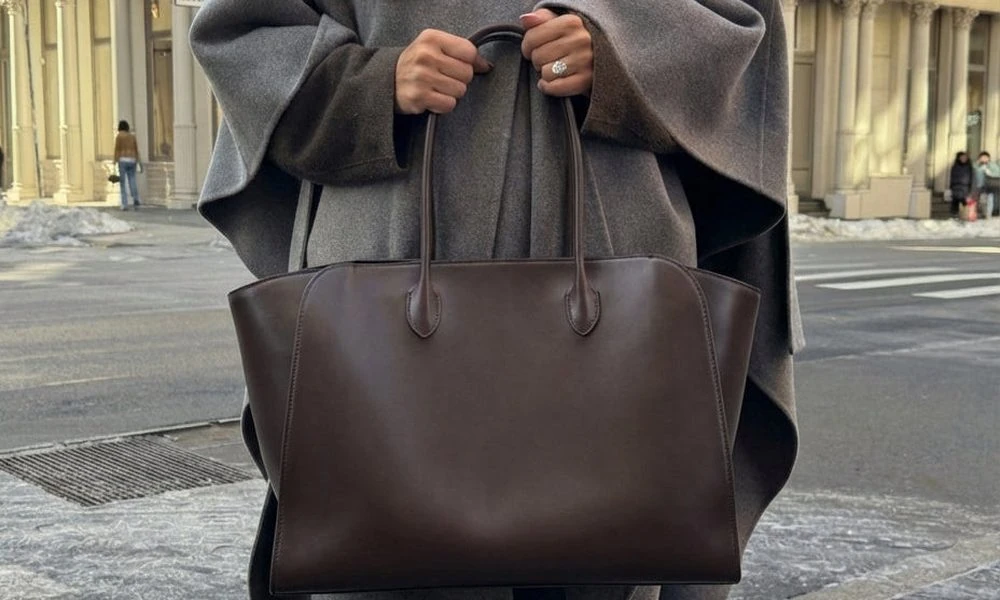
The Urban Satchel is the outlier on this list in almost every way: it is the only bag here made from rubbish, and the only one whose price is a provocation rather than a reflection of its materials.
Released as a limited edition in Louis Vuitton’s autumn/winter 2008 collection, it is built from fine Italian leather dressed with the contents of a city street crushed plastic water bottles, cigarette packets, sugar wrappers and chewing-gum sleeves and it is reported at about $150,000. Ashley Olsen modelled it in the campaign, and it was, by most accounts, the most expensive Louis Vuitton bag ever made at the time.
The point of the bag was environmental: a luxury house drawing attention to litter by turning it into a luxury object. Whether it succeeds as a statement is a matter of taste plenty of people found it absurd but as a piece of design it is honest about its own contradiction, and it has lasted in the memory far longer than most bags at ten times its price.
It also marks the moment in this list where the prices stop being about gemstones and start being about ideas.
The seven bags above it are expensive because of what they are made of. The Urban Satchel is expensive because of what it is saying, and because Louis Vuitton only made a small number of them.
9. Louis Vuitton Tribute Patchwork Bag: About $42,000
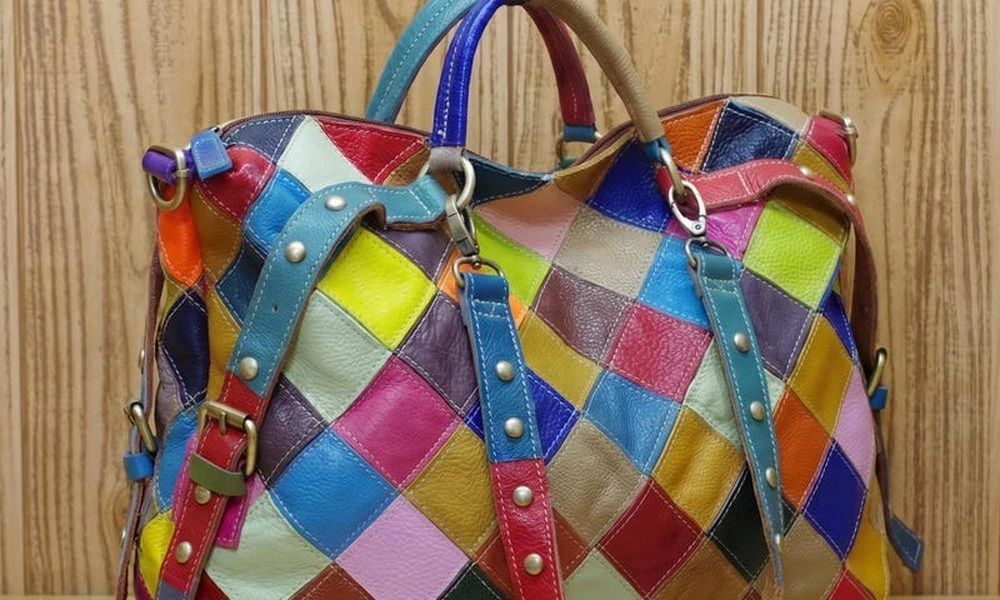
The last bag on the list is also a Louis Vuitton, and also a collage, but of a very different kind. The Tribute Patchwork Bag, designed by Marc Jacobs for the spring/summer 2007 collection, is made by piecing together elements of fifteen earlier Louis Vuitton bags monogram canvas, denim, crocodile, lizard and snakeskin, among others into a single oversized tote.
About two dozen were made, sources differing between twenty and twenty-five, and it retailed at about $42,000, selling out quickly despite or perhaps because of being described in the press at the time as the world’s ugliest handbag.
What the Tribute Patchwork honours, as its name suggests, is the house’s own archive. It is a greatest-hits record you can carry, and a demonstration that a luxury brand’s history is itself a material worth cutting up and re-sewing. Beyoncé is reported to own one, which did the bag’s reputation no harm at all.
It is the least expensive entry here by a wide margin. That is precisely why it earns its place. The list is not only about the highest numbers. It is about the most extraordinary things a handbag has been asked to be. A bag made of other bags, at $42,000, is as extraordinary as a bag made of butterflies at $7 million. It is considerably easier to explain to anyone who asks what it is.
The craft of couture is often described as the art of making one thing, once, for one person. The Tribute Patchwork is that idea applied to a brand’s own past.
What the Prices Actually Buy
Looked at together, these nine bags suggest that an extreme handbag price is rarely paying for one thing. It is paying for a combination of four things, in different proportions each time: material, hours, rarity and meaning.
Material is the most obvious the gold, the diamonds, the Paraíba tourmalines and it is the easiest to put a number on. Hours are harder to see but just as real: 8,800 hours for the Mouawad, more than 1,000 hours for each Parva Mea, about two years for each Kelly Rose Gold.
Rarity is a matter of arithmetic: three of this, twelve of that, one of the other. And meaning is the hardest of all to price, which is why the two Louis Vuitton bags sit at the bottom of the list in money and near the top of it in interest.
It is also worth noticing what the list does not contain. There are no ordinary production bags here, however expensive their retail price, because a bag you can order in a boutique is a different kind of object from a bag made once for one client.
And there are no auction results, for the reason given at the start: a hammer price tells you what the market thought on one day, while a creation price tells you what the maker thought the thing was worth before anyone had the chance to disagree.
If you are building a wardrobe rather than a collection, the lesson is a modest one, and it is the same lesson behind any set of timeless wardrobe pieces: buy the best-made version of the thing you will actually carry, look after it, and let the record-breakers stay where they belong, behind glass.
Frequently Asked Questions
What is the most expensive handbag ever created?
Based on the figures reported at launch, the Boarini Milanesi Parva Mea, at a reported value of about $7 million, ranks ahead of Debbie Wingham’s Upcycled Easter Egg Purse at $6.7 million and the Mouawad 1001 Nights Diamond Purse at $3.8 million.
Are these prices the same as auction prices?
No. The prices in this list are reported creation, launch, or asking values for one-off and limited-edition pieces. Auction results are a separate ranking, and a bag can appear in both lists at very different figures.
Can any of these bags actually be carried?
Some can, in the ordinary sense. The Parva Mea, the Ginza Tanaka Birkin, and the two Louis Vuitton bags were made to be carried. The Sac Bijou Birkin and the Kelly Rose Gold are miniature pieces designed to be worn as jewellery, while the Mouawad purse was designed for display.
Why are there so many Hermès bags on the list?
Hermès’s Haute Bijouterie collection, designed by Pierre Hardy in 2012, deliberately recreated the house’s most famous bag shapes in precious metals and diamonds, producing four of the most valuable handbag creations ever made.
If any of these nine bags has stayed with you, let it be for the making rather than the number. The hours, the hands and the odd, stubborn idea behind each one are the parts that last, long after the price has stopped sounding quite real. We hope you have enjoyed this small tour of the outer edge of handbag-making, and that you will come back soon for another look at the quieter luxuries closer to home.