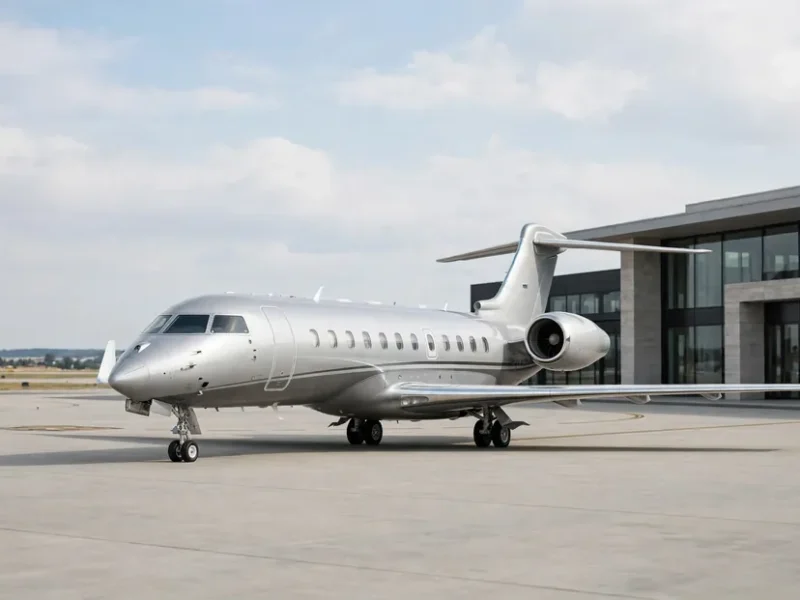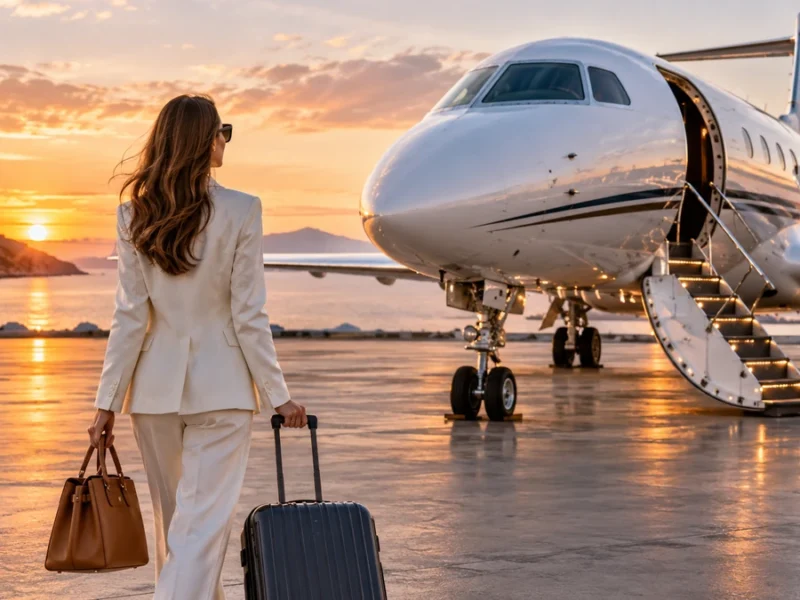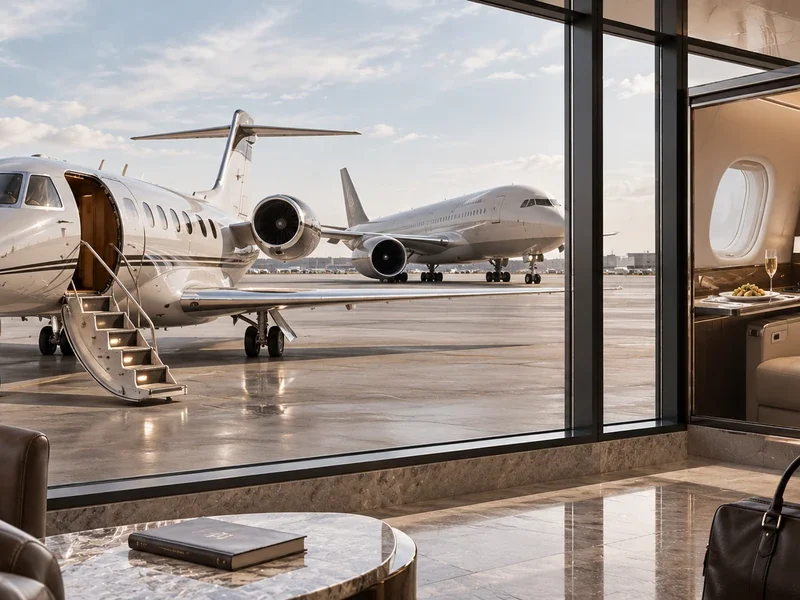
The luxury private jet passenger experience begins long before take-off, and that is exactly the point. There is no queue at check-in, no security line, and no gate to find. You arrive at a small private terminal, your bags are taken from the car, and within minutes you are walking across the tarmac to an aircraft that is waiting only for you.
For most first-time passengers, the calm is the biggest surprise: flying stops feeling like an ordeal and starts feeling like a car service that happens to fly.
That calm continues in the air. The cabin is quiet enough for normal conversation, the seats are wide enough to work or sleep properly, and the schedule bends to you rather than the other way round. This guide explains what each stage of a private flight actually feels like, what the cabin offers, what it costs in time and money, and how to make a first private flight feel effortless rather than overwhelming.
Before You Board: The Ground Experience
Private flying starts at a fixed-base operator, a small terminal away from the main airport crowds. You drive up, hand over your luggage, and show identification once. There is usually a comfortable lounge with coffee, still water and Wi-Fi, but most passengers spend only a few minutes there. The aircraft is fuelled, the crew is ready, and boarding begins when you are ready, not when a screen tells you to.
Security is still real, but it is handled differently. Your details are checked in advance, and the screening itself is quick and private. There are no liquid rules to worry about in the same way, no removing shoes in a line, and no announcements. Families with small children notice the difference most: nobody is watching the clock, and a delayed toddler does not mean a missed flight.
Your luggage goes straight into the hold or the cabin, depending on the aircraft, and you can usually keep a bag beside you. There is no weighing of hand luggage at the gate and no fight for overhead space, because the space is yours. If you arrive early, the aircraft often departs early. If you are running late, the crew waits, within reason and subject to air traffic rules.
Inside the Cabin: Space, Light and Quiet
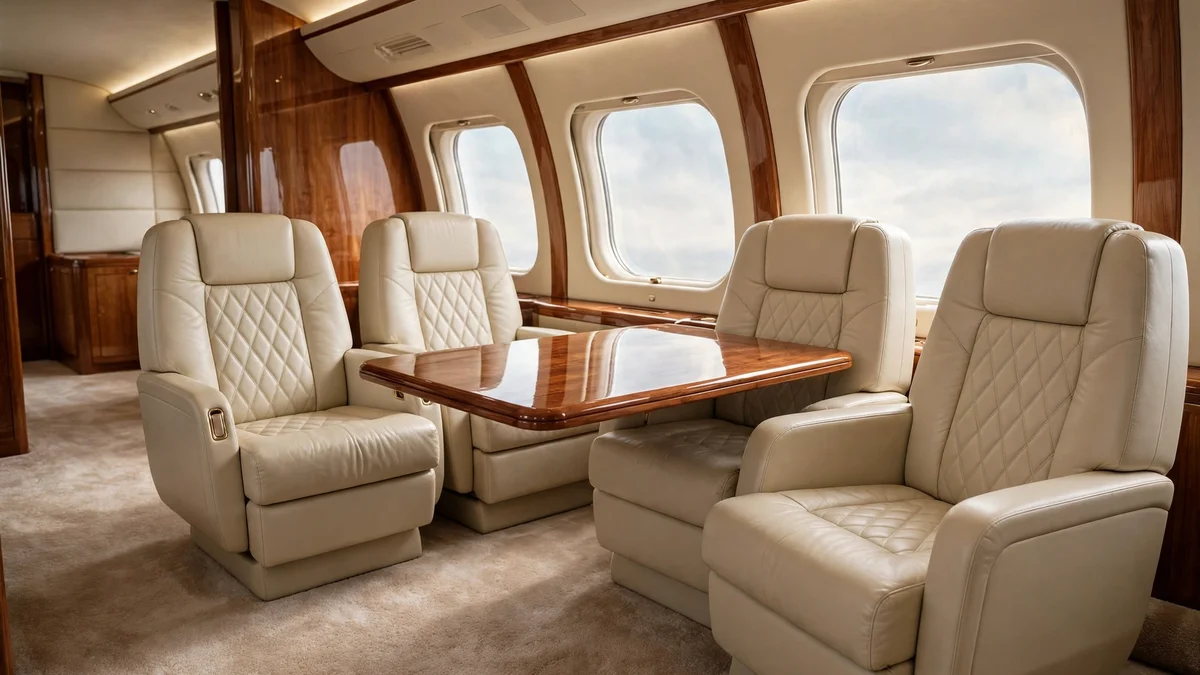
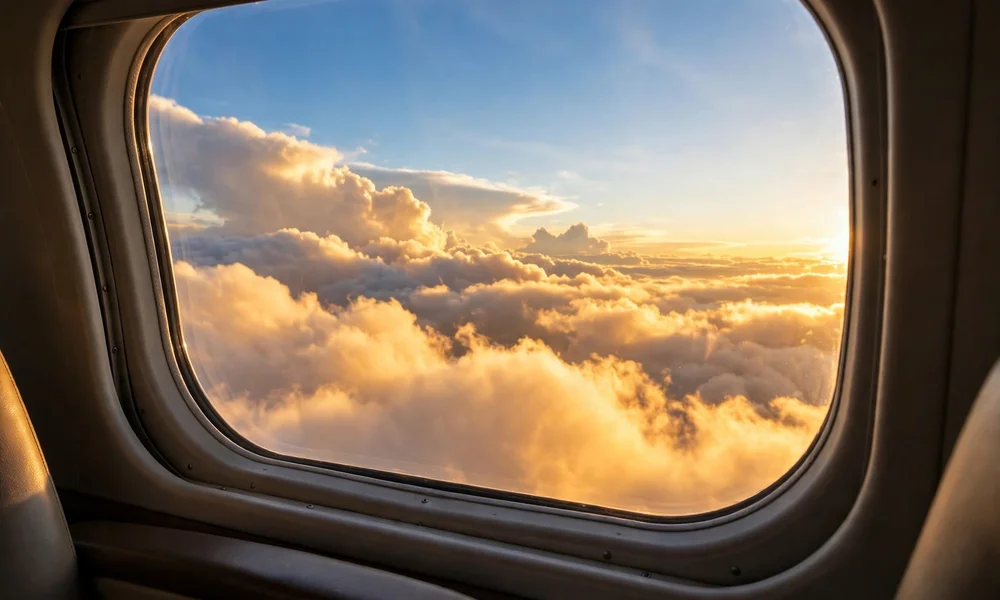
Step inside a private jet and the first thing you notice is the light. Large windows, light-coloured leather and a low cabin height create a room that feels more like a small lounge than a tube. The second thing you notice is the quiet. At cruise altitude the cabin is calm enough to talk without raising your voice, which changes the whole feeling of the flight.
Cabins differ by aircraft size, and size is the single biggest factor in comfort. A light jet suits two or three passengers on a short hop, with club seating for four and a small refreshment area. A midsize jet adds a proper galley and a little more legroom.
Large-cabin jets offer a flat floor you can walk along, a separate seating area, and on some aircraft a bedroom or a shower. Our guide to which private jets have bedrooms, showers and full-size kitchens shows how far the largest cabins go.
Seats That Work for Sitting, Eating and Sleeping
Private jet seats are wide, fully adjustable and usually arranged in club pairs that face each other, with a table between them. That layout is ideal for a meal, a meeting or a game of cards, and it makes the cabin feel sociable rather than regimented. On longer flights, many seats convert into a flat or nearly flat bed, and the crew will make it up with proper bedding if you ask in advance.
The seat is also where the details show. Good cabins offer individual air vents, reading lights, power outlets and a place for a glass that does not rattle. Ask for a window seat if you want the view, and a forward seat if you are sensitive to motion. The smoothest ride is usually over the wing, and the quietest spot is towards the front, away from the engines.
Temperature, Air and Pressure
Cabin altitude on a private jet is usually lower than on an airliner, which means the air feels fresher and most people arrive less tired. Temperature is set to your preference and adjusted during the flight, and the crew will check whether you are comfortable rather than leaving you to find a control panel. If you have ever stepped off a long commercial flight feeling dried out and groggy, the difference on a private jet is one of the first things you will notice.
Dining at 40,000 Feet
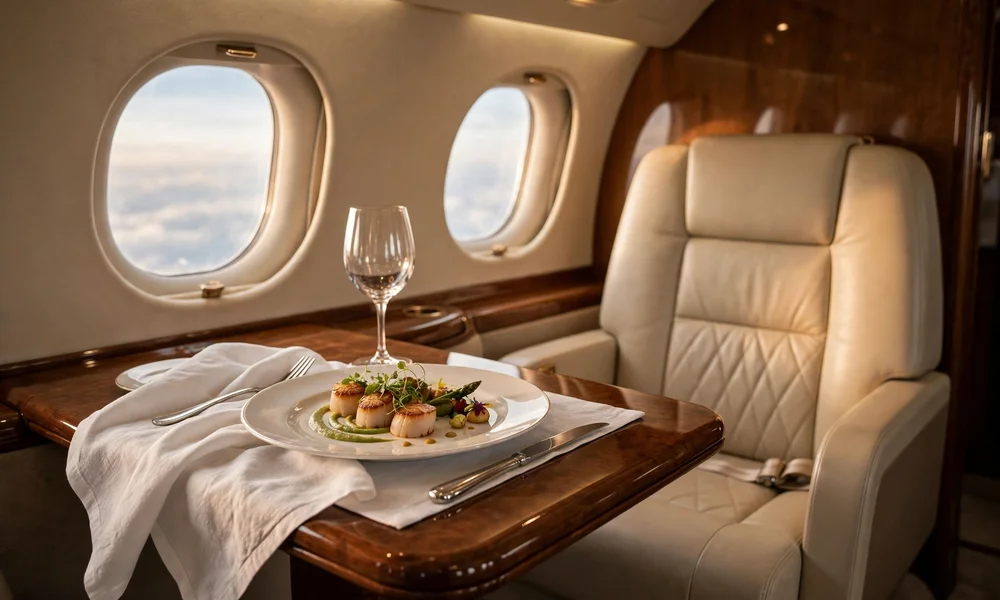
Food on a private jet is ordered in advance, cooked to your taste, and served when you want it, not when a trolley reaches your row. Most operators ask for your preferences before the flight: dietary requirements, favourite dishes, drinks, and whether you want a full meal or light snacks. The catering is usually prepared by a specialist company or a restaurant near the departure airport, then finished and plated on board.
The galley on a larger jet can warm, chill and plate a proper multi-course meal, while a light jet offers a simpler service of cold dishes, hot snacks and drinks. Either way, the food arrives on real plates with real cutlery and glassware, and you eat at a proper table. Champagne, fine wine and good coffee are standard requests, and the crew will keep your glass filled without hovering. If you have dietary needs, say so early: a private caterer can handle almost anything with a day or two of notice, but very little with an hour.
Work, Rest and Entertainment in the Air
A private jet is a remarkably good office. The Wi-Fi on newer aircraft is fast enough for video calls and large files, the tables are big enough for a laptop and papers, and nobody is listening to your conversation. Business travellers often say they get more done in two hours on a jet than in a day at the office, simply because the interruptions stop. If your work depends on connectivity, confirm the Wi-Fi speed and coverage for your route before you fly, because older aircraft and remote regions can still be slow.
For rest, the cabin is yours to arrange. Lower the blinds, ask the crew to dim the lights, and sleep properly in a seat that reclines fully. Some passengers change into comfortable clothes after take-off, and nobody minds. Families use the space to let children move around, watch a film together, or eat at a table like a normal family meal. The entertainment system usually includes films, music and satellite television, and you can connect your own devices to the cabin screens and speakers.
| Aircraft size | Typical seats | Cabin feel | Best for | What to expect |
|---|---|---|---|---|
| Light jet | 4 to 6 | Cosy, club seating | Short hops, couples | Snacks and drinks, limited galley |
| Midsize jet | 6 to 8 | Room to stand and move | Business day trips | Hot food, proper table service |
| Super-midsize jet | 8 to 9 | Near large-cabin comfort | Cross-country flights | Full meals, good Wi-Fi, more luggage |
| Large-cabin jet | 10 to 14 | A lounge that flies | Families, long haul | Bedroom options, shower on some types |
| Ultra-long-range jet | 12 to 19 | Closest to a flying home | Intercontinental travel | Separate living areas, full dining |
The table shows the trade-off clearly: bigger aircraft bring more space, better dining and longer range, but they cost more per hour and need longer runways. Our top ten luxury private jets guide compares the most comfortable aircraft in each class. For a first private flight, a midsize or super-midsize jet usually gives the best balance of comfort and value on a typical two to three hour route.
What It Costs in Time, Not Just Money
Private flying is expensive, and honest advice should say so plainly. Charter prices vary widely by aircraft, route, season and how far ahead you book, and a single hour in a large-cabin jet costs many times more than a first-class airline ticket on the same route. What you buy is not just the seat: it is the hours saved at both ends, the ability to fly into smaller airports closer to your destination, and a schedule that fits your day.
The time saving is often larger than people expect. A trip that takes six hours door to door by airline can take three by private jet, once you count the early arrival, the queues and the drive from a major airport. For a group of four or more travelling together, the per-person cost also narrows, because the aircraft price is fixed however many seats you fill. Our private jet charter prices guide shows what popular routes actually cost, and our owning versus chartering comparison explains when chartering, a jet card or ownership makes sense. If you fly privately only a few times a year, chartering or a jet card is almost always the better choice.
Your First Private Flight Checklist
A little preparation turns a first private flight from slightly nervous into completely relaxed. Work through this list the day before you travel.
– Confirm the departure terminal address and arrival time with the operator, not the main airport
– Send passenger names and identification details in advance so screening is already done
– Order catering and drinks early, and flag any dietary requirements in writing
– Ask about Wi-Fi speed and power outlets if you plan to work during the flight
– Pack soft bags if the aircraft has a small hold, and keep valuables in the cabin with you
– Dress comfortably and bring a layer, since cabin temperature is yours to set
– Confirm the ground transport at the other end, including who is meeting you and where
Frequently Asked Questions
How early should I arrive for a private jet flight?
Most operators ask you to arrive twenty to thirty minutes before departure, which is usually enough for a relaxed boarding. If you arrive earlier, the aircraft may leave earlier. Build in a little extra time on your first flight so you can enjoy the lounge rather than rushing.
Can I bring pets on a private jet?
Yes, and this is one of the most popular reasons people fly privately. Pets usually travel in the cabin with you, without a carrier requirement on many operators, although rules vary by country and aircraft. Tell the operator in advance, bring the pet’s documents, and check the rules for your destination.
Is there Wi-Fi on a private jet?
Most modern private jets have Wi-Fi, and the newest systems are fast enough for video calls. Older aircraft may have slower connections or none at all, and coverage can drop over oceans and remote areas. Confirm the system and expected speed for your route before you rely on it for work.
What should I wear on a private jet?
Wear whatever you find comfortable. There is no dress code on a private flight, and many regular passengers change into relaxed clothes after take-off. Smart casual is the norm for business trips, but nobody will judge you for choosing comfort on a long flight.
Can a private jet fly in bad weather?
Private jets follow the same weather rules as airliners, and the captain has the final say on safety. Your flight may be delayed or rerouted in severe weather, just as a commercial flight would be. The difference is that the operator will tell you directly, explain the options, and replan around you rather than leaving you to guess.