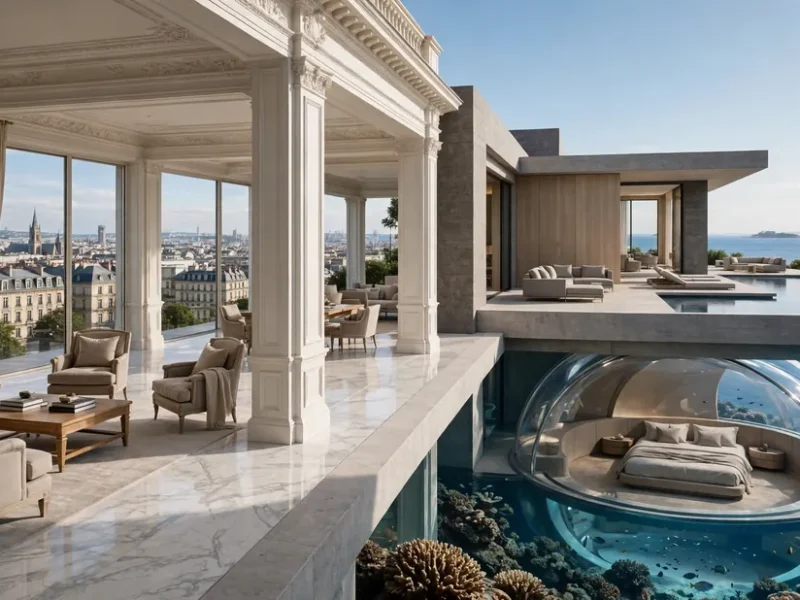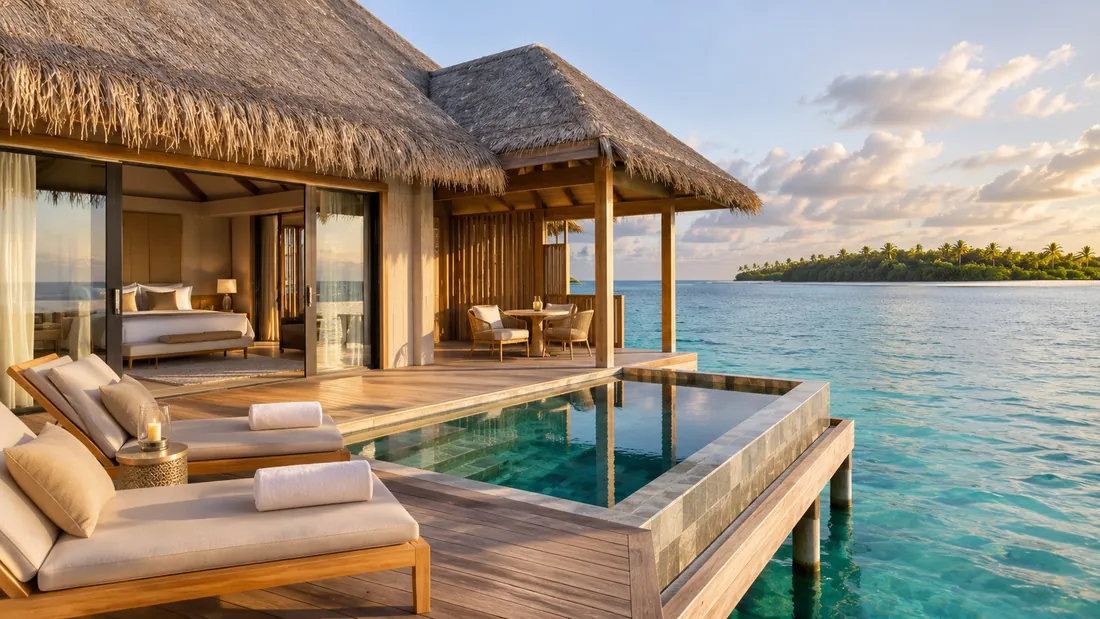
Learning how to plan a luxury honeymoon is less about booking the most expensive room on the internet. It is more about designing a journey that feels entirely yours. A luxury honeymoon is not defined by a single splurge. It is defined by privacy, genuinely unhurried time and service that anticipates what you want before you ask. It also needs a setting that makes the first days of married life feel like a beginning rather than a holiday.
The couples who enjoy theirs most are rarely the ones who spent the most. They are the ones who decided early what mattered. They booked the pieces that sell out first and left room in the itinerary for doing nothing at all.
Start With the Honeymoon You Actually Want
Before you open a single hotel website, answer five questions together. What matters most to you: rest or exploration? Would you prefer warm sunshine or cooler air? Is your ideal honeymoon spent deeply exploring one place or briefly visiting several? And how much attention would you enjoy from the staff: constant care or plenty of privacy?
And how much travelling between places are you willing to do after a wedding that will already have exhausted you? The answers narrow the world quickly, and that is the point.
A couple who wants to sleep late, swim and eat well will be miserable on a safari that starts with a 5.30 a.m. game drive, however beautiful the lodge. A couple who wants adventure will be bored after three days on a private island with nothing to do but snorkel.
Write down your non-negotiables first. For many couples, these are simple: a private pool, a direct flight or at most one easy connection, no more than two hotels in ten days, and at least two days with nothing scheduled. The non-negotiables shape the destination and the hotel. The nice-to-haves can mostly be arranged by a concierge once you are there.
When to Book and How Far Ahead
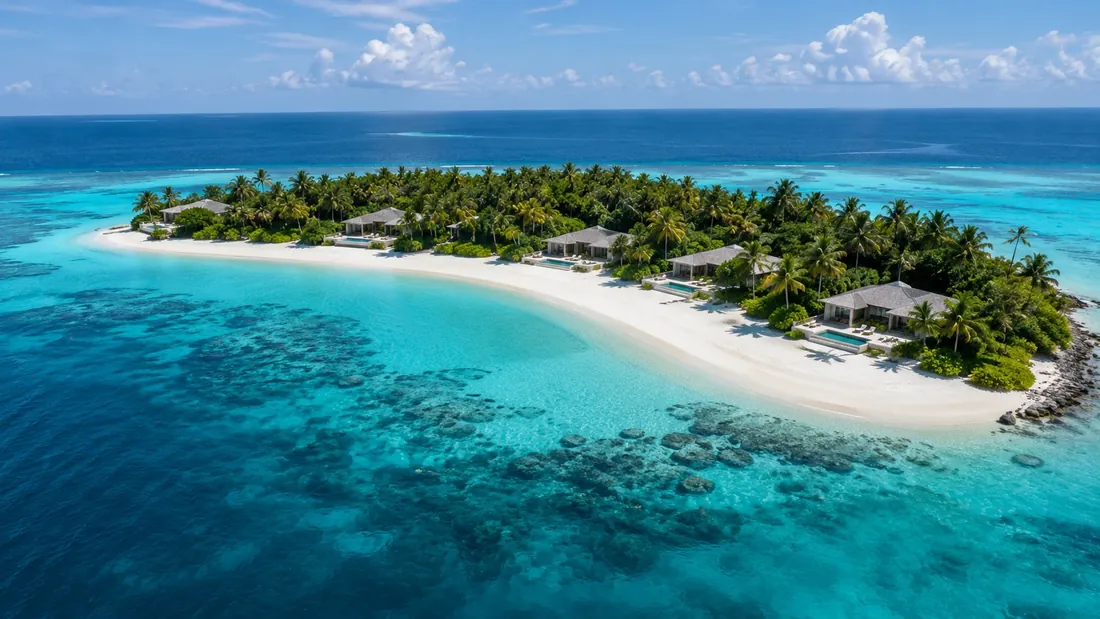
Luxury Honeymoon Booking Timeline and Planning Checklist
For a luxury honeymoon, twelve to nine months ahead is the right window for the pieces that matter most. The best overwater villas in the Maldives and Bora Bora, the most sought-after safari lodges, the clifftop suites in Santorini and the Amalfi Coast, and the finest small hotels in Kyoto all have a small number of top rooms.
Those rooms are often reserved a year out, particularly for June, September and the Christmas to New Year period. Booking early is not about anxiety. It is about choice. At twelve months, you choose the room you want. At three months, you choose from what is left.
Work backwards from departure. Twelve to nine months out, choose the destination, set the budget and reserve the hotel and flights. Eight to six months out, arrange passports and visas, and book signature experiences that need advance reservation.
Three months out, confirm every reservation in writing. Arrange airport transfers and seaplane or speedboat connections, and buy travel insurance. One month out, check passport validity, confirm dietary requirements and celebrations with each hotel, and pack. The week before, reconfirm flights and transfers, and stop planning. The planning should be finished before you leave, so the trip itself can be lived rather than managed.
Budgets by Tier: What a Luxury Honeymoon Really Costs
Luxury honeymoons span an enormous range, and honesty about your tier makes every later decision easier. At the comfortable luxury tier, roughly 10,000 to 18,000 dollars per couple for ten to twelve days, excluding international flights, you can expect excellent five-star hotels.
This includes a private pool villa in Southeast Asia or the Caribbean, good restaurants and private transfers, with a few signature experiences included. At the high luxury tier, roughly 20,000 to 40,000 dollars per couple, you move into overwater villas in the Maldives and Bora Bora. You can also expect clifftop suites in Santorini, top safari lodges and business-class flights on shorter long-haul routes.
At the ultra-luxury tier, from 50,000 dollars upward, you are looking at private islands and fully private villas with a chef and butler. First-class flights and multi-country journeys with a dedicated travel designer also fall into this tier.
Within any tier, the same costs dominate. Accommodation is usually 45 to 60 per cent of the on-the-ground budget. International flights in business class can add 4,000 to 12,000 dollars per couple, depending on the route. Transfers that look like footnotes add up quickly.
A seaplane in the Maldives costs 400 to 800 dollars per person return. A private car from Naples to the Amalfi Coast or a domestic flight in French Polynesia must also be priced before you fall in love with a hotel. Food and drink at a remote island resort can run 200 to 400 dollars per couple per day. A meal plan is often better value. Build in a ten per cent contingency.
Choosing the Destination
The classic luxury honeymoon destinations are classic for a reason, but each suits a different couple. The skill is matching the place to your temperament rather than to a photograph.
The Maldives
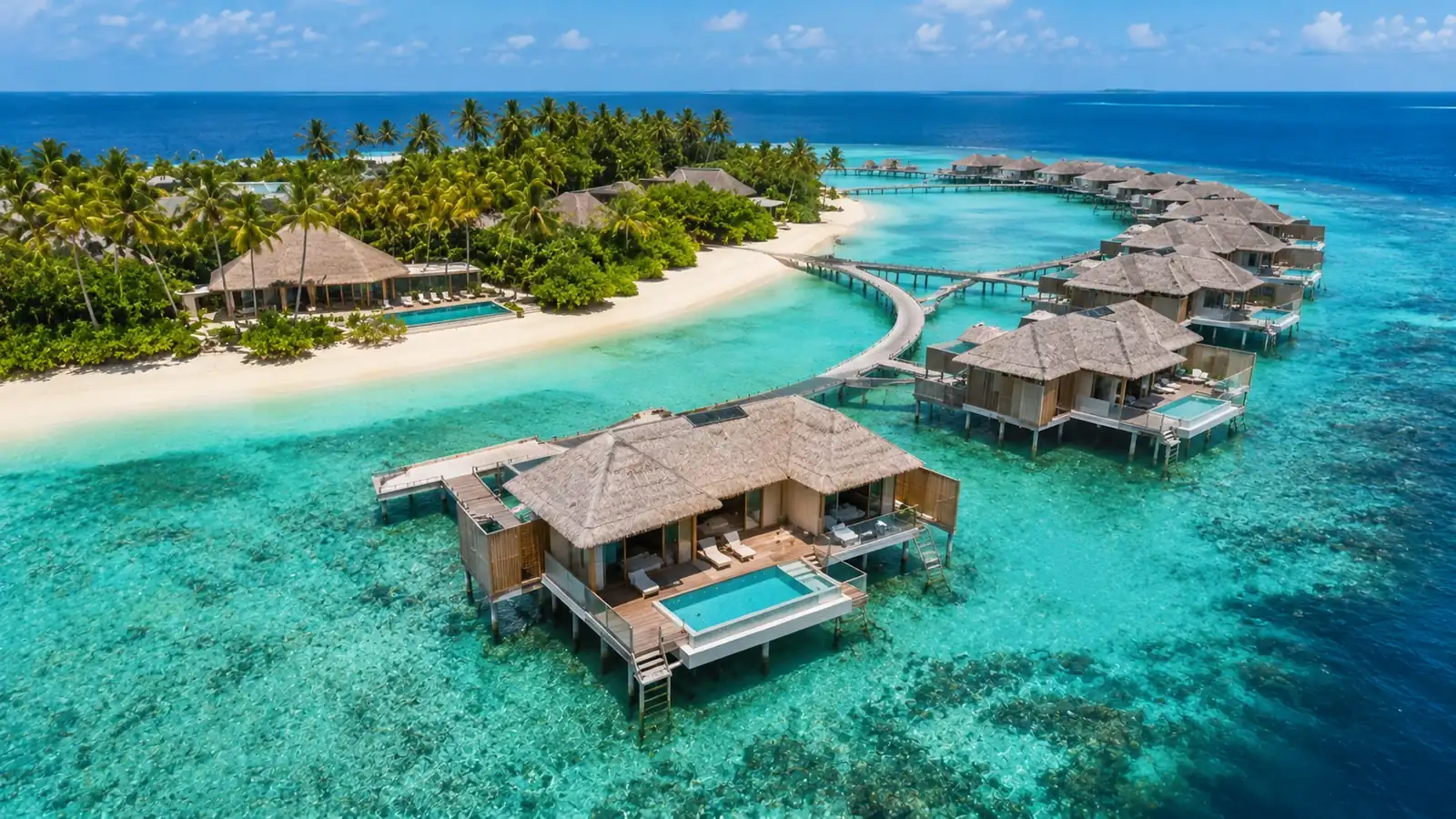
The Maldives remains the purest form of the luxury honeymoon: one island, one resort, a villa over clear water, and almost nothing you have to do. The best time to go is the dry northeast monsoon season, from November to April, when the skies are clear, the sea is calm and diving visibility is at its best.
Expect to pay from around 800 to 1,500 dollars per night for a good overwater villa in shoulder season, and 1,500 to 3,500 dollars or more for the finest villas at resorts such as Soneva Jani or the St. Regis Maldives Vommuli during peak season. Seaplane transfers from Malé take 25 to 45 minutes and are an experience in themselves, though couples who dislike small aircraft should choose a resort reachable by speedboat or domestic flight.
Bora Bora and French Polynesia
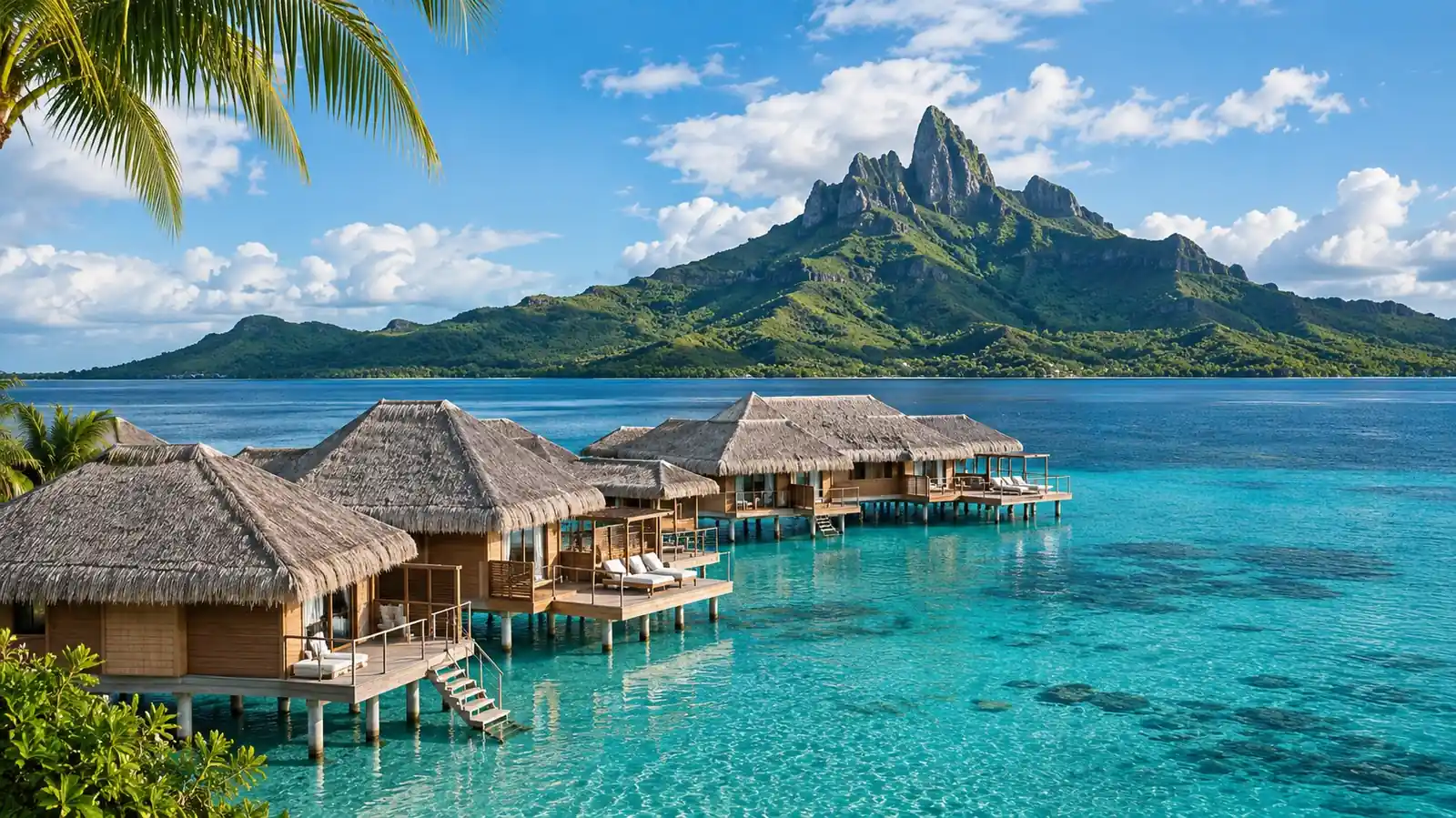
Bora Bora is the Maldives with a mountain. Mount Otemanu rises 727 metres above a lagoon of impossible blue, and the overwater bungalows here, pioneered in the 1960s, remain the most romantic rooms in the Pacific. The dry season runs from May to October, when temperatures sit around 24 to 29 degrees Celsius and the trade winds keep the air fresh.
Overwater bungalows at the Four Seasons, the St. Regis or the Conrad typically start at around 1,000 to 1,800 dollars per night and rise well above 2,500 dollars for the largest villas with private plunge pools.
Getting there takes commitment: most travellers fly to Tahiti, then take a 50-minute domestic flight to Bora Bora, then a boat to the resort. For couples who want the lagoon without the single-island stillness, a cruise changes the rhythm entirely, and exploring French Polynesia by luxury cruise lets you wake in a different anchorage each morning Moorea, Huahine, Raiatea without repacking a bag.
Santorini and the Amalfi Coast
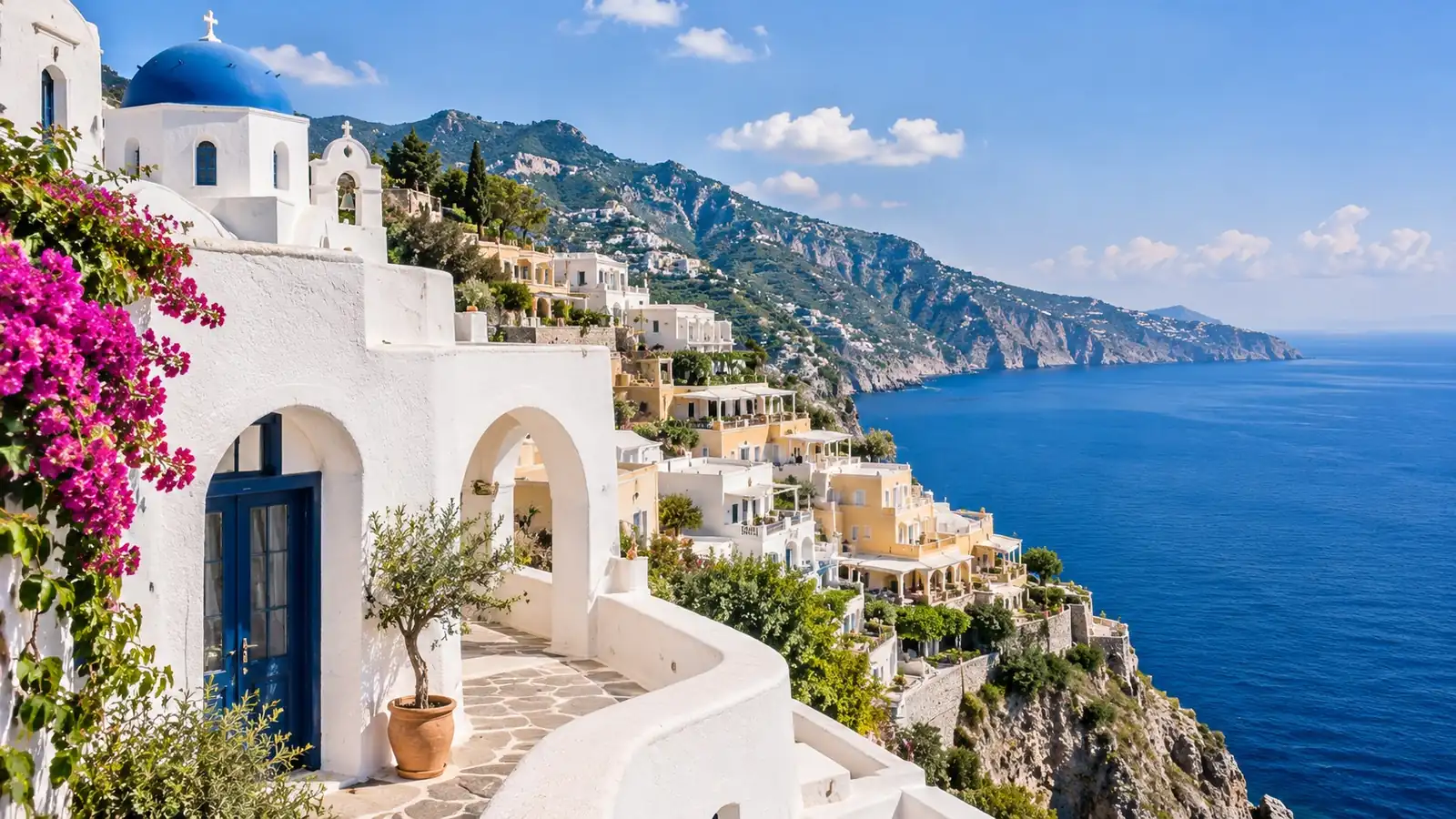
For a European honeymoon, Santorini and the Amalfi Coast offer the two most seductive versions of the same idea: white walls and blue water in Greece, lemon groves and cliff roads in Italy.
Santorini is at its best in May, June, September and early October, when the caldera light is soft, the crowds thin and the sea is warm enough to swim. A cave suite with a private plunge pool in Oia or Imerovigli costs from around 600 to 1,200 dollars per night in shoulder season, rising to 1,500 dollars and beyond in July and August, when the island is crowded and best avoided.
The Amalfi Coast rewards the same shoulder-season thinking: Positano and Ravello in May or September are glorious, with daytime temperatures around 22 to 27 degrees, while August brings traffic, heat and peak prices. A sea-view room at a hotel such as Le Sirenuse in Positano can cost 1,200 to 2,500 dollars per night in season.
A Safari Honeymoon

A safari honeymoon is the most memorable kind there is, and the most demanding to plan well. The classic choice is East Africa the Masai Mara in Kenya or the Serengeti in Tanzania where the Great Migration moves through the year: river crossings in the Mara from July to October, calving in the southern Serengeti from January to March.
Southern Africa offers a different pleasure: Botswana’s Okavango Delta, where water-based safaris by mokoro canoe run from June to October, and South Africa’s Sabi Sand, superb year-round and easily paired with Cape Town.
Expect to pay from around 800 to 1,500 dollars per person per night for a very good luxury lodge, and 1,500 to 3,000 dollars per person per night for the finest camps, usually all-inclusive, covering meals, drinks, game drives and often internal flights. A safari suits couples happy to rise before sunrise, and it pairs well with a few island days afterwards.
Japan
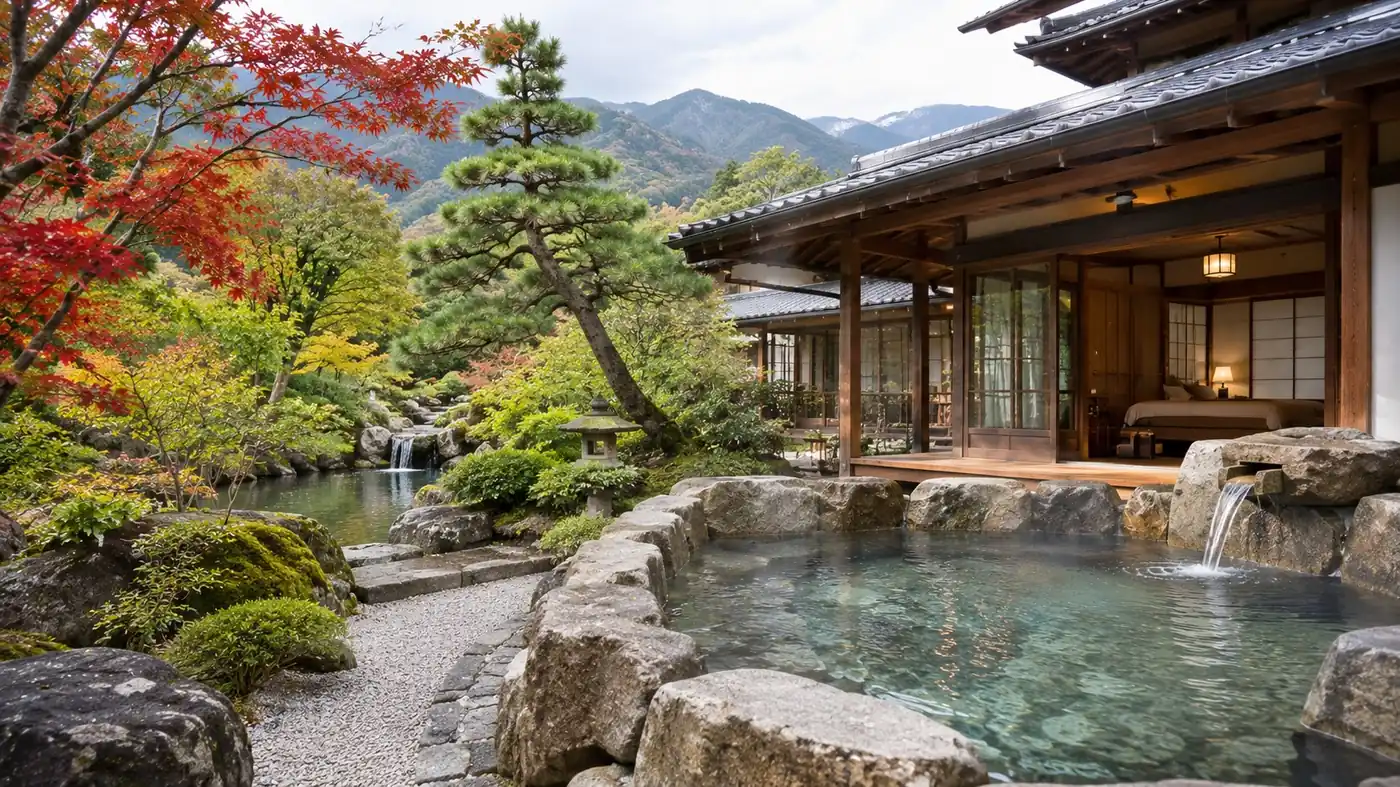
Japan is the most rewarding honeymoon for couples who want culture, food and beauty in equal measure. The classic route runs Tokyo to Kyoto, with the Japanese Alps or the Seto Inland Sea in between, and it works in almost every season: cherry blossom in late March and early April, fresh green in May, autumn maples in November, snow in Hokkaido in January and February.
A luxury ryokan a traditional inn with tatami rooms, kaiseki dinners and private onsen baths is the honeymoon experience here, and the finest, in Hakone, Kyoto and the Kii Peninsula, cost from around 800 to 2,000 dollars per couple per night including dinner and breakfast. In Tokyo and Kyoto, top hotels such as the Aman Tokyo and the Park Hyatt Tokyo run from around 800 to 1,800 dollars per night.
Private Villas Versus Resorts
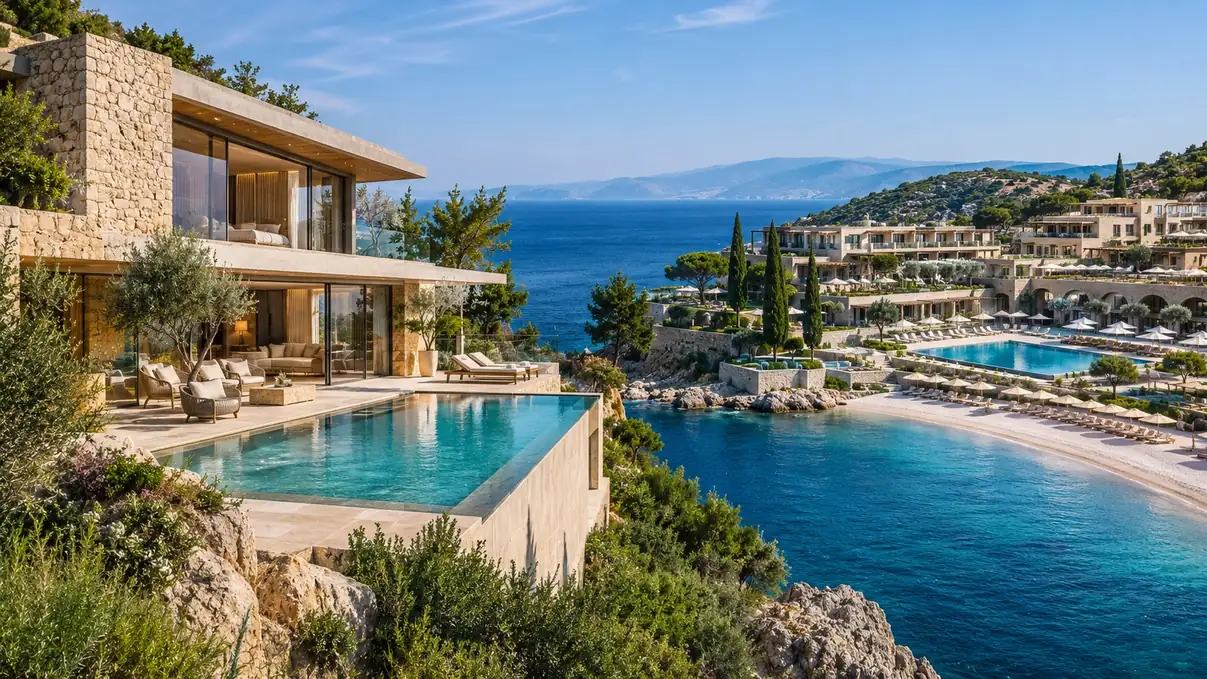
The central accommodation choice is between a resort and a private villa, and the right answer depends on how much service you want. A resort gives you restaurants, a spa, a beach and activities, all within walking distance. You never cook, clean or think about logistics.
The cost is privacy: other guests at breakfast, a shared beach, a pool you do not own. A private villa gives you the opposite: a whole house, a private pool, and nobody else at all. The cost is self-sufficiency: unless the villa comes staffed, you arrange your own meals, transport and activities, and a remote villa can feel isolated rather than romantic after a few days.
The best compromise for many couples is a staffed villa inside a resort, or a resort villa with a dedicated butler. You keep the privacy of your own pool and terrace, and you keep the resort’s restaurants, spa and concierge a short buggy ride away.
Whichever you choose, ask three questions before booking: how private is the pool really, how far is the nearest restaurant or town, and what happens if the weather turns. The answers tell you whether you are buying seclusion or inconvenience.
The Appeal of the World’s Most Exclusive Private Island Resorts
For couples drawn to the most private end of the spectrum, the world’s most exclusive private island resorts represent the logical extreme: a whole island, a handful of villas, and a staff-to-guest ratio that makes every wish feel modest.
They are priced accordingly, often from 3,000 dollars per night upward, and they suit a honeymoon only if you genuinely want to disappear. Read our guide to the world’s most exclusive private island resorts before committing to one, because the difference between a private island and a private villa on a larger island is not only price it is the feeling of being the only guests in the world, and not every couple wants that for a whole week.
Overwater Villas: What to Know Before You Book
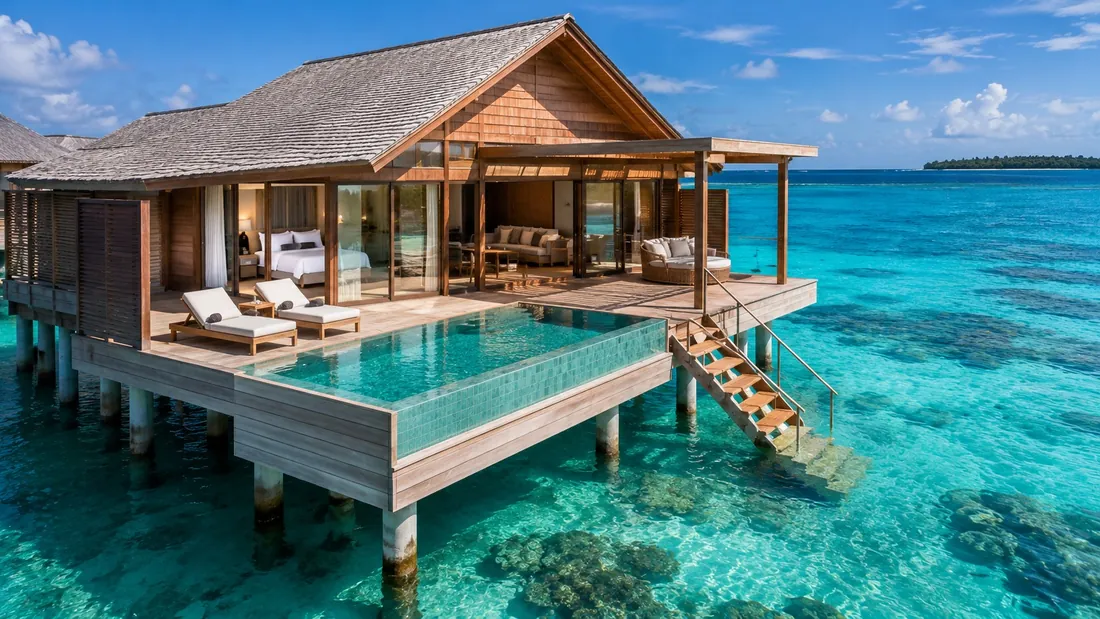
Overwater villas look effortless in photographs and mostly are, but a few practical details make the difference between a perfect stay and a disappointing one. First, position matters more than size.
A villa on the sunset side gives you evening light on your deck; a villa on the sunrise side gives you morning light and often calmer water. Ask which side your villa faces, and whether neighbouring villas overlook your deck. Second, direct lagoon access is worth paying for. Some villas have steps straight into the water; others require a walk to the beach. If snorkelling from your room is part of the dream, confirm it in writing.
Third, understand what is included. At many Maldivian and Polynesian resorts, the villa rate covers breakfast only, and lunch, dinner and drinks are charged separately at island prices.
A half-board or full-board plan is often better value and removes the small daily arithmetic that spoils a honeymoon. Fourth, check the transfer: seaplanes run only in daylight, so a late arrival may mean a night in Malé. Finally, remember an overwater villa is a room over the sea, not a house; a beach villa with a private pool may suit you better and usually costs less.
Multi-Destination Honeymoons
A multi-destination honeymoon two or three places in one trip is the most rewarding structure for couples who cannot choose, and the most common source of exhaustion when it is overdone.
The rule is simple: no more than three bases in fourteen days, and at least three nights in each. A journey that moves every two nights is not a honeymoon; it is a tour, and you will spend it packing, checking in and recovering from travel rather than being together.
The pairings that work best share a logic. A city and a coast: three nights in Rome, then seven on the Amalfi Coast. A safari and an island: five nights in the Serengeti, then five in Zanzibar. A culture and a beach: seven nights in Japan, then five in the Maldives or Bali.
A mountain and a sea: a few days among the best luxury lodges in Patagonia, where the days are spent hiking beneath granite towers and the evenings in front of a fire, followed by a slow week on a Pacific beach. Each pairing works because the two halves contrast: effort then rest, stimulation then stillness, cold then warm.
Honeymoon Registries: Asking Well
A honeymoon registry is now the most practical wedding gift list a couple can make. The principle is to let guests contribute to specific, named experiences rather than to a vague fund.
People give more generously, and more happily, when they can picture what they bought: a sunset cruise, a couples massage, a private dinner on the beach, a night in the overwater villa, a cooking class in Tuscany. Price the items across a range, from 50 dollars to several hundred, so every guest can find something comfortable.
Choose one registry platform and link it clearly from your wedding website, with a short note explaining that your home is already set up and that experiences are what you would love most. Be specific about the trip in the descriptions the place, the date, the experience because a registry that names the Maldives in February feels real in a way that a generic fund does not.
Check the platform’s fees before you publish, and confirm how and when the money reaches you. Finally, thank every giver personally after the trip, mentioning the experience they gave you. A registry is not only a way to fund a trip; it is a way of letting the people who love you take part in it.
Packing and Travel Logistics
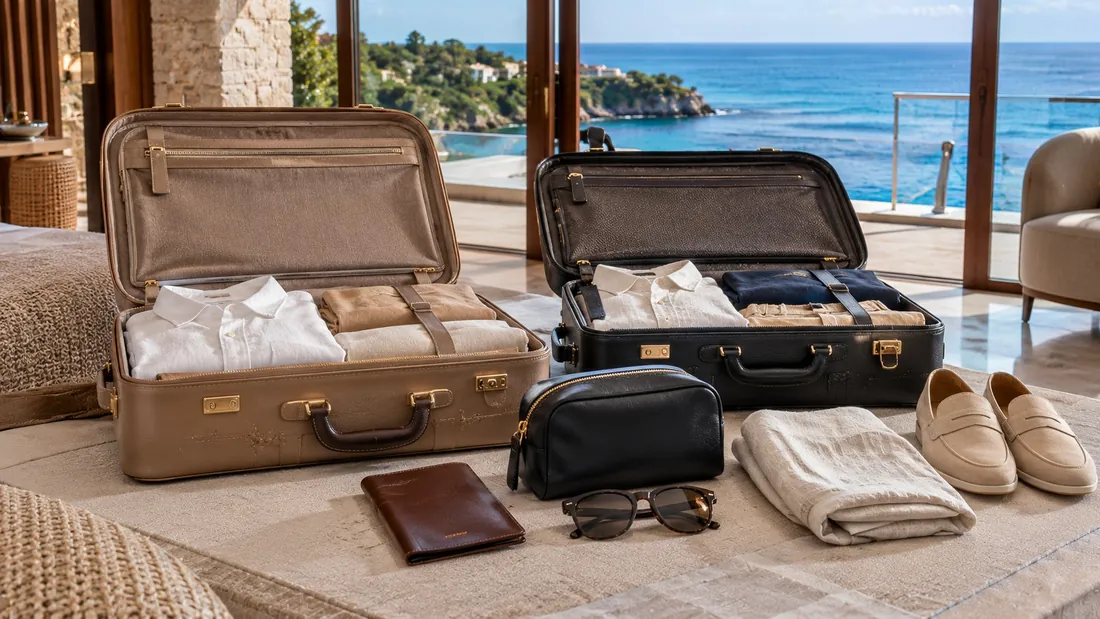
Packing for a luxury honeymoon is a matter of editing, not accumulating. Most couples overpack clothes and underpack the things that matter: the documents, the chargers, the medicines, the small comforts. Start with the documents. Both passports should be valid for at least six months beyond your return date, a requirement for entry to the Maldives, French Polynesia, Japan and many other destinations.
Check visa requirements early: most honeymoon destinations offer visa-free entry or visa on arrival for many nationalities, but a safari crossing from Kenya to Tanzania, or a trip transiting the United States, may need an advance visa or electronic authorisation. Carry printed copies of every hotel confirmation, transfer booking and insurance policy, even if you also have them on your phone.
Three arrangements deserve attention before departure. First, travel insurance: buy a comprehensive policy covering cancellation, medical evacuation and trip interruption, and check that it covers the activities you plan, from diving to hiking at altitude.
Medical evacuation from a remote island or safari camp can cost tens of thousands of dollars without cover. Second, money: tell your bank you are travelling and carry two different cards. Third, phones: arrange roaming or a local eSIM before you leave.
Common Mistakes to Avoid
The most common honeymoon mistake is over-scheduling. A couple who books a spa treatment, a cooking class, a sunset cruise and a guided tour on consecutive days will be tired by the fourth day and resentful by the sixth.
A luxury honeymoon should have, at most, one planned activity a day, and at least two days with nothing planned at all. The second mistake is choosing a destination for the photographs rather than for yourselves.
If you do not like heat, do not honeymoon in the desert in August. If you dislike flying, do not choose a destination that needs three flights and a boat. The third mistake is booking the cheapest room at an expensive resort in order to say you stayed there. A mid-range room at a hotel you can enjoy fully is a better honeymoon than a basic room at a famous address where every meal, drink and activity feels like an extra charge.
May the first morning of married life find you somewhere worth remembering, with nowhere else you need to be. Take the slow breakfast, linger over the view, and let the days ahead unfold at their own pace — the journey you have planned so carefully deserves to be enjoyed one unhurried hour at a time.