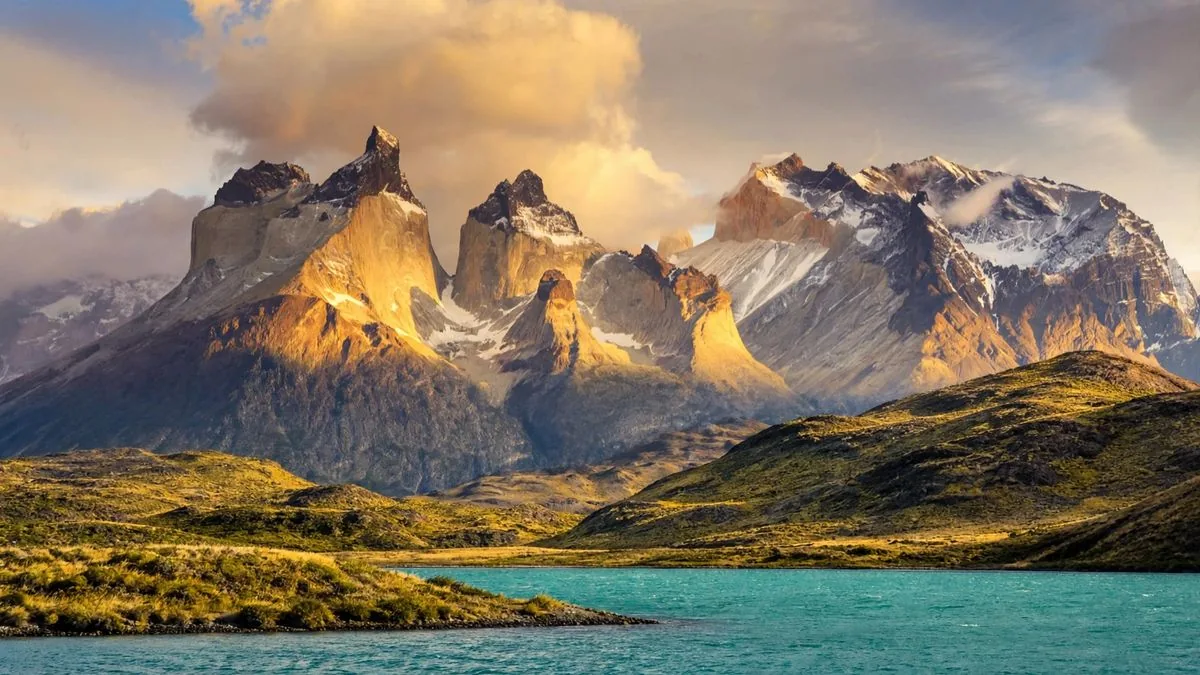
Patagonia is not a place you pass through on the way to somewhere else. It is the end of the road in the most literal sense: the southern Andes breaking apart into granite towers, glacial lakes and steppe that runs to the horizon, with weather that can change four times before lunch.
The luxury lodges here are built for exactly that landscape. They are not city hotels transplanted south. They are remote houses some inside national parks, some reachable only by boat where the day is organised around walking, riding, sailing or simply watching the light move across the mountains, and where dinner is served by a fire when you come back in.
This list gathers ten of them, from the towers of Torres del Paine in Chile to the Beagle Channel at Ushuaia in Argentina. Five sit on the Chilean side of the Andes and five on the Argentine side, and together they cover the region properly: the great national parks, the glacier country around El Calafate, the lake district near Bariloche, and the far south. What they share is a sense of being exactly where they are. None of them could stand anywhere else.
What Makes a Patagonian Lodge Different
A Patagonian lodge is usually all-inclusive, and the reason is practical rather than generous. Once you are two hours from the nearest town, there is nowhere else to eat, no taxi to call and no excursion desk to visit.
So the rate covers the room, the meals, the drinks and the guided outings, and each evening the guides sit down with guests to plan the next day around the weather. The best lodges employ their own guides, keep their groups small, and know their ground intimately which valley shelters from the wind, which trail is passable after rain, where the pumas were seen last week.
Timing matters more here than almost anywhere else. The southern summer, from November to March, brings the longest days and the most reliable weather, and it is when the lodges are fully open.
The shoulder months of October and April are quieter and often beautiful, with autumn colour in the southern beech forest, but several lodges close for the winter, when the days shorten and the wind hardens.
Book well ahead for the summer weeks: the lodges on this list are small, most with fewer than sixty rooms, and the best of them fill months in advance. A lodge stay rewards the traveller who plans early and then, once arrived, lets the place set the pace.
1. Explora Patagonia, Torres del Paine, Chile
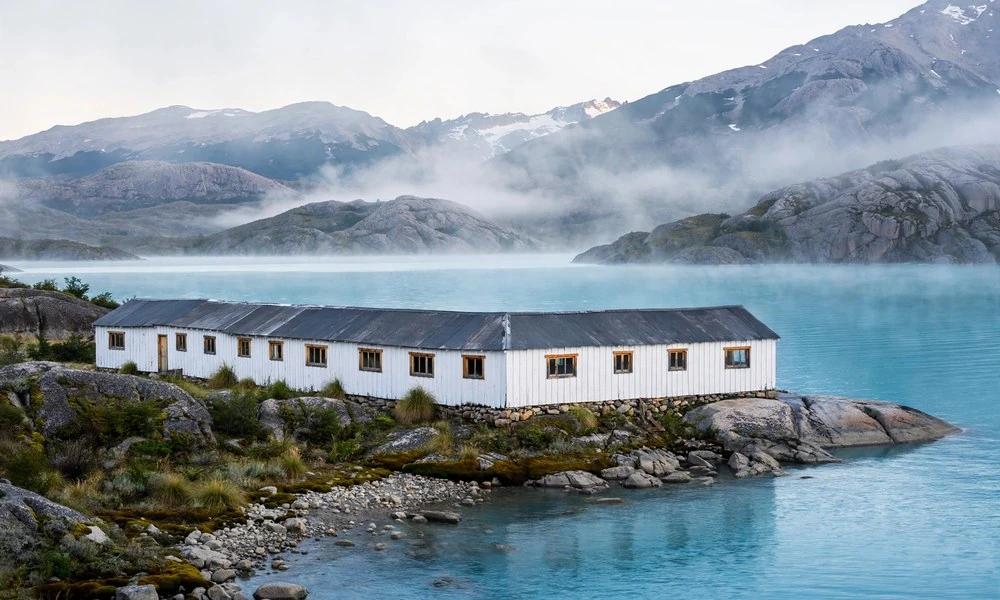
Explora Patagonia is the lodge that started Patagonian luxury, and it still holds the finest position in the region. It opened in 1993 on the shore of Lake Pehoé, inside Torres del Paine National Park, beside the Salto Chico waterfall, and it was the first luxury lodge in the park the house from which the whole Explora idea grew.
The long, low white timber building, designed by the Chilean architects Germán del Sol and José Cruz Ovalle, sits on the rock above the water like a ship at anchor, with the Cuernos del Paine filling the windows of the dining room and the granite towers a short drive away.
There are forty-nine rooms, and the stay is built around exploration: dozens of guided hikes, horse rides and boat outings, all included, with guides trained in the company’s own school.
Being inside the park means earlier starts on the trails and shorter drives at the end of the day, and the lodge’s position on the lake gives it a quality no other hotel in Torres del Paine can match you step outside in the morning and the massif is already there, across the water.
It is the lodge to choose for a first visit to the park, and for anyone who wants the classic Patagonian experience done properly. For a wider sense of how the world’s finest hotels are judged, see our guide to the best hotels in the world for 2026.
2. Tierra Patagonia, Torres del Paine, Chile
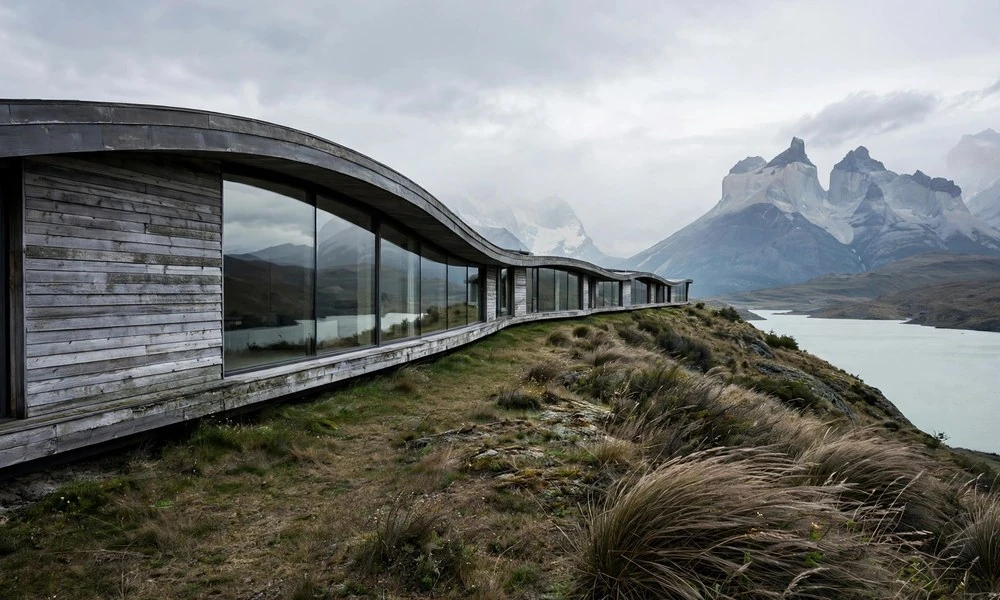
Tierra Patagonia sits on the shore of Lake Sarmiento, at the northern entrance to Torres del Paine National Park, and it is the most architecturally considered hotel in South America.
Designed by the Chilean architect Cazú Zegers and completed in 2011, the building is a single long curve of weathered lenga wood, shaped like a dune or a fossil found on the lakeshore, and it seems to rise from the steppe rather than sit on it.
All forty suites face the Paine massif through floor-to-ceiling windows, each with a soaking tub and a private terrace, so the mountains are present in the room as much as outside it.
The lodge is all-inclusive, with guided excursions into the park and a spa, the Uma Spa, that is the most serious in the region an indoor pool, sauna and outdoor whirlpool for the end of a long day on the trails.
Because it stands just outside the park boundary, on the eastern side, it avoids the daily permit zone while keeping the same view, and the light across Lake Sarmiento in the evening is one of the great sights of Patagonia. It suits travellers who care about design as much as walking, and couples who want a beautiful room to return to after a hard day outdoors.
3. Awasi Patagonia, Torres del Paine, Chile
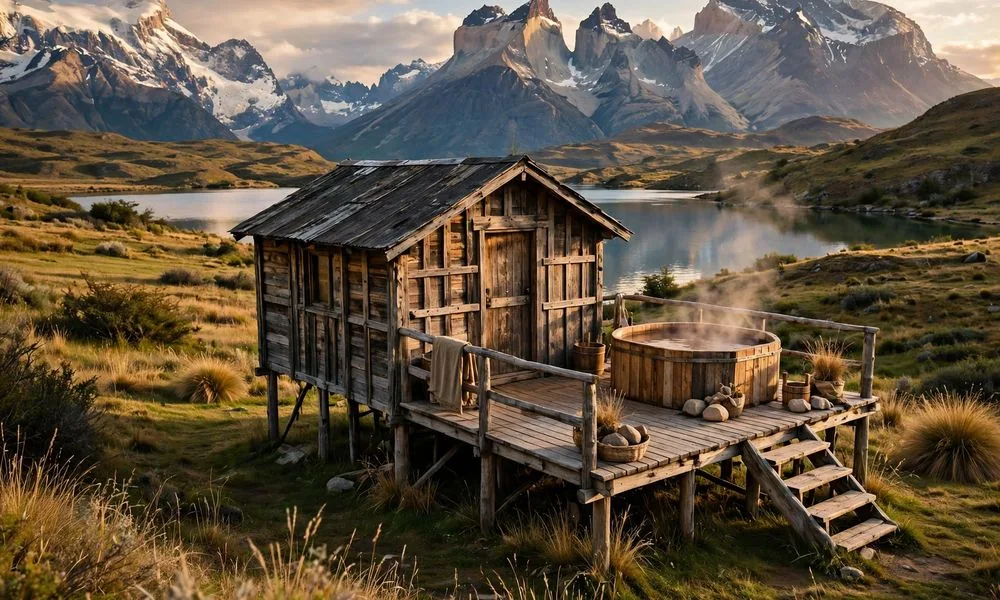
Awasi Patagonia is the most personal way to experience Torres del Paine. The lodge opened in December 2013 on a private reserve above Lake Sarmiento, east of the national park, and it holds just fourteen timber villas, each raised on stilts and spread far apart across the reserve for complete privacy.
Every villa is assigned its own private guide and its own four-wheel-drive vehicle for the whole stay, so there are no group excursions and no fixed schedule: each day is planned the evening before, around the guests alone a walk to the base of the towers, a drive to Grey Glacier, a ride with the estancia horses, or a morning tracking pumas on the reserve.
The villas were designed by the Chilean architect Felipe Assadi, inspired by the shelters of Patagonian sheep ranches, with wood-burning stoves, deep soaking tubs and outdoor hot tubs on the decks.
The lodge is a member of Relais & Châteaux, and the dining room cooks refined Patagonian food from regional ingredients. It is the most expensive way to see the park in this list, and the most private best for a honeymoon, a family travelling together, or anyone who would rather have one guide of their own than share the mountain with a group.
4. The Singular Patagonia, Puerto Natales, Chile
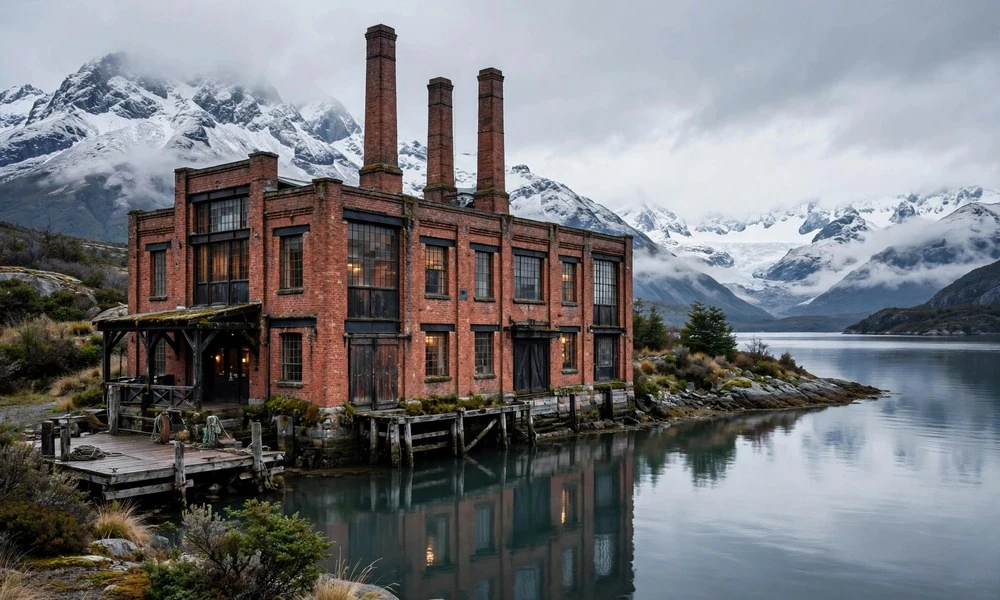
The Singular Patagonia is the only hotel on this list that is also a piece of history. It stands at Puerto Bories, on the fjord of Last Hope a few minutes from the town of Puerto Natales, inside the former Bories cold-storage plant a brick industrial complex built in 1915, when the Magallanes region ran on sheep, and declared a National Historic Monument in 1996.
After a restoration lasting more than a decade, the hotel opened in December 2011, keeping the original walls, machinery and smokestacks, with a glass walkway running beside the old engine room and a museum preserving the plant’s century-old equipment.
There are fifty-seven rooms, spacious and calm, with floor-to-ceiling windows looking across the water to the mountains, and a spa with a heated indoor and outdoor pool.
The Singular works differently from the park lodges: it is a base with a town nearby, restaurants within reach, and excursions that run from kayaking the fjords to horseback riding around Laguna Sofía and day trips into Torres del Paine, about two hours away.
It suits travellers who want heritage and comfort in equal measure, and anyone who would rather end the day in a town than in the middle of nowhere.
5. Patagonia Camp, Torres del Paine, Chile
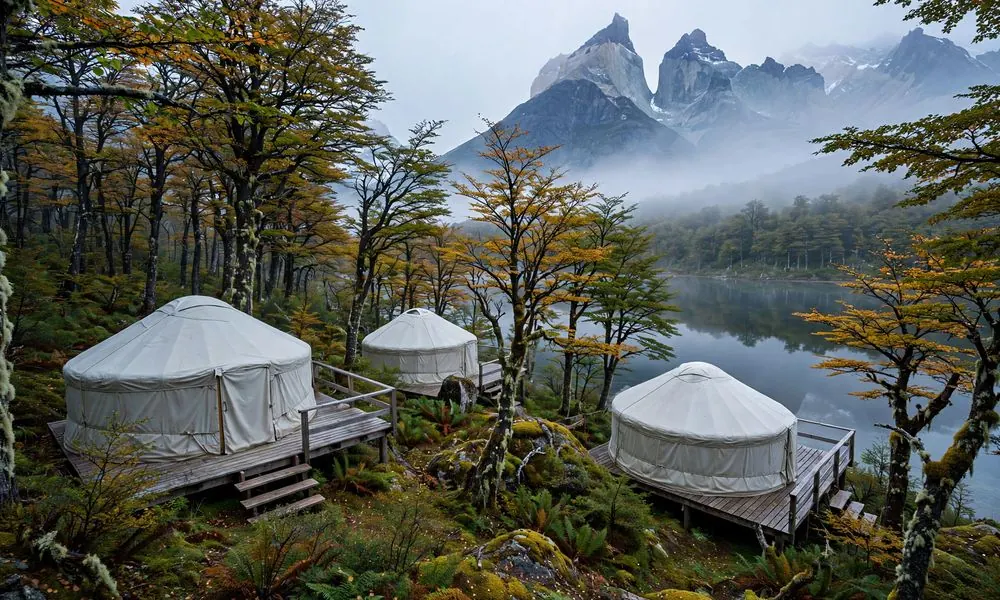
Patagonia Camp is glamping done properly, and it is the gentlest introduction to Torres del Paine on this list. The camp stands in native forest above Lake Toro, just outside the national park, facing the Paine massif across the water.
Twenty round yurts are set on wooden decks among the trees, each with heating, a real bathroom, a private deck and a skylight for stargazing, and some with their own hot tub. The canvas walls keep the sound of the forest close at night, and the mornings begin with the lake still and the mountains clear.
The camp was the first luxury eco-camp in Chilean Patagonia, and it keeps a lighter footprint than the big lodges: guided hikes, horseback rides and kayaking are included, the food is simple and generous, and the atmosphere is closer to a well-run expedition base than a hotel.
It is the best choice for travellers who like the idea of sleeping under canvas but not the reality of a tent, for families with older children, and for anyone who wants the park without the formality of a grand lodge. The yurts are comfortable in the shoulder seasons too, when the beech forest turns gold and the crowds thin.
6. Eolo, El Calafate, Argentina
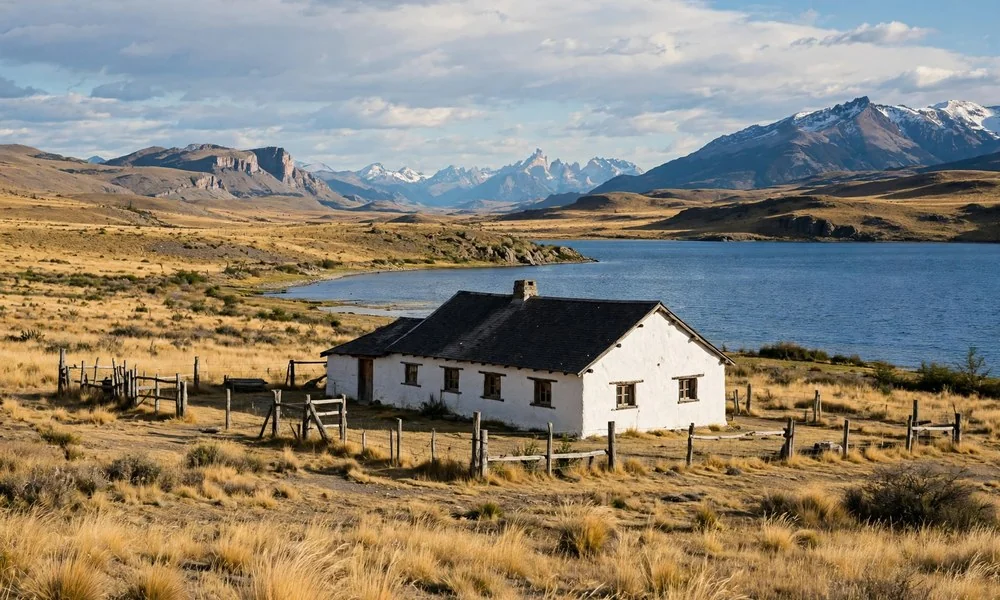
Crossing into Argentina, the landscape changes. The steppe opens out, the lakes grow larger, and the lodges become estancias old sheep ranches turned into quiet hotels. Eolo is the finest of them: a seventeen-room Relais & Châteaux lodge on a large private estancia between El Calafate and the Perito Moreno Glacier.
From outside it looks like a ranch house, low and whitewashed against the grass; inside it is calm and pared back, with big windows onto the steppe and Lake Argentino, and a warmth that comes from wood fires and unhurried service rather than decoration.
The position is the point. Perito Moreno, one of the few glaciers in the world still advancing, is an easy drive away, and the estancia itself offers horseback riding, walking and birdwatching across open country that feels almost empty.
Days here are slower than in Torres del Paine, and that is the appeal: long lunches, an afternoon by the fire, and a glacier visit that never feels rushed. Eolo suits travellers crossing from Chile to Argentina who want a night or two of stillness between the two great parks, and anyone who prefers a small house to a large hotel.
7. Estancia Cristina, Los Glaciares, Argentina
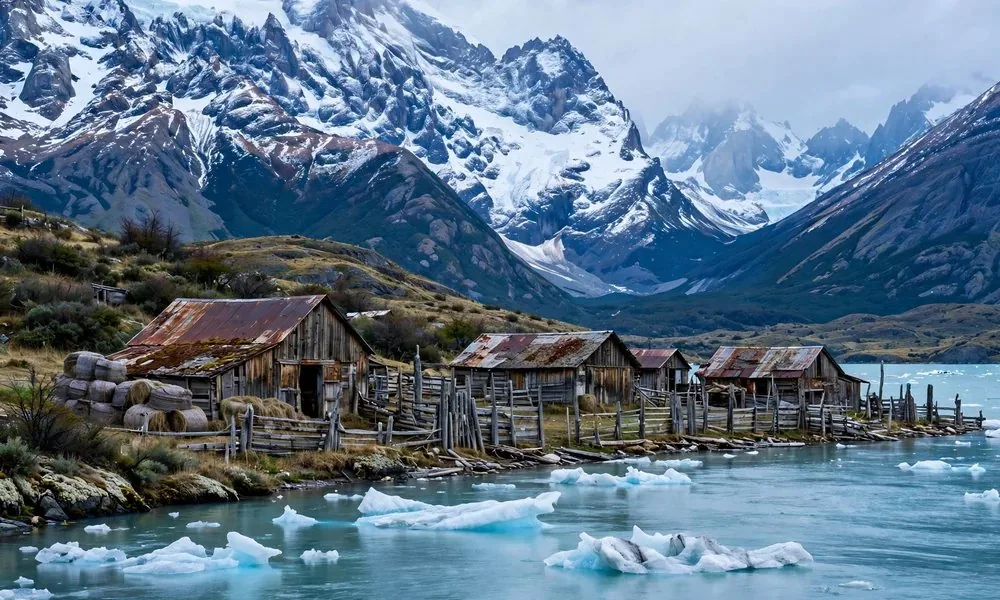
Estancia Cristina is the most remote stay on this list, and the one that feels most like the Patagonia of a century ago.
The estancia was founded in 1914 as a sheep ranch on the shore of Lake Argentino, inside Los Glaciares National Park, and it can only be reached by boat a catamaran crossing from El Calafate that passes icebergs drifting from the Upsala Glacier.
There is no road in, and that isolation is the whole experience: the ranch buildings are original, the valley is silent, and the scale of the ice field beyond the lake is difficult to take in all at once.
Guests stay in the ranch’s houses, walk the Fossil Canyon, ride in four-wheel-drive vehicles to a viewpoint over the Upsala Glacier, and take boat trips in front of the ice.
It is not a hotel in the usual sense the comforts are real but the spirit is that of a working estancia, and the days are shaped by the lake and the weather.
It suits travellers who have already seen Perito Moreno and want something rarer, and anyone who understands that the best Patagonian experiences are the ones that take some trouble to reach.
For journeys where the water is the way in, our guide to the best cruise destinations in the world is a useful companion.
8. Llao Llao Hotel & Resort, Bariloche, Argentina
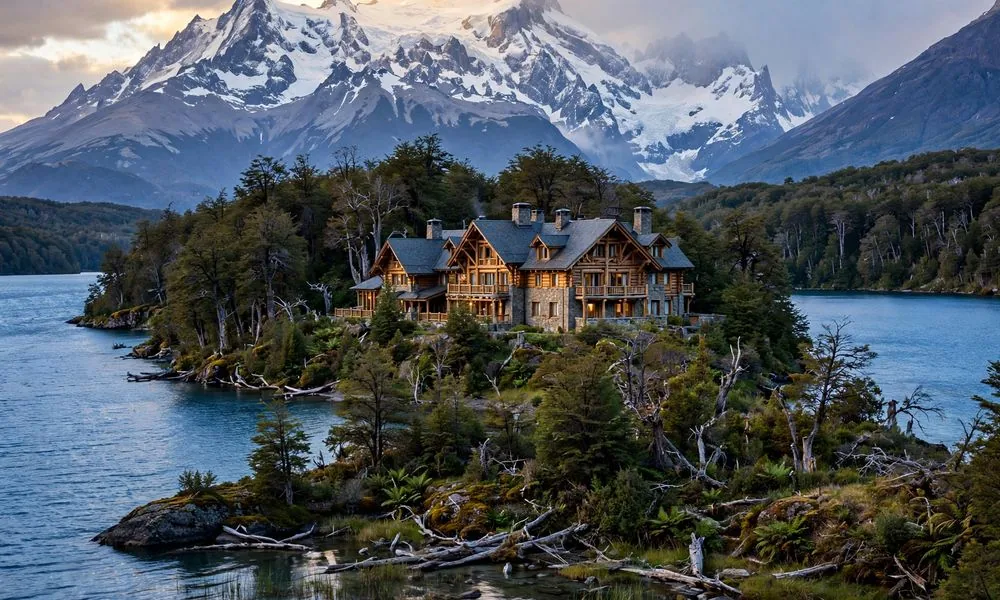
North of the great southern parks, Patagonia softens into the lake district, and its grand hotel is Llao Llao. The hotel stands on a forested peninsula between Lake Nahuel Huapi and Lake Moreno, outside Bariloche, built of timber and stone in the Alpine manner, and it has been a landmark since 1940.
It is the largest hotel on this list and the most traditional: a grand lobby, a golf course, a spa, and rooms that look out over water and mountains in several directions at once.
Bariloche is the gentlest Patagonia greener, warmer, and easier with children and Llao Llao is its natural base. Days are spent on the lakes, in the forests of the surrounding national park, or driving the lakeside roads that link the small villages of the region.
The hotel suits families and travellers who want Patagonia without the remoteness of the far south, and anyone marking an occasion who would rather have a classic grand hotel than a wilderness lodge. It is also the most accessible lodge here, with Bariloche’s airport a short drive away and the town’s restaurants and shops close at hand.
9. Estancia Peuma Hue, Bariloche, Argentina
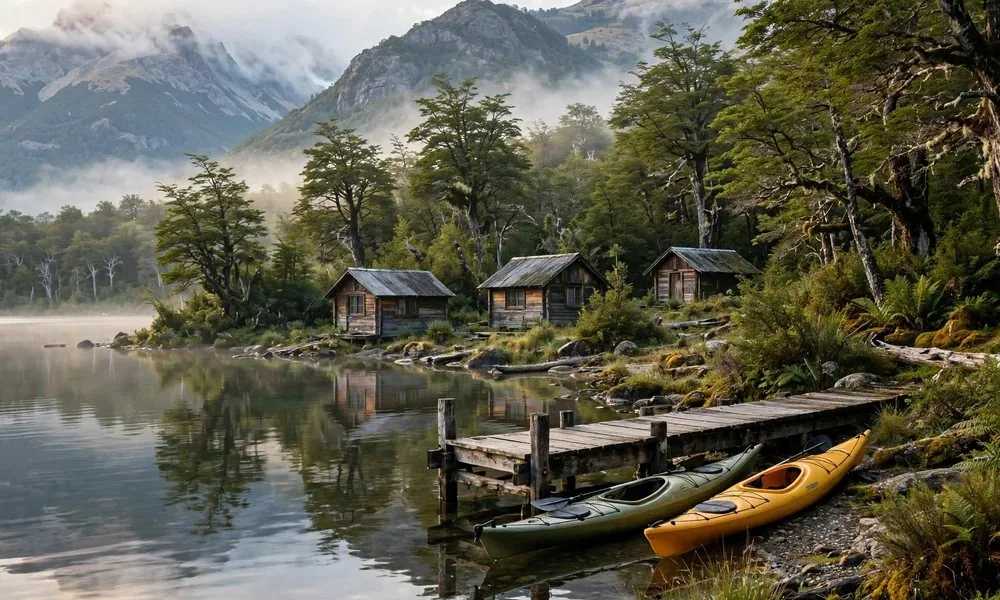
Peuma Hue means “Place of Dreams” in Mapudungun, the language of the Mapuche people, and the name fits. The estancia sits at the foot of Cerro Catedral, on the shore of Lake Gutiérrez near Bariloche, in native forest that feels a long way from the town though it is close by.
Accommodation is spread among houses and cabins in the trees, meals are taken together in the main house, and the days are organised around the property itself: marked trails through the forest, kayaking on the lake, and quiet hours on the shore.
It is the smallest and most intimate stay on this list, and the least hotel-like closer to staying with friends who happen to own a beautiful piece of lakeshore.
There is no spa and no grand dining room, and that is the point: the luxury is the setting, the food, and the time to enjoy both without a schedule.
Peuma Hue suits travellers who want the lake district at its most peaceful, couples looking for a quiet few days after the long drives of the south, and anyone who prefers a house in the forest to a resort on the lake.
10. Arakur Ushuaia Resort & Spa, Ushuaia, Argentina
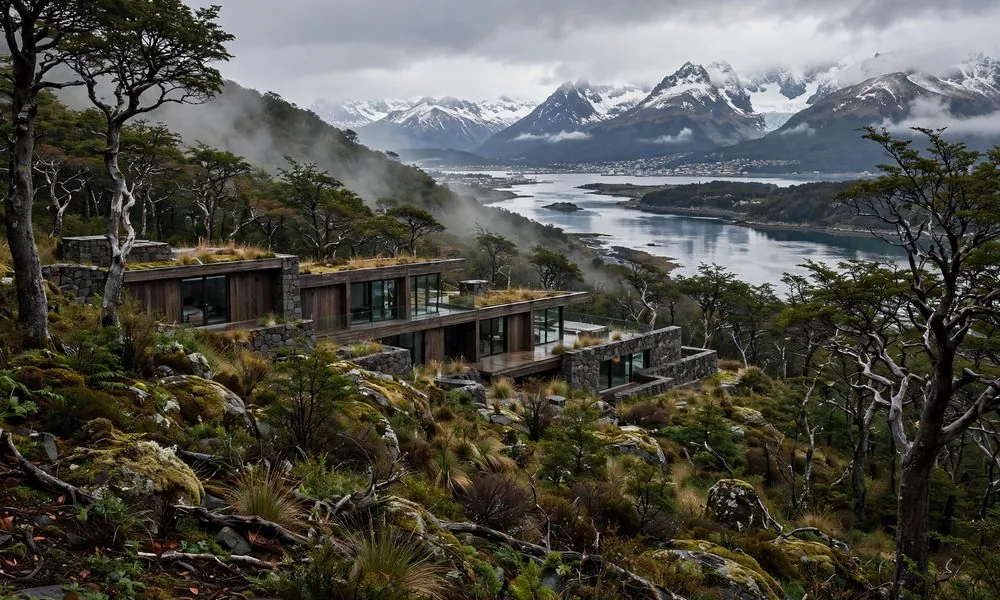
Ushuaia, at the southern tip of Argentina, is the end of the world in every practical sense: the last city before Antarctica, on the shore of the Beagle Channel, with the Martial mountains rising behind it.
Arakur sits above the town on the forested slopes of Cerro Alarkén, inside a private nature reserve, looking out over the channel and the mountains beyond.
It is the most modern hotel on this list low, stone and glass, built into the hillside and its position gives it a quality the town hotels cannot match: silence, altitude, and a view that runs to the water in every direction.
The resort has a spa, an indoor pool, and trails through the reserve that start at the door, and it is the natural base for the far south: boat trips on the Beagle Channel, walks in Tierra del Fuego National Park, and, for some guests, the first night before an Antarctic voyage.
Ushuaia’s weather is the most changeable in Patagonia, and Arakur’s calm, warm interior is built for exactly that a place to come back to when the wind comes off the channel. It suits travellers finishing a Patagonian journey at its southern end, and anyone who wants to be able to say they slept at the end of the world, comfortably.
How to Choose the Right Lodge
The ten lodges above are very different, and the right choice depends less on ranking than on the shape of the journey. First, decide which side of the Andes matters most. Torres del Paine, on the Chilean side, is the great walking country the towers, the French Valley, the glaciers and the lodges there are built for full days outdoors.
The Argentine side is the glacier country and the lake district: Perito Moreno and the ice field around El Calafate, the gentler lakes near Bariloche, and the far south at Ushuaia. Many travellers combine the two, crossing by road between Torres del Paine and El Calafate, and the lodges pair that way naturally.
Second, decide how much privacy and guidance you want. Awasi gives every villa a private guide and vehicle; Explora and Tierra run small-group excursions with their own guides; Patagonia Camp and Peuma Hue are more communal and relaxed. And third, be honest about how remote you want to be.
Estancia Cristina can only be reached by boat, and the park lodges are hours from the nearest town; Llao Llao and The Singular keep a town within reach. Our guide to choosing a luxury hotel that is actually worth it covers the same questions in more detail, and it is worth reading before you book anywhere this far south.
Patagonia does not hurry for anyone, and that is precisely the gift of it. The wind will decide your plans, the mountains will keep their own hours, and the best days will be the ones you did not quite plan. We hope one of these ten lodges is where you wait out the weather, and that when the light finally breaks across the lake, you are exactly where you hoped to be.