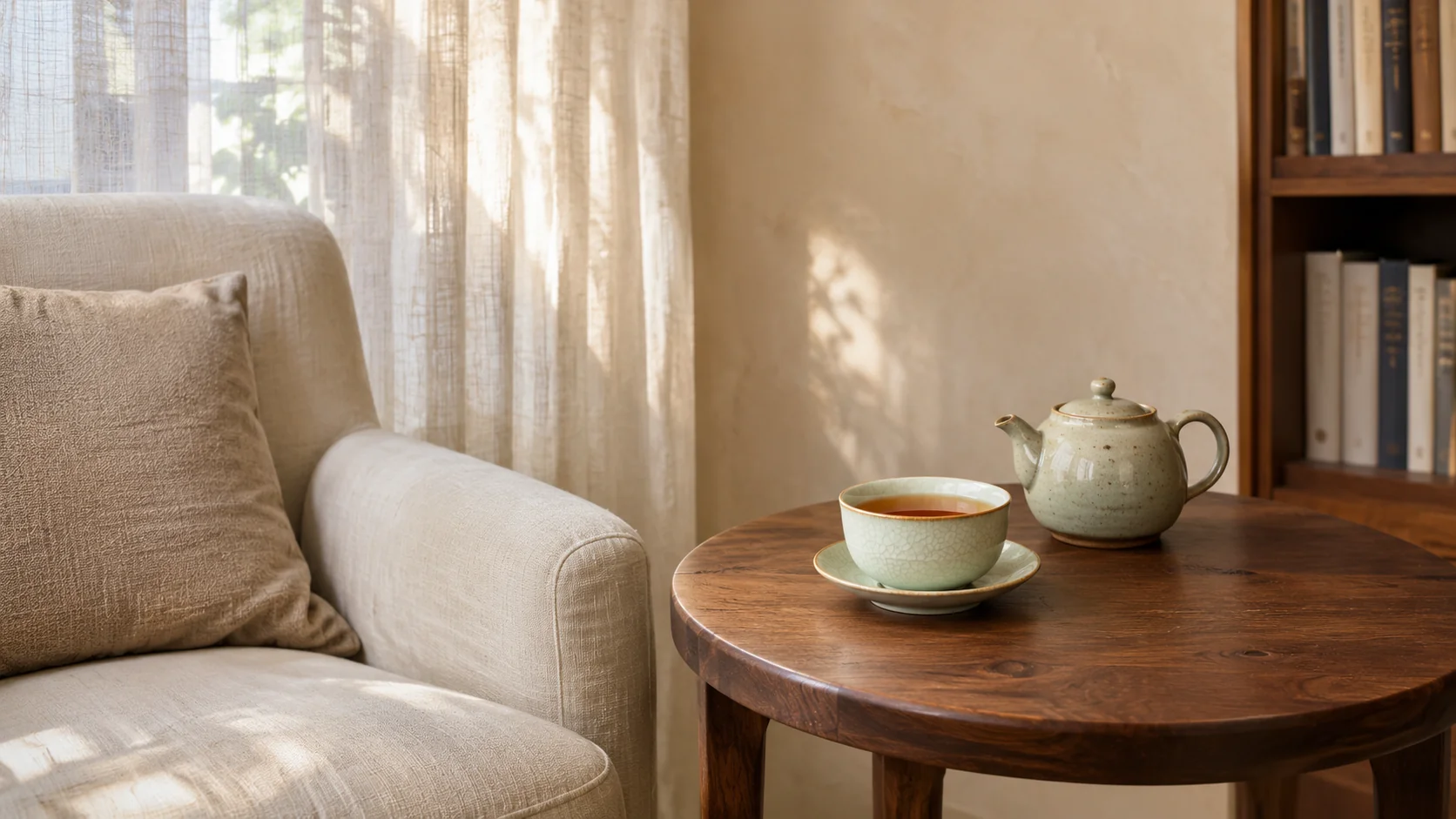
The kettle clicks off. You reach for your favorite cup, watch the leaves unfold, and wait a few minutes before taking the first sip.
For once, there is nothing else to prepare.
A home tea ritual can be this simple: a familiar drink, a comfortable place, and a little attention. Its character comes from the way you make and enjoy your tea, whether that means a quiet morning alone or an afternoon conversation across the kitchen table.
To create a home tea ritual, choose a reliable moment in your day, gather a few useful essentials, brew your tea according to its instructions, and give yourself time to enjoy it. Keep the setup easy to use so you want to return to it.
Here is how to turn that idea into something personal, practical, and worth repeating.
1. Choose a Moment That Already Exists
Start by deciding where tea naturally fits into your life.
Perhaps you already put the kettle on before breakfast. Maybe there is a short gap between finishing work and starting dinner. Use that moment instead of creating a routine that needs an entirely different schedule.
| Moment | A simple tea ritual | What to prepare |
| Before breakfast | Drink your first cup before opening messages | Mug and tea ready in the kitchen |
| Midmorning | Step away from your desk while the tea brews | One portion of tea and a timer |
| Afternoon | Pair tea with a small snack or a conversation | Two cups or a small plate |
| After dinner | Choose a drink that suits your evening preferences | Clearly labeled tea or infusion |
| Weekend morning | Explore a new tea without rushing | Teapot, tasting cup, and optional notes |
Choose one occasion to begin with. You can always add a longer weekend version later.
2. Start With the Tea You Actually Enjoy
There is little reason to build a ritual around a tea you dislike because it looks sophisticated.
Start with familiar flavors. An everyday breakfast blend, fragrant Earl Grey, green tea, or rooibos can all become the center of a satisfying routine.
Buy a small quantity first. A modest selection makes it easier to learn what you enjoy without filling a cupboard with unfinished packets.
Consider caffeine when choosing your time
Black, green, white, and oolong teas contain naturally occurring caffeine. Plain rooibos is naturally caffeine-free. Check the ingredients of flavored blends, because the name alone may not explain everything inside.
If you prefer to avoid caffeine in the evening, choose a product clearly labeled caffeine-free.
Tea bags are a practical starting point
A tea bag can make the routine quick and easy to clean up. Loose leaves offer another way to explore tea, especially if you enjoy measuring and adjusting your brew.
Both belong in a home tea ritual. The UK Tea & Infusions Association includes both tea bags and loose-leaf tea in its brewing guidance.
3. Gather a Small, Useful Tea Kit
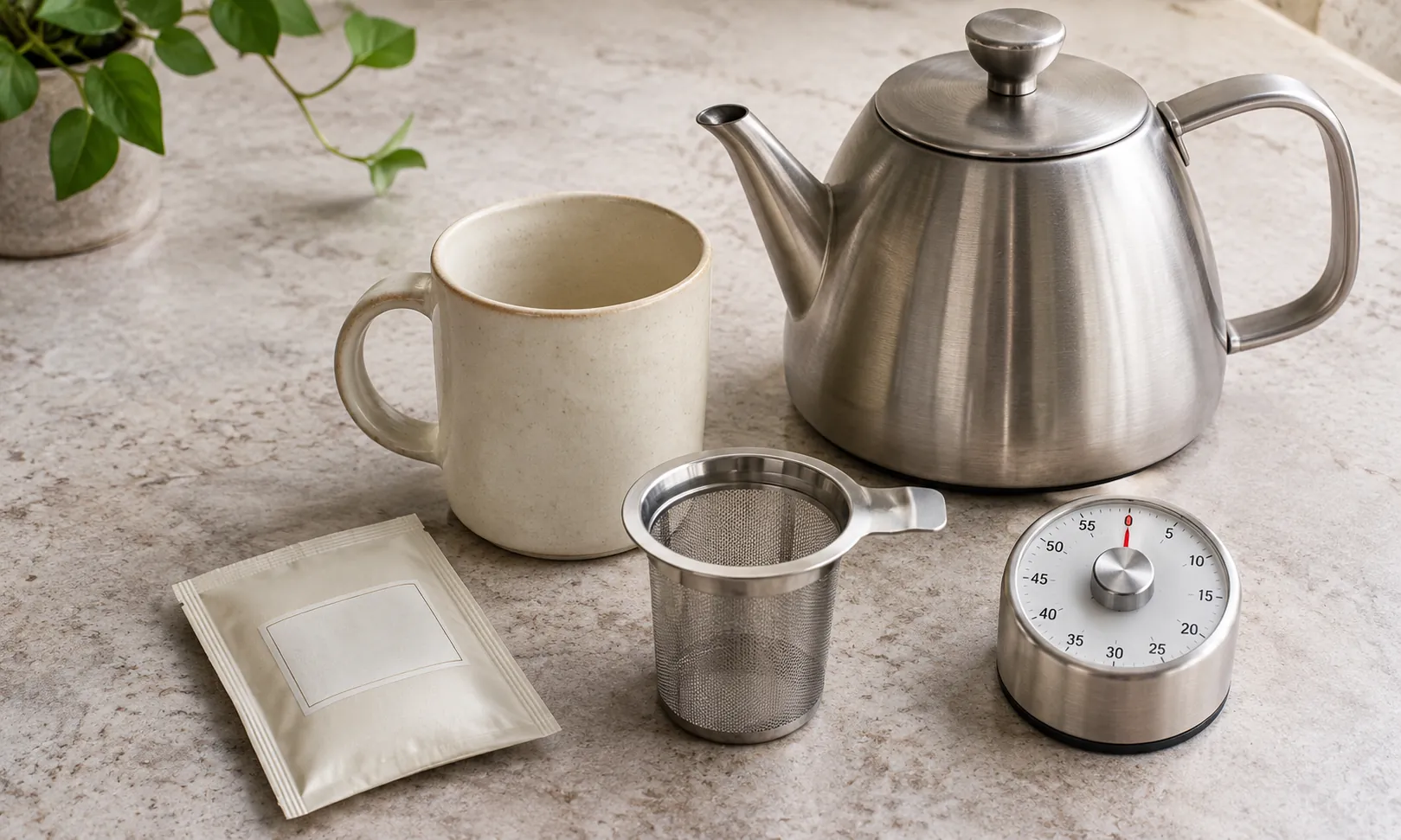
Begin with what you already own.
| Essential | What to look for |
| Kettle | Easy filling, pouring, and handling |
| Cup or mug | A comfortable handle and a size you enjoy |
| Tea | One dependable favorite |
| Infuser, if needed | Enough space for loose leaves to open |
| Timer | A kitchen timer, watch, or phone |
| Coaster | Suitable protection for your table |
A teapot is useful when you want several cups or are sharing. A variable-temperature kettle can be convenient when you regularly brew teas at different temperatures, but you can begin without one.
Before buying anything decorative, make a few cups with your current setup. You will quickly notice which changes would help.
Perhaps your mug is too large. Perhaps the infuser is difficult to wash. Solve those small frustrations first.
4. Create a Tea Corner That Works in Your Home
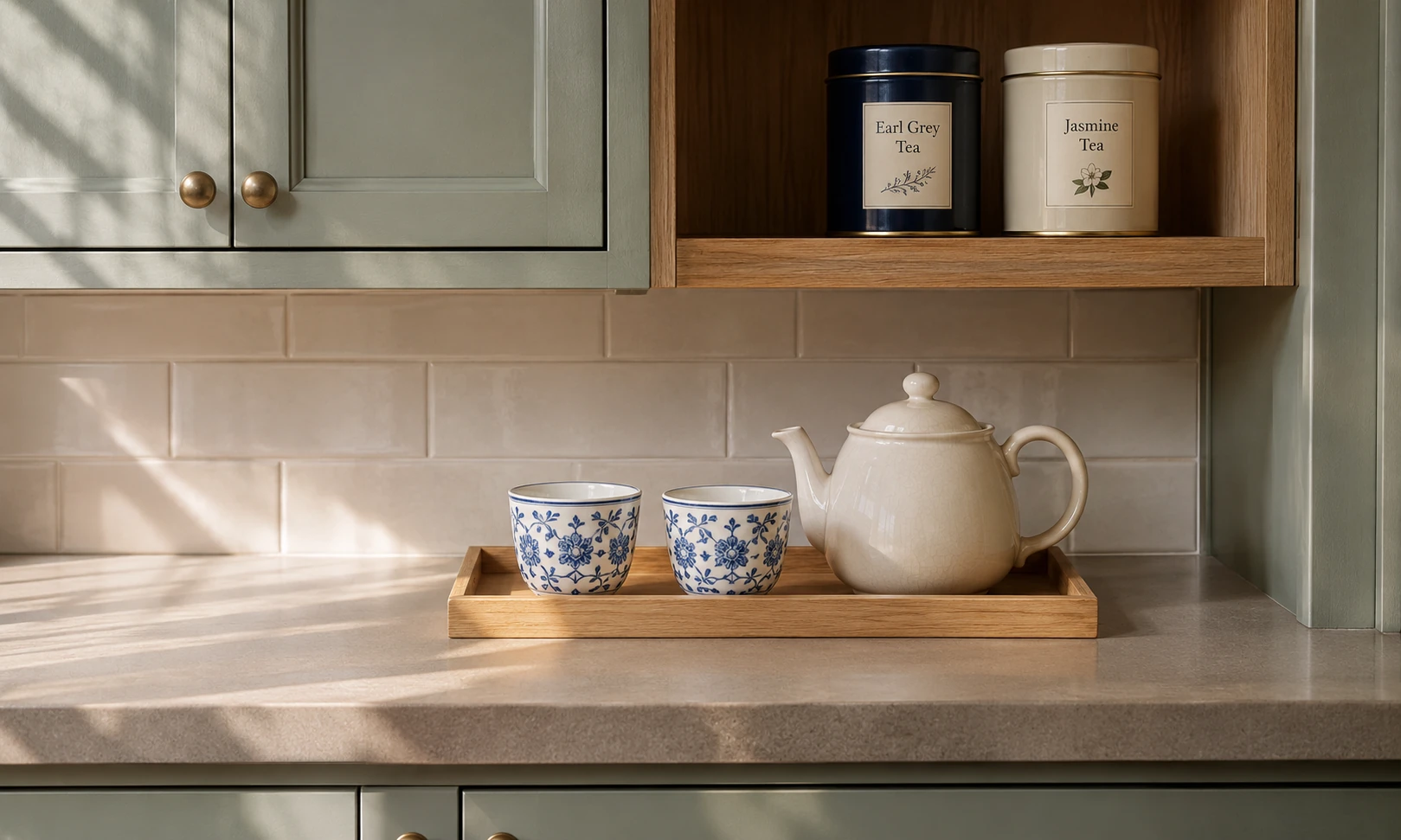
Your tea corner might be a section of kitchen counter, a cupboard shelf, or a tray you bring to the table.
Keep the frequently used pieces together. Store the rest away.
In an apartment, prepare hot water in the kitchen, then carry the finished drink to a comfortable seat. This keeps the serving area simple and avoids needing a second kettle or permanent tea station.
For more ideas on making a compact home feel considered, explore Pravi Celer’s guide to luxury tiny homes and thoughtful small-space living.
Make the setting comfortable
Choose a stable surface within easy reach. Add lighting that lets you see clearly, and sit somewhere you enjoy spending a few minutes.
A favorite ceramic cup, a wooden tray, or a comfortable chair may be enough to give the corner character. Pravi Celer’s warm minimalism interior design guide offers ideas for combining simple surroundings with inviting materials.
Leave enough clear space to put down a hot cup safely.
5. Learn One Reliable Brewing Method
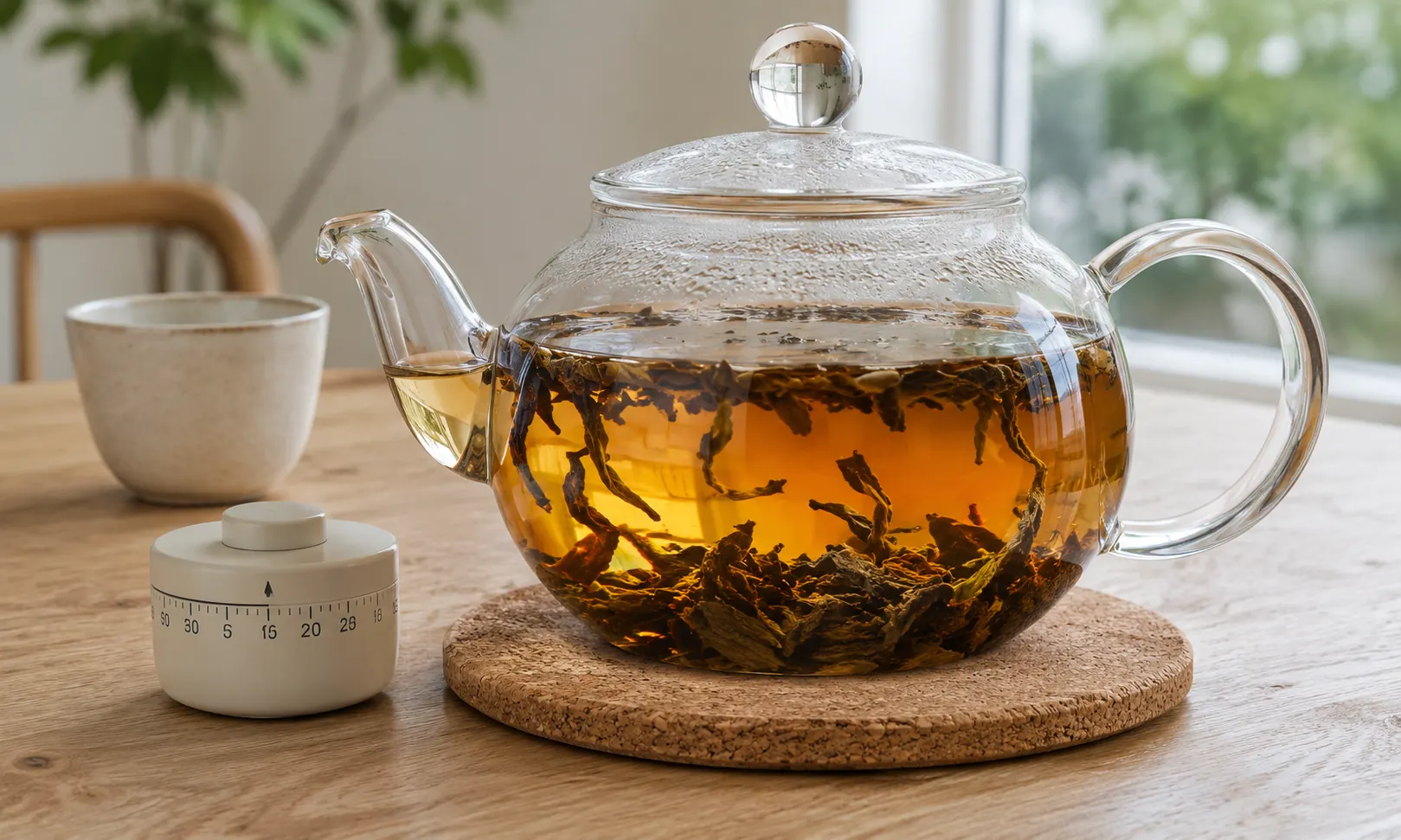
A beautiful setting cannot fix a cup that tastes unpleasant.
Start with the instructions on your tea packet. Water temperature, leaf quantity, and steeping time all influence the result, and different teas need different treatment.
The following table gives starting points for a conventional mug or teapot infusion. Specialized preparations, including matcha and gongfu brewing, use different methods.
| Tea type | Starting water temperature | Starting steeping time |
| Black tea | 100°C / 212°F | 3–4 minutes |
| Green tea | 79–85°C / 175–185°F | 2–3 minutes |
| White tea | 79–85°C / 175–185°F | 2–3 minutes |
| Oolong tea | Around 91°C / 195°F | 3–4 minutes |
| Herbal infusion | 100°C / 212°F | 4–6 minutes |
These are TeaSource’s general guidelines; follow your product’s directions when they differ. Remove the tea bag or separate the leaves from the drink when brewing is complete, rather than leaving them to steep throughout the cup.
Brewing temperature is not drinking temperature. Let the finished tea cool until it is comfortable to sip.
Measure for the cup you use
A large mug and a small teacup hold different amounts of water. Follow the packet’s tea-to-water ratio rather than assuming every vessel needs the same quantity.
Keep your measurements consistent at first. It is easier to improve a cup when you know how you made it.
Change one thing at a time
If the result disappoints, adjust one variable on the next attempt.
Try the recommended temperature before changing the amount of tea. Then experiment with steeping time. Keep a brief note if it helps:
“This blend: one bag, my smaller mug, three minutes.”
You are creating a useful household recipe.
6. Give the Brewing Time a Purpose
Once the water is poured, there is usually a short wait.
You could use those minutes to clear a chair, open a book, or put away the items you used. You might simply watch the color develop.
Choose something small enough that the tea does not become another forgotten drink beside your laptop.
A practical sequence is:
- Select the tea.
- Measure the water and tea.
- Pour at the recommended temperature.
- Set a timer.
- Prepare your place to sit.
- Remove the leaves or bag.
- Let the drink cool, then enjoy it.
The steps give the ritual a familiar shape while leaving room for different moods and days.
7. Let the Tea Supply the Sensory Detail
Tea already gives you plenty to notice: the dry leaves, the changing color, the aroma, the warmth of the cup, and the flavor as it cools.
Keep the surroundings as simple as you prefer.
If you want to explore the tea’s aroma, leave strongly scented candles or room sprays for another occasion. Choose silence, music, or company according to what feels pleasant to you.
When tasting, begin with ordinary questions:
- Is it light or full-bodied?
- Does it taste floral, roasted, grassy, fruity, or malty?
- Do you prefer it plain or with your usual additions?
- Would you make it the same way again?
You do not need a specialist vocabulary to recognize a cup you enjoy.
8. Build a Short Version and a Slow Version
Some days allow an unhurried pot of tea. Others allow one mug before leaving home.
Make room for both.
The everyday version
Use your familiar cup and dependable tea. Follow the brewing instructions, sit down for the first few sips, and clean up afterward.
The slower version
Choose a tea you want to explore. Prepare a pot, read a few pages, or invite someone to join you.
If the tea’s instructions suggest multiple infusions, try another and notice how it differs. There is no need to make every weekday cup an extended tasting session.
Store Your Tea So It Is Ready Tomorrow
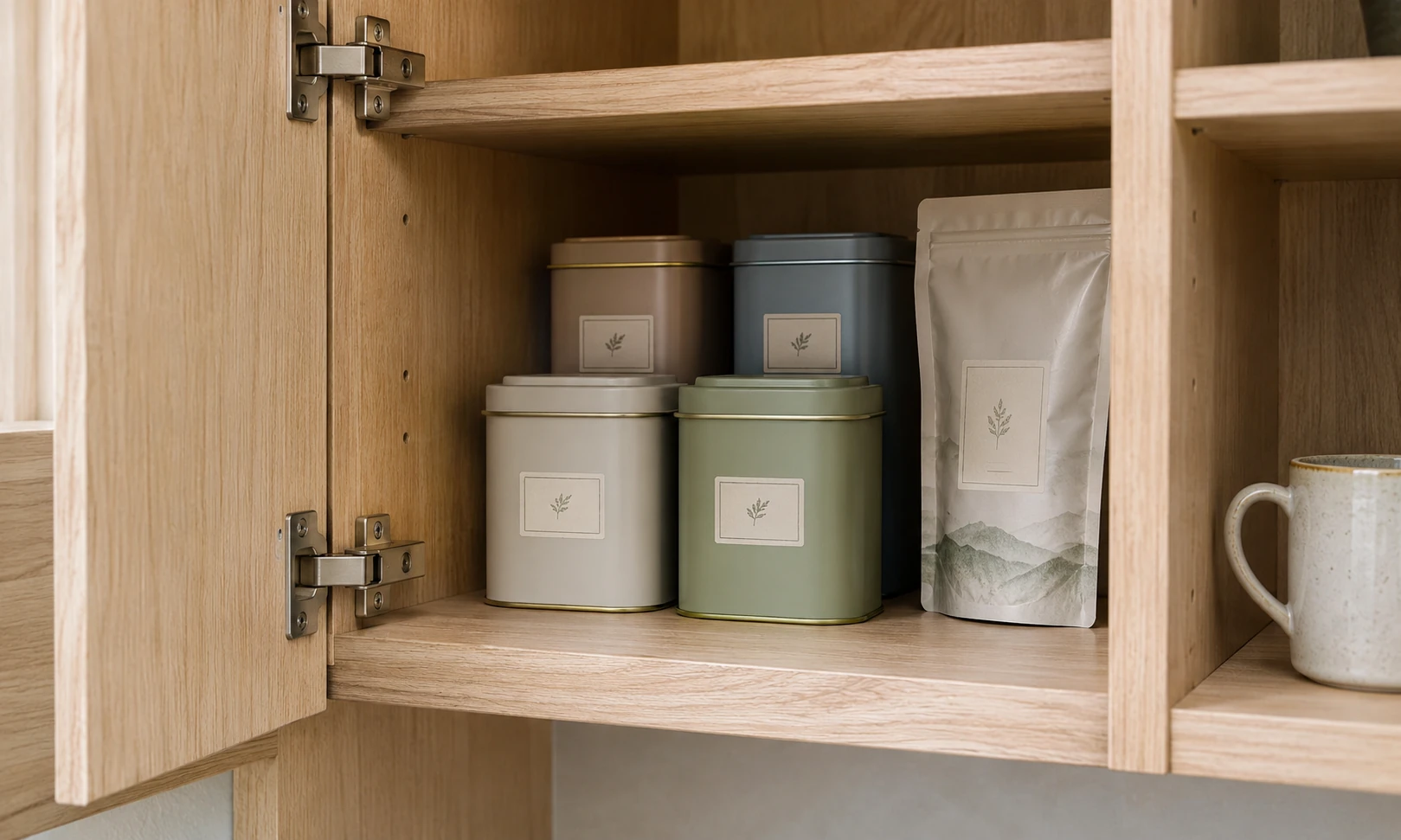
The ritual becomes easier when the next cup requires little searching or tidying.
Keep tea in a cool, dry place, away from strongly scented foods. Close its packaging properly, or use suitable containers that preserve the original storage protection. The UK Tea & Infusions Association specifically recommends cool, dry storage away from strong odors.
Keep names and brewing instructions visible. If you decant tea into a tin, transfer the useful label information too.
Wash your cup and infuser after use, let them dry, and return them to their place. A clean setup is a small invitation to repeat the routine.
Common Mistakes That Make a Tea Ritual Harder
| Mistake | A more practical approach |
| Buying several unfamiliar teas immediately | Start with one favorite and one small sample |
| Treating every tea the same | Read each packet’s brewing instructions |
| Choosing equipment mainly for appearance | Prioritize comfortable handling and easy cleaning |
| Leaving no space for the finished cup | Clear a stable surface before serving |
| Making the routine too elaborate | Keep an everyday version you can repeat |
| Forcing yourself to enjoy a fashionable tea | Choose flavors you genuinely like |
FAQs
What is a home tea ritual?
A home tea ritual is a personal routine for preparing and enjoying tea. It can involve a familiar time, cup, place, or sequence of steps. You decide how simple or elaborate it becomes.
How long should a tea ritual take?
Allow enough time to prepare the tea correctly, let it cool, and enjoy it comfortably. A single cup can fit into a short break; a shared pot can become a longer occasion.
Do I need expensive tea or special equipment?
No. A kettle, comfortable mug, and tea you enjoy are enough to begin. Add an infuser or teapot when it serves a clear purpose.
Can I create a tea ritual in a small apartment?
Yes. Keep your supplies on one shelf or a compact tray. Brew in the kitchen and enjoy the finished cup at a dining table, window seat, or another comfortable spot.
Is a personal tea ritual the same as a traditional tea ceremony?
A personal routine does not automatically follow a traditional ceremony. If you want to learn a specific tea tradition, seek instruction from knowledgeable practitioners and learn its preparation, etiquette, and cultural context.
Begin With Tomorrow’s Cup
Choose one tea tonight. Put your cup where you can find it, read the brewing instructions, and decide when you would like to drink it.
Tomorrow, make the cup and give yourself a comfortable place to enjoy it. Notice what worked. Adjust one small detail next time.
Over time, the familiar sound of the kettle and the cup waiting beside it can become a welcome part of being home.