Every grand hotel claims to have history, but only a handful of American hotels can claim that history happened inside them, in corridors where presidents plotted, bunkers were dug beneath ballrooms, and ducks marched through marble lobbies on command.
These are the survivors of the golden age of American resort hospitality, the era between the 1880s and the 1930s when the country’s new railroad wealth built palaces of leisure across the continent, from the mineral springs of Virginia to the Pacific surf of California.
Most of that generation is gone, demolished in the mid century collapse of the grand hotel. The eight on this list are the ones that made it, through wars, depressions, and the long dark decades when their ballrooms echoed, and each carries a story no modern luxury hotel, however polished, can manufacture.
For travelers who understand that the truest luxury is a room with a century in it, here are the eight, and the stories that make them worth the pilgrimage.
1. The Greenbrier, White Sulphur Springs, West Virginia
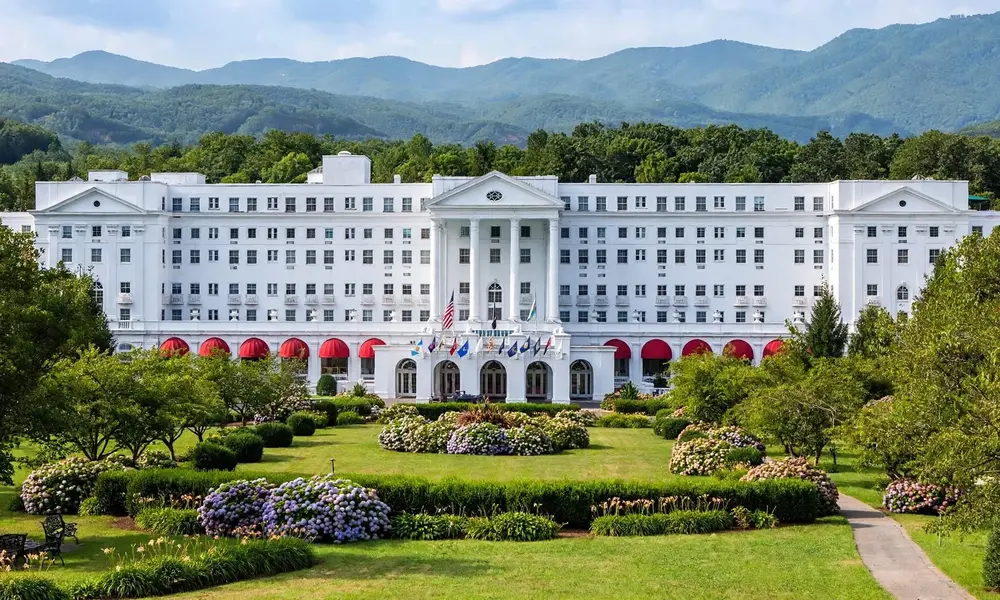
The Greenbrier’s story is the most improbable in American hospitality. The resort’s mineral springs drew visitors from the early 19th century, but its defining chapter began in the late 1950s, when the Eisenhower administration built a massive secret underground bunker beneath the resort, codenamed Project Greek Island, to house the entire United States Congress in the event of nuclear war.
For thirty years, resort guests danced in the ballroom directly above a facility designed to survive an apocalypse, and the secret held until a 1992 Washington Post exposé forced its declassification.
Today the bunker runs as a tourist attraction, and the Greenbrier, with its Dorothy Draper interiors of riotous color, its championship golf, and its white pillared facade, remains the finest surviving resort of the American springs era. The hidden history angle alone justifies the trip; the service and the spring water justify the rest.
2. The Broadmoor, Colorado Springs, Colorado
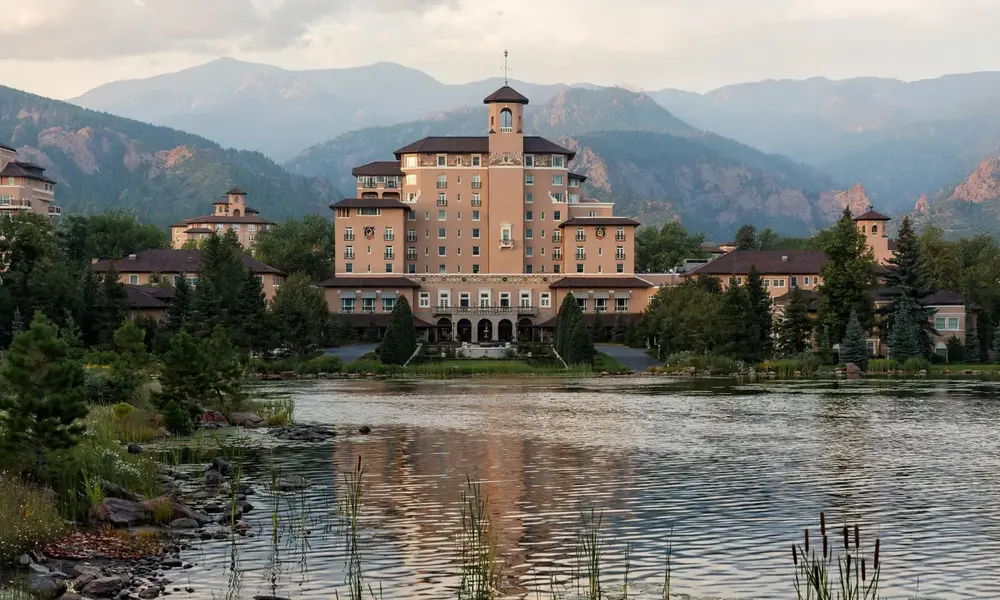
When Spencer Penrose, a Colorado mining magnate, opened the Broadmoor in 1918, he built not a hotel but a self contained world: a lake, three golf courses in time, a zoo that later became the city’s Cheyenne Mountain Zoo, and a main building of pink stucco designed to evoke the great resorts of Europe.
The Broadmoor became the Rocky Mountain address for everyone who mattered, from Will Rogers to several presidents, and its restaurants, starting with the fabled Charles Court, set standards the region still chases. The resort remains family controlled through the Anschutz interests and has expanded into a constellation of properties without surrendering the original’s scale or standards.
The story here is ambition: one man’s bet that the American West deserved a palace, placed in a mountain bowl where the light at sunset turns the facade to rose gold.
3. The Breakers, Palm Beach, Florida
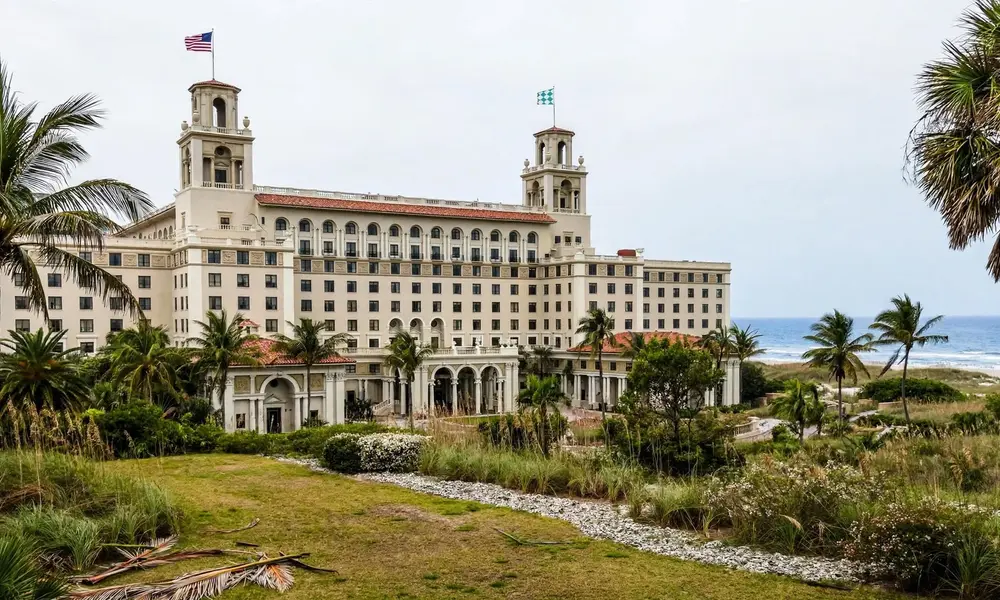
Henry Flagler, the co founder of Standard Oil and the man who built Florida’s east coast railroad, built the Breakers twice: the first burned in 1903, the second in 1925, and the current building, completed in 1926, is the one that survived, an Italian Renaissance palace of 540 rooms facing the Atlantic.
The Breakers is the winter palace of American society, the hotel whose colonnades have hosted a century of the season, from the debutante era to the modern galas, and its architecture, twin towers modeled on the Villa Medici in Rome, remains the most imposing resort facade in the country.
The story to know: Flagler built it for his guests, but the building itself became the institution, outlasting the fortune that raised it and becoming the standard against which Palm Beach’s legacy estates measure their own permanence.
4. Hotel del Coronado, Coronado, California
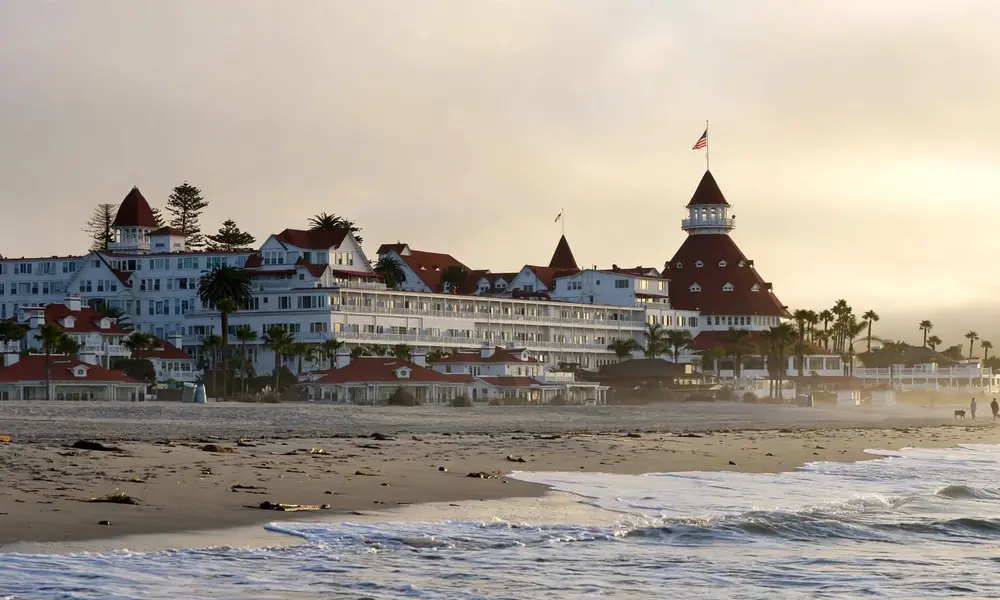
The Del, as San Diego calls it, opened in 1888 as the largest resort hotel in the world, a confection of white wooden turrets on the beach at Coronado that remains one of the last great wooden beach resorts anywhere.
Its story is Hollywood’s story: Some Like It Hot was filmed here in 1958, Marilyn Monroe, Tony Curtis, and Jack Lemmon camped in its corridors, and the film’s exteriors preserve the Del’s silhouette for eternity. Before that, it hosted presidents from Taft onward, and its ghost, the legend of Kate Morgan, who died there in 1892, still drives the hotel’s most requested room.
The Del is the rare historic hotel that stayed publicly accessible through every era, a working monument rather than a museum, and a sunset on its beach, with the turrets behind you, is one of the great no cost spectacles in American luxury.
5. The Peabody, Memphis, Tennessee
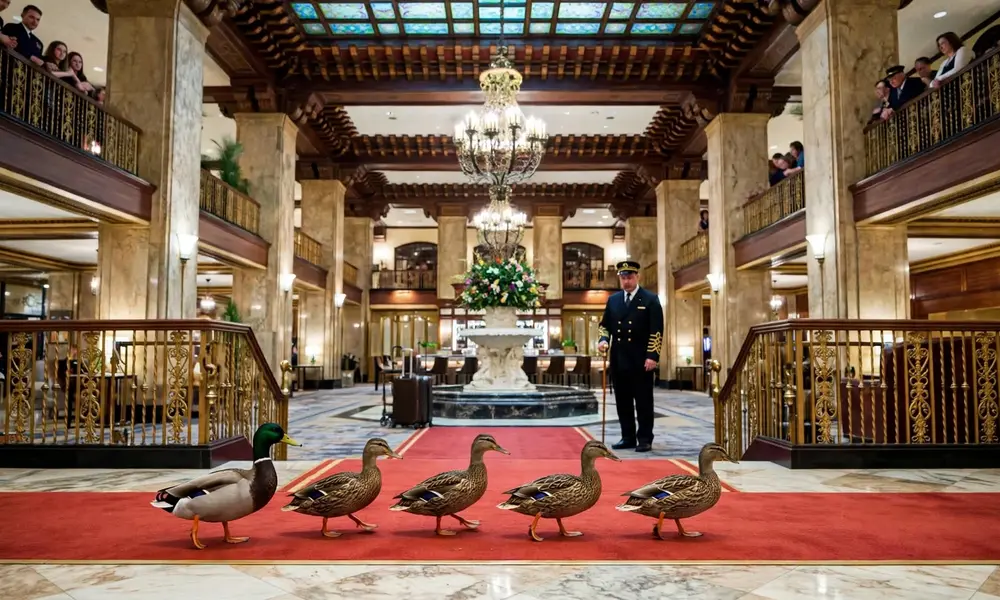
The Peabody’s claim to fame is five ducks. Since the 1930s, a team of resident mallards has marched from the rooftop palace where they live, down the elevator, across a red carpet, and into the lobby fountain each morning at eleven, reversing the journey at five in the afternoon.
The March of the Peabody Ducks is one of the most beloved rituals in American hospitality, a tradition begun as a prank by the hotel’s then general manager and his friend, a circus animal trainer, and now conducted by a formally titled Duckmaster before crowds that fill the lobby daily.
Behind the whimsy stands a genuinely grand hotel, a Memphis institution since 1869 in its current form since 1925, whose lobby, with its travertine fountain and ceiling frescoes, ranks among the finest public rooms in the South. Come for the ducks, stay for the history, and ask the concierge about the hotel’s role in the city’s music story.
6. The Royal Hawaiian, Waikiki, Hawaii
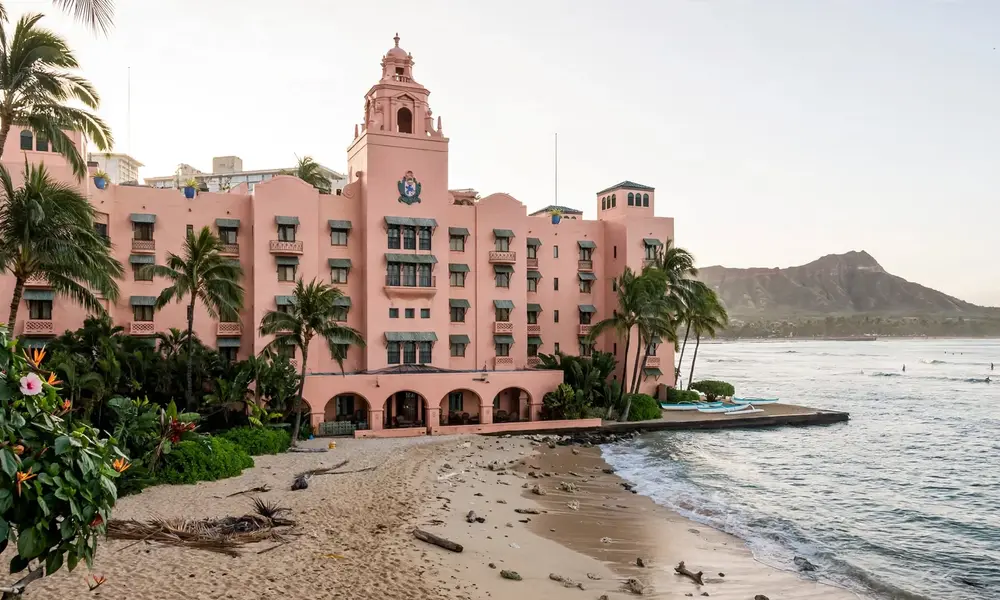
The Pink Palace of the Pacific opened in 1927, built by the Matson Navigation Company to give its steamship passengers a destination worthy of the crossing, and for decades the Royal Hawaiian was Waikiki, a Spanish Moorish confection in sherbet pink that hosted everyone from the Duke of Windsor to Elvis Presley.
Its story is the story of Hawaii’s arrival as an American fantasy: the pink facade framed against Diamond Head became the image that sold the islands to the mainland, and the hotel’s beach, its Mai Tai, and its 1920s bungalows carry the legend forward.
Modern Waikiki has grown dense around it, but the Royal Hawaiian’s towers and cottages remain a world apart, proof that a hotel can outlive the development it inspired. For a traveler building a Pacific itinerary, it pairs naturally with the island hopping logic of the coasts.
7. The Fairmont San Francisco, California
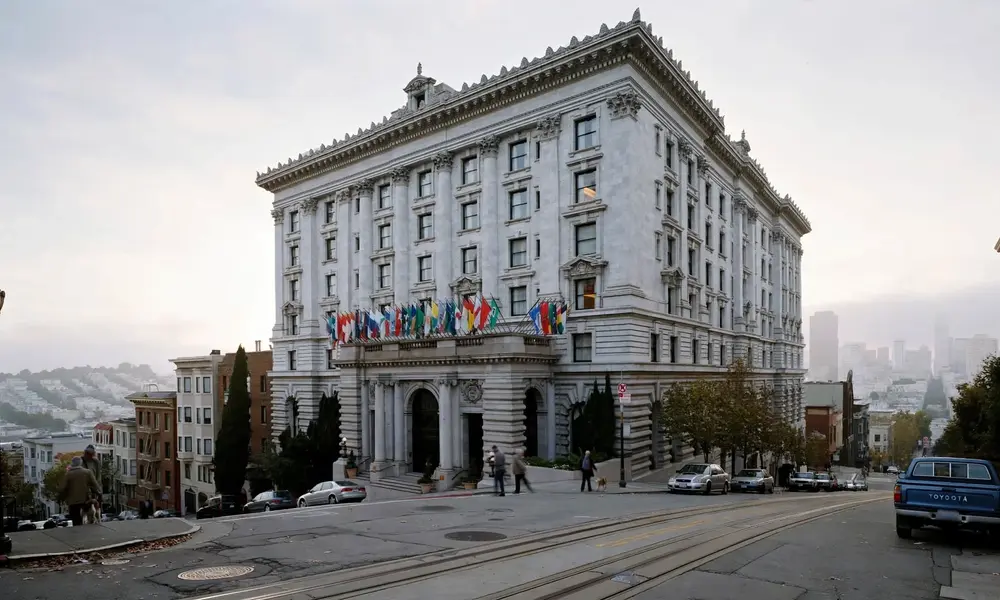
The Fairmont crowns Nob Hill, the summit of old San Francisco, in a building whose history reads like the city’s own: the hotel was nearly complete when the 1906 earthquake struck, and its opening, hastened by the disaster that destroyed its competition, made it the instant palace of the rebuilt city.
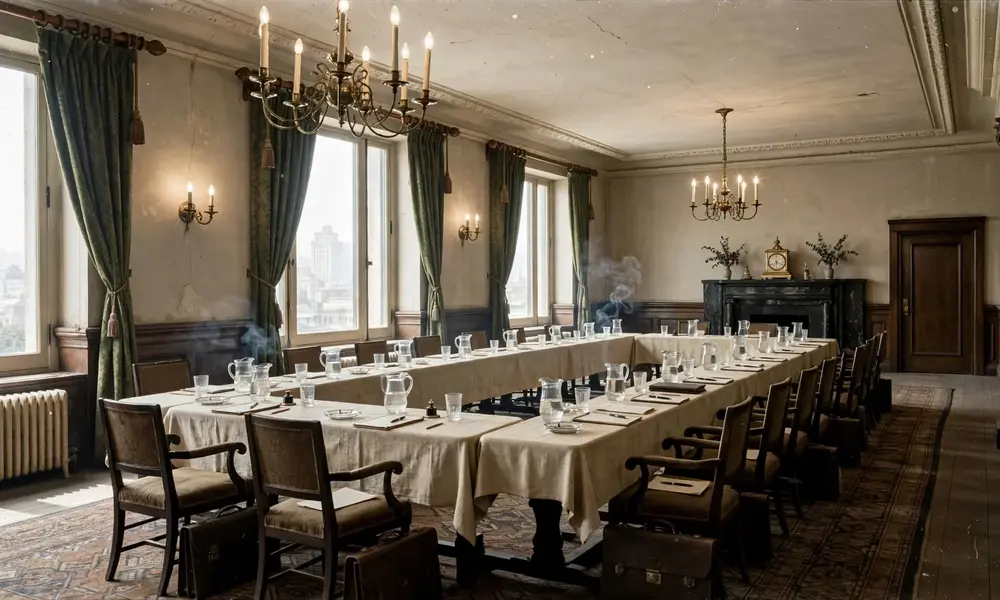
The Fairmont’s story includes the founding of the United Nations, whose charter was drafted in 1945 in the hotel’s Garden Room, and a guest list that spans every president and every era of Hollywood. The penthouse, a three story cottage atop the tower with a fireplace in the living room, is among the most storied suites in America.
The hotel remains the summit of Nob Hill in every sense, and its position, looking over the Bay and the bridges, gives every room a claim on one of the world’s great urban views. Its East Coast counterpart in the grand hotel canon is the Plaza, whose own storied history we told in our Plaza Hotel feature.
8. The Biltmore, Coral Gables, Florida
The Biltmore opened in 1926 as the centerpiece of George Merrick’s planned city of Coral Gables, a 400 room palace with a 300 foot tower modeled on the Giralda of Seville, and it remains the most architecturally ambitious resort of the Florida land boom.
Its pool, once the largest in the world, hosted aquatic spectacles and Esther Williams films, its golf course designed by Donald Ross ranks among the state’s finest, and its guests included the full register of the Jazz Age, from the Roosevelts to Al Capone, whose ghost, local legend insists, still plays cards in the hotel’s bar.
The Biltmore served as a military hospital during the Second World War and returned to hospitality only in the 1980s, its tower restored as the landmark of Coral Gables. It is the grand hotel as civic monument, the building around which an entire city organized itself, and its Sunday brunch in the courtyard is a Miami institution.
For the wider South Florida picture, our guide to Fort Lauderdale’s yachting capital completes the coast.
The Common Thread
The eight share more than survival. Each was built by a fortune with a point to prove, whether Flagler’s railroad, Penrose’s mining millions, or Matson’s steamships, and each became something its builders never planned: a civic institution that outlasted the money that raised it.
That is the real argument for staying in a historic grand hotel over a modern one. A new hotel can buy marble and hire chefs; it cannot buy a century of continuity, and the rooms on this list have hosted the moments, secret bunkers, founding charters, marches of ducks, that constitute the country’s actual history.
Choose the Greenbrier for the unbelievable, the Peabody for the charming, the Fairmont for the consequential, and the Royal Hawaiian for the beautiful, and you will find that the stories travel with you long after checkout. For where to pair them with the city’s best, our guides to the best hotels in New York and where to stay carry the same standard in the city that never needed a resort.
FAQs
What is the oldest grand hotel in America still operating?
The Greenbrier traces its resort history to 1778 and its mineral springs to the early 19th century, making it among the oldest continuously operating resorts in the country. The Peabody in Memphis dates to 1869, and several others on this list opened in the 1880s, placing them among the oldest grand hotels still welcoming guests in their original or early buildings.
Can you visit the Greenbrier bunker?
Yes. The declassified Project Greek Island bunker runs guided tours for resort guests and visitors, covering the facility’s construction, its thirty years of secrecy, and the logistics of sheltering Congress beneath a working resort. Tours are popular and should be booked in advance, particularly on weekends.
Why does the Peabody Hotel have ducks?
The tradition began in the 1930s as a prank by the hotel’s general manager and a friend who trained circus animals. A team of mallards was placed in the lobby fountain, guests loved it, and the twice daily March of the Ducks, to and from their rooftop palace, became a formal ritual overseen by a designated Duckmaster.
Which movies were filmed at these hotels?
Hotel del Coronado hosted Some Like It Hot in 1958, its exteriors immortalizing the resort’s silhouette. The Biltmore’s pool appeared in Esther Williams aquatic films of the 1940s. The Greenbrier and the Broadmoor have hosted decades of film and television productions drawn by their preserved period settings.
What is the Fairmont San Francisco’s connection to the United Nations?
The United Nations Charter was drafted in 1945 in the hotel’s Garden Room during the conference that established the organization. The hotel commemorates the event with historical displays, and the room remains a functioning event space with a place in the civic history of both the city and the world.
Is the Royal Hawaiian still pink?
Yes. The Royal Hawaiian retains its signature pink facade, a deliberate choice since 1927 that earned it the nickname the Pink Palace of the Pacific. The color, a custom shade, has been maintained through every renovation and remains the most recognizable resort facade in Hawaii.
Which of these grand hotels is best for a luxury golf trip?
The Broadmoor and the Greenbrier are the strongest golf destinations, each with multiple championship courses and decades of tournament history. The Biltmore’s Donald Ross course and the Breakers’ recently renovated layouts round out a Florida alternative. All four pair resort grandeur with serious golf.
Do these hotels still feel historic inside, or have they been modernized?
All eight have undergone major renovations that modernized rooms and systems while preserving the grand public spaces, facades, and rituals that define them. The balance varies: the Greenbrier and the Breakers feel most period, while the Fairmont and the Del have contemporary guest rooms beneath their historic shells. Historic character survives most strongly in the lobbies, ballrooms, and exteriors.