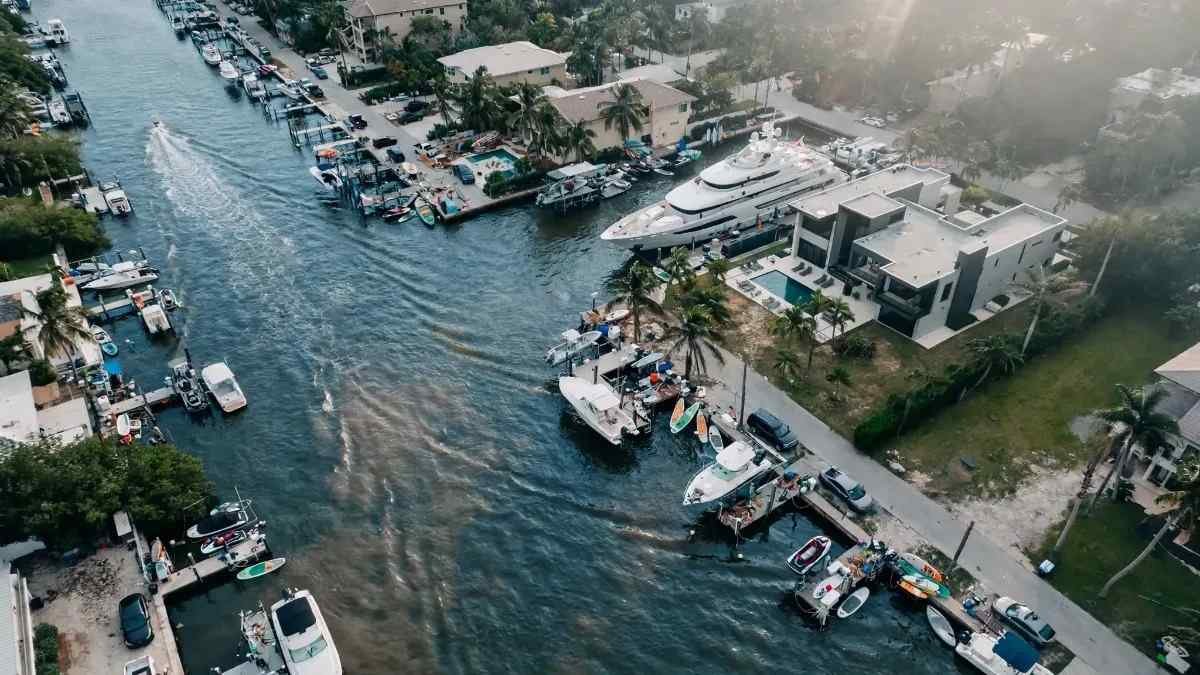
There is a stretch of the Intracoastal Waterway in Fort Lauderdale, just south of the Las Olas Bridge, where the houses stand so close to the water that their yachts appear to be parked in the living room.
A hundred foot Feadship idles at a private dock beside a swimming pool. Across the canal, a sportfishing boat worth more than the house behind it noses out toward the inlet. A water taxi putters past, its passengers gawking, while the captain narrates the passing fleet the way a safari guide narrates wildlife.
They call this stretch Millionaire’s Row, and on any given afternoon it is the most concentrated display of floating wealth in America.
Fort Lauderdale has earned its title, the Yachting Capital of the World, the old fashioned way: geography, infrastructure, and sixty years of deliberate specialization. More than 300 miles of navigable inland waterways lace the city, earning it a second nickname, the Venice of America.
Some 50,000 registered yachts call Broward County home. The region supports a marine industry employing well over 100,000 people, and its refit yards, brokerages, and crew agencies service a remarkable share of the global superyacht fleet.
Monaco may have the glamour per square foot, but Fort Lauderdale has the tonnage, the trades, and the boat show that closes more deals than any event on the water.
This is the story of how a spring break town became the capital of the superyacht world, and how to experience it whether you arrive with a yacht, on a yacht, or simply in love with them.
From Spring Break to Superyachts
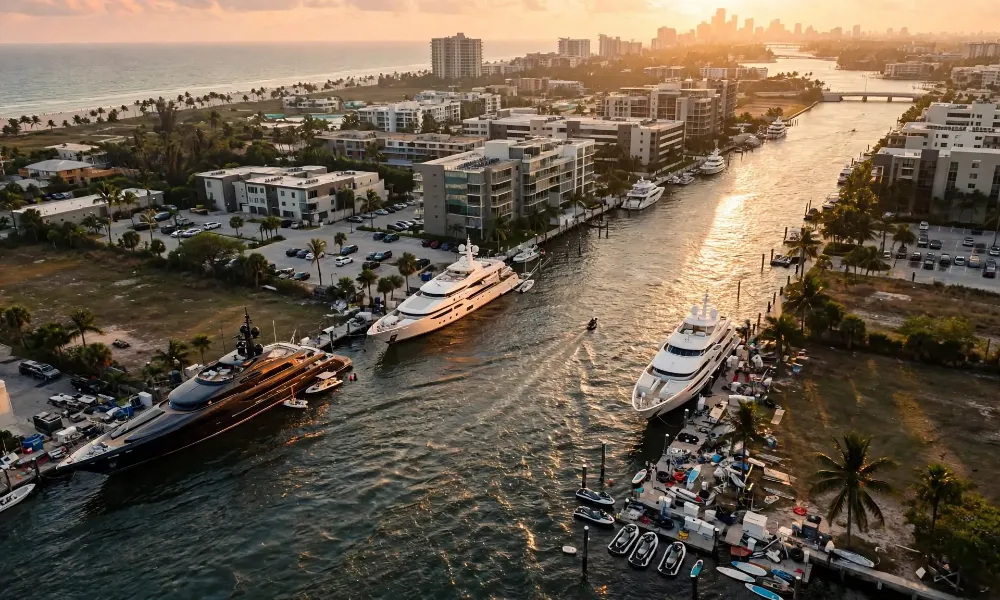
The transformation is one of the great reinventions in American leisure history. Through the 1960s and 1970s, Fort Lauderdale was famous primarily as the collegiate spring break capital, a reputation the city spent decades trying to shed.
The pivot began in earnest in the 1980s, as the marine industry consolidated around the city’s natural advantages: the deep water Port Everglades inlet, one of the few on the Florida coast that can accommodate large yachts at any tide; proximity to the Bahamas, barely fifty miles across the Gulf Stream; and the Intracoastal Waterway, a protected highway of water running the length of the city.
The yards came first. Rybovich, just up the coast in West Palm Beach, had been building sportfishing boats since the 1940s, but Fort Lauderdale developed something denser: an entire ecosystem. Derecktor, Lauderdale Marine Center, Safe Harbor, and a constellation of specialized refit facilities grew into what is effectively the largest yacht service cluster in the Americas.
When a 100 metre Lürssen needs work done in the Western Hemisphere, odds are it is headed for a slip on the New River. The trades followed the yachts, the crews followed the trades, and the capital followed everyone.
The Fort Lauderdale International Boat Show
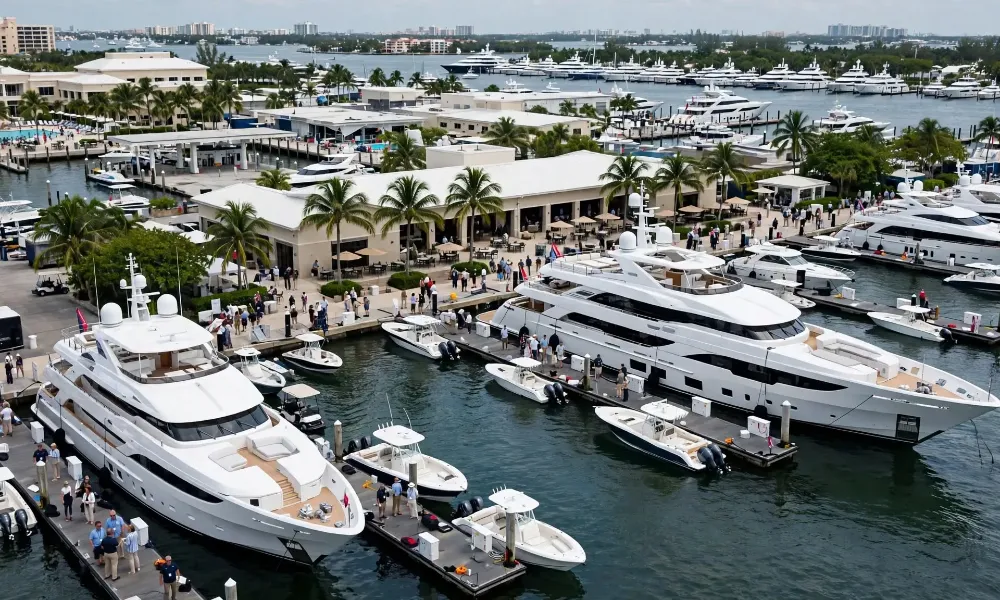
Every October, the city hosts the event that seals its claim: the Fort Lauderdale International Boat Show, universally known as FLIBS. Spread across multiple locations, with the Bahia Mar Yachting Center as its heart, FLIBS is the largest in water boat show on the planet, displaying more than a thousand vessels and over a thousand exhibitors across five days.
The show regularly features more than a billion dollars worth of yachts, and it functions as the global superyacht industry’s American marketplace: brokerage deals are struck on aft decks, builders announce new models over champagne, and the world’s shipyards, from the Dutch masters at Feadship to the Italian and German giants, send their senior people because everyone who matters is in town.
For a visitor, FLIBS is also simply one of the great spectacles in American luxury.
The superyacht section along the face docks reads like a registry of the hundred metre club, water taxis shuttle between venues, and the whole city tilts toward the water for a week. Book hotels early; the better waterfront rooms, including the suites we covered in our guide to South Florida’s finest stays, disappear months ahead.
Canals, Rivers, and the Venetian Grid
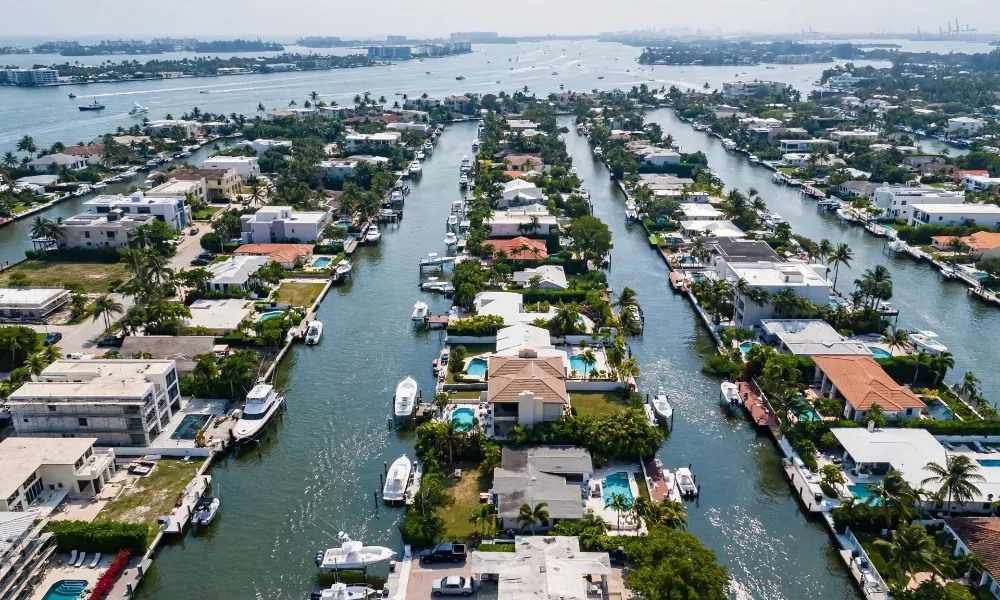
What makes Fort Lauderdale unlike every other yachting hub is that the yachts are not sequestered in marinas. They live in the neighborhood.
The finger canals of Las Olas Isles, Harbor Beach, Rio Vista, and Coral Ridge were dredged in the 1920s and 1950s into a residential grid where nearly every house has dockage, and the result is a city where the average commute for a yacht is measured in feet from the owner’s back door.
The New River winds through downtown, past the historic Stranahan House, and its water taxis function as both public transit and the city’s best sightseeing bargain, a rolling tour past mansions, megayachts, and the drawbridges that halt traffic whenever something tall needs to pass.
The Intracoastal runs north to south, and on any winter weekend it becomes a parade of every vessel type imaginable, from center consoles to the explorer yachts that have become the industry’s fastest growing category, many of them here for service before heading to the Exumas.
The Crew Capital and the Refit Economy
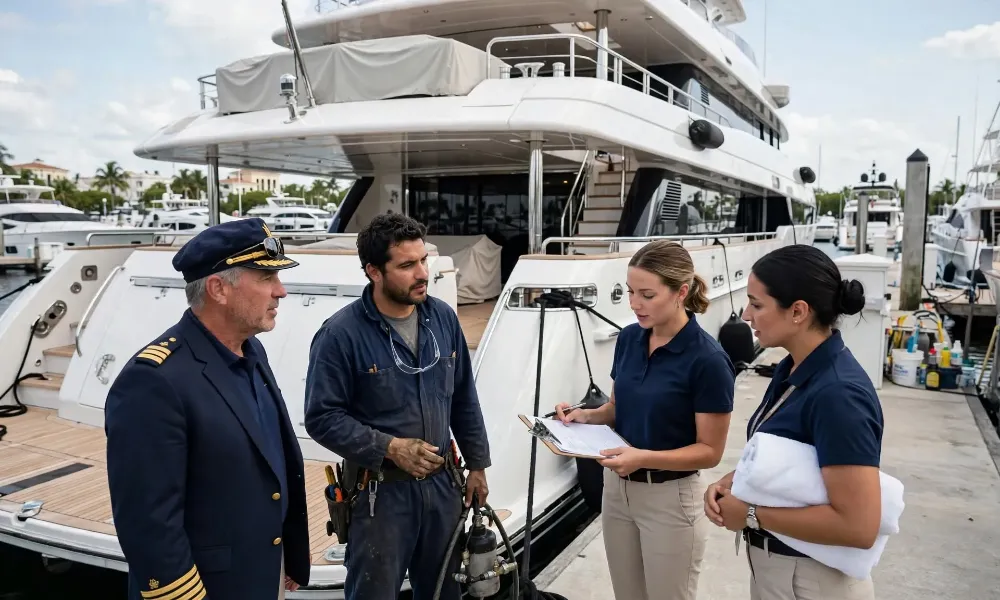
If the yachts are the city’s body, its beating heart is the crew economy. Fort Lauderdale is the largest yacht crew hub in the world. Thousands of captains, engineers, chefs, and stewardesses, the people whose lives we profiled in inside the world of superyacht crew, base themselves here between jobs, take their licensing courses at the city’s maritime schools, and gather at the dockside bars along 17th Street, which functions as the industry’s unofficial hiring hall.
Crew placement agencies, uniform suppliers, provisioning companies, and yacht management firms line the same corridor, making 17th Street Causeway arguably the single most important street in global yachting that no tourist has ever heard of.
The refit economy is the quieter giant. The cumulative value of refit and maintenance work performed in Broward County runs into the billions annually, and the skills concentration is such that European owners routinely send yachts across the Atlantic specifically for Fort Lauderdale workmanship.
When you step aboard a freshly refitted superyacht in the Mediterranean, there is a fair chance the work was done under a Florida sun.
Living the Capital: A Visitor’s Playbook
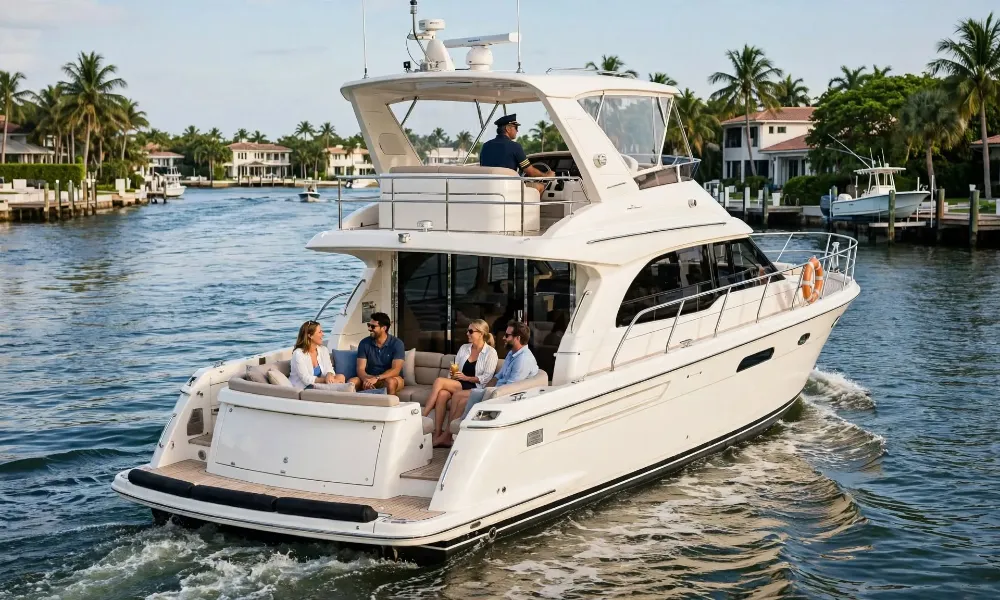
You do not need to own a yacht to enjoy the yachting capital. The water taxi, with its hop on hop off day passes, is the essential first move, delivering the Millionaire’s Row mansions, the mega yachts at Bahia Mar, and the restaurant docks of Las Olas in a single loop. Charters range from an afternoon sportfishing run to a fully crewed week in the Bahamas, and our guide to what to know before your first yacht charter covers how to book intelligently.
Timing matters: the season runs November through April, when the fleet migrates south from New England and the Mediterranean, the canals fill with transients, and the city hums at full pitch. During FLIBS in late October, the energy peaks, and so do the prices.
For dining, the waterfront restaurants reachable by boat, where you tie up at a dock and step straight to your table, are a Fort Lauderdale institution no inland city can replicate. And for anyone bitten hard by the bug, the brokerages along the 17th Street corridor will happily begin the conversation that ends, some years later, with a hull of your own at a Las Olas dock.
FAQs
1. Why is Fort Lauderdale called the Yachting Capital of the World?
The title rests on scale: more than 300 miles of navigable inland waterways, around 50,000 registered yachts in Broward County, the largest concentration of refit yards and marine businesses in the Americas, the world’s biggest in water boat show, and the largest superyacht crew hub on earth. No other city combines all five.
2. When is the Fort Lauderdale International Boat Show?
FLIBS takes place annually in late October, typically spanning five days across multiple venues centered on the Bahia Mar Yachting Center. It displays more than a thousand boats and over a thousand exhibitors, with the superyacht section along the face docks as its signature spectacle.
3. Can I visit Fort Lauderdale’s yachting scene without owning a boat?
Absolutely. The water taxi offers hop on hop off service past Millionaire’s Row and the major marinas, and day charters, sportfishing trips, and sunset cruises are easy to book. During FLIBS, a general admission ticket grants access to see the superyachts up close, though boarding the largest yachts is generally reserved for qualified buyers and charter clients.
4. What is Millionaire’s Row?
Millionaire’s Row is the stretch of the Intracoastal Waterway and New River lined with the mansions and mega yachts of Las Olas Isles and Harbor Beach. Water taxis and sightseeing cruises pass through it with running commentary, and it is the single most photographed waterway in the city.
5. When is the best time of year to visit?
The yachting season runs from November through April, when the weather is dry and mild and the visiting fleet arrives from summer grounds in New England and the Mediterranean. Late October adds the boat show but also peak hotel rates and crowds. Summer is quieter, hotter, and better for deals.
6. How close are the Bahamas from Fort Lauderdale?
The closest Bahamian islands sit roughly fifty to sixty miles across the Gulf Stream, an easy day run for a capable yacht. This proximity is a core reason Fort Lauderdale developed as a yachting hub: owners can service their vessel in world class yards and be anchored over Bahamian sandbars the same afternoon.
7. What is 17th Street Causeway known for in the yachting world?
The Southeast 17th Street corridor is the industry’s working capital: crew agencies, maritime training schools, yacht management companies, chandleries, and the dockside bars where captains and crew network between jobs. It is widely considered the largest yacht crew hub in the world.
8. Can I charter a yacht in Fort Lauderdale for the Bahamas?
Yes, and it is one of the most popular charter itineraries in the world. Crewed yachts based in Fort Lauderdale regularly run week long Bahamas charters to the Exumas, Abacos, and Bimini. Book well ahead for the winter season, and expect a repositioning fee if the yacht is based far from your preferred departure marina.