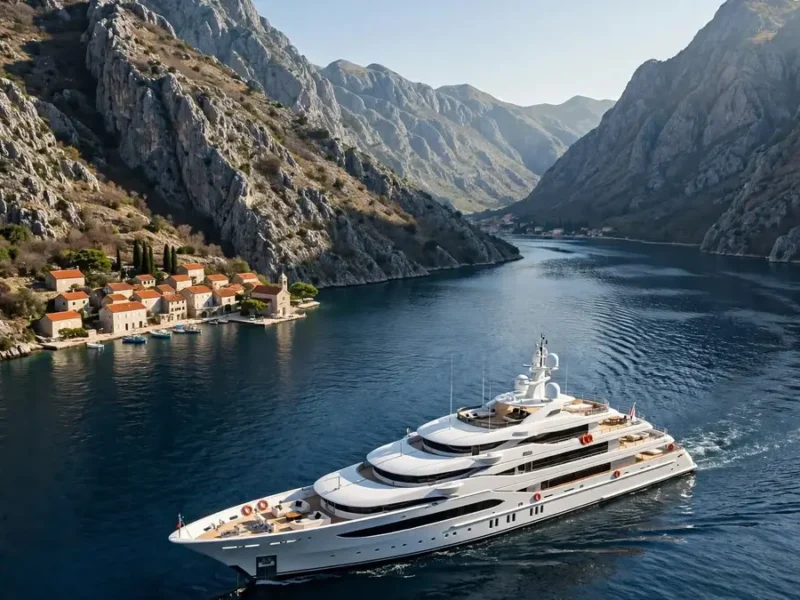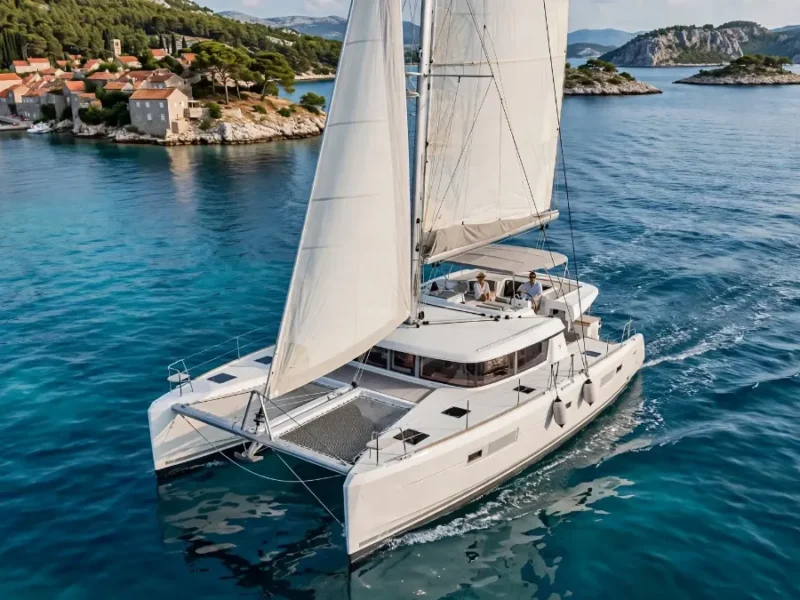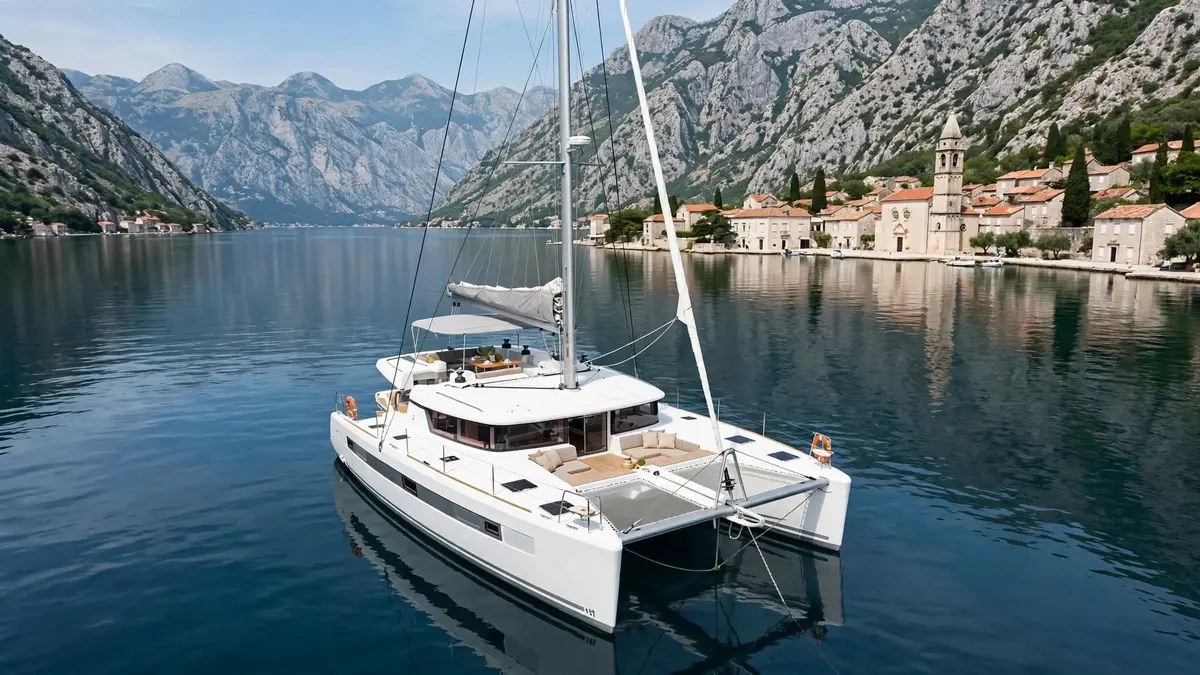
A crewed catamaran charter in Montenegro finds its home ground, much as it does in Croatia to the north. The Bay of Kotor is the most catamaran-friendly water in the series. It is a great enclosed inlet whose inner reaches lie as flat as a lake through the summer. Its anchorages shelve gently off medieval villages, and its short distances between wonders suit the twin hulls’ easy pace.
The open Adriatic can test a catamaran’s patience when the maestral builds, but the bay never does. The mountains close over its water and hold the calm inside. The catamaran spends its week in conditions its designers dreamed of: level decks at anchor beneath stone villages, the platform down in glassy water each morning, and the sails up only for pleasure since the distances hardly require them. On this coast, the catamaran’s case needs no argument from the series’ usual playbook. The geography has already made it.
A Tivat Captain’s Perspective on Catamaran Sailing
I had the case confirmed by the Tivat captain who has guided this series through the country. We spoke over coffee as his catamaran lay at the marina’s quay. In Croatia they sail, he said, and here we float. Both are right.
The bay is my children’s favorite water in the world: no waves, no hurry, a fortress to climb in the morning and a village to eat in at night. The boat never moves unless we want it to. Then he said the sentence that belongs at the head of this guide: my family has sailed everywhere this coast goes, and the bay is the one place they ask to return to without my suggesting it.
His case, with the honesty the series owes its readers, follows: why the bay rewards the twin hulls, the week it gives, the cost, and the method.
Why the Bay Rewards the Twin Hulls
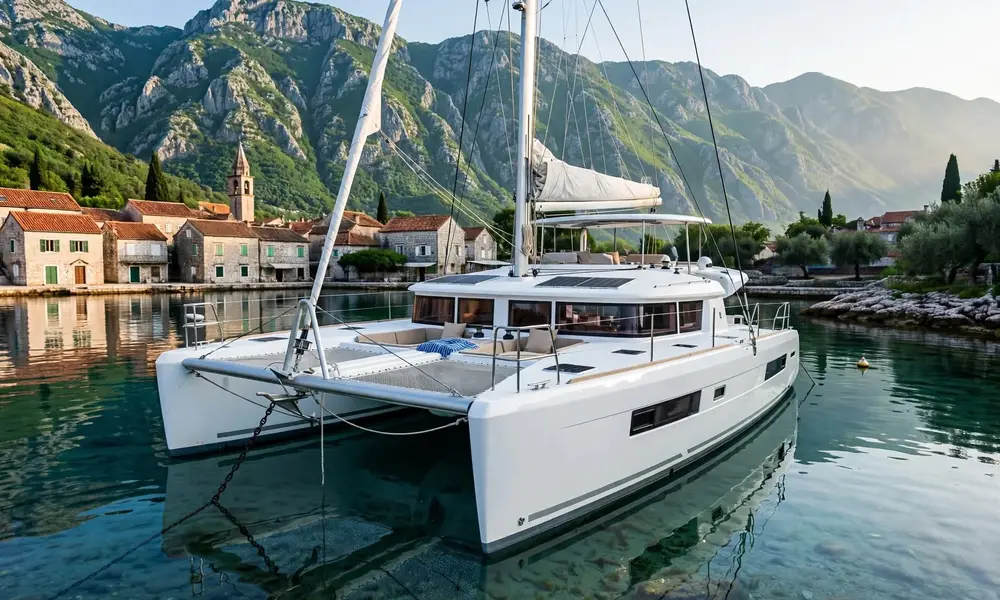
Four advantages, each written into the bay.
The calm comes first, and decisively. The bay’s inner reaches are protected from every summer wind by the mountain walls. The water lies flat from June through September. The catamaran’s stillness at anchor, the trait this series has praised from Saint Tropez to Sardinia, here meets water that was never going to move anyway. The combination gives the family a floating terrace of total serenity.
Shallow Anchorages Close to Medieval Villages
The anchorages come second. The bay’s coves and village waterfronts shelve gently, and the catamaran’s shallow draft lets it sit close in. It can anchor off Perast’s palaces or the fishing hamlets of the inner bay, in water too thin for the deep-drafted motor fleet. It sits close enough for a swim ashore to collect the village’s morning bread.
A Spacious Deck for Family Life
The deck comes third, and on this coast it defines the week itself. The catamaran’s great level floor serves the bay’s days perfectly. The fortress walls are there for the morning’s walkers, while the platform becomes the children’s headquarters through the warm middle hours. There is a long lunch aboard with the village across the water, followed by a tender run to the konoba at evening. The deck is the family’s living room, and the bay its garden.
Short and Scenic Sailing Passages
The passages come fourth, modest and pleasant. The bay’s turns are an hour apart, with the mountains shifting at each bend. Sailing is a pleasure rather than a necessity. The catamaran crosses these waters at its gentle pace without ever raising a voice.
The Week the Bay Gives You
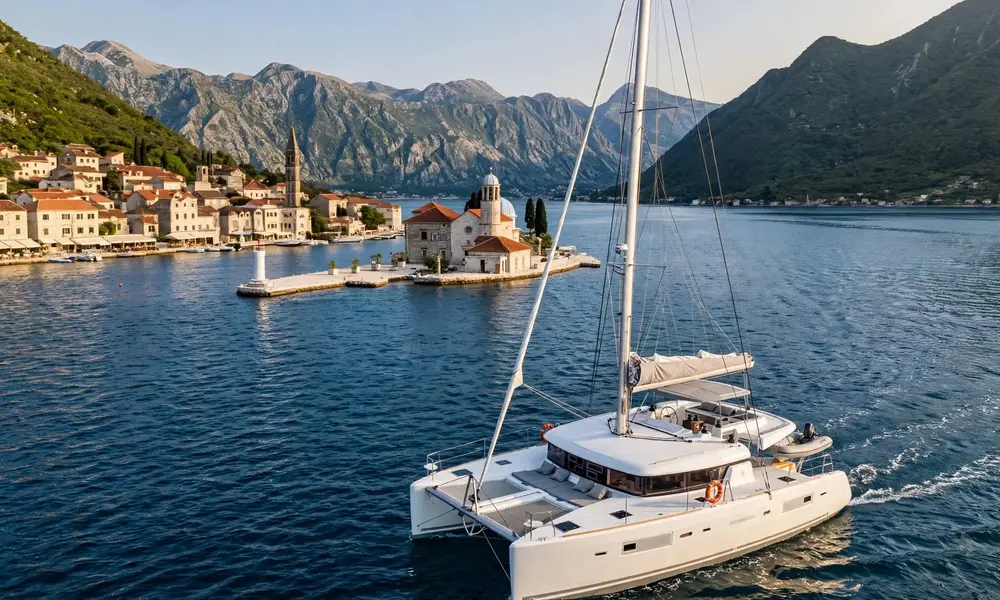
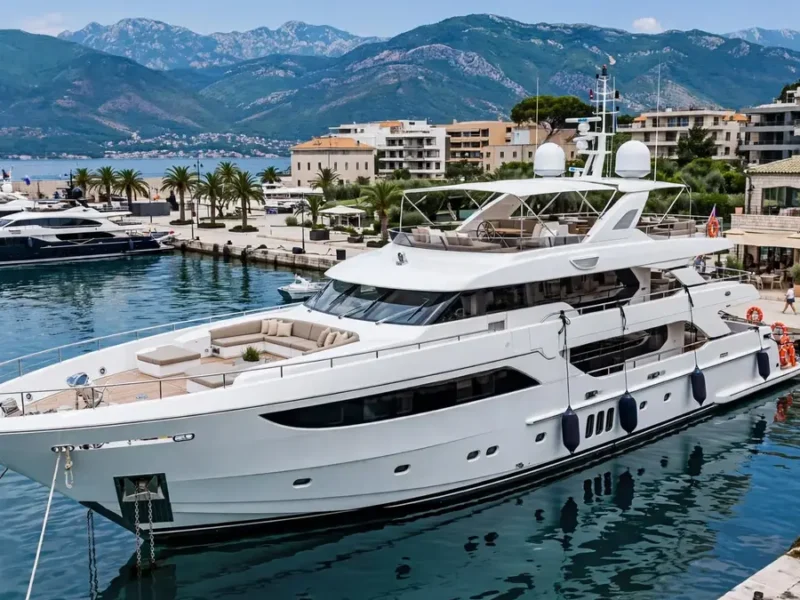
A classic Porto Montenegro or Kotor-based structure works beautifully for this route.
Day 1: Board at Tivat
Board at Tivat and spend the first evening among the marina’s colonnades.
Day 2: Enter the Bay of Kotor
Enter the bay, with the mountains closing over the water at each turn. Anchor at Perast and visit Our Lady of the Rocks by tender. Enjoy the first village dinner ashore.
Day 3: Explore Kotor
Spend the day discovering Kotor. The walls are there for the walkers, and the town for the wanderers. In the evening, anchor in the inner reach, where the water lies still as glass beneath the cliffs.
Day 4: Discover the Bay’s Hamlets
Drift between the bay’s hamlets and swimming coves. Enjoy a leisurely lunch aboard that becomes the day’s summit.
Day 5: Visit the Budva Riviera
Exit the bay and head towards the riviera. Explore Budva’s old town, then admire Sveti Stefan from the water at golden hour. Spend the afternoon swimming at the southern beaches.
Day 6: Return North at Leisure
Return north at leisure, reviewing the coast’s changing profile along the way. Reach the bay’s entrance at dusk, with the anticipation of coming home.
Day 7: Close the Charter at the Marina
Return to the marina and visit the market for provisions. The family’s verdict has already been delivered in the children’s request to return, just as the captain predicted before the week began.
What It Costs, Honestly
The arithmetic is the series’ kindest, with the young country’s generosity showing at every line.
Quality crewed catamarans of forty to fifty feet, with captain and hostess, run twelve to twenty-five thousand euros weekly. The fifty-five to sixty-foot flagships run thirty-five to fifty-five thousand. Against a motor yacht of equal sleeping capacity, the saving runs to half or better.
On this coast, the saving has a destination the family will endorse: the table. The bay’s konobas and the riviera’s restaurants feed the party magnificently at half the western seas’ prices. The long lunches aboard are the week’s native meal, and the difference between a good week and a great one here is measured in village dinners and the simple deck lunch done beautifully.
It is the kind of unhurried midday this series has celebrated from the start, a small art Pravi Celer has honored in its notes on the easy boat snacks and the pleasure of the simple table afloat.
The Montenegrin particularities apply unchanged: VAT at twenty-one percent, the allowance at thirty percent, the marina premium at Porto Montenegro optional, and the bay’s anchorages free. The total for a fine family week runs at the gentlest end of the series’ range. The family that spends the difference in the villages will remember the week longest for it.
Who It Suits
The Montenegrin catamaran suits families first and almost exclusively in the series’ judgment, for the bay is the family’s perfect water: calm, warm, close to wonders, and forgiving of every age and temperament. It suits sailors of the gentle school, for whom the bay’s quiet passages and the riviera’s afternoon breezes are pleasure enough. It suits photographers, since the bay’s compositions reward every hour of patience.
And it does not suit those who need open sea adventure or the open Adriatic’s test; the bay is an enclosed world, beautiful and serene, and the guest who needs the horizon unbroken should read the series’ Croatia guides instead, or accept that the horizon, here, is walls a thousand meters high, which is its own kind of unbroken.
A Method for Booking Well
First, base in the bay if the family is the point, Kotor or the bay’s anchorages, and let Porto Montenegro be a visit rather than a home. Second, ask the broker for a captain with a bay season, because the depth changes, the village moorings, and the bay’s quiet rules are local knowledge.
Third, book June or September, when the calm is certain and the anchorages answer to reasonable notice; take August with early booking, for the country’s fame grows each season. Fourth, provision for the village table and let the crew handle the bay’s permits as routine.
And fifth, protect at least two full days inside the bay without an exit, for the family’s memory of the week will be made in its still water, between the mountains, and the exits to the riviera, however lovely, are the excursion rather than the week.
Frequently Asked Questions
What is a crewed catamaran charter in Montenegro?
The private hire of a catamaran sailing yacht with a professional crew, based at Porto Montenegro, Kotor, or Budva, and sailing the Bay of Kotor and the country’s riviera. The bay’s calm makes it the twin hulls’ natural home.
How much does a crewed catamaran charter in Montenegro cost?
Working bands are twelve to twenty-five thousand euros weekly for forty- to fifty-foot catamarans with two crew, and thirty-five to fifty-five thousand for fifty-five- to sixty-foot flagships, before the thirty percent allowance, twenty-one percent VAT, and gratuity.
Why is the Bay of Kotor good for catamarans?
The bay’s inner water lies flat all summer behind its mountain walls. The anchorages shelve gently for the shallow draft, the villages sit at the water’s edge, and the short distances suit the twin hulls’ pace. It is the calmest cruising water in the series.
Can a catamaran anchor in the Bay of Kotor?
Yes, in designated bays and village moorings under the bay’s rules, with arrangements handled routinely by the captain. The inner bay’s stillness at anchor, beneath the walls, is the week the family remembers.
Is a Montenegro catamaran charter good for families?
Exceptionally, and it is the series’ first choice for families who want serenity over adventure: flat water, short hops, fortresses and villages at the water’s edge, and prices that forgive a long stay.
When is the best season for a catamaran charter in Montenegro?
June and September offer reliably calm, warm water and anchorages with room. May and October bring a quieter bay at the year’s gentlest rates, while July and August offer the full season at still-honest prices.