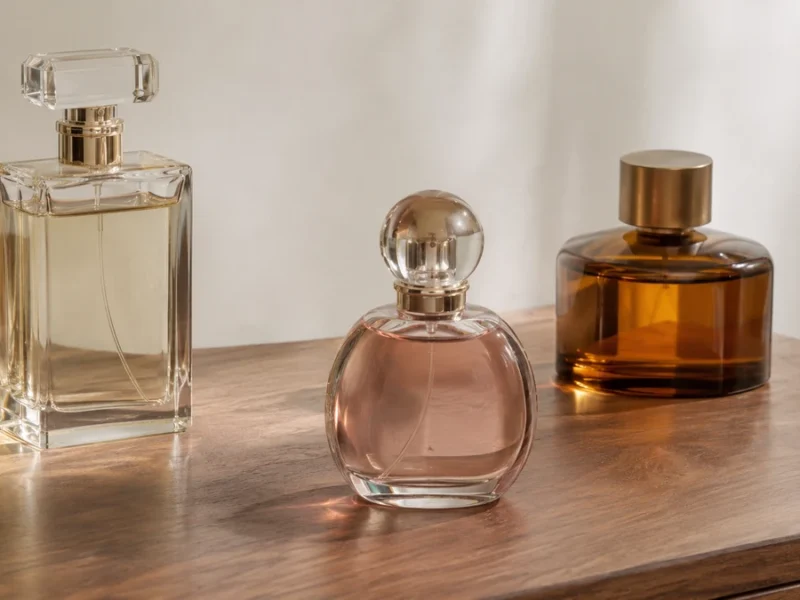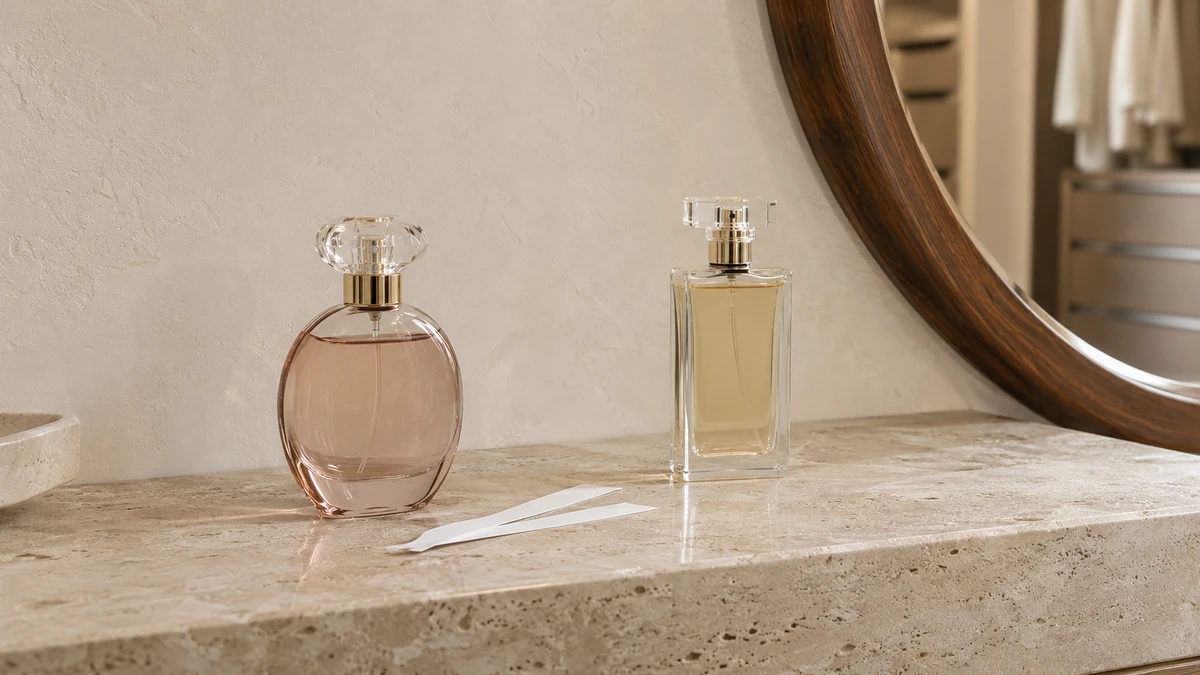
You enjoy your floral perfume, but sometimes wish it felt a little warmer. Another fragrance on your shelf has the soft, woody character you like.
Could you wear them together?
That question is the beginning of fragrance layering: exploring how familiar scents change when worn alongside each other.
Fragrance layering means wearing two or more scented products together. For beginners, start with two fragrances, smell them separately, test their combined aroma on blotters, and use a light application if you decide to wear the pairing. Evaluate how it develops before adding more.
The aim is to find a combination you enjoy. You can begin with products you already own.
What Is Fragrance Layering?
Fragrance layering can involve two perfumes or a perfume worn with a scented body product.
Jo Malone London describes scent pairing as layering fragrances to create a personal combination and recommends beginning with two scents. The brand also states that its fragrances are developed with layering in mind. Other fragrances can be explored together, but the result depends on the particular products and your preferences.
Three Ways to Approach Layering
| Method | What it involves | Beginner consideration |
| Perfume with perfume | Wearing two personal fragrances together | Start with a light application |
| Body product with perfume | Pairing a scented lotion or body cream with fragrance | Follow each product’s directions |
| Fragrance-free base with perfume | Applying perfume after an appropriate fragrance-free moisturizer | Keeps an additional scent out of the experiment |
A fragrance-free moisturizer does not add a second fragrance, so it is preparation rather than scent layering.
1. Learn Each Fragrance on Its Own
Wear or sample each fragrance separately before combining them.
Notice what you actually smell, rather than relying entirely on the listed notes:
- Is it bright, soft, sweet, dry, smoky, or powdery?
- Does one aspect dominate?
- How does it smell after the opening has settled?
- Does it remain noticeable at your usual application level?
Choose one fragrance you know well as the main character in the pairing.
For help exploring different styles, Pravi Celer’s luxury perfume guide offers a broader introduction to fragrance selection.
Decide What You Want to Change
Give the experiment a clear purpose.
Perhaps you want to add a woody impression to a floral fragrance or introduce a brighter opening to something sweet.
That makes it easier to assess whether the second fragrance improves the experience for you.
2. Start With Two Scents
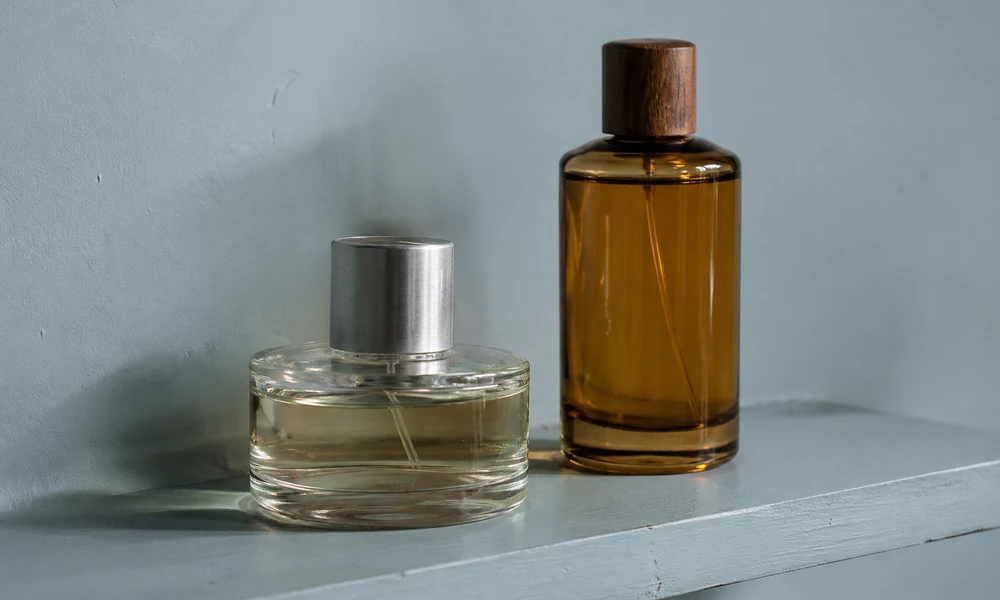
Two products give you a manageable comparison.
If you add several perfumes, scented lotion, and a fragranced hair product at once, it becomes difficult to identify what you like—or what feels overwhelming.
For your first attempt, choose products with contrasting roles:
- Main scent: The fragrance you want to remain recognizable.
- Supporting scent: The fragrance intended to add a particular effect.
This is a practical testing method, not a technical classification.
A quiet fragrance can disappear beside a powerful one. Adjust the balance according to what you smell rather than assuming equal amounts will work.
3. Try These Beginner Fragrance Combinations
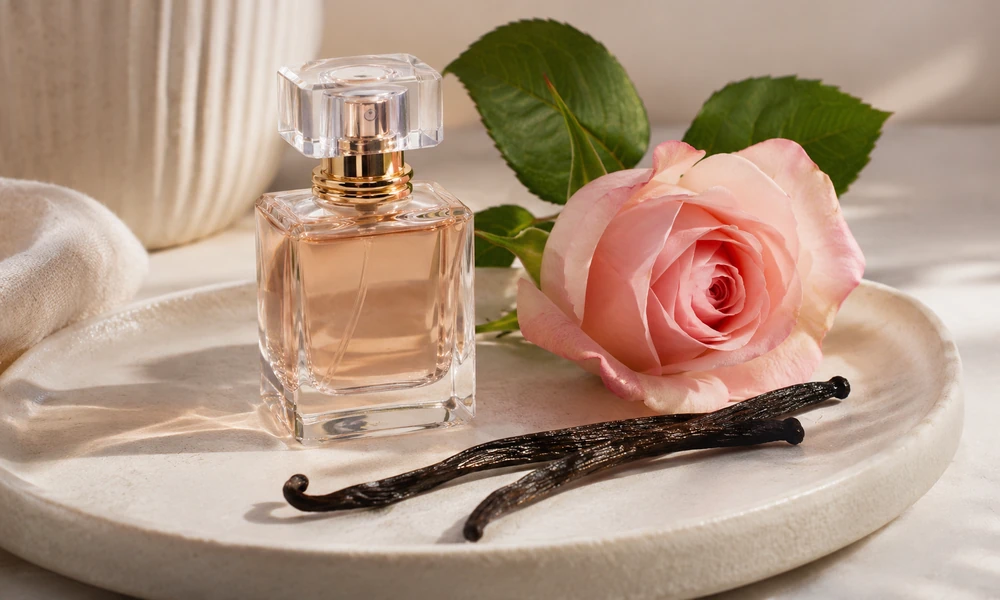
The combinations below are creative starting points, not guaranteed matches. Two perfumes described as “vanilla” or “rose” can smell very different.
| Pairing to explore | Possible impression | What to watch for |
| Citrus + soft woods | Bright with a warmer background | A strong woody fragrance may dominate |
| Rose + vanilla | Floral with added sweetness | The result may become sweeter than intended |
| Fresh floral + soft musk | A rounded floral impression | Powdery aspects may become more noticeable |
| Vanilla + woods | Warm, sweet, and dry contrasts | Both fragrances may already be dense |
| Green notes + floral notes | Leafy or garden-like | Sharpness may stand out |
| Citrus + vanilla | Bright and sweet | The pairing may feel more dessert-like than expected |
Start with a pairing that resembles something you already enjoy.
If you prefer floral perfumes, Pravi Celer’s guide to luxury perfumes for women provides examples to explore individually before considering combinations. Use your own scent preferences when choosing.
4. Test on Separate Blotters First
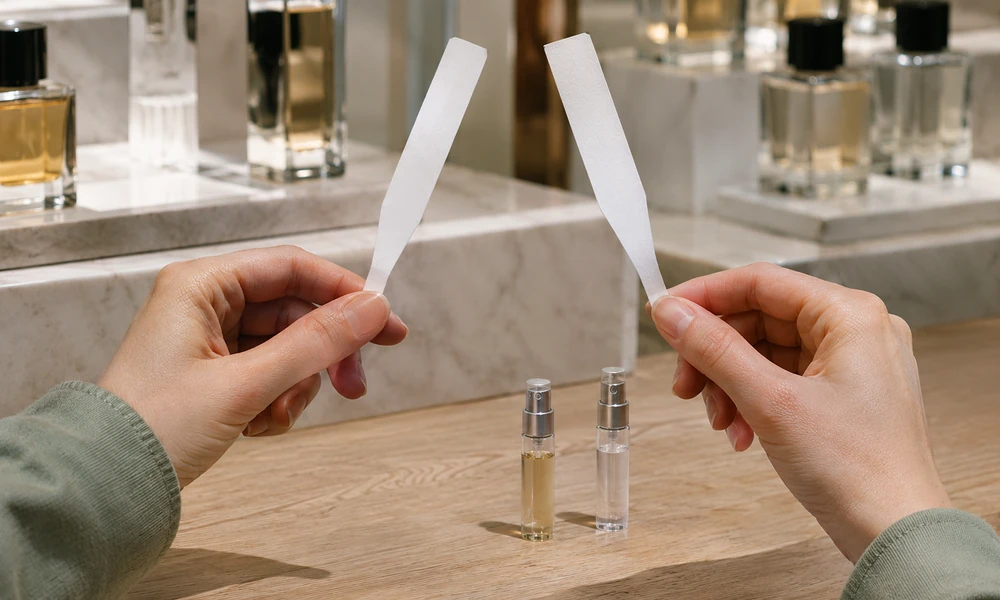
A paper test lets you assess the aroma before wearing it.
A Simple Blotter Method
- Label two fragrance blotters.
- Apply one fragrance to each.
- Let the initial spray settle.
- Smell each separately.
- Hold them near one another and assess the combined aroma.
- Return later to see whether your impression changes.
Keeping the blotters separate also lets you move one farther away to explore a different balance.
This gives you an initial impression. It cannot predict exactly how the fragrances will smell when worn, and it does not establish skin tolerance.
5. Keep the First Wear Light
If you like the blotter pairing and the products are suitable for you, test it on a low-pressure day.
Use a light application within the products’ directions. Treat the pairing as your total fragrance application rather than automatically applying your usual amount of both.
There is no universal spray count: atomizers and fragrance intensity vary.
You can apply the fragrances to separate suitable areas to assess how they wear together. Follow product instructions and avoid eyes, irritated skin, and unintended application areas.
Does the Stronger Fragrance Go First?
Some people use the richer fragrance first, then add a lighter one. You can try that approach, but application order alone will not correct an overpowering balance.
Begin with less of the scent that dominates. Compare results on another day if you want to test a different order.
6. Give the Combination Time
The first impression is only part of the experience.
Revisit the pairing after the opening settles and again later in the day. You may enjoy the beginning but dislike the sweeter or woodier impression that follows.
A short note can help:
| What to record | Example |
| Products | Floral perfume A and woody perfume B |
| Intention | Add a drier impression to the floral |
| Application | Light application of each, recorded for comparison |
| First impression | Floral remains clear |
| Later impression | Woody fragrance becomes dominant |
| Next adjustment | Try less of fragrance B |
These observations describe your experience. They are more useful than trying to achieve a supposedly perfect combination.
7. Treat Body Products as Part of the Scent
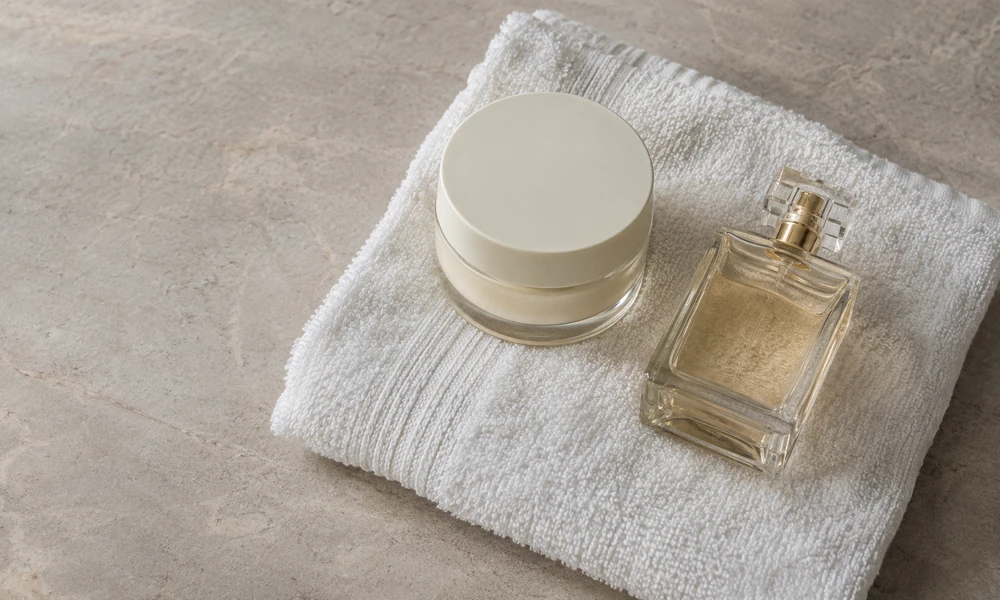
A fragranced body cream can contribute noticeably to the overall result.
If your goal is to understand two perfumes, keep other scented products minimal where practical. If you want to explore body-product layering, choose one product and one perfume first.
Use products only as intended. Room sprays, diffuser oils, and candle fragrance oils do not belong in a skin-fragrance experiment.
Keep the Products in Their Original Containers
Wear suitable finished products together rather than pouring them into one bottle or adding perfume to a lotion container.
Keeping them separate preserves their instructions and makes it easier to adjust or stop the combination.
8. Take Skin Reactions Seriously
The American Academy of Dermatology identifies fragrance in perfume and personal-care products as a possible cause of allergic contact dermatitis.
If you know you react to fragrance, seek appropriate advice before experimenting. Stop using a product if it causes irritation and consult a healthcare professional about persistent or recurring reactions.
Enjoying the smell on a blotter does not mean a product will suit your skin.
“Natural,” expensive, or lightly scented should not be treated as a guarantee that a product is suitable for you.
Will Fragrance Layering Make Perfume Last Longer?
Layering does not guarantee longer wear.
The second fragrance may remain noticeable after the first becomes less apparent. That is different from demonstrating that the original perfume itself lasts longer.
Evaluate the pairing for its smell, comfort, and overall intensity. If longevity is your main concern, test each product separately before deciding whether layering helps your experience.
Avoid adding more fragrance repeatedly just because you have stopped noticing it.
Common Fragrance-Layering Mistakes
| Mistake | A more useful approach |
| Combining several unfamiliar perfumes | Learn each one separately |
| Applying a full usual dose of both | Begin with a lighter total application |
| Choosing by note lists alone | Smell the actual products together |
| Judging only the first minute | Revisit the pairing later |
| Changing several variables at once | Adjust one product or amount |
| Buying full bottles for an experiment | Use legitimate samples or products you own |
| Wearing an untested pairing to an important event | Try it at home first |
| Ignoring workplace or venue fragrance policies | Adapt to the setting |
A First Experiment Using What You Own
Choose a familiar perfume and one possible partner.
Test them separately on blotters, then smell them together. If you enjoy the result, try a light wear on another occasion and record how it develops.
On the next attempt, make one adjustment: less of the supporting fragrance, a different pairing, or simply wearing your favorite alone.
A successful experiment can also tell you that two fragrances are better enjoyed separately.
FAQs
What is fragrance layering?
Fragrance layering is wearing more than one scented product together, such as two perfumes or a perfume with a scented body cream.
How many fragrances should beginners layer?
Start with two. This makes it easier to assess the combination and adjust its balance.
Can you layer perfumes from different brands?
Yes, you can explore suitable personal fragrances from different brands. Test the actual products; brand names do not establish whether you will enjoy the pairing.
Can you layer eau de toilette and eau de parfum?
You can experiment with them, but the concentration labels alone do not determine the result. Assess the smell and intensity of each product.
Can fragrance layering be subtle?
Yes. Keep the total application light and choose a balance that feels comfortable to wear. Two fragrances do not need to mean a stronger overall presence.
Do all perfumes need layering?
No. Layering is optional. A fragrance you enjoy on its own may need no adjustment.
Begin With a Small Change
Choose one fragrance you love and decide what you would like to explore around it: a brighter impression, more warmth, or a softer floral effect.
Test one possible partner, keep the application light, and notice how the combination develops.
The most useful result is a pairing you enjoy enough to wear again.