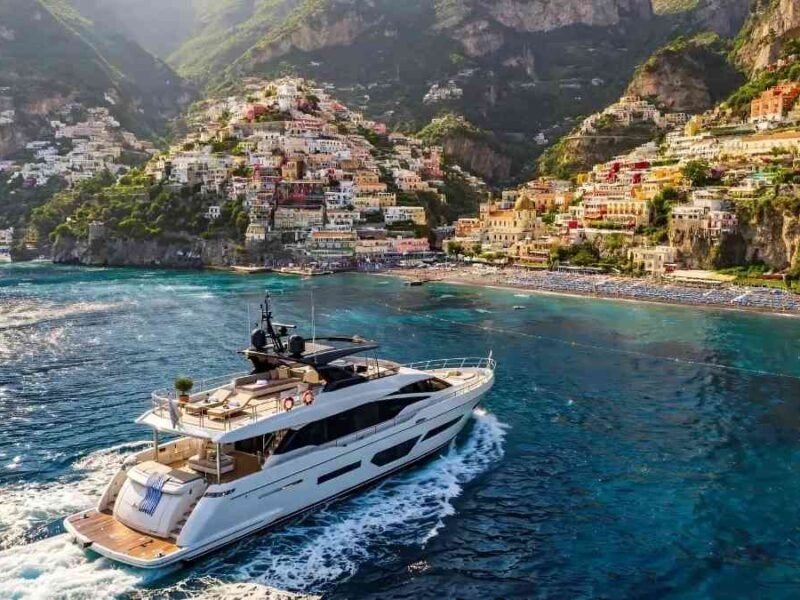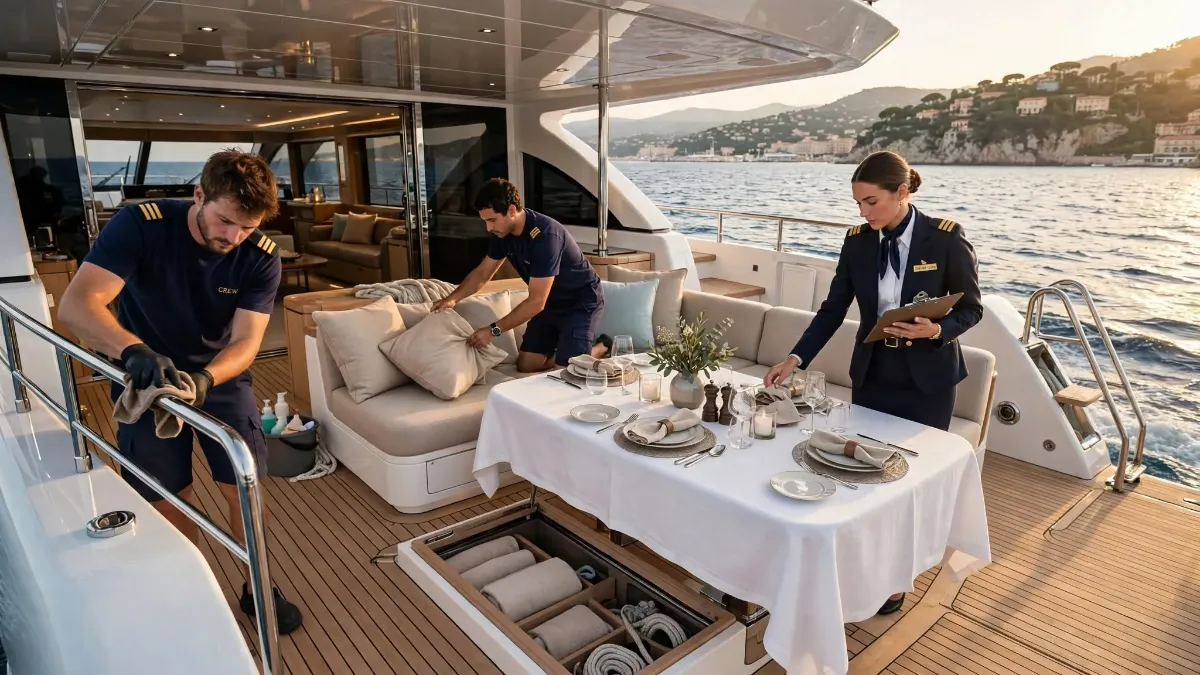
Superyacht crew life is the most romanticized job in the luxury world and simultaneously one of its most demanding, a profession where the view from your workplace is a Côte d’Azur sunset and the workplace itself never closes. A chief stewardess I met in Antibes, ten seasons into her career, gave me the definition that has stayed with me.
Guests see us glide, she said, but gliding is the last ten percent of the job. The other ninety percent is hauling, polishing, planning, and smiling at four in the morning because a guest wants pancakes in a bay that took six hours to reach.
She would not trade it, and neither, it turns out, would most of the tens of thousands of young professionals who crew the world’s finest yachts. The reality behind the glamour is a story of discipline, craft, remarkable pay for the young, and a lifestyle with no equivalent on land. Here is what the life actually looks like, from the crew mess outward.
The Floating Hierarchy
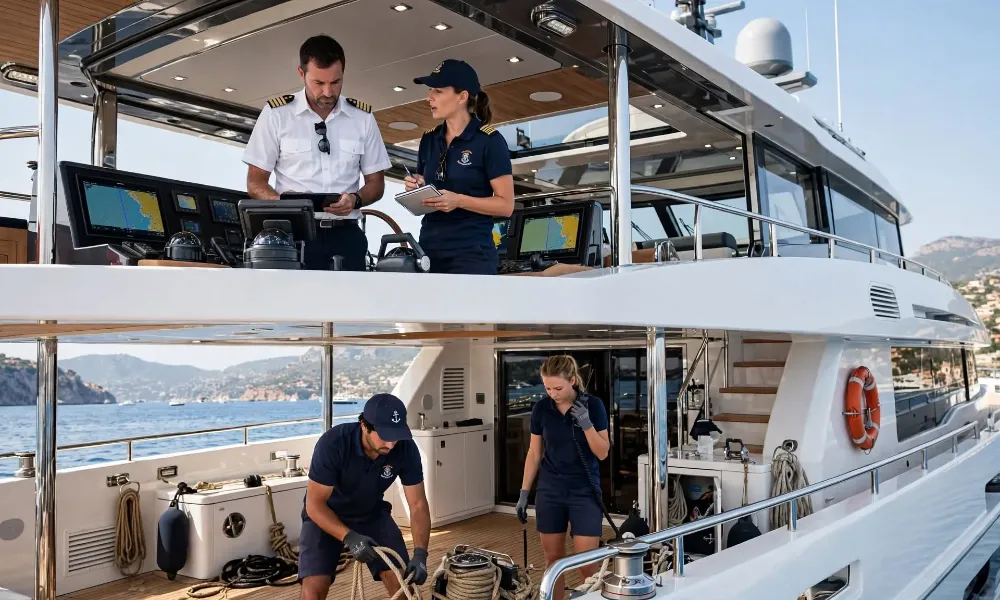
A superyacht operates like a small ship crossed with a five star hotel, and its crew structure reflects both parents. At the top stands the captain, master of the vessel, legally responsible for every life and decision aboard. Below the captain, the officer ranks manage navigation and the deck department, whose crew handle tenders, water toys, lines, and the endless exterior maintenance that keeps a yacht gleaming.
The engineering department, led by the chief engineer, keeps the machinery, the generators, watermakers, and stabilizers alive. The interior department, led by the chief steward or stewardess, runs service, housekeeping, and the guest experience, and the chef operates a galley expected to match the world’s best restaurants on a moving platform.
Crew numbers scale with the yacht: a 40 metre charter yacht might carry seven crew, while the gigayachts in our survey of the hundred metre club employ forty to sixty. Every crew member holds maritime certifications, with the STCW basic safety training as the universal entry requirement, and careers progress through formal licenses that govern how large a vessel each rank may serve.
The Money: Better Than You Think, Earned Harder

The financial reality explains why so many young people choose this life. Entry level deckhands and stewardesses typically earn from around 2,500 to 3,500 euros per month, which sounds modest until the arithmetic lands: crew live aboard with food, accommodation, and often uniforms and travel provided, meaning nearly every euro is saved.
Officers and senior crew climb steeply, and captains of large yachts command from around 120,000 to well over 300,000 dollars annually, with the largest vessels paying more.
Then come the charter tips. The industry’s custom holds that charter guests tip ten to fifteen percent of the charter fee, split among the crew.
On a yacht chartering at 300,000 dollars per week, a single good week can add several thousand dollars per crew member, and a busy Mediterranean season stacks those weeks into sums that transform annual earnings. Young crew regularly bank more in their twenties than their shorebound peers earn in a decade, a fact that fuels both the profession’s appeal and its stories.
The Rhythm of the Seasons

The yachting year has two hearts. From May through October, the fleet works the Mediterranean season, the Balearics, the Côte d’Azur, Italy, Greece, and Croatia, with charter trips running back to back and turnaround days, when one group of guests departs and another arrives within hours, standing as the crew’s crucible.
November brings the great migration: yachts cross the Atlantic for the Caribbean season, with Antigua, St. Barths, and the Grenadines hosting the winter fleet and its holiday peak.
Between seasons come shipyard periods for maintenance, and for crew, the rhythm creates a life of compressed intensity: weeks of fourteen hour days during trips, then genuine downtime in extraordinary places. Days off happen in Positano and Palma.
Friendships form fast in a world where your colleagues are also your roommates, and the global crew community, concentrated in hubs like Antibes and Fort Lauderdale, becomes a second family with its own culture, its own bars, and its own endless store of stories that stay, as the saying goes, on the boat.
The Sacrifices Nobody Photographs
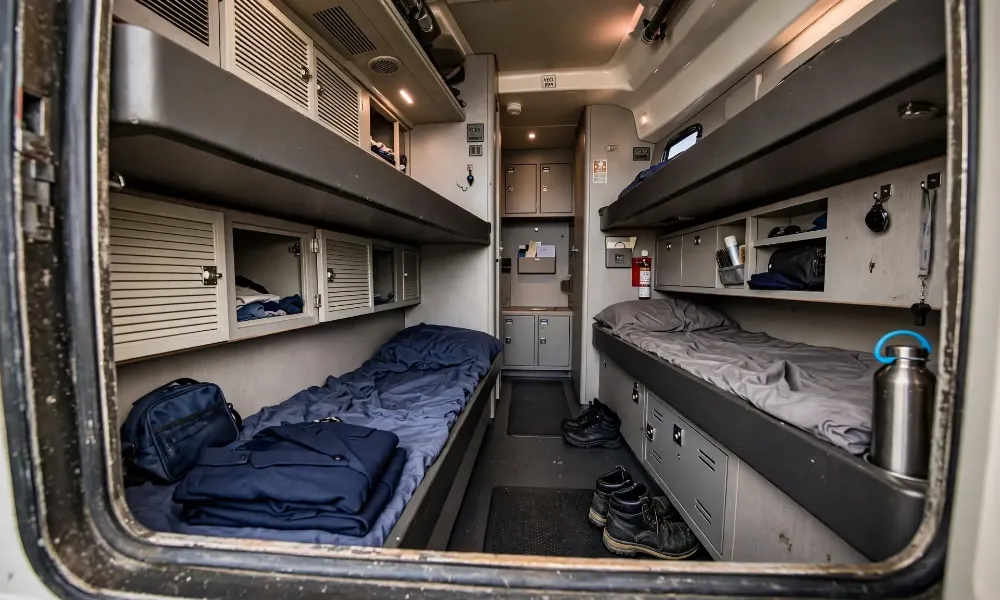
The honest account requires the shadows. Crew quarters are tiny: bunk cabins, shared heads, and storage measured in centimeters, a stark contrast to the guest spaces the crew maintains. Privacy is nearly nonexistent. During charter trips, the working day runs from dawn service prep to the last guest’s midnight espresso, seven days a week, for weeks on end.
Relationships ashore strain under months away. The hierarchy is real, the standards unforgiving, and the service culture demands that exhaustion never become visible to the guests whose dream the crew is paid to deliver.
The best crews and the best owners build cultures that sustain people through this: fair rotations, respect from the bridge, and guests who treat crew as professionals.
The worst stories in the industry almost always trace to failures of leadership. Crew who thrive describe the same essentials: a captain who mentors, a program that invests in training, and the memory, on the hardest turnaround day, that their office floats in places like those mapped in our guide to Mediterranean charter destinations.
The Path In, and the Path Up
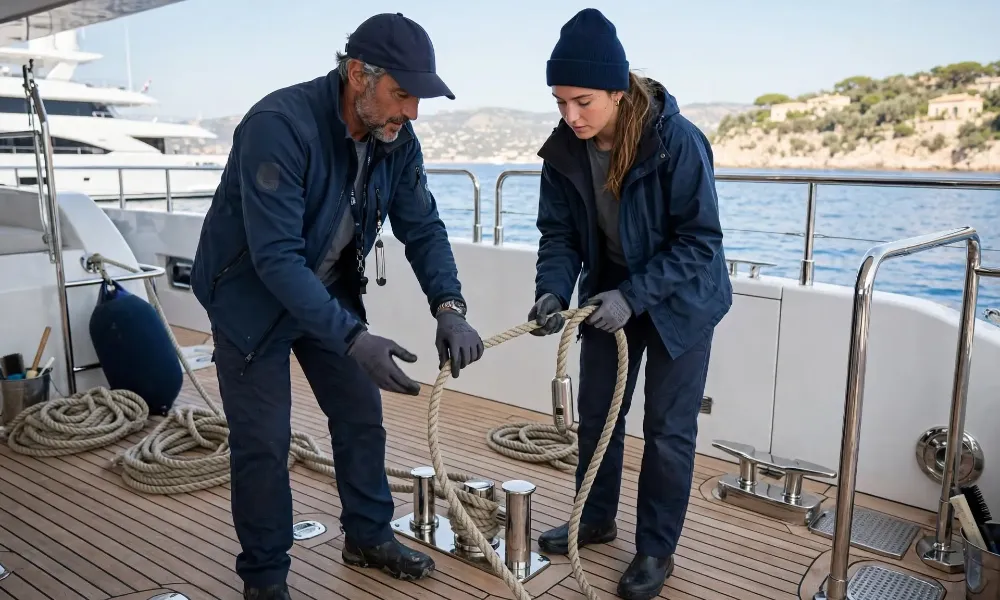
For those the life attracts, the entry path is well marked. Obtain STCW basic safety training and a medical certificate, gather the small qualifications that distinguish candidates, powerboat handling for deck, hospitality or culinary background for interior, then head to the hubs, Antibes or Fort Lauderdale, for dockwalking, daywork, and the networking that lands a first position.
Crew agencies place candidates worldwide, and first jobs on smaller yachts build the sea time and references that larger programs demand.
The ceiling is remarkable: captains, chief engineers, and pursers of the world’s great yachts began as dayworkers scrubbing hulls, and the profession actively develops its people through license progression and specialist training.
Some crew transition ashore into charter brokerage, yacht management, and the build side covered across our superyacht engineering coverage, carrying their sea experience into the industry’s landside professions.
And for charter guests who will meet these professionals this summer, the final insight is simple: the crew you tip at week’s end have given you a standard of service that few institutions on earth can match, and they have earned every cent of it, usually before breakfast.
FAQs
How much do superyacht crew earn?
Entry level deckhands and stewardesses earn around 2,500 to 3,500 euros monthly with living costs covered aboard. Senior officers earn substantially more, and captains of large yachts command 120,000 to over 300,000 dollars annually. Charter tips of ten to fifteen percent of the charter fee, split among crew, add significantly.
What qualifications do you need to work on a superyacht?
The universal entry requirement is STCW basic safety training plus a valid maritime medical certificate. Deck candidates benefit from powerboat licenses and tender handling skills, interior crew from hospitality backgrounds, and chefs from professional kitchen experience. Career advancement follows formal maritime license progression.
How many crew does a superyacht have?
Crew numbers scale with vessel size. A 40 metre charter yacht typically carries seven to nine crew, 60 metre yachts carry fifteen to twenty, and gigayachts over 100 metres employ forty to sixty across deck, engineering, interior, and galley departments.
How much should you tip a yacht charter crew?
Industry custom holds that charter guests tip ten to fifteen percent of the base charter fee, distributed among the entire crew according to the captain’s allocation. The tip recognizes service across the week and represents a significant portion of crew earnings during the season.
Do superyacht crew get time off?
Crew receive contractual leave, commonly structured as rotation or blocks between seasons, plus days off during quiet periods. During charter trips, expect working days from dawn to late evening without days off, which is why the between season periods and leave structures matter so much to retention.
What are crew quarters like on a superyacht?
Crew cabins are compact: bunk beds, shared bathrooms, and minimal storage, usually located in the hull away from guest areas. The contrast with guest suites is deliberate, and living in close quarters with colleagues is among the job’s genuine challenges.
Where do superyacht crew find jobs?
The industry’s hiring hubs are Antibes in the South of France and Fort Lauderdale in Florida, where crew agencies, daywork, and dockwalking connect candidates with yachts. Online platforms and crew houses support the search, and first positions often come through daywork that converts to permanent roles.
Is superyacht crew a good career?
For the right person, exceptionally so: rapid savings in your twenties, global travel, professional maritime qualifications, and progression to senior roles or shoreside careers in brokerage and management. The tradeoffs are privacy, relentless standards during trips, and months away from home, and honest candidates weigh both sides.