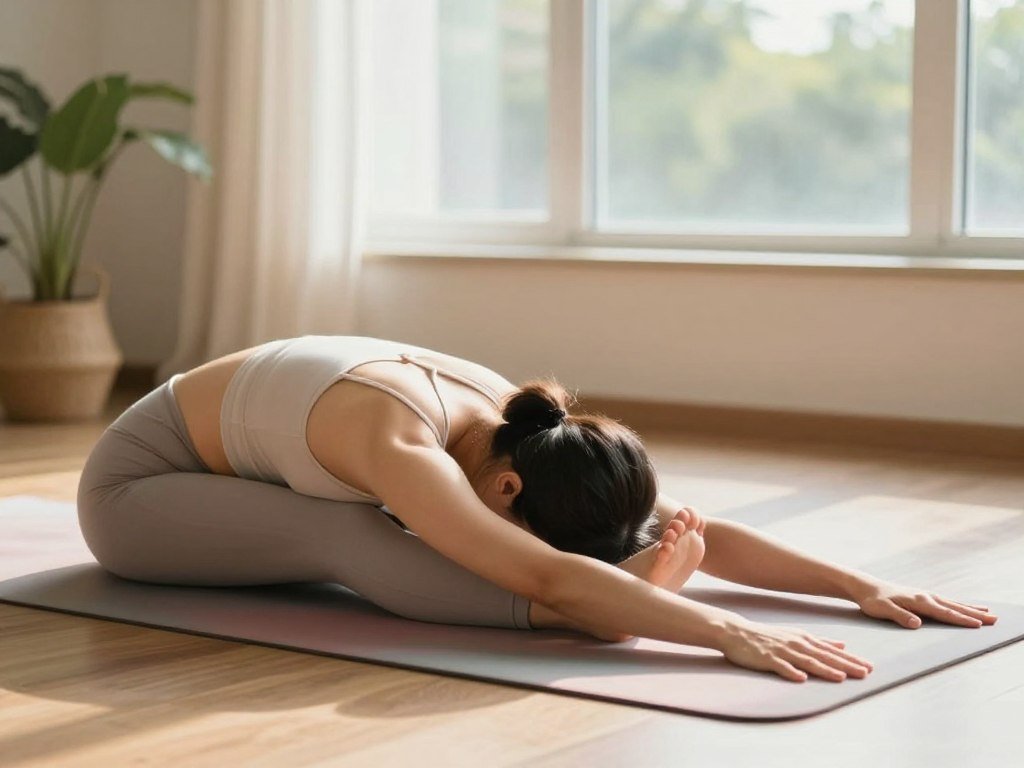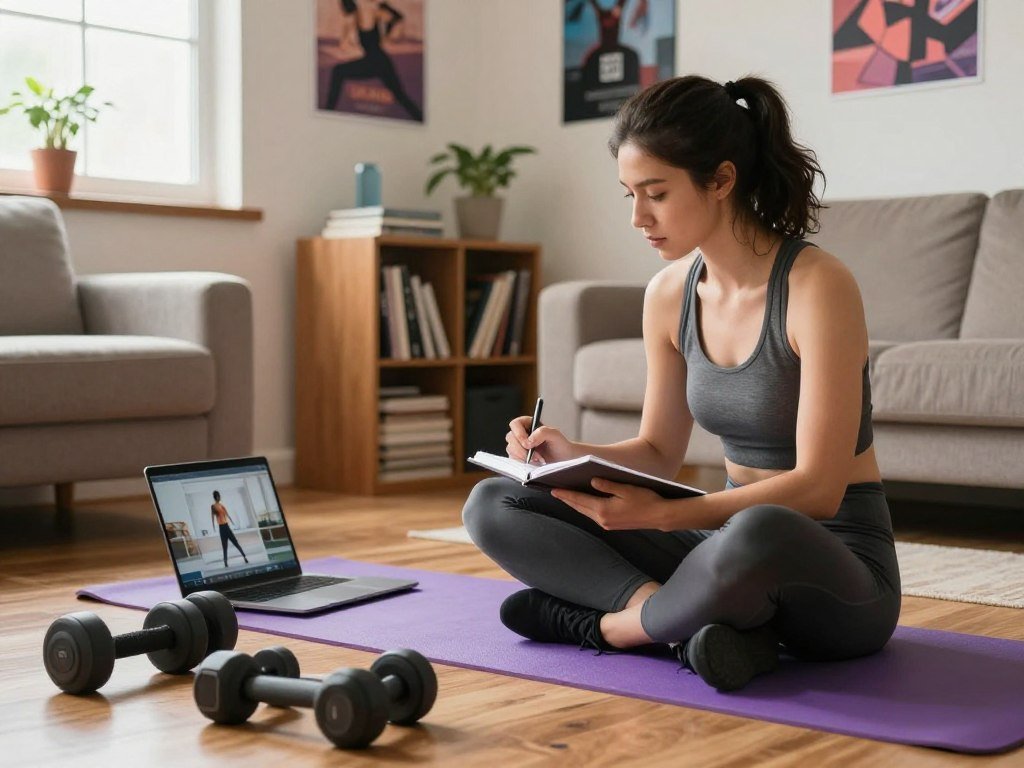
Your first workout does not need to be complicated to count. A new gym, unfamiliar equipment, or home workouts can feel intimidating at first. You do not need a perfect routine before you begin. Regular, manageable activity is a more useful first aim.
This guide helps you choose a plan that fits your time, goals, and comfort level. You will see how strength, cardio, and recovery can work together, with ways to adapt the routine as you go. Start with a session you can complete without dreading the next one. A plan you can repeat next week is a stronger starting point than a demanding plan you dread.
Key Takeaways
- Choose a routine that fits your real schedule.
- Start with manageable sessions and simple movements.
- Build strength, cardio, and recovery into your plan.
- Adjust the routine to your setting, goals, and experience.
- Track steady changes instead of judging one workout.
What Makes a Beginner Workout Plan Balanced?
A balanced routine combines activities that challenge muscles, raise breathing, and keep movement varied. You can begin with simple options such as walking, bodyweight moves, or gentle mobility work. A beginner does not need to master every exercise style to build fitness.
Seven common exercise types serve different purposes, and you can choose a few that suit your needs. Aerobic exercise supports heart and lung fitness, while strength work challenges muscles against resistance. The 2026 ACSM resistance-training position stand draws on 137 systematic reviews with more than 30,000 participants.
Choose activities you can repeat, not a checklist you must complete every session.
Strength and aerobic activity
Resistance training includes weights, bands, and bodyweight calisthenics. Aerobic activity uses steady movement that raises your breathing, such as walking, cycling, or swimming. High-intensity interval training alternates harder efforts with easier periods, while boot camps often combine cardio and strength exercises.
These styles can overlap. A brisk walk is aerobic exercise, while a bodyweight squat challenges your legs. A class may mix both, but beginners can learn movements at a comfortable pace before trying fast circuits.
Mobility, balance, and flexibility
Balance or stability work trains control, while flexibility exercises help you move through a comfortable range. Gentle mobility practice can make movement feel less stiff. Yoga and Pilates often combine mobility, balance, and strength, though each class may emphasize different skills.
You need not fit every category into each workout. The 2026 ACSM guidance also recognizes different ways to train resistance, from body weight to home routines. Start with the activities you can access and enjoy rather than trying to cover all seven categories at once.

How to Choose the Best Workout Routines for Beginners
For most beginners, a full-body routine repeated two or three times a week is a practical first choice. A full-body session commonly takes about 30-45 minutes, depending on rest and exercise selection. Simple and repeatable beats a complicated beginner workout that keeps getting skipped.
Choose a workout plan you can fit into an ordinary week, at home, in a gym, or in both places. Your plan can change as you gain confidence or access to equipment. A gym membership is not a requirement for fitness.
Match the plan to your schedule and setting
Start by looking at the time you can protect each week. If travel to a gym makes exercise hard to schedule, home sessions may be a better fit. If you feel unsure about equipment, a guided class or a simple routine can help you get started.
Consider what you can access and use with confidence. Some people like the range of equipment in a gym, while others prefer training at home or mixing settings. Compare workout routines for different goals if you want to see how full-body, bodyweight, and other formats differ.
Pick a goal you can measure
A clear goal helps you notice whether your routine is working. To get stronger, track the resistance or reps you use. To build endurance, note how long you can walk or cycle comfortably. To move more, count the sessions you complete each week.
Keep the first goal small enough to check without special tools. A note on your phone can record a session, a walk, or a movement that feels easier. Choose the option that still fits your busiest ordinary week, not just an unusually free one.

How Often Should Beginners Exercise Each Week?
Two weekly strength days that train all major muscle groups are a sound minimum to build toward. The U.S. physical-activity guidance calls for muscle-strengthening activity on at least two days each week. Give your body time to recover between challenging strength sessions. Two well-spaced days can be more useful than rushing into daily hard training.
Work toward at least two strength days each week, with recovery between them. The 2026 ACSM guidance also recommends training all major muscle groups at least twice weekly. Five basic movement patterns can help you cover the body without needing a long list of exercises.
- Squat: try a squat or leg press.
- Hinge: try a hip hinge or glute bridge.
- Push: try a push-up or chest press.
- Pull: try a row or lat pulldown.
- Core or carry: try a plank or loaded carry.
These patterns offer a useful way to think about strength training, not a required exercise menu. Choose versions that match your ability and available equipment. You can use a chair or lighter resistance while learning a movement.
Seven exercises can be useful across a week, but you do not need seven hard strength exercises every day. Alternate strength days with walking or gentle mobility. The body responds to training and recovery together, so more daily effort is not always better.
The U.S. activity guidance for muscle-strengthening days gives a clear weekly baseline. If a muscle group is still unusually sore or your form is slipping, make the next day easier rather than forcing another hard session.
How Can You Start Strength Training at Home?
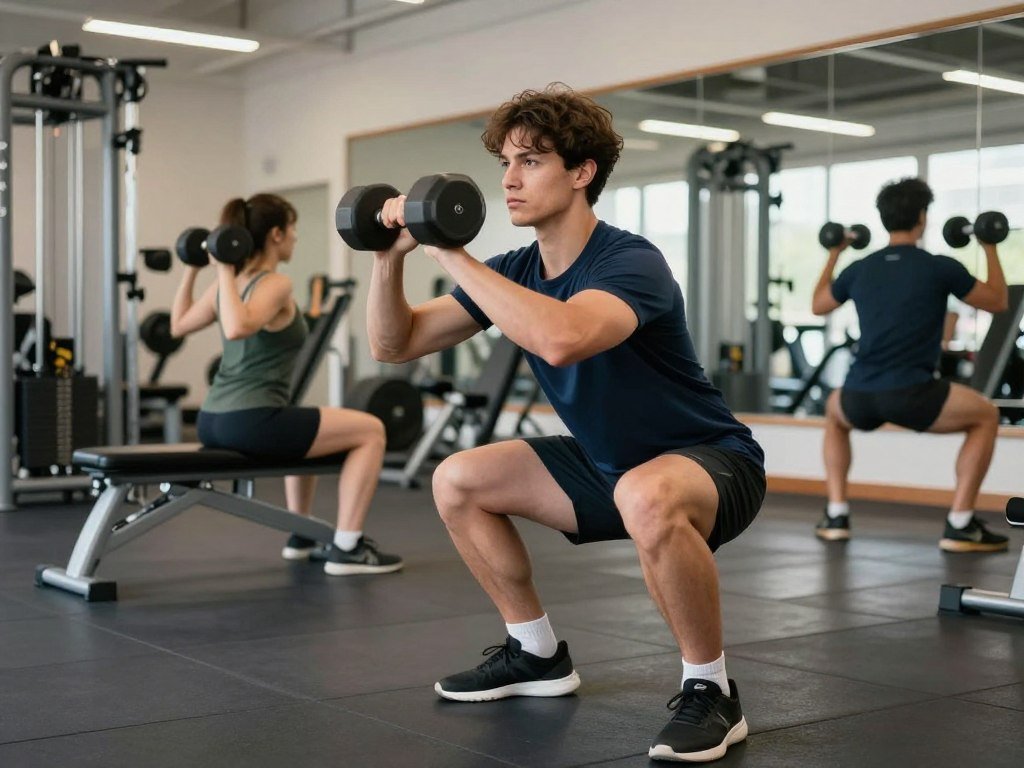
You can begin strength training at home with body weight alone. A small clear area and a stable chair can support many beginner exercises. Home training can work well without a gym or a large equipment budget.
Bodyweight, bands, and dumbbells can all support strength, muscle growth, and physical function. The 2026 ACSM guidance includes home-based resistance training among useful approaches. Choose the setup that makes it easiest to practice with steady control.
No-equipment bodyweight training
A short session can include a squat variation, a wall or elevated push-up, a glute bridge, and a plank or dead bug. Start with a version that lets you move smoothly. A wall push-up uses less bodyweight than a floor push-up, while a chair can help you control a squat.
Use a clear floor space and move slowly enough to notice your position. If a plank feels too hard, try a dead bug or hold the plank from your knees. The goal is to practice the movement, not to make every exercise feel difficult.
Add resistance with bands or dumbbells
Resistance bands add pulling movements and adjustable tension without taking much storage space. Light dumbbells make it easier to add resistance to common movements. Start with a load you can handle without swinging or rushing.
| Setup | Equipment | Sample exercise | Simple progression |
|---|---|---|---|
| Bodyweight | No equipment | Wall push-up | Use a lower support |
| Resistance bands | One light band | Seated band row | Step farther from anchor |
| Dumbbells | One light pair | Dumbbell squat | Add a small amount of load |
Keep the floor clear and check that any chair or anchor stays steady during movement. A band can slip if you attach it to an unstable object, so use a secure setup. Clear floor space and a stable chair are enough to make many beginner movements more accessible.
Which Cardio Workouts Are Easiest to Start?
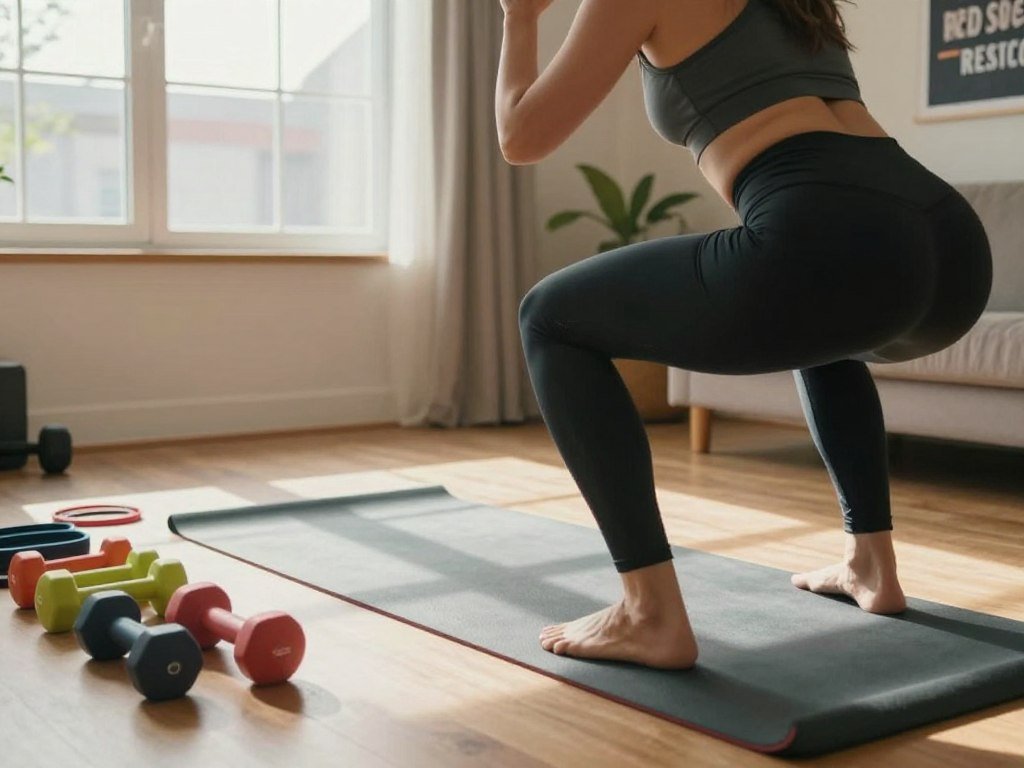
A purposeful walk is one of the simplest ways to add cardio to a beginner week. Walking needs little equipment and lets you adjust the pace as your fitness changes. Brisk walking is a useful first choice if you enjoy being outdoors or want a low-cost option.
Pick a cardio activity that feels comfortable enough to repeat. A stationary bike can feel easier on your joints, while an elliptical offers a smooth moving stride. Swimming suits people who prefer water, and treadmill walking helps when weather or sidewalks make outdoor walks inconvenient.
- Walking: choose it for easy access and flexible pacing.
- Stationary bike: choose it for seated, low-impact movement.
- Elliptical: choose it for a smooth stride without outdoor terrain.
- Swimming: choose it if you enjoy water-based exercise.
- Treadmill walking: choose it for indoor control over pace and incline.
Three purposeful walks can fill the weekly cardio role in a beginner version of the 3-3-3 framework. That does not require a set distance or pace. You can begin with a manageable walk and add time as it feels comfortable.
Pay attention to how the activity feels while you move. Choose a pace that raises your breathing while still letting you speak in short sentences.
How Do 3-3-3 and 3-2-1 Workout Plans Work?
The 3-3-3 label describes two different formats, while 3-2-1 usually describes a weekly mix of activity types. Check the meaning before you copy a workout, since the numbers can refer to different things.
The weekly 3-3-3 format groups activity exposures, while the other version counts exercises, sets, and days. Neither label is a fixed rule for every beginner. You can change the structure to suit your recovery and available time.
Two meanings of the 3-3-3 rule
One weekly framework uses three strength exposures, three cardio exposures, and three active-recovery or mobility exposures. Those exposures can overlap, so they do not require nine separate workout days. A walk after strength work, for example, can count toward more than one type of activity.
Another 3-3-3 label means three exercises, three sets, and three days per week. That minimalist format describes a simple strength routine, not a mix of cardio and recovery work.
How the 3-2-1 method divides a week
The common 3-2-1 method means three strength sessions, two Pilates sessions, one cardio session, and one full rest day. This arrangement uses seven days, with the rest day separate from the six activity days.
| Format | Weekly structure | Key distinction |
|---|---|---|
| Weekly 3-3-3 framework | 3 strength, 3 cardio, 3 recovery exposures | Exposures may overlap |
| Minimalist 3-3-3 routine | 3 exercises, 3 sets, 3 days | Counts workout parts |
| 3-2-1 method | 3 strength, 2 Pilates, 1 cardio, 1 rest day | Divides activity by type |
Treat either label as a flexible template, not a rule that overrides your recovery or schedule.
What Does a Sample Beginner Week Look Like?
A sample week can make the 3-2-1 pattern concrete: strength on Monday, Wednesday, and Friday, with Pilates, cardio, and rest filling the other days. This is one example, not a required calendar for every beginner.
The sample includes five weekday sessions, cardio on Saturday, and full rest on Sunday. Use it to picture how different sessions can fit into a week, then shorten or reduce the plan if needed.
| Day | Planned session | Sample focus | Effort |
|---|---|---|---|
| Monday | Lower-body strength | Controlled leg movements | Moderate |
| Tuesday | Pilates | Core control and mobility | Light to moderate |
| Wednesday | Upper-body strength | Push and pull movements | Moderate |
| Thursday | Pilates | Balance and smooth control | Light to moderate |
| Friday | Full-body strength | Whole-body practice | Moderate |
Saturday holds the cardio session, and Sunday is the full rest day. Six gym visits are not required for a beginner. This sample has six activity days and one full rest day, but your schedule can use fewer workouts.
If this many sessions feels like too much, start with fewer workouts or shorter sessions. Add activity gradually as the routine becomes easier to manage. A short Pilates class or walk may also fit better than a long session on a busy day.
Keep Sunday fully off in this example, or use it as a rest day wherever it best follows your hardest sessions.
How Should Beginners Progress Sets, Reps, and Weight?
A rep is one complete repetition of a movement, while a set is a group of those repetitions. For example, eight squats in a row make one set of eight reps. Controlled reps help you focus on the movement rather than racing through a workout.
Rest long enough to keep your form steady in the next set. Your breathing, the exercise, and your experience can all affect how much rest feels right. Stop before fatigue changes the way you move.
Understand reps, sets, and rest
Use a steady pace and a range of motion you can control. You do not need to test your limits in every session. A set should end when you finish the planned reps or when your technique starts to break down.
Keep a simple record of the resistance and reps you complete. This makes it easier to see whether a workout feels more manageable over time. It also helps you avoid adding weight just because you had one unusually strong day.
Adjust resistance to your goal
The 2026 ACSM guidance gives a strength target of about 80% of your one-rep max (1RM) for two to three sets per exercise. A one-rep max (1RM) is the heaviest weight you can lift once with good form. The 80% figure is a goal-specific guideline, not a required starting weight for a novice.
For muscle growth, the guidance recommends about 10 sets per muscle group per week. Beginners can build toward a training goal over time rather than trying to match advanced targets immediately. A 2026 ACSM review of resistance training also finds benefits for strength and physical function.
- Keep your form consistent from rep to rep.
- Complete the planned reps before raising the challenge.
- Add a rep before adding load when appropriate.
- Stop a set when your technique breaks down.
Increase resistance only when you can complete the planned work with control and repeatable form.
How Can Beginners Train Safely and Recover?
A few minutes of preparation can make the first working set feel more controlled. Before exercise, learn the movement and check that your space and equipment are set up safely. Start with care if you are new to exercise or returning after a long break.
Talk with a healthcare professional if you have a health condition, concerning symptoms, or plan strenuous activity after being inactive. Learn how equipment works before adding resistance. A brief practice with light effort can help you notice how a movement feels.
Check readiness and learn the movement
Ask for help with an unfamiliar machine or exercise if you are unsure how to set it up. Keep the movement within a range you can control. Good technique matters more than using a heavy load early in training.
Pay attention to unusual symptoms during activity. Stop if something feels wrong rather than trying to finish a planned number of reps. A safer session can be shorter than expected.
Warm up, then cool down
A dynamic warm-up commonly takes about 5-10 minutes. Begin with easy movement, then use simple motions that prepare the joints and muscles you plan to work.
- Arm circles
- Leg swings
- Hip circles
- Walking lunges
After exercise, ease down with light walking and comfortable stretches. This is especially useful after hard cardio, when stopping suddenly can feel abrupt. Keep stretches gentle rather than forcing a deep position.
Stop for sharp or worsening pain and seek appropriate medical advice instead of trying to work through it.
How Can Beginners Stay Consistent and Motivated?
A routine is easier to keep when it has a predictable place in your day. A regular time can make it easier to get started, especially when energy or confidence is low. It does not need to be the same hour every day.
Thirty minutes of activity can be split into three 10-minute bouts. Walk at lunch, take a short evening walk, or fit in a brief home session. Smaller blocks can be easier to protect than one long workout.
Make exercise fit your real schedule
Look for a time you can repeat without rearranging your whole day. A short walk between errands may fit better than a gym trip across town. If your schedule changes, choose another regular time instead of dropping the session altogether.
- Schedule a recurring time for activity.
- Prepare clothes or equipment in advance.
- Record completed sessions in a calendar or notes app.
Choose activities you want to repeat
Try a class if you like learning with a group, or exercise with a friend for company. Music or a podcast can make a walk feel more inviting. If you want guided sessions or a simple log, workout apps for different fitness goals may help you find a format you enjoy.
Enjoyment does not have to mean every workout feels easy. It can mean choosing an activity you look forward to more often than you avoid it. A short session you complete consistently is more useful than a long session you keep postponing.
How Can You Adapt a Routine to Your Goals and Experience?
The right adjustment is the one that lets you train safely at your current level and progress gradually. Beginners can use shorter sessions or fewer weekly workouts, then build as the routine feels manageable. Start where you are, not where you think a gym regular should be.
Adapt each workout to your equipment, ability, and any movement limits. Training at home, in a gym, or in a mix of both can work. Choose the setting you can access and use with confidence.
Scale the plan to your starting point
If a session feels too long, reduce its length. If the number of weekly workouts feels hard to manage, begin with fewer. You can adjust movements to suit available equipment or a movement limitation, and seek professional guidance when you need help choosing safe options.
Strength, endurance, and general fitness are different goals. Strength work focuses on moving resistance with control, while endurance work supports longer periods of activity. General fitness can draw on both, with your schedule and preferences shaping the mix.
Keep the plan personal, not gendered
A beginner workout plan for men and a workout plan for women can use the same basic movement patterns. Gender labels do not tell you what exercises, equipment, or goals suit a person. Your experience, interests, access, and health needs matter more.
Nutrition is a separate part of health and weight management, not a workout setting. A routine can support strength or fitness, but it cannot promise a particular body shape. For broader help choosing a sustainable approach, see how to choose a weight-loss plan.
A personalized plan should reflect your actual goals and limitations, not assumptions about who you are.
How Can You Track Progress Without Chasing the Scale?
Better control of a movement or an extra completed rep can show progress before the scale changes. Track performance and consistency, not just body weight. Small changes can be easier to notice when you keep a simple record.
Review your routine every 2-4 weeks instead of reacting to one workout. This gives you time to spot a pattern in your strength, cardio, and attendance. One unusually hard session does not tell the full story.
Track performance and consistency
Record the reps or resistance you use for strength exercises. Note the duration or pace of walks and other cardio sessions. You can also mark which planned sessions you completed during the week.
A basic log can be a paper calendar, phone note, or training app. Write down enough to compare one period with another, but keep the process easy. The best record is one you will keep using.
Understand body-weight changes
No single sensation reliably proves that your body is burning fat. Weight trends, clothing fit, and repeatable measurements can offer context when you look at them over time. Day-to-day weight changes are normal.
Exercise can support weight management, but it does not guarantee fast weight loss on its own. Food intake, habits, and individual factors also shape weight change. Judge your routine by a pattern of changes over time, not by one day’s weight or energy.
One reading cannot tell you whether your routine is working; look for a pattern across time.
Conclusion
A good first routine is the one you can begin and return to. You can start with a few weekly sessions, simple movements, and room for recovery. As you gain confidence, adjust the plan to match your schedule and goals.
There is no need to wait until you feel completely ready. Choose a first session that seems realistic, then make it easy to begin by preparing what you need. Pick a day for your first session, set out what you need, and start at a pace that feels manageable.
FAQ
What is the 3-3-3 rule for working out?
What is the 3-2-1 rule for working out?
What is the 5 5 5 30 rule?
Which exercise is most anti-aging?
Can I lose weight by exercising 30 minutes a day?
How can I drop 20 pounds quickly?
Is walking 10,000 steps a day a good way to lose weight?