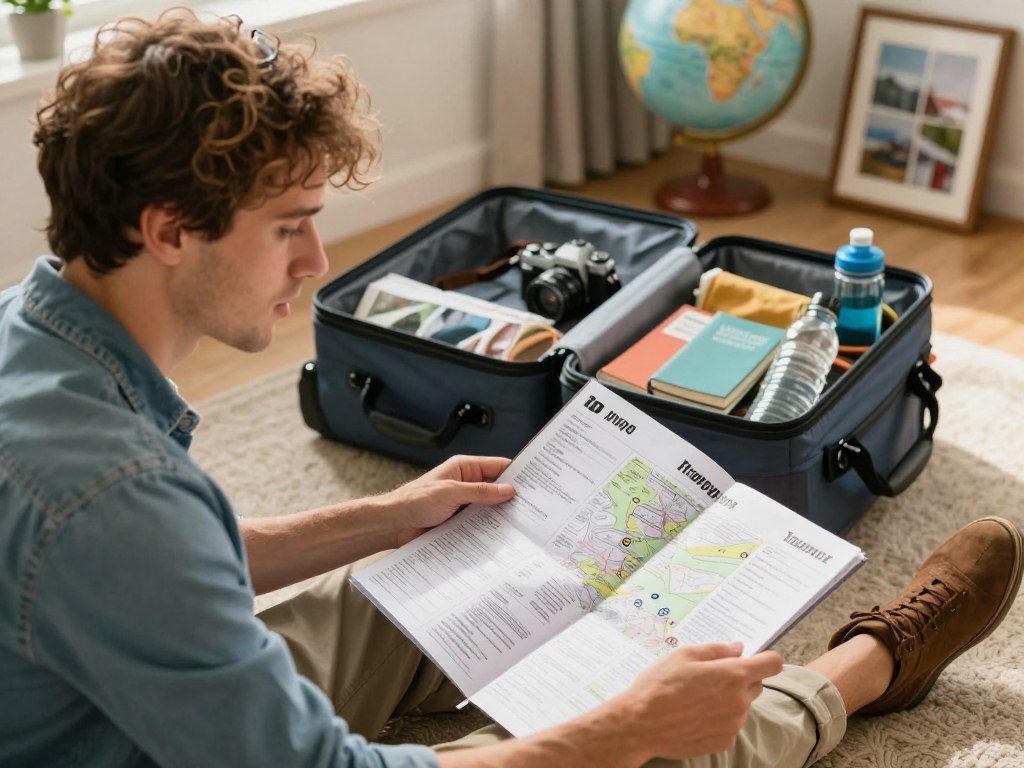
A smoother trip usually comes from a few small decisions made before you leave, not a bigger budget. When planning feels rushed, small oversights can cost you money, time, and patience at the airport. The best travel hacks help you handle common snags without buying expensive gear.
Shoulder season is the period just before or after a destination’s busiest travel season, often spring or fall. It can bring a different mix of crowds, prices, and local conditions, so check what matters for your trip. Good habits can help from the first booking through the final day.
This list covers planning, flights, packing, and choices you make after landing. You can use the ideas that fit your route, airline, and travel style. There is no need to change everything at once. Pick the two or three habits most likely to solve your own travel-day frustrations and start there.
Key Takeaways
- Compare flexible travel dates and flight types before booking.
- Check airline bag limits before you pack.
- Keep key items and documents easy to reach.
- Prepare maps and useful phone tools for offline use.
- Leave room in your itinerary for rest or delays.
How Can the Best Travel Hacks Lower Flight Costs?
Shifting the departure day can make a larger difference than waiting for a particular weekday to book. Flexible dates and a willingness to take a layover can give you more fare options. In Google’s 2025 holiday-travel analysis, weekday departures and layovers had larger reported differences than Tuesday booking.
Compare the whole trip, not just the fare on one date. Google Flights and Skyscanner let you set fare alerts, which can help you notice a price change without checking every day.

| Comparison | Reported average difference | Practical caveat |
|---|---|---|
| Monday-Wednesday vs. weekend departure | About 13% cheaper on weekdays | Routes and dates still affect fares |
| Layover vs. nonstop flight | About 22% cheaper with a layover | More travel time and missed-connection risk |
| Tuesday vs. Sunday booking | Tuesday was 1.3% cheaper | Booking day matters less than date flexibility |
These figures come from Google’s 2025 holiday-travel analysis. For another view of domestic prices, the Bureau of Transportation Statistics posts average domestic airline itinerary fares by origin city.
Compare dates and flight types
Try a calendar view before settling on a flight. A Monday departure may cost less than a weekend flight, while a layover can lower the fare if the added time works for you.
For a multi-city route, an open-jaw flight arrives in one city and leaves from another. It can fit some trips well, though the route and ground transport need to make sense.
Understand fare tools and hidden-city risks
Skiplagged searches hundreds of airlines and lists hidden-city, self-transfer, and separate-ticket itineraries. It also offers fare alerts and trip filters. Its Price Hacker adjusts eligible reservations and issues airline credit if a fare drops by $15 or more. If a qualifying lower fare is secured within 24 hours of ticketing, the difference is refunded to the original payment card.
The average credit issued on trips that receive one is $84, and roughly one in five of those trips receives $100 or more. Skiplagged claims hidden-city itineraries save an average of $180 per flight based on past fare comparisons. Results vary by route, dates, and availability, so treat the figure as a claim, not a promise.
Hidden-city booking is legal, but it may conflict with an airline’s contract of carriage, which airlines enforce.
A hidden-city itinerary uses a ticket with a connection, then ends the trip at that connection instead of flying the last leg. That choice can disrupt later parts of a ticket or lead to other airline consequences. Read the operating airline’s contract of carriage before considering a hidden-city itinerary.
What Should You Do Before Reaching the Airport?
A few minutes of preparation at home can prevent a rushed search for documents or a gate change at the airport. A simple five-check routine can help you keep track of the flight, your boarding pass, and screening rules.
Use the airline app for updates, but keep a boarding pass screenshot as backup. Airline apps can provide check-in, boarding passes, and delay or gate updates.

- Check in through the airline app.
- Save a screenshot of your boarding pass.
- Review gate and flight updates before leaving and during the trip.
- Confirm the liquids rule for the screening point you will use.
- Consider whether TSA PreCheck or Global Entry fits your travel habits.
TSA PreCheck and Global Entry are U.S. trusted traveler programs. They can change parts of the screening process for eligible travelers, but they do not remove the need to follow airport security instructions.
For U.S. carry-on liquids screening, the TSA 3-1-1 rule generally applies. Check the rules for your airport and route, since security steps can differ outside the United States.
Travel hacks for flying work best when your key details are ready before the ride to the airport. A screenshot can be useful if the app or data connection fails at the wrong moment. Keep your identification and boarding pass easy to reach while moving through security.
When Should You Book and Where Should You Stay?
Dates just outside a destination’s busiest season can offer a useful balance of milder crowds and more choice. Shoulder season often falls in spring and fall, though the best time depends on local weather and events.
Check local conditions before choosing dates. A normally quieter period can turn busy or expensive during a holiday, festival, or major event.

Shoulder season may bring different weather, shorter opening hours, or fewer services than peak months. Look at what will be open and how you want to spend your days before you lock in a trip.
Peak-season flights and hotels can have fewer options as departure gets closer. Booking early enough can preserve a wider choice of routes and rooms, even when it does not guarantee the lowest price.
Google Flights and Skyscanner offer fare alerts that can flag price changes. Use alerts as one planning tool, not as a reason to wait when your dates or lodging needs are fixed.
Airline and hotel loyalty programs may offer benefits such as points or preferred services. An upgrade is never guaranteed, so compare the full room cost and location without counting on one.
If you are choosing a New York stay, compare areas and room details in this guide to New York City hotels. A convenient address can matter more than a long amenities list.
Local holidays and major events can change crowd levels, room prices, and the range of available hotels. Compare the full dates and location before treating a loyalty perk or a calendar label as a deal.
How Do You Pack Clothes and Choose a Carry-On?
Start by choosing clothes that work together, then decide which pieces need to stay smooth and which can be compressed. Fabric matters: soft, crease-resistant items often roll well, while dress clothes need more care.
Measure your packed carry-on against the airline’s rules, including its handles and wheels. Most major U.S. airlines typically allow up to 22″ x 14″ x 9″, but limits vary.
| Fabric or item | Best method | Reason and useful aid |
|---|---|---|
| Cotton or linen | Fold | Creases easily; keep layers smooth |
| Wool knits | Fold | Bulky, and rolling can use more space |
| Lycra or polyester | Roll | Less likely to crease; use a packing cube |
| Formal shirts | Fold or use a garment folder | Helps keep collars and fronts smooth |
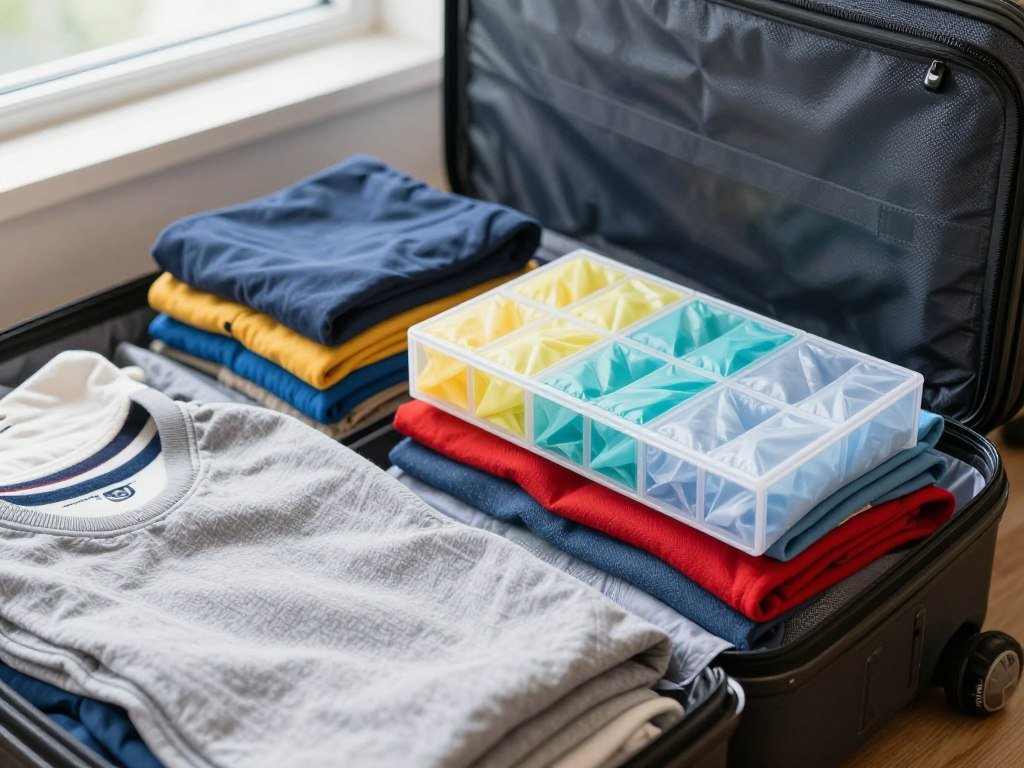
Roll socks, underwear, lightweight T-shirts, pants, tops, and skirts. Fold bulky sweaters and dressier pieces, such as button-up shirts and formalwear. A garment folder suits smooth, structured clothes, while compression cubes work best with items that do not wrinkle easily.
A compression cube groups clothes and can press them into a smaller bundle. A compression sack uses straps to squeeze a larger soft load. The Osprey StraightJacket Compression Sack comes in 8-liter and 12-liter sizes and uses two buckles and straps; its compression rating is 7.
The Gonex Compression Packing Cubes set includes four cubes and cost around $30 at the time of the product page’s writing. Its compression rating is 5, and the zippers can catch on the inner liner. Peak Design Packing Cubes have a rating of 6 and a Hypalon tab for quick access. They come in small and medium sizes or sets of three, six, or eight.
The typical carry-on limit for many major U.S. airlines includes handles and wheels. Spirit and Frontier often limit free personal items to about 18″ x 14″ x 8″, while larger carry-ons may require a fee. Airline carry-on weight limits range from 15-40 pounds, depending on the carrier. The IATA passenger baggage rules also explain that allowances vary by airline, cabin class, aircraft, and route.
The 3-3-3 travel-packing rule is a capsule approach with three tops, three bottoms, and three pairs of shoes. Versions differ, and climate or activities may call for changes. The 5-4-3-2-1 rule also has different versions, so name the clothing categories when you use it rather than assuming everyone counts the same way.
Choose a bag that suits the trip, not just one that looks compact in a product photo. Measure the packed bag, including wheels and handles, against the airline’s current limit before leaving home.
What Belongs in Your Personal Item?
Keep anything you would need during an unexpected overnight delay in the bag that stays with you. Think access first, especially if checked luggage does not arrive with you.
Keep medication, key documents, valuables, and one spare change of clothes in your personal item. A charging cable can also help you stay in touch during a long wait.
- Essential medication and a spare outfit.
- Charging cable and a small toiletry pouch.
- Key documents and valuables you need close by.
- A zip-close laundry pouch or cube for worn clothes.
- An optional Bluetooth tracker for a checked bag.
Apple AirTag and Tile are examples of Bluetooth luggage trackers. Their location information depends on device setup and nearby networks, so a tracker cannot replace reporting a missing bag to the airline.
Zip-close bags can separate toiletries, damp items, or worn clothes from clean belongings. A packing cube can serve as a laundry pouch, which keeps the rest of your luggage easier to manage.
For help choosing a way to keep passports and cards organized, see these travel wallet options. Keep the setup simple enough that you can find what you need without emptying the bag.
If you check a suitcase, a clear photo can make it easier to describe at the airline desk. Photograph the outside of a checked bag before handing it over so its appearance is easy to describe.
How Can You Protect Travel Documents?
Check passport validity and entry rules as soon as the destination is chosen, not on the eve of departure. Early checks leave more time to handle an expired passport or a missing visa.
Passport-validity rules differ by destination, and some require six months beyond your planned stay. Check official guidance for your destination before booking or leaving.
- Check your passport’s expiry date and the destination’s validity rule.
- Review visa and entry requirements.
- Save insurance details and booking records.
- Photograph your passport, visa, health insurance, and bookings.
- Keep digital copies in a protected account you can reach.
Requirements can change by country and trip length. The U.S. Department of State offers official traveler and passport guidance, including destination advice and passport services.
U.S. travelers taking eligible trips abroad can enroll in STEP, the Smart Traveler Enrollment Program. It can help travelers receive alerts and connect with U.S. officials during an emergency abroad.
Digital copies can help if a paper record goes missing, but protect them with a secure account. Avoid relying on one phone or one storage spot. Store digital copies in a protected account that is accessible without relying on a single device.
How Can Your Phone Work Without Reliable Wi-Fi?
Downloading essential tools before departure means a dead signal does not leave you without directions or a way to communicate. Offline access can help when you arrive tired or cannot connect right away.
Set up mobile data, maps, and translation before the trip begins. An eSIM connects a compatible phone without swapping a physical SIM.
Arrange data and translation before departure
Check that your phone supports eSIMs and that the service works where you are going. If it does not, ask your carrier about international plans and charges before leaving.
Save useful translation phrases or a language pack in an app. Some tools can translate signs and menus, which helps when a place has no easy English option.
Keep maps, power and entertainment available offline
Google Maps supports offline map downloads. Save the areas you expect to visit, then open the map once before departure to check that it is ready.
Download shows, books, and podcasts while you have Wi-Fi. A show saved at home can make a long wait easier without using mobile data.
A power bank stores power for later, while a travel adapter lets your plug fit a different outlet. They solve different problems. A compact phone power bank with up to two charges is one option, and a universal adapter may include several USB ports.
Check your device needs and airline rules for power banks before packing one. A travel adapter does not charge a phone by itself unless it has the right ports and power supply.
Open each offline map or translation tool once before leaving to check that the downloaded material is available.
How Can You Make a Long Flight More Comfortable?
The best seat is the one that supports your priority, whether that is sleep, movement, or extra legroom. Choose for your body and what you plan to do during the flight.
Seat choice has tradeoffs, so match it to your main need. A long-flight comfort kit can also make hours in the cabin feel easier.
| Seat | Best suited to | Advantage and tradeoff |
|---|---|---|
| Aisle | Travelers who want to move | Easy to get up; people may pass nearby |
| Window | Travelers who want to lean and sleep | Wall support; harder to leave the row |
| Exit row | Eligible travelers seeking legroom | More space; rules and stowage limits apply |
Choose a seat and clothing for your needs
Wear comfortable layers that work if the cabin feels cool or warm. A scarf or light layer can add warmth without taking much room.
Exit-row seats can offer more legroom, but airlines set eligibility rules. Cabin items may need to be stowed during takeoff and landing, so keep that tradeoff in mind.
Manage rest, movement and entertainment
Shift sleep toward the destination’s time zone before and during the flight when it suits your schedule. Drink water, and avoid excess alcohol or caffeine if they disrupt your rest.
On long flights, take a movement break every one to two hours when it is safe. Walk or stretch if the crew allows it and the aisle is clear.
- Eye mask.
- Scarf or light layer.
- Headphones.
- Downloaded entertainment.
For work trips, noise-canceling headsets and charging gear can also help make cabin time more useful. These flight tech accessories include headphones and adapters, though your own needs may be simpler.
Follow crew instructions and move only when it is safe to do so.
How Do You Get Around After You Land?
A local transit app can turn an unfamiliar station into a route choice you can check before stepping outside. Set it up early so you are not trying to sort out payment at a busy stop.
Compare single fares with a day or multi-ride pass before choosing how to pay. Some city passes cover buses, trains, or trams.
- Find the official transit app for your destination.
- Download it and set up payment where possible.
- Compare single fares with an available day or multi-ride pass.
Local transit apps may include route planning, live updates, and ticket options. Check fares and service with the local operator, since routes and hours can change.
Walking or public transit can work better than taxis for some routes. A Lisbon tram ride or Tokyo train trip can also become part of the day, not just a way to get somewhere.
Look at the whole route, including the walk from the stop to your destination. A pass may cover several kinds of transit, but it only helps if you will use enough rides.
Check the final service time for the return journey before heading out for the evening.
How Can You Spend Less on Food, Water and Currency?
The easiest daily savings often come from avoiding convenience markups on water, snacks, and currency. Small choices add up without requiring you to skip meals or local treats.
When a card terminal offers conversion, choosing local currency usually avoids the merchant’s conversion rate. Your card’s own fees still depend on its terms.
| Payment method | When useful | Common cost risk and check |
|---|---|---|
| Card payment | Routine purchases | Merchant conversion; choose local currency |
| ATM withdrawal | Getting local cash | ATM fees or conversion; check card terms |
| Airport exchange | Small amount on arrival | Rates or fees may be unfavorable |
Airport exchange counters and ATM conversion can involve poor rates or fees. Travel cards may save foreign transaction fees, but the terms vary by card.
Bring snacks for travel days so hunger does not force a costly stop. At your destination, busy local spots at normal meal times can be an easy way to find food people nearby enjoy.
A collapsible water bottle takes up less space when empty. You can refill a reusable bottle after security where stations are available, but check local tap-water safety before drinking.
Keep enough accessible local cash for the first small expense, but avoid exchanging more than you expect to use.
What Should You Check Before Booking a Hotel?
A room’s location and cancellation terms can affect the whole trip more than a long list of amenities. Check the fine print before choosing a place to stay.
Compare the cancellation deadline and refund terms before you pay. Free cancellation only helps when its deadline and conditions fit your plans.
Check location and room details
A central hotel can make it easier to return for a rest and may cut transit time. The tradeoff is that rooms in central areas can cost more.
Compare the total price, room details, and nearby transit before deciding. A hotel that looks close on a map may not suit your daily plans or pace.
If you are traveling with a dog, look for a pet-friendly stay with enough space and suitable outdoor access. This Australian Shepherd travel guide covers lodging needs and comfort on the road.
Check booking terms and room features
Read the actual cancellation deadline and refund conditions for your reservation. A free-cancellation label does not mean you can cancel at any time without cost.
If you want to watch your own streaming services, ask whether the room supports casting to services such as Disney+ or YouTube. That small detail can matter during a quiet night in.
Save the cancellation deadline with the reservation so it is not missed.
What Safety Habits Help When Traveling Solo?
A simple check-in plan gives someone you trust a way to notice when your plans change. Keep it practical, with enough detail to help without sharing every move.
Share a general itinerary and use established transportation services. This can help solo travelers, including women, make plans with more support, but no single tactic guarantees safety.
Send a trusted person your general route and a time to check in. If your plans shift, a quick message can keep them from worrying over an old schedule.
At an airport, use established transport options rather than accepting rides from people who approach you. Keep valuables out of sight while moving through public places.
Split a backup card or cash between secure locations instead of keeping everything together. Choose places that are hard to reach casually, and avoid drawing attention to where you keep them.
Local conditions and transport options differ, so check current official advice for the destination. Women’s solo-travel planning can include practical choices that suit the route, time of day, and local setting.
If a situation feels wrong, leave for a staffed, public place and contact someone you trust.
How Can You Find Memorable Experiences for Less?
A memorable day can start with a walk, a public park, or a local event rather than a costly ticket. Look nearby first, then decide whether a paid tour adds something you want.
Free or low-cost activities can include parks, public events, and museum entry periods. A tip-based walking tour can also introduce local history.
Free walking tours commonly work on tips, so check how the guide expects payment before you join. The tour can give you a feel for a neighborhood and point out details you might miss alone.
GetYourGuide is a tour discovery and booking platform. A listing can spark ideas for things to explore on your own, but check what the tour includes before you book it.
Early morning can bring quieter streets and a different feel to familiar places. Check opening hours and safety before planning an early visit, especially if you will be alone.
Some museums offer free entry periods, while parks and public events can fill a day without a full-price ticket. Confirm opening hours and any reservation requirements before setting out.
Why Is Travel Insurance Worth Considering?
Insurance matters most when a disruption would be too expensive or difficult to handle out of pocket. Match the cover to the risks and costs of your trip.
Policy wording sets what the plan may cover and what it will not. Insurance does not guarantee reimbursement, even when a trip is disrupted.
Medical coverage can help with certain emergency costs. Check its limits and any rules for pre-existing conditions before relying on it.
Cancellation or interruption cover may apply to certain reasons for changing or ending a trip. Delay benefits may help with costs after a covered delay, while baggage protection may address some lost or damaged items.
Read limits, exclusions, claim steps, and any pre-existing-condition rules before paying. A policy may not cover every reason for cancelling or every item in a checked bag.
Some travel credit cards include coverage, but their limits and exclusions vary. Compare the card’s terms with a separate policy so you can spot overlap and gaps.
Read the policy’s exclusions and claim steps before paying for coverage.
How Can a Flexible Itinerary Save Time?
A flexible plan gives you somewhere to put the delay, rest day, or unexpected favorite that a tightly packed schedule cannot absorb. Leave breathing room around the parts of the trip that cannot easily move.
A buffer day before a tour or cruise can give you room for rest or disruption. Avoid packing your arrival day with activities you cannot shift.
Build in room for delays and rest
Put a buffer between arrival and a scheduled tour or cruise start. A delayed flight or a need to sleep can make a close connection between arrival and an activity stressful.
An open block can also give you time to return to a place you liked or take a slower day. A packed schedule has fewer places to absorb a change.
Avoid backtracking between cities
An open-jaw flight arrives in one city and departs from another. It can save backtracking when the route between cities makes sense, but compare extra ground transport costs with the time saved.
Check local holidays and festival dates before setting the itinerary. They can affect opening hours, crowd levels, and public transportation.
Leave room for a change of plans instead of filling every hour before you arrive.
Leave at least one open block in the itinerary for a change of plans or a place you want to revisit.
Conclusion
Traveling smarter is less about doing everything and more about preparing for the parts that matter to you. Small steps can reduce avoidable stress, but the right choices depend on your route, airline rules, and personal priorities.
Before departure, check your airline’s baggage limits and save essential trip documents in a protected place. That simple check can catch a packing issue or missing record while you still have time to fix it.
Before the next booking, make a short checklist for the one part of travel you most want to simplify.
FAQ
What are the top 5 travel hacks?
Why not wear jeans on a plane?
What is the most forgotten item when packing for vacation?
What are the 5 biggest packing mistakes to avoid?
What is the 5-4-3-2-1 rule for packing?
Is it better to roll or fold clothes when traveling?
What is the best travel outfit packing hack?
What are 10 items I need for a trip?