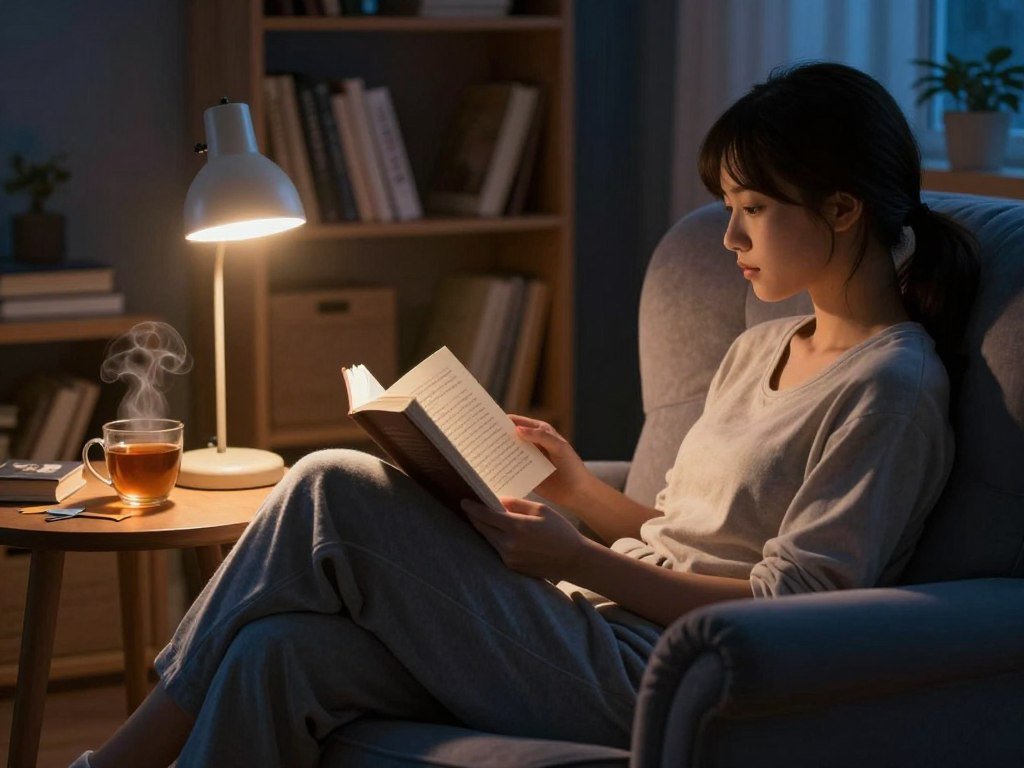
A good reading setup makes the page easy to see without turning the rest of the room into a spotlight. Your choice should balance clear page light, low glare, useful placement, and the room’s purpose. A bedside chapter, a long night of studying, and a book in a parked car call for different setups.
Task lamps suit focused desk work, while portable lights travel with a book or e-reader. Bedside options can keep light close to the page and leave the rest of the room calmer. The right design can make reading easier on your eyes, whether you settle in for a few minutes or spend hours with a book.
These choices matter in a shared room, too, where a wide beam can bother someone nearby. A good fit should work with your habits, your furniture, and the time of day you read. Start with where and how you read most often, because that determines which features matter.
Key Takeaways
- Match the light to your usual reading spot.
- Choose direction and dimming controls you will use.
- Portable lights can keep light near the page.
- Warm, dimmable settings suit many bedtime routines.
- Check placement for glare before settling in.
How to Choose the Best Reading Lamps for Your Needs
For most readers, a focused, adjustable light with enough output for the page is a more useful starting point than a decorative room glow. Useful light should make print clear without glare or harsh shadows.
A dedicated reading light should provide 450-800 lumens, a useful range for lighting a page. Color rendering index (CRI) measures how accurately a light source shows colors. Aim for a CRI of 90 or higher when color accuracy matters, such as reading a richly illustrated book.
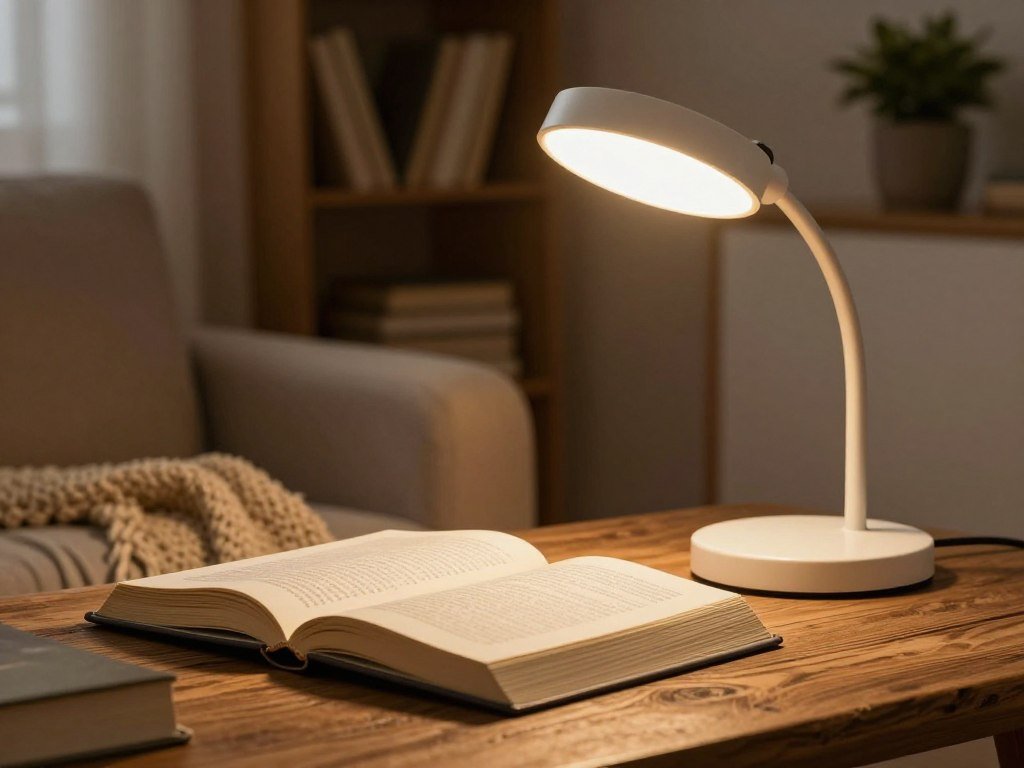
A focused, adjustable reading light is often the best reading light for your eyes because you can direct brightness where you need it. It can improve visibility and comfort, but it does not treat an eye condition. The 450-800-lumen range gives you a practical starting point, not a fixed rule for every room.
Give the page enough light to read comfortably, then keep the beam out of your direct line of sight.
Which Reading Light Is Best for Your Eyes?
The best reading light for your eyes is one that lights the print evenly and lets you control glare. A bare bulb in your sightline can feel harsh, even when the page looks bright. An adjustable head helps you aim the beam without shifting your seat.
High color accuracy can help colors look closer to their natural appearance. Still, comfort also depends on the page, your distance from it, and the room around you. If reading causes lasting pain or blurred vision, a lamp is not a substitute for an eye care visit.
What Features Make a Reading Light Easier to Use?
Use this four-point checklist when comparing lamp design and everyday controls:
- Confirm that the light has enough output for your page.
- Check the CRI when accurate colors matter.
- Look for an adjustable head or arm.
- Choose dimming if the lamp serves more than one job.
Dimming helps when one light covers reading and other tasks. Before buying, check that the beam can reach your page without shining directly into your eyes.
Which Desk Lamps Fit Different Reading Setups?
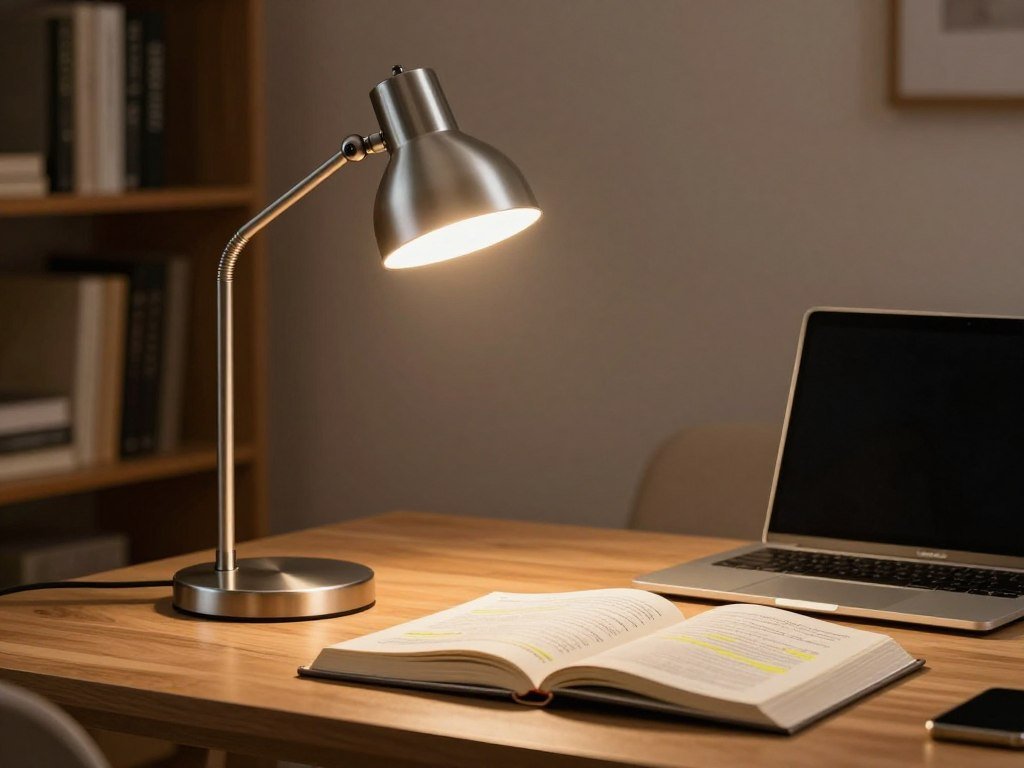
A clamp lamp is a practical starting point when desk space is limited, while a freestanding model suits a surface that can spare room for a base. Desk shape and overhead clearance can matter as much as the lamp’s light.
These five LED options use different designs, controls, and connections. The EppieBasic offers broad coverage, while smaller lamps can suit tighter work areas.
| Model | Notable light or build feature | Specific size or connection detail | Suitable use |
|---|---|---|---|
| EppieBasic LED Desk Lamp | 31.5-inch light bar; adjustable brightness and color temperature; ambient-light sensor | Clamp fits desks 0.5-3.4 inches thick | Broad, adjustable desk coverage |
| Lampat LED desk lamp | Five brightness levels; four lighting modes; one-hour auto-off | 5V/1A USB charging port | Readers who value controls and charging |
| LEPOWER Metal Desk Lamp | Metal build with a compact base | 18-1/8 inches high; 5-3/4-inch-diameter base | A desk with limited base space |
| Globe Electric 56963 clamp-on desk lamp | Clamp-mounted design | 32-inch reach; 6-foot cord | A desk that needs clamp mounting |
| Mchatte LED desk lamp | Five color settings; ten brightness levels; timer; wireless phone charging | USB-A port | Readers who want multiple functions |
The EppieBasic clamp fits desk edges from 0.5-3.4 inches thick, so measure the edge before choosing it. If your setup also needs a height-adjustable work surface, this guide to choosing a riser desk covers size and clearance.
The Lampat’s auto-off timer may suit readers who forget to switch off a desk light. The LEPOWER’s base takes little desk space, while the Globe Electric model reaches across a wider area. Mchatte adds phone charging, though those extra functions matter only if you will use them.
The best fit depends on your desk surface, the space above the page, and the features you will use. Measure the desk edge and the space above the page before choosing a clamp or a taller lamp.
Should You Choose a Clip-On or Neck Reading Light?
A portable light is usually the more considerate option when someone nearby is sleeping or watching a screen. Clip-on book lights suit a single book or e-reader, while a neck reading light keeps both hands free.
A wearable light can help when you read and do something else, such as knitting or journaling. A clip-on keeps its light close to one book, which may make it easier to direct at a small page.
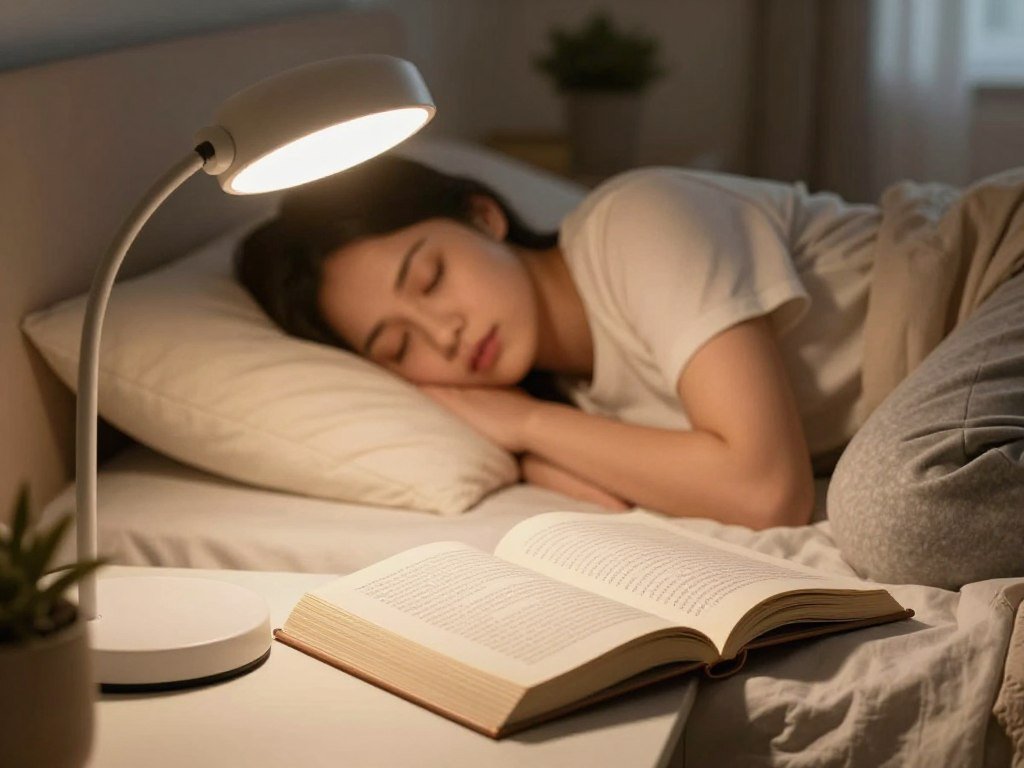
What to Check in a Flat Reading Light
A flat reading light should attach securely and send its beam across the page. Check whether the clip fits your cover, especially if the book has a thick spine or soft cover. A broad clip may also work better on an e-reader case than a narrow one.
Gritin’s 19 LED Rechargeable Book Light has three color temperatures and stepless dimming. Its runtime is claimed to reach up to 90 hours, depending on use. The Amber Light + Book Light offers a 1600K tone, three brightness settings, and a claimed runtime of 30+ hours.
The Glocusent USB Rechargeable Clip-on has three amber-based color modes and five brightness levels. Its claimed runtime is 10-80 hours. These runtime figures are product claims, not independently verified performance results.
What Does the Glocusent Reading Light Offer?
The Glocusent Neck Reading Light is a separate wearable model, not the clip-on light. It has a narrow 90-degree beam angle, a 1000mAh rechargeable battery, three brightness levels, and a 30-minute timer.
It takes 2-3 hours to charge and offers bright white and warm yellow modes. The 90-degree beam angle keeps the light focused, though aim and brightness still affect how much reaches another person.
How to Keep a Reading Light From Disturbing a Partner
A narrow, page-directed beam is more considerate in a shared room than light that spreads across the bed. A bright beam can still disturb someone if you point it toward their face or screen. Test the position before settling in for the night.
Check these details before choosing a portable light:
- Whether the clip fits the cover securely.
- Whether the beam reaches the page.
- Whether a wearable light holds its aim.
- Whether the controls are easy to reach in bed.
When Does a Clip-On Beat a Neck Light?
A clip-on book light makes sense when you read one book or e-reader and want the light attached to it. A neck reading light works better when you need both hands free for another quiet task.
Travel habits can also tip the choice. A clip-on packs with a book, while a wearable light leaves the reading surface clear. Test the light from your usual reading position to make sure its beam stays on the page.
What Color Light Is Best for Reading in Bed?
For a bedtime chapter, choose a warm, dimmable white setting that still makes the print easy to see. Warm white around 2700K-3000K is a practical reading range.
Some evening-light guidance uses a lower 1500K-2600K range. Those ranges describe different settings and preferences, not a conflict: a warmer, lower setting can suit winding down, while brighter print may need more output.
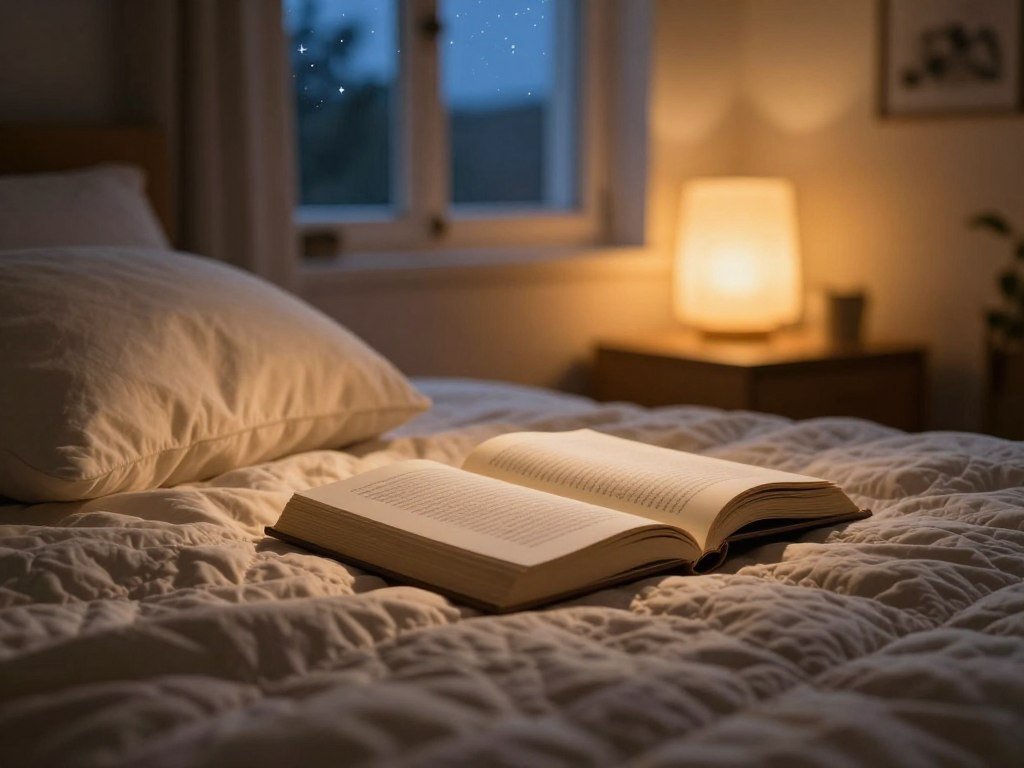
Warm and Adjustable Light for Bedtime Reading
A dimmable bulb lets you lower brightness as the room gets darker. Philips Hue White provides dimmable 2700K light, while Philips Hue White Ambiance bulbs offer 50,000 shades from cool blue-white to warm yellow.
Philips Hue White and Color Ambiance bulbs offer white-light shades and 16 million colors. These are examples of adjustable options, not a reason to choose one brand over another. If you are also weighing bed comfort, this mattress buying guide covers sleep positions and temperature preferences.
What Bedroom Light Can Mean for Sleep
One sleep-focused recommendation keeps bedroom lighting under 10 lux and switches to red or amber light 60-90 minutes before a target bedtime. Red light spans 620-700 nm, while amber light is around 590 nm. Melanopsin, a light-sensitive eye pigment, is most sensitive around 480 nm.
Harvard Health summarizes a study in which blue light suppressed melatonin for roughly twice as long as green light at similar intensities. It also shifted circadian timing by about double the amount. The Harvard blue-light study summary describes these findings, which do not predict every person’s response.
A 2012 study found that 14 days of nightly red-light exposure improved sleep quality and raised serum melatonin levels in athletes. That result does not show that red light treats insomnia or prevents sleep disruption for everyone.
Another study found ordinary room light suppressed melatonin by about 85% compared with dim conditions. Individual sleep can still vary, so treat these results as research findings, not a promise about your night. Lower the brightness as you wind down, and avoid treating a color setting as a substitute for medical advice about persistent sleep problems.
Where Should You Place a Reading Light at Home?
The light should reach the page from beside or behind you, not from a position that puts the bulb in your direct line of sight. Room layout helps determine whether a table, floor, wall, or fixed task light works best.
Place a bedside reading light 15-20 inches from the book or e-reader, behind and to the side of your dominant hand. This position helps the beam fall on the page instead of your eyes.
At bedside, keep the light 15-20 inches from the book or e-reader, behind and to the side of your dominant hand.
| Setup | Works well when | Placement | Main trade-off |
|---|---|---|---|
| Bedside table lamp | A usable nightstand is available | Beside or behind the reader, aimed at the page | The base takes nightstand space |
| Floor lamp | A bed or reading chair has no useful tabletop | Beside the seat, with the beam aimed down | It needs floor space |
| Wall or headboard lamp | The bedside surface must stay clear | Mounted to direct light onto the page | Placement is less flexible after installation |
| Shelf or under-cabinet task light | A fixed surface needs even illumination | Aimed over the work or reading area | It only lights that surface’s location |
A bedside lamp works best when its height suits both the mattress and the nightstand. The main light source should sit near seated eye level, while its beam falls on the book. A table lamp suits a usable nightstand; a floor lamp serves a spot without a useful tabletop.
The best reading lamps for the living room are generally adjustable table or floor task lights chosen for the seating layout. A chair beside a wall may suit a floor lamp, while a sofa with a side table can take a movable table lamp.
Wall and headboard lights save surface space, but their fixed position takes more planning. Sit in your usual reading posture and check for both a shadow across the page and glare in your eyes.
Conclusion
The right pick is the light that fits your reading spot and makes the page comfortable to see. A focused task lamp may suit a desk, while a portable choice can travel with a book. Your habits should guide the balance between page direction, adjustable controls, and portability.
One small check can narrow the field before you compare models. Measure the reading area and note the features needed before looking at choices. Measure your space, choose the features you will use, and compare only the options that fit those needs.
FAQ
What lamp is best for reading?
What is the best table lamp for reading books?
What is the best desk lamp for a study table?
What type of lamp is best for a bedroom?
What is the rule of thumb for bedside lamps?
What is the healthiest light to sleep in?
What color light should you not sleep with?