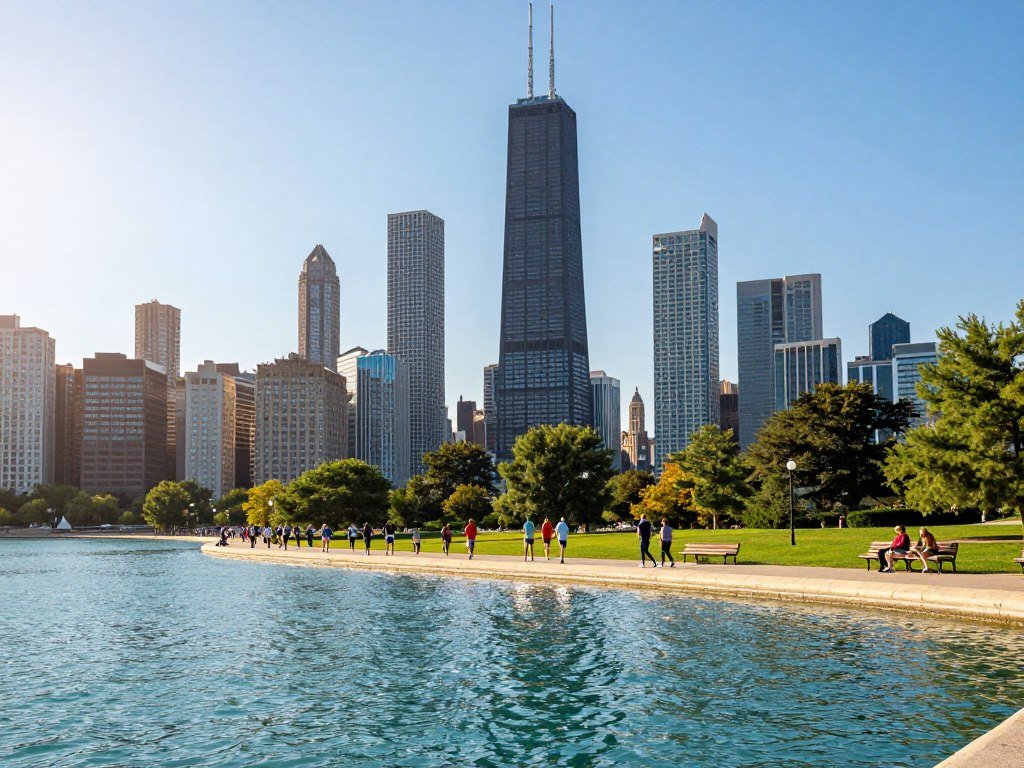
A first Chicago visit can pair world-class architecture with lakefront space, memorable museums and classic local food. You can fill a trip with grand buildings, public art, neighborhood walks and time beside Lake Michigan. Deep-dish pizza is Chicago pizza baked in a deep pan as an open-topped pie with cheese, sauce and toppings.
This list helps you choose experiences that fit your interests, schedule and budget. You will find free cultural stops, major museums, outdoor routes and evening options, plus ways to plan each day. Chicago can reward a quick weekend or a longer stay, but a packed schedule leaves little room to enjoy the places you choose.
Use the ideas below to build a trip around what you most want to see, eat or do. Choose a few priorities rather than trying to fit every highlight into one packed day.
Key Takeaways
- See Cloud Gate and other public art in Millennium Park.
- Take a river cruise for a close look at Chicago architecture.
- Choose one observation deck for a high-up skyline view.
- Match a museum to your interests and allow enough time.
- Balance downtown sights with a neighborhood or lakefront visit.
- Check schedules and admission rules before you set your plans.
What Should You See in Millennium Park?
Start with Cloud Gate for a close-up view of the sculpture and the skyline reflected across its surface. The curved steel form, often called The Bean, changes the view as you move around it. Look from more than one angle to catch different parts of downtown in its mirrored surface.
Millennium Park combines public art, gathering spaces and performance venues in one downtown stop. Crown Fountain is an interactive public artwork with large video displays and water. At the Jay Pritzker Pavilion, you can see an open-air performance space framed by steel structures.
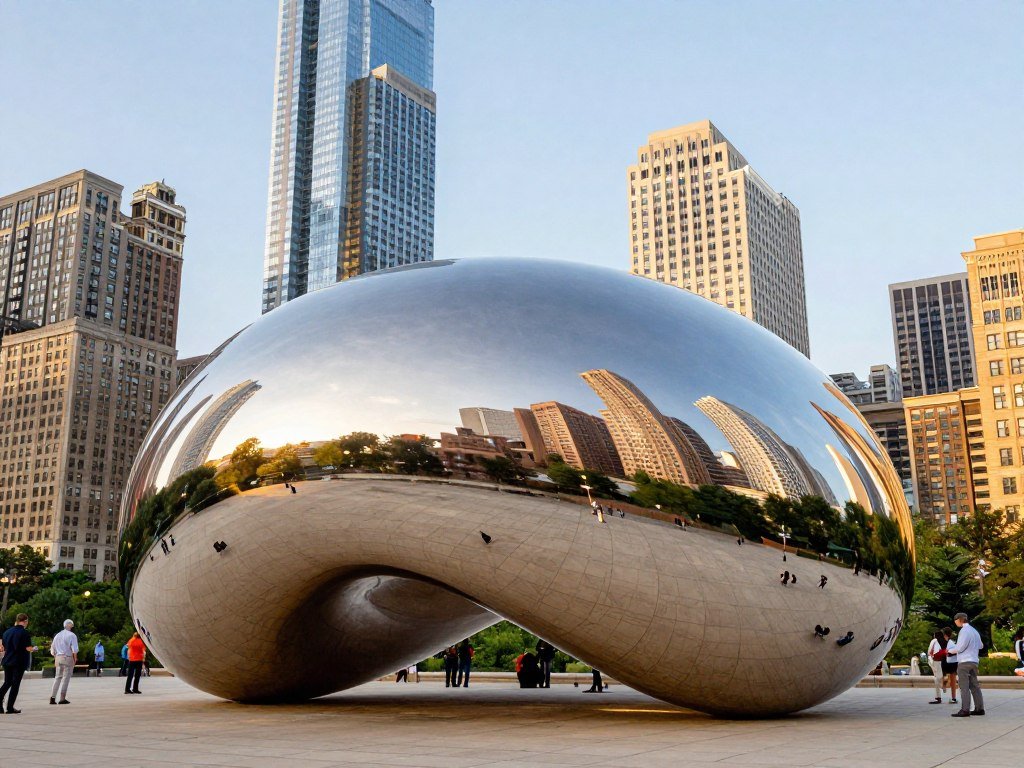
Cloud Gate and Crown Fountain
Cloud Gate draws visitors for its polished surface, but you can also use it to study how the skyline bends across the sculpture. Crown Fountain offers a very different experience. Its changing video faces and water features make the plaza a place to pause, especially when you want an interactive stop.
Both works are part of the park’s public art, so you can enjoy them without buying admission. Still, a free public artwork does not mean every nearby event is free or open at all times.
The park’s public art and performance spaces
The Jay Pritzker Pavilion gives the park a stage for concerts and other performances. A walk through Millennium Park can include the pavilion, gardens and other works, not just a quick photo at Cloud Gate.
- Cloud Gate: Walk around the reflective sculpture and study its changing skyline views.
- Crown Fountain: Watch the video faces and enjoy the interactive water artwork.
- Jay Pritzker Pavilion: See the outdoor venue or attend a scheduled performance.
Public art and the Cultural Center are free to visit, but performances and events follow their own schedules.
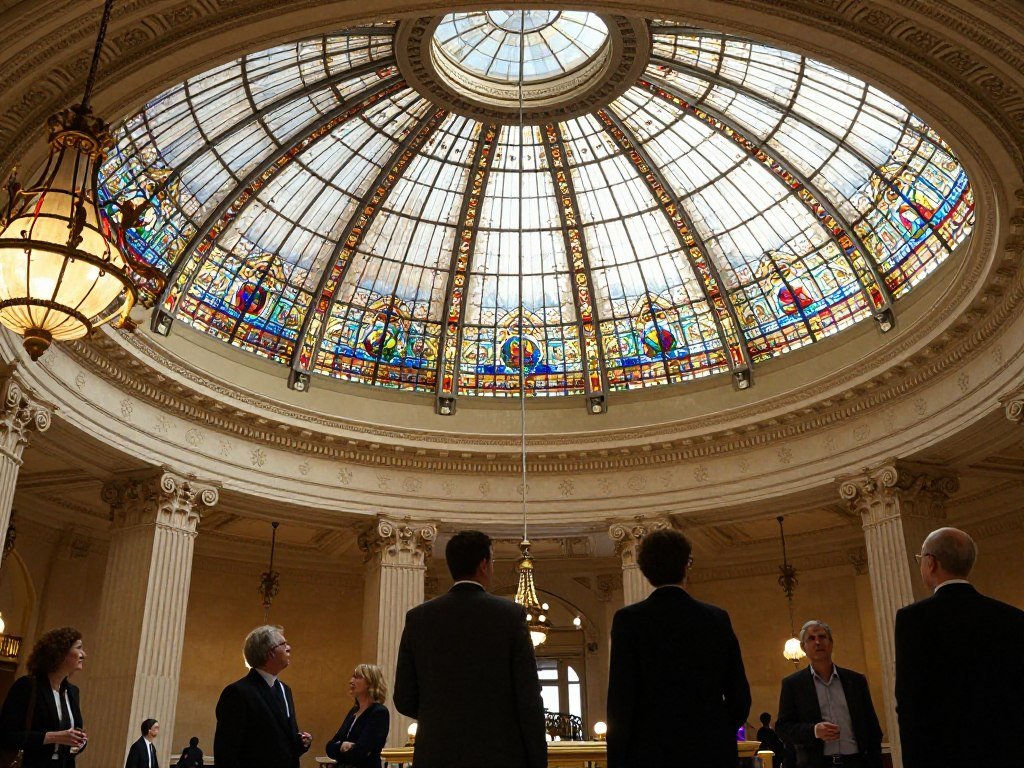
Across from the park, the Chicago Cultural Center holds year-round free events and a striking Tiffany dome. Step inside the Chicago Cultural Center to see the Tiffany dome without paying an admission fee.
How Can You See Chicago’s Architecture From the River?
A guided architecture cruise is the easiest first choice if you want building views and their history in one outing. Guides point out details along the Chicago River that are easy to miss from the sidewalk. Choose the water when you want a narrated view without planning a route yourself.
The Chicago Riverwalk offers a slower, self-paced way to see the riverfront. This 1.25-mile pedestrian path follows the river through downtown, with places to sit and stop along the way. The Chicago Architecture Center and Wendella both offer architecture and river cruises.
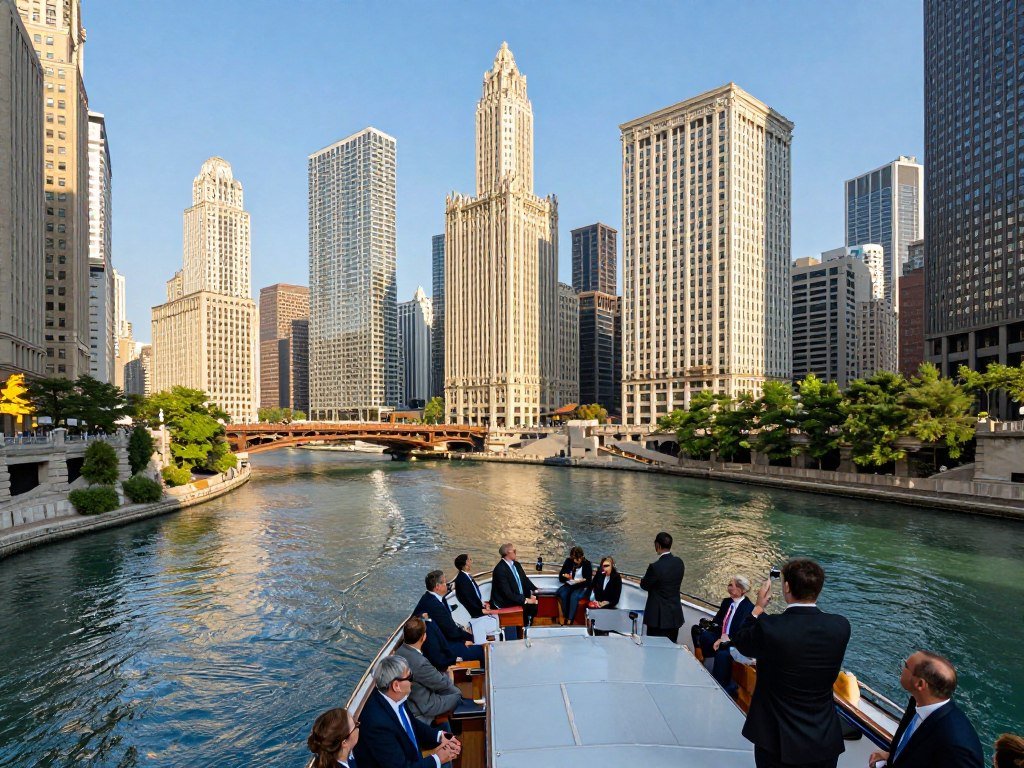
Take an architecture cruise
A cruise is a good fit if you want the city’s buildings explained as you pass them. It also makes a relaxed shared outing, which can suit couples looking for unique things to do in Chicago for couples. Tour departure times and trip lengths depend on the operator and schedule.
Compare the route and length before booking. If you would rather move at your own pace, take a walk along the Riverwalk and stop when a view catches your eye.
Walk the Chicago Riverwalk
The path is a practical choice for a short break between downtown stops. You can walk one section instead of covering the full route, then choose a riverfront place to sit or eat. For a more active outing, kayaking gives you a shared view from the water, with a bit more effort.
- Architecture cruise: Hear building history while viewing the skyline from the river.
- Riverwalk stroll: Follow the path at your own pace and pause along the way.
- Kayak outing: Share an active river experience after checking water and weather conditions.
Check river conditions before booking a paddle, and follow the operator’s safety guidance. For a low-pressure couples’ outing, walk the Riverwalk and choose a riverfront stop when you want a break.

Which Chicago Skyline View Is Right for You?
Choose Skydeck Chicago if the glass-floor experience is your priority, or 360 CHICAGO if you want a view from Michigan Avenue with the option of Tilt. Skydeck Chicago sits on Willis Tower’s 103rd floor and includes The Ledge, a glass platform that extends beyond the building. Pick the experience first, then choose your deck.
Clouds and haze can limit the view, so check the forecast before booking a timed visit. At 360 CHICAGO, the observation deck sits on the 94th floor of 875 N Michigan Avenue. Its optional Tilt ride angles visitors outward in a glass enclosure.
Skydeck Chicago is the direct choice if you want to step onto The Ledge. Look down through the glass and see the streets far below, then take in the wider skyline from inside the deck.
At 360 CHICAGO, the view includes the city and Lake Michigan. Tilt adds a moving experience, while the main deck suits visitors who want a broad view without the ride.
Both sites offer high-up city views, but their locations and main experiences differ. Willis Tower stands farther west in the downtown area, while 875 N Michigan Avenue faces the lake and the Magnificent Mile.
If you have limited time, choose one deck instead of trying to squeeze both into the same day. Consider how much time you want at the site and whether a glass-floor moment or lake-facing panorama matters more.
Check the forecast on the day of your visit before committing to a timed observation-deck ticket.
What Is Worth Seeing Along the Magnificent Mile?
Walk the Magnificent Mile for a blend of Michigan Avenue shopping and landmark architecture. This mile-long stretch of North Michigan Avenue has shops, hotels, restaurants and historic buildings. Look above the storefronts to spot details you might miss while browsing.
The Chicago Water Tower, Tribune Tower and Wrigley Building make the route worthwhile beyond shopping. Their different styles give you a quick look at how the avenue’s streetscape has changed. You can enjoy the walk even if you do not plan to buy anything.
Start near the Chicago Water Tower, then walk along Michigan Avenue and pause at the Tribune Tower and Wrigley Building. This simple route combines a look at historic landmarks with time to browse shops or stop for a meal.
The area has many places to eat and stay, so it can work as both a sightseeing route and a practical downtown stop. Its busy sidewalks can also make it feel different from a quiet architecture walk along the river.
Plan around your interests. A shopping-focused visit needs a check of store hours, since opening times vary. If you only want to see the buildings, you can make a shorter walk without setting aside time for retail stops.
The avenue gives you a clear route through downtown, with landmarks close enough to view on one outing. If the stores are not your priority, make the Water Tower and nearby historic buildings the reason for the stroll.
What Can You Do at Navy Pier?
Navy Pier works best when your group wants lake views alongside a choice of rides, food and family activities. The waterfront destination combines skyline views with places to eat, play and see a show. Allow time to wander rather than treating it as only a ride stop.
Entry to Navy Pier is free, while rides and many attractions have separate fees. The Centennial Wheel offers a high view over Lake Michigan. Families can also visit the Chicago Children’s Museum, while theater fans can check the schedule at Chicago Shakespeare Theater.
You can build a visit around one paid activity or simply walk the pier and enjoy the views. Food stops and seasonal events add more options, so the best plan depends on your group’s ages and interests.
Summer fireworks take place on Wednesday and Saturday evenings. The schedule makes an evening visit appealing, but fireworks and seasonal activities can change. Check current event listings before you plan around a show.
For families, the children’s museum gives younger visitors a dedicated indoor stop. The Centennial Wheel is a separate ride, and the theater offers a different pace from the pier’s outdoor areas.
Decide which activities matter before you arrive, especially if you are visiting with children or have a show time to meet. Treat the Ferris wheel and other rides as optional paid add-ons, not part of the pier’s free entry.
Which Museum Campus Attractions Fit Your Visit?
Choose the Field Museum for natural history, Shedd Aquarium for aquatic life, or Adler Planetarium for space. Each Museum Campus institution has a distinct focus, so pick by interest rather than trying to see everything at once.
These are substantial institutions, and a rushed visit to all three can leave too little time for any one. The Field Museum covers natural history and ancient civilizations, with dinosaurs and Egyptian mummies among its draws. Shedd Aquarium focuses on aquatic habitats, including its Caribbean Reef exhibit.
Field Museum for natural history
The Field Museum is a strong fit if you want to explore natural history, fossils or ancient cultures. Its dinosaur displays and Egyptian mummies offer very different ways into the past. Choose a few areas that interest your group before you begin.
Shedd Aquarium and Adler Planetarium
Shedd Aquarium lets you explore aquatic life and habitats, from reef environments to other water-based exhibits. Adler Planetarium turns your attention to space and astronomy. It was the first planetarium in the Western Hemisphere.
| Attraction | Main subject | Best fit |
|---|---|---|
| Field Museum | Natural history and dinosaurs | Fossils and ancient civilizations |
| Shedd Aquarium | Aquatic life and habitats | Marine exhibits and reef life |
| Adler Planetarium | Astronomy and space | Space and the night sky |
Think about how long your group likes to spend in museums. One focused visit may feel more rewarding than rushing between entrances and leaving each institution before you have seen what interests you.
Pick one main museum for a shorter day and add another only if your group has the energy and time.
Which Chicago Art and History Museums Should You Prioritize?
For a first art-focused visit, start with the Art Institute of Chicago; choose the Chicago History Museum or DuSable for a history-centered day. Match the museum to your interests before you arrive, since each offers a different way to explore art and history.
Choose one or two collection themes instead of trying to cover a large museum in a short gap. At the Art Institute of Chicago, you can see works by Van Gogh, Monet and Picasso. The collection spans many types of art, so a short visit works best with a plan.
The Chicago History Museum is a good choice if you want to learn about the city’s past. It has interpreted Chicago history since 1856, giving visitors ways to explore the people and events that shaped the city.
The DuSable Black History Museum focuses on African American history and culture. It is the nation’s first independent museum dedicated to that subject. Give yourself time to read and reflect, rather than rushing through its exhibits between other stops.
Before entering any large museum, decide what you most want to see. At the Art Institute, that might mean a specific artist or type of work. At a history museum, you might focus on a period, community or theme.
A common mistake is to book a major museum visit into a narrow gap between other attractions. Travel time, lines and the size of the collections can make that plan feel rushed.
Set one or two collection priorities before entering a museum with more to see than a quick visit allows.
Best Things to Do in Chicago for Free
Several Chicago museums and cultural spaces are free all the time, while others offer free admission on set days or to eligible visitors. The Chicago Cultural Center and Smart Museum of Art are always free. The National Museum of Mexican Art is free daily and open Tuesday through Sunday.
Free admission often depends on your age, residency or the day you visit. Check the rules for the exact museum and bring proof of eligibility when needed. That small check can help you avoid reaching a ticket desk without the right card or ID.
Museums and cultural spaces with free admission
The DuSable Black History Museum offers free admission on Wednesdays. Illinois residents can enter the Museum of Contemporary Art for free on Tuesdays from 5 p.m. to 9 p.m. Visitors 18 and under are always free there.
| Institution | Free or reduced admission | Schedule or eligibility |
|---|---|---|
| Cultural Center | Free admission | Always free |
| Smart Museum of Art | Free admission | Always free |
| National Museum of Mexican Art | Free admission | Daily, Tuesday through Sunday |
| DuSable Black History Museum | Free admission | Wednesdays |
| Museum of Contemporary Art | Free for Illinois residents; free for visitors 18 and under | Tuesdays, 5 p.m. to 9 p.m.; under 19 always |
Scheduled free admission and eligibility
Illinois residents receive free Art Institute admission on the third Thursday of each month, from 5 p.m. to 8 p.m. Visitors under 18 are free. For a different option, the Field Museum offers Illinois residents free general admission on Wednesdays, including Evolving Planet, The Ancient Americas and Inside Ancient Egypt.
The Field Museum has other offers, too. Children under 3 enter free, and Illinois pre-K through 12th grade teachers receive free general admission. Chicago residents receive reduced-price general admission every day.
Valid EBT or WIC cardholders from any state can get $3 general admission per person for up to six people. The offer is in person, not online. CityKey holders receive one free general-admission visit during the first year after getting the card, with immediate family members visiting with them also admitted free.
Active-duty military personnel, veterans and Illinois State Gold Star ID cardholders receive complimentary general admission. Check the Field Museum’s current admission rules before making plans.
The Illinois Holocaust Museum offers free admission on the last Wednesday of each month in 2026, beginning January 28. The Swedish American Museum offers free admission to everyone on the second Tuesday of each month. Illinois residents can also get free Art Institute admission during the monthly Thursday window.
Check residency, age and card requirements before setting out for a timed free-admission window.
How Can You Enjoy Chicago’s Lakefront?
Set aside a short stretch of the Lakefront Trail if you want a break from downtown streets without leaving the city. The paved path runs 18 miles along Lake Michigan and works for walking, running or biking. You do not need to cover it all to enjoy the shoreline.
Choose one part of the trail that fits your schedule, then build your lakefront time around it. The route offers skyline views and access to beaches, so you can keep your outing active or slow it down with time by the water.
For an easy visit, walk or run a manageable stretch and turn back when you are ready. If you want to cover more ground, biking lets you connect shoreline stops without walking the whole way.
A beach visit pairs well with a short section of the trail. You can spend time by the water, then walk or ride along the lakefront before heading back downtown.
- Walk or run: Choose a manageable stretch and enjoy the view at your own pace.
- Bike between stops: Connect different shoreline spots without taking on the full trail.
- Visit a beach: Pair time by the water with a short walk on the trail.
Pick a section based on the time you have and how far you want to move. A short outing can still give you open space and a change from city streets.
Pick one beach or trail segment as your destination rather than treating the entire route as a single outing.
Which Chicago Neighborhoods Add a Different Side to the Trip?
Choose Lincoln Park for a relaxed neighborhood-and-zoo day, Pilsen for murals, or Wicker Park for independent shops and cafes. Hyde Park offers a university setting and the nearby Griffin Museum of Science and Industry. One neighborhood stop can add a different feel to a downtown-focused trip.
Pick a neighborhood based on the kind of day you want, not just its distance from downtown. Lincoln Park Zoo is free to visit, and the area suits a walk after seeing the animals. Pilsen brings murals and deep cultural roots, while Wicker Park offers cafes and independent stores.
Hyde Park makes sense if you want to explore a university area and visit the nearby Griffin Museum of Science and Industry. The 606, an elevated trail stretching 4 kilometers, gives you another way to see the city beyond its main tourist streets.
For a garden outing, Garfield Park Conservatory offers a glasshouse setting. The Chicago Botanic Garden has free admission on September 15, 17 and 29, October 1 and 12, November 2-6, 9 and 11, and December 7-13 in 2026. Parking fees still apply on free-admission days.
The Peggy Notebaert Nature Museum has free admission for Illinois residents on October 1-2 and 5-9, November 2-4 and 30, and December 1-2 and 7-8 in 2026. Those dates offer another option if your plans include Lincoln Park.
Neighborhoods and gardens take time to reach and explore, so avoid stacking distant stops into one tight day. If you are planning a garden visit on a free-admission date, account for the Botanic Garden’s parking fee.
What Can Adults Do in Chicago After Dark?
For an evening out, choose a live performance if you want a planned event or a blues club if you prefer music with a more casual feel. The Chicago Theatre, built in 1921, is a historic place to see a show. Pick your mood first, then choose a venue and set the evening’s pace.
Show dates and ticket availability depend on the night you choose. Buddy Guy’s Legends is a Chicago blues venue, while neighborhood music spots offer other styles and a less formal setting.
Theater suits visitors who want a clear start time and a full evening event. Chicago has several performance venues, so check the show and location before planning dinner or other stops around it.
For a specific 2026 engagement, Goodman Owen Theatre scheduled Dead Girl’s Quinceañera from September 26 through November 1. That run is one option for visitors whose trip falls within those dates.
- Theater performance: Choose a scheduled play or other live show.
- Blues set: Hear live music at Buddy Guy’s Legends.
- Neighborhood music venue: Find a different style and a more local feel.
Some evenings work best with one ticketed event; others leave room to choose a venue after dinner. Check the performance date and venue schedule before building the rest of the evening around a show.
What Should You Eat in Chicago?
Try deep-dish pizza for the open-topped pie style, or order stuffed pizza if you want the additional dough layer. Deep dish has cheese, sauce and toppings inside a deep pan, with the sauce on top. They are distinct styles, not two names for the same pizza.
Choose based on the dough structure you want before you order. Stuffed pizza starts with a layer of dough, then adds fillings and another top layer. That extra dough changes the bite and makes it different from the open-topped deep-dish pie.
Deep dish is the classic first-time choice if you want a hearty local meal. Stuffed pizza offers another local style, but the names are not interchangeable. Ask for the style you mean when ordering with a group.
Pizza is only one way to try local food. A Chicago-style hot dog, an Italian beef sandwich and Garrett Popcorn’s caramel-and-cheese mix each offer a different flavor and texture.
- Chicago-style hot dog: Try a local take on a familiar meal.
- Italian beef sandwich: Choose a savory sandwich as an alternative to pizza.
- Garrett Popcorn mix: Sample the caramel-and-cheese combination.
If you plan to share, decide which pizza style sounds right to everyone first. If sharing a pizza, decide whether your group wants deep dish or stuffed before ordering.
When Is the Best Time to Visit Chicago?
September is a strong all-around choice for outdoor sightseeing, with May and October also bringing mild temperatures. In those months, daily temperatures range from about 50°F to 70°F. September is the best single pick if you want comfortable outdoor time.
Summer suits lakefront plans, while winter calls for indoor stops and warm clothing. Chicago has four distinct seasons, and the weather can shift within each one. Avoid assuming summer will stay dry or that winter conditions remain the same every day.
Choose a season for the experience you want
Spring runs from March through May, summer from June through August, fall from September through November, and winter from December through February. Summer daily highs are usually in the mid-80s°F and can exceed 90°F. Rain falls on about a third of summer days.
| Season | Months | Typical conditions | Best fit |
|---|---|---|---|
| Spring | March-May | Changeable; May ranges about 50°F-70°F | Outdoor walks with layers |
| Summer | June-August | Highs usually mid-80s°F; rain on about a third of days | Lakefront and outdoor plans |
| Fall | September-November | Mild in September and October, about 50°F-70°F | Outdoor sightseeing |
| Winter | December-February | Highs average around freezing; about 40 inches of snow per season | Indoor attractions and cold-weather plans |
Plan around weather and daylight
Winter daily highs average around freezing, and the city gets about 40 inches of snow per season. January is the coldest month, with temperatures dipping as low as 18°F and about 10 inches of snow in an average year.
May, September and October offer a milder range, but pack for changing conditions. A sunny morning can feel different from a rainy or windy afternoon, especially near the lake.
Pack layers in spring and fall, and leave room in summer plans for rain or heat.
How Should You Get Around and Plan a Three-Day Visit?
For a three-day visit, choose one main attraction each day and use the Blue Line from O’Hare or Orange Line from Midway to reach downtown. Group nearby stops so you spend less time crossing the city. Build each day around one anchor, such as a museum or major sight.
A three-day Chicago trip can cost about $900-$1,800 per person, excluding airfare. Your hotel choice and paid attraction selection drive the largest changes in that range. Chicago’s grid and public transit can make it easier to plan a route, as noted in this guide to U.S. cities for first-time visitors.
Group downtown stops on one day, then give a major museum or another large attraction its own place on the schedule. For a trip that includes more than one U.S. city, you can compare the pace with this first-time San Francisco itinerary.
| CityPASS feature | What it includes | Important condition |
|---|---|---|
| Core admissions | Shedd Aquarium and Skydeck Chicago | One-time admission to each |
| Three-attraction choice | Choose from Field Museum, 360 CHICAGO, Griffin Museum of Science and Industry, Art Institute of Chicago, Adler Planetarium and Shoreline Sightseeing’s architecture river tour | Architecture tour lasts 75 minutes, or 60 minutes from November 2 through spring |
| Ticket validity | Nine consecutive days | Starts with the first attraction visit |
CityPASS Skydeck admission includes expedited elevator entry, the 103rd-floor deck and The Ledge. Shedd admission includes general admission and one 4-D experience, subject to availability.
For a visit today or this weekend, check current opening times and event schedules before fixing the itinerary. CityPASS can suit a plan with several included attractions, but compare its choices with the places you actually want to see.
Do not buy an attraction pass just because it includes famous places. Compare its included attractions with your real itinerary first.
Conclusion
A memorable Chicago visit comes from choosing a few highlights that match your interests, not from racing through every landmark. Balance one or two headline sights with a neighborhood, lakefront stop or food experience that fits your group. Leave breathing room between big plans so the trip feels like a visit, not a checklist.
Start by choosing three priorities, such as one major sight, one cultural stop and one outdoor or food experience. Place them on separate days when possible, then add nearby activities only when the timing works.
Pick three must-do experiences, check their current schedules and map them onto your available days.
FAQ
What are some cool things to do in Chicago?
What is a must eat in Chicago?
Is 3 days in Chicago too much?
What’s the best month to go to Chicago?
How much money do you need for 3 days in Chicago?
What is the cheapest month to go to Chicago?
What should I do in Chicago for my first time visit?