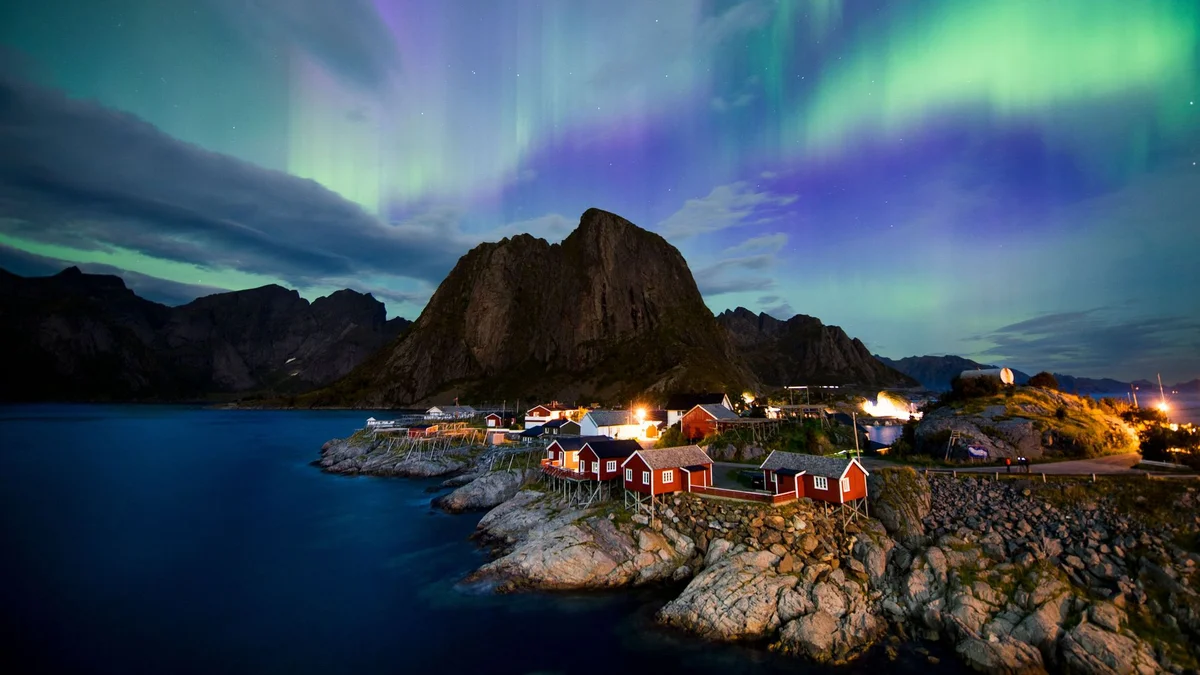
There is a particular kind of silence that falls over a group of people the first time the sky catches fire. Someone points. Someone laughs, nervously. And then everyone just stands there, breath fogging in the cold, watching green ribbons ripple across the stars as if the atmosphere itself is breathing.
That moment is why millions of travelers board planes bound for the Arctic every winter. But here is what the postcards do not tell you: the northern lights are never guaranteed, and where you choose to go matters enormously. Some destinations sit directly beneath the auroral oval and deliver displays on the majority of clear nights. Others require stronger solar storms, better timing, or simply more patience.
If you are searching for the best places to see the northern lights, the short answer is this: northern Norway, Iceland, Finnish Lapland, Swedish Lapland, Alaska, and northern Canada offer the most reliable viewing on Earth. The aurora season runs from late August to early April, with the longest and darkest nights falling between December and February.
Below, we break down each destination, what makes it special, and how to choose the one that fits your trip.
Quick Answer: The Best Aurora Destinations at a Glance
| Tromsø, Norway | First-timers, fjord scenery | Late Aug–early Apr | Direct flights, mild coastal climate |
| Iceland | Road trips, landscapes | Sep–mid-Apr | Dark skies almost everywhere |
| Rovaniemi, Finnish Lapland | Families, glass igloos | Aug–Apr | Arctic Circle infrastructure |
| Abisko, Sweden | Serious aurora chasers | Mid-Nov–mid-Mar | The famous “Blue Hole” of clear sky |
| Fairbanks, Alaska | Reliability, hot springs | Mid-Aug–mid-Apr | Directly under the auroral oval |
| Yellowknife, Canada | Wilderness lodges | Mid-Aug–mid-Apr | Some of Earth’s clearest skies |
| Svalbard, Norway | Polar night adventures | Oct–Feb | Lights at midday during polar night |
Tromsø and Northern Norway: The Aurora Capital
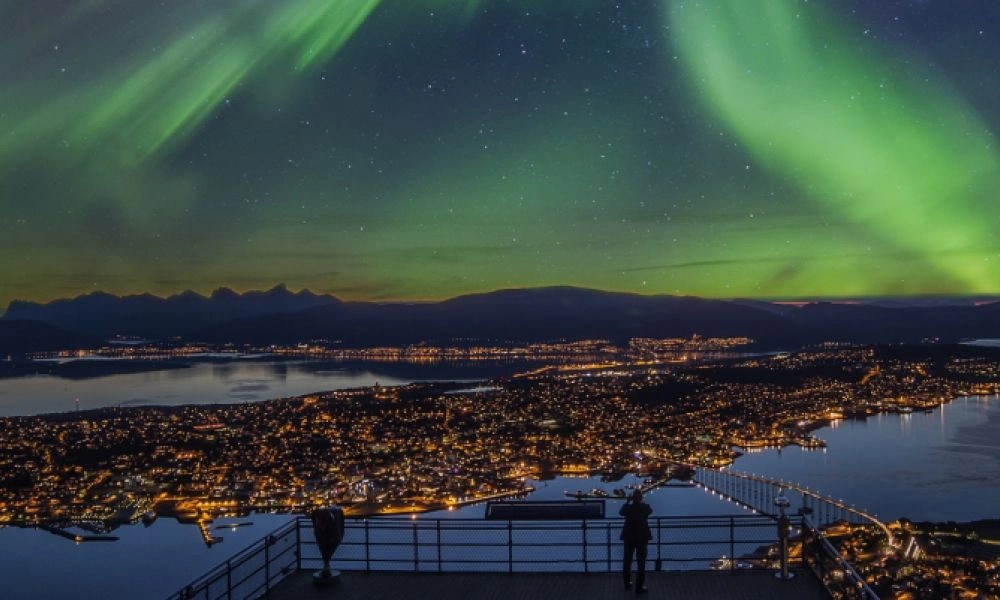
If you could only pick one destination, northern Norway would be the safest bet on the planet. Tromsø sits at 69°N, directly beneath the auroral oval, and on clear nights the lights can appear even during periods of low solar activity. Around the city, the Lofoten Islands offer the same skies framed by jagged peaks and fishing villages, while Alta benefits from a rare convergence of three microclimates that keeps skies unusually clear.
What makes Norway especially appealing is accessibility. Direct flights connect Tromsø to Oslo and much of Europe, the Gulf Stream keeps coastal temperatures surprisingly tolerable by Arctic standards, and a well-developed tour industry means you can join a chase group that will drive hundreds of kilometers to find clear sky on cloudy nights. Whale watching, dog sledding, and Sámi cultural experiences fill the daylight hours.
Iceland: The Whole Island Is a Viewing Platform
Iceland’s greatest advantage is geography combined with emptiness. The entire island lies under or near the auroral oval, the population is tiny, and you rarely need to drive more than twenty minutes from anywhere to find genuine darkness. Thingvellir National Park is the classic dark-sky escape near Reykjavik, while the south coast around Vík and Jökulsárlón glacier lagoon offers the most cinematic backdrops in aurora photography, with lights reflecting off floating ice.
The trade-off is weather. Iceland is an island, and offshore weather systems frequently blanket the whole country in cloud for days at a time. Your odds improve considerably if you stay five nights or more, build flexibility into your plans, and treat the lights as a bonus rather than the sole purpose of the trip. The waterfalls, black-sand beaches, and geothermal pools are worth the flight on their own.
Finnish Lapland: Aurora Comfort, Arctic Style
Rovaniemi, the official hometown of Santa Claus, is the most comfortable base in the Arctic Circle, with direct flights, excellent restaurants, and a full menu of winter activities from reindeer safaris to snowmobiling. Venture farther north to Saariselkä, Inari, or Levi and light pollution drops to nearly zero.
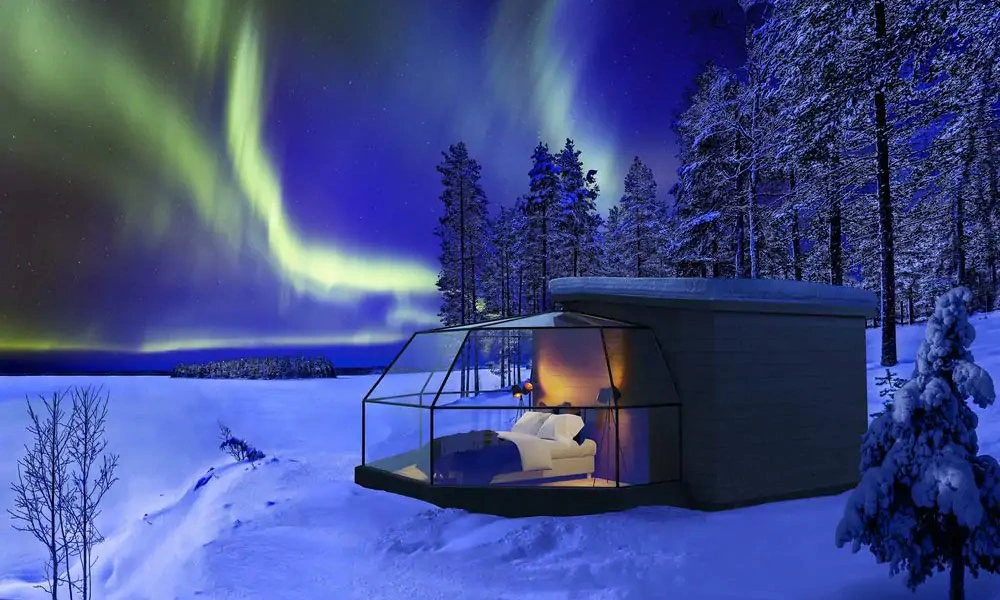
The signature Finnish experience is the glass igloo resort, where you can watch the sky from a heated bed, sometimes with a private sauna attached. It is the most luxurious way to chase the aurora, and it suits travelers who would rather not stand in minus-twenty temperatures at midnight. If skies cloud over, local guides run chase tours that sometimes cross into Sweden in pursuit of clear air.
Abisko, Sweden: The Blue Hole
Abisko National Park in Swedish Lapland holds a geological quirk that aurora chasers swear by: a patch of sky known as the Blue Hole, which tends to stay clear even when surrounding areas are overcast. A chairlift carries visitors up to the Aurora Sky Station, where panoramic views stretch across the Torneträsk lake and surrounding peaks.
Abisko is remote, cold, and gloriously dark. Temperatures regularly drop well below freezing, but that cold often comes with crystal-clear air and frequent displays. It is the destination for travelers who care more about the lights than the nightlife.
Fairbanks, Alaska: North America’s Safest Bet
Fairbanks sits directly under the auroral oval with clear inland skies and minimal light pollution, giving it some of the highest aurora-sighting probabilities of any city in the world. Many local hotels offer aurora wake-up calls, so you can sleep soundly without missing a display. The season is long, running from mid-August to mid-April, and the surrounding wilderness, from Denali to the Brooks Range, offers darker skies still.
The classic pairing is aurora hunting with a soak in Chena Hot Springs, where you can watch the sky from steaming mineral water. Fairbanks is also the easiest Arctic destination for US-based travelers, reachable by direct domestic flights.
Yellowknife and Northern Canada: Big Sky Country
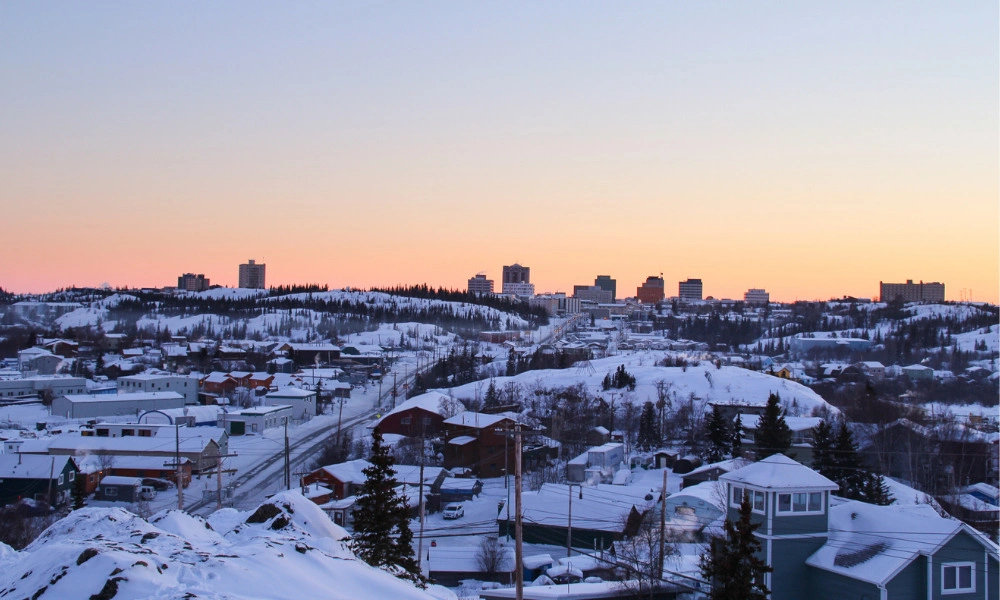
Canada’s Northwest Territories often sit directly beneath the auroral oval, and Yellowknife has built an international reputation as an aurora tourism hub. The continental climate produces some of the clearest, driest winter skies on Earth. Farther west, the Yukon pairs cabin lodges and vast wilderness with reliable displays from late August onward.
These destinations demand more preparation: winter driving skills, proper cold-weather gear, and realistic expectations about remote services. The reward is a scale of darkness and silence that feels genuinely wild.
Svalbard: The Northern Edge of the Map
Halfway between mainland Norway and the North Pole, Svalbard experiences the polar night from mid-November to late January, when the sun never rises. This means the northern lights can appear at any hour, even in the middle of the day. Guided excursions by snowmobile or dog sled run through terrain where polar bears roam, which is why leaving Longyearbyen without an armed guide is not permitted.
Svalbard sits slightly farther from the auroral oval than Tromsø, so displays typically require somewhat stronger solar activity. But for sheer Arctic drama, nothing else on this list compares. Many travelers combine Svalbard with Tromsé on one trip, since direct flights connect the two.
How to Maximize Your Chances Wherever You Go
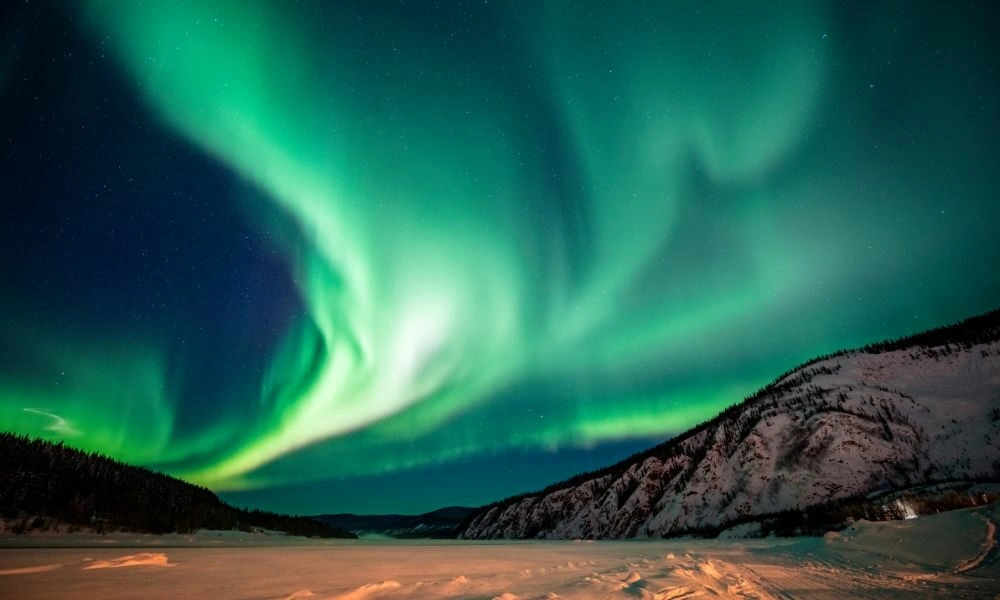
Location gets you to the dance, but conditions decide whether the lights show up. Keep these principles in mind:
- Stay at least three to four nights. Cloud cover is the single biggest variable, and multiple nights dramatically improve your odds.
- Watch the forecast, not just the calendar. The KP index (a 0–9 scale of geomagnetic activity) tells you how strong the aurora is likely to be. Anything at KP 3 or above is promising; even KP 2 can produce a beautiful display under dark skies.
- Chase darkness, not just latitude. Get away from town lights, plan around the new moon when possible, and remember the strongest activity often falls between 9 p.m. and 2 a.m.
- Consider a guided chase tour. Local guides know the microclimates, the cloud maps, and the back roads. In places like Tromsø and Yellowknife, chasing tours routinely drive hours to find clear sky.
- Dress for standing still. Aurora watching means long, motionless periods in extreme cold. Layer properly: merino wool base, insulated mid-layer, windproof shell, serious boots, and gloves you can operate a camera with.
For travelers planning this as a once-in-a-lifetime trip, it is worth approaching the journey the way you would any major luxury expedition. The same careful planning behind curated luxury travel experiences applies here: the difference between a good Arctic trip and an extraordinary one usually comes down to logistics done well. Browse more inspiration in our luxury travel section to round out your itinerary.
Frequently Asked Questions
What is the single best place to see the northern lights?
Tromsø in northern Norway offers the strongest overall combination of aurora frequency, accessibility, infrastructure, and scenery. Fairbanks, Alaska, is the closest equivalent for travelers based in North America.
Can you see the northern lights in summer?
No. The aurora occurs year-round, but you need a dark sky to see it, and Arctic summers have little or no darkness. The viewing season runs from late August to early April.
Do you need a tour to see the northern lights?
Not necessarily. With a rental car and a reliable aurora forecast app, independent chasing works well in Iceland and Fairbanks. Guided tours make more sense where roads are icy or where local knowledge of cloud patterns matters, such as Tromsø, Abisko, and Yellowknife.
How cold does it get during the aurora season?
Coastal Norway is surprisingly mild thanks to the Gulf Stream, often hovering around freezing. Inland destinations like Fairbanks, Yellowknife, and Abisko regularly drop to minus 20°C or colder. Proper layering is non-negotiable.
Will the solar cycle affect my trip?
Auroras are visible throughout the sun’s 11-year activity cycle, but periods of high solar activity, such as the solar maximum reached in the mid-2020s, produce stronger and more frequent displays. Even during quieter years, prime locations under the auroral oval deliver regular shows.
The Bottom Line
The best place to see the northern lights is ultimately the one that matches your travel style. Choose Tromsø or Fairbanks for the highest odds and easiest logistics. Choose Iceland for scenery that stands on its own. Choose Finnish Lapland for comfort and glass-roofed stargazing, Abisko for obsessive sky-chasing, or Svalbard if you want the Arctic at its most extreme.
Whichever you pick, give yourself several nights, check the forecast every evening, and actually go outside when the sky is clear. The lights reward those who make the effort.
Disclaimer: This article is intended for informational purposes only.