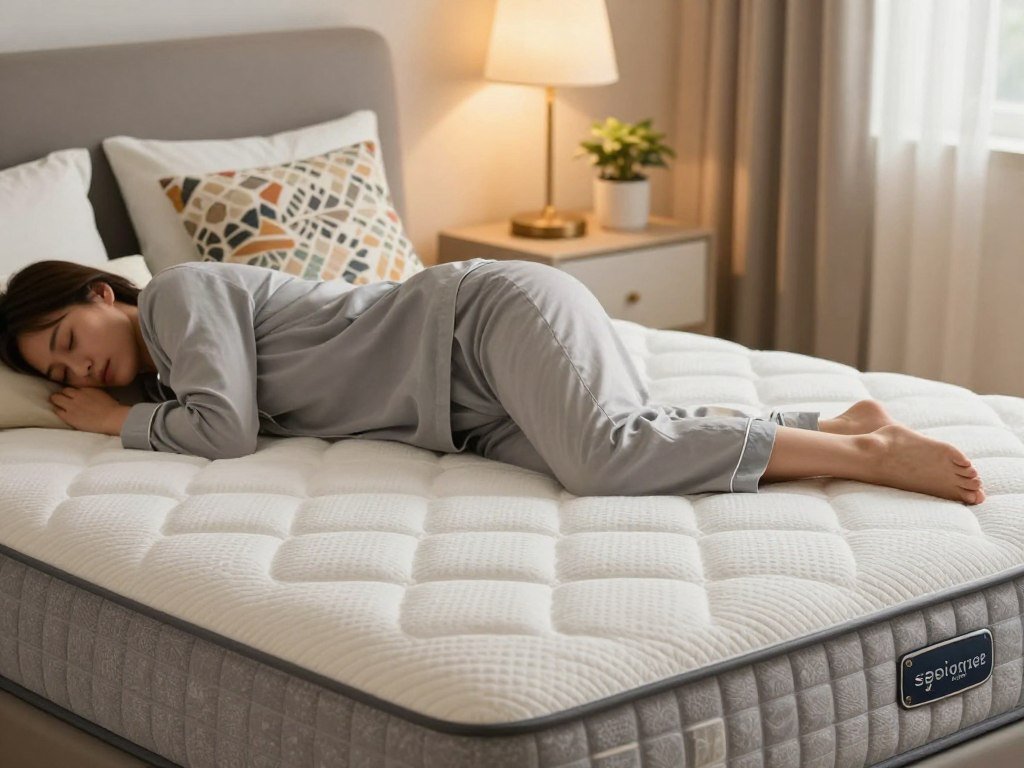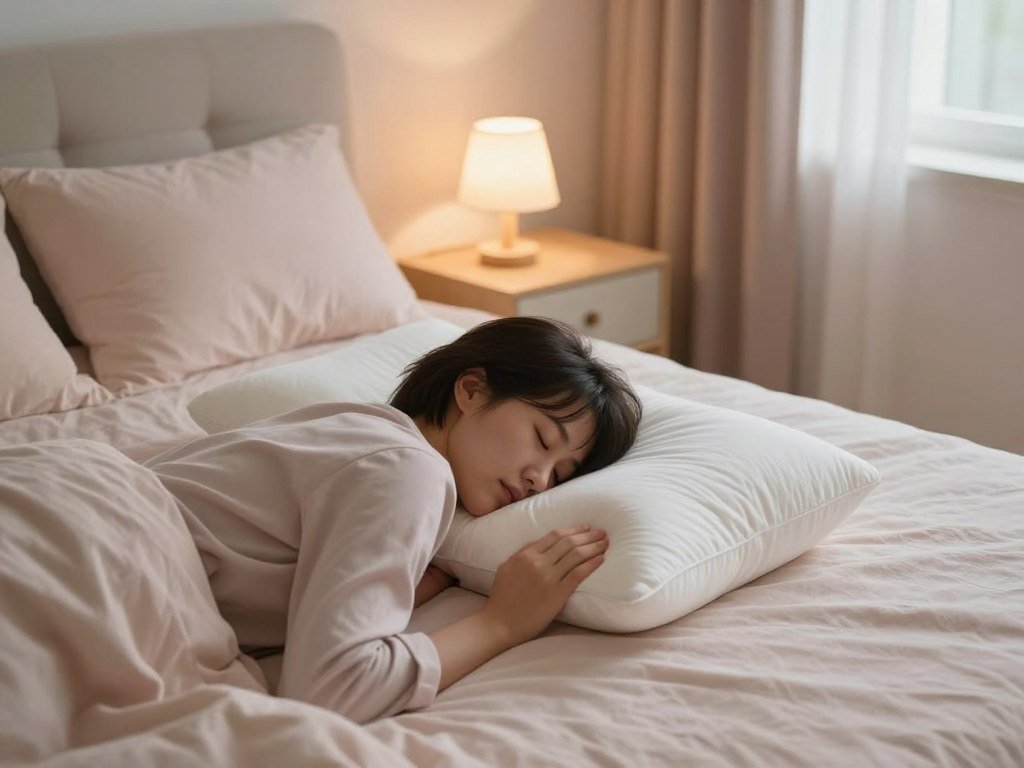
A pillow that keeps your head and neck in a neutral line is a better starting point than choosing by softness alone. If you wake with neck pain, a pillow that tilts your head can add strain while you sleep. The best pillow for neck pain should feel comfortable and support your usual sleep position.
Loft means the height of a pillow beneath your head while lying in a usual sleep position. Adjustable pillows let you change the fill, while a contoured pillow has a shape designed to support your neck. Each can work when it suits your body and mattress. Your sleeping position matters more than a pillow’s label or look.
Key Takeaways
- Choose a pillow that keeps your head and neck in line with your torso.
- Match the pillow’s height and shape to your usual sleep position.
- Adjustable fill can help when one fixed height feels wrong.
- A shaped pillow may suit you if you prefer firm neck support.
- A pillow change cannot replace medical care for persistent or worsening pain.
Use your usual sleep position as the first filter when comparing pillow options.
Best Pillow for Neck Pain: Top Picks for Different Needs
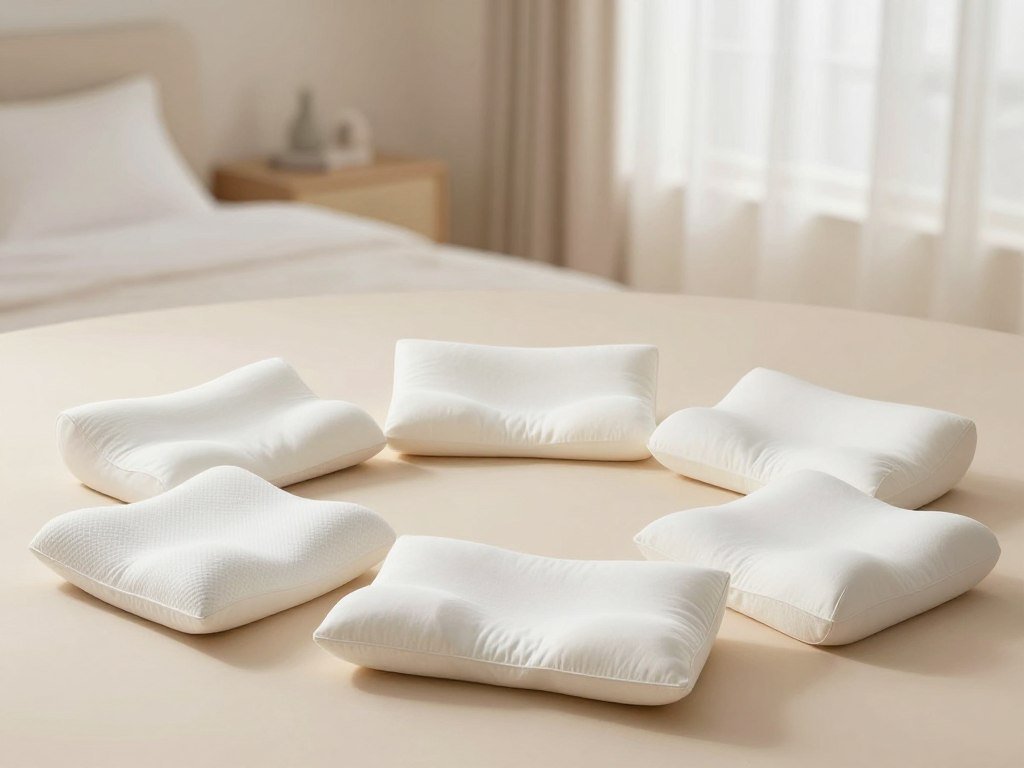
For an adjustable option that can suit different sleep positions, start with the Coop Home Goods Original Adjustable Pillow. Its flexible fill lets you change the height and firmness instead of settling for one fixed feel.
The right pick depends on the support or feel you want most. The TEMPUR-Neck offers firm, shaped support, while the Purple Harmony comes in three heights. The Honeydew Essence has a curved shape made for side sleepers.
| Pillow | Best suited to | Why it may fit |
|---|---|---|
| Coop Home Goods Original Adjustable Pillow | Flexible support in different positions | Adjustable fill lets you tune height and firmness |
| TEMPUR-Neck | Side and back sleepers who like firm support | Shaped memory foam cradles the neck |
| Purple Harmony | Sleepers who want airflow and height choices | Low, Medium and Tall options suit different needs |
| Honeydew Essence Side Sleeper Pillow | Side sleepers who want a curved shape | Curved design and adjustable fill target side sleeping |
| Layla Sleep Adjustable Kapok Pillow | Sleepers who change positions | Adjustable mixed fill can suit different positions |
Start with the sleep position you use most, then compare the pillow’s support and feel.
The table offers a focused shortlist of best pillows neck pain shoppers may want to compare. A memory foam pillow can mold under pressure, but its feel depends on the model and shape. No single pillow guarantees relief for every person with neck pain.
Think about whether you need a changeable fill, a firm cradle, more airflow, or a side-sleeper shape. These differences make it easier to narrow your options without treating a product label as proof of fit.
Treat the table as a shortlist, then choose by the position you actually fall asleep in most often.
How Were These Pillows Tested?
The testing combined older adults’ preferences with practical checks of how pillows behaved. Both comfort and function shaped the review, so results include hands-on checks and people’s reported experiences.
A focus group in November 2025 included people ages 51 to 69. A March 2026 survey included 300 U.S. adults ages 50 and older. More than half had bought a memory foam pillow, and 81 percent of those buyers reported less pain.

The survey result reflects respondents’ own reports, not a promise that memory foam will ease your pain. Controlled checks looked at how pillows performed in four areas:
- Sinkage under the head’s weight
- Ease of care
- Temperature regulation
- Older adult feedback on adjustability and spinal alignment
Sinkage checks helped show whether a pillow kept its shape under pressure. Care checks considered how easy a pillow was to clean. Temperature checks focused on how well each design handled warmth.
Older adult testers also considered whether they could adjust a pillow to fit their needs. They shared views on how well it supported spinal alignment in their usual sleep positions.
These measures cannot predict how every sleeper will feel after a full night. A pillow that holds its shape may still feel too firm or too soft for you.
Use test findings as one input, since your own comfort and alignment still determine the right fit.
Which Sleep Position Needs Which Pillow?
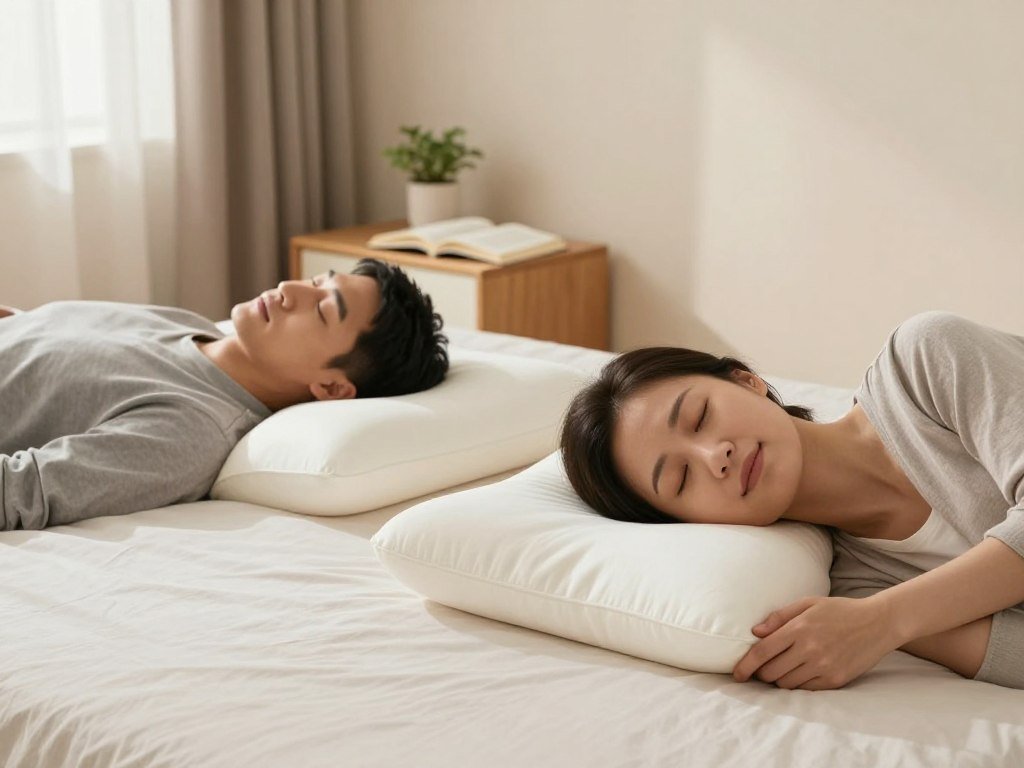
Side sleepers should fill the space between the shoulder and ear without tipping the head up or down. That gap guides the fit better than choosing a pillow by softness alone.
Check whether your head stays level with your neck and spine while you lie down. The Arthritis Foundation advises keeping the head in line with the neck, not tilted up or down.
| Sleep position | Pillow choice | Alignment check |
|---|---|---|
| Side | Enough support to fill the shoulder-to-ear gap | Head stays level with the spine |
| Back | Support under the neck without too much height | Head does not tip forward |
| Stomach | Very thin pillow or none | Neck is not held in a strained turn |
Side sleeping needs a filled shoulder-to-ear gap
A pillow for neck pain side sleepers can start with should fill the space left by your shoulder. A thicker, firmer pillow may suit many side sleepers, but mattress softness and shoulder width affect how much support you need.
The Centers for Advanced Orthopaedics advises using a thick enough pillow to keep the head horizontally aligned with the spine. You can read more about choosing a pillow for side sleeping and how shoulder width can affect the fit.
Back and stomach sleeping need different support
Back sleepers need neck support without pushing the head forward. Support should follow the natural curve of the neck, while the pillow stays low enough to keep the head comfortable.
OrthoNJ recommends a supportive but not overly high pillow for back sleepers. The same guidance suggests a very thin pillow or none for stomach sleepers who continue in that position. Experts generally advise against stomach sleeping with neck pain because the neck may stay turned, though people tolerate positions differently.
Check alignment while lying in your usual position, not just while holding the pillow in your hands.
What Pillow Loft Keeps Your Neck Aligned?
As a starting point, side sleepers can try about 4-6 inches of loft, while back sleepers can try 3-5 inches. Stomach sleepers need less, often under 2-3 inches or no pillow.
These ranges are starting points, not fixed rules. Shoulder width, body shape, and how much your mattress lets you sink all affect the height that keeps your head and neck neutral.
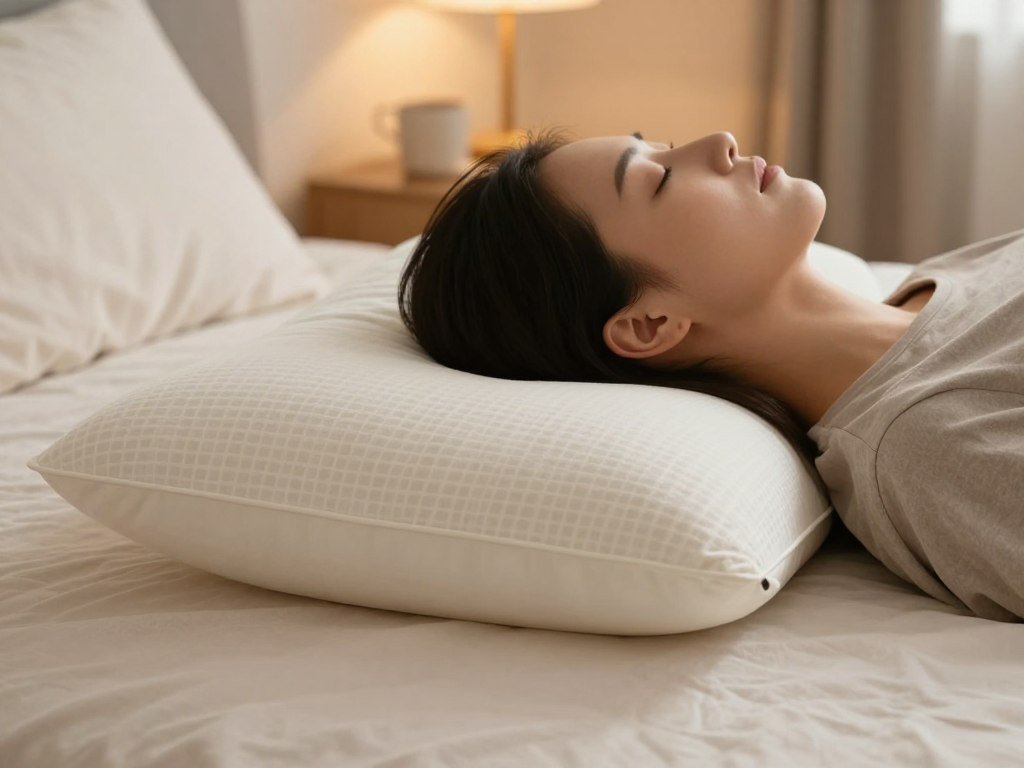
Lie down in your usual sleep position and notice whether your head tips up or down. If your head bends toward your chest or falls back, change the pillow’s height and check again.
Mattress support can change how much your shoulder sinks, which can affect the pillow height that feels right. If your mattress feels very soft, your shoulder may sink farther than it does on a firmer surface. See mattresses for different sleep needs if you are also weighing how your bed affects support.
A pillow neck pain fit should keep the head in line with the torso without bending the neck forward or backward. Comfort matters too; a neutral position should not feel forced or strained.
Recheck the height after settling into the mattress, since the shoulder and head may sink by different amounts.
Memory Foam, Latex, and Other Pillow Materials
Memory foam and latex are worth comparing when you want a material that resists sinking under your head. They feel different, even though both may provide steady neck support.
Resisting sinkage can help a pillow hold support, but it does not ensure comfort for everyone. The right feel still depends on your position and preferences.
| Material or design | How it behaves | What to consider |
|---|---|---|
| Memory foam | Molds to the head and neck under pressure | May feel close-fitting or too firm to some sleepers |
| Latex | Resilient, with a bouncy feel | May suit sleepers who prefer a quicker response |
| Contoured or cervical design | Pre-shaped to cradle the neck | Its fixed shape may not suit every sleep position |
Memory foam molds to the head and neck
A memory foam pillow changes shape under pressure from your head and neck. That molding feel can help create steady contact, rather than leaving a large gap beneath the neck.
A foam pillow may feel close around the head, which some sleepers enjoy and others dislike. Memory foam can also feel less springy than latex when you shift during the night.
Latex and contoured designs hold a different feel
Latex foam tends to feel resilient and bouncy. It may suit you if you want support that responds quickly when you move rather than a material that molds closely.
A contoured pillow has a set shape made to cradle the neck and encourage alignment. Its raised areas may feel supportive in one position but awkward in another.
Choose the material whose feel lets your neck stay supported without forcing a position you find uncomfortable.
Adjustable or Contoured: Which Pillow Shape Fits?
An adjustable pillow makes the most sense when one fixed height or firmness does not feel right. You can tune the fill to better match your position and comfort.
A contoured pillow suits you best when you prefer a shaped cradle that supports the neck. Chiropractic pillows for neck and shoulder pain are shaped support options, not a guarantee of pain relief.
Adjustable fill lets you tune height
Adjustable or multi-layer pillows let you change height and firmness. That can help when you switch between side and back sleeping, or when a pillow feels too high after you settle in.
Before choosing a design, consider three parts of your fit:
- Your usual sleep position
- Your shoulder width
- Your neck curve or any prior injury
These factors can affect which shape feels natural. A careful fit matters more than whether a pillow is described as a cervical pillow or a neck pillow.
Contoured shapes cradle the neck
The Coop Eden Pillow has two curved options for side or back sleepers. The TEMPUR-Neck uses a wave shape with a raised edge to cradle the neck.
These are different shapes, not interchangeable designs. A chiropractic pillow may feel helpful when its shape suits your sleep position, but the label alone cannot predict comfort.
A 2-4 week trial while adjusting a pillow’s height or layers can help you judge the fit. Give a new configuration 2-4 weeks of trial and adjustment before deciding whether it suits your usual position.
How Can You Check Whether a Pillow Fits?
A hotel stay can reveal what you prefer about a pillow’s fill, contour and design. Notice the details while away from home, then use them to guide your choice.
Judge the pillow while lying in your usual sleep position, not while standing. A pillow can feel soft in your hands but push your head too high once you lie down.
Pay attention to whether the hotel pillow feels springy, moldable, or firm. Note whether it has a raised contour or a more even shape beneath your head.
Too much lift can cause discomfort by tipping your head forward or to one side. Lying perfectly flat can also feel uncomfortable if the pillow leaves your neck without support.
Try to notice how your neck feels after waking, not just during the first few minutes in bed. Your comfort in the morning can help you spot a pillow shape that feels good at first but does not suit a full night.
Keep your notes simple: write down the fill, contour, and sleep position that felt best. Those details can help you compare pillows without relying on softness alone.
Make a note of the feel and position that leave your neck most comfortable the next morning.
Is the TEMPUR-Neck Pillow Right for You?
If you prefer a firm, shaped pillow for side or back sleeping, the TEMPUR-Neck is one option to consider. Its wave shape has a raised edge that cradles the neck.
The TEMPUR-Neck comes in Small, Medium and Large sizes. Its firm memory foam is intended for side and back sleepers who want a structured feel.
In pressure-resilience tests, the foam maintained its shape and recovered after pressure. That result may matter if you want a pillow that does not quickly flatten beneath your head.
Firmness is personal, though. Some consumer testers may find this pillow too firm, especially if they prefer a softer or more flexible feel.
The TEMPUR-Neck may not suit stomach sleepers or people who dislike a raised edge. It can also feel too fixed if you shift among sleep positions and need different support.
Check the pillow’s shape while lying down, rather than judging the wave by sight alone. A supportive feel should not force your chin toward your chest.
Choose the size and shape that keep your head comfortable without pushing it forward.
Can the Coop Adjustable Pillow Be Customized?
The Coop Home Goods Original Adjustable Pillow is designed for people who want to tune the fill rather than accept one fixed loft. Its fill can change to adjust the pillow’s height and firmness.
You can add or remove shredded memory foam and polyester-fiber fill. The pillow is designed for all sleeping positions, which may help if you shift between positions at night.
Start with the fill level that feels comfortable, then make small changes if your head sits too high or low. A little adjustment can be easier to assess than changing a large amount at once.
The cover and fill are machine washable and dryer safe. Follow the care label when washing or drying the pillow, and make sure the fill is fully dry before using it again.
Adjusting fill can help when a fixed pillow does not fit your position. It does not mean the same amount of fill will work for every sleeper or mattress.
Adjust the fill in small changes so the pillow does not become too high or too low at once.
Does the Purple Harmony Pillow Sleep Cooler?
The Purple Harmony combines an airy polymer grid with a latex core. Its open channels are designed to increase airflow through the pillow.
The Purple Harmony comes in Low, Medium and Tall heights. Those options let you compare support needs as well as the pillow’s airy feel.
The pillow scored highly for holding its shape in weighted pressure tests. Testers with chronic neck pain described it as comfortable and supportive, and said it kept their necks in a neutral position.
That feedback reflects those testers’ experiences, not a promise that the pillow will relieve neck pain. A cooling pillow can still feel wrong if its height does not suit your position.
The polymer grid and latex core give the pillow a different construction from a solid foam pillow. Its Low, Medium and Tall options provide a clear way to compare heights when choosing.
Match the height to your sleep position instead of assuming the most airflow-friendly design will fit every neck.
Is the Honeydew Essence Pillow a Good Fit for Side Sleepers?
Side sleepers who want a curved pillow with adjustable fill can consider the Honeydew Essence. Its curved shape is intended to support the neck and reduce shoulder pressure.
The fill combines adjustable memory foam pieces and microfiber clusters. You can tune the mix to change how the pillow feels beneath your head and neck.
Testers described the pillow as supportive yet soft. It also returned to its original shape quickly in pressure-resistance tests.
The curved design is made for side sleepers, though each person’s shoulder and neck shape differs. A curve that supports one sleeper may feel too high or too firm for another.
Adjustable fill gives you a way to change the feel, but the pillow’s shape remains curved. If you often sleep on your back or stomach, consider whether that fixed curve will feel comfortable there.
Check that the curve fills your shoulder-to-ear gap without lifting your head out of line.
Does the Layla Kapok Pillow Suit Changing Sleep Positions?
The Layla Sleep Adjustable Kapok Pillow combines two types of fill in an adjustable design. Its mixed fill includes shredded memory foam and kapok.
Adjustable fill lets you customize height and firmness for different sleep positions. That may help if you move from side to back sleeping during the night.
Shredded memory foam and kapok make up the pillow’s fill. You can add or remove fill to change how much support it gives and how firm it feels.
A single pillow height may not feel the same in every position. When you turn onto your back, your shoulder no longer presses into the mattress in the same way.
Adjustable fill offers a way to respond to those changes, though it may take some testing to find a comfortable setup. Focus on whether your head and neck stay supported as you shift.
Recheck the pillow’s height after changing positions, since the loft that works on your side may not feel right on your back.
Are Traditional and Lower-Cost Pillows Worth Considering?
A lower-cost or traditional fill can be worth considering if it still keeps your neck comfortably supported. Price alone does not decide fit; the pillow still needs to hold a comfortable shape.
Feather pillows can be punched into shape, while synthetic polyfill is generally budget-friendly. Polyfill may offer a less durable or supportive feel than other options.
| Option | What it offers | Fit or care consideration |
|---|---|---|
| Amazon Basics down-alternative pillows | Two-pillow set with different firmness levels | Maintained shape and softness in testing |
| Feather pillows | Fill can be shaped by punching the pillow | May suit sleepers who like reshaping the fill |
| Synthetic polyfill | Generally budget-friendly | May feel less durable or supportive |
Feather and down-alternative fills offer different feel
Feather fill can be reshaped by punching it, which may help you move the fill where you want it. Some people with neck pain also find extra pillows supporting their arms more comfortable.
Amazon Basics down-alternative pillows come as a two-pillow set with different firmness levels. They maintained their shape and softness in testing, giving you options if you want a basic pillow with more than one feel.
Replace a pillow that has lost its shape
A pillow that stays flat or lumpy may no longer support your head as it once did. Fold it in half and see whether it springs back, then consider whether it still feels comfortable in bed.
Replace a pillow that is over two years old or fails to spring back after being folded in half.
What Can You Change in Your Sleep Routine?
Small changes around your usual sleep position can be more useful than piling extra pillows under your head. Try one change at a time, then notice whether it improves comfort.
A pillow for neck pain and headaches should support a neutral neck, but it cannot guarantee headache relief. A pillow for neck pain and shoulder pain should not press uncomfortably on the shoulder.
Add support for your arms, knees or lower back
Extra support can make some sleep positions feel easier without adding height beneath your head. Try these options only if they feel comfortable:
- Support your arms with an extra pillow.
- Place a pillow between your knees when side sleeping.
- Try a small pillow under your knees when back sleeping.
- Use gentle neck rotations or chin tucks before bed.
Use gentle movement and observe the result
Gentle neck rotations or chin tucks may help relax your neck muscles before bed. Move slowly and stop if the motion feels painful or strained.
Wash pillowcases weekly, and shake or air pillows as needed. Avoid stacking pillows under your head unless a health care professional has advised it.
Check how your neck feels after one week of a routine change. If pain grows or a movement increases pain, do not push through it.
If a movement increases pain, stop doing it and ask a health care professional for guidance.
When Does Neck Pain Need Medical Care?
New weakness, worsening numbness, or difficulty breathing needs urgent medical attention, not another pillow trial. Do not wait to see whether a new pillow helps if any urgent warning sign appears.
Seek urgent care for new or severe symptoms that affect strength, balance, breathing, or bladder and bowel control. Neck pain can need care even when you are also changing how you sleep.
Seek urgent attention for new or severe warning signs
Get urgent medical attention for any of these symptoms:
- New weakness in an arm or leg
- Worsening numbness
- Difficulty walking or loss of balance
- New loss of bladder or bowel control
- Difficulty swallowing or breathing
- Fever with neck stiffness
Urgent symptoms need medical attention rather than a wait to see whether a pillow helps.
Arrange prompt evaluation for persistent or worsening pain
Arrange prompt clinical evaluation if neck pain persists or worsens despite a short trial of basic care. A history of cancer also calls for prompt assessment.
Unexplained weight loss or signs that suggest an infection are other reasons to seek prompt evaluation. Mention these details when you speak with a health care professional.
A pillow change may help you feel more comfortable, but it cannot rule out a health problem. Do not use a better sleep position as a reason to delay care for concerning symptoms.
Persistent or worsening pain deserves clinical evaluation even when sleep-position changes seem helpful.
Conclusion
The right choice is the one that keeps your neck comfortable and aligned in the position you actually sleep in. Comfort and alignment matter more than a pillow’s name or material.
Adjustable fill is a practical way to fine-tune loft when one fixed shape does not fit. Change the fill in small steps, then notice how your neck feels when you wake.
Start with the position you use most and test one suitable pillow adjustment at a time. Contact a health care professional if pain persists or worsens.
FAQ
What pillows do doctors recommend for neck pain?
What type of pillow is best for neck pain?
How do I stop my neck from hurting when I sleep?
What is a red flag for neck pain?
Is it better to sleep without a pillow if your neck hurts?
Do chiropractors recommend neck pillows?
How to decompress your neck while sleeping?
Is my pillow causing my neck pain?