Most superyachts are built for a particular kind of life: warm water, short passages between familiar harbours, and evenings at anchor off a coast everyone already knows. They do that life beautifully. But they are not built to leave it.
An explorer yacht is the vessel for the owner who looks at the map and wonders about the parts of it that are still blank the ice edge in Antarctica, the Northwest Passage, the fjords of East Greenland, the rivers of Borneo. It is a yacht designed first to get there, and only second to look good doing it.
What follows is not a ranking by price. The most expensive yachts in the world are a different list altogether, and the fastest yachts are another.
These eight are chosen for a single quality: the honest ability to go almost anywhere on the planet, stay there a while, and bring their guests home in comfort. Some are conversions of working ships, some were drawn from a blank page, and one is still being finished but each of them has earned its place by what it can do, not by what it cost.
What Makes an Explorer Yacht an Explorer
The difference starts below the waterline. A conventional superyacht has a hull shaped for speed and calm seas; an explorer has a full-displacement steel hull, often with an ice belt of thickened plating around the waterline, and in the serious cases an ice class awarded by a classification society.
That steel is heavy, and it costs speed, but it is what lets a yacht push through brash ice, take a knock from a growler, and keep going when the weather turns in a place where there is no port to run to.
Range is the second dividing line. Explorer yachts carry fuel in quantities that look absurd on a Mediterranean boat enough, on the best of them, for crossings of five or six thousand nautical miles without refuelling, and in one case on this list far more.
They also carry provisions for weeks rather than days, water-making capacity to match, and storage for the equipment the journey demands. A yacht that can stay away from port for a month is a yacht that can genuinely choose its own route, and that freedom is the whole point of the explorer yacht revolution that has reshaped the top of the market in the last two decades.
Expedition Equipment: What Makes an Explorer Yacht Truly Capable
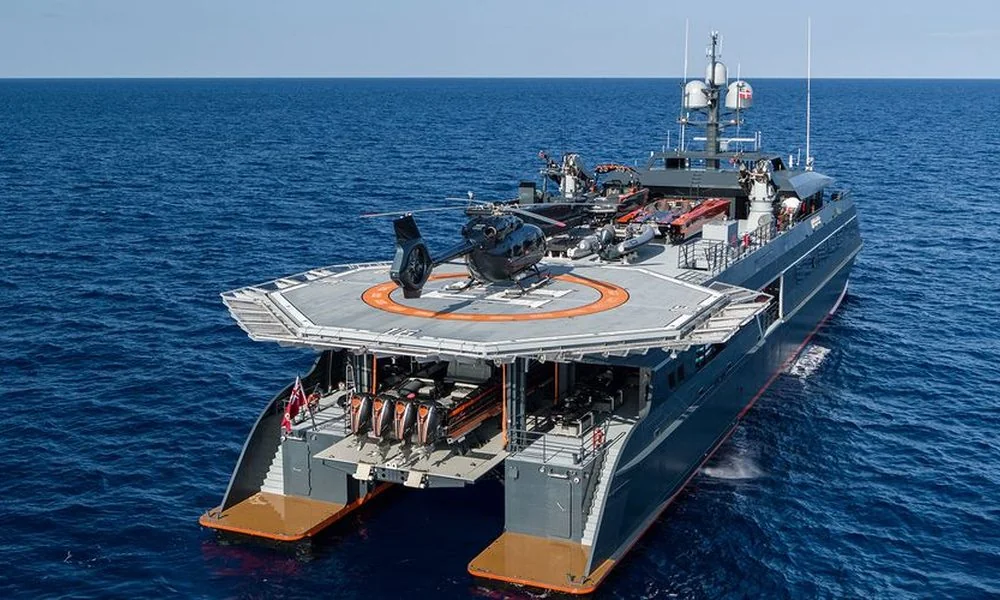
Then there is the equipment. A helideck ideally a certified one, with a hangar to keep the aircraft out of polar weather turns a yacht into a base for heli-skiing, for reaching a glacier that no road serves, or simply for flying guests in and out of anchorages no tender could reach.
A fleet of tenders, a submersible, a dive centre with proper decompression facilities, snowmobiles, kayaks: these are not toys in the usual sense. They are the means by which a yacht in a remote place becomes useful rather than merely present.
And inside, the contrast is the point a warm saloon, a proper spa, a dining room where the view through the window is pack ice. The best explorer yachts hold both ideas at once: tough enough for the Southern Ocean, comfortable enough that nobody on board is thinking about the toughness.
Eight Explorer Yachts That Can Genuinely Go Anywhere
1. Octopus the explorer that started it all
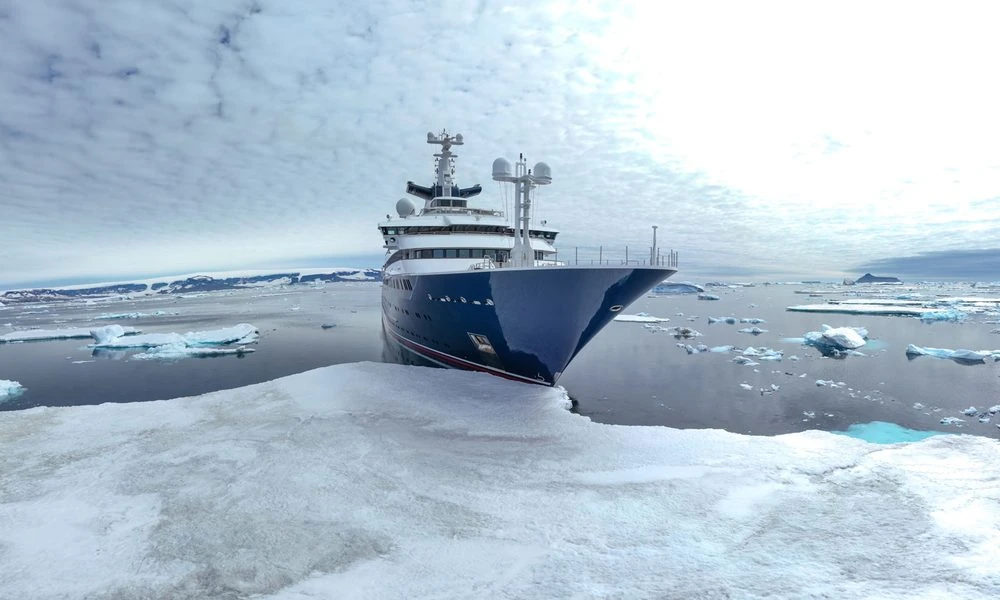
If there is a single yacht that made the explorer category what it is, it is Octopus. Built by Lürssen in Germany and delivered in 2003, she measures around 126 metres, and she was commissioned by the late Microsoft co-founder Paul Allen not as a floating palace but as a working platform for the things he cared about: science, exploration, and the search for history under the sea.
She carries two helicopters, a submersible, a remotely operated vehicle and a fleet of tenders, and she has supported scientific expeditions and the search for historic shipwrecks in waters most yachts never see.
What is striking about Octopus, more than twenty years after her delivery, is how complete the package still feels. Her interior, by Jonathan Quinn Barnett, is understated and comfortable rather than showy a cinema, a basketball court, a recording studio, and a glass-bottomed observation lounge from which to watch the sea pass beneath the hull.
She appears in our look at the most expensive yachts in the world on the strength of her reported build cost, but that is the least interesting thing about her.
Octopus matters because she proved the idea: a private yacht could be a serious expedition vessel, and the people who owned one would use it that way. Every explorer yacht built since owes her something.
2. REV Ocean the largest research expedition yacht ever conceived
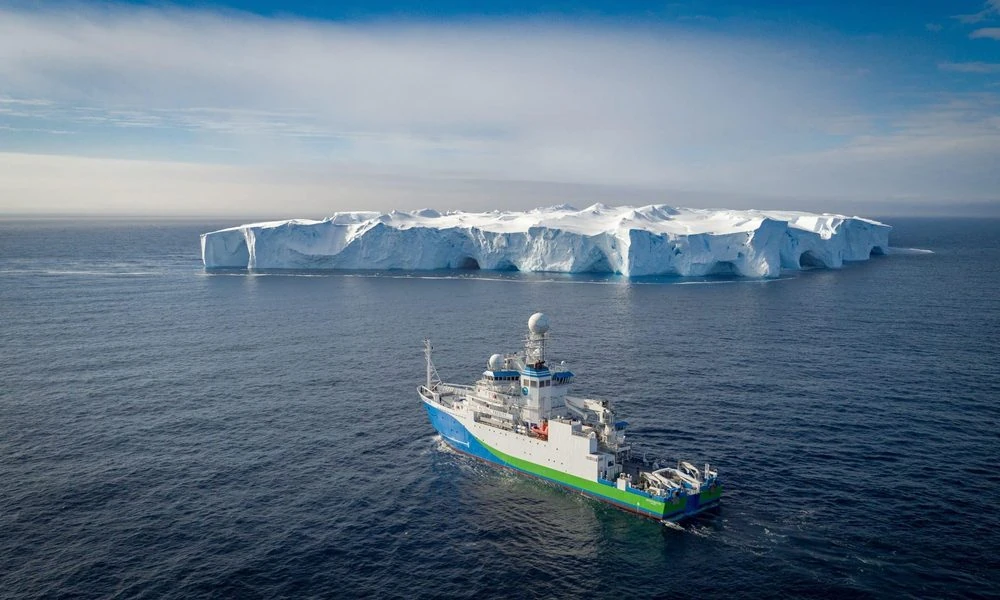
REV Ocean is the outlier on this list, and it is included with a caveat: as of writing she is still in final outfitting, with delivery expected in late 2026 or 2027. But no list of explorer yachts would be honest without her, because no vessel of her kind has ever been attempted at this scale.
At around 194.9 metres and roughly 19,235 gross tons, built by VARD in Norway with exterior design by Espen Øino and interiors by H2 Yacht Design, she is set to become the largest purpose-built research and expedition yacht in the world a ship that happens to carry guests, rather than a yacht that happens to carry scientists.
Her brief is science first. She is designed around laboratories, a submersible hangar, remotely operated vehicles reported to work at depths of around 6,000 metres, and accommodation for scientists alongside guests.
A proportion of her time is intended to be spent on research and conservation work, with guests joining expeditions rather than simply chartering a holiday.
Her reported range said to reach around 21,000 nautical miles would let her deploy for months at a time. Until she is delivered, the numbers should be read as the yard’s stated ambitions rather than proven fact. But if she performs as designed, REV Ocean will not just top this category; she will redraw it.
3. La Datcha two helicopters, a submarine, and forty days from anywhere
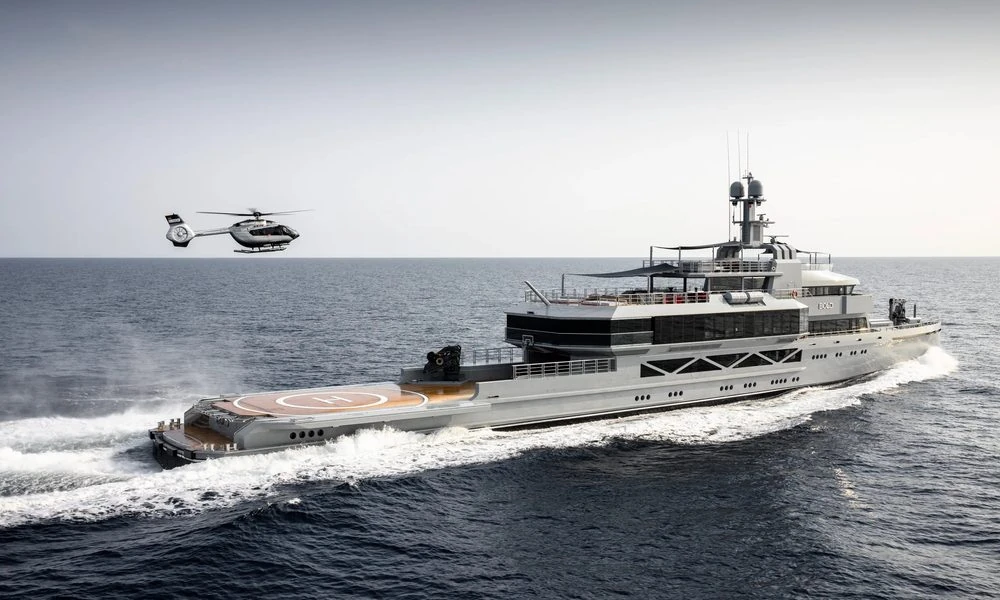
La Datcha, delivered by Damen Yachting in 2020, is the first hull of the Dutch yard’s SeaXplorer 77 series, and the most single-mindedly expedition-focused yacht of her size ever built for private use.
At 77 metres she is not the largest yacht here, but she may be the most capable for her length. She is built to Ice Class 1C and to the IMO Polar Code, and she carries enough fuel and provisions for forty days of autonomy without a port call a figure that changes what an itinerary can be.
The aviation setup is the headline. She has a certified helideck, a standby deck for a second helicopter, and a below-deck hangar that takes both aircraft indoors, out of polar weather the arrangement that makes serious heli-skiing possible in places like Kamchatka and Alaska, where the mountains meet the sea and there is no other way in.
Below the waterline, a three-person Triton submersible and a full dive centre, including decompression facilities, handle the vertical exploration.
Twelve guests are accommodated in six suites, and the wellness deck carries a spa with a hammam, a jacuzzi and an ice fountain. La Datcha is the yacht for the owner whose idea of a holiday is a coastline no one else has skied.
4. Cloudbreak the adventurer’s yacht

Cloudbreak was built by Abeking & Rasmussen in Germany in 2016 for an owner with a very particular brief: heli-skiing, surfing, and global exploration, in that order.
At around 72 metres, with exterior design by Espen Øino and interiors by Christian Liaigre, she is the smallest purpose-built explorer on this list and one of the most influential, because she showed that an explorer yacht could be beautiful as well as capable, and that a design brief written around a life, rather than a status, produces a better boat.
Her credentials are serious. A steel hull with an ice belt, a commercially rated helideck, a ski room with heated boot racks, a fireplace, a spa with a sauna, and a range reported at around 8,500 nautical miles at economical speed.
The toy inventory is famously extensive surfboards and kayaks, diving equipment, mountain bikes and snowboards and the tenders are large enough to carry the surfboards properly, which matters more than it sounds.
Cloudbreak is the yacht on this list most likely to be found somewhere unexpected: a break off Fiji, a slope above a fjord, a bay in Patagonia. She was built for a life lived outdoors, and everything about her still serves that life.
5. Multiverse, ex-Ulysses the quiet giant
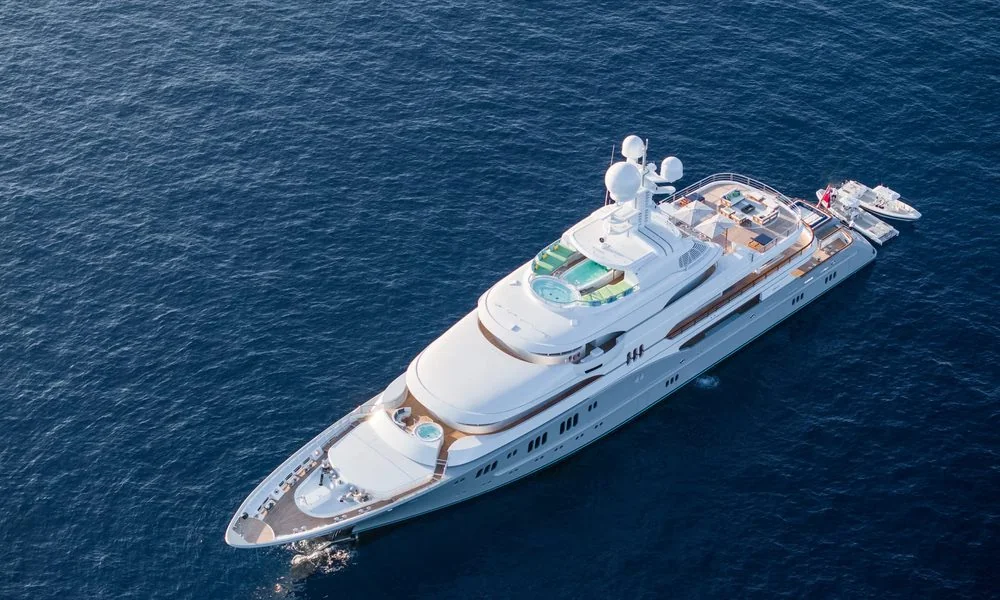
The 116-metre Kleven explorer delivered in 2018 as Ulysses and renamed Multiverse in 2023 is the largest yacht on this list that is actually in service, and the most understated.
Her technical build was finished in Norway in December 2016, with completion in Germany, and she is built on Kleven’s expedition support vessel platform with naval architecture by Marin Teknikk: commercial bones, in other words, dressed as a private yacht.
The result is a vessel of remarkable self-sufficiency, with a range reported at around 8,000 nautical miles and room for around thirty guests.
What she carries is the story. A certified helideck with a dedicated hangar for her helicopter, a well deck housing a 21-metre Princess tender itself a substantial yacht and a fleet of high-speed and day-cruising tenders besides.
Her 18-metre beam gives her an interior volume that smaller explorers cannot match, and her crew is sized for long, unsupported deployments. Multiverse does not court attention; she is rarely the yacht photographed in a harbour. She is the yacht that disappears for months and returns with stories from latitudes most of us will never see.
6. Ragnar the icebreaker that became a yacht
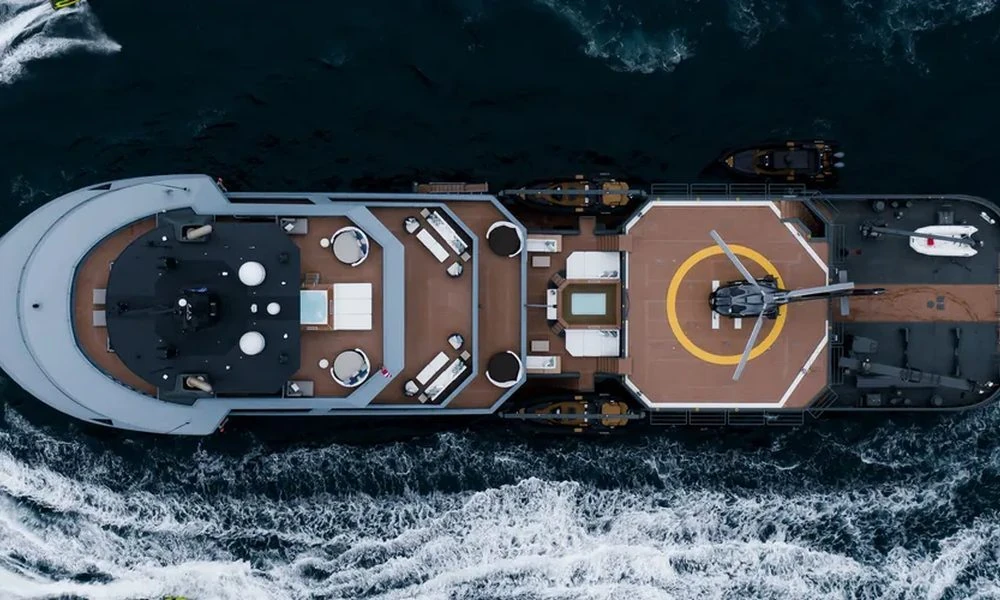
Ragnar began life as Sanaborg, an ice-breaking multipurpose support vessel built in the Netherlands in 2012 for work in the shallow, icy waters of the Caspian Sea. In 2017 she was acquired by Icon Yachts, and over two and a half years she was converted to a design by RWD into a 68.2-metre explorer yacht, delivered in 2020.
It is one of the most convincing conversions in yachting, because the starting point was so honest: a working ship, built to break ice, given a second life rather than a costume.
The numbers are those of a real ice vessel. A range of around 6,000 nautical miles, a certified helideck able to take an Airbus EC145 helicopter, an industrial crane rated to ten tonnes, and the ability to operate in temperatures as low as minus 35 degrees, maintaining four knots in ice more than half a metre thick.
She carries a three-person submersible, snowmobiles, amphibious all-terrain vehicles and jet skis the full kit for a polar winter. Twelve guests are accommodated in comfort that would have astonished her first crew.
Ragnar is proof that the best explorer yacht is not always the one drawn from scratch; sometimes it is the working ship that was already going to the hard places, and simply needed someone to see what it could become.
7. Legend the Soviet icebreaker, reborn
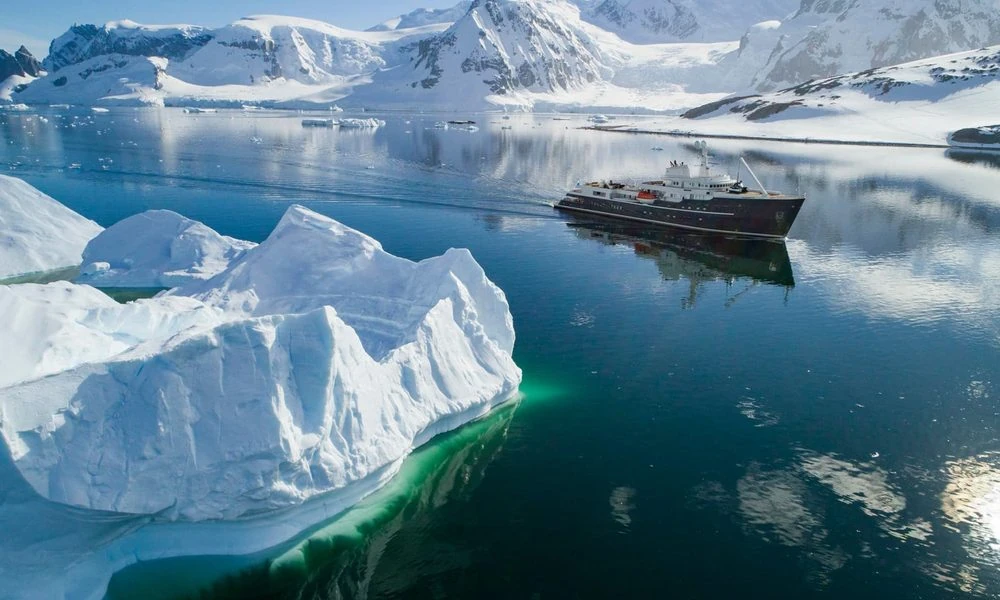
Legend has the most remarkable past of any yacht on this list.
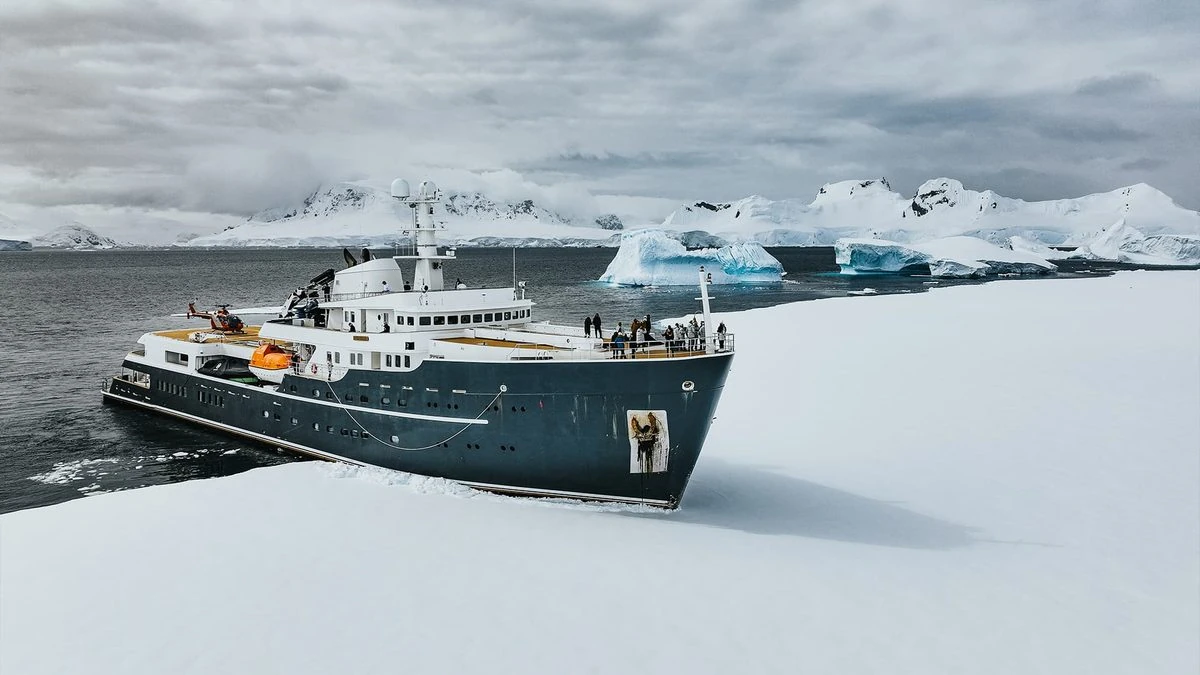
She was built in 1974 at the Dutch yard IHC Verschure as an icebreaking tug for the Soviet merchant marine a Class 1 icebreaker, built to break ice rather than merely survive it and she spent a quarter of a century in service before being converted into a yacht, then laid up, then rebuilt almost entirely by Icon Yachts and redelivered in 2016 as a 77.4-metre explorer.
Her 6.4-metre draught is nearly twice that of many yachts her length, and in heavy weather she is famously steady: a hull that was built for the Barents Sea does not notice a Mediterranean chop.
The refit added everything a modern expedition needs. A commercially certified helideck aft, suitable for a six-person Eurocopter EC135, with fuel storage and fire systems to match; a U-Boat Worx submersible housed forward, able to carry guests well below the surface; and a 16-person spa pool with a waterfall on the extended stern.
She takes more than twenty guests, with room for an expedition team of ten a helicopter pilot, a doctor, naturalists and expedition leaders on top of her regular crew. Legend has cruised Antarctica, Svalbard and Greenland as a matter of routine. She is the closest thing in private yachting to a ship that has already seen the worst the sea can offer, and decided to go back for the view.
8. Anawa — the compact explorer, done properly
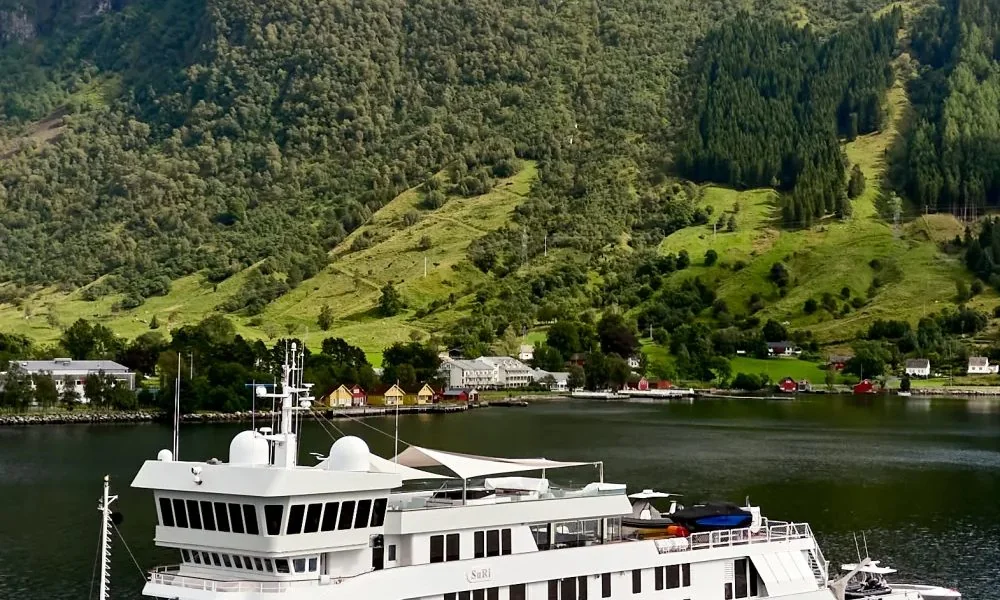
Anawa, delivered by Damen Yachting in March 2020, is the first yacht built on the yard’s SeaXplorer 65 design, and the proof that an explorer yacht does not need to be enormous to be serious.
At 62 metres, with exterior design by Azure Yacht Design and naval architecture by Damen’s own team, she packs the full expedition brief into a hull that can enter harbours and anchorages her larger sisters cannot: a Polar Class steel hull, a certified helideck with a hangar, two large tender garages, a dive store, and thirty days of autonomy.
The details repay attention. The helideck, when it is not flying helicopters, becomes a 150-square-metre open deck a space for a party, or a basketball game, with the sea on every side.
She carries a submersible among her tenders and toys, and her range of around 6,000 nautical miles at economical speed is enough for a transoceanic passage without a fuel stop. Twelve guests are accommodated in six suites, with a crew of around twenty.
Anawa is the yacht for the owner who wants the whole explorer idea the ice, the helicopter, the weeks away from port in a vessel that still feels like a yacht rather than a ship. She is the smallest boat on this list, and in many ways the most complete argument for the category.
How to Choose an Explorer Yacht
The first question is not how big, or how fast, or how luxurious it is where you actually intend to go. A yacht built for Antarctica needs ice class, a helicopter, and the crew to use both; a yacht built for the South Pacific needs range, tenders, and diving facilities.
The hull and the equipment should follow the itinerary, not the other way around, and any broker who shows you a yacht before asking about your map is showing you the wrong yacht.
Range deserves more weight than speed. On the fastest yachts in the world, speed is the point; on an explorer, it is almost irrelevant. A yacht that cruises economically at eleven or twelve knots and can keep going for six thousand miles will see more of the world than a faster yacht that must refuel every few days.
Ice class matters too, and it is worth understanding the distinction: an ice-classed hull is strengthened for ice, while a true icebreaker like Legend, or Ragnar in her first life is built to break it. For most owners, the former is enough; for the polar winter, only the latter will do.
Choosing the Right Explorer Yacht: Why the Crew Matters as Much as the Vessel
Finally, look at the crew. An explorer yacht is only as capable as the people who run her, and the best of them carry expedition leaders, a helicopter pilot, a dive team and often a doctor, alongside the usual captain, engineers and interior crew.
Ask who has actually been to the places on your list, and what the yacht carried when it went. The honest answer to that question is worth more than any brochure, and it is the surest way to tell a yacht that can go anywhere from a yacht that merely looks as though it can.
Somewhere far beyond the last marina, past the point where the charts grow quiet, there is a stretch of water no ordinary yacht will ever see.
If one of these eight ever carries you there, we hope the cold air, the stillness, and the sense of having arrived somewhere genuinely remote stay with you long after you are home. Thank you for reading, and for keeping a little room in your plans for the far corners of the map.