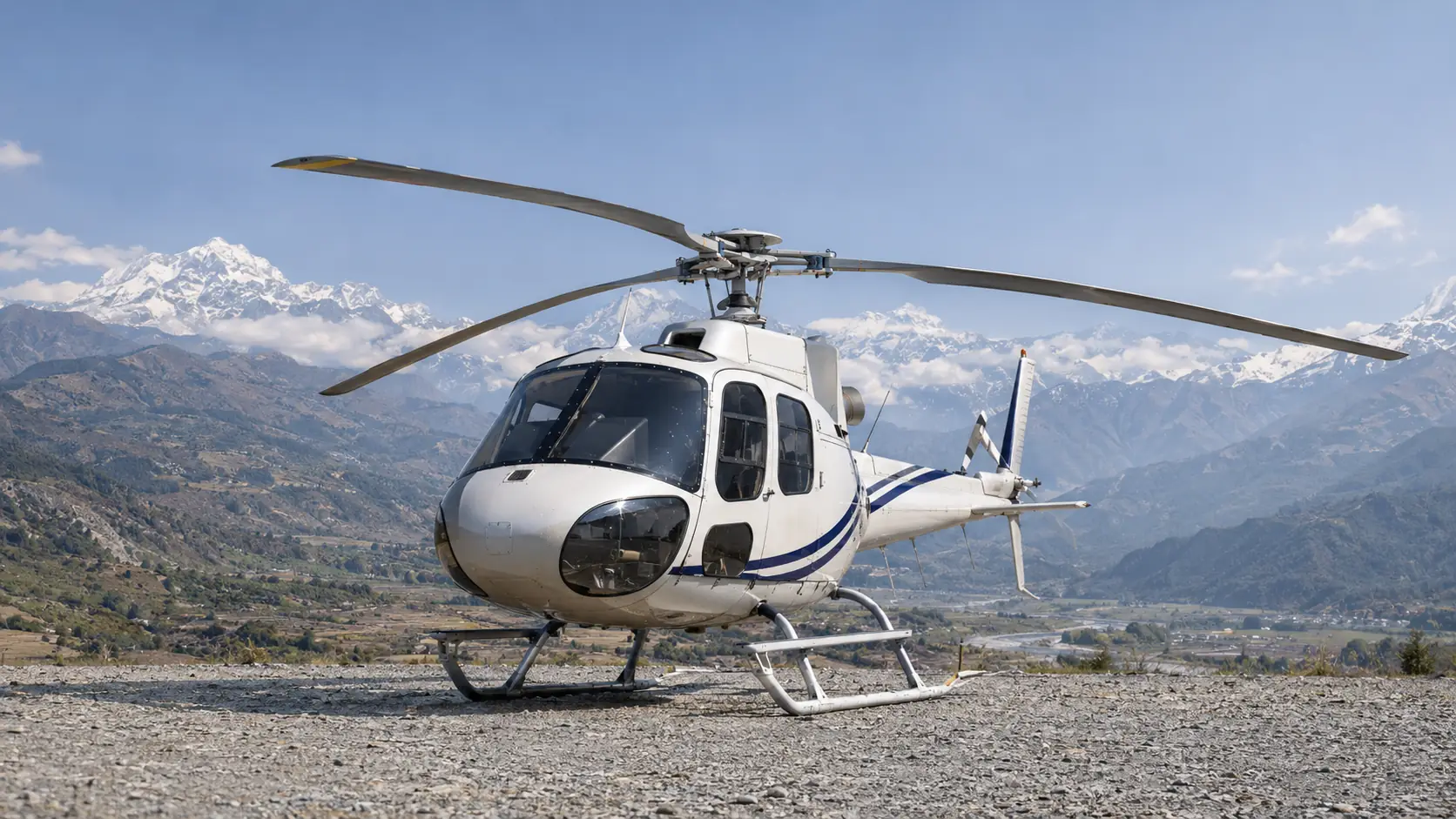
On May 14, 2005, test pilot Didier Delsalle landed a helicopter on the summit of Mount Everest, 29,032 feet above sea level, an altitude where the air holds barely a third of the oxygen at sea level and where flight itself was long considered impossible.
The aircraft that accomplished the only summit landing in aviation history was not a prototype or a military giant. It was a production Airbus H125, known then as the AS350 B3, the same machine that ferries tourists over the Grand Canyon every day.
That flight tells you everything essential about this helicopter: the H125 is the most capable single-engine rotorcraft ever built, a machine whose everyday versatility rests on performance margins proven at the roof of the world.
The Record That Redefined Possible

The Everest landing deserves careful telling, because its significance is easy to miss. Helicopters fly by pushing air downward, and at extreme altitude there is simply less air to push. Above 25,000 feet, helicopter flight enters a regime where engines gasp, rotors find little to grip, and every kilogram of weight becomes an enemy.
Before 2005, no helicopter had landed on Everest, and rescues above the mountain’s lower camps were considered beyond the reach of rotorcraft.
Delsalle’s aircraft was a standard production AS350 B3, stripped of nonessential weight but otherwise unmodified in its fundamentals, powered by a single Turbomeca Arriel engine.
Over two days he landed on the summit twice, the second time for nearly four minutes, having also performed a rescue en route. The Fédération Aéronautique Internationale certified the records: the highest landing and the highest takeoff in history, marks that still stand two decades later.
The flight was more than a stunt. It demonstrated that the high camps of the world’s great mountains were reachable by air, and high-altitude rescue operations in the Himalayas have since transformed accordingly.
When climbers are plucked from Camp Two today, they owe their rescue to the proof Delsalle carried to the summit.
A Half Century of Écureuil
The H125 descends from the Aérospatiale AS350 Écureuil, meaning Squirrel, which first flew in 1974 and became one of the most successful helicopter families in history. The formula was elegant in its simplicity: a light single-engine machine, easy to fly, cheap to operate relative to twins, and capable of lifting remarkable loads for its size.
The family’s evolution has been continuous. The B3 variant of the 1990s introduced the high-altitude Arriel engine and the performance that conquered Everest, and the modern H125, the current production standard, refines the platform with improved power, updated avionics, and safety systems developed across millions of fleet hours.
More than six thousand aircraft of the family have been delivered, operating on every continent and in every climate, a record of service that few aircraft of any kind can match.
The Workhorse of the Vertical World
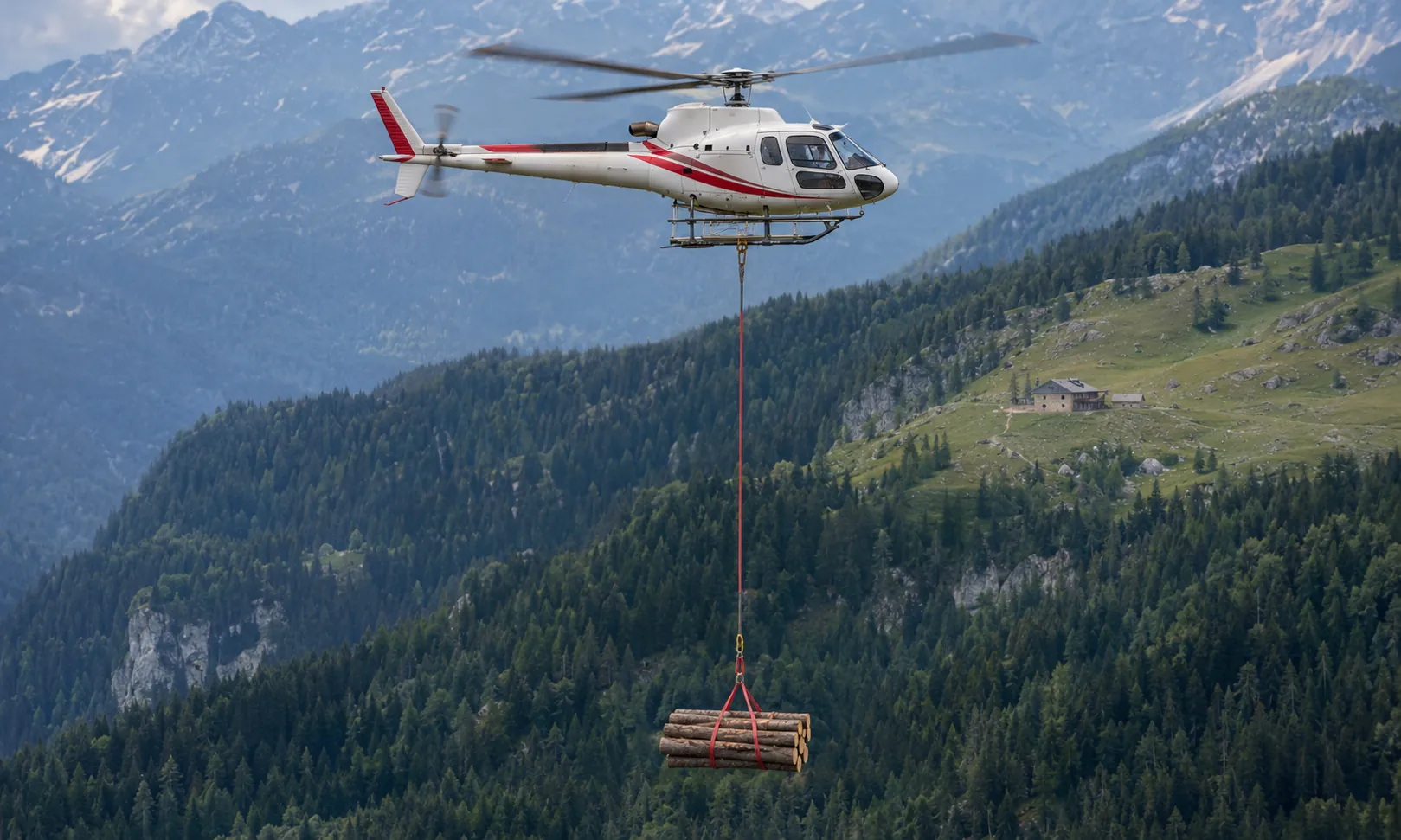
Spend time anywhere helicopters work for a living and the H125 appears with metronomic regularity. It is the aircraft of aerial firefighting, dropping water on wildfires from California to Australia. It serves police and air medical fleets, power line inspection crews, and the film industry, whose most dramatic aerial shots are so often captured from its stable platform.
In the Himalayas and the Andes, it performs mountain flying that no other machine attempts. In the Alps, it supplies refuges perched on ledges at altitudes where even goats hesitate.
The luxury world knows it best through two roles. The first is the tour: the H125 is the signature helicopter of sightseeing operations from the Grand Canyon to the Hawaiian islands, its enormous windows and gentle manners making it the perfect flying theater.
The second is access: for reaching remote lodges, backcountry ski terrain, and private estates, the type offers twin-class capability at single-class cost.
Skiers planning a season at the world’s finest mountains will recognize its silhouette from the heliports of the best luxury ski resorts, where it serves as the wings of the winter elite.
The Single-Engine Question
Any honest discussion of the H125 must address the question that defines its class: one engine. Aviation’s conservative instinct prefers two, and for operations over cities at night or long stretches of water, twins rightly dominate, as the larger machines in our survey of luxury helicopter models demonstrate.
Yet the modern single has earned its case through statistics. Turbine engine reliability has reached levels where engine failure is among the rarest causes of helicopter incidents, and the H125’s record across millions of hours in the world’s harshest environments stands as evidence.
The type compensates with capabilities twins cannot match at its price: superior hot-and-high performance, lower acquisition and operating costs, and a lifting ability, including external sling loads, that makes it the crane of the mountains.
For the private owner, the calculus is practical. Missions over land in daylight, to lodges, ranches, and remote properties, play to the type’s strengths completely. Regular night operations over dense urban cores belong to the twins. The H125 does not pretend otherwise.
Ownership and Operation
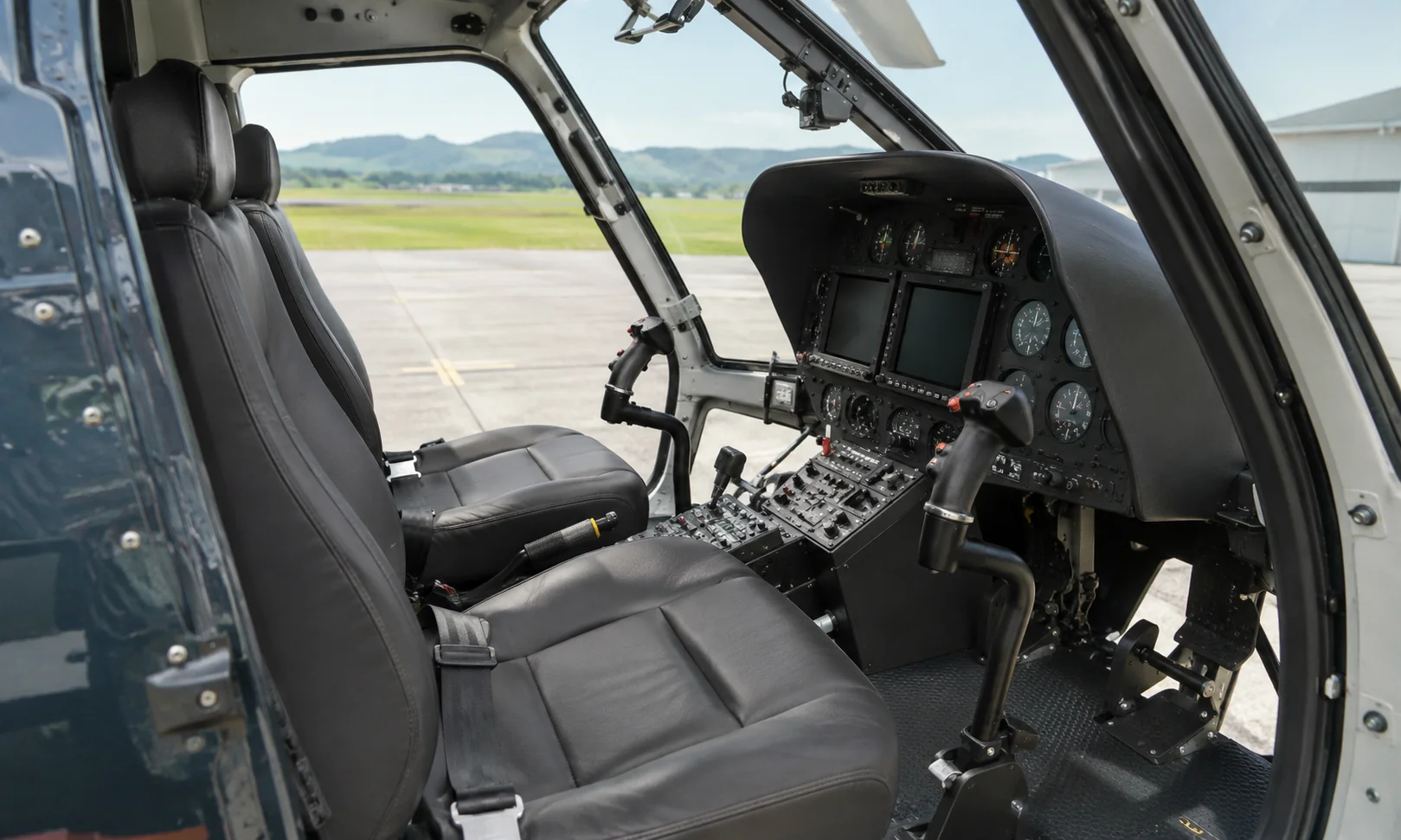
An H125 represents an acquisition in the mid single-digit millions, with operating costs among the most approachable in turbine aviation, a combination that has made it the most common first turbine helicopter for private owners stepping up from piston machines.
The support network, built around Airbus’s global presence and the family’s five decades of production, is as deep as any in rotorcraft: parts, training, and expertise are available virtually everywhere the aircraft flies.
The type also rewards the owner-pilot more than most. Its flying qualities are famously benign, its visibility is panoramic, and its performance reserves inspire confidence in terrain that humbles lesser machines.
Many owners describe the relationship in terms usually reserved for horses: responsive, honest, and capable of far more than it is usually asked.
The Verdict
The Airbus H125 occupies a category of one. No other helicopter combines its altitude performance, its lifting capability, its global support, and its acquisition value, and no other production rotorcraft carries a world record set on the summit of Everest.
It is equally at home dangling a firefighting bucket over a burning forest and delivering guests to a private alpine refuge, and it performs both missions with the same unflustered competence.
Luxury is often defined by what a machine lets you stop worrying about. The H125 lets you stop worrying about altitude, about access, and about the question of whether the helicopter can manage. Half a century after the Écureuil first flew, the answer, proven at 29,032 feet, remains the same: it can.
FAQs
Did a helicopter really land on Mount Everest?
Yes. On May 14, 2005, test pilot Didier Delsalle landed an Airbus AS350 B3, now known as the H125, on the summit of Mount Everest at 29,032 feet, the only helicopter summit landing in history, and repeated the landing the following day.
What records does the Airbus H125 hold?
The H125 holds the world records for the highest helicopter landing and takeoff, set on the summit of Everest in 2005, records that remain unbroken two decades later.
Is the Airbus H125 a single-engine helicopter?
Yes. The H125 is a single-engine helicopter powered by a Safran Arriel turboshaft, whose reliability record across millions of flight hours has established the type’s exceptional safety case.
How much does an Airbus H125 cost?
A new H125 represents an acquisition in the mid single-digit millions of dollars, with operating costs among the most approachable in turbine helicopter aviation.
How many passengers does the H125 carry?
The cabin seats five to six passengers in addition to the pilot, with wide panoramic windows that have made it the signature aircraft of the sightseeing industry.
What is the H125 used for?
Its missions span sightseeing, private transport, aerial firefighting, law enforcement, air medical services, power line work, film production, and high-altitude mountain operations, making it the most versatile light helicopter in service.
How high can the H125 fly?
The type operates routinely at altitudes beyond the capability of any rival in its class, with its performance proven at the highest point on earth and service ceilings far above typical helicopter operations.
Is the H125 good for private owners?
Yes. Its combination of acquisition value, operating economy, benign flying qualities, and global support has made it the most common first turbine helicopter for private owners worldwide.