There is a very specific moment during winter when going for a run stops sounding like a good idea.
You’re standing by the door.
It’s cold outside.
The wind is doing absolutely nothing to encourage you.
And you’re suddenly wondering whether tomorrow would be a perfectly reasonable day to start again.
The funny thing is, winter running usually isn’t about finding motivation. It’s about making the first few minutes comfortable enough that you don’t regret leaving the house.
That’s why choosing the best winter running gear is less about buying the biggest collection of technical clothing and more about getting a few important layers right.
Start With the Layer Closest to Your Skin
The first layer has one job: manage moisture.
A good base layer should help move sweat away from your skin while remaining comfortable when you’re running.
I’d avoid treating a heavy cotton shirt as your primary winter running layer. Once it becomes damp, it can feel cold quickly when temperatures are low.
Technical synthetic fabrics and, depending on your preferences and budget, merino wool are common choices for winter activity.
The goal isn’t to feel extremely warm when you step outside.
You’re going to generate heat once you start moving.
The Midlayer Is Where You Control Warmth
This is the layer that changes depending on the temperature.
A lightweight long-sleeve running top might be enough on a cool morning.
When temperatures drop further, you might add a fleece or another insulating layer.
The important thing is flexibility.
A runner in mild winter weather doesn’t need the same setup as someone heading out in freezing temperatures.
I’d rather have two versatile layers than one enormous jacket that only works on the coldest days.
Your Outer Layer Has to Deal With the Weather
Cold is one thing.
Wind and rain are another.
A lightweight running shell can make a surprisingly big difference when the weather turns unpleasant.
Look for a jacket that balances protection with breathability.
If it traps too much heat, you may feel uncomfortable once your body temperature rises.
If it offers almost no protection, a cold wind can make the run miserable.
The right balance depends heavily on the conditions where you run.
Don’t Forget Your Hands
Your body may warm up quickly.
Your fingers don’t always get the memo.
A lightweight pair of running gloves can make the first part of a winter run much more comfortable.
For particularly cold conditions, insulated gloves or mittens may make more sense.
And if your hands tend to overheat, choose something breathable and easy to remove or carry.
Small details like this can determine whether you actually enjoy the run.
A Hat Can Change the Whole Experience
A lot of body heat is exchanged through the head, but the idea that you lose a fixed majority of your body heat through your head isn’t supported by modern evidence.
Still, keeping your head comfortable in cold weather matters.
A lightweight running beanie can help on colder days without adding much bulk.
For milder temperatures, a headband may be enough.
Again, think about the actual weather rather than following a universal winter-running formula.
Your Feet Need the Right Balance
This is where I think winter running gets interesting.
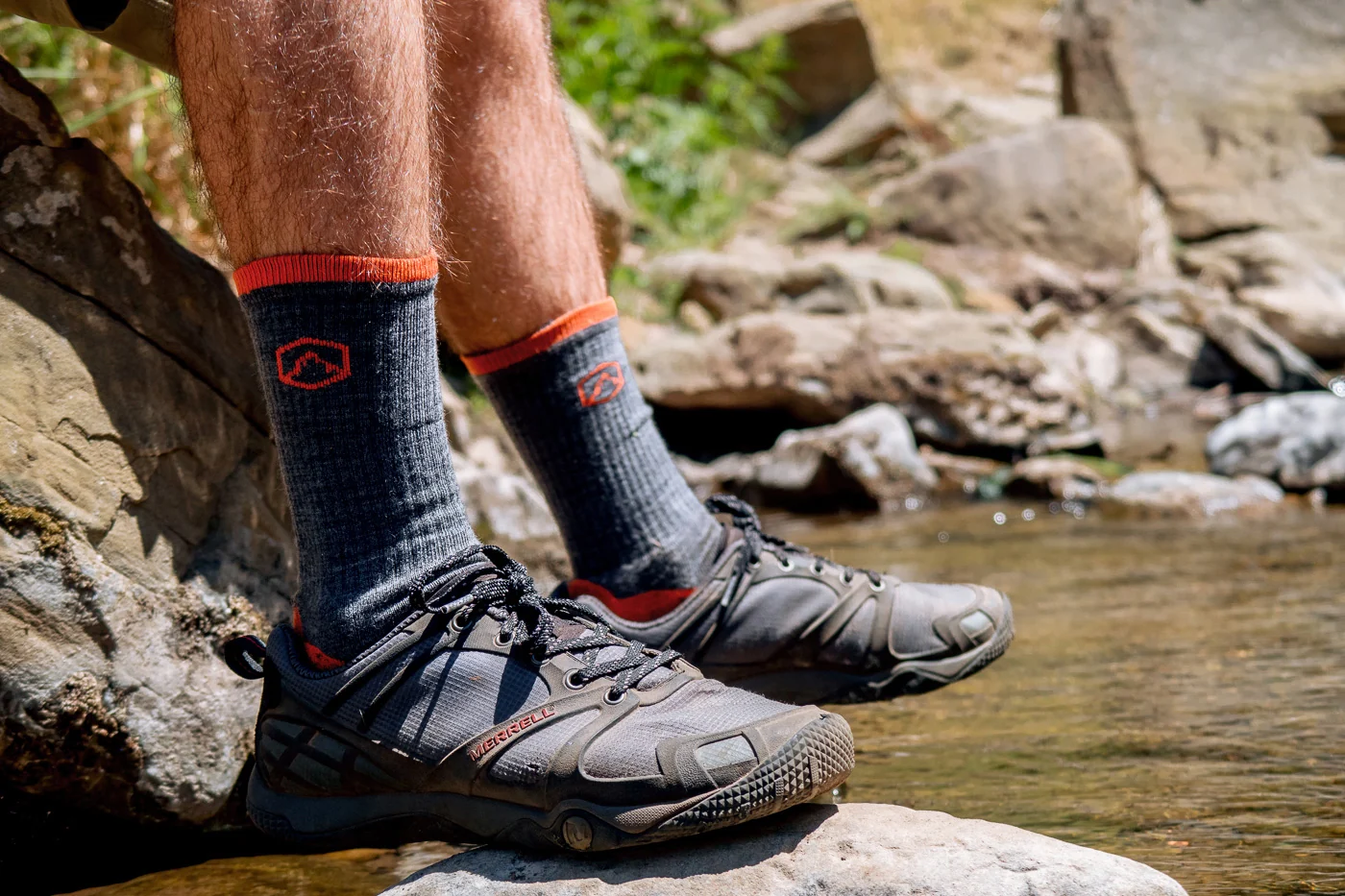
You want your feet protected from the conditions without putting them inside an unnecessarily thick, sweaty setup.
The right socks depend on temperature, moisture and the shoes you’re wearing.
Merino wool can be useful in cold conditions because of its moisture-management and insulating properties.
Synthetic running socks are another practical option.
What I’d avoid is simply putting on the thickest socks you own.
If they make your running shoes too tight, you’ve created another problem.
Your Shoes Matter More When Surfaces Get Difficult
The perfect summer running shoe isn’t automatically the perfect winter shoe.
If you’re running on wet pavement, trails, snow or icy surfaces, traction becomes much more important.
Some runners may benefit from shoes designed specifically for winter or trail conditions, while others can continue using their normal running shoes depending on the route.
The key question is simple:
What surface am I actually running on?
A snowy trail and a wet city sidewalk require very different considerations.
Visibility Becomes Part of Your Running Gear
Winter often means darker mornings and earlier sunsets.
That makes visibility much more important.
Reflective details, reflective accessories and lights can help make you more visible to drivers, cyclists and other people using the road.
A headlamp can also be useful when you’re running in poorly lit areas.
I actually think this belongs on every winter running checklist not because it looks particularly exciting, but because being seen matters.
Dress for the Run, Not the Doorstep
This is probably the simplest winter-running rule I like.
Don’t dress based only on how cold you feel while standing still.
You’re going to warm up.
A common approach is to dress as though the temperature is somewhat warmer than it actually is, although the exact adjustment depends on the individual and conditions.
The first few minutes may feel chilly.
That’s okay.
If you’re already sweating heavily five minutes into the run, you probably wore too much.
What I’d Keep in a Winter Running Kit
You don’t need a huge wardrobe.
A practical rotation could include:
- Moisture-managing base layers
- One or two insulating midlayers
- A lightweight weather-resistant shell
- Running tights or cold-weather bottoms
- Running socks suited to the conditions
- Lightweight gloves
- A beanie or headband
- Reflective clothing or accessories
- A running light for dark routes
- Weather-appropriate running shoes
The exact combination changes with temperature.
That’s the point.
How I’d Dress for Different Winter Conditions
| Conditions | A practical approach |
| Cool and dry | Lightweight long-sleeve top + running tights |
| Cold | Base layer + midlayer + tights + gloves |
| Cold and windy | Add a wind-resistant outer layer |
| Wet | Moisture-managing layers + weather-resistant shell |
| Snowy or slippery | Warm layers + shoes with suitable traction |
| Dark morning/evening | Add reflective details and appropriate lighting |
There isn’t a single outfit that works across every winter day.
The Best Winter Running Gear Shouldn’t Get in Your Way
That’s really what I’d look for.
The clothes should keep you comfortable without constantly reminding you that you’re wearing technical clothing.
No excessive bulk.
No overheating.
No soaked cotton shirt sticking to your back.
No gloves that make you want to rip them off halfway through the run.
Just layers that quietly do their jobs.
And once you’ve found that combination, winter running becomes much less intimidating.
The best winter running gear isn’t necessarily the most expensive gear or the most technologically impressive.
It’s the setup that matches your weather, your route and the way your body responds to cold.
Because once you’re dressed properly, the hardest part of winter running is usually just opening the door.
FAQs
What should I wear for running in winter?
Start with a moisture-managing base layer and adjust with insulating and weather-resistant layers depending on temperature, wind and precipitation.
Are cotton clothes good for winter running?
Cotton can absorb and retain moisture, which may leave you feeling cold during prolonged outdoor activity. Moisture-managing technical fabrics are generally more practical for winter running.
Are wool socks good for winter running?
Merino wool socks can provide warmth and moisture management, making them a popular option for cold-weather activities.
Do I need special winter running shoes?
Not always. It depends on your route and conditions. Snow, ice, mud and slippery trails may require footwear with more appropriate traction.
How can I stay visible when running in winter?
Reflective clothing or accessories and appropriate lights can improve visibility, particularly during early-morning or evening runs.
Should I wear more layers when running in winter?
Not necessarily. Too many layers can cause overheating once you start moving. Build your clothing around the actual conditions and your own tolerance for cold.