
Key Takeaways
-
Mechanics beyond basic timekeeping
-
Artistry meets high horology
-
Essential luxury watch features
-
Masterpieces of micro-engineering
Introduction
Ever looked at a fine mechanical watch and wondered what all those tiny sub-dials actually do?
You are definitely not alone.
When you dive into luxury horology, you quickly realize telling time is just the baseline.
The real magic happens when watchmakers pack complex mechanical features into a case barely wider than a coin.
In simple terms, any function on a mechanical watch that goes beyond tracking hours, minutes, and seconds is called a complication.
Whether it is tracking leap years or defying gravity, these tiny engineering marvels showcase human skill at its absolute peak.
In this guide, we are going to explore the most impressive watch complications and explain how they work without getting lost in overwhelming jargon.
AI Overview
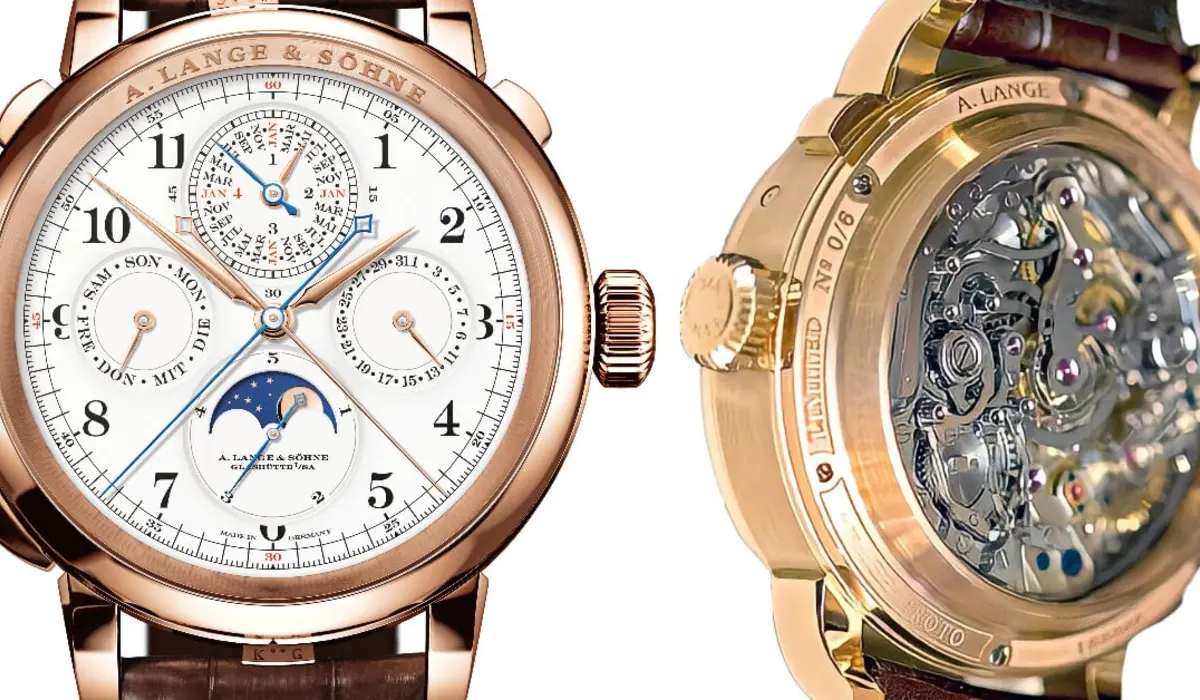
The most impressive watch complications represent the pinnacle of mechanical watchmaking skill and artistic engineering. A watch complication is any feature on a mechanical watch that does more than tell standard time. From the gravity-defying tourbillon watch to the self-adjusting perpetual calendar watch, these high horology mechanisms blend history, utility, and micro-craftsmanship into stunning luxury watch features.
What Exactly Is a Watch Complication?
Before we jump into the list, let’s clear up the main definition.
A complication is simply any feature built into a watch movement that does more than tell hours, minutes, and seconds.
In high horology, these features are graded by the sheer complexity of their mechanical parts.
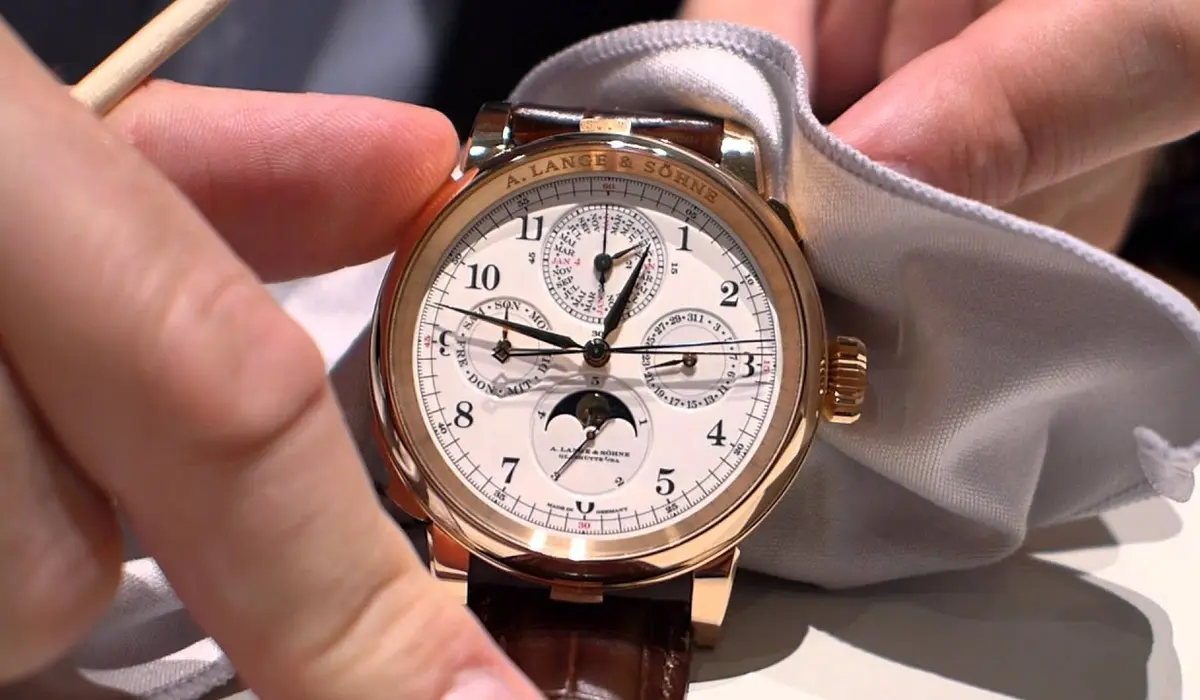
Adding a simple date display requires a few extra gears, but adding astronomical tracking takes hundreds of handcrafted components working in total harmony.
At PraviCeler, we always appreciate how these mechanical watch complications transform a simple accessory into a wearable piece of art.
Let’s look at how the main complication categories stack up in high horology:
| Complication Category | Primary Purpose | Relative Complexity | Common Examples |
| Timing & Measurement | Track elapsed events accurately | Moderate to High | Chronograph, Split-Seconds |
| Calendar & Date | Track days, months, and leap years | Moderate to Extreme | Annual Calendar, Perpetual Calendar |
| Acoustic & Chimes | Announce time using tiny internal gongs | Extremely High | Minute Repeater, Alarm |
| Astronomical & Gravity | Counteract forces or track lunar cycles | Ultra High | Tourbillon, Moon Phase |
The 8 Most Impressive Watch Complications Explained
1. The Tourbillon: Defying Gravity in Style
Have you ever seen a tiny spinning cage inside a watch dial?
That hypnotizing mechanism is a tourbillon watch complication.
Back in 1795, Abraham-Louis Breguet invented the tourbillon to solve a very specific problem with pocket watches.
When a pocket watch sat vertically in a vest pocket, gravity pulled on its delicate balance wheel, causing slight timekeeping inaccuracies.
Breguet built a rotating cage that constantly turns the escapement 360 degrees every minute.
By constantly rotating, the watch averages out positional errors caused by gravity.
While modern wristwatches move with your arm anyway, the tourbillon watch remains one of the ultimate luxury watch features because it is extraordinarily difficult to build.
2. The Perpetual Calendar: Mechanical Memory That Lasts a Lifetime
Setting the date on your watch at the end of a 30-day month can be a minor annoyance.
A perpetual calendar watch solves that problem permanently.
Unlike a standard date wheel, a perpetual calendar mechanically remembers:
-
Months with 30 or 31 days
-
The short month of February with 28 days
-
Leap years every four years with 29 days in February
This incredible mechanical watch complication will automatically adjust itself without manual correction until the year 2100.
Why 2100?
Because leap years are skipped on century years not divisible by 400, based on available data from the Gregorian calendar.
It is a true mechanical computer for your wrist.
3. The Minute Repeater: Telling Time Through Sound
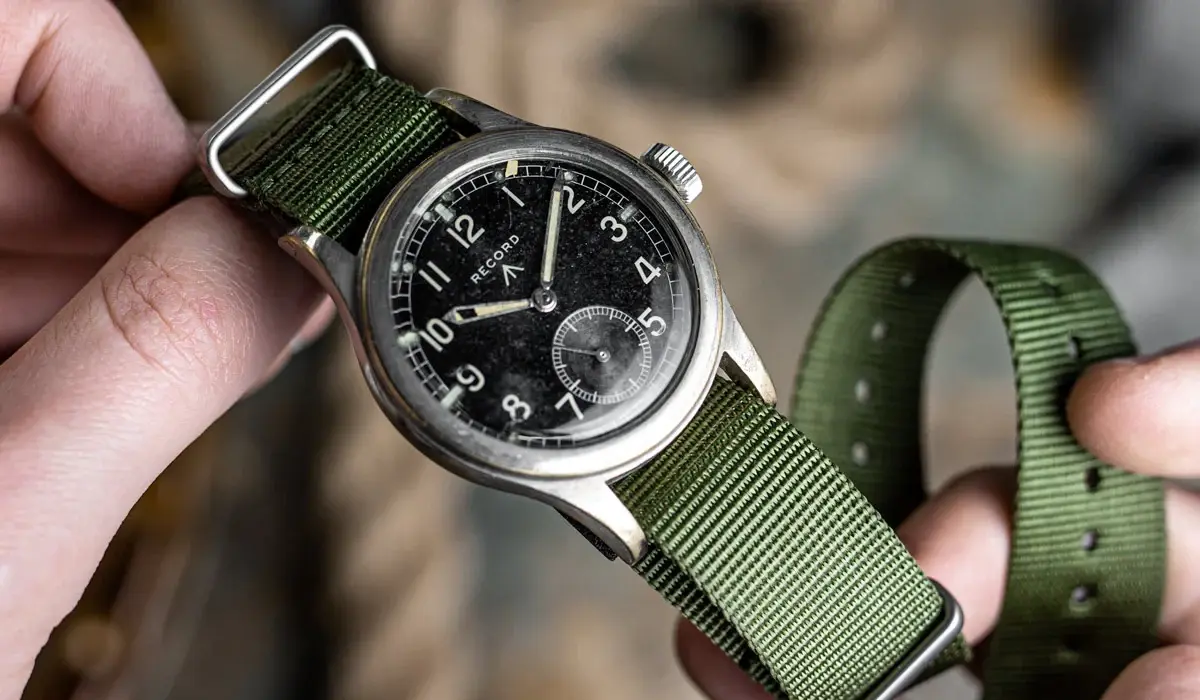
Imagine being able to check the time in pitch-black darkness just by pressing a slide lever on your watch case.
That is exactly what a minute repeater does.
Before electric lights existed, watchmakers created acoustic complications that chime the exact hour, quarter-hour, and minute on demand.
When activated, tiny steel hammers inside the case strike miniature tuned wire gongs:
-
A low-pitched tone chimes the hours.
-
A double high-low combination chimes the quarter-hours.
-
A high-pitched tone chimes the remaining individual minutes.
The manufacturing tolerances required for a minute repeater are mind-boggling.
The master watchmaker must manually file and tune the steel gongs by ear to achieve perfect acoustic harmony.
4. The Chronograph: The Classic Mechanical Stopwatch
If you love sport watches, you are probably already familiar with the chronograph watch.
A chronograph watch is essentially a mechanical stopwatch integrated directly into the regular watch movement.
By pressing pushers on the side of the case, you can start, stop, and reset a central seconds hand to time specific events.
Standard sub-dials on the watch face track elapsed minutes and hours.
High-end versions like the split-seconds (rattrapante) chronograph use two overlapping second hands.
This allows you to pause one hand to record a lap time while the second hand keeps running undisturbed.
Whether timing race cars or brewing coffee, it remains one of the most practical high horology complications ever created.
5. The Moon Phase: A Touch of Celestial Romance
There is something undeniably magical about wearing the lunar cycle on your wrist.
A moon phase watch tracks the 29.53-day synodic cycle of the moon across the night sky.
Behind a decorative cut-out on the dial sits a disc painted with two metallic moons.
As time moves forward, an internal gear train slowly rotates this disc to show the current lunar phase:
-
New Moon
-
Waxing Crescent
-
Full Moon
-
Waning Gibbous
While it might not be strictly necessary for daily commuting, a moon phase watch connects mechanical horology back to its historical astronomical roots.
At PraviCeler, we think it adds an unmatched level of artistic elegance to any dress watch dial.
6. The GMT and World Timer: Essential Tools for Frequent Flyers
Do you travel across different time zones often?
If so, GMT and World Time complications are designed specifically for your lifestyle.
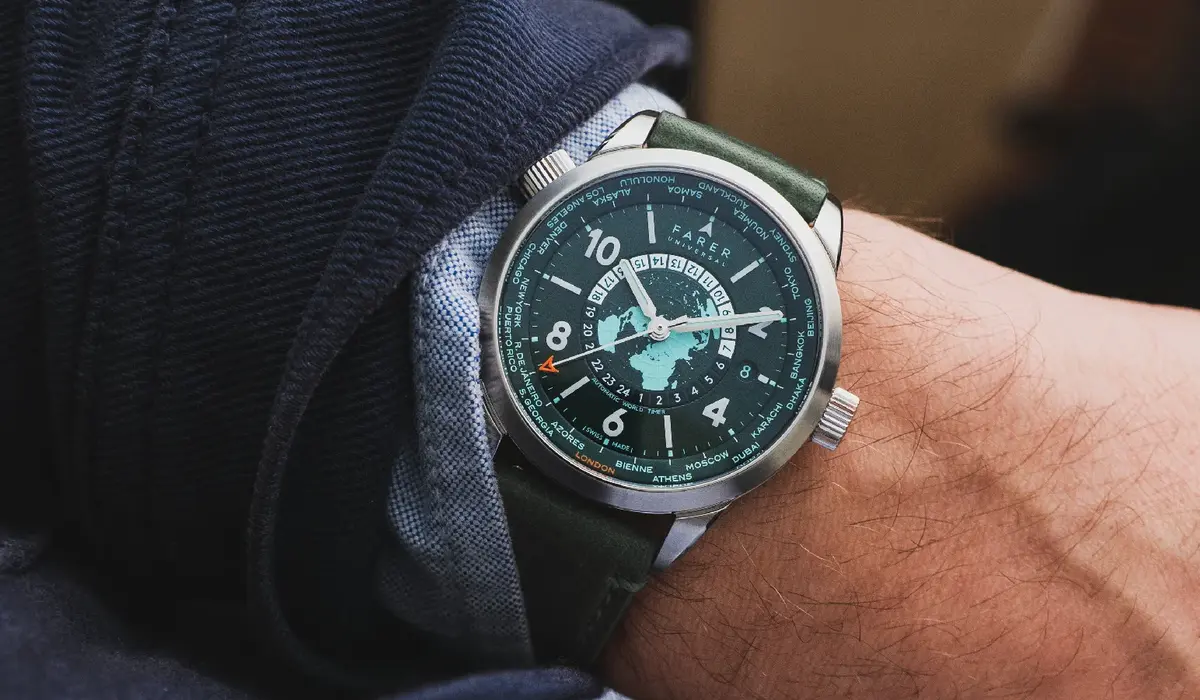
A GMT watch uses an extra 24-hour hand and a rotating outer bezel to display two time zones simultaneously.
A World Timer takes this concept even further by displaying all 24 major global time zones at once.
By looking at an outer ring printed with famous city names, you can instantly see what time it is in London, Tokyo, or New York.
It is one of the most functional mechanical watch complications ever engineered for modern travel.
7. The Equation of Time: Mapping True Solar Reality
Did you know that a standard 24-hour day is actually an artificial human average?
Because Earth moves in an elliptical orbit and sits on a tilted axis, actual solar days fluctuate throughout the year.
Solar noon (when the sun is highest in the sky) rarely matches 12:00 PM on your digital clock.
The difference between solar time and standard mean time ranges from -14 minutes to +16 minutes depending on the season.
An Equation of Time complication calculates this natural variance using a custom, kidney-shaped mechanical cam inside the movement.
An extra hand on the dial displays the precise difference between your watch’s mechanical time and true solar time.
It is one of the rarest high horology features reserved for elite watchmaking houses.
8. The Grand Complication: The Ultimate Horological Holy Grail
What happens when a master watchmaker decides not to choose just one feature, but combines many of them into a single timepiece?
You get what the watch industry calls a Grand Complication.
To qualify for this legendary title, a watch generally must combine major complications from three distinct families:
-
Timing: Split-seconds chronograph
-
Calendar: Perpetual calendar with moon phase
-
Sound: Minute repeater or grande sonnerie
Building a Grand Complication requires housing hundreds or even over a thousand microscopic parts inside a standard case.
A single master watchmaker might spend an entire year assembling, adjusting, and finishing just one piece.
It is the absolute summit of luxury watch features and mechanical engineering artistry.
Comparing Key Watch Complications

To help you remember how these incredible features differ, here is a breakdown of their primary roles and everyday practicality:
| Complication | Primary Focus | Best Used For | Maintenance Complexity |
| Tourbillon | Positional precision & visual beauty | Showcasing micro-engineering mastery | High |
| Perpetual Calendar | Date accuracy across decades | Seamless daily date tracking | High |
| Chronograph | Event interval measurement | Timing workouts, laps, or cooking | Moderate |
| Moon Phase | Celestial tracking | Aesthetic appeal & lunar tracking | Low to Moderate |
| GMT / World Timer | Multi-time zone tracking | International travel & global communications | Low to Moderate |
Why Mechanical Complications Still Matter Today
You might wonder: why do people still care about mechanical watch complications when a smartphone can do all of this instantly?
The answer comes down to appreciation for human craft and heritage.
Every gear, lever, and spring inside these timepieces is finished by hand.
When you strap on a perpetual calendar watch or a tourbillon watch, you are wearing centuries of preserved mathematical and artistic discovery.
At PraviCeler, we believe that understanding these mechanisms transforms how you look at fine wristwatches forever.
Conclusion
Understanding the most impressive watch complications gives you a brand-new appreciation for mechanical watchmaking.
From gravity-defying tourbillon cages and acoustic minute repeaters to perpetual calendars that think decades ahead, these features demonstrate what is possible when engineering meets passion.
While smart devices offer convenient digital utilities, nothing replaces the tactile satisfaction and timeless artistry of a mechanical complication.
Next time you admire a fine timepiece, take a closer look at its dial, you might just be staring at a masterpiece of human ingenuity.
Frequently Asked Questions
What is considered the hardest watch complication to build?
Generally, minute repeaters and grand complications are considered the most difficult mechanisms to assemble manually.
Does a tourbillon watch make a timepiece more accurate today?
While originally designed for vertical pocket watches, modern wrist tourbillons primarily showcase high horology craftsmanship.
How often does a perpetual calendar watch need manual adjustment?
In most cases, a perpetual calendar watch only requires adjustment during skipped century leap years like 2100.
What is the difference between a chronograph and a automatic watch?
An automatic watch refers to self-winding movement power, while a chronograph is a built-in stopwatch function.
