French Polynesia is a long way from almost everywhere, and that distance is part of its character. The islands lie scattered across a stretch of the South Pacific so wide that the sea between them is measured in days rather than hours, and the reward for the journey is water of a colour that photographs struggle to describe and a pace of life that asks very little of anyone.
To explore it by luxury cruise is to accept the region on its own terms: slowly, from the water, with the ship as both transport and refuge. The finest sailings here are small, unhurried, and shaped around the lagoons rather than in spite of them. They do not rush between famous names; they linger where the water is calmest and the light is best, and they leave the islands more or less as they found them.
There are other ways to see French Polynesia. Flights connect the main islands, and a stay in a single resort can be deeply restful. But the archipelago was made to be approached by sea: the islands reveal themselves gradually from the deck first a green peak on the horizon, then the pale ring of a reef, then the lagoon itself.
A cruise gathers several islands into one journey without repeated packing or small-plane schedules. For travellers who want the breadth of the region without sacrificing comfort, it is the most considered way to travel here.
Why French Polynesia Suits a Small Ship
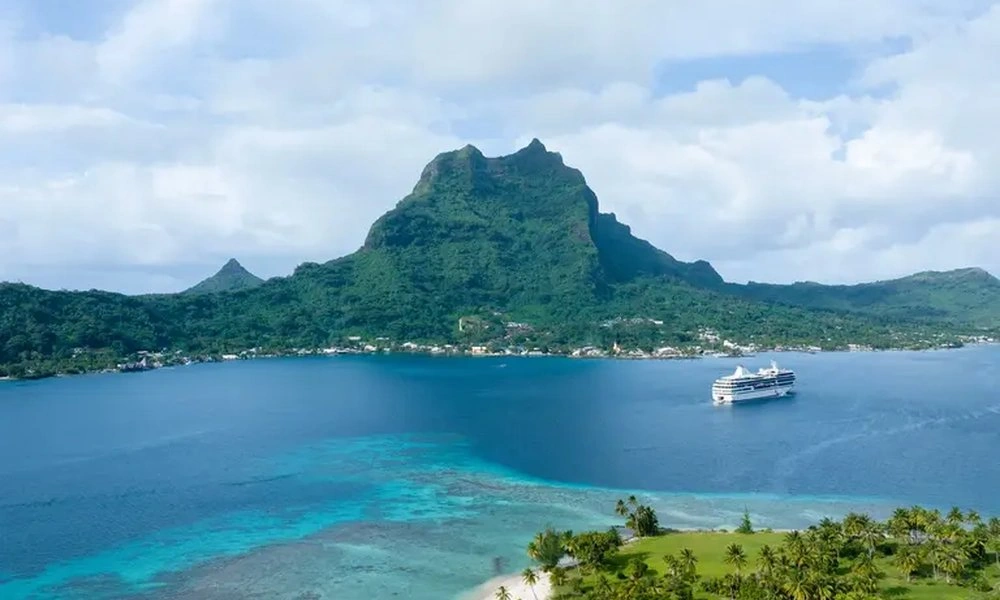
Scale is the first thing to get right. French Polynesia’s lagoons are shallow, its passes narrow, and many of its finest anchorages are closed to anything large. A ship of a few hundred guests can slip through a reef pass, anchor inside a lagoon, and put guests ashore by tender onto a beach that no road reaches.
A larger vessel must stand off in deep water, and the islands it visits are the ones with the infrastructure to receive it which are rarely the quietest ones. The difference is not a matter of taste; it is a matter of access. The smaller the ship, the more of French Polynesia it can actually reach.
Why Small Ships Suit French Polynesia’s Lagoons and Islands
The region’s most established luxury vessel is the m/s Paul Gauguin, a 330-guest ship operated by Paul Gauguin Cruises, which has sailed these waters year-round from Papeete for many years and is purpose-built for the region, with a shallow draft that lets it enter lagoons and atolls larger ships cannot.
It is the clearest expression of the small-ship idea in French Polynesia: a single ship, devoted to one part of the world, with itineraries of roughly seven to fourteen nights covering the Society Islands, the Tuamotus, the Marquesas, and the Cook Islands. Other lines visit the region seasonally with small expedition-style vessels, and the principle is the same in each case the ship is sized to the water, not the other way around.
Small ships also change the atmosphere on board. With a few hundred guests rather than a few thousand, the dining rooms are calm, the decks are never crowded, and the crew learn names within a day or two. Days ashore are organised in small groups, and the ship can stay late in a port when the light is good or leave early when the weather turns.
The luxury here is not in spectacle but in proportion. Travellers weighing the wider world of high-end cruising may find our guide to the world’s most luxurious cruise journeys a useful companion, but French Polynesia rewards a narrower focus one ship, one ocean, and time enough to do both justice.
The Islands of the Classic Route
Most first sailings follow the Society Islands, the group that includes Tahiti, Moorea, Bora Bora, Huahine, Raiatea, and Taha’a. The route is classic for good reason: the islands are close enough together for a week-long sailing to visit several of them properly, and each one has a distinct character.
A good itinerary does not try to cover everything. It gives Bora Bora and Moorea the time they deserve, leaves room for a quieter island in between, and keeps at least one day with nothing scheduled but the lagoon.
Tahiti and Papeete
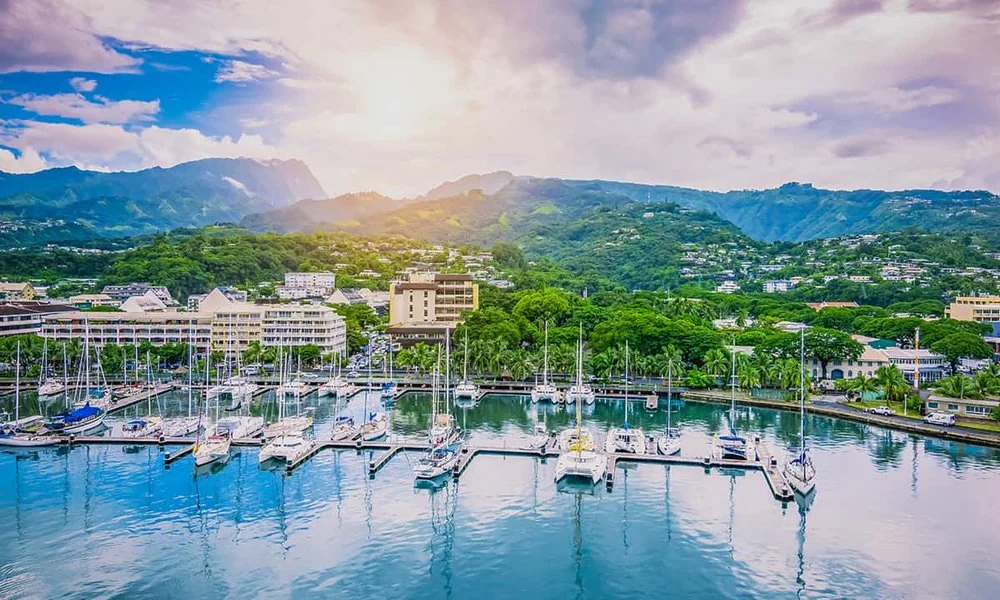
Nearly every French Polynesia cruise begins and ends in Papeete, the capital of Tahiti and the region’s main port. Papeete is a working town rather than a resort, and that is its charm. The waterfront market sells fruit, flowers, and woven hats; the marina fills with sailboats; and the mountains rise green behind the town in a way that makes the whole place feel smaller and more sheltered than it is.
It is worth arriving a day early, if only to adjust to the time zone and to see the island from land before seeing it from the sea.
Tahiti itself is larger and wilder than its reputation suggests. The interior is mountainous and largely untouched, with valleys, waterfalls, and black-sand beaches on the eastern coast. Most cruise guests see only the Papeete waterfront, which is understandable the ship is waiting, and the islands ahead are the point.
The embarkation evening, with the ship still in port and the town’s lights coming on across the water, is a gentle beginning to a voyage that only gets quieter from here.
Moorea
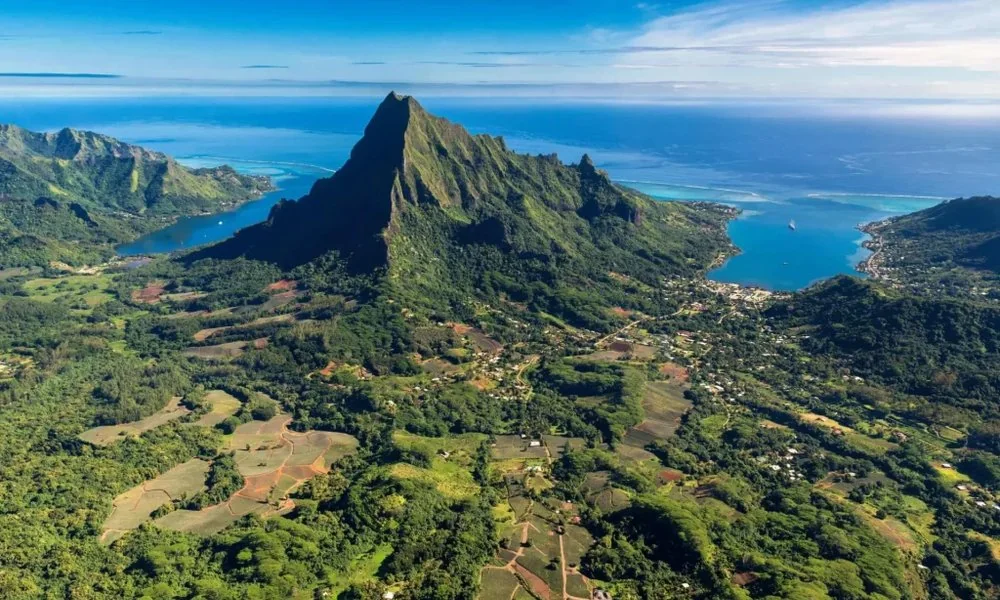
Moorea lies a short sail from Tahiti, and it is often the first island that makes travellers understand what they have come for. Its two great bays, Cook’s Bay and Opunohu Bay, cut deep into the island beneath jagged green peaks, and the sight of them from the deck the mountain called Rotui rising between the two is one of the finest arrivals in the South Pacific.
Moorea is smaller and softer than Tahiti, and it suits a slow day: a swim in the lagoon, a walk through a pineapple plantation, a lookout over the bays in the late afternoon when the light turns the peaks gold.
Many itineraries give Moorea an overnight stay, and it is worth choosing one that does. The island changes after the day visitors leave: the lagoon goes still, the mountains darken, and the evening feels private in a way a single afternoon cannot offer. Snorkelling here is easy and rewarding, with rays and reef fish in the shallow water close to shore.
Moorea is also the island where the idea of the cruise itself starts to make sense: the ship is anchored in the bay, the island is entirely present, and there is nowhere else to be.
Bora Bora
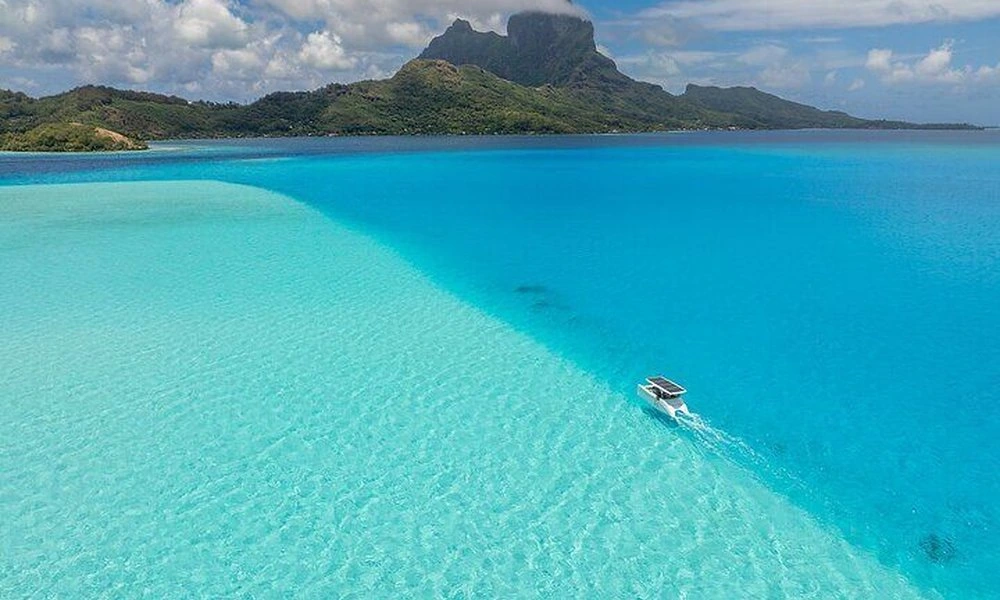
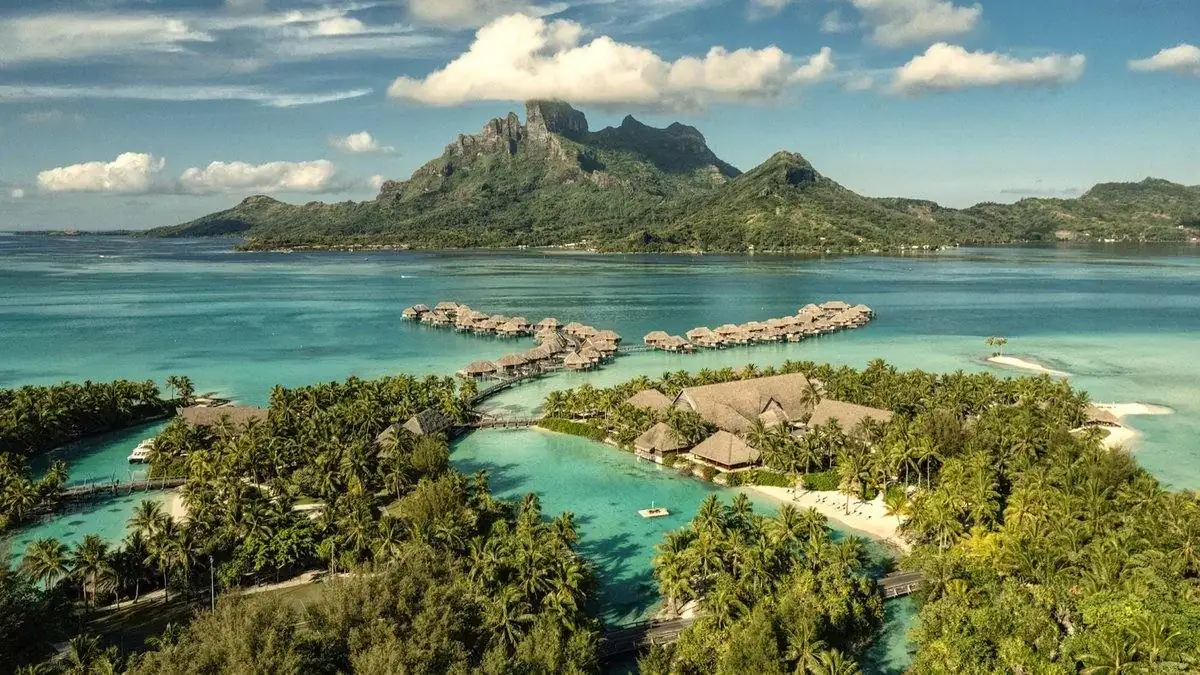
Bora Bora is the name everyone knows, and it earns its reputation the moment the ship enters the lagoon. The water here is the clearest and most variously coloured in the region pale turquoise over the sand, deep blue over the reef, and every shade between and Mount Otemanu rises from the centre of the island in a way that keeps the eye returning to it all day.
The lagoon is the experience: swimming, snorkelling, and slow boat rides across water so clear that the coral is visible from the surface. The ship will typically anchor and tender guests ashore, and the best hours are the early ones, before the sun is high and the water is at its most transparent.
Why an Overnight in Bora Bora Is Worth Prioritising
An overnight in Bora Bora is the single most valuable feature of a Society Islands itinerary, and it is worth asking about before booking. The island by day is beautiful; the island at dusk, with the mountain going dark against a pink sky and the lagoon turning to glass, is something else entirely. Some sailings also include a day at a private beach or islet in Bora Bora, away from the main island, where the only company is the ship’s own guests.
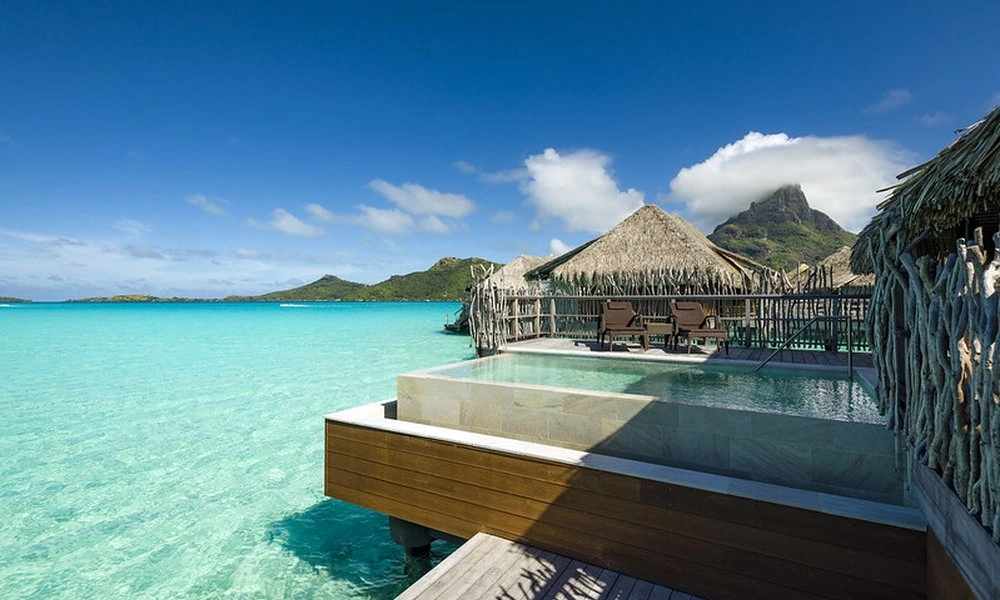
For travellers who wish to linger, Bora Bora is also the natural place to extend a journey ashore before or after the cruise. The island’s overwater bungalows are the most famous rooms in the South Pacific, and a night or two in one waking to the lagoon beneath the deck is a fitting bookend to a week at sea.
An overwater stay is not a substitute for the cruise but a complement to it: the cruise shows the breadth of the islands, while a bungalow shows the depth of one lagoon, hour by hour, from a private deck.
Huahine
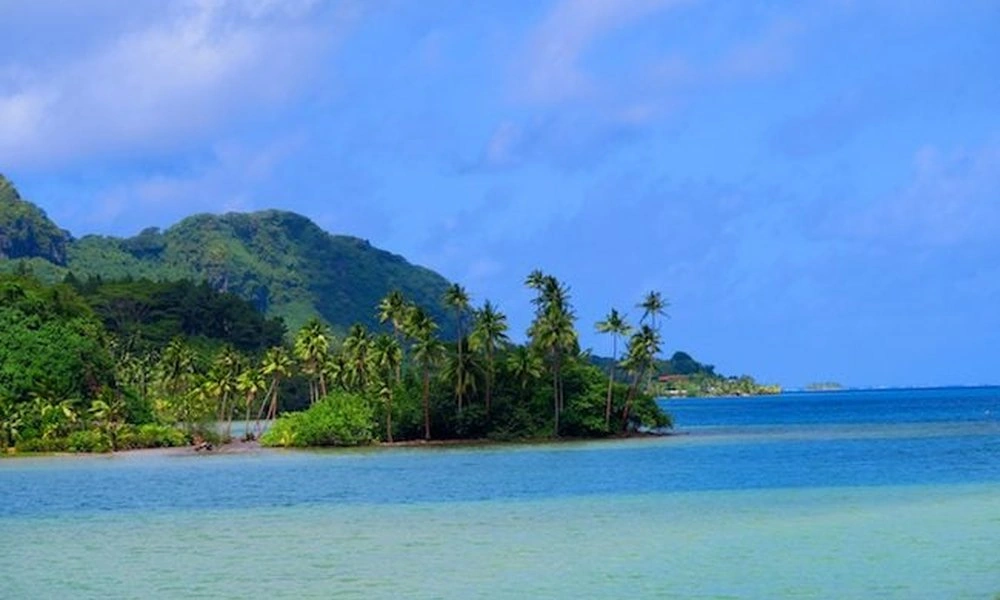
Huahine is the quiet counterweight to Bora Bora. It is less developed, less visited, and, to many travellers, more rewarding for it. The island is really two islands joined by a bridge, fringed with palms and ringed by a shallow lagoon, with ancient stone temples marae standing in the forest as a reminder that these islands were settled and organised long before European ships arrived.
The pace here is slower still: a bicycle ride around the coast, a visit to a pearl farm, a long lunch in a village that has not rearranged itself for visitors.
Huahine is the island that regulars mention first when asked which stop mattered most, and it is usually the one that first-time travellers had not heard of. That is the pattern of French Polynesia by cruise: the famous islands deliver exactly what is expected of them, and the quieter ones deliver something unlooked-for.
An itinerary that includes Huahine and its neighbours Raiatea and Taha’a, where the sacred marae of Taputapuatea on Raiatea is recognised by UNESCO is an itinerary put together by people who know the region rather than people who know its postcards.
Beyond the Society Islands
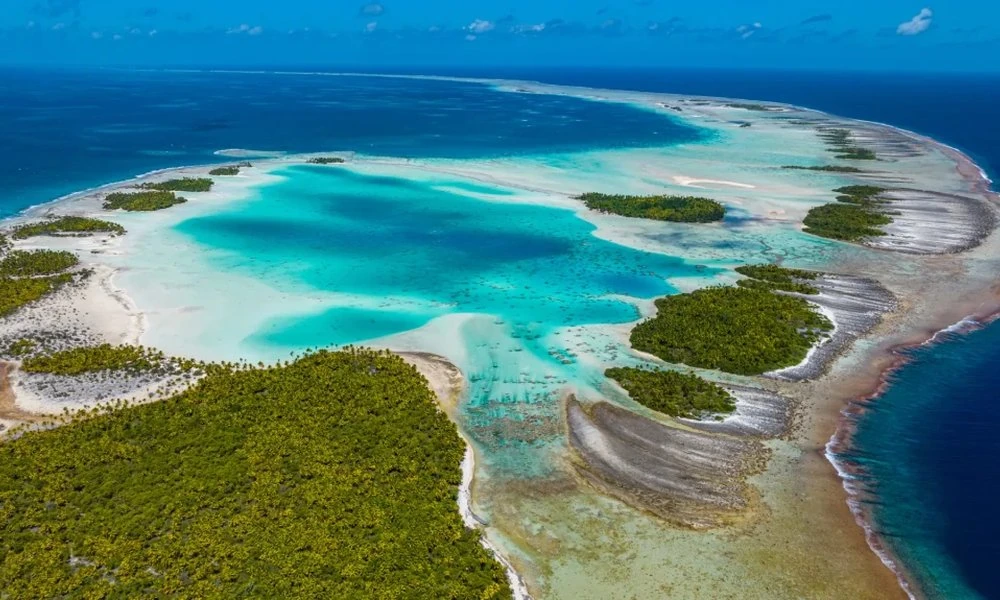
A longer sailing opens up the Tuamotus, the vast chain of low atolls to the northeast of Tahiti. These islands are the opposite of the Society Islands in almost every way: no mountains, no valleys, just thin rings of coral and palm motu enclosing lagoons so large they feel like inland seas.
Rangiroa, the largest atoll in French Polynesia, is the best known, and its lagoon is wide enough that the far shore disappears over the horizon. Fakarava, its neighbour, is a UNESCO Biosphere Reserve, recognised for the richness of its marine life, and its passes are famous among divers for the walls of fish that move through them with the tide.
The Tuamotus are for travellers who want the ocean itself rather than the scenery around it. The islands are low and quiet, the villages small, and the days are shaped by the water snorkelling in the passes, drifting over coral gardens, watching the light change across a lagoon that has no far edge.
A ten- or eleven-night itinerary that pairs the Society Islands with the Tuamotus is the fullest version of a French Polynesia cruise.
Further still lie the Marquesas, the remote northeastern group, recently inscribed on UNESCO’s World Heritage List. They are high, rugged islands of cliffs and valleys, far from the lagoons of the Society group, and they are reached only on the longest sailings typically around two weeks.
The Marquesas are the least visited part of French Polynesia, and the most distinct, and a Marquesas sailing is the natural next step for travellers who have already fallen for the region. The Cook Islands, to the west, appear on some of the longer routes too, offering a gentler counterpoint to the French territory.
Life Aboard a Small Ship
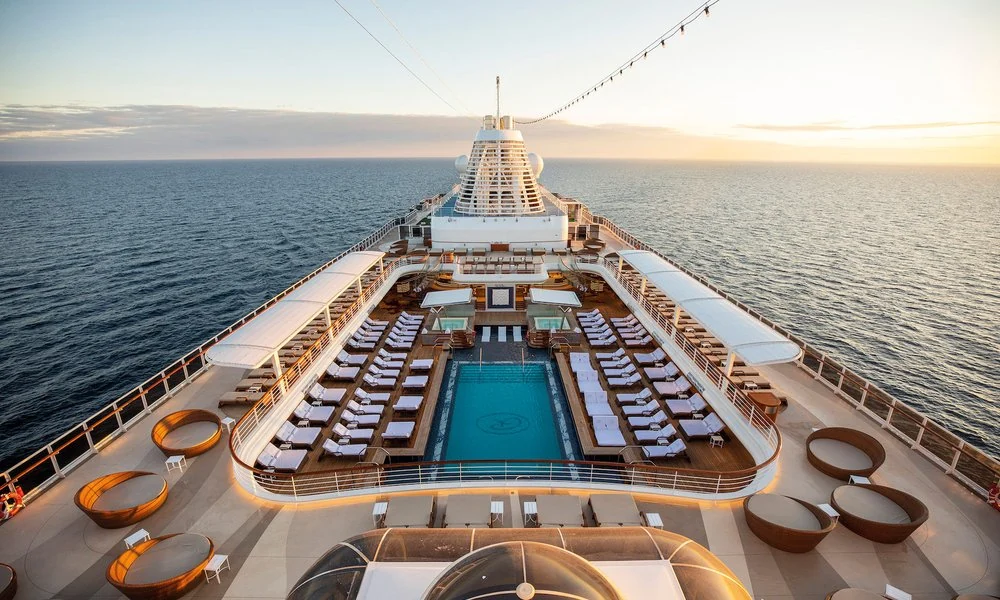
Days aboard a small ship in French Polynesia follow a rhythm that is easy to settle into. Mornings are for the water a tender ashore, a snorkel, a walk and afternoons are for the ship itself: reading on deck, a swim in the pool, a long lunch that drifts into the early evening.
There are no queues, no announcements competing for attention, and no need to plan the day in advance. The ship moves between islands mostly at night or in the early morning, so the waking hours are spent either ashore or at anchor in a lagoon, with the island in view.
Dining, Polynesian Culture and the Private Charter Alternative
Dining is one of the quieter pleasures of these sailings. The food leans French, as befits a French territory, with local fish, tropical fruit, and vanilla from Taha’a appearing often, and the dining rooms are small enough that a meal feels like a dinner party rather than a service.
Evenings are unhurried: a drink on deck as the sun sets, music rather than spectacle, and the occasional Polynesian cultural performance by the ship’s local hosts. On the Paul Gauguin, resident Polynesian hosts known as the Gauguines and Gauguins travel with the ship and share music, dance, and stories, which gives the evenings a connection to the islands that a visiting entertainer could not.
For travellers who find even a small ship too sociable, the alternative is a private charter a yacht of one’s own, with a crew and an itinerary set entirely by the guests.
The principle is the same, and the waters are just as kind; our guide to a luxury yacht charter in Montenegro sets out how a first charter works, and the same questions the right broker, an honest account of the group, a careful reading of the terms apply in the South Pacific as they do in the Adriatic. A charter suits a family or a group travelling together; a cruise suits everyone else.
The Water Itself
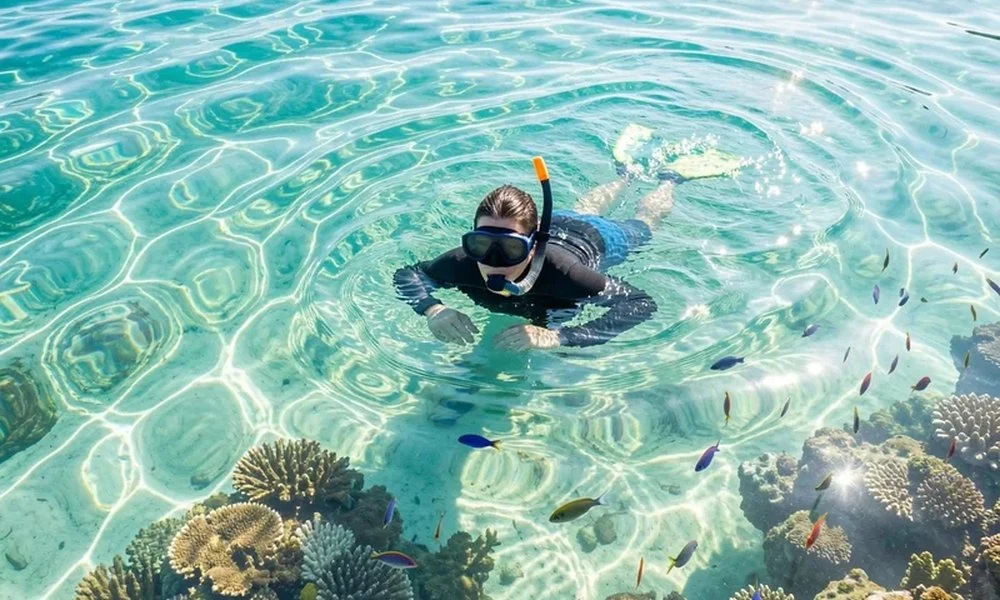
It is worth saying plainly: the water is the reason to come. The lagoons of French Polynesia are warm, clear, and shallow enough that a snorkeller can spend hours over coral gardens without ever feeling out of their depth, and the marine life is present in a way that feels generous rather than staged rays gliding over the sand, reef sharks moving calmly in the passes, turtles surfacing beside the tender.
Most ships carry snorkelling equipment and offer guided sessions from the marina or the beach, and the best of them include it without fuss or extra charge.
For divers, the Tuamotus in particular are among the finest waters anywhere, with the passes of Rangiroa and Fakarava drawing experienced divers from around the world. For everyone else, a mask and fins are enough.
The etiquette is simple and worth observing: the reefs are living things, and the islands’ communities have looked after them for generations. Touch nothing, take nothing, and leave the coral as it was. The ships’ naturalists and guides will say the same, and it is worth listening the lagoon is the reason the journey exists, and it deserves to be treated as more than a backdrop.
There is also a pleasure in the water that has nothing to do with wildlife. A lagoon at dawn, before anyone is awake, is one of the stillest sights in the world: the surface unbroken, the mountain reflected, the ship at anchor in water the colour of glass. Travellers who rise early for it are rarely disappointed.
Choosing a Sailing, and When to Go
The choice, for most travellers, is between length and depth. A week covers the Society Islands well and is the right length for a first visit. Ten or eleven nights add the Tuamotus and give the journey a second character.
Two weeks reach the Marquesas and the Cook Islands, and suit travellers who want the region in full. There is no wrong answer, but there is a common mistake: trying to see everything in the shortest sailing. French Polynesia rewards time, and a slower itinerary with overnights in Bora Bora and Moorea will always be better than a faster one that ticks off more names.
When to go is a question of trade-offs. The drier, cooler months roughly May to October are generally considered the finest, with steady trade winds and clear skies, and they are also the most popular.
The warmer months, roughly November to April, bring more rain and humidity, but also warmer water, fewer visitors, and the islands at their greenest. Choose the sailing that has the overnights and the islands you want, and let the season follow.
Planning Your Arrival and Making the Most of Your Cruise
Getting there is part of the planning, and it deserves the same care as the sailing itself. The journey to Tahiti is a long one from almost anywhere, and the arrival is far pleasanter if the flight is treated as part of the holiday rather than an obstacle to it.
Travellers weighing the options for the long haul may find our comparison of private jet versus first class useful, and in practice a well-chosen first-class seat, with a night in Papeete before embarkation, is the most sensible way to arrive rested.
Book the ship first, then the flights, then a hotel night or two in Tahiti and leave a day spare at the end, so that the return journey does not begin the moment the ship docks.
A few practical notes, briefly. Pack lightly: the days are warm, the evenings are informal, and the ship will have what is needed. Bring reef-safe sunscreen and a good mask if you own one, and book the smaller-group excursions early where the ship allows it.
Confirm, before booking, what is included the better sailings in this region are largely all-inclusive, covering meals, drinks, gratuities, and watersports, but the details vary, and it is worth reading them rather than assuming.
When the last tender returns and the lagoon darkens around the ship, the day settles into the quiet that makes these islands what they are. French Polynesia does not ask to be hurried, and a good cruise does not try.
If you go, go slowly, give the water your mornings, and let the ship carry the rest. We wish you calm seas, clear lagoons, and a journey that stays with you long after the islands have slipped below the horizon.