Step aboard a large private jet and the first thing you notice is the quiet. There is no queue, no cabin announcement, no neighbour’s elbow. The door closes, the engines spool, and a room the size of a small apartment lifts into the sky. For the people who fly this way, the aircraft is not really transport. It is a private office, a dining room, a bedroom and a meeting room, all of which happen to cross oceans.
The largest private jets sit at the far end of business aviation, far beyond the light jets that shuttle executives between neighbouring cities. They are the aircraft built for intercontinental days: a morning meeting in one hemisphere, dinner in another, and a proper bed in between. This guide looks inside them what counts as large, how the cabins are arranged, where they can fly, and what ownership and charter actually involve.
What Counts as a Large Private Jet
There is no single official line where a private jet becomes large. The working definition is consistent enough: a large private jet is one with a cabin tall enough to stand in comfortably, wide enough for a proper aisle and club seating, and long enough to divide into separate living zones. Everything else the range, the baggage space, the crew follows from that scale.
The Size Classes, from Light Jets to VIP Airliners
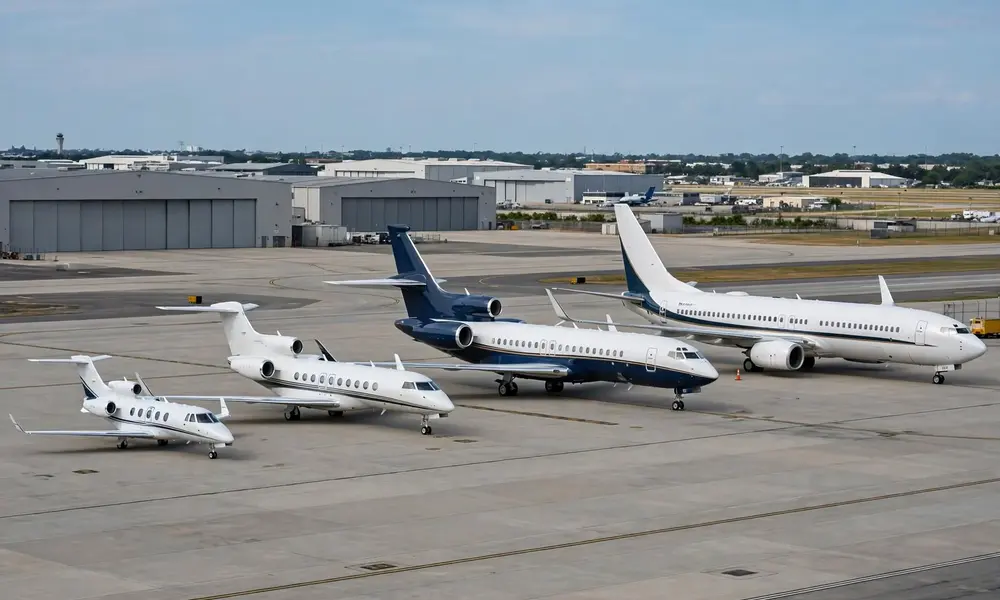
Business aviation is usually described in four broad bands. Light jets are compact, quick aircraft for short hops with a handful of passengers. Midsize jets add range and a little more cabin room. Super-midsize jets bring stand-up headroom and transcontinental reach. Then come the large-cabin jets, the subject of this guide, and beyond them the converted airliners — the Boeing Business Jets and Airbus Corporate Jets that are, in effect, private airliners.
The step from super-midsize to large cabin is the one passengers feel most. The cabin grows wider, the ceiling rises, the seats get further apart, and there is room for a galley that can prepare a real meal rather than simply warm one. On the longest-range models, the cabin is long enough for a forward lounge, a mid-cabin dining or conference area, and a private suite at the rear.
Cabin Height and Floor Space: The Real Measure
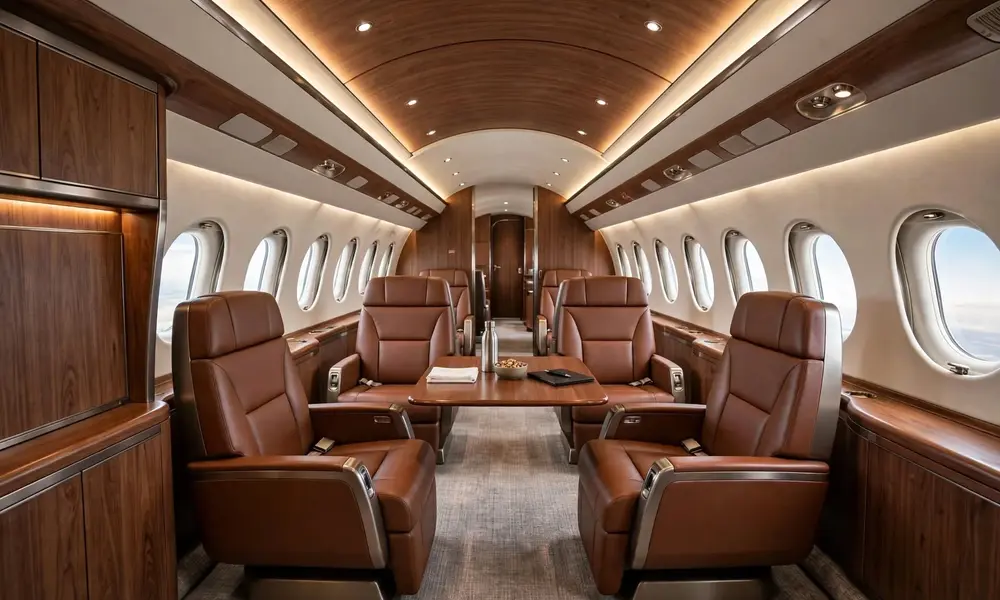
Ask an owner what makes a jet feel large and the answer is rarely the length of the aircraft. It is the height of the cabin and the width of the floor.
A tall cabin changes the way a space is used: people stand, walk and dress without ducking, and the interior designer can hang lighting, fit full-height cabinets and shape a ceiling that feels architectural rather than tubular.
A wide cabin allows club seating in which four people can face each other across a table and still have room to cross their legs.
Floor space matters because a large jet is used differently from a small one. Passengers are not simply seated for take-off and landing; they move around, take meetings, eat at a table, change clothes and sleep.
A cabin that can only be used while seated is a small cabin, whatever the brochure says. The largest jets offer something closer to a suite of rooms, and the best interiors are planned that way from the outset.
The Largest Cabins in the Sky
The large-cabin market is dominated by a small group of manufacturers, each with its own philosophy about what a flagship should be. Gulfstream, Bombardier and Dassault build the purpose-designed ultra-long-range jets that carry the segment.
Boeing and Airbus supply the airliner platforms that become VIP aircraft. The differences between them are real, but they share a common trait: cabins designed around days, not hours, in the air.
Ultra-Long-Range Business Jets
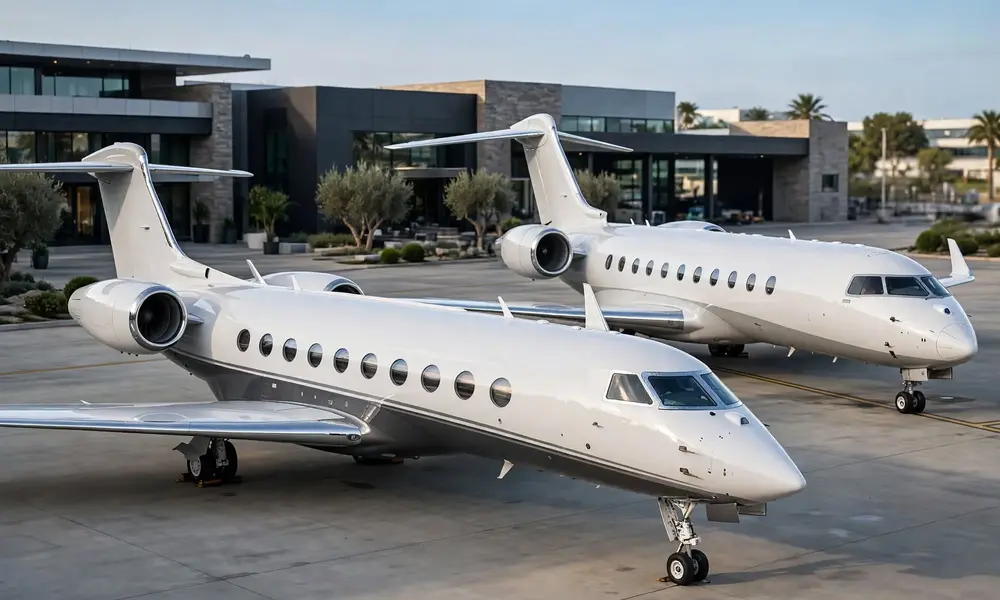
The flagship of this class is the aircraft that can leave one continent after breakfast and arrive on another in time for dinner, without stopping for fuel.
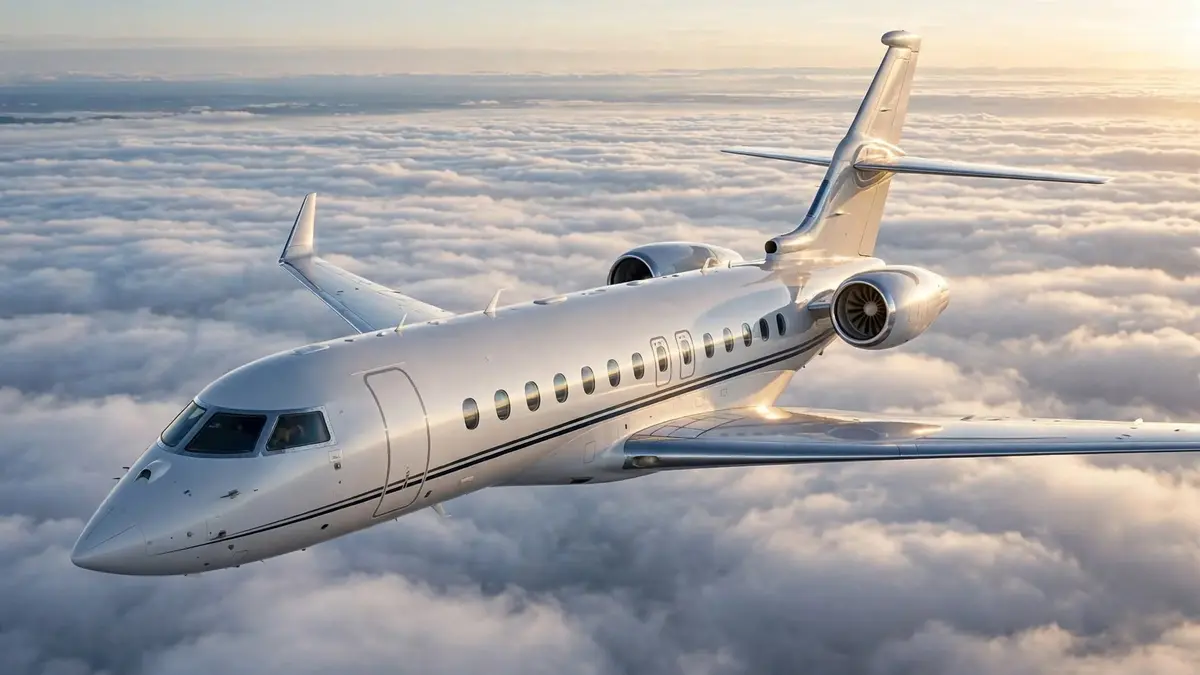
Gulfstream’s largest jets, led by the G700, are the most recognisable examples: long, quiet cabins with as many as five living areas, enormous oval windows, and a reputation for arriving rested rather than merely arrived.
Bombardier’s Global family, including the Global 7500 and its faster sibling the Bombardier Global 8000, offers a similar proposition a cabin divided into distinct zones, with a dedicated crew rest area so the aircraft can keep flying while its passengers sleep.
Dassault’s Falcon 10X, the largest Falcon yet, takes a different route to the same destination, with a very wide cabin and a focus on quiet, low cabin altitude and natural light.
VIP Airliners: The Boeing BBJ and Airbus ACJ
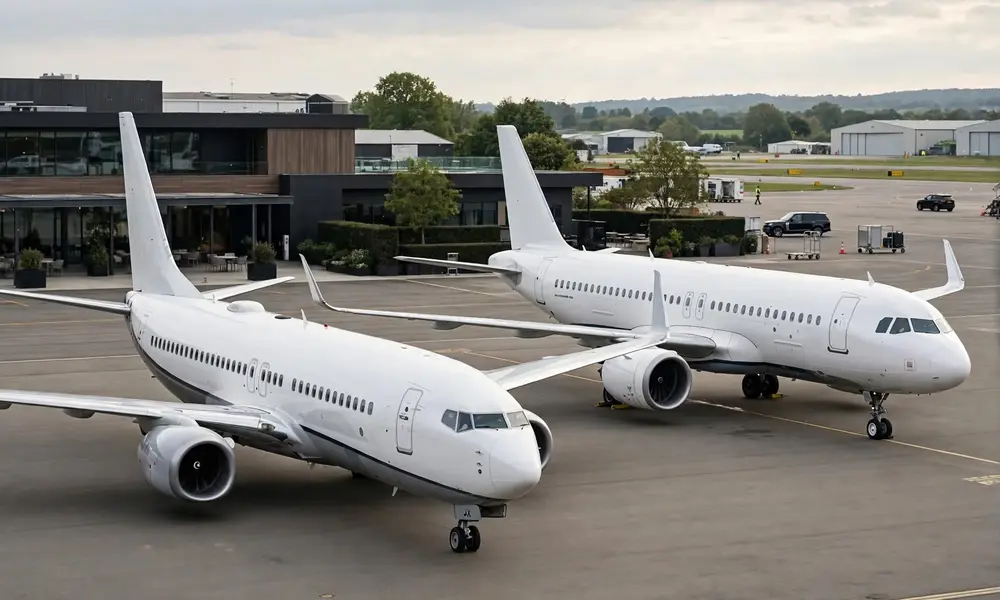
Above the purpose-built business jets sit the converted airliners. A Boeing Business Jet begins life as a 737 and is then fitted out as a private aircraft; an Airbus Corporate Jet starts as an A320-family airliner.
The result is a cabin with the floor area of a small house and the freedom to lay it out almost any way the owner wishes: a lounge, a dining room, a bedroom with a full bathroom, an office, and still room for guests.
These aircraft change the arithmetic of private flight. A large business jet might carry a dozen passengers in great comfort; a BBJ can carry several dozen in the same standard, or a smaller group with a level of space that no business jet can match.
They are the choice of governments, royal families and the very largest corporate flight departments, and they are the reason the phrase “flying palace” exists at all.
Converted Airliners and Head-of-State Aircraft
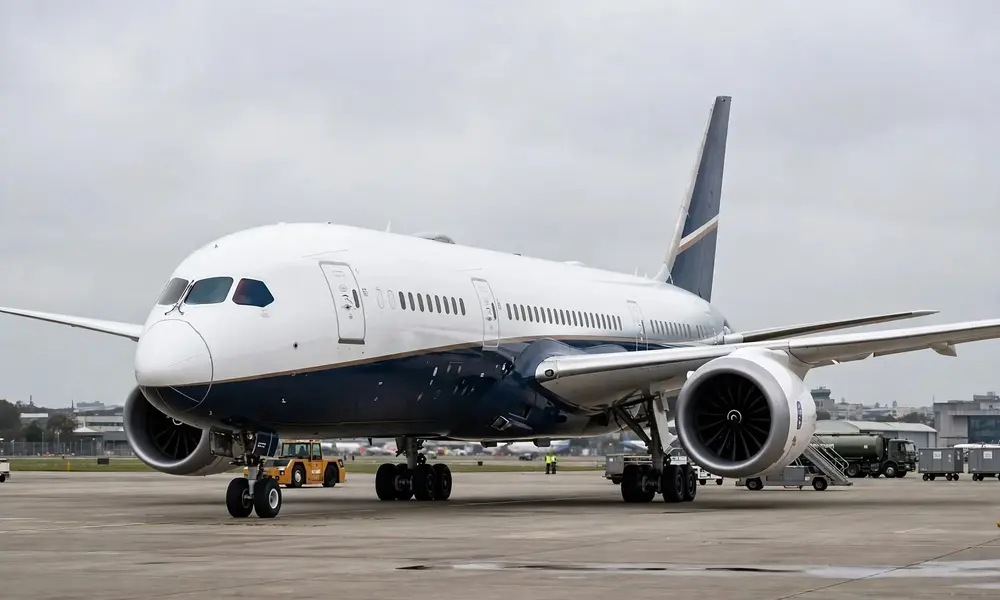
At the very top of the scale are the wide-body conversions: 787s, 777s, A330s and A340s fitted out as private aircraft, along with the head-of-state aircraft operated by governments. These are no longer really comparable to business jets.
They carry meeting rooms, medical suites, secure communications and staff quarters, and they operate with a crew and a support operation closer to a small airline than to a private flight department.
Few people will ever fly on one, but they set the benchmark for what is possible when budget and space are effectively unlimited. The design language of the large business jet the residential styling, the zoned cabin, the emphasis on light and quiet is, in large part, a scaled-down version of what was first tried on these aircraft.
Inside the Cabin: How the Largest Jets Are Laid Out
A large jet cabin is not one room. It is a sequence of rooms, each with a purpose, and the quality of the interior is judged by how well those rooms flow into each other.
The best layouts feel less like an aircraft and more like a well-planned apartment, with the practical constraints the curved walls, the low ceiling at the edges, the need for everything to be secured for turbulence handled so quietly that passengers never notice them.
Lounges and Dining
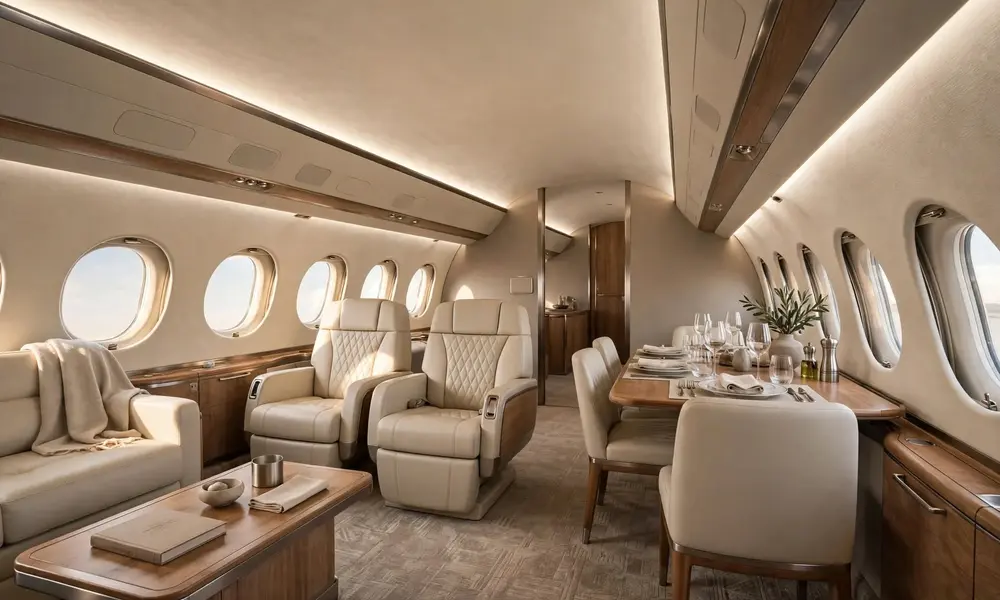
The forward cabin is usually the social space: club seating in cream leather, a sofa, low tables and a screen. It is where passengers gather after take-off, where a meeting happens, and where the cabin crew serves the first drinks.
On the largest aircraft this lounge can be a genuine living room, with a sofa long enough to stretch out on and a table large enough for a working lunch.
Dining is taken seriously. The galley on a large jet is a working kitchen, and the dining area is set with linen, glass and china rather than trays. A long table, sometimes seating eight, turns a flight into a dinner party.
For owners who entertain in the air, the dining room is often the heart of the aircraft the place where the jet earns its keep as a venue, not just a vehicle.
Bedrooms and Bathrooms
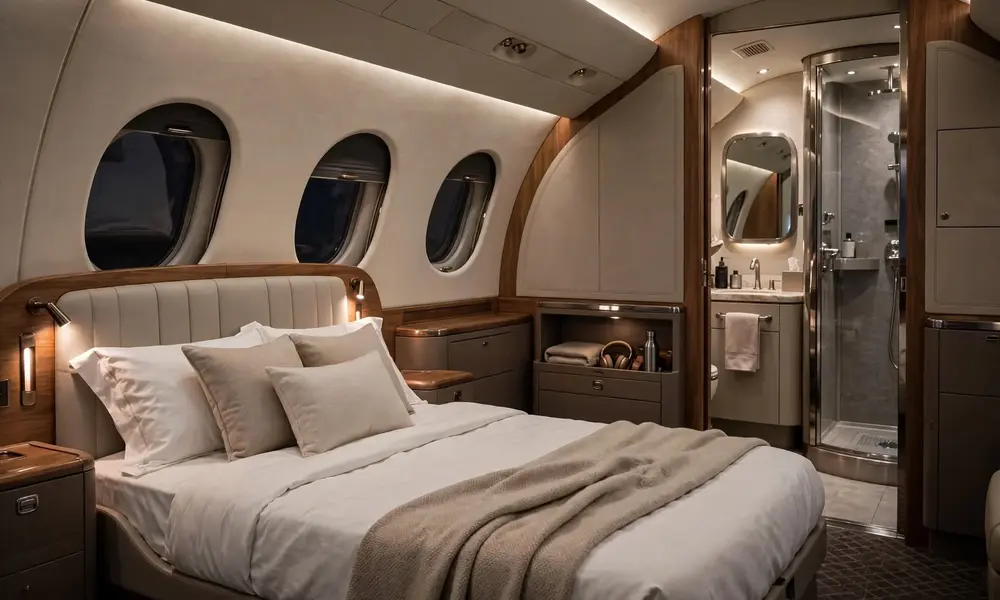
The aft cabin of a large jet is usually private. On the biggest business jets it holds a bedroom with a full-size bed, made up with proper linen, and a bathroom with a shower.
The shower matters more than it sounds: arriving after a long overnight flight, fresh and changed, is one of the quiet luxuries that separates the largest jets from everything below them.
Noise and light are managed carefully in these spaces. Heavy soundproofing, blackout shades and a low cabin altitude the cabin is pressurised to feel closer to sea level than an airliner cabin are all aimed at one thing: sleep.
Owners who fly overnight regard the bedroom as the most valuable square footage on the aircraft, and designers treat it accordingly, with warm materials, soft lighting and storage that keeps the space uncluttered.
Work, Rest and the Crew
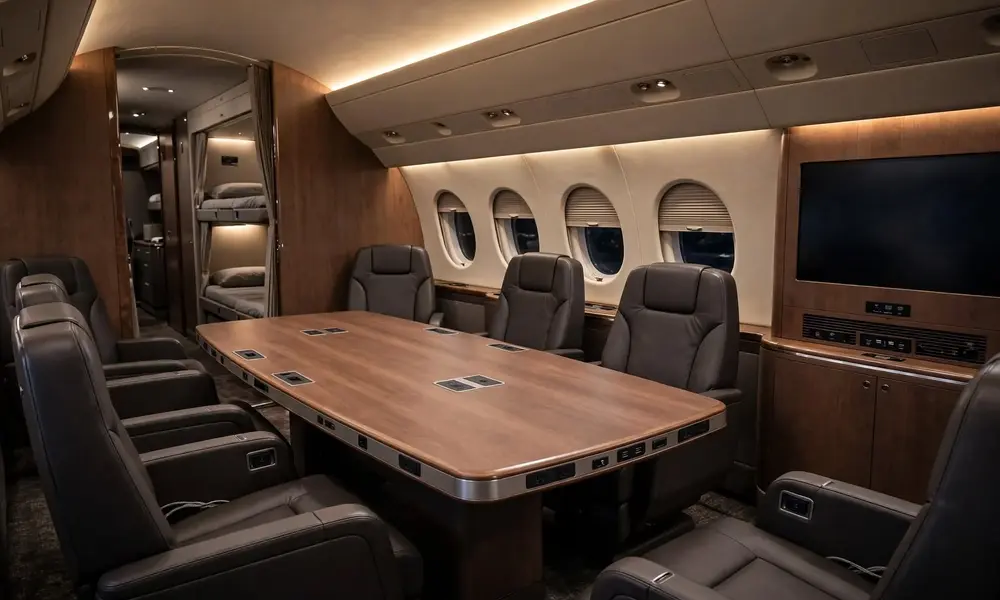
A large jet is also a workplace. The mid-cabin often holds a conference table with seating for four or six, power and connectivity at every seat, and a screen for presentations. Deals are reviewed, boards are briefed and decisions are made at altitude, and the cabin is designed to make that feel normal rather than improvised.
None of it works without the crew. A large jet typically flies with two pilots and at least one cabin attendant, and on the longest routes an augmented crew, so that duty limits are respected and service never lapses.
The crew has its own rest area on the largest aircraft, and a galley and storage planned around serving a full meal service to a full cabin twice, if the flight is long enough. When owners talk about their aircraft, they often talk about the crew first. The aircraft is the hardware; the crew is the experience.
Range and Where the Largest Jets Can Go
The defining capability of the largest jets is range. Not speed the fastest business jets are quick, but the difference of half an hour matters less than the ability to fly non-stop. A large jet connects city pairs that smaller aircraft can only reach with a fuel stop, and that changes the shape of a trip entirely: no intermediate landing, no second take-off, no lost hour on the ground in the middle of the night.
Non-Stop, Continent to Continent
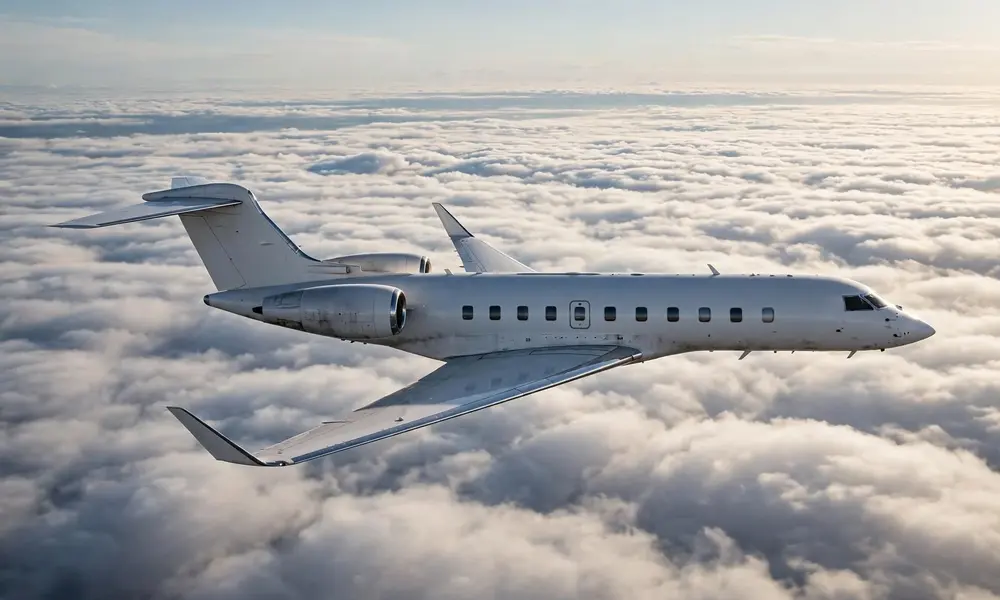
In practical terms, the largest business jets link the world’s major business centres without stopping: the east coast of the United States to the Middle East, western Europe to the west coast of the United States, and much of Asia to Europe.
The exact reach depends on winds, payload and the alternates required by the weather, and a headwind on a winter’s night can turn a comfortable non-stop into a planned fuel stop. Experienced operators plan for that and brief their passengers honestly.
Range is also a question of margin. An aircraft with a long reach can depart with a full cabin, full baggage and full fuel and still have reserves; an aircraft at the edge of its range cannot. The largest jets are bought, in large part, for that margin the ability to take the passengers, the luggage and the fuel, and still have room for the unexpected.
Airports: The Ones That Welcome Them, and the Ones That Cannot
Size has a cost on the ground. The largest jets need long runways, wide taxiways and generous parking, and they cannot use the small airfields that are one of private aviation’s great advantages. A light jet can slip into a short strip close to its destination; a large jet usually cannot, and its passengers accept a longer drive at the other end as the price of the cabin.
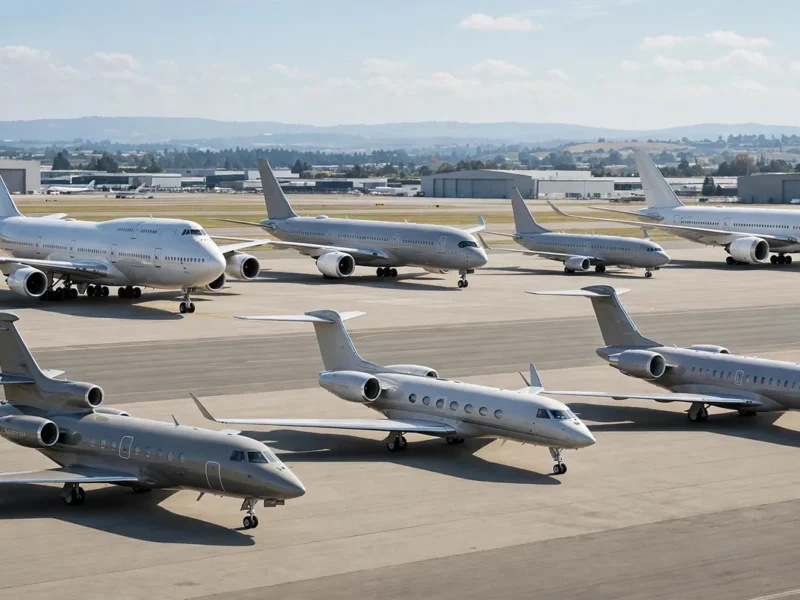
That said, the large jets still enjoy far more choice than an airliner. They use the private terminals the fixed-base operators at major airports, and the busiest of those have become destinations in their own right, with lounges, meeting rooms and discreet handling.
Teterboro, America’s busiest private jet airport, is the classic example: a dedicated private aviation airport a short drive from Manhattan, where the largest jets sit alongside the smallest and the whole operation is built around people who would rather not set foot in a commercial terminal.
Runway performance, airport slots and overnight parking all shape where a large jet can go, and good flight departments plan the ground as carefully as the air. The most useful question is rarely “how far can it fly” but “can it fly there, park there, and leave when we need to” and the answer depends as much on the airport as on the aircraft.
Ownership vs Charter
There are three honest ways to fly on a large private jet: own one, own part of one, or hire one by the trip. Each suits a different pattern of flying. The decision turns on a simple question: how often, and how predictably, do you fly?
Owning Outright
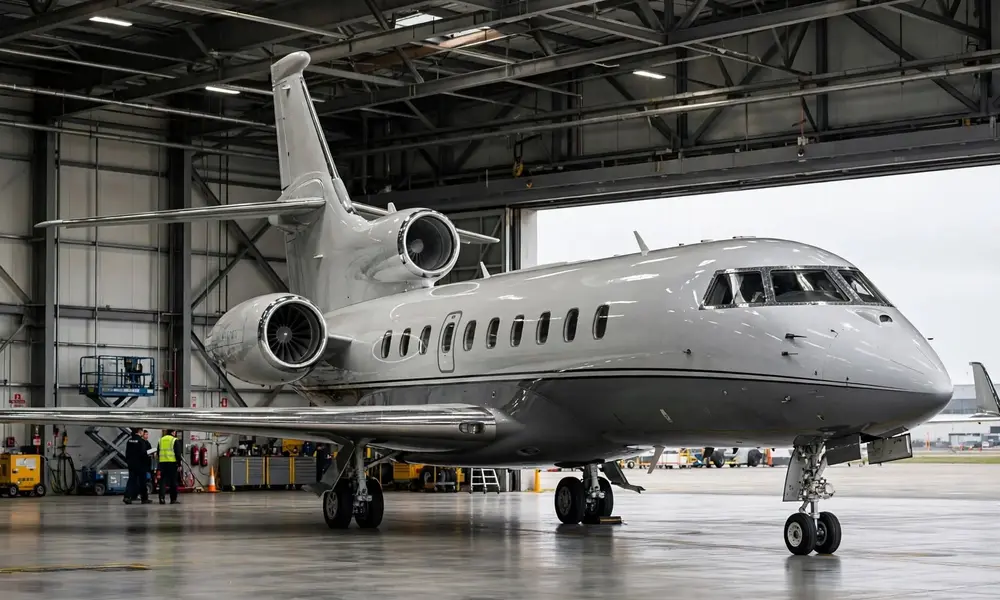
Full ownership gives complete control. The aircraft is configured to the owner’s taste, crewed by people the owner knows, and available at the owner’s notice. It also brings the full weight of responsibility: a flight department or a management company, hangarage, insurance, maintenance programmes, crew salaries and training, and the slow depreciation of a very expensive asset.
For owners who fly hundreds of hours a year, the arithmetic can work. For anyone flying less, it rarely does which is why the market has produced two alternatives
Buying well matters as much as flying well. The pre-owned market for large jets is deep and well documented, and a careful buyer can find an aircraft whose cabin has barely been used.
Buying a pre-owned private jet is a discipline of its own, with inspection, records and engine programmes to weigh before any money changes hands, and it is worth reading before approaching a broker.
Fractional and Shared Ownership
Fractional ownership splits an aircraft between several owners, each buying a share that corresponds to a number of flying hours a year.
The operator manages the aircraft and guarantees availability, and the owner flies on an aircraft of the same type not necessarily the same tail with a few hours’ notice. It is the closest thing to ownership without the operational burden, and it suits flyers whose travel is frequent but not constant.
Jet cards and membership programmes sit beside fractional ownership, offering guaranteed availability and fixed rates for a block of hours. They trade a little flexibility for simplicity: one price, one call, one aircraft type.
For a flyer who wants the large-cabin experience a dozen times a year, a card or a small share is usually the sensible middle ground.
Chartering by the Trip
Charter is the simplest route: hire the aircraft for a single trip, pay for that trip, and walk away. There is no commitment, no management and no depreciation, and the choice of aircraft is wide including, on the right routes, the largest cabins in the sky.
The trade-off is availability and price: the aircraft you want may be elsewhere, and a one-way trip can carry positioning costs that an owner never sees.
Charter also has a quiet advantage that owners sometimes forget: variety. A charter flyer can take a large-cabin jet to one continent and a smaller, more agile aircraft to a short runway the next week. The aircraft fits the trip, rather than the trip fitting the aircraft.
For occasional flyers, and for owners testing the water before committing, that flexibility is hard to beat.
What It Costs to Keep One Flying
The purchase price of a large jet is only the beginning. Fuel, crew, maintenance, insurance, hangarage, navigation charges and catering all add up, and the largest aircraft consume them all at the largest scale. A heavy maintenance check can keep an aircraft on the ground for weeks, and the engine and airframe programmes that cover it are negotiated in detail before delivery.
Two costs surprise first-time owners most. The first is the cost of standing still: an aircraft that flies rarely still needs its crew current, its insurance paid and its hangar kept.
The second is the cost of positioning flying empty to collect passengers, or returning empty afterwards which is the hidden tax on private flying and the reason a well-planned schedule matters as much as a well-chosen aircraft. None of this makes ownership a bad idea only one to enter with open eyes and a good management company.
Choosing the Right Large Jet
The right large jet is the one that fits the flying, not the one with the longest brochure. A buyer or charterer should start with the routes: the city pairs flown most often, the number of passengers, the baggage, and whether the trips are overnight. Range follows from the routes. Cabin layout follows from the passengers a family needs a bedroom, a deal team needs a conference table, and a head of state needs both.
Then comes the practical test. Fly the cabin before committing to it, if at all possible, and sit in every seat. A cabin that photographs beautifully can feel cramped at the table or noisy at the rear, and no specification sheet will tell you that. Talk to the crew, too: they know the aircraft’s habits better than anyone involved in the sale.
Finally, remember that the largest jets are bought for decades, not seasons. Interiors can be refreshed, avionics can be upgraded, but the airframe and its cabin volume are fixed. Choose the space first, the finish second, and the rest will follow.
The world’s largest private jets are, in the end, a study in what happens when the constraints of commercial flight are removed. No queues, no cabins shared with strangers, no compromise on where you sleep or how you work.
The aircraft differ in size, in range, in the way their cabins are laid out but they share a single promise: that the hours spent crossing the sky can be as considered and as comfortable as the hours spent on the ground. For the people who fly them, that is the whole point.