The opening sequence of every great modern film, the sweep over the Monaco harbor, the chase through the Alpine passes, the establishing shot that makes a location the star, shares a hidden author. A helicopter, flying without doors, carrying a camera operator strapped to its frame, with a gyro stabilized gimbal holding a cinema camera steady through the rotor’s vibration and the wind of two hundred kilometers per hour.
Aerial filming is one of the helicopter world’s most demanding specializations and one of its least visible, and the footage it produces has quietly defined how the modern world imagines luxury, speed, and place.
Here is how the industry works, and what it takes to shoot the sky.
The Doors Off Doctrine
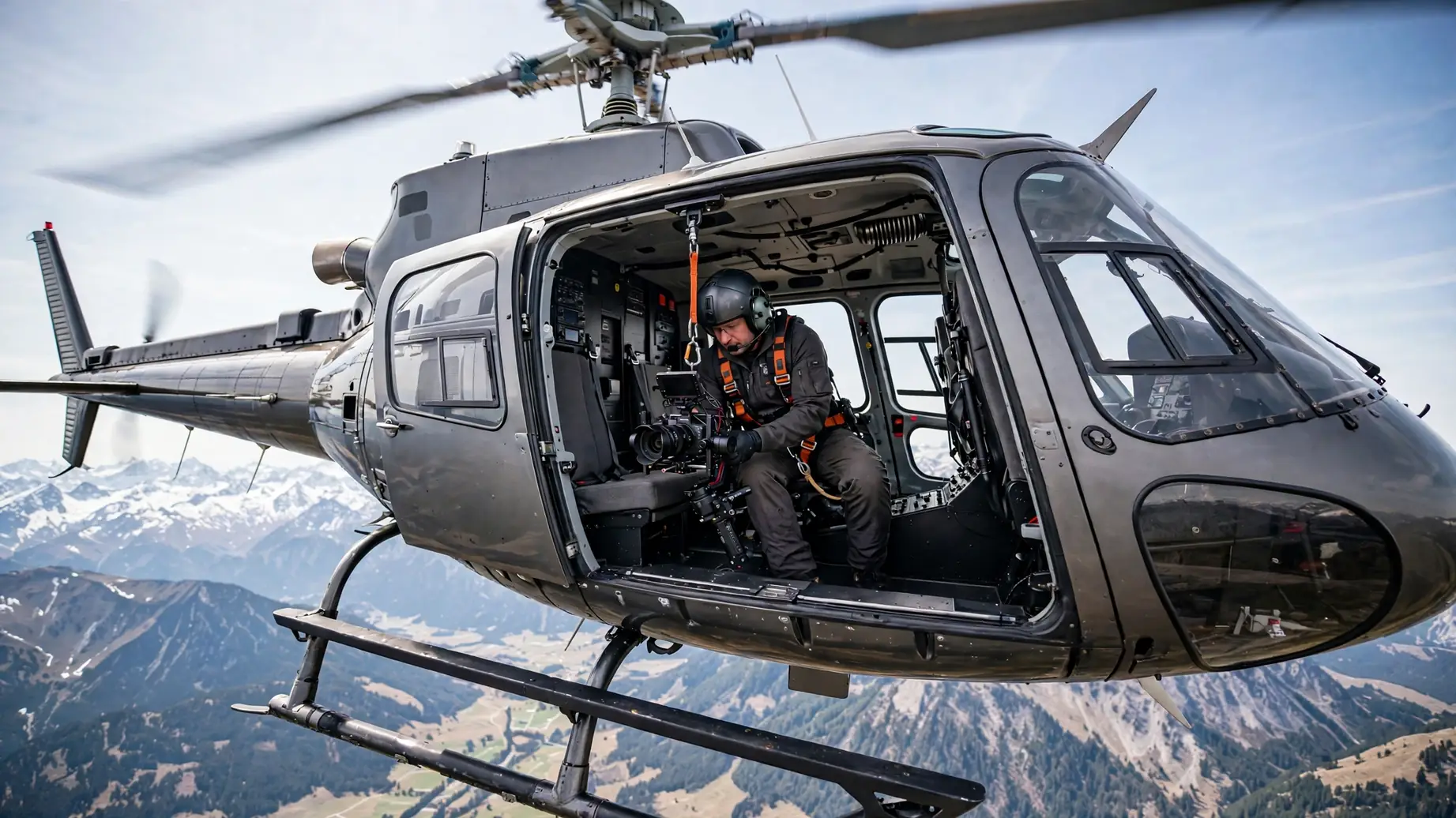
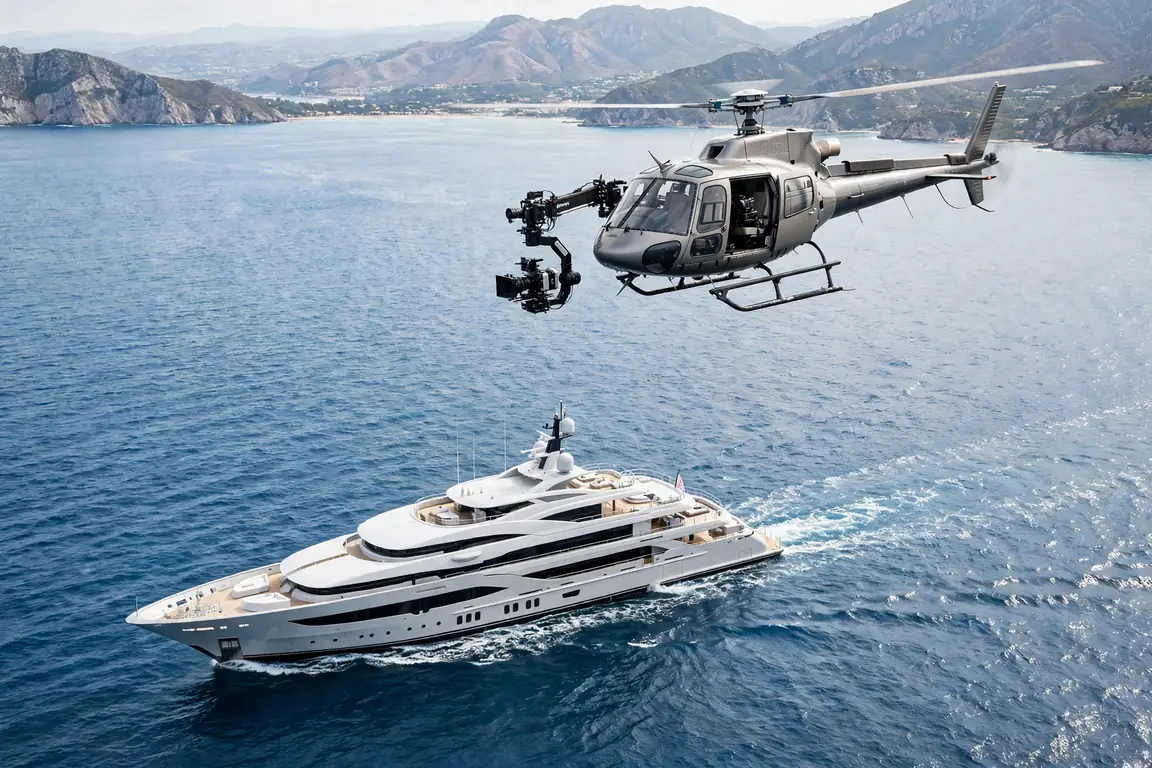
The founding discipline of aerial filming is radical in its simplicity: the doors come off. The gimbal mounts outside the cabin, the operator works exposed to the airflow, and the machine flies as an open frame around the camera.
The reasons are optical: helicopter windows produce reflections, distortions, and color shifts that no post production fully cures, and the open frame gives the camera the unobstructed, vibration isolated field that cinema demands.
The operator, secured by harnesses and trained in the specific aerodynamics of working in the slipstream, leans into the shot with a physical commitment that the footage never betrays. Every spectacular aerial sequence of the past two decades descends from this willingness to remove the walls.
The Gimbal Revolution
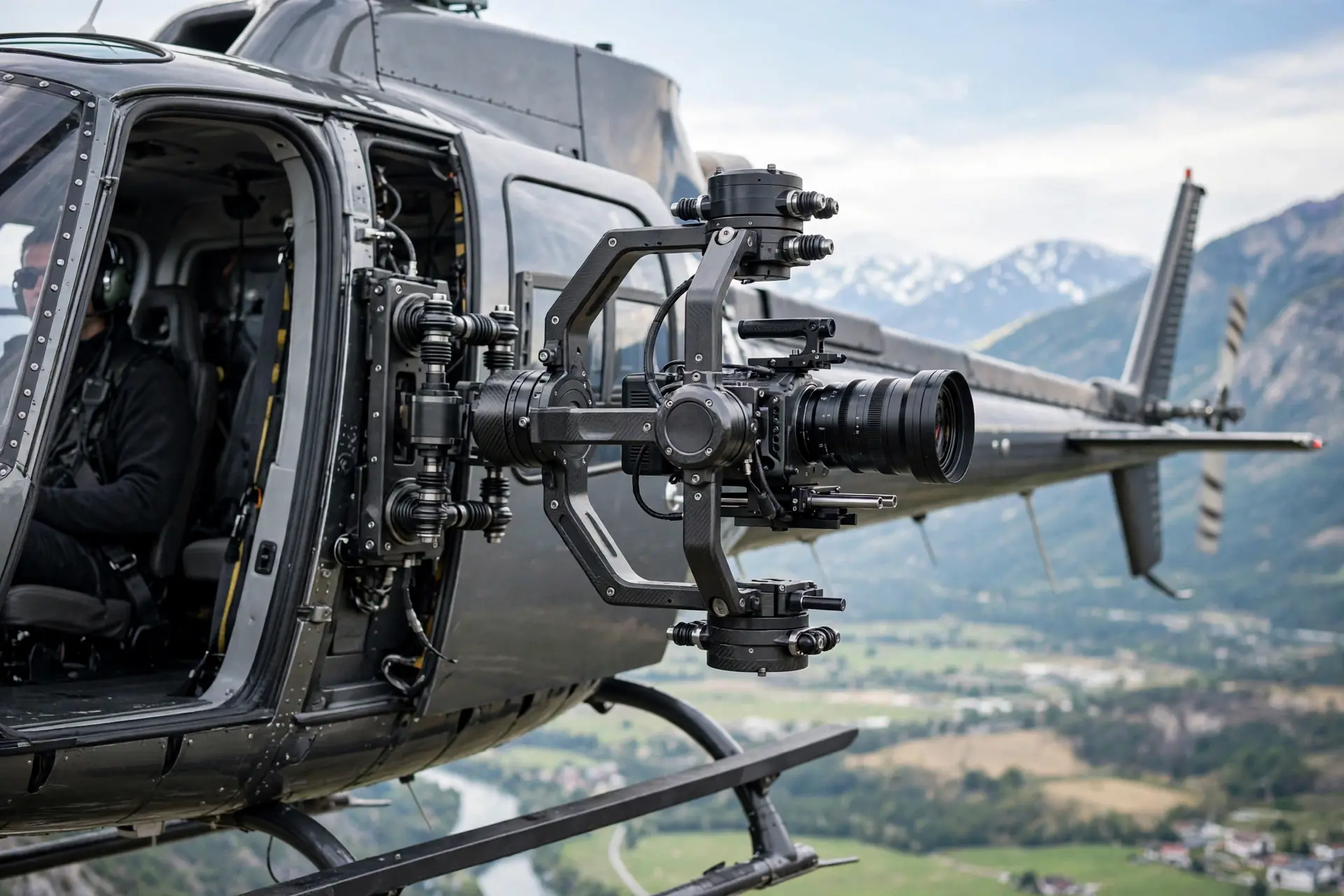
The technology that transformed aerial footage is the gyro stabilized gimbal, a mount that isolates the camera from the helicopter’s motion through three axes of motorized correction, holding the horizon level through banks, climbs, and the rotor’s constant shudder.
The Shotover and GSS gimbals, names that function as generic nouns in the industry, support cinema cameras of the highest resolution and their lenses, stabilized to fractions of a degree, allowing directors to frame a subject at a kilometer’s distance as precisely as a studio dolly.
The gimbal operator, often working alongside the pilot through a dedicated intercom, is a new profession invented by the technology, and the best of them are sought by productions on every continent.
The Missions
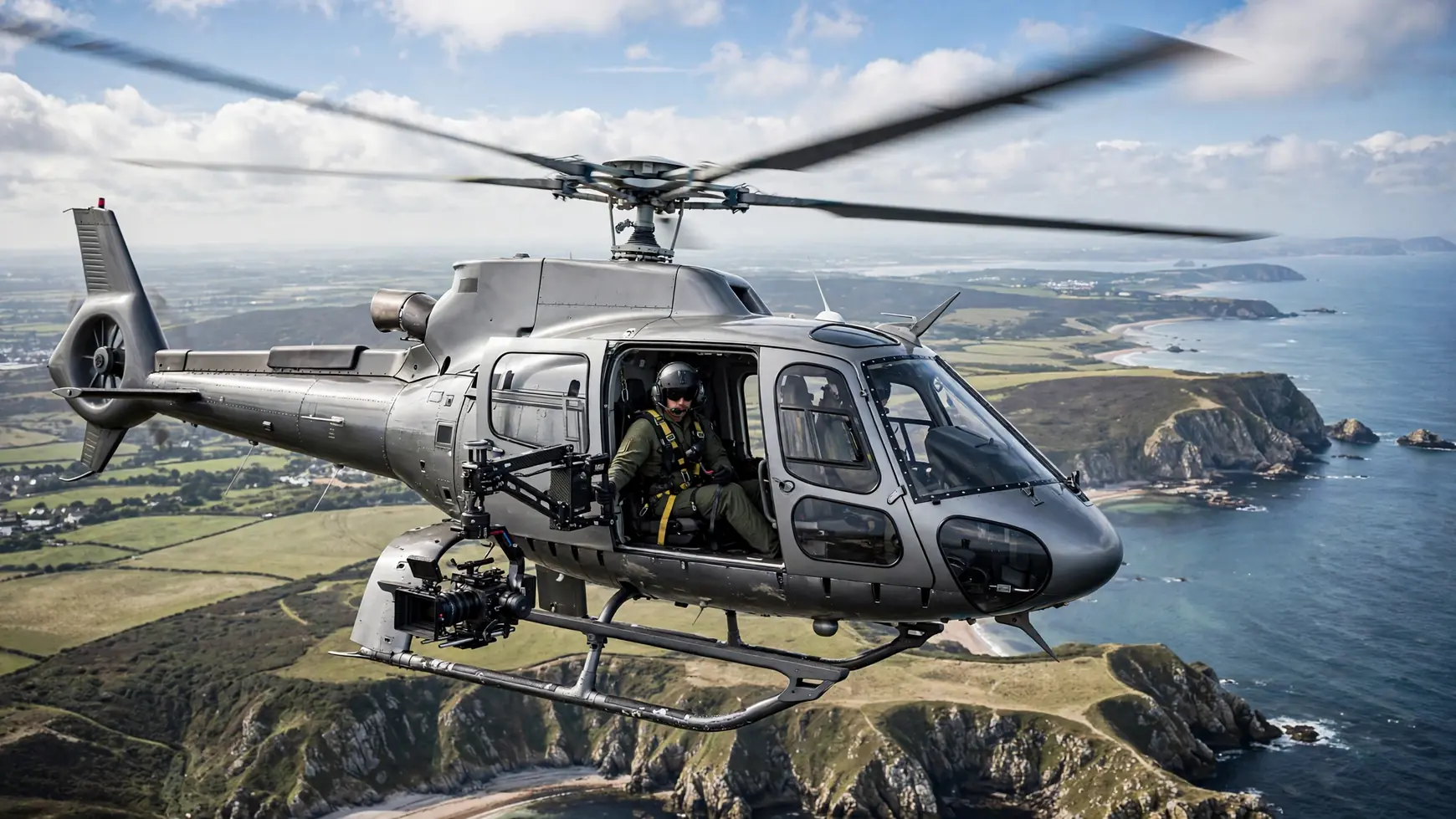
Aerial filming divides into distinct crafts. Feature work, the establishing shots and chase sequences of cinema, demands coordination with ground units and stunt teams at the edge of the safety envelope.
Commercial work, the automotive films where the camera car’s companion shots chase supercars through the great roads, is the industry’s volume business and its most technically polished.
Yacht filming, the genre that serves this readership’s world directly, requires specialized discipline: the relative motion of two moving platforms, the sea’s glare, and the client’s expectation that a hundred metre superyacht look as majestic as its owner’s imagination, all compose into a choreography of timing, light, and closing speeds.
And documentary and natural history work, the polar opposite of the commercial polish, prizes endurance and patience, loitering for hours over landscapes that reveal themselves on their own schedule.
The Economics and the Craft
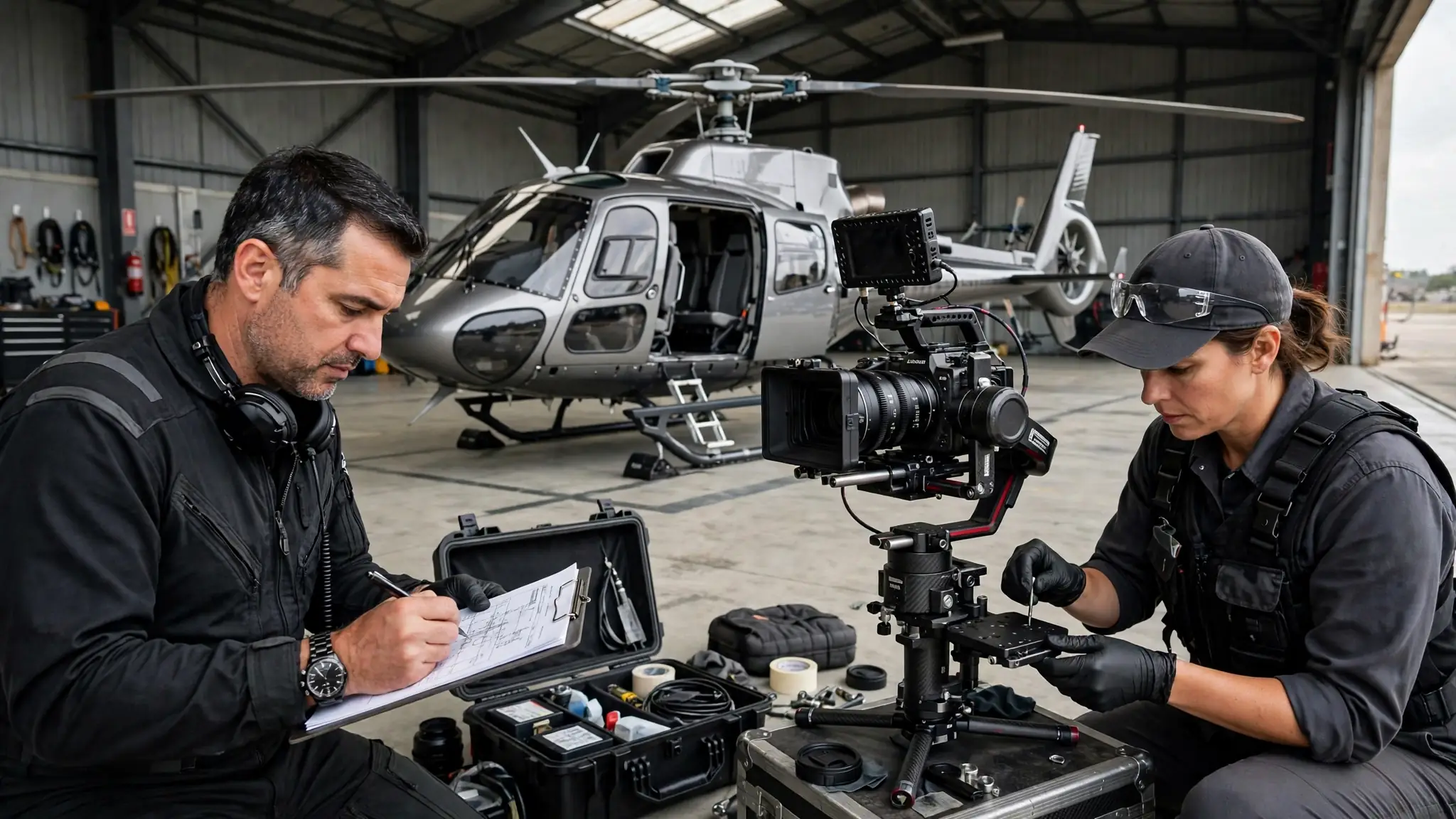
Aerial filming units price by the flight hour at rates that reflect the specialization, the insurance, and the standing availability of the highest specification aircraft. The pilots are a distinct class within the profession, many trained in mountain or external load work, all carrying camera specific experience that producers treat as irreplaceable.
And the craft’s ultimate secret is restraint: the footage that survives the edit is rarely the most aggressive maneuver but the smoothest, the longest, the shot that lets the subject breathe inside the frame. The helicopter disappears; the place remains.
FAQs
1. Why do aerial film helicopters fly without doors?
Optical purity: windows produce reflections, distortion, and color shifts that cannot be fully corrected, while the open frame gives the stabilized camera an unobstructed field. The crew works secured by harnesses in the slipstream.
2. What is a Shotover gimbal?
A gyro stabilized camera mount that isolates the camera from the helicopter’s motion across three axes, holding the horizon level through maneuvers and vibration. Shotover and GSS gimbals are the industry standards, supporting the highest resolution cinema cameras.
3. How much does aerial filming cost?
Rates run several thousand dollars per flight hour depending on the market, aircraft, and gimbal specification, with feature productions budgeting aerial units in the hundreds of thousands for multi day shoots.
4. Is aerial filming dangerous?
It is among the most demanding helicopter disciplines, mitigated by specialized training, harness systems, conservative weather minimums, and experienced crews. The accident record reflects the discipline’s seriousness rather than its recklessness.
5. Who operates the camera in aerial filming?
A dedicated gimbal operator, a profession created by the stabilized mount technology, working with the pilot through a dedicated intercom and coordinating framing with the director on the ground or in a chase platform.
6. Can drones replace helicopters for filming?
Drones have absorbed the low altitude, short duration work, but the helicopter retains the long endurance, high altitude, heavy camera, and over water and mountain work that cinema demands. The two coexist, each at its scale.
7. What makes yacht filming difficult?
Relative motion: the camera platform and the subject are both moving, over water that adds glare and reflection, with closing speeds that demand choreography. The best yacht filming is planned like a dance between two machines.
8. How does one hire an aerial filming unit?
Through the specialist production companies and the operators’ representatives, with early engagement advised: the best units, pilots, and gimbal operators book months ahead, and the location permits that govern aerial work take time in every jurisdiction.