There is probably an outfit in your wardrobe that rarely lets you down.
The trousers sit comfortably. The shirt works with your shoes. The jacket has enough room for your essentials. When you wear the combination, getting dressed takes very little thought.
A personal uniform starts with that outfit.
A personal uniform wardrobe for men is a collection built around a few repeatable outfit formulas. You choose the shapes, colors, and combinations that suit your life, then rotate individual pieces according to the occasion, weather, and laundry cycle.
It might mean jeans, a T-shirt, and an overshirt. It could mean tailored trousers and a knit polo, or a kurta with coordinating trousers. The useful formula is the one you genuinely want to wear.
What Is a Personal Uniform?
A personal uniform is a familiar structure for getting dressed.
For example:
Straight-leg trousers + a plain top + an open outer layer + comfortable shoes
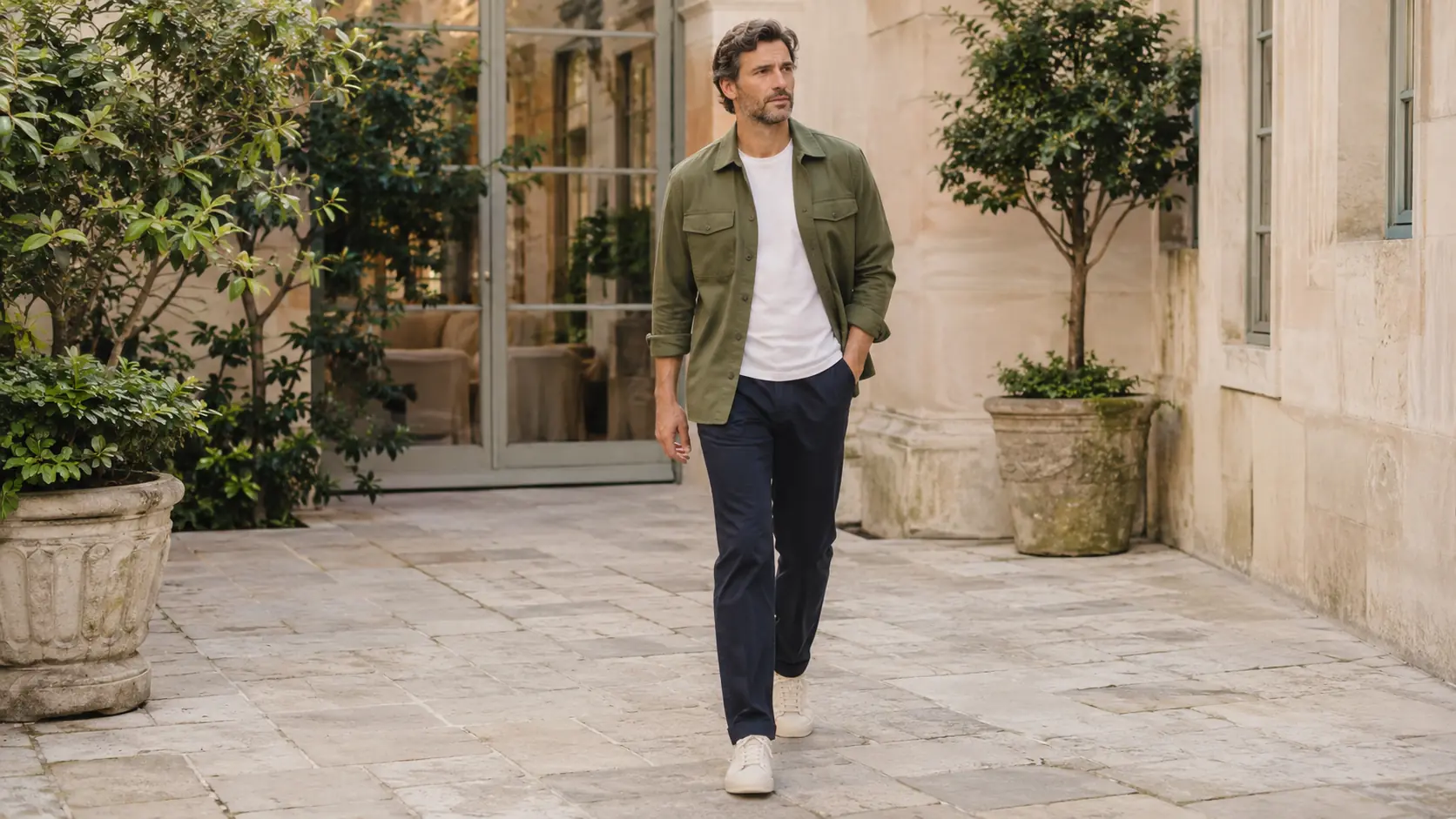
You can repeat that structure with different clothes. Navy trousers, a white T-shirt, and an olive overshirt might work one day. Brown trousers, a cream knit, and a navy jacket could follow the next.
The outfit remains recognizable without being identical.
Personal uniform vs. capsule wardrobe
| Approach | What it organizes | Example |
| Personal uniform | Your usual outfit combinations | Chinos, polo shirt, and loafers |
| Capsule wardrobe | A coordinated selection of clothes | A seasonal collection of interchangeable pieces |
| Signature style | The details associated with your appearance | Workwear jackets, strong colors, or distinctive eyewear |
These approaches can overlap. A capsule wardrobe can supply several personal uniforms, while a favorite accessory gives each one a familiar character.
1. Start With Your Week
Before choosing clothes, identify what they need to do.
Consider your workplace, commute, climate, cultural preferences, and the activities that fill most days. Include practical needs such as protective clothing, accessible fastenings, or room for movement.
| Your routine | A formula to explore | Main priority |
| Casual workplace | Chinos + shirt or polo + simple shoes | Appropriate presentation and comfort |
| Formal office | Suit or tailored separates + shirt + dress shoes | Workplace dress requirements |
| Working from home | Comfortable trousers + presentable top + optional layer | Sitting comfort and easy transitions |
| Walking or public transport | Jeans or trousers + top + weather-ready jacket | Footwear, pockets, and weather protection |
| Active weekends | Washable separates + practical shoes | Movement and manageable care |
| Traditional dressing | Kurta or other preferred garments + suitable footwear | Fit, coverage, and everyday practicality |
Start with your most frequent situation. Build occasional outfits separately when necessary.
A wardrobe designed around imagined business meetings will be frustrating if most of your week involves walking, travel, or hands-on work.
2. Identify the Clothes You Keep Choosing
Look at your most-worn items before opening a shopping website.
Choose two or three outfits you enjoyed wearing recently. Ask what made them work:
- The trouser rise felt comfortable.
- The shirt allowed easy movement.
- The shoes suited your commute.
- The fabric felt pleasant against your skin.
- The outfit worked with your preferred coverage.
- The clothes were straightforward to clean.
Write down those details.
“Relaxed trousers, a tucked shirt, and sturdy shoes” is a useful direction. So is “a long top, loose trousers, and a lightweight jacket.”
Your existing preferences give you a stronger starting point than a generic essentials list.
3. Choose One Main Formula and One Alternative
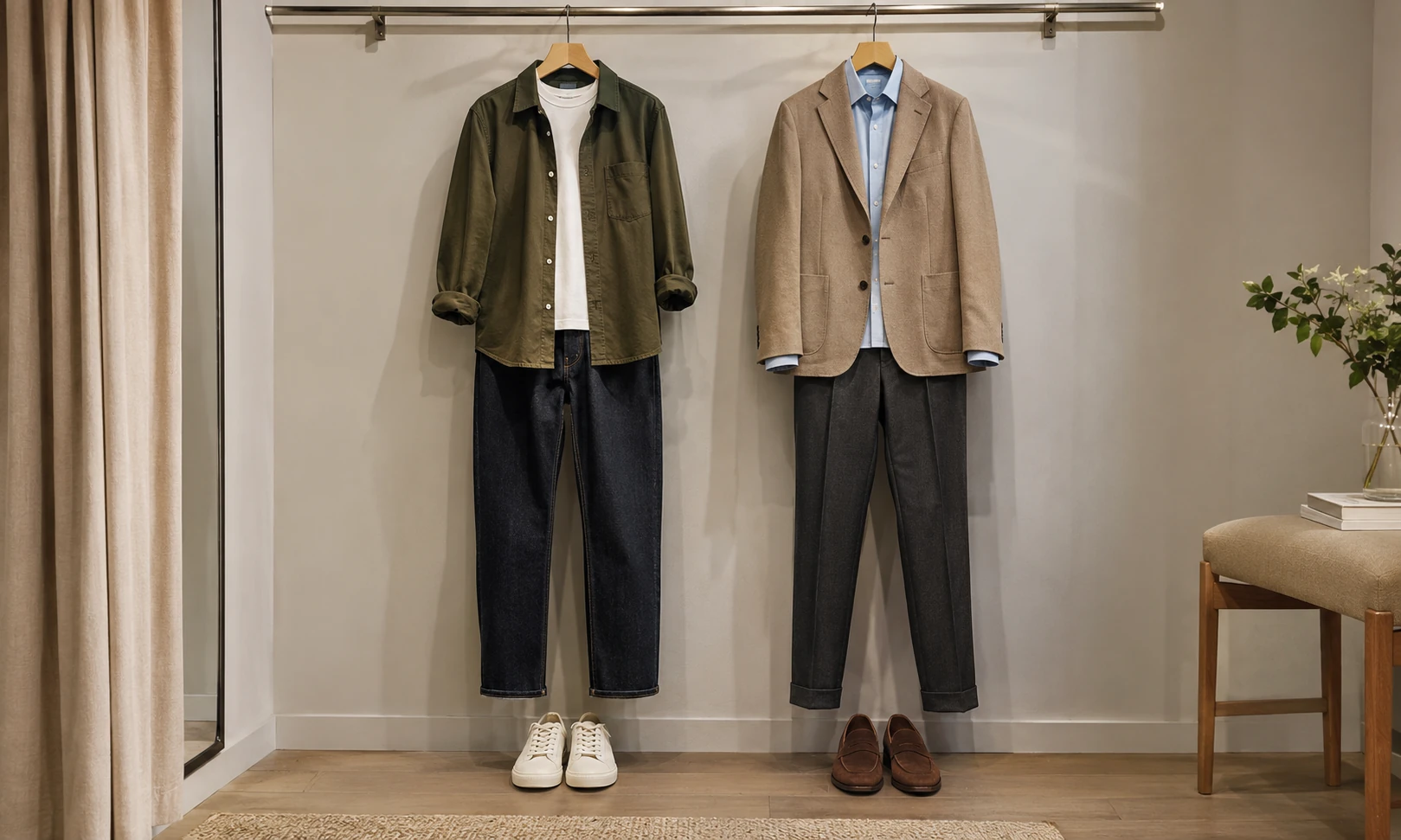
Begin with a dependable combination for ordinary days. Add an alternative for occasions when you need a different level of formality or comfort.
For example:
- Everyday: Straight jeans, plain T-shirt, overshirt, trainers.
- Smarter occasions: Tailored trousers, collared shirt, jacket, appropriate leather shoes.
Both should feel natural to wear.
Six Personal Uniform Ideas for Men
| Style | Outfit formula | Simple variation |
| Casual | Straight jeans + T-shirt + trainers | Add an overshirt |
| Smart casual | Chinos + polo shirt + loafers | Replace the polo with a shirt |
| Relaxed tailoring | Tailored trousers + knit top + unstructured jacket | Wear the top without the jacket |
| Workwear-inspired | Utility trousers + shirt + sturdy shoes | Add a practical jacket |
| Minimal and understated | Coordinated trousers + plain top + simple footwear | Change texture or color |
| Traditional | Kurta + coordinating trousers + suitable shoes | Adjust fabric and outer layers |
These are styling suggestions, not requirements. Test the formula with your actual day before buying several versions.
4. Get Fit Right Through Movement
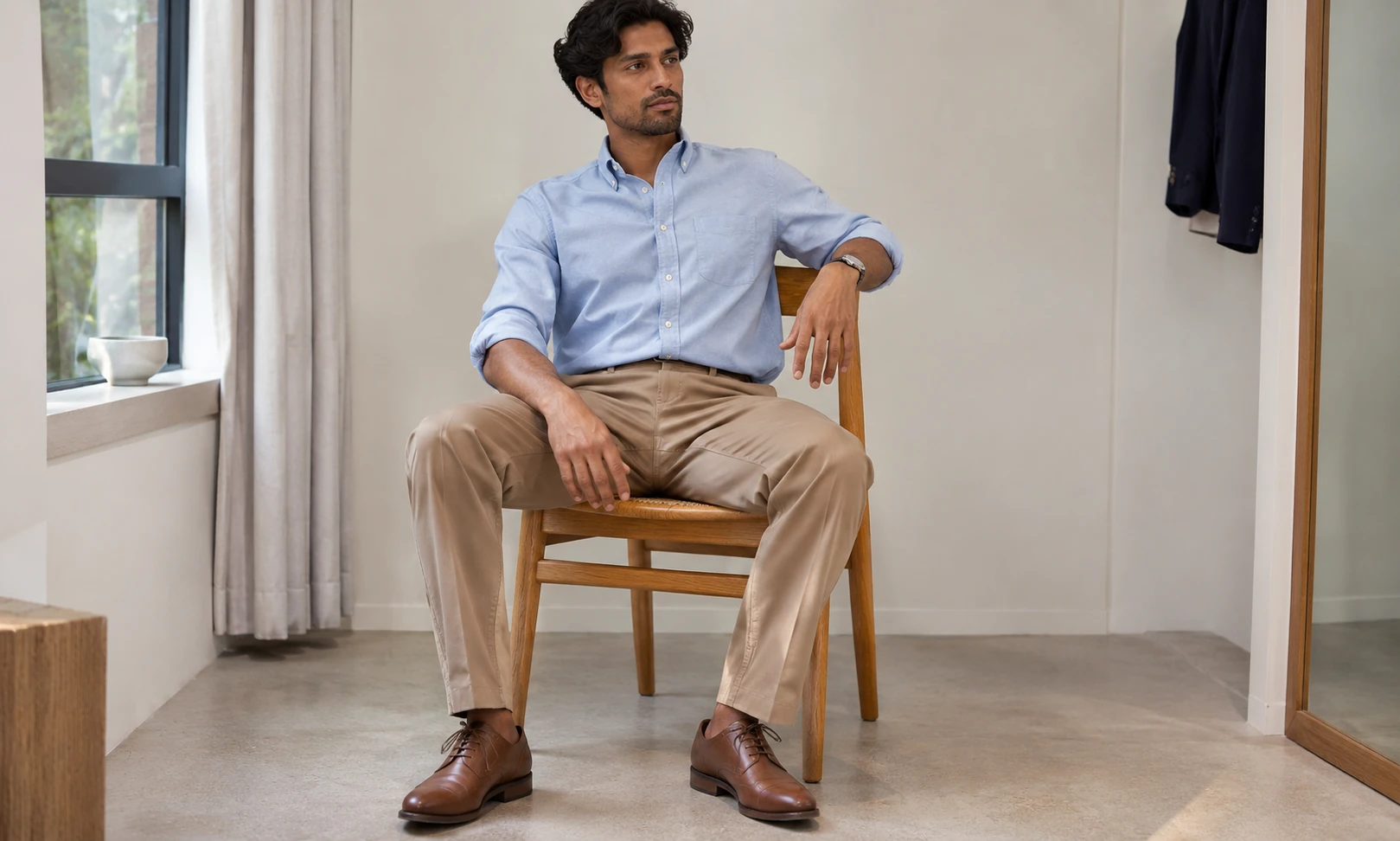
A repeatable outfit needs to feel comfortable after you leave the mirror.
Try clothes while sitting, walking, reaching forward, and bending your arms. Wear the layers and shoes you expect to use with them.
What to Check
| Item | Practical fit check |
| Trousers | Waist remains comfortable when seated; seat and thighs allow movement |
| Shirt | Buttons stay comfortable when sitting and reaching |
| T-shirt | Neckline, sleeves, and body length feel right during movement |
| Jacket | Allows your intended layers and comfortable arm movement |
| Shoes | Suit your walking needs and stay comfortable with the socks you wear |
| Long tops | Allow comfortable sitting, walking, and reaching |
For online purchases, use the retailer’s measurements alongside the stated fit. Levi’s men’s size guide, for example, includes waist, seat, and thigh measurements for bottoms, with inseam information also provided.
Be Specific About Fit Problems
If trousers feel wrong, identify where: waistband, rise, seat, thigh, or length.
That makes the next purchase easier to assess. A tailor can advise whether a particular adjustment is practical before you commit to keeping an item.
Avoid relying on substantial alterations to rescue an uncertain purchase.
5. Build a Color Palette You Enjoy Repeating
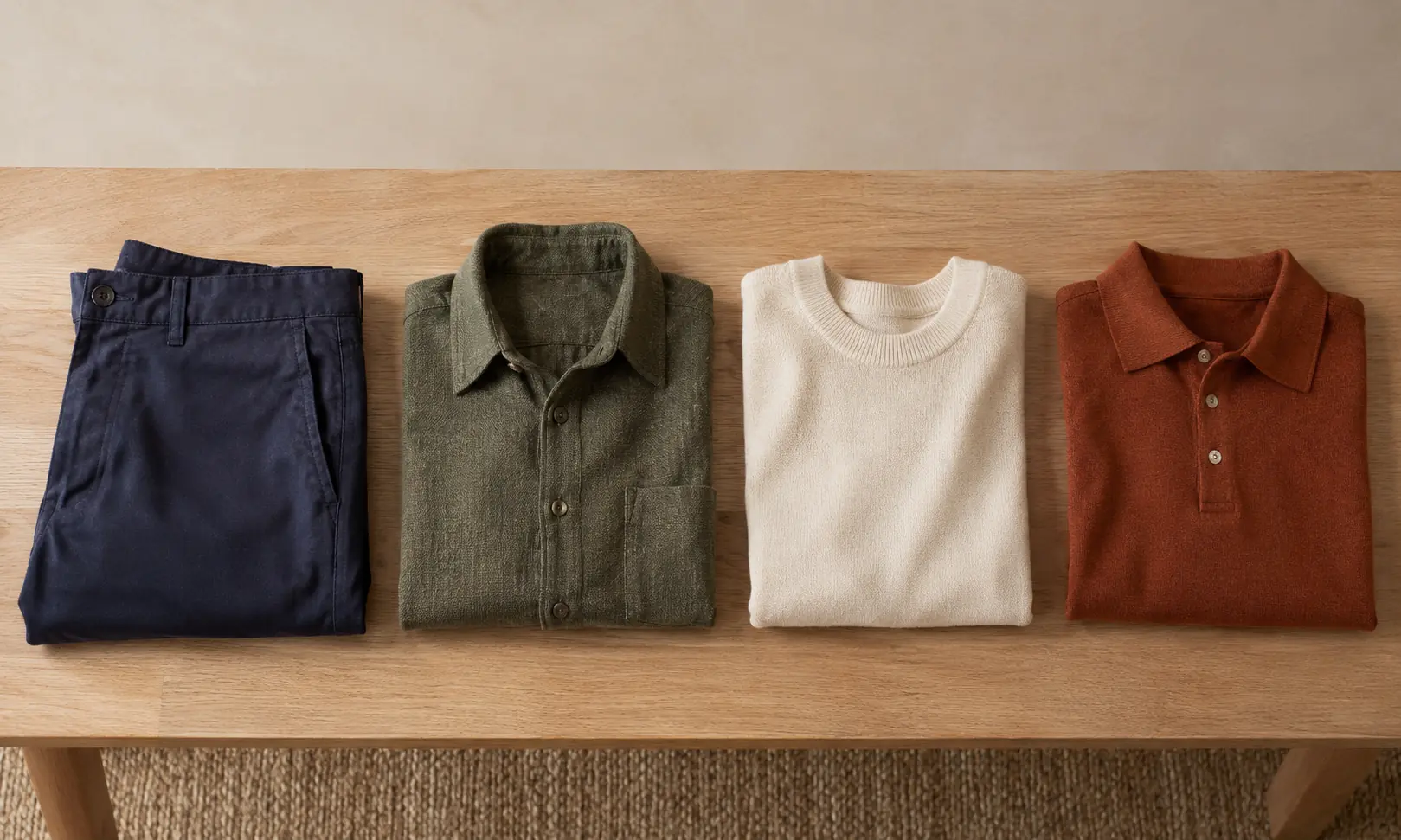
Choose colors from the clothes you already like.
A useful starting palette might be navy, olive, cream, and brown. Another could be black, gray, white, and burgundy. Brighter wardrobes can work just as well when the combinations feel intentional.
Example: A Small Coordinated Palette
| Role | Example colors |
| Main trousers | Navy, dark denim, olive |
| Everyday tops | White, cream, blue |
| Layers | Navy, brown |
| Optional accent | Burgundy, rust, or a favorite print |
Before buying, place the proposed item beside the clothes it needs to accompany.
Check the shoes and outerwear too. A shirt may match your trousers but feel awkward with the only jacket you use.
If understated dressing appeals to you, Pravi Celer’s guide to stealth wealth fashion explores how fabric, proportion, and discreet details contribute to a polished appearance.
6. Choose Fabrics for Your Actual Routine
Read the composition and care label, then examine the garment itself.
Consider its weight, texture, opacity, construction, and comfort. A fiber name alone cannot tell you whether the finished item will work for your needs.
Ask:
- Can I wear this comfortably for several hours?
- Does it suit the temperature where I spend my day?
- Will I manage the ironing or cleaning it requires?
- Does the fabric move and hang as I prefer?
- Will it work under my usual outer layer?
Pravi Celer’s guide to how to identify luxury fabrics explains what to examine beyond softness and brand names.
Check Care Before Buying
A personal uniform needs a realistic maintenance routine.
For wool garments, Woolmark recommends following the item’s care label. Washing, drying, and dry-cleaning permissions vary between products.
Check the whole garment, including its lining and trims. Choose everyday pieces whose care requirements fit your time and budget.
7. Plan Quantities Around Laundry
There is no fixed number of garments every man needs.
Your rotation depends on how often you change, how frequently you wash clothes, drying time, and whether particular items can appropriately be reworn when clean.
The following is an illustrative starting wardrobe, assuming weekly laundry and everyday use.
| Category | Example quantity |
| Everyday tops | 5–7 |
| Jeans, chinos, or other trousers | 3 |
| Shirts or smarter tops | 2, if needed |
| Knitwear or overshirts | 2 |
| Practical outerwear | According to climate |
| Everyday footwear | 2 suitable options |
| Smarter outfit | According to actual occasions |
Underwear, socks, sleepwear, exercise clothing, and specialist workwear sit outside this example.
Adjust the list rather than trying to meet an arbitrary total. If your preferred uniform uses shirts every day, you may need more shirts and fewer T-shirts.
Test Before Buying Duplicates
Wear and clean a promising garment according to its instructions before ordering several more.
Check whether you still like the fit and feel afterward. A duplicate is useful when the original has proved dependable.
Also check the product details when reordering; the same model name may be offered in different fabrics or fits.
8. Let Shoes Help Set the Outfit’s Purpose
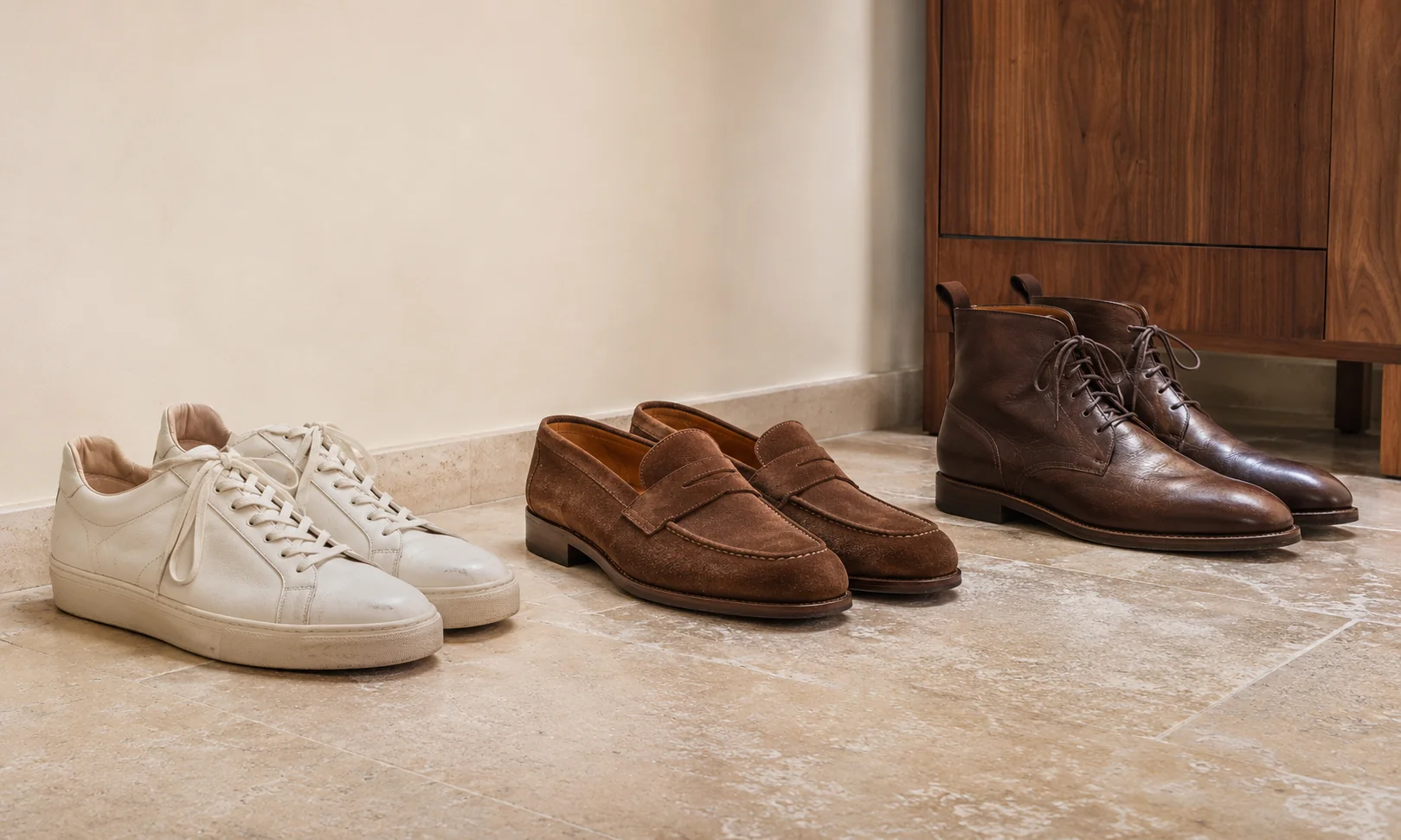
Try your formula with the footwear you actually need.
The same trousers and shirt may serve different occasions with trainers, loafers, or boots, provided the combination suits the setting.
Check trouser length with those shoes. Look at how the hem falls, then walk and sit to see whether it remains comfortable.
Keep a practical option available for wet weather or longer walking days. A uniform becomes much less useful when it depends on shoes you cannot comfortably wear.
9. Keep a Few Personal Details
A personal uniform can include color, pattern, vintage clothing, jewelry, or distinctive accessories.
Choose details you enjoy enough to repeat:
- A patterned shirt.
- A favorite watch.
- A vintage jacket.
- A particular collar shape.
- A colorful scarf.
- A practical bag with a familiar design.
You can repeat a silhouette while changing its mood through these details.
Keep accessories useful and comfortable. If an item regularly catches, irritates, or gets in your way, reconsider its place in the everyday formula.
A Five-Day Example Using One Formula
Here is how trousers + top + optional layer could work across a week.
| Day | Trousers | Top | Optional layer |
| Monday | Navy chinos | White T-shirt | Olive overshirt |
| Tuesday | Dark jeans | Blue shirt | Navy jacket |
| Wednesday | Olive trousers | Cream knit top | Weather-appropriate coat |
| Thursday | Navy chinos | Blue shirt | Brown cardigan |
| Friday | Dark jeans | Plain polo | Olive overshirt |
This example assumes repeated items remain clean and appropriate to rewear. Adjust the rotation to your needs.
Prepare combinations in advance if it helps. A short outfit list or a few reference photographs can make familiar choices easier to find.
Adapt the Formula as the Weather Changes
Keep the combinations you like while adjusting fabric, coverage, and layers.
| Core formula | Warmer-weather version | Cooler-weather version |
| Trousers + shirt | Lightweight trousers and a suitable shirt | Heavier trousers with knitwear and outerwear |
| Jeans + T-shirt | T-shirt with optional light layer | T-shirt under an overshirt, knit, or jacket |
| Tailored separates | Lighter fabrics and fewer layers | Warmer fabrics with a suitable coat |
| Traditional clothing | Lightweight, appropriately opaque fabric | Warmer fabric and comfortable outer layers |
Try seasonal outfits together before relying on them. A bulkier knit may need more room under your jacket, while a different shoe can change the trouser length you prefer.
Common Mistakes to Avoid
Buying a Complete New Wardrobe Immediately
Test one formula using existing clothes. Add pieces once you know what is missing.
Treating Every “Essential” as Essential for You
Buy for your workplace, climate, and habits. A frequently recommended coat or formal shoe may have little use in your routine.
Keeping Uncomfortable Clothes Because They Match
Coordination helps only when you want to wear the outfit.
Making the Formula Too Restrictive
Keep an alternative for different occasions and moods. Review the wardrobe when your work, size, comfort needs, or preferences change.
Ignoring the Total Cost
Include alterations, care, and likely use when comparing purchases. An inexpensive item can still be poor value if it never feels right.
FAQs
What is a personal uniform wardrobe for men?
It is a wardrobe organized around a few reliable outfit formulas. Individual garments can change while the combinations remain familiar.
Does a personal uniform mean wearing identical clothes daily?
No. You can repeat the shape of an outfit while changing colors, fabrics, layers, and accessories. Identical pieces are an option if you prefer them.
How many outfit formulas should I start with?
One everyday formula and one alternative are practical starting points. Add more when a recurring need remains uncovered.
Can a personal uniform include traditional clothing?
Yes. Build around the garments you actually wear, including cultural and traditional clothing, with appropriate seasonal and occasion variations.
Can I build a personal uniform on a budget?
Start with your current wardrobe. Repair useful pieces, assess secondhand options, and buy only the items that improve several outfits.
Do I need expensive brands?
No. Assess fit, construction, comfort, care requirements, and suitability for your routine. Price and branding alone cannot establish those qualities.
Start With Tomorrow’s Outfit
Choose an outfit you already trust. Write down its formula, then create another version with clothes you own.
Wear both during an ordinary week. Notice what stays comfortable, what needs adjusting, and which missing item would genuinely help.
Build from that evidence. A good personal uniform becomes familiar because it repeatedly works for the life you lead.