There is a landing strip in the French Alps, at Courchevel, 2,008 meters above the sea and carved into the side of the mountain, with a gradient so steep that approaching aircraft aim at a hillside and trust the slope to catch them. It has no instrument approach, no go around in the conventional sense, and a requirement that pilots hold a special mountain qualification before they may attempt it.
Planes use it a few times a day in season. Helicopters use it constantly, all winter, depositing guests at hotels whose lobbies sit within a two minute walk of the skid marks. Courchevel’s altiport is the most famous example, but the whole Alps, from Chamonix to Zermatt to St. Moritz, runs on a helicopter economy that most visitors never see and every local understands.
The Alpine helicopter scene is distinct from America’s: denser, older, more integrated into daily life, and governed by a mountain flying culture with no real parallel. Here is how Europe moves through its mountains by rotor, and what the visitor should know before booking the flight.
The Mountain Qualification
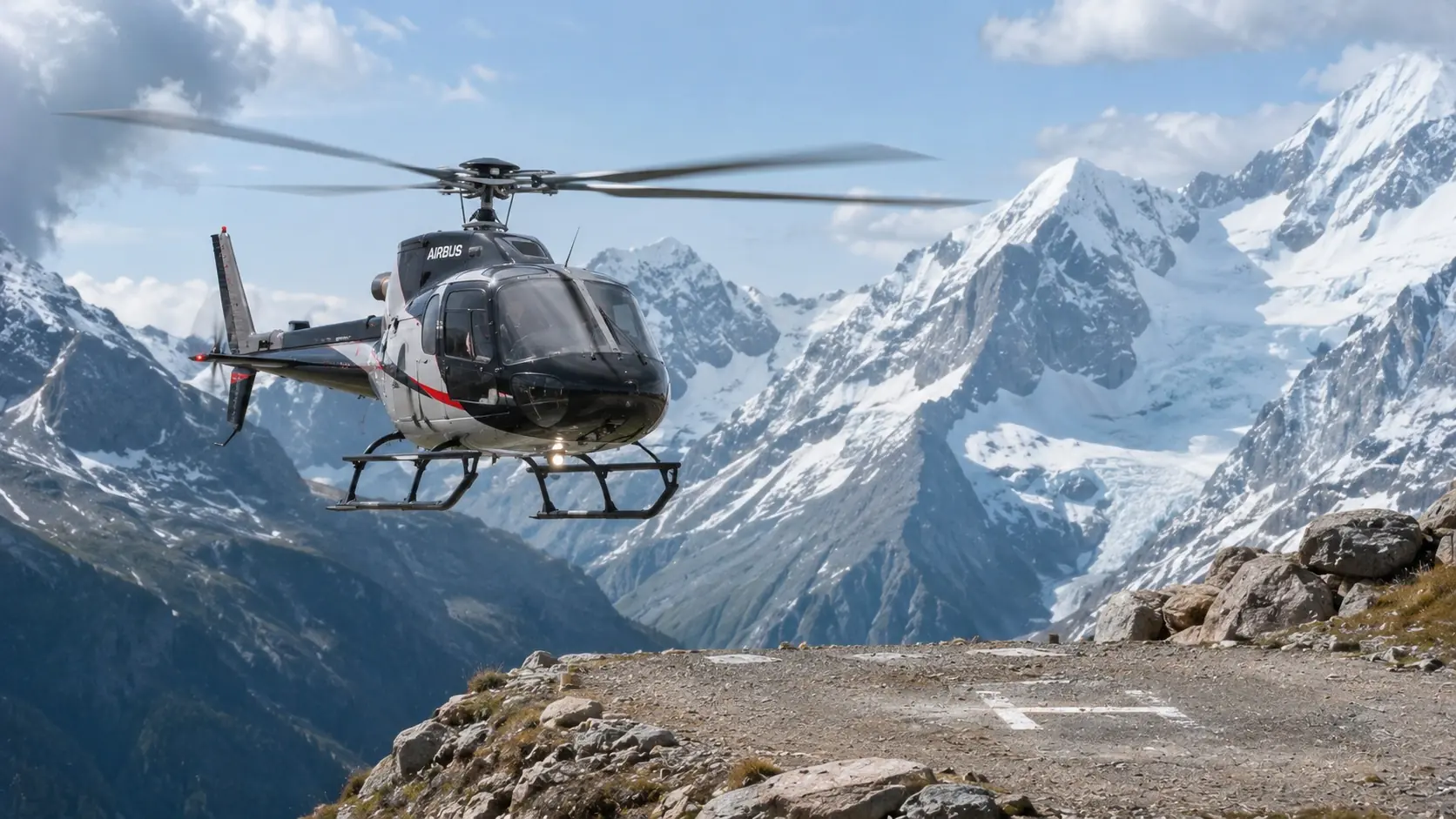
Alpine helicopter flying is a discipline apart, and the Europeans treat it that way. Pilots accumulate mountain ratings through structured training that covers density altitude, wind rotor, whiteout approaches, and the peculiar aerodynamics of sloped ground, where a helicopter must touch down with uphill skid first and the pilot manages pitch against the gradient.
The qualification is not ornamental: the major operators maintain dual pilot crews or specially endorsed captains for glacier work, and the summer glacier landing season, when tourists set down on the ice at 3,400 meters for champagne and photographs, is conducted under procedures indistinguishable from industrial lift work. The culture is conservative in the way serious mountain cultures are conservative, and the safety record reflects it.
The Winter Transfer Economy
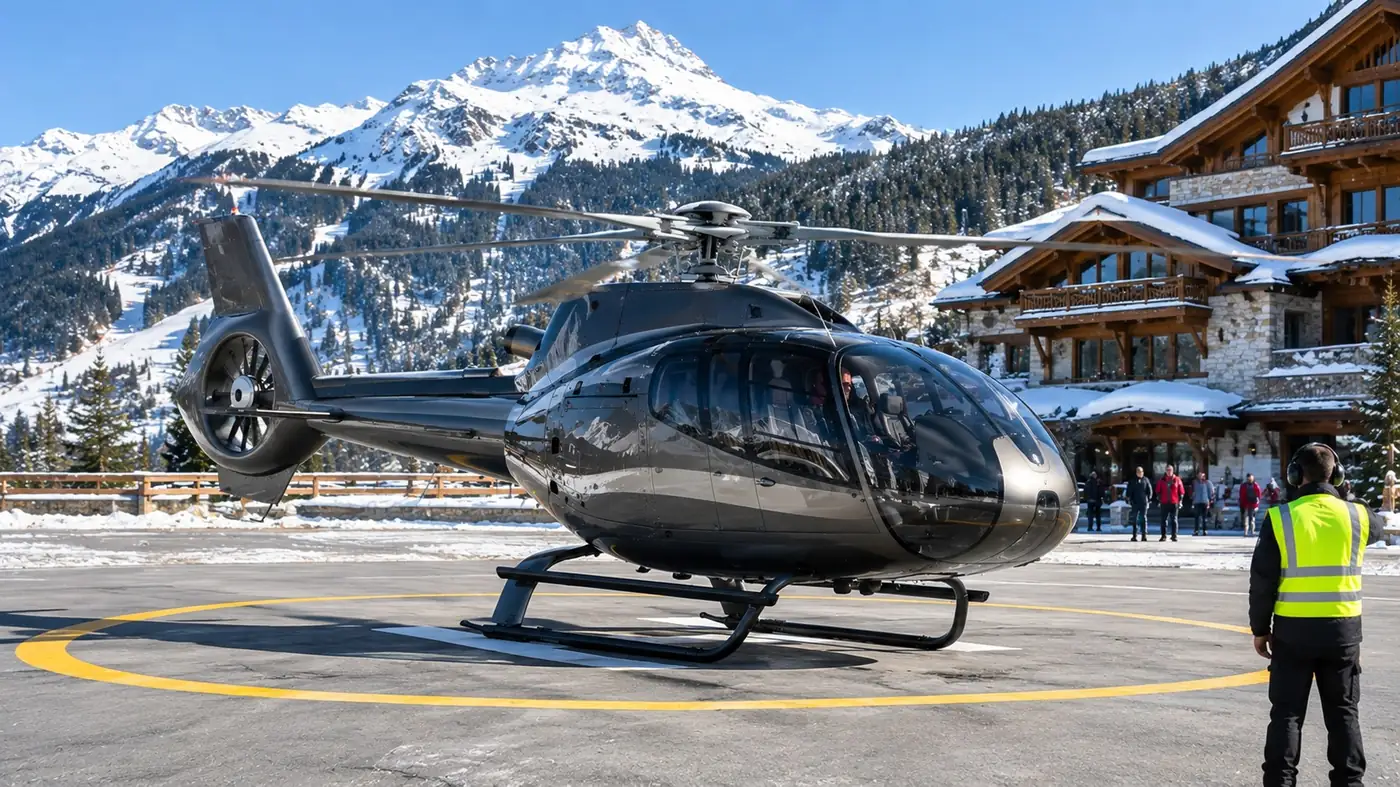
January through March, the Alps experience the world’s densest helicopter transfer market. Geneva, Zurich, Milan, and Innsbruck airports feed the resorts, and the flight times tell the story: Geneva to Courchevel, 35 minutes against a three hour drive in chain traffic; Zurich to St. Moritz, 40 minutes against the winding Julier pass.
The market divides into per seat services on scheduled routes, shared flights run by the major operators, and private charters for families and groups, with the shared seat market on peak Saturdays operating at airline intensity. The resorts we profiled in our luxury ski guide depend on this air bridge in both directions, and the heliport pads at Courchevel, Megève, and Lech function as seasonal airports with ground handling, fuel, and queues.
The Summer Season: Glaciers, Huts, and Weddings
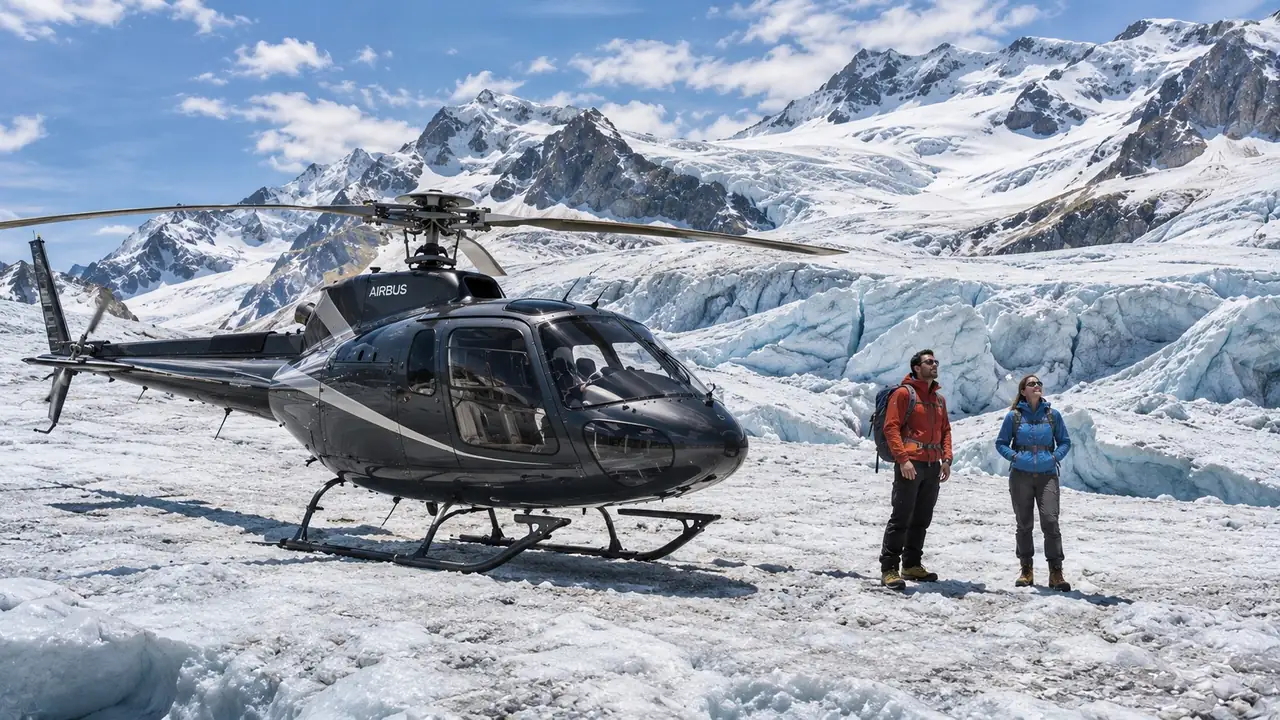
Summer transforms the mission set. Glacier landings, the signature Alpine experience, take visitors onto the ice fields above the resorts for photographs, mountaineering access, and the peculiar pleasure of standing on a river of ancient ice reached by rotor in twelve minutes.
Mountain hut access, the alpine club refuges that serve hikers far above the lifts, becomes a helicopter logistics exercise, with food, supplies, and occasionally guests slung or landed at altitudes that would take a fit hiker six hours to reach on foot.
And the wedding and event market has grown into a serious sector, with ceremonies staged on ridges and meadows accessible only by air, the helicopter functioning as both transport and photography.
The Machines of the Alps
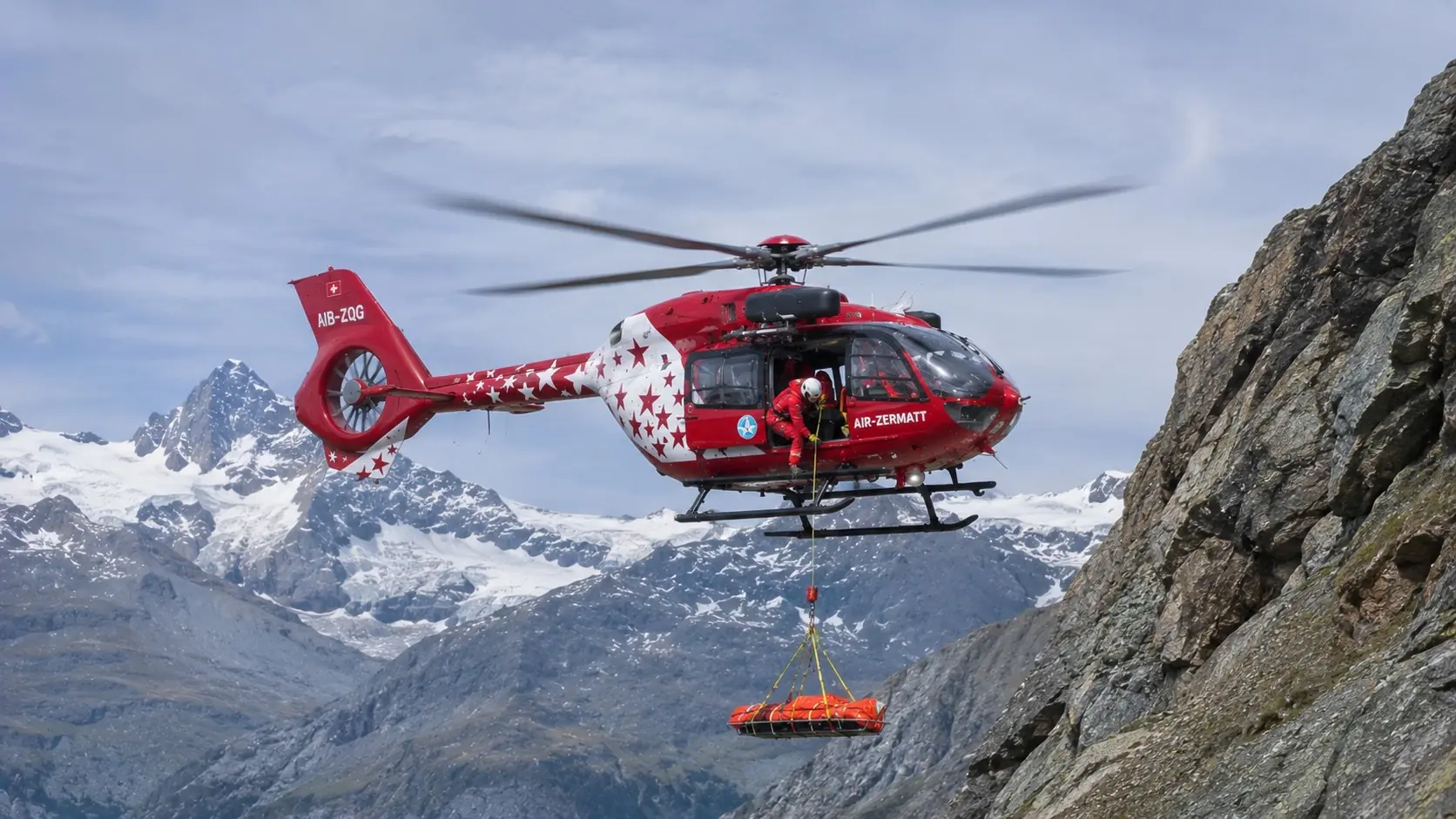
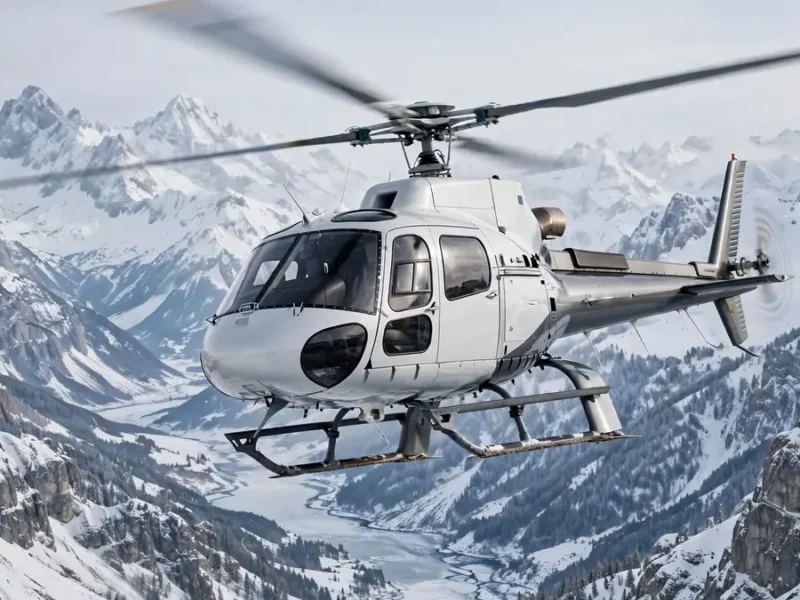
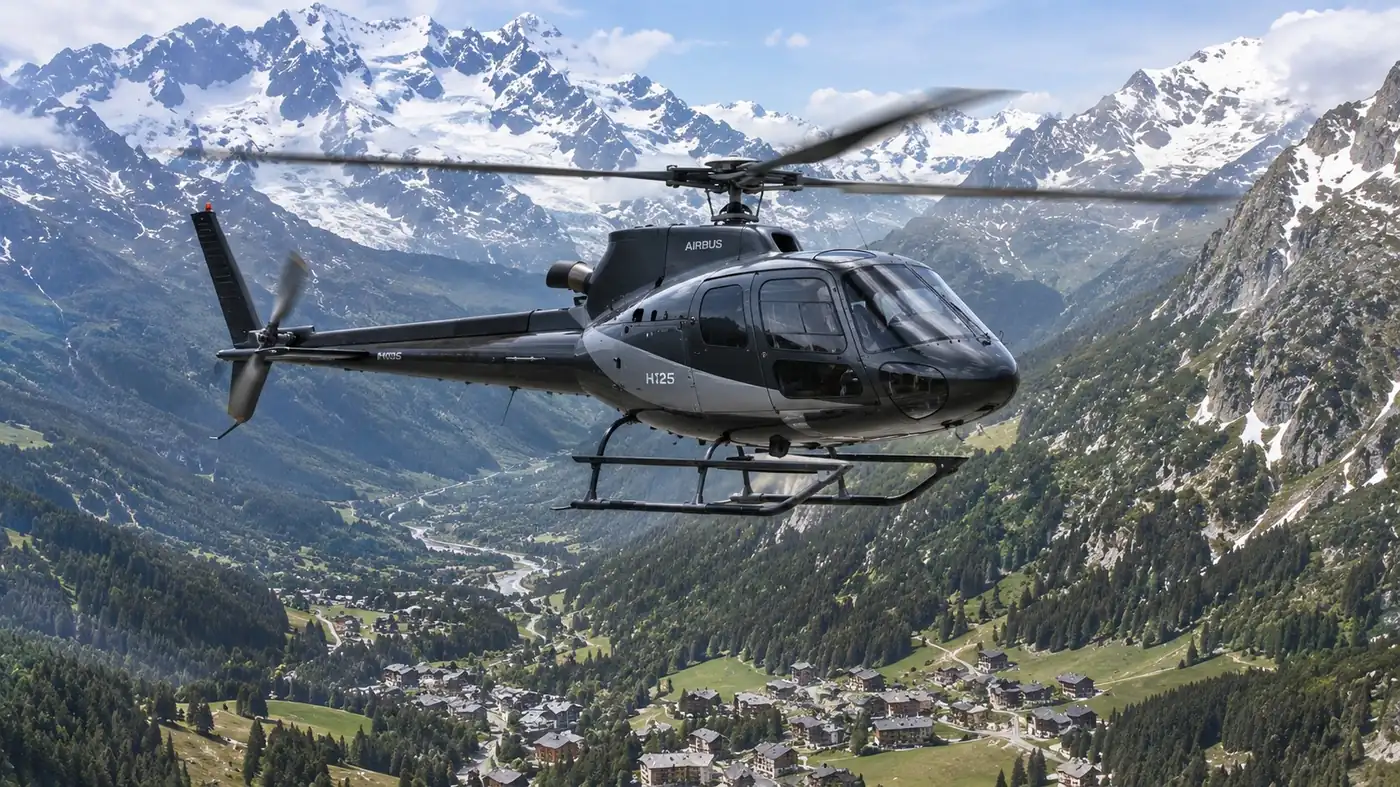
The European fleet reflects the terrain: Airbus H125s, the former AStar, favored for their high altitude performance and lifting power, work alongside H130s and H135s for passenger work, while the twin engine AS355 and H145 handle overwater and multi passenger missions.
The operators, companies like Air Zermatt, which built its reputation on mountain rescue before building its commercial business, carry a rescue heritage into everything they do; the same pilots who fly your glacier landing spend their off days winching climbers off the Eiger.
The equipment reflects the seriousness: rescue hoists are standard on many mountain configured aircraft, and the line between commercial and lifesaving operations blurs in a way that keeps skills sharp.
The Rules of the Air and the Guest
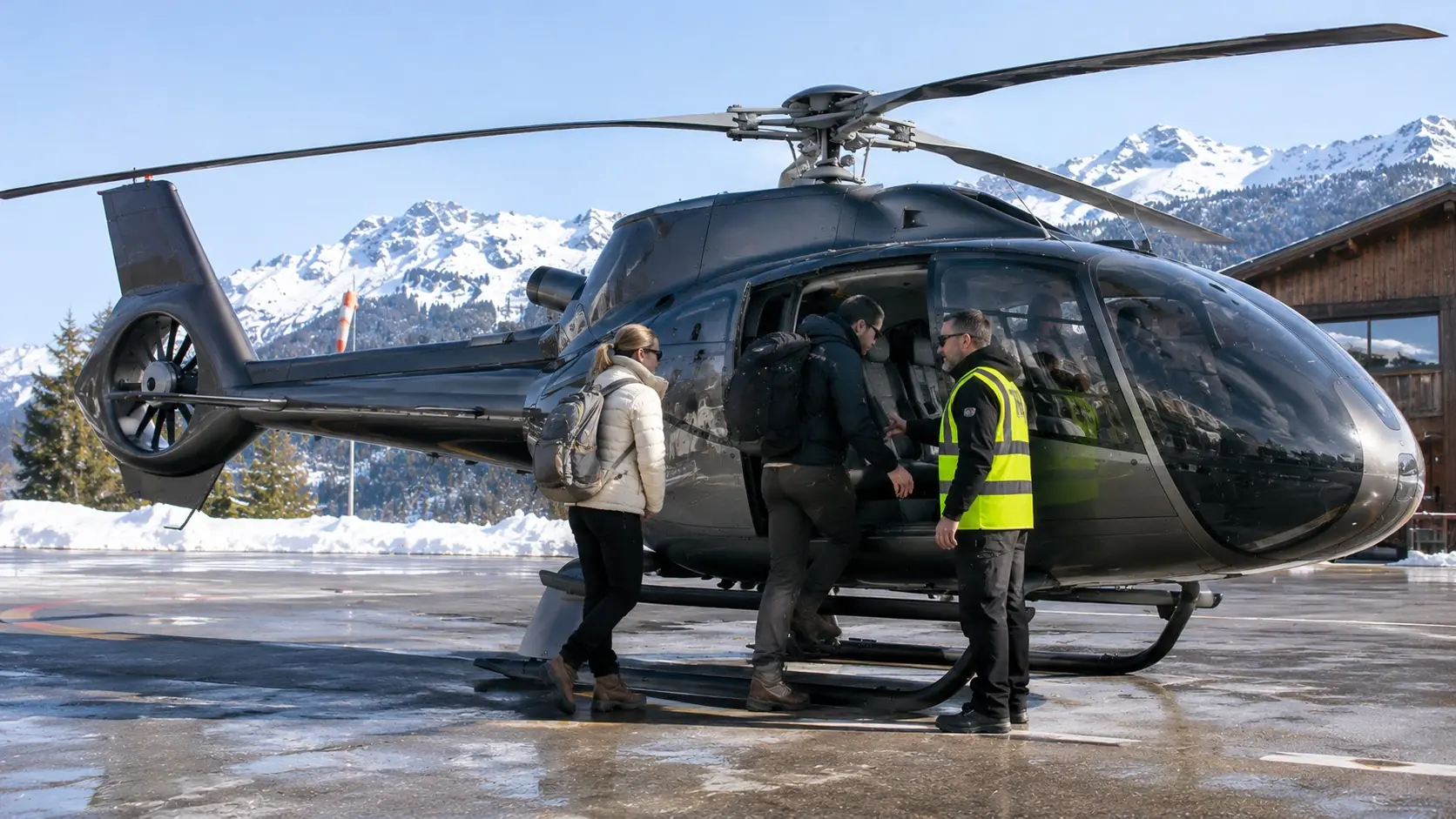
For the visitor, the Alpine helicopter experience runs on etiquette and weather discipline. Flights are weight calculated with alpine precision: passenger weights are collected at booking, and the operator’s dispatcher balances the manifest against density altitude with a rigor that surprises first timers.
Weather is the sovereign: afternoon clouds build over the peaks with summer reliability, and morning flights are the reliable ones, with glacier landings often cancelled by 11 a.m. as thermals develop.
And the dress code is practical: glacier temperatures, even in August, demand layers, and the operators provide over boots and jackets for the ice landing. For more details on booking, costs, and what to expect, explore our helicopter charter FAQ guide. The experience, done properly, is the finest hour of helicopter tourism anywhere: twelve minutes from a green valley to a blue ice world, with the Matterhorn filling the windscreen on the way.
FAQs
Can tourists land on glaciers in the Alps?
Yes, through commercial glacier landing tours operated from the major resorts in summer. Flights typically include snow landings at 3,000 meters or higher, weather permitting, with equipment provided. Morning departures are the reliable ones; afternoon thermals cancel most operations.
What is special about Courchevel’s altiport?
The altiport sits at 2,008 meters on a steeply sloped runway with no instrument approach, requiring a special mountain qualification for pilots and limiting operations to visual conditions. It serves as the winter hub for helicopter transfers into the Trois Vallées resorts.
How much does an Alpine helicopter transfer cost?
Shared seats on scheduled resort transfers run a few hundred euros each way in season, while private charters from Geneva or Zurich to the major resorts range from roughly 2,000 to 4,000 euros depending on aircraft and distance. Glacier tours from resort bases run a few hundred euros per person.
What is a mountain flying qualification?
A structured European rating covering density altitude operations, sloped ground technique, wind and rotor management, and whiteout procedures, required for Alpine commercial operations. Operators maintain specially endorsed crews for glacier and high altitude work.
Which operators run glacier landings?
The major operators at Chamonix, Zermatt, Interlaken, and the Tyrol resorts all run glacier programs, many with rescue heritage. Air Zermatt is the best known, combining its famous mountain rescue service with commercial operations under the same pilot corps.
Is helicopter transport necessary for Alpine skiing?
Not necessary, but transformative: the transfers save two to three hours each way from the gateway airports, and heli skiing beyond the lifts, available in Switzerland, Italy, and France under local rules, is the sport’s ultimate expression. The resorts’ pads make the air bridge a routine part of the season.
What should I wear for a glacier landing?
Layers, sunglasses, and sunscreen regardless of season: temperatures on the ice run far below the valley even in August, and the reflected sunlight is intense. Operators provide over boots and jackets where the landing requires them.
How reliable are Alpine helicopter flights?
Morning operations are highly reliable in season; afternoon flights face thermal and cloud cancellations, particularly for glacier work. The operators’ conservatism is a feature: Alpine weather is respected absolutely, and the same discipline that keeps rescue statistics strong governs the commercial schedule.