The first helicopter charter is a leap. Unlike airlines, there is no terminal familiar from a thousand trips, no boarding process learned by osmosis, and no friend who has done it enough times to explain the unwritten rules. The industry knows this, and it has answered with a stack of questions that every first timer asks, usually in the same order, usually the night before the flight.
Here are the ten questions that govern the first charter, answered the way a veteran operator would answer them, not the way a brochure would.
1. How much does it actually cost?
The honest answer has three parts. Per seat on scheduled services, short hops run a few hundred dollars. On demand charters run $1,500 to $3,000 per hour for light singles, $3,000 to $7,000 for light twins, and beyond for larger aircraft.
And then there are the extras: landing fees at some heliports, facility fees at the busier ones, fuel surcharges when prices spike, and positioning charges if the aircraft must fly empty to collect you. Operators quote hourly rates; the invoice tells the real story. Always ask for an all in estimate.
2. Should I book a seat or the whole aircraft?
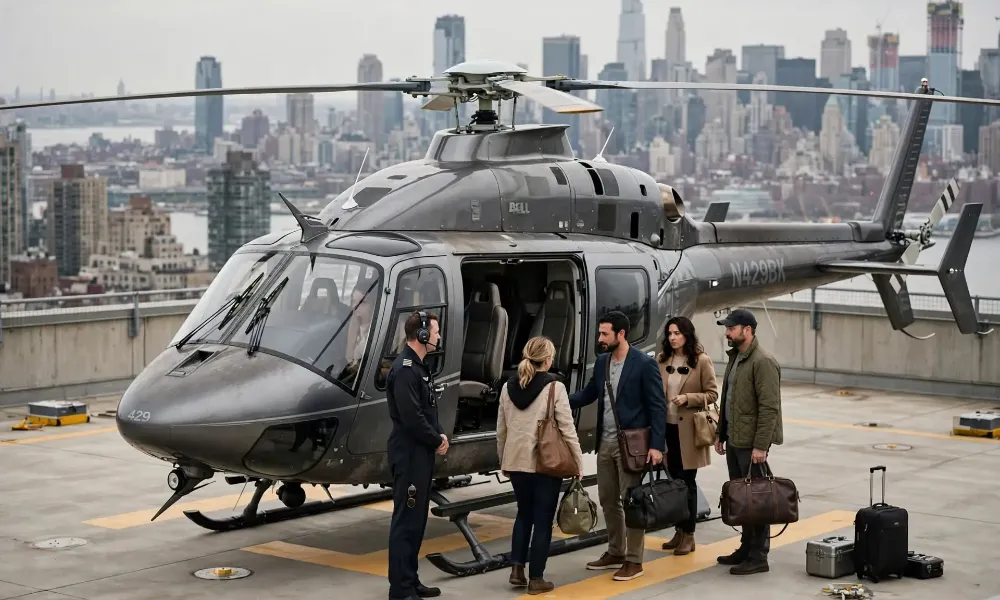
Buy a seat when the route is popular enough to have scheduled service and your schedule is flexible: Manhattan to the Hamptons, Manhattan to JFK, the Miami corridors.
Charter the whole aircraft when you have four or more passengers, luggage beyond carry on, a schedule of your own, or a destination off the scheduled routes. The crossover point, where a family’s seats approach the price of a charter, arrives sooner than most expect.
3. How much luggage can I bring?
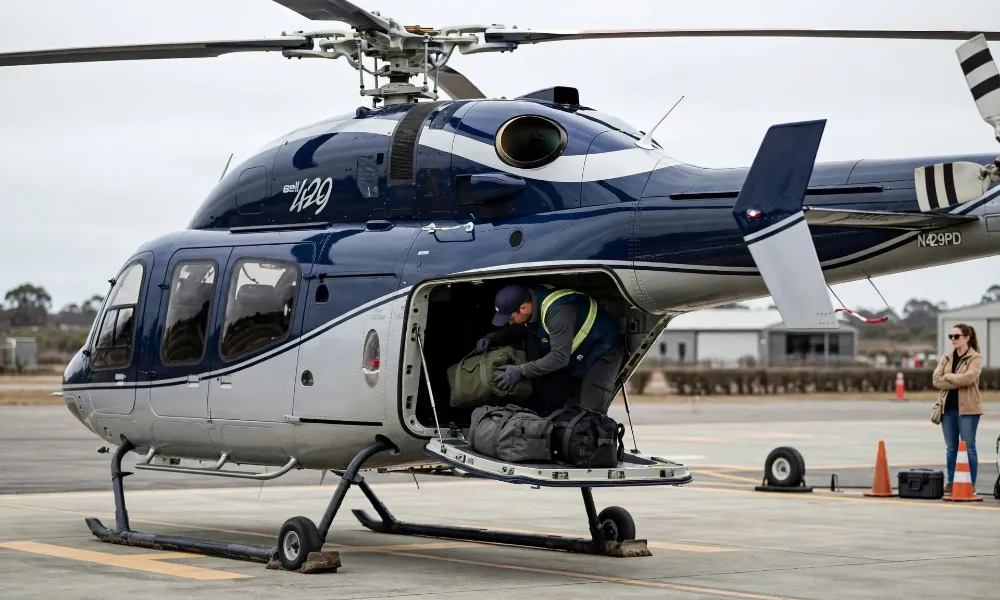
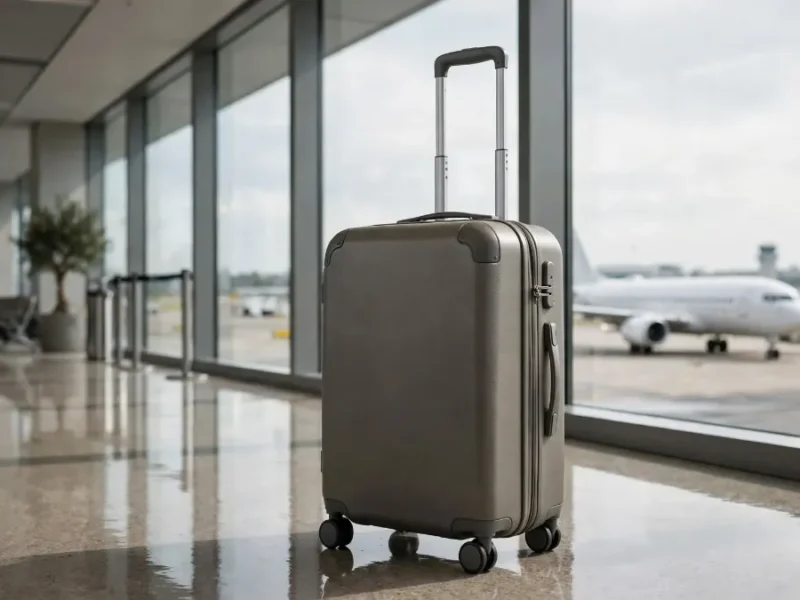
Less than you think. Helicopters are exquisitely sensitive to weight and balance, and baggage allowances are set by calculation, not courtesy. A light twin might take one soft bag per passenger; larger aircraft take more.
Hard cases are discouraged because they do not conform to the cargo space. Tell the operator your luggage count and weights when booking, not at the pad, and our etiquette guide covers the rest of the behavior.
4. Is it safe?
Statistically, charter flying in turbine helicopters operated by established companies is comparable to other forms of private aviation, and the industry’s safety record has improved dramatically with modern aircraft, satellite weather, and transparent reporting.
The variables that matter are the operator’s record, the aircraft’s maintenance, and the pilot’s experience in the specific environment, mountain, offshore, urban. Ask for the operator’s safety record and the pilot’s hours in the relevant category. The good ones answer without hesitation.
5. What happens in bad weather?
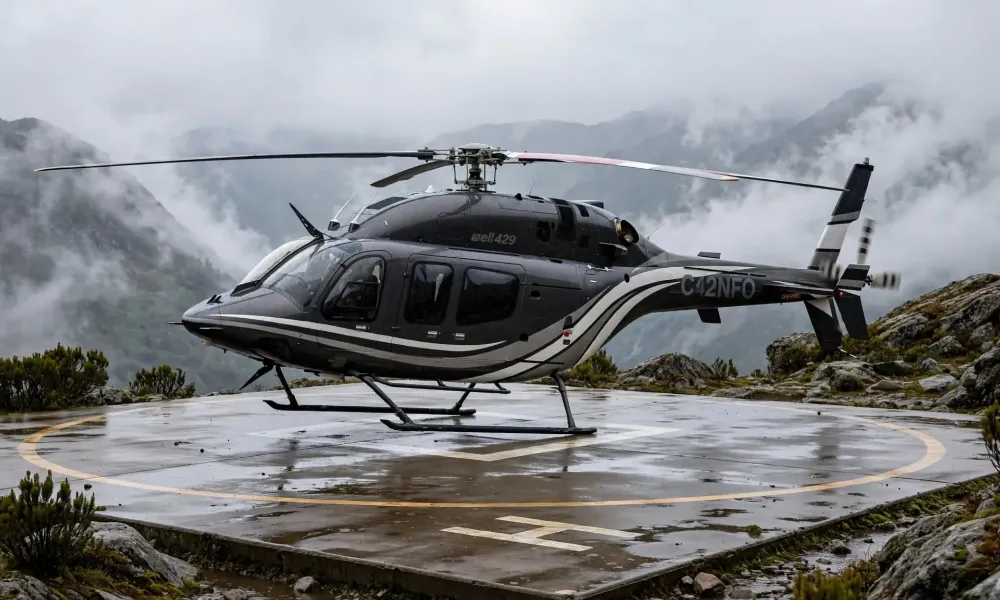
Helicopters cancel more readily than airlines, because their value is flexibility and their risk tolerance is lower. Fog, low cloud, icing, and high winds ground flights that an airliner would fly through, and the correct response to a cancellation is gratitude, not frustration.
Build margin into any itinerary where the helicopter leg connects to something immovable, a cruise departure, a wedding, an international flight, and treat the charter as the part most likely to move.
6. How far can a helicopter fly?
The practical charter range of a light twin is roughly 250 to 350 miles; larger aircraft stretch further with reserve. Helicopters shine below 150 miles, where their speed advantage over driving is total and their fuel burn against a light jet is competitive. Beyond 300 miles, the math tilts toward fixed wing, and the wise itinerary combines both.
7. Can I bring pets, children, champagne?
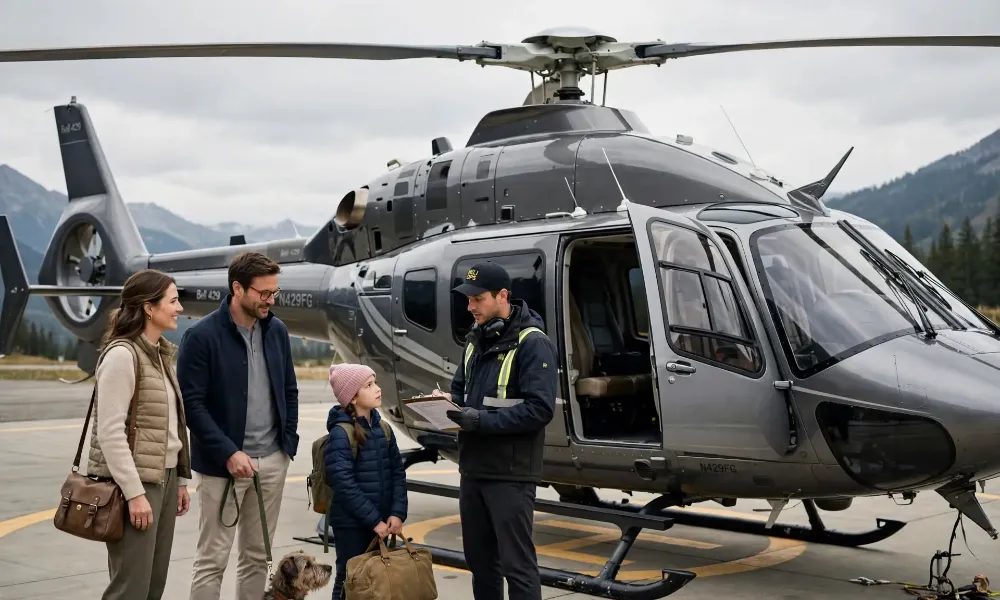
Pets, almost always, with advance notice, and dogs are regulars on summer Friday flights. Children, yes, with seats appropriate to age. Champagne, after landing rather than during, since glasses and rotor vibration are natural enemies.
The single rule governing all three is communication: the operator plans weight and balance around what it knows, and surprises at the pad are the one thing the industry cannot accommodate.
8. How do I choose an operator?
Three filters in order. Safety record, verified through reporting programs and the operator’s willingness to discuss it. Fleet age and type, favoring turbines for over water and night operations.
And transparency in quoting, the all in estimate, the cancellation policy, the positioning charges. Brokers add value when the mission is unusual; for standard routes, booking direct with the operator is simpler and sometimes cheaper.
9. Do I tip, and how much?
Tipping is customary in the American charter market, though less codified than in restaurants. For the pilot, a gratuity of $50 to $200 per flight, scaled to the complexity and service, is appreciated; for line crews who load luggage, $20 to $50. On scheduled seat services, tipping is optional. The line service staff remember the tippers, and at busy pads that memory has practical value.
10. What does the future hold for charter pricing?
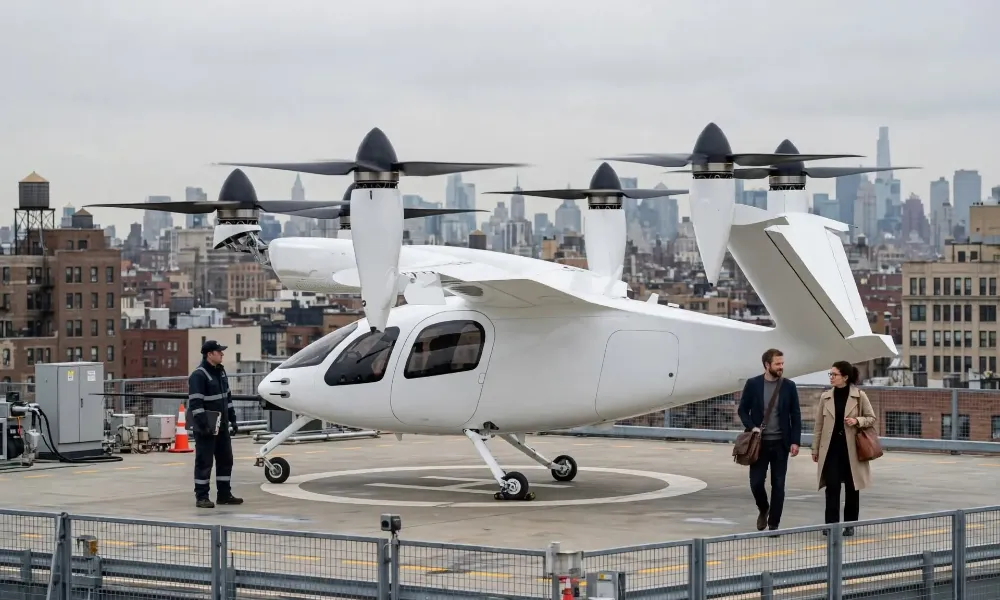
The coming electric aircraft generation promises to compress prices on short routes, with per seat costs projected toward premium ride hailing levels on city pairs like the JFK run, as detailed in our air taxi analysis.
Until then, the charter market’s pricing reflects what it always has: you are not buying a seat. You are renting the sky for an hour, and the hourly rate of the sky, for now, remains one of the better bargains in luxury.
FAQs
1. How far in advance should I book a helicopter charter?
Standard routes need a day or two in peak season and only hours in the off season. Holiday weekends, major events, and mountain or offshore destinations warrant a week or more. Scheduled seat services should be booked as early as possible for peak Friday departures.
2. What is a positioning charge?
The cost of flying the aircraft empty to your departure point, charged when the aircraft is based elsewhere. It is quoted separately and can materially change the economics of an otherwise attractive hourly rate, which is why the all in estimate matters more than the advertised rate.
3. Are helicopter charters wheelchair accessible?
Many can be, with advance coordination. Boarding involves rotor clearance and sometimes a step up, so operators need notice to arrange assistance and to plan the boarding sequence. Discuss requirements at booking rather than arrival.
4. Can I request a specific route or sightseeing?
Yes, and it is one of the charter’s great advantages. Scenic routing, overwater legs, and landmark flybys are routinely accommodated within airspace and fuel constraints, and operators will quote the additional time directly.
5. What identification do I need?
Government issued photo identification for all passengers, matching the manifest names provided at booking. International flights, the Bahamas, Canada, require passports and customs coordination, which the operator arranges with notice.
6. What is the cancellation policy?
Typically flexible until 24 to 48 hours before the flight, after which charges escalate to full price. Weather cancellations initiated by the operator incur no charge. Read the policy before booking, not after receiving the invoice.
7. How noisy is it inside?
Modern turbine helicopters with noise reducing headsets are conversational, and most passengers are surprised by the quiet. The crew provides headsets, and the experience of talking normally at 140 miles per hour is one of the charter’s quiet pleasures.
8. Why do helicopters seem to cancel more than airplanes?
Because their missions are flexible and their value is time, so operators err on the side of caution, and because low altitude flight in marginal weather offers fewer options than an airliner at 35,000 feet. The cancellations are the system working, not failing.