For sensitive underarms, start by checking for baking soda and added fragrance, then match the formula to the way you want to apply it. Natural deodorants can manage odor, but no formula is guaranteed to suit every person or every day. A baking-soda-free product is a sensible first trial if baking soda has bothered your skin. An unscented option may suit you better if you want to avoid added scent.
This roundup helps you compare sticks, creams, roll-ons, and sprays, along with scent, odor control, and packaging. You can also check which formulas leave out baking soda or use a mineral salt. A short trial of one formula at a time makes it easier to identify what your skin tolerates.
Key Takeaways
- Start with a formula that avoids a known trigger.
- Unscented and fragrance-free are separate label terms.
- Deodorant manages odor, while antiperspirant reduces sweat.
- Choose a format that fits your daily routine.
- Try one new product at a time.
How Do You Choose a Formula for Sensitive Skin?
A useful first filter is whether the formula avoids the ingredient or scent that has bothered your skin before. Start with what you know, then compare the format and the full ingredient list.
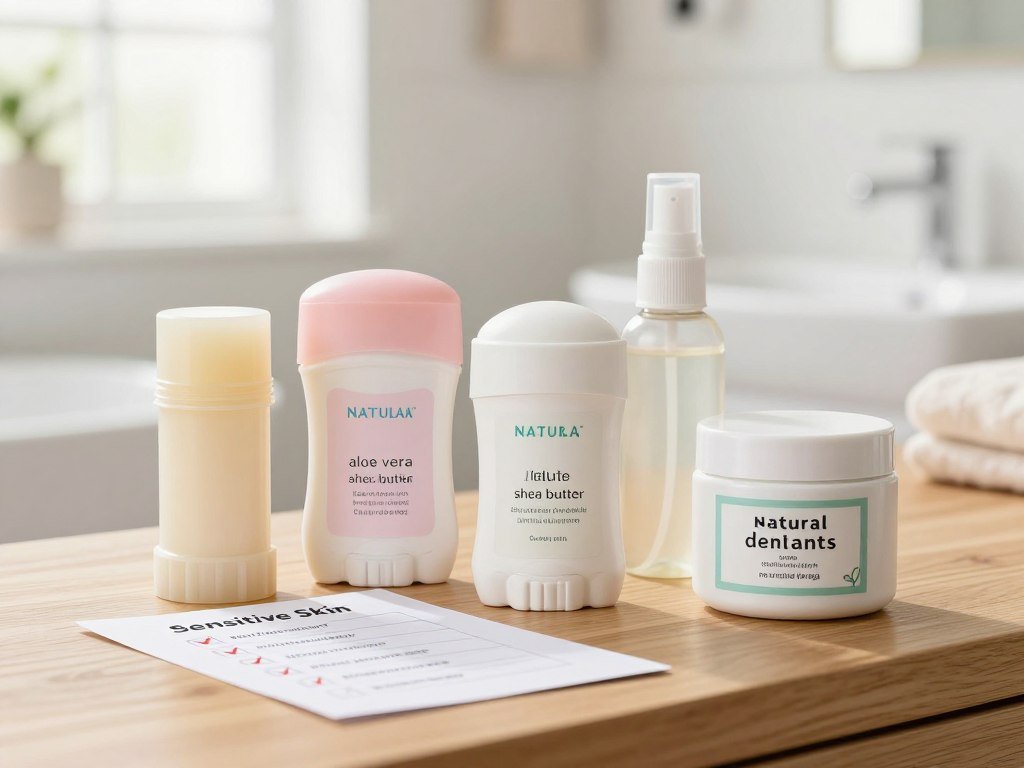
“Natural” does not guarantee a gentle formula. Fragrance-free and baking-soda-free are separate label choices, so check both when they matter to you. A product can avoid one and still contain the other.
Choose one new formula at a time so a reaction is easier to trace.
Four simple questions can help narrow the options before you shop:
- Do you want an unscented product, a scented one, or no added fragrance?
- Have any ingredients caused redness, itching, or discomfort before?
- Would you rather use a stick, cream, roll-on, or spray?
- Does absorbing some moisture matter, even though it will not stop sweat?
Application format changes how a product feels and how much effort it takes. The trade-offs are easy to compare:
| Format | How it applies | Practical trade-off |
|---|---|---|
| Stick | Direct solid application | Familiar format, can leave residue |
| Cream | Applied with fingers or an applicator | Amount is easy to adjust, hands may get messy |
| Roll-on | Liquid applied with a roller | Can feel wet and need drying time |
| Spray | Misted onto skin | Quick application, scent may be noticeable |
A label may say “unscented” even when the formula contains ingredients used to mask odor. “Fragrance-free” is a different claim, so read the ingredients rather than relying on the front label.
For a broader look at gentle cleansing, this guide to body washes for sensitive skin also stresses checking labels and personal triggers. Use the same careful approach when comparing deodorants.
What Is the Difference Between Deodorant and Antiperspirant?
The key difference is that an antiperspirant reduces sweat, while a deodorant targets odor. They do different jobs, so choose by whether you want odor control or drier underarms.
An antiperspirant is a product that reduces sweating by temporarily blocking sweat ducts with aluminum-based active ingredients. Deodorants manage odor without stopping sweating.
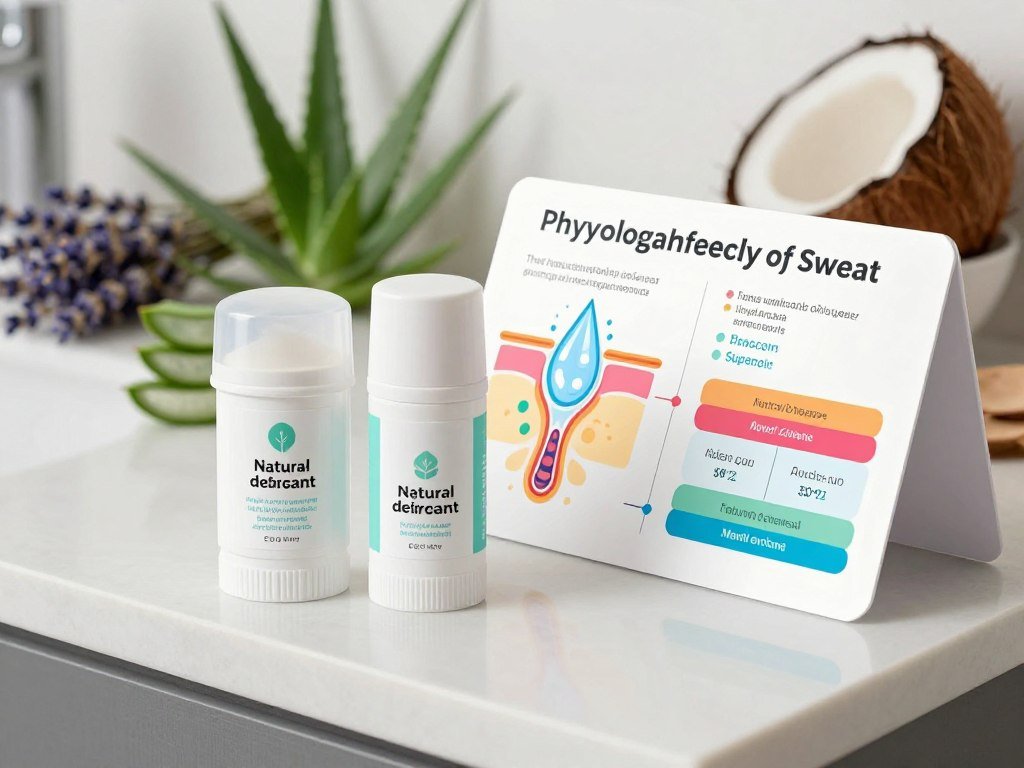
This table shows the main difference in a quick comparison:
| Product type | Main function | Effect on sweating |
|---|---|---|
| Deodorant | Manages odor | Allows sweating |
| Antiperspirant | Reduces perspiration | Temporarily blocks sweat glands |
| Crystal mineral deodorant | Manages underarm odor | Allows sweating |
When odor control is the priority
A natural deodorant is intended to manage odor, not keep your underarms dry. Skin bacteria can contribute to odor as they interact with sweat. Some formulas use ingredients that absorb moisture, but that is not the same as preventing perspiration.
Crystal deodorant is a mineral-salt deodorant, not an antiperspirant. It can manage underarm odor while allowing your body to sweat. The word “crystal” describes the format or mineral ingredient, not sweat control.
When reducing sweat matters
Choose an antiperspirant if reducing perspiration is your main goal. The term “natural antiperspirant” can refer to a deodorant with moisture-absorbing ingredients, rather than a product that blocks sweat.
For a simple overview of how underarm products fit into a body-care routine, see this guide to choosing body-care products. If staying drier is the priority, check whether the product is actually labeled as an antiperspirant.
Which Ingredients Are Less Likely to Irritate Sensitive Skin?
For someone who has developed redness from a natural formula, baking soda is one ingredient worth checking first. Known triggers matter more than a product’s natural label.
Baking soda is sodium bicarbonate, and it can irritate some underarm skin. Other ingredients may suit your skin better, but no ingredient is right for everyone.
These ingredients have common roles in deodorant formulas, with different checks to keep in mind:
| Ingredient | Common role | Sensitivity check |
|---|---|---|
| Baking soda | Odor neutralizer | Can irritate some people |
| Magnesium hydroxide | Alternative odor-control ingredient | Check the full formula for other triggers |
| Arrowroot or tapioca starch | Absorbs moisture | Check for added scent or oils |
| Fragrance or essential oils | Adds scent | Consider fragrance-free if scent has caused irritation |
Baking soda and gentler alternatives
Magnesium hydroxide is used as an alternative odor-control ingredient. Arrowroot and tapioca starch can absorb some moisture, but they do not stop sweating.
Coconut oil and shea butter are plant-derived emollients, which help soften skin. A formula with these oils may still contain another ingredient that does not suit you.
Fragrance, essential oils, and other sensitivities
Fragrance and essential oils can also bother reactive skin. A study of 107 deodorants and antiperspirants found fragrance in 90 percent, propylene glycol in 47 percent, and essential oils or biological additives in 10 percent. The study on deodorant allergy discusses these potential triggers.
“Unscented” and “fragrance-free” are not interchangeable label terms. A guide to skincare for dry, sensitive skin also recommends checking ingredients and adding new products one at a time. If you already know a particular ingredient triggers a reaction, avoid experimenting with another formula that contains it.
Best Natural Deodorants for Sensitive Skin
PiperWai Cream is the most straightforward first trial here for someone avoiding baking soda, while CRYSTAL offers an unscented mineral-salt option. Neither is guaranteed to suit every person.
The best natural deodorants in 2026 for sensitive skin are best treated as a formula-matched shortlist, not a universal ranking. Compare scent, format, and ingredients with your own known triggers.
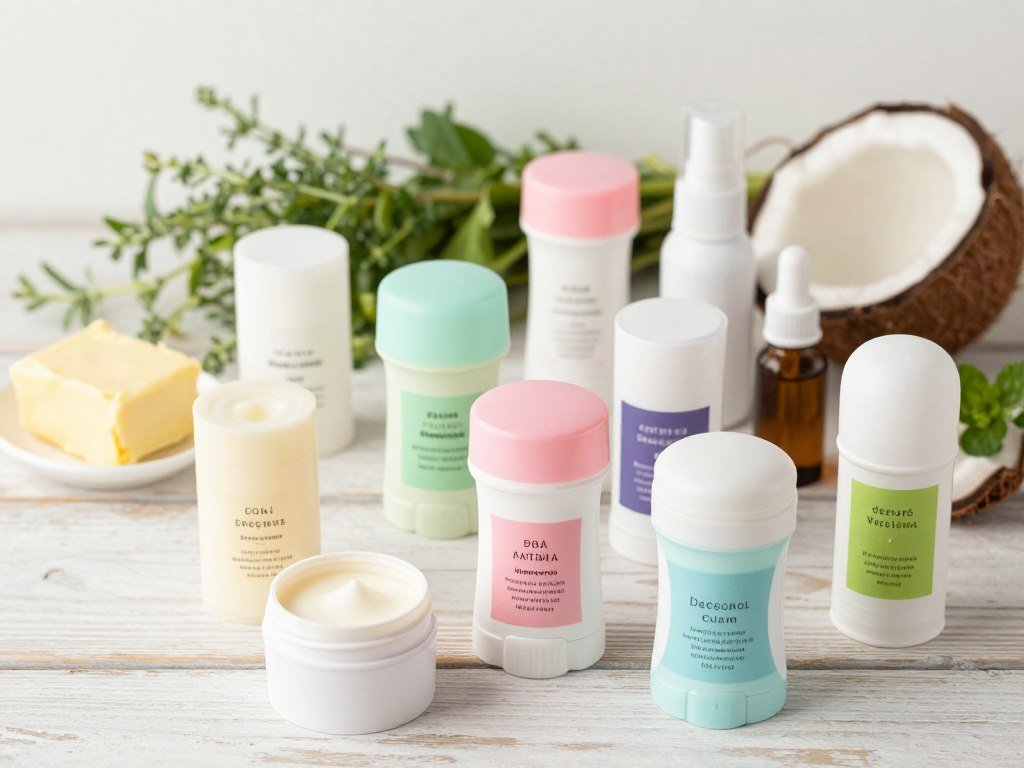
CRYSTAL Mineral Deodorant Stick for an unscented mineral option
CRYSTAL Mineral Deodorant Stick is an unscented choice for someone who wants to avoid added scent. It uses potassium alum, also called potassium aluminum sulfate, a mineral salt with antimicrobial properties. The stick costs $8.59, and the product is applied to wet skin or a wet stone.
Crystal deodorant can reduce or eliminate underarm odor while allowing sweating. That makes it different from an antiperspirant, which aims to reduce perspiration. This option may suit you if you prefer a mineral-salt product and want an unscented label. It may not suit everyone, and unscented does not mean irritation-free. Check the full ingredient list and follow the product directions, especially if you have reacted to mineral salts before.
PiperWai Natural Deodorant Stick for a recycled-plastic package
PiperWai Natural Deodorant Stick comes in a recycled-plastic package and offers a familiar solid format. It costs $18.99 for 2.6 ounces (75 grams). This may suit you if you prefer a stick and want to consider packaging alongside the formula.
The stick format is easy to carry and apply, but it may leave residue on clothing. Its recycled-plastic package does not tell you whether every local recycling program accepts it. Check the full ingredient label if you are avoiding a certain scent or ingredient. The stick is not an antiperspirant, so do not expect it to keep your underarms dry.
PiperWai Cream Deodorant for a baking-soda-free cream
PiperWai Cream Deodorant is baking-soda-free, making it a reasonable trial for someone who has reacted to sodium bicarbonate. It costs $18.99 for 2 ounces (57 grams). A cream format lets you adjust the amount, though applying it with your fingers can feel messy.
Baking-soda-free does not mean fragrance-free. If added scent has bothered your skin, check the current ingredient list before choosing this product. A cream may suit you if you prefer a softer texture over a solid stick, but the format is a personal choice. The product is a deodorant, not an antiperspirant, so it manages odor without stopping perspiration.
Meow Meow Tweet for its paper-tube stick
Meow Meow Tweet offers a deodorant in a paper-tube stick for shoppers who want less plastic packaging. It costs $13.99 for 1.8 ounces (50 grams). Its formula uses baking soda, magnesium, and arrowroot, so it may not suit someone avoiding baking soda.
The mix of ingredients may appeal to someone who tolerates baking soda and prefers a stick. The paper tube is a distinct packaging feature, but end-of-life options depend on local rules and the package itself. Check the full formula for fragrance or other known triggers before buying. This deodorant manages odor; it does not promise to keep sweat from reaching the skin.
Ethique Minimalist for a plastic-free stick
Ethique Minimalist is a plastic-free deodorant stick labeled pH-balanced. It costs $14 for 2.5 ounces (71 grams). The format may suit someone looking for a solid product with a package that avoids plastic.
“pH-balanced” and “plastic-free” describe different product features, not a promise of comfort for every skin type. Read the ingredient list for baking soda, fragrance, and any other personal triggers. The stick may feel more familiar than a cream or spray, though solid products can leave residue. It is a deodorant, so its role is odor management rather than sweat reduction.
EcoRoots Zero Waste Deodorant for a compostable paper tube
EcoRoots Zero Waste Deodorant comes in a compostable paper tube and costs $18 for 3 ounces (85 grams). It may suit you if you want a paper package and can use an end-of-life option that accepts it.
A compostable label does not by itself mean a package will break down in a home compost pile. Local compost services may have different rules, and some do not accept personal-care packaging. Check the formula for ingredients that have bothered your skin before. The product’s paper tube is a packaging feature, not a measure of how well the deodorant fits your underarms.
Battle Green for a lower-priced cardboard tube
Battle Green deodorant costs $8.60 for 2.3 ounces (65 grams) and comes in a cardboard tube. It may suit you if you want a paper-style package at a lower listed price than several other picks here.
Price alone cannot tell you whether a formula will suit sensitive skin. Read the current ingredient list for baking soda, fragrance, and other known triggers, then consider whether a tube is easy for you to use. Cardboard packaging may be a lower-waste choice where local recycling accepts it. The deodorant manages odor, rather than preventing perspiration.
Ursa Major Forest Fix Spray for a spray format
Ursa Major Forest Fix Spray Deodorant is aluminum-free and baking-soda-free. Its spray format may suit you if you prefer a quick mist instead of a solid stick or cream.
A spray may feel different from a balm or solid formula, and its scent may be more noticeable during application. Check the ingredient list if you are avoiding fragrance or essential oils. Aluminum-free means the deodorant is not an aluminum-based antiperspirant; it does not mean the product will stop sweat. The spray may suit someone who wants to avoid baking soda, but that label alone cannot predict your skin’s response.
Kaia Naturals The Takesumi Detox for an activated-charcoal stick
Kaia Naturals The Takesumi Detox Deodorant is an aluminum-free, baking-soda-free stick that contains activated charcoal. It may suit someone who wants to avoid baking soda and prefers a solid format.
Activated charcoal is a distinctive formula ingredient, but its presence does not guarantee a certain odor-control result for every person. Check the full ingredient label for added scent or other known triggers. The stick may be convenient if you already prefer solid deodorant, though it can leave some residue. Like other deodorants, it does not block sweating.
Just Ingredients Magnesium Deodorant for a baking-soda-free formula
Just Ingredients Magnesium Deodorant is aluminum-free and baking-soda-free. Its magnesium-based formula may suit someone who wants to avoid sodium bicarbonate while choosing another odor-control ingredient.
The product has a six-month shelf life after opening, which gives you a clear use period to track. This is a useful detail if you do not use deodorant every day or keep several products in rotation. It may not be the right choice if another listed ingredient bothers your skin. Check the full label for scent and other personal triggers, since baking-soda-free does not mean fragrance-free.
Compare the current ingredient label with your own known triggers before choosing a full-size product.
Do Natural Deodorants Actually Work?
Yes, natural deodorants can manage odor for many people, but they do not work by preventing perspiration. Odor control is possible, though results depend on the formula, your activity, and your skin.
Moisture-absorbing ingredients do not stop sweat. Skin bacteria, including Corynebacterium and Staphylococcus, contribute to underarm odor. Heat and exercise can make odor more noticeable as the day goes on.
Pay attention to four details during normal use:
- Your activity level, such as a quiet workday or a brisk walk.
- Heat, especially when warm weather makes your skin damp.
- How the formula feels on your skin after application.
- When you notice odor returning during the day.
Ingredients like baking soda and magnesium may appear in odor-control formulas, but each product works differently for each wearer. A product that feels comfortable at a desk may feel less comfortable after a long workout or a hot commute.
Give the formula a fair look during your usual routine, rather than judging it only on one unusually hot day. Judge a formula by odor control through your usual day, not by whether your underarms stay completely dry.
How Long Can Switching to Natural Deodorant Take?
A switch from conventional antiperspirant can come with a temporary period of stronger odor or more sweating. Some people notice this during the first 2 to 4 weeks, while others may have a different experience.
The adjustment period is not a required “detox.” A deodorant does not reduce sweat like an antiperspirant, so your underarms may feel different after a change.
Try to keep the rest of your routine steady while you test a new formula. If you change your cleanser, laundry detergent, and deodorant at once, it becomes harder to tell which change affected your skin or odor.
Write down the product you used and any clear changes you notice. That note can help you compare one formula with another without relying on memory alone. Experiences differ, so a change in odor does not mean every person will need the same adjustment time.
Do not push through clear irritation in the name of an adjustment period. If irritation or a persistent rash appears, stop using the product rather than waiting for an adjustment period to end.
Why Do I Still Smell After Using Natural Deodorant?
If odor returns before the end of your day, the formula may not be keeping up with your sweat and activity. Smelling after use can happen when bacteria, heat, or movement outlast a deodorant’s odor control.
You may still smell after using natural deodorant because the formula manages odor rather than stopping sweat, and your activity, heat, or skin response can outlast its effect.
Use this four-point check to spot a possible reason:
- Check whether you applied the product as directed.
- Look for a known trigger in the ingredient list.
- Note the time odor returns after application.
- Consider whether your activity or the heat changed.
Corynebacterium and Staphylococcus are among the skin bacteria associated with underarm odor. Sweat, heat, and activity can make odor more noticeable, even when you used deodorant earlier.
Some formulas may need reapplication when odor returns, but follow the product label. Baking soda or another ingredient may also feel different on your skin, so discomfort is a reason to stop and reassess rather than add more product.
A sudden or unusual change in body odor is a reason to discuss it with a health professional.
What Makes Deodorant Packaging More Eco-Friendly?
The most practical lower-waste package is one your local system can actually reuse, recycle, or compost. Local rules count because a package label does not guarantee access to those services.
Choose packaging by its real end-of-life options, not by a broad “eco” claim. These examples use different materials and offer different ways to handle the package:
| Example | Packaging format | Reuse or end-of-life detail |
|---|---|---|
| HiBar | Recyclable cardboard tube | Recyclable packaging |
| Mineralized | Metal tins | Refillable tins |
| Weleda spray | Glass bottle | Glass packaging |
| Weleda roll-on | Plastic bottle | Differs from its glass spray container |
| HealthyBaby | Paperboard tube | Labeled biodegradable |
Refillable and reusable formats
Mineralized deodorant powder comes in refillable metal tins. A reusable tin may cut down on single-use packaging if you keep using it and can get refills.
Refillable does not always mean the package can be recycled through your local curbside program. A package can also have several materials that need separate handling. Check whether the refill itself uses less packaging than a new container.
Paper, cardboard, and recyclable containers
HiBar uses a recyclable cardboard tube, while HealthyBaby deodorant comes in a biodegradable paperboard tube. Weleda sells a spray in glass and a roll-on in plastic, so the two formats do not share the same package material.
Humble offers both plastic and plastic-free packaging, giving shoppers a choice between formats. Curbside acceptance depends on local rules, and a compostable or biodegradable claim does not guarantee home compostability.
U.S. recycling access also differs by household. A report of EPA packaging data estimates that about 40 percent of households lack access to comparable-quality recycling services. Check local recycling and composting rules before treating a package label as an end-of-life guarantee.
How Should Men and Women Choose a Formula?
Men and women do not need separate deodorant chemistry to manage underarm odor. Skin response matters more than gendered product labels.
The best natural deodorants for men and women can be the same products. Choose by scent preference, format, and how your skin responds, rather than by the intended gender on the package.
Some brands use gendered marketing, while others present products as unisex. Every Man Jack is a men’s line, and Ursa Major is presented as a unisex option. Those labels do not show that either product works better for a particular gender.
Search terms like “best natural deodorants for men,” “best natural deodorants for women,” and “best non-toxic deodorant for men” point to different shopping labels, not separate body needs. “Non-toxic” is not a guarantee of zero irritation, so the ingredient label still matters.
Scent can be a bigger daily choice than the product’s name. A fragrance that smells mild in a store may feel strong when worn close to your body. If scent is a priority, sample a smaller size before committing to a fragrance worn every day.
What Is the Downside of Lume?
Lume is an odor-control deodorant, not a sweat-blocking antiperspirant. Its main limit is that it does not stop sweating, and its solid stick contains fragrance.
A deodorant without aluminum and parabens is one option for odor control, and Lume’s solid stick is formulated without both, but it still does not prevent sweating.
The solid stick is also formulated without baking soda, phthalates, sulfates, and talc. Its ingredient list includes mandelic acid, corn starch, arrowroot root powder, panthenol, caffeine, and fragrance. The exclusions do not prove that the formula is safer or more effective for everyone.
The stick costs $15, or $12.75 with a subscription. In an 18-day comparison, measured odor control was 12 to 24 hours for Lume and 8 to 18 hours for Native. Those figures describe that comparison, not a guarantee for every wearer.
Check the full ingredient list if fragrance or any listed ingredient has bothered your skin before.
Are Aluminum-Free Deodorants Healthier?
Aluminum-free does not automatically mean healthier for every person, and the breast-cancer claim is not supported by scientific studies. Health and skin comfort are separate issues, so consider them on their own.
The National Cancer Institute says scientific studies do not support claims that aluminum or other chemicals absorbed through the underarm cause breast cancer.
That finding does not mean every underarm product will feel comfortable. Local irritation is a separate issue, and any formula can bother someone’s skin.
Crystal deodorant may cause rash, itching, or irritation, especially on broken skin or skin recently shaved or waxed. Wait until the skin feels healed before applying a product to an irritated area.
There is no single healthiest category for everyone. Your known triggers, comfort, and desire to reduce sweat are practical factors when choosing between products with different active ingredients.
Choose based on the effect you want and the ingredients your skin tolerates, not on an unsupported cancer claim.
How Should You Apply Natural Deodorant?
A comfortable application starts with clean skin and the directions for that specific formula. Follow the label, since products with different formats may need different steps.
Deodorants manage odor rather than stop perspiration. Using more product than you need can leave residue or transfer onto clothing.
Use this four-step routine as a starting point, then follow any product-specific directions:
- Apply the product to clean skin.
- Use the directions printed on its label.
- Let wet formulas dry before you get dressed.
- Reapply only when odor control fades and the label allows it.
A solid stick, cream, and spray should not be treated as identical. A cream may need careful spreading, while a spray may need time to dry. A roll-on can also feel wet before it settles.
Using a thin, even layer can help limit buildup on skin and clothing. Use only enough to cover the underarm evenly, since an extra-heavy layer can leave more residue.
What Can You Use Instead of Deodorant?
If deodorant irritates your skin, leaving the area bare while keeping it clean and dry is a reasonable alternative. You can skip the product without using another underarm formula.
Wash gently, dry thoroughly, and choose breathable clothing to help manage odor residue and dampness. These steps do not prevent sweating.
Washing can remove sweat and odor residue from the skin. Drying well can reduce lingering dampness, while breathable fabric may feel more comfortable when you sweat.
These habits do not replace a sweat-blocking treatment if reducing perspiration is your goal. They also do not ensure that odor will never return, especially during warm or active days.
Avoid using acids, baking soda, or essential oils as improvised underarm treatments. Household ingredients can irritate delicate skin, and burning or itching is a sign to stop using them.
Stop using any household ingredient that causes burning, redness, or itching.
Which Natural Deodorant Can Help With Persistent Underarm Odor?
For persistent odor, choose an odor-control formula your skin can tolerate rather than expecting it to keep you sweat-free. Start with known sensitivities when weighing a stronger scent or formula.
A baking-soda formula may suit someone who tolerates it, while a baking-soda-free formula with magnesium may be a better trial for someone prone to irritation.
Baking soda is a common odor-neutralizing ingredient, but it can irritate sensitive skin. Magnesium hydroxide is another odor-control ingredient used in deodorants. Compare the label with your own known reactions before choosing between them.
Arrowroot and tapioca starch can absorb some moisture. They do not block sweat, so they cannot keep your underarms completely dry during an active day.
Use this three-point check when you expect a busy day:
- Consider any ingredients that have caused you a reaction before.
- Apply the product according to its label.
- Carry it if you may need a top-up later.
If a stronger formula causes redness or itching, discontinue it instead of applying more.
A deodorant that feels fine during a quiet morning may feel different during a long, warm afternoon. If the stronger formula causes redness or itching, discontinue it instead of applying more.
How Can You Patch-Test a New Deodorant?
A small test area can reveal a reaction before you apply a new formula to both underarms. Use the test as a screen, not as a promise that the product will suit you.
The American Academy of Dermatology’s at-home product test advises using a small amount twice daily for 7 to 10 days. Stop if a reaction develops.
Choose a small area of skin and follow the product’s directions for the test. Apply a small amount twice daily, and watch for redness, itching, or swelling.
This method gives you a careful way to check for a reaction before regular use. It cannot tell you how your underarms will respond in every situation, and a home test does not replace medical advice for severe symptoms.
A negative home test cannot rule out every future reaction, so stop using the product if symptoms appear later.
Conclusion
The best first choice is the formula that meets your odor-control needs without repeating a known skin trigger. Match the label to your own experience, rather than expecting one product to suit everyone.
A baking-soda-free product is a practical first trial if baking soda has bothered your skin. An unscented choice may suit you if you want to avoid added scent. Deodorant manages odor, but it does not stop sweat.
Select one option, compare its current ingredient label with known triggers, and try it on a small area before regular use. Pick one candidate and patch-test it before making it part of your daily routine.
FAQ
What is the downside of lume?
What did humans use before deodorant?
What do Japanese use instead of deodorant?
What is the best eco-friendly deodorant?
What is the healthiest deodorant to wear?
Do any natural deodorants really work?
What can I put on my armpits instead of deodorant?
Is it healthier to not use deodorant?