A work trip can mean a client meeting, a flight, and dinner with colleagues, all before you unpack. Planning how to build a wardrobe for business travel can feel tricky when you need to look professional, stay comfortable, and keep your luggage light. A capsule wardrobe is a small, coordinated set of clothing pieces that can be combined into multiple outfits.
You do not need a separate look for every meeting or meal. You need clothes that suit your workplace, your plans, and the way you like to move through a long day. This practical process can help you prepare for different dress codes and trip lengths without guessing at every choice. A few coordinated pieces can cover more situations than a suitcase full of one-use outfits.
Key Takeaways
- Plan around real events, dress codes, and the local forecast.
- Choose clothing that can form several polished outfits.
- Keep a flexible option for a change in plans.
- Use layers to adjust comfort and formality.
- Pick bags that keep work items easy to reach.
- Unpack and care for clothes soon after you arrive.
How should you plan around your itinerary and dress code?
Start with the calendar, because a presentation and a sightseeing afternoon do not call for the same level of polish. Build the plan around real events and your workplace dress code, then leave room for one change of plans.
A business-formal office expects a different style from a business-casual team. A client-facing formal event may call for a more structured outfit than the rest of your trip. That one event can set the formality level for a key day.
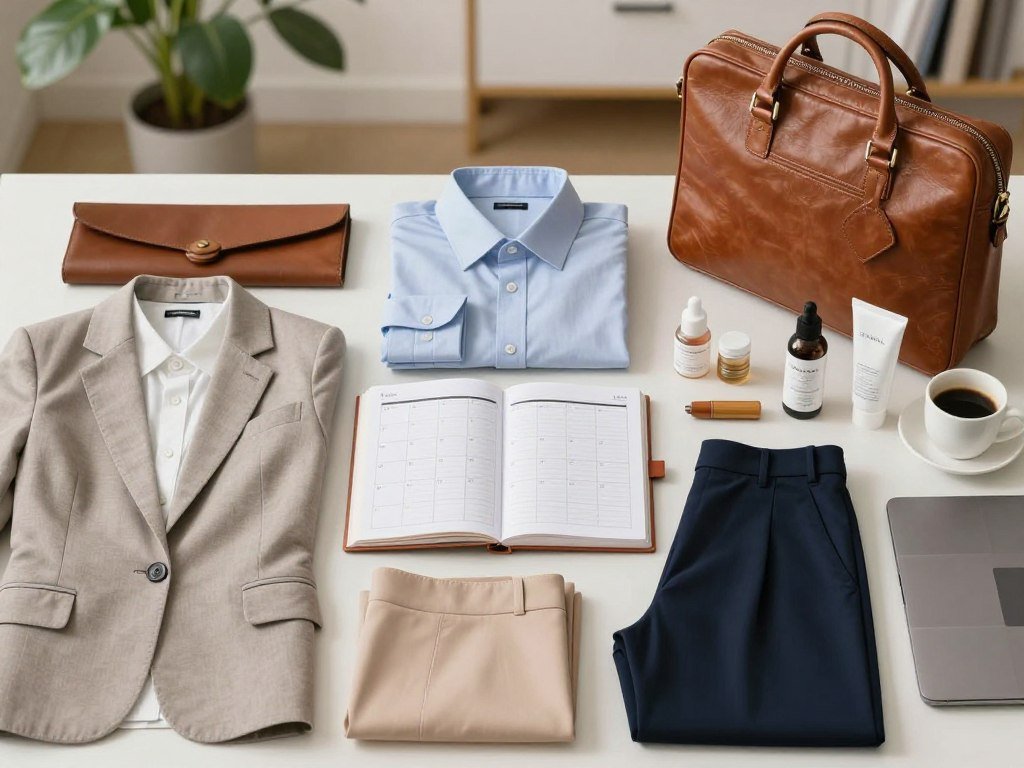
Match outfits to scheduled events
Work travel outfits should reflect the meetings, meals, and activities you actually have planned. Put each event on a simple checklist, then note what it asks of your clothing.
- Scheduled meetings and presentations
- Work dinners or networking events
- Likely walking or standing during the day
- Destination weather
Choose clothes for the most formal event that is truly on your schedule, not an imagined worst-case scenario.
Consider whether your day includes a long walk between offices or time on your feet at a trade show. Those details affect comfort, even when the dress code stays the same.
Check destination weather and workplace expectations
Look up typical temperatures and rainfall for the destination, then check a current forecast closer to departure. NOAA’s U.S. Climate Normals show long-term local patterns, not the forecast for your exact dates.
Those climate normals use observations from 1991-2020 and cover temperature and precipitation at nearly 15,000 U.S. weather stations. Check the destination forecast before choosing fabrics and outer layers.
How to Build a Wardrobe for Business Travel With a Capsule Formula
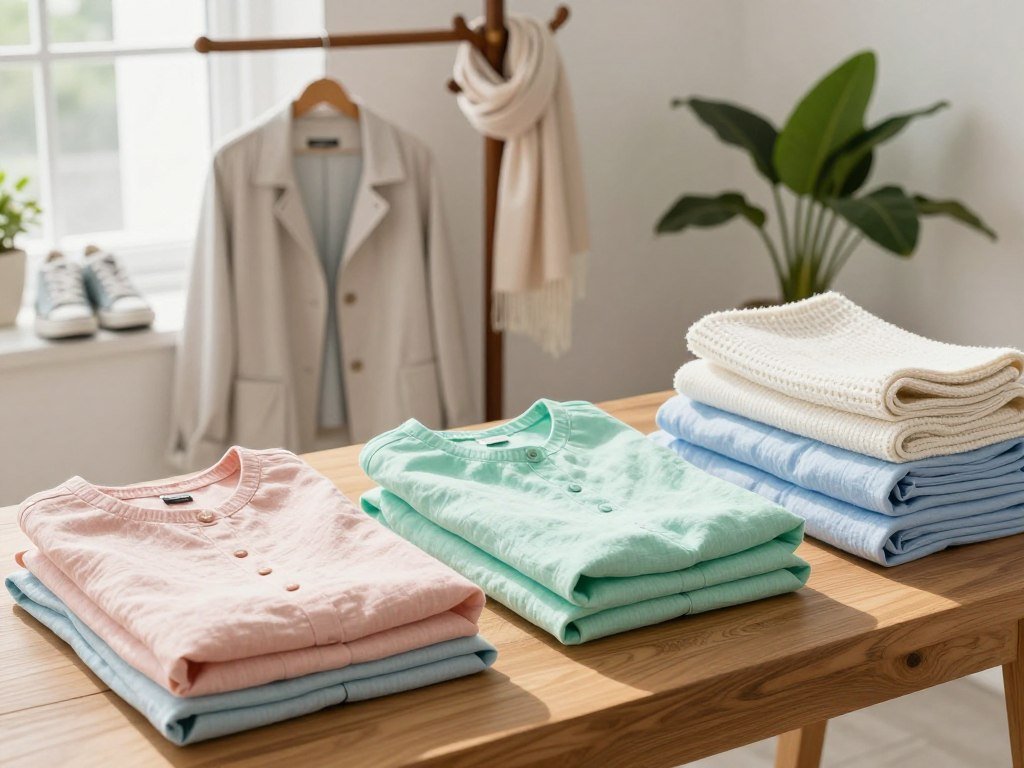
Begin with pieces that share colors and can pair in more than one way, not a separate outfit for every day. Three bottoms and four tops can make 12 possible outfit combinations, before you add layers or accessories.
Choose a color story with a few neutral foundations, such as navy, gray, black, or cream. Add one accent color if you want variety without making each item harder to match. A clear palette helps you spot useful pairings before you pack.
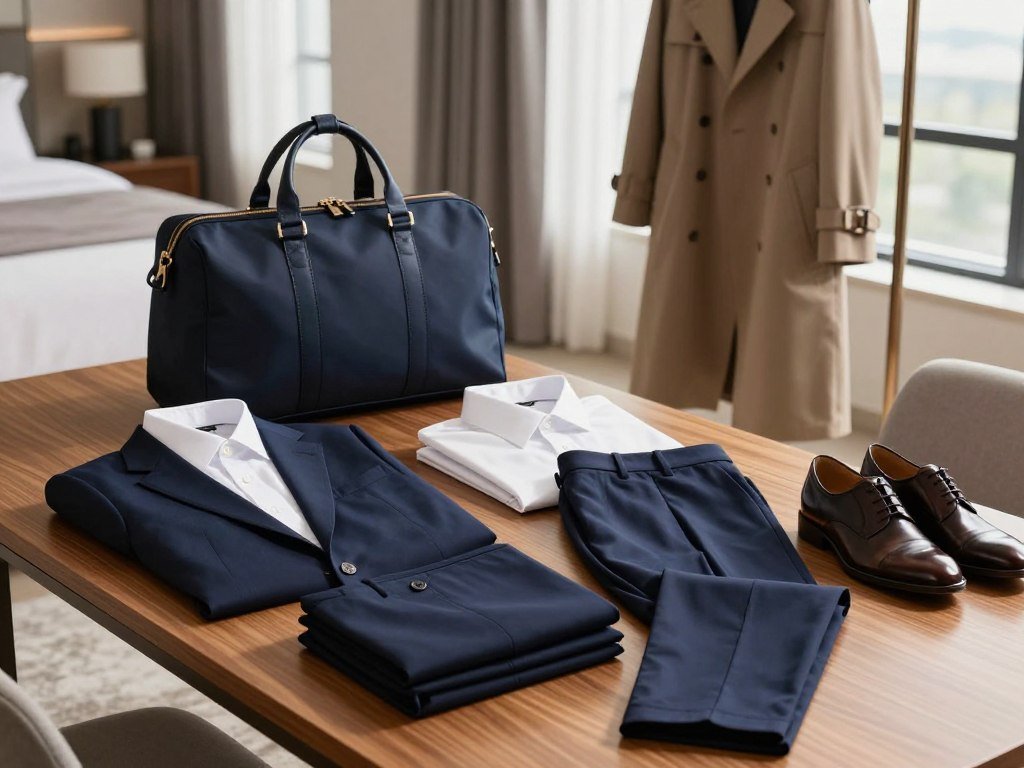
For example, navy pants can work with cream, gray, and blue tops. A gray bottom can pair with those same shirts, so you gain choices without adding a new outfit for each day. The goal is a wardrobe that feels varied, not a stack of identical looks.
Give every item a three-outfit test. If you cannot name at least three outfits it can join, it may take up space without doing enough work. A required garment for a single formal event can be an exception when the dress code leaves no suitable alternative.
Build around repeatable combinations
Start with the pieces you already wear well, then see which ones share colors and formality. A capsule wardrobe does not need to be a fixed number of items, and it should fit the trip rather than a strict formula.
A 10-piece capsule can provide upwards of 40 outfit combinations, but that is a benchmark, not a promise for every set. The count depends on how well each piece works with the others and whether the trip’s dress code allows those pairings.
If you are building beyond this trip, a smaller, coordinated wardrobe can also make everyday choices easier. Try the three-outfit test with clothes you own before buying anything new.
Keep a note of the combinations that work, especially if you travel often. Before packing an item, name at least three outfits it can join.
Which clothing pieces cover the most work settings?
Choose a small number of tops and bottoms that look polished together and feel comfortable through a full workday. Trousers or a skirt can pair with several tops already in your capsule, giving you more than one work look from the same pieces.
Business travel clothes for women can include shirts or other tops that work with both trousers and a skirt. Look for fabrics that travel well, such as ponte, jersey, silk-blend, or technical fabrics that resist wrinkles. Comfort matters when you will sit through meetings and walk between locations.
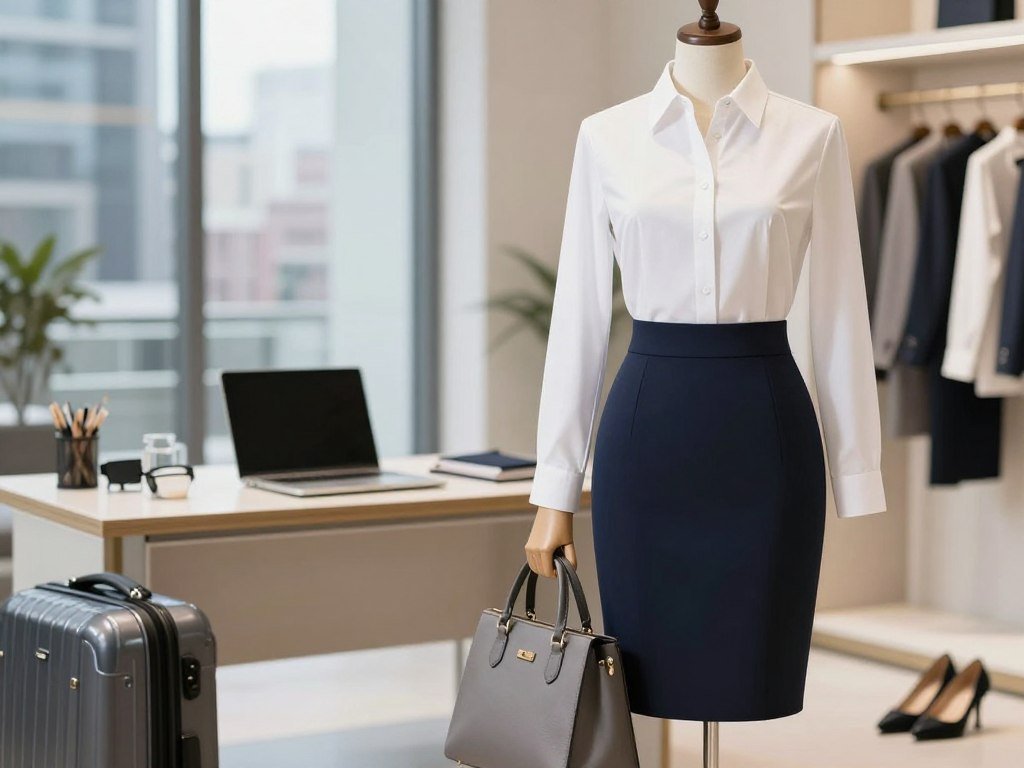
Choose tops and bottoms that mix easily
Use the same level of formality across your core pieces. A polished shirt that works with trousers should also look right with your skirt, unless the event calls for a specific outfit.
Fabric labels can help, but they do not tell the whole story about wrinkles. A study using the AATCC 128 wrinkle-recovery test found that treated 100% cotton scored 4.78, while other tested fabrics averaged 3.03. The wrinkle-recovery study also found that tested cotton blends with wrinkle-resistance claims did not differ significantly from fabrics without those claims.
Check the garment’s feel and care needs as well as its label. A fabric that stays presentable and feels good on your body is more useful than one that looks good only on a hanger.
Use skirts and dresses to vary the rotation
A knee-length or midi skirt in ponte or jersey can make a different outfit with the same tops. Wrap, sheath, and shirt-dress silhouettes in midi or knee length can also work across business settings.
A dress can simplify a morning when you have little time to get ready. It may also need a separate layer or shoes to meet the formality of a particular event, so test the full look before travel.
A skirt or dress does not replace trousers when your workplace or event dress code makes it unsuitable. Explore polished, versatile wardrobe pieces if you want more ideas for combining work clothes with personal style. Test each outfit while standing, sitting, and walking before it earns space in the bag.
What should men pack for a three- or five-day business trip?
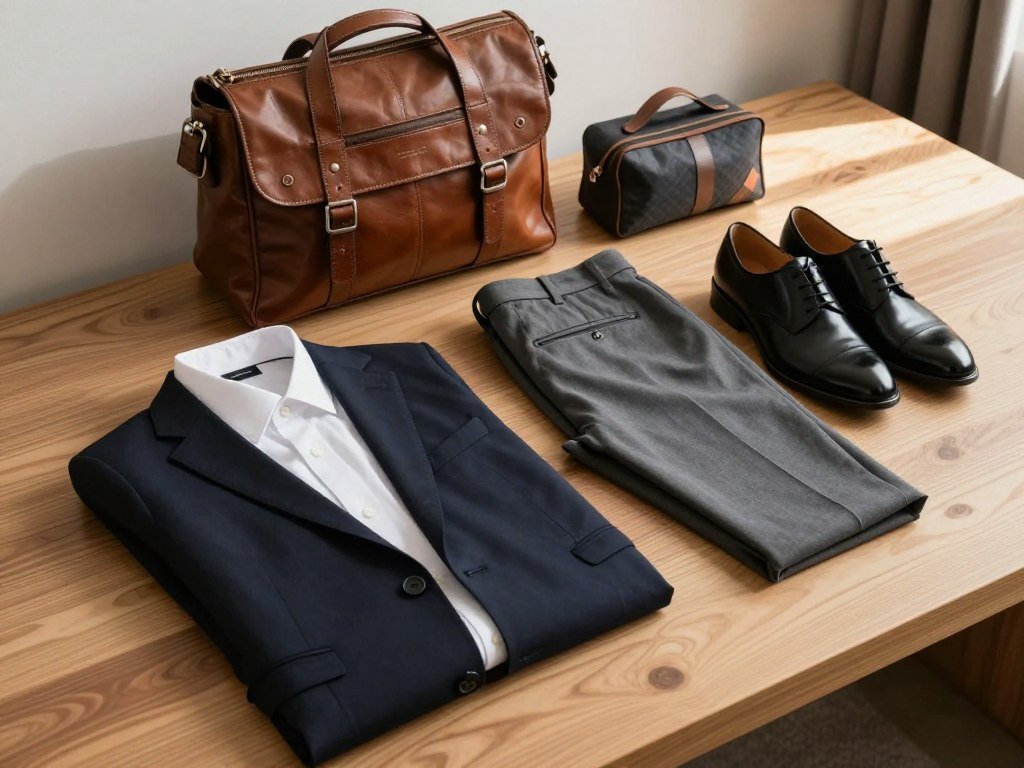
For a three-day carry-on trip, a man can start with 1-2 travel pants, 2-3 versatile shirts, one polished jacket, and one meeting-ready pair of shoes. This is a practical baseline, not a fixed rule for every schedule, since a formal dinner may call for a different setup.
A useful packing list should match the trip’s events and the number of times you can repeat pieces. Start with the calendar, then decide whether laundry or a second jacket changes what you need.
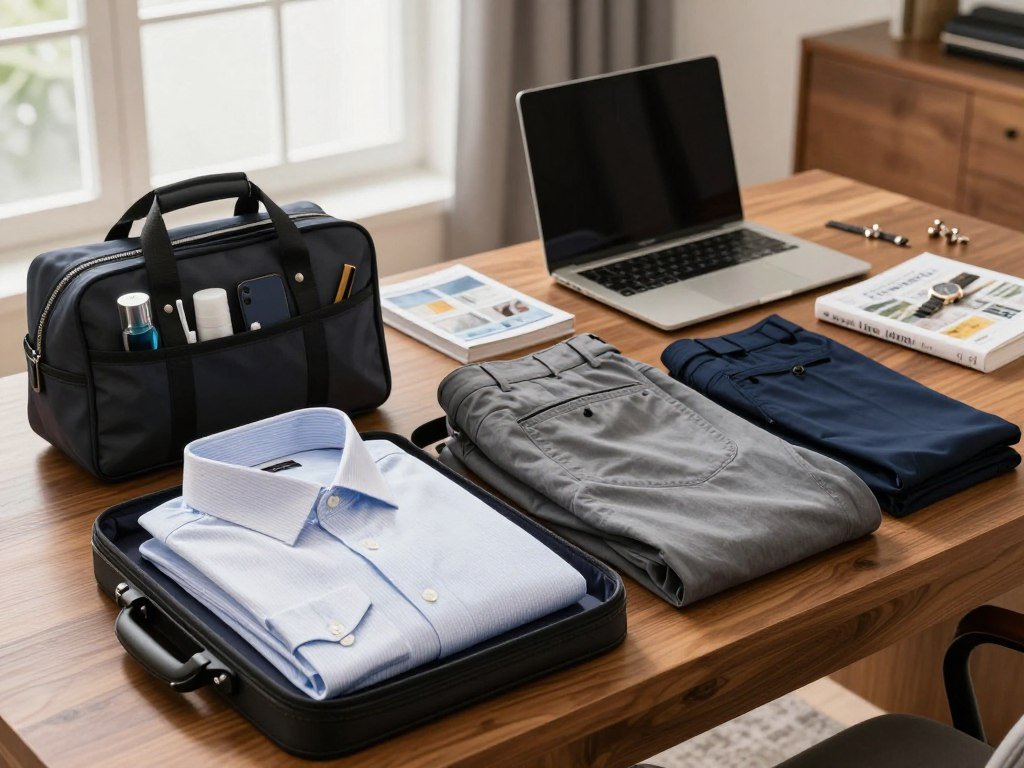
Start with a three-day carry-on baseline
The baseline keeps the main pieces simple: two pants, a few shirts, a polished jacket, and one pair of shoes that works for meetings and dinner. Here are two other men’s list examples, each with its own level of detail.
| Plan | Pants | Shirts | Jacket or blazer | Shoes | Belt |
|---|---|---|---|---|---|
| 3-day carry-on baseline | 1-2 pairs of travel pants | 2-3 versatile shirts | 1 polished jacket | 1 meeting-ready pair | Not specified |
| Detailed guide list | 3 pairs | 4 shirts | 2 blazers | 2 pairs | 1 reversible belt |
| Shorter guide list | 2 pairs | 2 shirts | Not specified | 1 pair | 1 belt |
A detailed men’s guide list includes four shirts, three pairs of pants, two blazers, two pairs of shoes, and one reversible belt. A shorter list uses two pairs of pants, two shirts, one belt, and one pair of shoes.
The quantities belong to different list styles, so do not combine them into a single required kit. A dress code, planned dinners, and access to laundry can all change the right count.
Scale the list for a longer trip
A five-day business trip packing list for men should account for scheduled outfits, repeatable pieces, and laundry plans. Do not automatically double every item just because the trip lasts two extra days.
Check whether the same pants and jacket can work across several days, and decide if you are comfortable wearing a shirt again. A formal presentation may need a fresh shirt, while a quiet office day may allow a repeat.
Keep the list lean by choosing shirts and pants that can share the same jacket and shoes.
Which layers make a small work wardrobe more adaptable?
A single blazer can make a simple outfit meeting-ready, then work as an extra layer during transit. One useful layer can change the formality of several base outfits, which is more efficient than adding a separate look for every event.
A blazer can sharpen a simple top-and-trouser combination or sit over a dress. A softer layer may feel easier to wear for long stretches, but formal settings can still call for a structured blazer. Match the layer to the room and the event.
Make the blazer earn its place
Choose a blazer that works with more than one base outfit. It should let you sit, reach, and move without pulling across the shoulders or feeling tight at the waist.
A structured blazer may take more room than a cardigan, yet it can be needed for a formal presentation or client meeting. If the rest of the trip is less formal, wear it with different tops instead of packing a second jacket.
Add a light layer for changing temperatures
A lightweight cardigan or thin sweater can help in an air-conditioned meeting room. Merino wool is one option because it helps regulate temperature and resists odor, which can be useful during a full day of travel.
Check each layer against these four needs before you pack it:
- Comfort while seated
- Ease of removal
- Compatibility with the capsule
- Suitability for the forecast
A layer that feels good standing up may bunch at the waist once you sit through a long meeting. Try it with the base clothes you plan to wear, then check how quickly you can take it off.
If you want more ideas for a polished look, a well-cut blazer and other versatile pieces can serve across several settings. Choose layers that can be worn over more than one base outfit.
What should you wear for the airport and flight?
Wear the bulkiest useful pieces on the plane and choose shoes you can walk in and remove easily. Comfortable business travel outfits should work for walking, sitting, and screening, especially when you need to go straight to an appointment after landing.
Wearing your heaviest jacket, pants, and shirt can free space in your carry-on. Shoes that slip on and off easily can simplify screening, while socks keep your feet covered if you need to remove them. Keep the outfit simple so you can move without fuss.
| Situation | Clothing choice | Practical reason |
|---|---|---|
| Airport screening | Easy-to-remove shoes and socks | Simpler screening without bare feet |
| Long flight | Comfortable base with removable layers | Adjusts to changing cabin comfort |
| Meeting after landing | Polished clothes with a ready-to-wear jacket | Reduces changes before the meeting |
Dress for security and easy movement
What to wear to the airport for a business trip depends on the first commitment after landing. If you have no meeting right away, comfort can lead; if you do, wear a polished outfit that still allows a long walk through the terminal.
Remove a coat or jacket and place it in a screening bin before walking through the metal detector or body scanner when required. The TSA’s screening tips explain common steps, including shoe removal at some checkpoints.
Layer for a long flight or meeting on arrival
Outfits for a business-class flight can stay polished with a simple base and removable layers. Avoid complicated garments such as bodysuits or jumpsuits on long flights, since they can make a quick change less convenient.
Two or three pairs of shoes are a practical maximum for a carry-on trip. Keep socks on for screening, and place a coat or jacket in the bin when required.
Which bag setup works for a business-trip capsule?
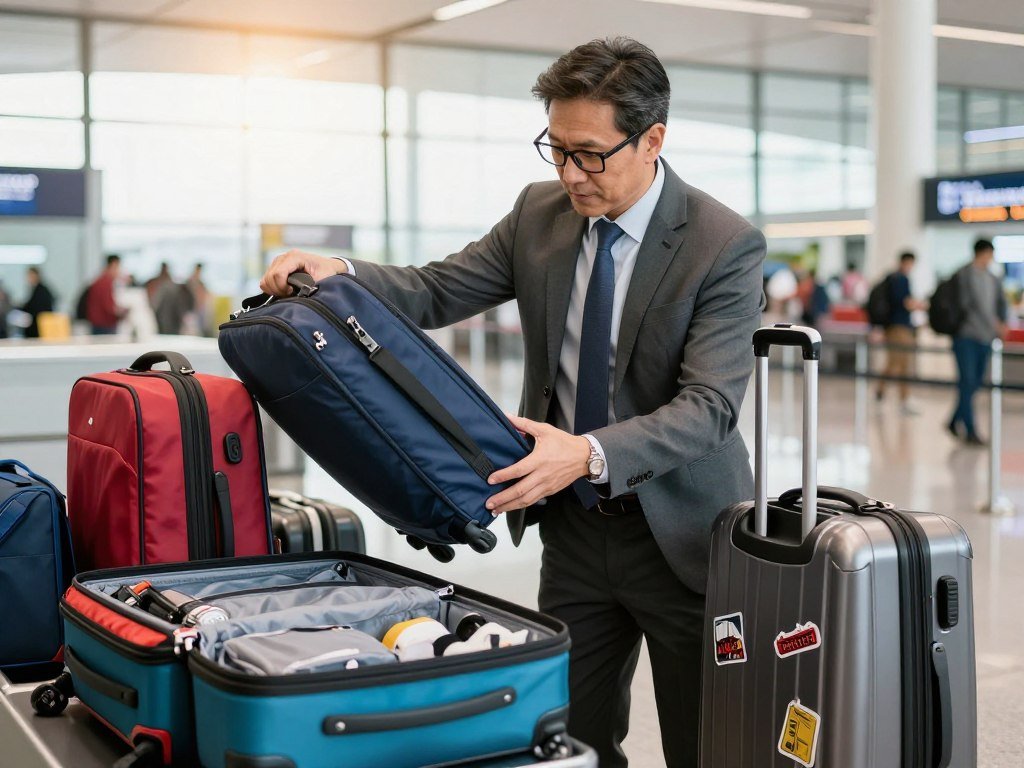
Choose the bag around what you need to carry at your seat and what you need to reach during the workday. A carry-on suitcase and a personal item make a common two-bag setup, with the personal item kept close in the cabin.
A weekender can suit a trip of 2-3 nights, while a longer trip or extra work gear may call for a different setup. Think about access as well as space, especially if your laptop or papers must stay within reach.
| Bag type | Useful for | Tradeoff |
|---|---|---|
| Carry-on suitcase | Clothes for several workdays | Less convenient on stairs |
| Weekender | Trips of 2-3 nights | Can feel bulky when full |
| Backpack | Laptop and hands-free travel | May have less room for clothes |
| Duffel | Flexible packing and short trips | Can be harder to carry over distance |
Choose the main bag for the trip
A carry-on suitcase can hold clothes, while a personal item keeps items you need at your seat. A backpack, roller bag, or duffel can replace one part of that setup, depending on how you move through the airport.
Cabin acceptance and bag size depend on the airline’s rules. Check the size limits for your flight before you settle on a bag, especially if you plan to use two larger pieces.
Some detailed men’s packing lists include four shirts, three pairs of pants, two blazers, two pairs of shoes, and one reversible belt. That is a fuller list than many short trips need, so consider how much room it leaves for work gear.
Keep work essentials accessible
If you carry a laptop or meeting documents, use a separate work bag or a personal item with a clear place for them. That keeps work essentials handy without opening the suitcase to find a charger or folder.
A wallet or document holder can keep payment cards and travel papers together. Pick one that fits what you carry, and keep a backup card or cash apart from your main wallet.
Keep the laptop and meeting documents in the bag you can access without unpacking your clothes.
How can you adapt outfits for summer and downtime?
Summer work travel calls for breathable clothes that still look appropriate when the day moves from meetings to dinner. Lightweight, breathable, moisture-wicking fabrics can help in warm weather, while a light layer helps indoors.
A blazer can be useful in a cold airplane cabin or an over-air-conditioned convention center, even when the outdoor weather is hot. Indoor temperatures count when you choose what to wear for a full day.
Keep warm-weather work outfits breathable
Choose summer business trip outfits that suit your workplace, not just the weather outside. Lightweight fabrics can feel more comfortable during active travel, while a polished cut helps the clothes suit meetings.
Keep an extra layer handy if you expect long hours in chilled indoor spaces. A blazer can cover a simple base outfit without requiring a separate set of clothes for the office.
Think about how the fabric feels after a warm walk between buildings. Clothes that trap heat can make the next meeting less comfortable, even if they look right at the start of the day.
Reuse polished pieces after meetings
A work outfit can move into dinner or sightseeing with a small change. Swap formal trousers for a more relaxed pair, or switch to a casual top after the last meeting.
Jeans can suit downtime or an informal dinner, but they are not a default for formal meetings. Check the workplace and event dress code before wearing them to a client meeting or presentation.
A skirt or dress that works for a meeting may also suit dinner when you change a small accessory or layer. Keep the event’s tone in mind, since an informal plan does not always mean casual clothes are right for every stop.
Check the event’s formality before treating a casual evening outfit as meeting-ready.
How do you pack and care for clothes on the road?
Unpack work clothes soon after checking in so luggage creases do not set while you settle in. Hang garments as soon as you arrive, then use a suitable wrinkle treatment only when the care label allows it.
Fold structured items and roll softer clothes when that suits the fabric. Place shoes in a shoe bag or wrap them to protect clothing, then take garments out promptly after you reach your room. Early care can help you avoid a rushed fix before a meeting.
Reduce creasing while packing
Pack clothes in a way that suits their shape and fabric, rather than forcing every item into the same fold. A jacket may need a careful fold, while softer pieces can often roll without taking much space.
Keep footwear apart from clean clothes so soles do not mark fabric. If a garment arrives with light creases, hanging it gives the fabric time to settle before you need it.
Refresh garments after arrival
Use this four-step arrival-care checklist to get clothes ready for the next workday:
- Hang clothes as soon as you unpack.
- Let garments air before wearing them.
- Use bathroom steam for light creasing.
- Use a travel steamer or wrinkle-release spray for persistent wrinkles.
Trips longer than 4-5 days call for a laundry or dry-cleaning plan. Check the hotel’s laundry options or find a nearby dry cleaner before you need a clean outfit in a hurry.
Steam can ease light creases, but it cannot replace the care instructions on a garment’s label.
A travel steamer or wrinkle-release spray can help with stubborn wrinkles when the fabric allows it. Check the care label before applying steam or any wrinkle treatment.
Conclusion
A useful work-trip wardrobe is the one that fits your schedule, dress code, and comfort needs. Versatile pieces and a realistic event plan can keep you looking polished without adding clothes for situations that may never happen.
Before packing, lay out the planned clothes and build three outfits from each piece. That quick test can show which items work hard and which ones are taking up room without earning it.
Before your next trip, test the combinations at home and leave behind anything that cannot earn its place.
FAQ
How many outfits can I make from a small business travel capsule?
Can I wear jeans on a business trip?
How many pairs of shoes should I pack for a business trip?
Should I pack a blazer or wear it on the plane?
How do I keep business clothes from wrinkling in a suitcase?
What should I pack for a five-day work trip?