A good travel pack makes airports and city transfers easier, but the right choice changes with what you carry and where you’re going. Your trips may call for a small personal item, a carry-on pack, or a larger bag for outdoor-leaning travel. The best travel backpack depends on that choice, plus your comfort needs and budget.
We compare 10 options for weekend trips, longer travel, under-seat use, and adventure-minded plans. The picks distinguish personal-item backpacks from carry-on bags and larger packs, so you can weigh space against airline fit. True volume is the usable space inside a backpack, which can differ from its advertised liter capacity because of its shape, materials, and internal layout.
Price matters, but an inexpensive pack can feel costly if its fit or access style frustrates you. Look at what you carry each day, not just the number printed on the label. Start with your airline’s size limit and the amount of gear you actually plan to carry.
Key Takeaways
- Check your airline’s size rules before choosing a bag.
- Match capacity to your clothing, shoes, and tech.
- Choose clamshell or top-loading access to fit your packing habits.
- Try the loaded pack before a long trip.
- Compare empty weight as well as price and features.
How Should You Choose a Travel Backpack?
Most travelers can narrow the choice quickly by deciding how much they need to carry and whether they want suitcase-style access. A useful first step is matching capacity to your trip, then checking how the main compartment opens. Advertised liters do not tell you how much space the pack offers in practice.
Match capacity to trip length and packing habits
A light packer can often start around 20-30L for a weekend or overnight trip. For longer travel, 35-45L is a common range for carry-on one-bag travel. Pack Hacker recommends staying under 50L for one-bag travel, though airline size limits depend on dimensions.
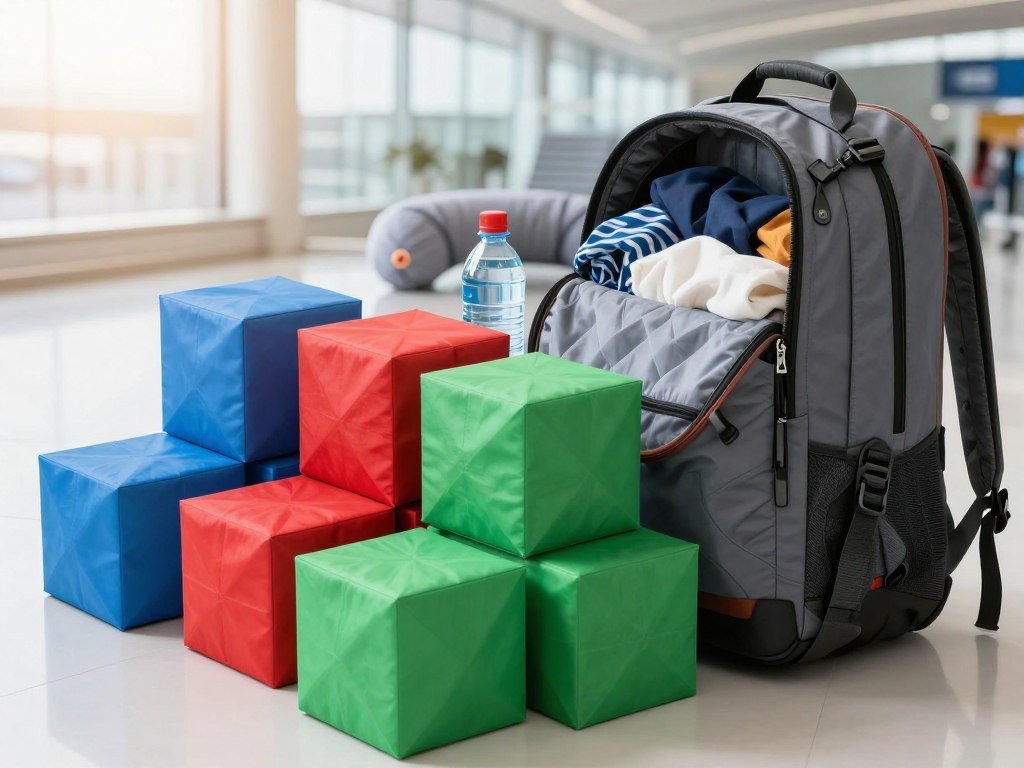
Capacity alone does not guarantee space for your gear. Shape, structure, and pockets affect true volume, while thick padding can take room from the main compartment. Packing cubes help sort clothes and small items, especially when a large compartment has few dividers.
| Trip style | Typical capacity range | Packing approach |
|---|---|---|
| Weekend or overnight | 20-30L | One or two cubes |
| Carry-on one-bag trip | 35-45L | Cubes by clothing category |
| Extended trip with more gear | Under 50L if possible | Prioritize essentials and check airline limits |
Leave room for the pack’s frame, padding, and pockets when comparing advertised liter counts.
Choose an opening that suits how you pack
A clamshell opening lays open like a suitcase, giving you a clear view of most items. Panel-loading designs open across part of the bag, while top-loading packs are filled from the top. With top-loading access, items near the bottom are harder to reach without unpacking.
Pick the style that suits your routine. Packing cubes work well in a clamshell or panel-loading bag, while a top-loader can suit travelers who pack by stacking gear. A laptop compartment also takes space, so choose one only if you need it.
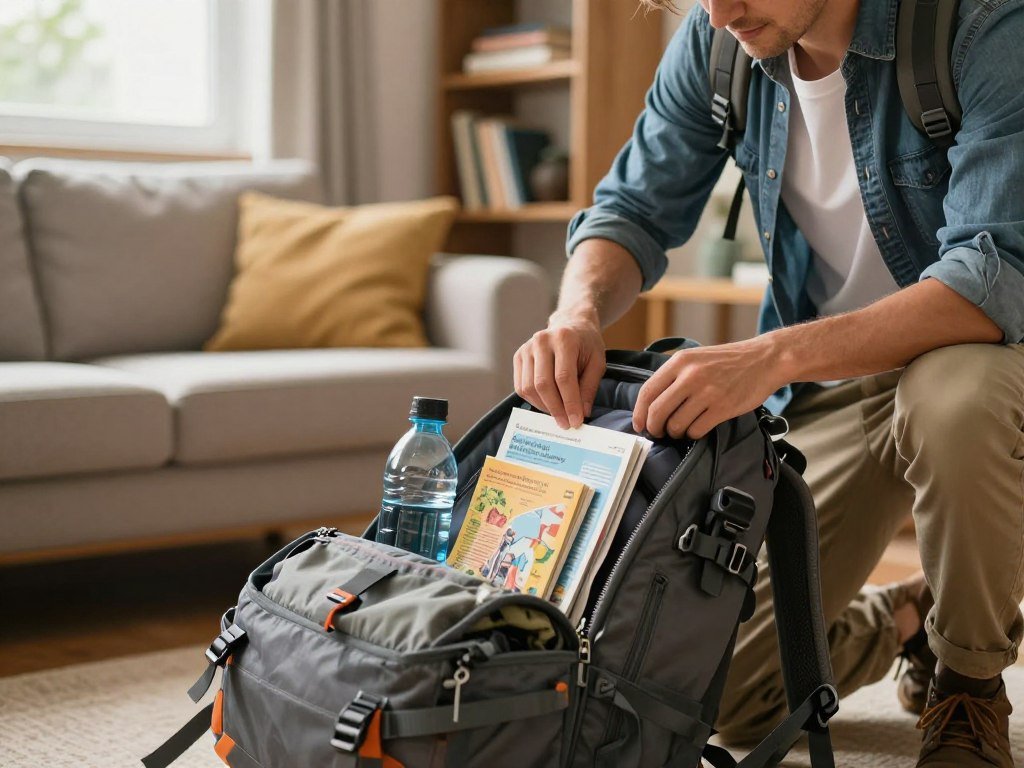
Before buying, estimate your clothing and tech, decide whether you need a laptop compartment, and test how the loaded pack feels. A bag that seems roomy at home can feel awkward once you add a laptop, shoes, and water bottle. Leave room for the pack’s frame, padding, and pockets when comparing advertised liter counts.
Will It Fit as a Carry-On or Personal Item?
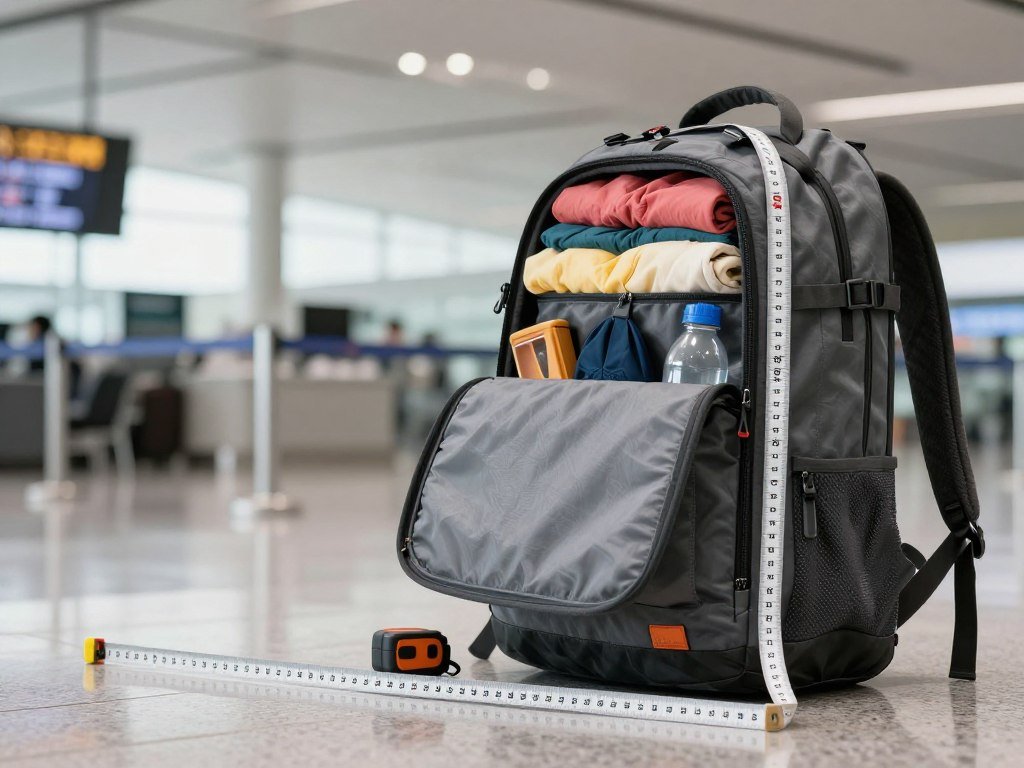
A backpack qualifies by its packed dimensions, not by the capacity printed on its tag. Check the rules for your own itinerary, since personal-item and carry-on limits vary by airline, aircraft, and fare. A liter label cannot confirm that a bag fits beneath a seat.
Check the airline’s actual size limit
Frontier’s personal-item allowance is 18 x 14 x 8 inches. A bag that meets one carrier’s rule may fail another’s, so check the rules attached to your flight and fare. A packed bag can also change shape when its pockets bulge or its straps are loose.
Compare dimensions, not just liters
The Cotopaxi Allpa 28L measures 19 x 12 x 9 inches, while the Patagonia Black Hole Mini MLC measures 20 x 12 x 7 inches. Both exceed at least one part of Frontier’s stated personal-item limit. These examples show why capacity alone does not settle fit.
| Model | Listed dimensions | Frontier personal-item fit |
|---|---|---|
| Cotopaxi Allpa 28L | 19 x 12 x 9 inches | Exceeds the allowance |
| Patagonia Black Hole Mini MLC | 20 x 12 x 7 inches | Exceeds the length limit |
| Frontier personal-item allowance | 18 x 14 x 8 inches | Limit, reference dimensions |
Measure the packed bag, check current airline rules for personal items and carry-ons, and never rely on liters alone. Use the bag’s fullest points, including handles and pockets, when you measure. A soft pack may compress, but you should not count on squeezing it into a size frame.
- Measure the pack after you load it.
- Check your airline’s current personal-item and carry-on rules.
- Do not use the liter label as proof of fit.
Recheck the fit after packing, because a bulging front pocket can push a compliant bag beyond its allowance.
Which Is the Best Travel Backpack for Most Trips?
For most carry-on travelers, the Cotopaxi Allpa 35L is the clearest all-around starting point. It suits organized travel without requiring you to choose a highly specialized design. For a broad mix of trips, it balances access and storage well.
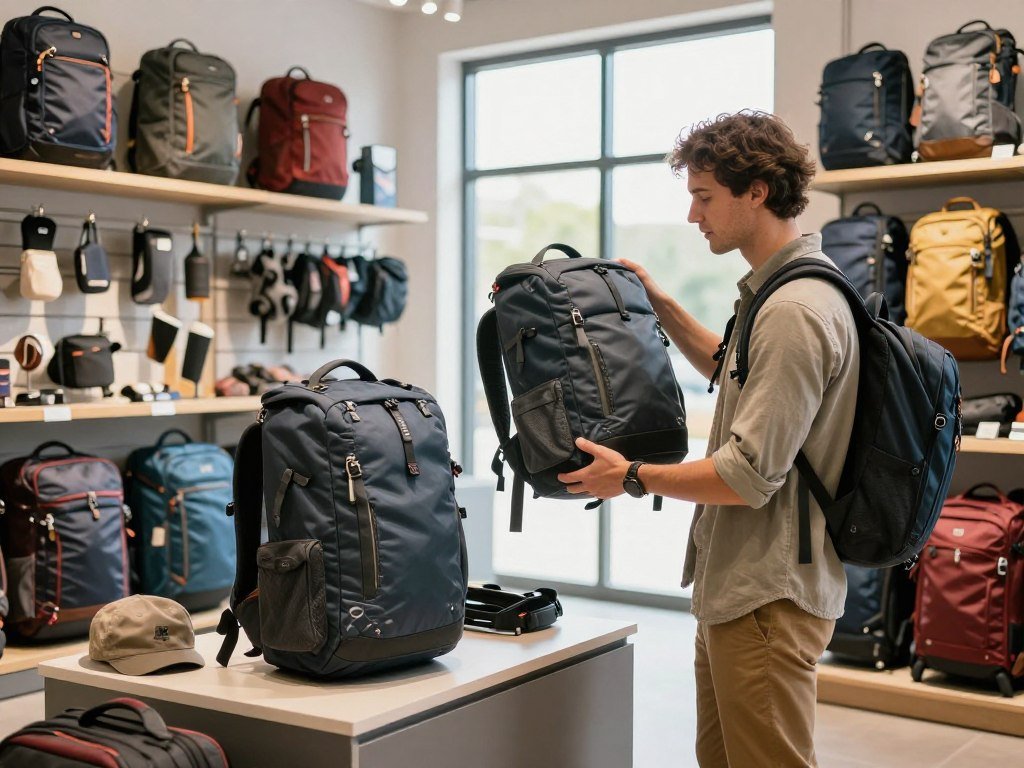
Best all-around fit for typical carry-on travel
The Allpa 35L scored 83 overall in testing of 17 travel backpacks, with an 8.7 storage-and-protection score. The Aer Travel Pack 3 also scored 83 overall, making it a strong alternative if tech organization matters more to you. Choose based on fit and use, not on a score alone.
The best travel backpack for men depends on torso fit and the load you carry. The Allpa 35L is a practical all-around pick, not a design that one gender must use. The best backpack for international travel is a manageable-capacity bag that meets your airline’s dimensions; the Aer Travel Pack 3 is one option.
Best alternatives for specific priorities
Tomtoc Navigator T-66 suits lower-cost carry-on use, while the Osprey Fairview 40 has a more supportive harness. Tortuga Travel Backpack Pro 40L suits travelers who want a premium, structured carry. Each one asks you to trade one benefit for another.
| Pick | Best suited to | Main trade-off |
|---|---|---|
| Cotopaxi Allpa 35L | Organized carry-on travel | Comfort has a load limit |
| Aer Travel Pack 3 | Tech organization | Hip belt costs extra |
| tomtoc Navigator T-66 | Lower-cost carry-on use | Comfort drops with heavier loads |
| Osprey Fairview 40 | Supportive harness | Fit takes adjustment |
| Tortuga Travel Backpack Pro 40L | Structured premium carry | Heavy empty weight |
- Choose fit before counting features.
- Check the pack’s dimensions when loaded.
- Include empty weight in your decision.
Favor the pack whose fit and access style match your real itinerary over the one with the longest feature list.
Cotopaxi Allpa 35L: Best for Organized Adventure Travel
Choose the Cotopaxi Allpa 35L if you want a travel-focused pack that balances organization with a supportive carry. Its layout suits travelers who like gear in defined places, rather than loose inside one main compartment. That order helps when you change locations often.
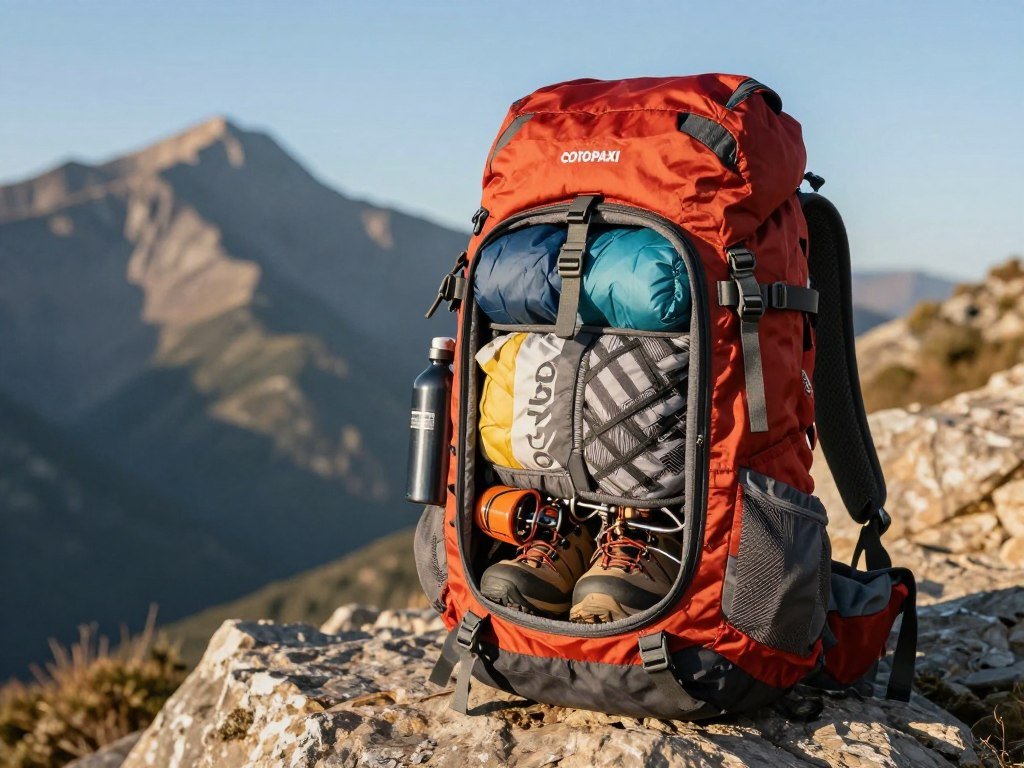
The bag is aimed at trips where access and protection matter as much as capacity. Packing cubes can add order for clothing, while the pack’s own sections help separate other items. The result is easier to manage than a large, open space when you need something quickly.
Its carry feels comfortable with loads up to about 25 pounds. That makes it a good match for travelers who pack thoughtfully, but not for someone who plans to haul a heavy load all day. Add the weight of water, snacks, and tech before judging the fit.
The Allpa 28L sibling may suit lighter packing and shorter trips. It is a different size choice, not an automatic under-seat option; check the dimensions against each airline. The larger 35L model makes more sense when you need extra room without moving to a bulky pack.
For outdoor-leaning travel, think about what you will carry between transit stops and trails. A supportive pack can help, but it does not replace clothing suited to wet weather. Keep the packed load near or below 25 pounds if comfortable carrying is a priority.
Aer Travel Pack 3: Best for Tech-Focused Travel
The Aer Travel Pack 3 is a good match for travelers who want a carry-on-sized work bag with dedicated laptop protection. Its padded, fleece-lined laptop compartment fits a 16-inch laptop, with room elsewhere for work gear. That protected space is useful when your trip mixes meetings and transit.
The pack fits common U.S. carry-on maximum dimensions, though your packed bag still needs to meet your airline’s rules. Its pockets give tech and small items separate places, which can save time when you move between a gate and a desk. A slim work setup suits it better than a load built around bulky outdoor gear.
The hip belt is sold separately. That extra purchase may matter if you carry a heavy laptop and other gear over long walks. Think about how far you will walk with the pack, not just how often you will lift it into an overhead bin.
The Aer Travel Pack 3 is listed at $249. Aer released the Travel Pack 4 in August 2026, but that release alone does not make the Travel Pack 3 a direct replacement or establish the newer model’s features.
When comparing generations, check the exact model name and its listed features before buying. Sellers may use similar names for different versions, and details can change. Confirm whether the separately sold hip belt is worth adding for the loads and distances you expect to carry.
tomtoc Navigator T-66: Best for a Lower-Cost Carry-On
The tomtoc Navigator T-66 is a practical value candidate if you want laptop protection and substantial carry-on storage. It has a padded 17-inch laptop compartment and fits common U.S. carry-on maximum dimensions. For a budget-minded traveler, those are useful basics.
The T-66 advertises 40L, but its usable space can feel closer to 32-35L in practice. That difference matters when you pack bulky clothing or several pairs of shoes. The layout may feel less roomy than the capacity number suggests.
Loads over 20 pounds become less comfortable to carry. Consider the weight of your laptop, charger, water bottle, and travel items together. A pack that feels fine when lightly loaded may not suit long walks through a station.
Two different 2026 listings show different prices: one lists the Navigator T-66 40L at $96, while another lists the Tomtoc Navigator T66 at $89.99. These are separate listings, not a promise of one checkout price. Check the model name and details on the listing you choose.
For a short flight with moderate gear, its price and laptop protection may be enough. If you carry a heavier load, test the shoulder straps before travel rather than judging the bag by its empty weight. Pack it with your expected load before a trip, especially if that load may exceed 20 pounds.
Tortuga Travel Backpack Pro 40L: Best for a Supportive Premium Carry
The Tortuga Travel Backpack Pro is aimed at travelers who value a supportive harness and structured organization more than a light empty pack. It comes in 40L and 34L sizes, giving you a smaller option if you need less space. Its focus is carry support, not shaving every ounce.
Tortuga refreshed the Pro with a V2 edition in July 2026. The model weighs 4.5 pounds before you add any gear, so its empty weight deserves a place in your decision. You will carry that weight even on days when the pack is only partly full.
At about $350, the Pro is a premium purchase. Frequent travelers who carry a substantial load may value the structured design over many years of trips. Light packers and infrequent travelers may prefer a lighter or lower-priced option.
- Good fit: frequent travelers carrying a substantial load.
- Poor fit: light or infrequent travelers who prioritize low weight or price.
The shoulder straps and back panel matter most when you carry the pack for more than a quick walk through an airport. Try it with a realistic load, including the items that usually make your bag feel full. Compare the Pro’s 4.5-pound starting weight with your airline’s carry-on weight allowance before committing.
Osprey Fairview 40: Best for Women and Backpacking-Style Travel
The Osprey Fairview 40 stands out for travelers who want a travel pack with an adjustable torso harness and load-support features. It has a sternum strap, load lifters, and a hip belt to help spread the load. Fit is the key, not the label on the product.
Among backpacking backpacks for travel, the Fairview 40 is a useful choice if you value torso adjustment and a supportive carry. A hip belt can help when the load rests on your hips, while shoulder straps need to sit comfortably. Try more than one adjustment before you decide.
Torso fit and load support matter more than a gender label. The Fairview is marketed for women, but travelers should choose by body fit and how the pack carries. A gendered name does not tell you whether the back panel or straps will feel right.
Its 40L capacity is aimed at travel, yet a full pack still needs to meet your airline’s dimensions. Keep in mind that a hiking-style harness can feel different from a simple travel bag, especially when you are moving through crowded spaces.
If your trip includes rainy walks or trail time, plan for the weather as well as your pack. Waterproof hiking pants can be useful for wet trails, though they take extra space in your luggage. Adjust the harness with the intended load inside, not with the bag empty.
Forclaz Travel 900: Best for Longer Trips With More Gear
The Forclaz Men’s Travel 900 is for travelers who need much more space than a standard carry-on pack provides. Decathlon lists it with a 70+6L capacity, suitcase-style access, and a detachable 6L daypack. That extra room suits trips with more gear or a separate day bag.
In 2026, Decathlon lists the pack at $199.00. A travel backpack from Decathlon can make sense when you want one main pack plus a smaller bag for daily use. You can leave the larger pack behind while using the daypack for essentials.
A 70L travel backpack should not be assumed to fit in an overhead bin. Its size is far beyond a typical one-bag carry-on choice. Check your airline’s baggage limits and be ready to check the pack, especially when it is full.
The suitcase-style access makes it easier to see the main compartment than a traditional top-loader. Still, a large pack can invite you to bring more than you need, and a detachable daypack adds another piece to manage. Make a packing list before filling all that space.
For longer trips with bulky clothing or extra equipment, the capacity may be useful. For a short trip, the size can make station transfers and storage harder. Treat its 70+6L capacity as a signal to check baggage rules before arriving at the airport.
Osprey Daylite Expandable Travel Pack: Best for a Compact Personal Item
The Osprey Daylite Expandable is the clearest choice here for travelers who want a compact personal item with optional extra space. Unexpanded, it holds 26L and measures 17 x 13 x 6 inches. Expansion adds flexibility, but not a guarantee of airline fit.
The unexpanded dimensions fit Frontier’s personal-item allowance. The pack can expand by 6L, which may push it outside that airline’s size limit. If you need the under-seat space, leave the expansion unused and avoid stuffing the outside pockets.
Its 26L unexpanded capacity is the safer setup for a personal-item trip. The additional space can help when you have more to carry, but the packed bag’s shape still matters. A full front pocket can make a compact pack deeper than expected.
The 26+6L model is listed at $110. That price buys flexibility for travelers who sometimes need extra room, while keeping a compact profile available for stricter flights. Use the larger setup only when the airline’s rules and your ticket allow it.
Check the actual packed shape before leaving home, especially if you use the expansion feature. Keep it unexpanded when you need to stay within Frontier’s stated personal-item dimensions.
Patagonia Black Hole Mini MLC: Best for a Short, Organized Trip
The Patagonia Black Hole Mini MLC is a compact option for travelers who want a dedicated travel bag without moving up to a larger one-bag pack. Its 30L capacity can suit a lighter short trip with careful packing. Think compact, not limitless, when you choose what goes inside.
Packing cubes can separate clothing, chargers, and small items in the main compartment. They also help you find things without pulling everything out at once. Keep the cubes small enough to leave space for items you need during the day.
A 30L capacity does not promise personal-item acceptance on every airline. The pack measures 20 x 12 x 7 inches, so check the carrier’s limits before using it under the seat. A bag that fits a carry-on rule may still be too large for a personal item.
The Patagonia Black Hole Mini MLC is listed at $179. It may suit a short trip if you pack light, but overfilling can press the fabric outward and change its profile. Avoid adding bulky items just because the zipper still closes.
Its travel-focused layout can keep a small load tidy, especially when you use cubes by category. Check the packed bag against the airline’s rules before relying on it as an under-seat item.
Peak Design Travel Backpack: Best for Adaptable City Travel
The Peak Design Travel Backpack is suited to travelers who want one roomy pack for varied city trips. Its 45L capacity leaves space for clothing, a laptop, and travel gear, if you have enough to justify it. Room helps most when you use the extra space with care.
Packing cubes make it easier to separate clothing from equipment inside the bag. Smaller pockets can hold items you reach often, while a laptop sleeve keeps a computer apart from loose gear. Check the layout against your routine before you decide which pockets matter.
The 45L capacity does not establish airline compliance. A large bag can suit a city stay yet be awkward when packed for overhead travel. Check its dimensions and weight with your intended load, rather than relying on the capacity label.
For a design-focused city trip, compare the bag with other styles you might carry daily. A Goyard backpack guide can help you think through structure, device space, and everyday use before choosing a luxury option.
If you rarely need the extra capacity, a smaller pack may be easier to carry through transit and hotel halls. Confirm that its packed dimensions and weight work for your airline before choosing it for carry-on travel.
Lululemon Cruiser Travel Backpack: Check the Fit Before Buying
The Lululemon Cruiser may suit a traveler who wants a larger everyday-to-travel bag, but its dimensions rule it out as a Frontier personal item. It measures 20.3 x 13.6 x 9.1 inches. Those measurements matter more than the size printed on the bag.
Its 20.3-inch length and 9.1-inch depth exceed Frontier’s personal-item limit. Do not treat it as an under-seat choice for that airline, even if you pack lightly. The outside shape can still be too large for the sizer.
The 35L capacity may suit a larger travel backpack, if the airline allows its dimensions. It can work for a traveler who wants one bag for daily use and trips, rather than a small personal item. Check the bag’s shape when it is full.
The Cruiser is listed at $168. Before buying, compare its full measurements with the carrier’s current carry-on rules. The 35L label cannot tell you whether your fare includes the right bag size.
A bag that works for daily errands may still be too large for a strict flight allowance. Compare its full dimensions with the carrier’s current limit rather than relying on the 35L label.
Which Anti-Theft Features Matter for Travel?
For crowded transit and busy sightseeing days, prioritize features that make a bag harder to open or remove unnoticed. Lockable zippers, slash-resistant panels or straps, and an anchor point can help when your route makes them useful. They deter access, but they cannot promise safety.
Look for physical barriers and lockable closures
Pacsafe offers anti-theft packs in 20L and 55L sizes. Its 20L pack is described with RFID-blocking technology, anti-slash material, hidden pockets, and zipper hooks. RFID blocking can help protect compatible cards or passport chips, but it does not stop someone from taking a bag.
The Pacsafe V 16L has lockable zippers, a slash-resistant body and straps, and an anchor strap. It is designed to carry a laptop and day-trip essentials. Those features may suit a traveler who carries a computer through busy public places.
Choose practical barriers that fit your routine, not a promise of theft-proof protection. The Rachel Bloom travel backpacks are described with fingerprint locks, GPS tracking, slash-resistant materials, RFID protection, and app-based alerts. Connected features add another tool, but they do not replace attention to your bag.
Match security features to the trip
A short city walk may call for a secure place for a phone and wallet, while a work trip may need laptop space. Keep a backup card or cash apart from your main wallet. A guide to travel wallets and organizers can help you plan where essentials go.
| Option | Security features | Best suited to |
|---|---|---|
| Pacsafe 20L | RFID protection and anti-slash features | Everyday essentials |
| Pacsafe V 16L | Lockable closures and anchor strap | Laptop and day-trip essentials |
| Rachel Bloom packs | Tracking and app alerts | Travelers who want connected features |
Keep your passport, payment cards, and backup access plan separate from any single security feature.
Pay attention to how you carry the pack on transit, and keep closures facing your body when possible. Choose features you will use, not a long list you will forget to set up.
Which Packs Suit Women, Parents, and Everyday Travel?
A comfortable fit and easy access matter more than whether a pack is marketed to a particular gender or family type. The best travel backpack for women is the one that fits the wearer’s torso and load. Try the fit yourself, since names and product labels cannot predict comfort.
Women’s options with different carry priorities
The Osprey Fairview 40 has an adjustable torso harness, sternum strap, load lifters, and hip belt. Pack Hacker’s women’s travel-backpack list also includes the Cotopaxi Allpa 35L, Patagonia Black Hole Mini MLC 30L, and Pacsafe Venturesafe EXP35. Choose by fit and load support, not by gender label alone.
| Model | Distinctive point | Potential fit |
|---|---|---|
| Osprey Fairview 40 | Adjustable harness and support straps | Travelers prioritizing load support |
| Cotopaxi Allpa 35L | Organization-focused travel design | Travelers who want accessible packing |
| Patagonia Black Hole Mini MLC 30L | Compact 30L capacity | Lighter trips |
| Pacsafe Venturesafe EXP35 | Listed among women’s travel options | Travelers comparing anti-theft styles |
Parent-friendly access and everyday features
The best travel backpack for parents makes everyday essentials easy to reach. The Pakt Travel Backpack opens like a suitcase, with a separate top opening for quick access to its laptop sleeve. It is listed at $130 and has expandable, lightweight nylon construction and RFID-blocking pockets.
The Nordace Siena is listed at $109 and has a built-in USB charger and water-resistant exterior. These features may suit a parent who carries devices and wants easy charging access, but they do not prove the bag will work for every family routine.
Use the pockets for the items you reach for most, such as snacks, wipes, or a charger. For a smaller daily bag alongside a travel pack, consider your load and fit with this guide to choosing a crossbody bag. Try the loaded bag with your own daily essentials, since empty-pack comfort can be misleading.
Conclusion
Choose the pack that fits your route and your body, not the one that simply offers the most space. A bag’s dimensions decide whether it meets an airline’s rules, while capacity should match the load you will actually carry.
Try your leading option with the items you plan to bring, including water, tech, and shoes. Check its packed shape, since an overfilled pocket can change the fit. A few minutes of testing at home can save an awkward airport check.
Before your next trip, load your leading option and check its packed dimensions against your airline’s rules.
FAQ
Is a 40L backpack usually allowed as a carry-on?
What size travel backpack works for a weekend trip?
Can an expandable backpack count as a personal item?
Are packing cubes necessary in a travel backpack?
Is a 70L backpack too large for carry-on travel?
Should I choose a clamshell or top-loading travel pack?
What should I check before buying an anti-theft backpack?