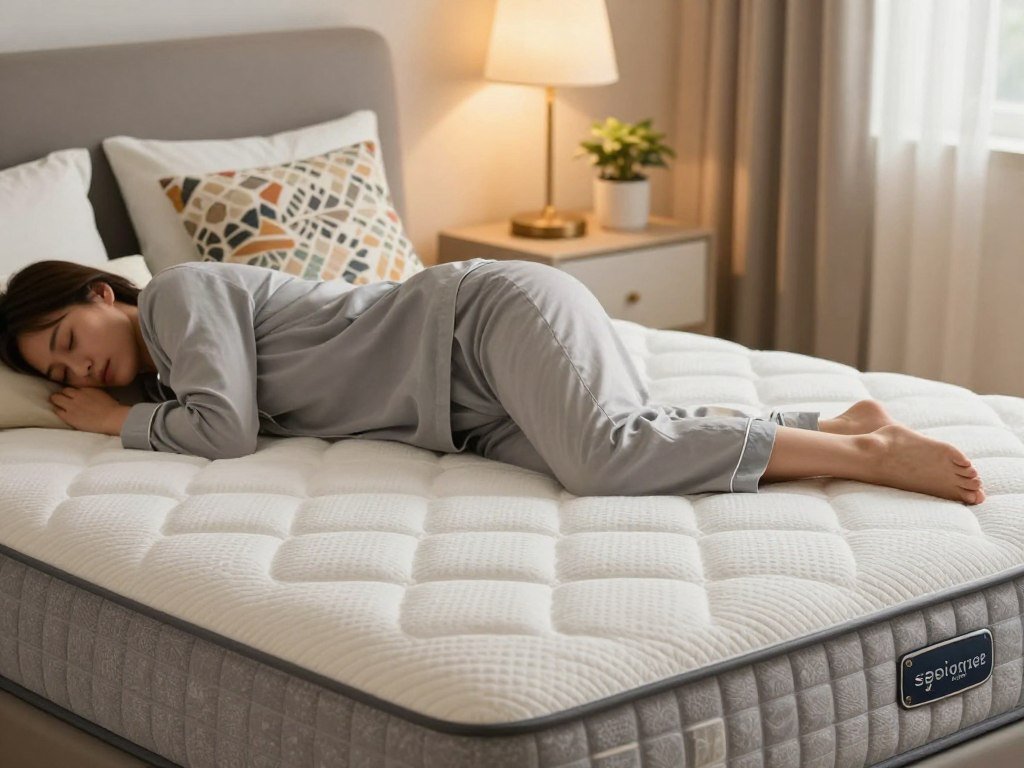
A mattress that feels comfortable at first can still leave a side sleeper with sore shoulders or hips by morning. Cushioning must give those areas room to settle, while support helps keep your spine aligned. The balance can affect pressure points, comfort, and how rested you feel.
Your budget, body weight, temperature needs, pain concerns, and preference for a still or springy bed all shape the right choice. This guide compares mattress types and standout picks, with practical ways to judge firmness, support, and purchase terms. Use your usual sleep position and the way your body feels on waking as the first clues in your comparison.
Key Takeaways
- Look for pressure relief at your shoulders and hips with steady support beneath your body.
- Use body weight and your usual sleep position to choose a starting firmness.
- Memory foam can contour closely, while hybrids often offer more lift and airflow.
- Compare mattress fit, movement, heat, price, sleep trial, and warranty terms.
- Check mattress and adjustable base compatibility before pairing them.
What Is the Best Mattress for Side Sleepers in 2026?
For most side sleepers who want a balance of cushioning and lift, the Helix Midnight Luxe is the best place to start. Its design aims to ease pressure at the shoulders and hips without losing the support many people want. It is a broad-appeal pick, not a universal fit.
Body weight, budget, temperature preference, and pain concerns can all change which bed feels right. A single best mattress cannot account for every body or sleeping style. A foam bed may suit you better if you want close contouring, while a hybrid mattress can offer a more lifted feel.
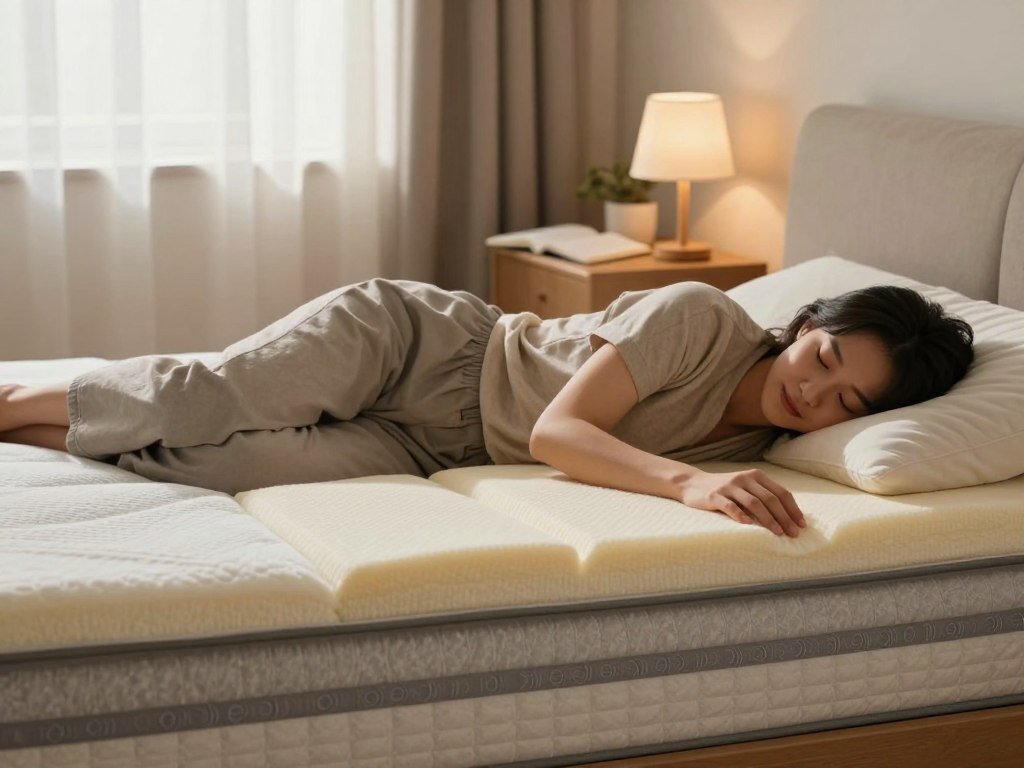
The Helix Midnight Luxe is a strong shortlist leader, but your comfort depends on how its feel matches your body and needs.
Other picks in this roundup address different priorities, including value, cooling, foam contouring, and edge support. Those differences matter if you share a bed, sleep hot, or rely on the mattress edge when getting up. Your preferred feel also matters more than a model’s label alone.
Compare how each mattress handles pressure relief and support before deciding that a popular pick suits you. Treat that pick as a shortlist leader, then match its feel and cost to your own needs.
What Firmness Should Side Sleepers Choose?
A medium-soft to medium mattress is a sensible starting point for many side sleepers, but body weight changes how firm the same bed feels. Start with your weight range, then judge whether the bed keeps your spine in a comfortable line. A firmness number is a guide, not a guarantee.
Testing recommendations place lighter sleepers on softer beds and heavier sleepers on firmer ones. A 2021 literature review found that medium-firm mattresses can improve sleep quality and reduce the risk of developing low back pain. Your body shape and comfort still matter.
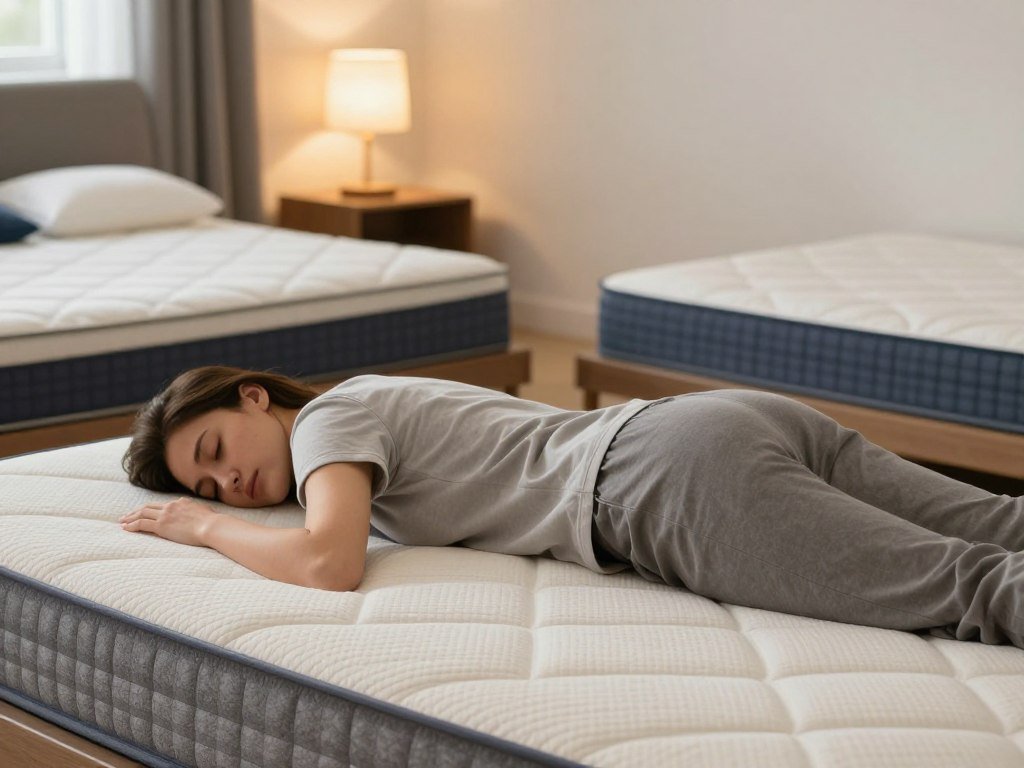
Firmness recommendations by body weight
Use these ranges as a practical starting point. Sinkage can change how firm a mattress feels, so check both comfort and support rather than relying on the rating.
| Body weight | Starting firmness | What to check |
|---|---|---|
| Under 130 pounds | 3-5 | Enough sinkage for comfort without feeling trapped |
| 130-230 pounds | 5-6 | Steady support as your body settles into the surface |
| Over 230 pounds | 7-8 | Limited sinkage and enough support to stay aligned |
These ratings describe a firmness level, not a medical result. If the mattress feels too hard or too soft after a full night, adjust your shortlist accordingly. The mattress buying guide compares feel, construction, and sleep positions.
Can one mattress suit side and stomach sleeping?
The best mattress for side and stomach sleepers must cushion your shoulder and hip while supporting your midsection on your stomach. A bed that feels comfortable on your side may let your stomach position feel unsupported. Some combination sleepers need a compromise or a split-firmness design, which gives each side of a shared mattress a different feel.
If you regularly switch to your stomach, prioritize a feel that keeps your midsection supported without creating sharp shoulder or hip pressure.
How Can a Mattress Relieve Shoulder and Hip Pressure?
Side sleepers put much of their weight on two contact points, the shoulders and hips, so both need room to settle without the torso sagging. Good pressure relief cushions these areas while helping your spine stay in a neutral position. Numbness or tingling can signal that pressure relief is inadequate.
Those feelings do not identify a medical cause, but they can tell you to reassess the mattress. A 2021 literature review found medium-firm mattresses improved sleep quality and lowered the risk of developing low back pain. Look for support that feels even from your shoulders through your hips.
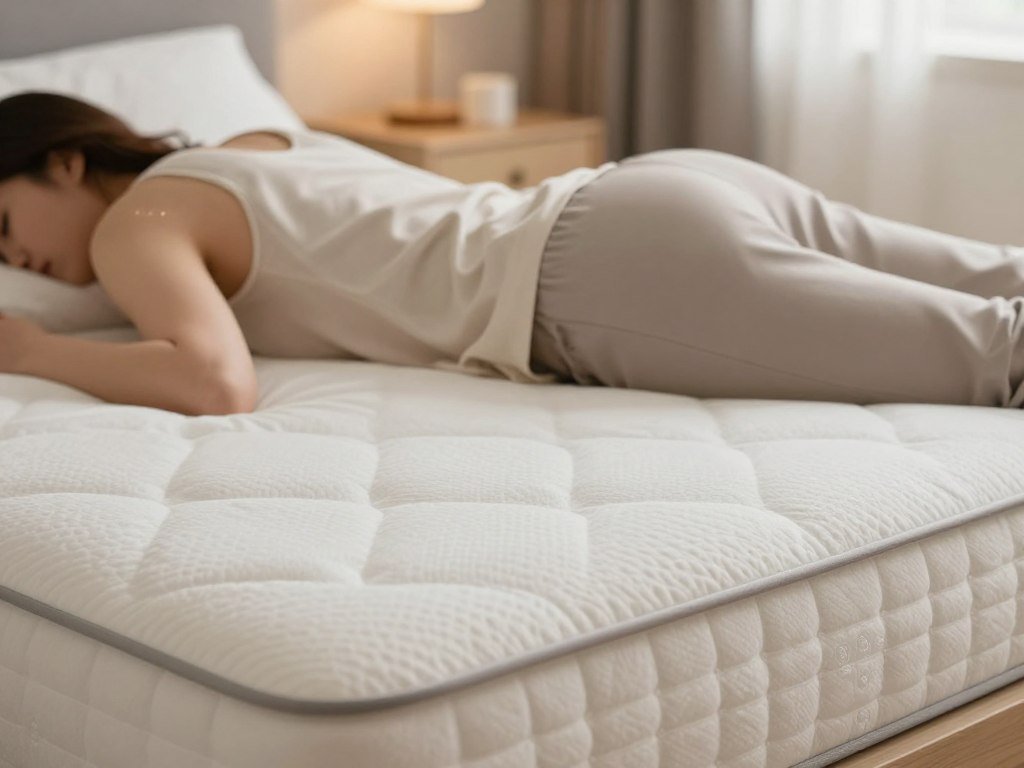
Use this checklist while lying in your usual sleep position:
- Notice whether the surface cushions your shoulder and hip.
- Check for even support from your shoulders through your hips.
- Watch for pronounced sinking around your midsection.
- See whether you can change position without struggling.
If shoulder pain or hip pain worsens on one mattress, note the position and time when discomfort begins. Your pillow can affect head and neck alignment, too. A pillow for side sleeping should fill the space between your head and the mattress without tilting your neck.
Recheck your alignment while lying in your usual position, rather than judging the mattress only while sitting on its edge.
Which Mattress Type Works Best for Side Sleeping?
Memory foam and hybrid mattresses are the most straightforward starting points for side sleepers, while latex and innerspring offer a more buoyant feel. Choose by feel, since close contouring and easy movement can be opposing priorities. Memory foam can suit side sleepers who want contouring, while hybrids suit people who want pressure relief with more lift.
Memory foam mattresses can cushion shoulders and hips closely and limit motion between partners. Some sleepers find that foam holds heat or makes position changes slower. Latex usually feels springier and less body-hugging, while an innerspring bed can feel buoyant but may need a cushioned top.
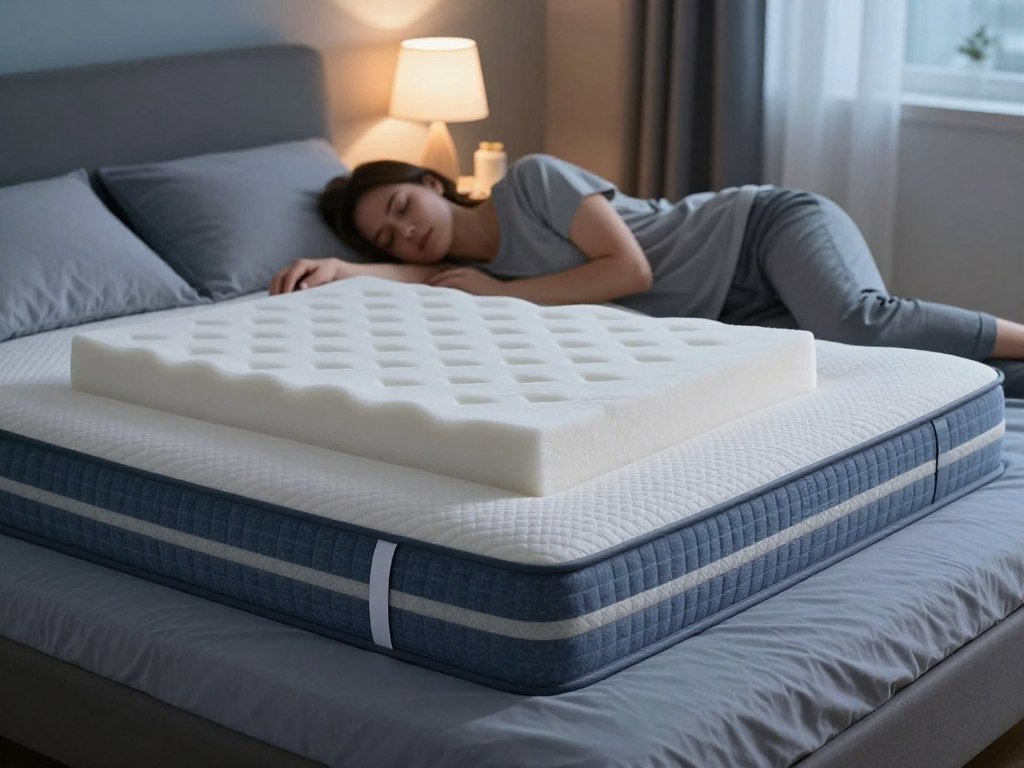
Memory foam for contouring and motion isolation
NapLab testing averages give memory foam an 8.4 for pressure relief, 7.9 for cooling, and 8.6 for motion transfer. The motion transfer score reflects how much movement travels across the mattress. Tested queen-size memory foam beds average $1,139 and 2.17 inches of sinkage.
Hybrids for cushioning with more lift
A hybrid mattress pairs foam layers with coils, so you get cushioning above a more lifted base. Coils can also allow more airflow than a tightly hugging foam surface. That blend can suit side sleepers who want pressure relief without the slow, deep feel some all-foam beds create.
Latex and innerspring for bounce
| Type | Pressure relief | Cooling | Typical feel |
|---|---|---|---|
| Memory foam | 8.4 average | 7.9 average | Close contour, slower response |
| Latex | 8.3 average | 8.9 average | Springy, less body-hugging |
| Hybrid | Foam cushions pressure points | Coils may aid airflow | Cushioning with more lift |
| Innerspring | Top cushioning may be needed | Open coil feel | Buoyant and springy |
Latex averages 8.2 for motion transfer and 2.18 inches of sinkage in the same testing. Tested queen-size latex beds average $1,621. Compare mattresses for back pain if support and sleep position are central to your choice.
Choose the construction that gives you enough contour to ease pressure without making it difficult to move.
How Do the Top Picks Compare?
A shortlist is easier to compare when each bed is judged by what it does well and where it asks you to compromise. Look past one score and compare pressure relief, support, cooling, and movement. Those factors give you a clearer picture than a firmness number alone.
Mattress Nerd tested more than 200 mattresses for its 2026 hip-pain guide, assessing pressure relief, edge support, and responsiveness. NapLab scores mattresses on eight factors, including cooling, motion transfer, response time, edge support, sex, pressure relief, off-gassing, and company.
| Mattress | Shortlist role | Construction | Main tradeoff |
|---|---|---|---|
| Helix Midnight Luxe | Broad-appeal pick | Hybrid | Higher price |
| Nectar Premier | Contouring foam option | Foam | Less bounce |
| Brooklyn Bedding CopperFlex Memory Foam | Value option | Foam | Firmness may not suit everyone |
| WinkBed | Customizable hybrid choice | Hybrid | Motion can transfer |
| Saatva Classic | Buoyant innerspring-style choice | Coil-on-coil | More bounce than motion isolation |
Test scores can help sort the mattresses, but your sleeping position and comfort remain the final test. Couples may care more about motion isolation, while a hot sleeper may put cooling first. Use the comparison to choose which individual review deserves your attention first.
Is the Helix Midnight Luxe a Good Fit for Side Sleepers?
The Helix Midnight Luxe pairs cushioning at the shoulders and hips with a coil base that helps keep the body lifted. That mix can suit side sleepers who want contour without a deeply sunken feel. Its queen price is over $2,000 before discounts.
Comfort layers cushion pressure points while the coils support the body. Zoned support, a mattress design that varies support across different areas to better accommodate parts of the body such as the lower back and hips, can help different areas receive different levels of support.
A Tencel cover and gel-infused memory foam sit above breathable coils. Those features can help manage heat, a practical plus for hot sleepers who prefer foam cushioning. The mattress’s support and feel still matter more than any single cooling feature.
The Helix Midnight Luxe may not provide enough support for stomach sleepers over 230 pounds. A stomach position can need firmer support than a side position, especially around the midsection. Consider another model if you sleep mainly on your stomach and weigh over 230 pounds.
Who Should Consider the Nectar Premier?
The Nectar Premier is a good match for side sleepers who want foam to contour closely around their shoulders and hips. Its all-foam feel can help cushion pressure points and limit motion between partners. It has a 5.5/10 firmness rating and stands 13 inches tall.
Foam layers adapt to your shape rather than pushing back like a springy surface. That close contour can feel comfortable if you like settling into a mattress. Some side sleepers may still find the Nectar Premier too firm, even with its pressure-relieving design.
The Nectar Premier and Nectar Classic are distinct models, not interchangeable names for the same mattress. If you want a buoyant surface or easy position changes, a hybrid may feel more responsive. That can matter if you change sides often or dislike a slow-moving foam surface.
Choose foam when motion isolation and close contouring matter more than bounce. If you dislike sinking into a bed, try a more responsive construction before settling on an all-foam feel.
Which Side-Sleeping Mattresses Cost Less Than $1,000?
Two queen-size foam options fall below the $1,000 mark, but they differ in feel and edge support. The Nectar Classic is listed just under $700 with a 6/10 medium-firm feel. The Brooklyn Bedding CopperFlex Memory Foam queen can cost as low as $650, depending on sales and coupons.
The CopperFlex has a 7.5/10 firmness rating, which may feel firm to some side sleepers. The Nectar Classic’s foam layers contour for pressure relief, but its 6/10 feel may also seem too firm to some people.
Use this checklist before choosing a lower-priced mattress:
- Confirm the price for the exact size you plan to buy.
- Consider whether its firmness suits your body weight and position.
- Test the edge if you rely on it to get in or out of bed.
The Nectar Classic’s edge support may feel unstable during transfers. That is a specific concern for seniors and anyone who needs a steady surface when sitting or standing. A low price will not help if the edge feels difficult to use.
Check the current size-specific price and return conditions before deciding that a sale fits your budget.
Is the WinkBed a Better Choice for Customizable Support?
WinkBed stands out for offering three firmness levels rather than asking every side sleeper to adapt to one feel. You can choose a softer, medium-firm, or firm option rated 4, 6, and 8 out of 10. Its queen price is listed at $1,799.
Its edge support can help if you sit near the side or use the full mattress surface. NapLab testing gives WinkBed 10/10 scores for cooling, pressure relief, and edge support. Those strengths may appeal if you want a cooler sleep and a stable perimeter.
Motion transfer is a separate issue from edge support. Movement between partners may still be noticeable, so couples who wake easily should consider motion isolation in their choice. A strong edge does not mean the bed will keep every movement from crossing the surface.
The queen price is listed at $1,799, while sizes and current offers can change the amount you pay. Choose the firmness that lets your shoulder and hip settle while your waist and lower back stay supported.
Does the Saatva Classic Suit Side Sleepers?
The Saatva Classic is worth considering if you want a traditional, buoyant mattress feel with a cushioned top. Its Euro-top sits over a coil-on-coil design, giving it moderate sinkage and very high bounce. The medium-firm version is rated 6/10.
The Saatva Classic has soft, medium-firm, and firm options, with an overall score of 9.48. Its pressure-relief, edge-support, and cooling scores are each 10/10. Those features may suit side sleepers who want cushioning, a steady edge, and airflow.
That bounce makes moving on the bed feel easy, but it can also carry movement across the surface. A partner may feel more motion than on a foam mattress built for motion isolation. Couples who wake when the other person moves may prefer a less springy feel.
Try a more motion-isolating design if a partner’s movement regularly wakes you.
Which Mattress Helps Side Sleepers With Shoulder or Hip Pain?
A side sleeper with shoulder or hip pain should look for cushioning at the sore area without letting the rest of the body sink out of alignment. Pressure relief and support both matter when you assess a mattress. Nolah Evolution is a hip-pain option with a cushioned top and several firmness choices.
Side sleepers with shoulder and hip pain should prioritize cushioning that still maintains support. If shoulder pain is your main concern, check whether your shoulder can settle without your torso sagging. Mattress testing often assesses both pressure relief and support because neither alone describes the full feel.
For shoulder pain, check the comfort layer and your alignment
Shoulder pain can make a hard-feeling surface uncomfortable, but softness alone may not solve the problem. Pay attention to how your chest, waist, and hips line up while lying on your side. Your pillow can also affect neck comfort and alignment.
For hip pain, balance cushioning with support
A cushioned top may ease pressure around the hips, while support helps keep the lower back from sagging. Nolah Evolution is one model to investigate if hip pain shapes your mattress search. A home trial or pressure mapping can help you judge your own response.
Use this checklist to compare a mattress:
- Check pressure mapping or use an at-home trial.
- Assess alignment in your usual sleep position.
- See whether you can change position comfortably.
- Choose a firmness that feels right for your body weight.
Persistent pain can have causes a mattress cannot diagnose or treat. Seek medical advice for persistent, worsening, or unexplained pain rather than relying on a mattress change alone.
What Should Hot Side Sleepers Look for in a Cooling Mattress?
Hot side sleepers should look for cooling features that do not sacrifice the cushioning their shoulders and hips need. Airflow matters, since a close body contour can limit air movement around you. A good starting point combines pressure relief, cooling materials, and an airflow-friendly design.
Breathable coils and cooling covers or foams may help with temperature regulation. Yet a mattress that hugs your body closely can feel warmer if less air moves around the surface. The best cooling choice is one that keeps your pressure points comfortable without trapping too much heat.
Brooklyn Bedding’s Aurora Luxe Cooling sloped when testers raised the head or foot of an adjustable base. That result makes it a poor fit for that use. A cooling label alone does not show how a mattress will behave when the base changes position.
Confirm that a mattress is compatible with your adjustable base before pairing the two.
Can an Adjustable Bed Work for Side Sleepers, and When Does Medicare Help?
An adjustable base can suit a side sleeper who finds elevation comfortable, but Medicare coverage depends on medical necessity and specific equipment rules. Comfort and coverage are separate: raising the head or foot does not replace shoulder and hip cushioning. Medicare Part B may cover a qualifying adjustable bed when a doctor certifies medical necessity.
An adjustable base can change head or foot elevation, and some side sleepers may find a raised position comfortable. The mattress must work with the base, and your sleeping position still needs to feel good. A position that feels helpful to one person may not suit another.
What an adjustable base can change
An adjustable base can raise the head or foot of a bed. It changes your angle, not the need for support under your body. Medicare coverage applies only when the equipment and medical rules are met.
When Medicare Part B may cover an adjustable bed
Medicare Part B may cover an adjustable bed for home use as durable medical equipment. Qualifying equipment must be durable for repeated use, serve a medical purpose, be for home use, and have an expected lifetime of at least three years. A qualifying bed adjusts at the head or foot and has side rails that can be raised or lowered.
Check these four requirements:
- A doctor certifies that the equipment is medically necessary.
- The bed meets durable medical equipment rules for home use and repeated use.
- The prescription describes your condition, diagnosis, and medical need.
- The supplier accepts Medicare assignment.
The prescription must explain why the bed is medically necessary. Age or comfort alone does not establish coverage. The 2026 Part B deductible is $283; after you meet it, you generally pay 20% of the Medicare-approved amount for covered equipment.
What rental and out-of-pocket costs to expect
Medicare requires continuous rental for 13 months before the supplier transfers ownership. The usual 20% cost share applies after the deductible, when the equipment qualifies and the supplier accepts assignment. Confirm the prescription, supplier assignment, and Medicare-approved amount before committing to rent or buy.
Which Trial and Warranty Terms Deserve a Close Look?
A generous sleep trial can give you time to assess comfort at home, while a warranty addresses only the issues its terms cover. Read them separately, because a long warranty does not promise comfort or a fixed mattress lifespan. The trial period governs your at-home decision window.
Return steps, fees, and other terms can affect how useful a sleep trial feels. Warranty coverage depends on its conditions, including what counts as a covered issue. Read the details before ordering, not after you need them.
| Mattress | Sleep trial | Warranty |
|---|---|---|
| Helix Midnight Luxe | 365 nights | Limited lifetime |
| Nectar Classic | 365 nights | Lifetime |
| Nectar Premier | 365 nights | Lifetime |
| Saatva Classic | 365 nights | Lifetime |
| WinkBed | 120 nights | Lifetime |
A lifetime warranty does not mean every problem qualifies for repair or replacement. A sleep trial and warranty serve different purposes, so compare both before choosing among mattresses. Read the return steps and warranty exclusions before purchase, not after a problem appears.
What Should Older Side Sleepers Prioritize?
For an older side sleeper, comfort is only part of the decision if the mattress edge makes getting in or out of bed difficult. Stable edges and pressure relief can both matter. Older side sleepers should prioritize comfort, manageable bed height, and support during transfers.
Firm edges can help adults with hip pain or people recovering from hip replacement get in and out of bed more carefully. The Nectar Classic has weaker edge support, which may make a transfer feel unstable. A mattress that suits you while lying down may still feel awkward at its edge.
If mobility or recovery affects transfers, test the edge with the movement you actually use and ask a clinician for individualized guidance.
Try these checks before choosing a mattress:
- Sit on the edge and notice how much it compresses.
- Check whether the mattress shifts during a transfer.
- Assess the comfort layer while lying on your side.
- Consider whether the bed height works with your frame.
Older adults may also benefit from making sure the path beside the bed stays clear. If mobility needs also affect seating, a recliner guide for seniors can help you compare options for standing and sitting. Ask a clinician for personal guidance when pain or recovery changes how you move.
If mobility or recovery affects transfers, test the edge with the movement you actually use and ask a clinician for individualized guidance.
Conclusion
The right choice is the mattress that cushions your shoulders and hips while keeping you supported in the position you actually sleep in. Pressure relief matters, but it works best with support that feels steady beneath your body.
Body weight, heat, pain, motion, and mobility can matter more than any single score. Your best option should fit the way you sleep and the way you move around the bed.
Shortlist two or three models, confirm the fit and purchase terms for the exact size, then use the available trial to assess comfort at home. Start with two or three candidates, compare their current terms, and test your preferred option at home before making it your long-term bed.
FAQ
What is the absolute best mattress for side sleepers?
What’s the difference between memory foam and latex?
Can a bad mattress cause sciatica?
How often should you replace a mattress?
What are the downsides of adjustable beds?
Do doctors recommend adjustable beds for seniors?
What are common problems with adjustable beds?
How much will Medicare pay for an adjustable bed?