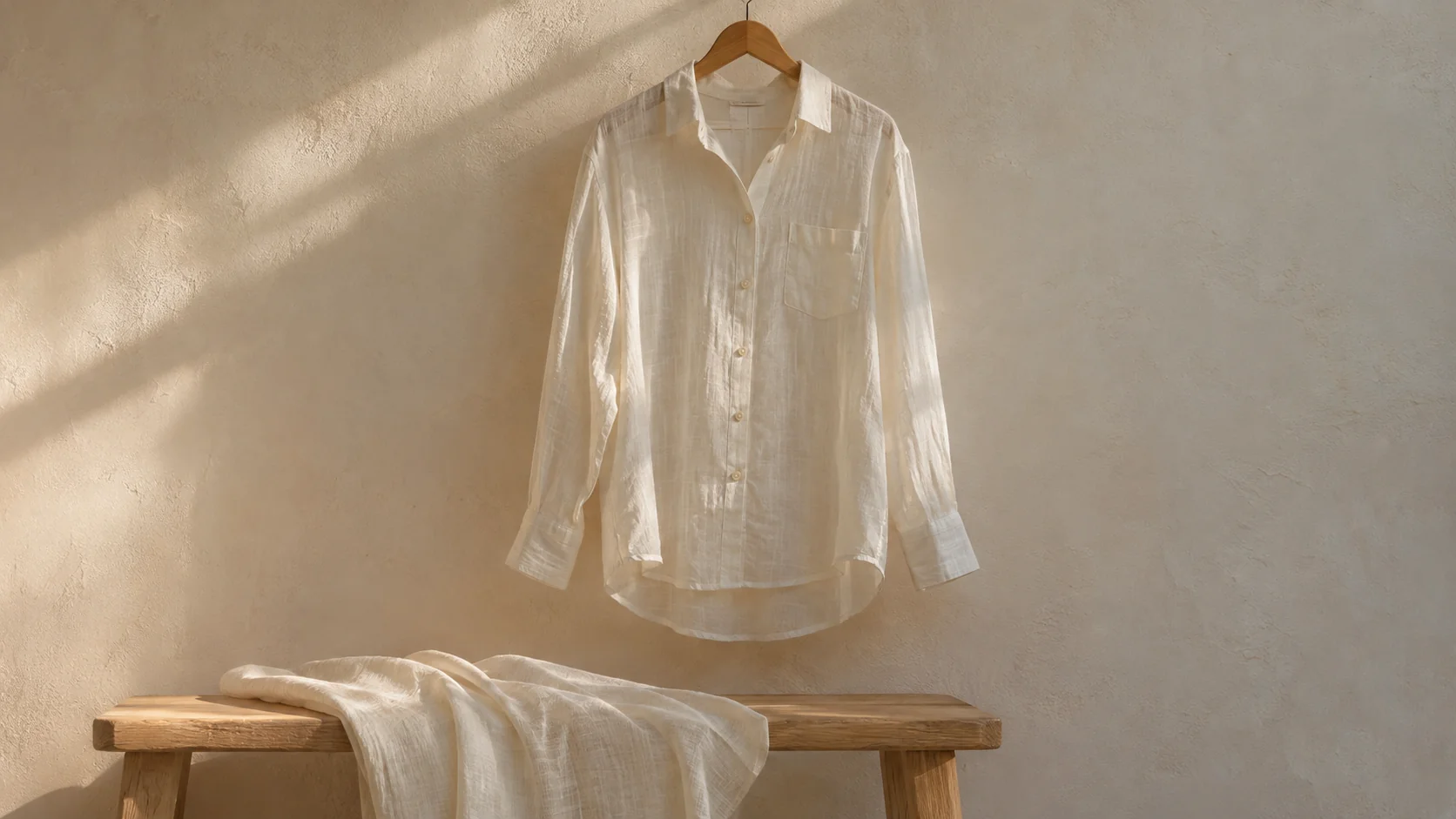
A summer shirt catches your attention because it looks like linen, but the label names something unfamiliar. What is Ramie fabric, and will it feel as comfortable as it looks?
Ramie fabric is made from a natural plant fiber obtained from the stems of Boehmeria nivea, a perennial plant in the nettle family. It is known for its strength, absorbency and natural sheen, but it also wrinkles easily and has little elasticity.
It can be an appealing choice for warm-weather clothing, particularly when you enjoy a crisp, textured look. The finished garment matters, though: ramie can feel quite different depending on the yarn, weave, finishing and other fibers blended with it.
Meet Ramie: A Plant Fiber With a Long Textile History
Ramie is sometimes called China grass or Chinese linen. Despite those names, it is neither a true grass nor the flax fiber used to make linen.
It belongs to the nettle family. Its useful textile fibers come from the stem’s outer tissues, placing it among the materials commonly described as bast fibers.
Ramie has a long history of textile use in Asia. Today, it appears in clothing and furnishings, sometimes alone and sometimes blended with other fibers.
The distinction between ramie and ramie fabric is worth understanding:
- Ramie fiber is the material extracted from the plant.
- Ramie yarn is made by processing and spinning those fibers.
- Ramie fabric is the woven or knitted textile used to make a finished item.
That journey helps explain why two garments labeled ramie do not necessarily feel alike.
What Does Ramie Fabric Feel Like?
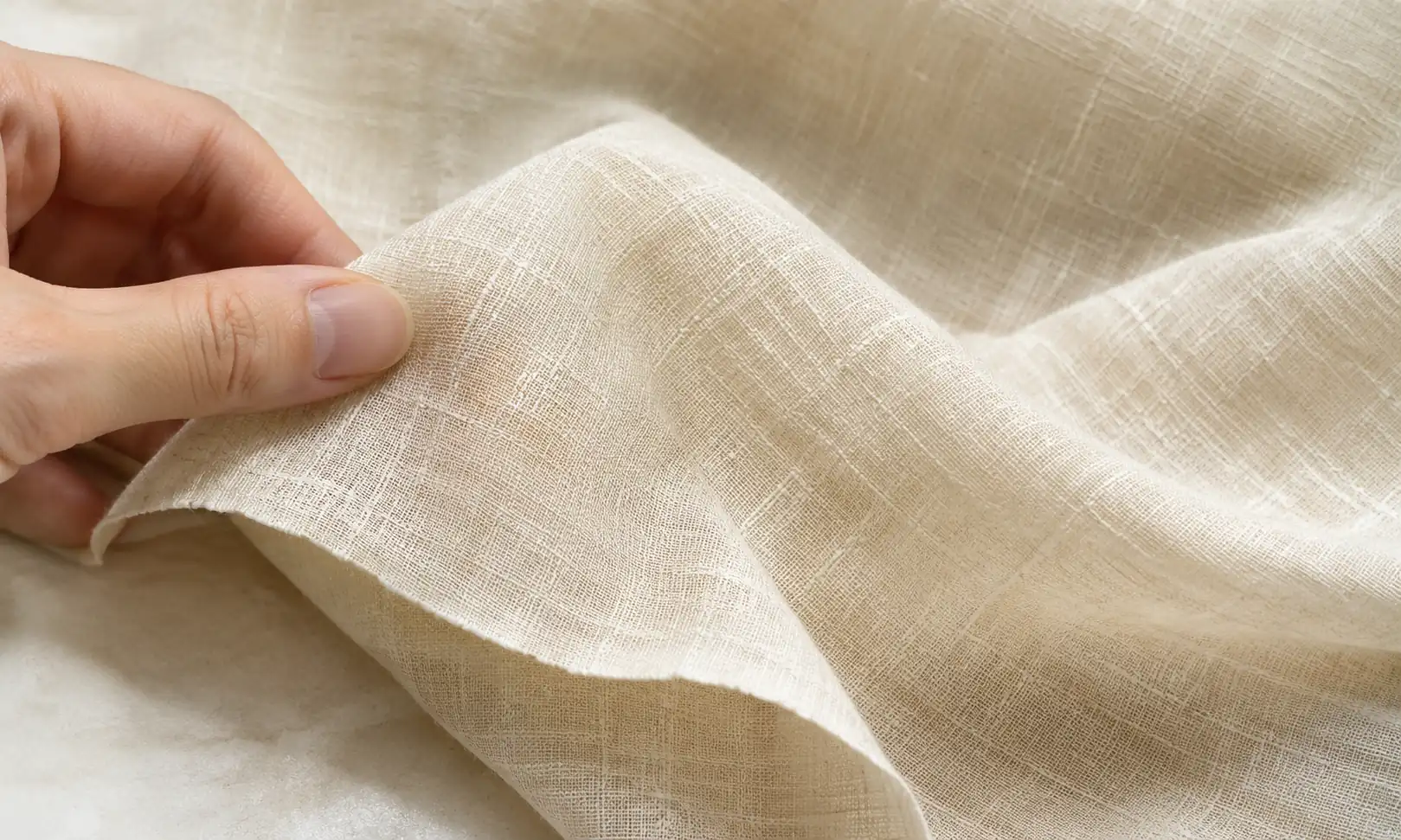
Ramie often has a crisp, relatively firm character with a subtle natural shine.
If you enjoy the fresh appearance of a lightweight woven summer shirt, it may appeal to you. If you expect the softness and stretch of a familiar cotton jersey T-shirt, it may feel quite different.
The fiber name does not determine the whole experience.
Crisp Does Not Have to Mean Heavy
Ramie can be used in fine, lightweight fabrics.
For example, Massimo Dutti has listed a 100% ramie shirt described as fine and lightweight, with a flowing shape. That is a product-specific example rather than a promise about all ramie clothing.
A garment’s cut and fabric construction can create movement even when the fiber itself has limited elasticity.
Is Ramie Itchy?
It can feel coarse or stiff, but not every ramie garment will feel scratchy.
Processing, yarn construction and finishing affect the surface you touch. Blending can also change the feel.
Try it against your neck or inner arm if possible. When shopping online, look for descriptions of texture, weight and lining rather than assuming “natural” means soft.
Persistent discomfort is a reason to choose something else, not a requirement you must accept to wear a particular fiber.
Ramie’s Strengths and Drawbacks at a Glance
Ramie has useful properties, but its advantages come with trade-offs.
| Characteristic | Potential benefit | What to keep in mind |
| High fiber strength | Useful for making strong yarns and textiles | Fiber strength does not guarantee garment durability |
| Absorbency | Can support comfort in warm conditions | Fabric weight and construction still matter |
| Natural luster | Gives the surface a subtle brightness | The appearance varies with finishing |
| Low elasticity | Can contribute to a crisp character | Provides little inherent stretch |
| Low crease recovery | Creates a relaxed, textured appearance | Wrinkles are part of the ownership experience |
| Stiffness and brittleness | Can support a defined fabric character | Processing and blending are important |
| Processing requirements | Allows a useful plant fiber to become textile-ready | Degumming introduces environmental considerations |
The most important distinction is between a strong fiber and a hard-wearing garment.
A textile can resist pulling yet behave differently under abrasion, repeated folding or strain at seams. “Strong” does not mean indestructible.
How Is Ramie Fabric Made?
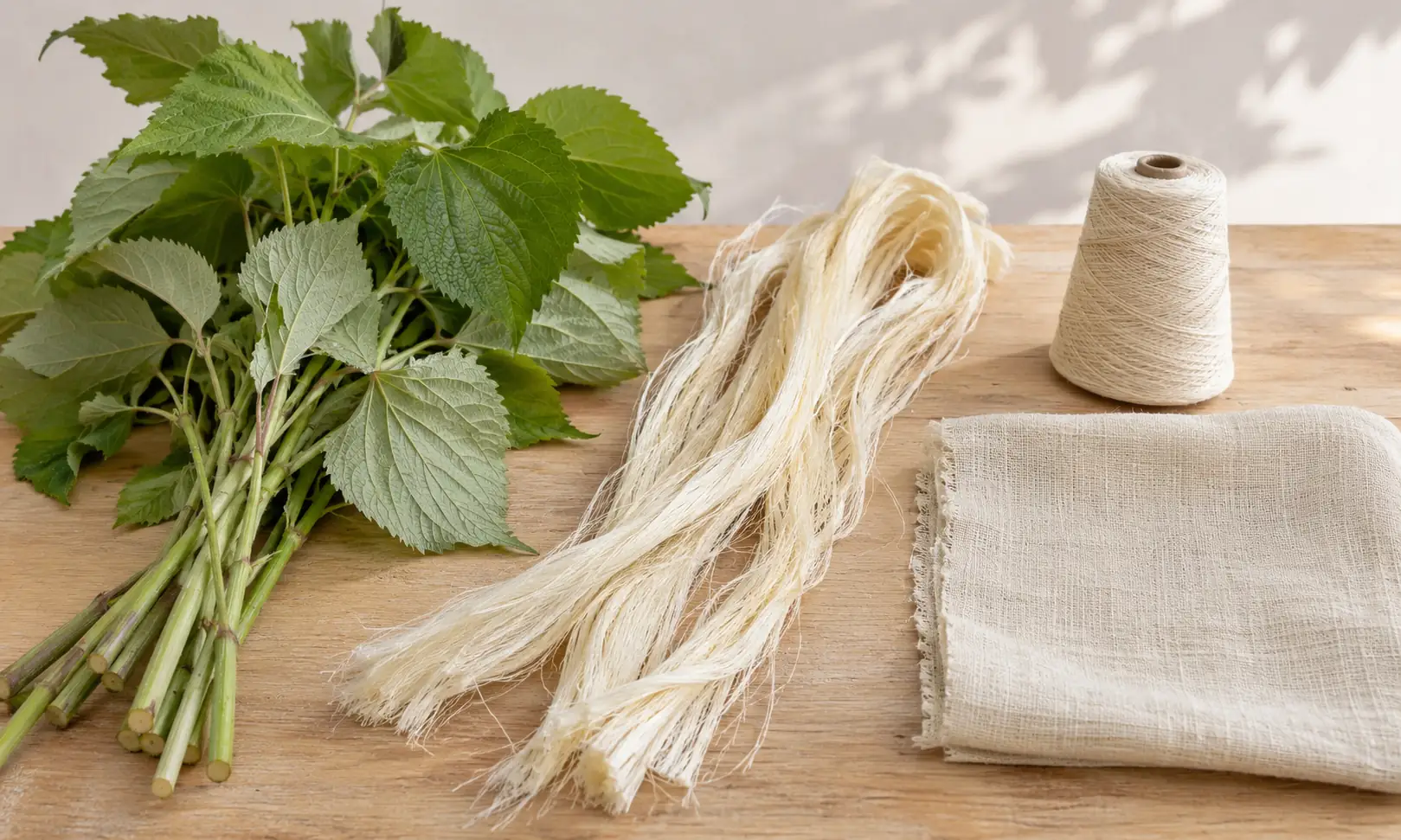
Before ramie becomes clothing, the fiber has to be separated from the stem and prepared for spinning.
1. The Plant Is Harvested
Ramie is a perennial crop, meaning it can regrow rather than requiring replanting after every harvest.
The number of harvests depends on growing conditions. It should not be described as one fixed figure for every region.
2. Fibers Are Separated From the Stems
A process called decortication separates useful fibrous material from the stem.
At this stage, natural gums still bind the fibers together.
3. The Fibers Are Degummed
Degumming removes much of the material that holds the fibers together, making further textile processing possible.
This is an important part of both quality and environmental impact. Processing needs to produce suitable fibers without overlooking chemical use, water, energy and waste treatment.
4. The Material Becomes Yarn and Fabric
Prepared fibers can be spun into yarn and then woven or knitted.
They may also be blended with other fibers to change the finished textile’s feel and performance.
This is why the label “100% ramie” tells you the fiber composition, but not the complete story of how the fabric will behave.
Ramie vs Linen vs Cotton: What Is the Difference?
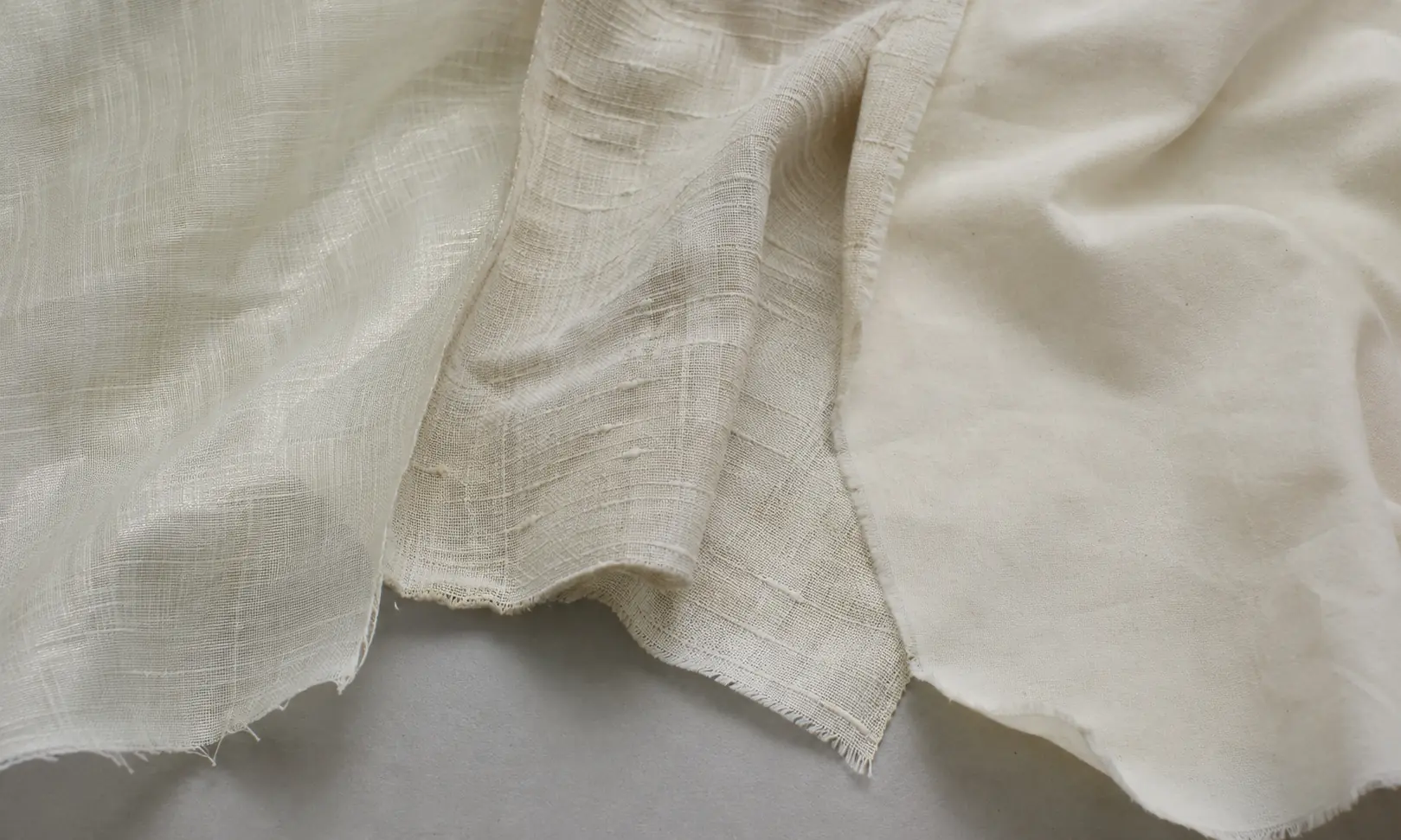
Ramie, linen and cotton are all plant-based fibers, but they come from different parts of different plants.
Linen comes from flax stems. Ramie comes from ramie stems. Cotton is obtained from the fibers surrounding cotton seeds.
Their finished fabrics vary enormously, so a comparison should be treated as a starting point rather than a guarantee.
| Question | Ramie | Linen | Cotton |
| Plant source | Boehmeria nivea | Flax | Cotton plant |
| Fiber location | Stem | Stem | Around the seed |
| Typical fabric impression | Crisp, sometimes lustrous | Often crisp and textured | Often soft, with substantial variation |
| Wrinkling | Common | Common | Also possible; construction and finishes matter |
| Stretch | Little inherent fiber elasticity | Limited inherent elasticity | Fabric stretch depends heavily on construction |
| Useful shopping check | Feel, opacity and crease behavior | Texture, weight and care | Weight, knit or weave, and care |
| Care decision | Follow the garment label | Follow the garment label | Follow the garment label |
Is Ramie the Same as Linen?
No.
The nickname “Chinese linen” reflects a resemblance and historical terminology. It does not make ramie a flax fiber.
If you are buying a garment specifically because you want linen, read the composition rather than relying on appearance.
Is Ramie Better Than Cotton?
Neither is universally better.
Ramie may appeal when you want a crisp, lustrous textile. A cotton garment may be preferable when its construction gives you the softness or familiarity you want.
Compare the actual products. Fiber identity alone cannot decide comfort, opacity, fit or quality.
Is Ramie Good for Hot Weather?

Ramie’s absorbency and its use in lightweight textiles make it worth considering for warm-weather clothing.
However, comfort comes from the complete garment.
A loose, fine shirt and a densely woven, fully lined garment will not feel the same simply because both contain ramie.
Look at These Four Details
Fabric weight: Does it feel appropriate for the temperature?
Weave: Is the material open and airy or dense and substantial?
Fit: Can the garment move comfortably without pulling?
Lining: Does an additional layer change the experience?
For a travel wardrobe, also consider whether you are comfortable with visible creases. Our summer travel capsule wardrobe guide offers ideas for choosing pieces around a real itinerary.
Is Ramie Sweat-Wicking?
Absorbency and moisture-wicking should not be treated as identical claims.
Ramie can absorb moisture. That does not establish a tested sweat-management performance for every fabric made from it.
If a seller promises technical wicking or rapid drying, look for product-specific information rather than assuming it follows from the fiber name.
Why Does Ramie Wrinkle So Easily?
Ramie has low elasticity and limited recovery from creasing.
For someone who enjoys relaxed summer clothing, that can be part of the appeal. For someone who wants a freshly pressed appearance throughout a long day, it may become frustrating.
Use the Fitting Room to Test Your Expectations
Sit down in the garment and bend your arms.
Look at the creases that develop and decide whether they suit the appearance you want.
A fabric can be good quality and still be wrong for your preferred level of maintenance.
If you are drawn to ramie because it resembles linen, remember that similar appearance does not establish identical care instructions. Do not automatically apply a linen-softening method to another garment.
Why Is Ramie Blended With Other Fibers?
Blending can help address ramie’s stiffness, low elasticity and crease tendency.
The result depends on the partner fiber, proportions and fabric construction.
| Blend | What the maker may be trying to adjust |
| Ramie and cotton | Hand feel, texture and everyday comfort |
| Ramie and linen | Surface character and the balance of two bast fibers |
| Ramie and a regenerated cellulosic fiber | Drape and feel |
| Ramie and synthetic fibers | Crease behavior, dimensional performance or other characteristics |
These are possible design goals, not guaranteed results.
A blend containing less ramie can be more suitable for you than a 100% ramie garment. Purity is a composition fact, not an automatic quality award.
How to Wash and Care for Ramie
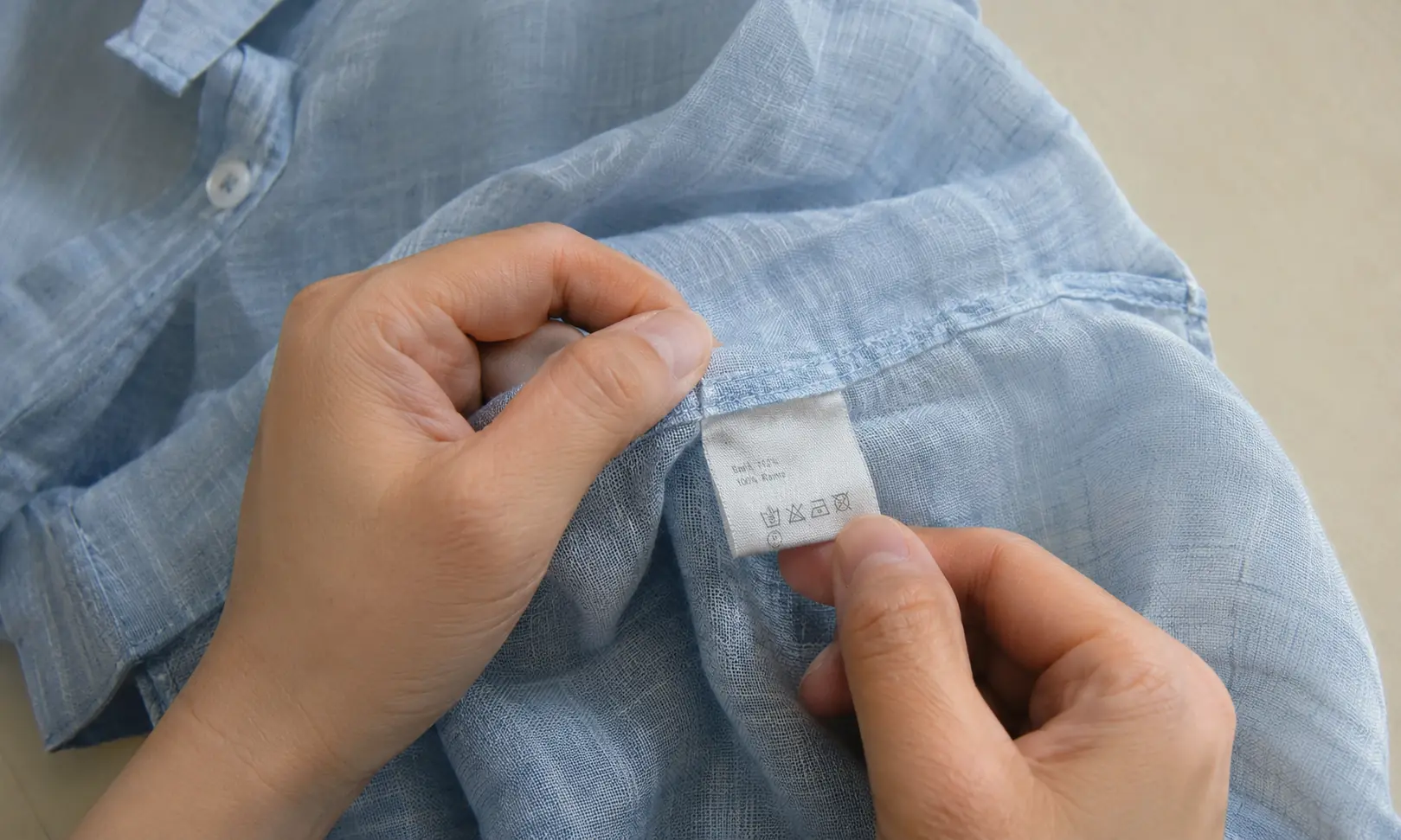
Follow the care label on the finished garment.
Do not choose a washing temperature or iron setting solely because the fabric contains ramie.
Blends, dyes, finishes, interlinings, trims and garment construction can change the appropriate routine.
Before the First Wash
Check:
- Whether washing is permitted.
- Hand-wash or machine-wash instructions.
- Maximum temperature.
- Drying restrictions.
- Ironing symbols.
- Any instructions about color or separate washing.
If the label is unclear, ask the retailer before experimenting.
Does Ramie Shrink?
Do not assume a ramie garment is shrinkproof.
Fiber properties and finished-garment dimensions are different matters. Yarn, construction and finishing can affect what happens during laundering.
No universal shrinkage percentage applies to all ramie clothing.
Can You Tumble-Dry or Iron Ramie?
Only as permitted by the item’s care instructions.
Broad claims that ramie always tolerates high temperatures overlook the rest of the garment. A blend or finish may need a different approach.
When buying, make the care routine part of the decision. A beautiful shirt is less useful if maintaining it feels unrealistic.
Is Ramie Fabric Sustainable?
Ramie has features worth investigating: it is plant-based, perennial and capable of repeated harvests under suitable conditions.
Those facts do not establish a universally low-impact fabric.
Processing Matters as Much as the Plant Story
Degumming is a central issue.
Research discusses conventional chemical processing alongside enzymatic and other approaches intended to improve processing performance and reduce associated burdens.
A finished fabric’s impact also depends on cultivation, energy, water, dyeing, finishing and what other fibers are present.
“Natural” is a starting description, not a complete environmental assessment.
Ask Better Questions About the Product
Useful questions include:
- Where was the fiber grown and processed?
- What does the supplier disclose about degumming?
- What other fibers are included?
- What evidence supports environmental claims?
- Is the garment useful enough that you expect to keep wearing it?
Avoid assuming that every ramie fabric is organic, chemical-free, plastic-free or environmentally preferable to every cotton or linen alternative.
Is Ramie a Luxury Fabric?
Ramie can appear in refined clothing, but the fiber name does not establish luxury quality.
A well-executed garment needs more than an unfamiliar label.
Inspect the fabric surface, seam finishing, button attachment, opacity and fit. Check whether the textile feels comfortable and whether its structure supports the design.
Our guide to identifying quality fabrics explains why composition should be assessed alongside construction and finishing.
When Is Ramie Worth Buying?
Choose it when you enjoy:
- A crisp or textured fabric character.
- A subtle sheen.
- A garment that suits warm-weather dressing.
- The specific feel and appearance of the finished item.
Look elsewhere when you need substantial stretch, dislike creases or expect a soft jersey feel.
The best purchase is the garment that meets your requirements, rather than the one with the most unusual fiber name.
Frequently Asked Questions
Is Ramie Natural or Synthetic?
Ramie itself is a natural plant fiber. A ramie-blend fabric may also contain synthetic or regenerated fibers, so read the complete composition.
Is Ramie the Same as Rayon?
No. Ramie is extracted from plant stems. Rayon belongs to the regenerated-cellulose family. The names sound somewhat similar but describe different fiber-production routes.
Is Ramie Fabric Breathable?
It can work well in warm-weather textiles, but comfort depends on fabric weight, construction, lining and fit. The fiber name alone cannot guarantee how airy a garment will feel.
Does Ramie Fabric Stretch?
Ramie has low inherent elasticity. A fabric may gain stretch through its construction or other fibers, but a woven 100% ramie garment should not be assumed to behave like stretch jersey.
Is Ramie Better Than Linen?
Neither is automatically better. They come from different plants and can produce different fabrics. Compare the particular garments for feel, weight, creasing, fit and care.
Final Verdict: Is Ramie Worth Wearing?
Ramie is a useful natural fiber for clothing that benefits from strength, absorbency, luster and a crisp character. Its main compromises are low elasticity, easy creasing and the importance of good processing.
Choose the finished garment carefully. Try the feel, inspect the fabric and read the care label before buying.
That linen-like shirt may turn out to be exactly what you want. The reason to keep it is how well it works on an ordinary summer day—not simply the unfamiliar word inside its collar.
Disclaimer: This content is for informational purposes only and reflects our personal opinions and experiences. We just love to write and share what we know and research.