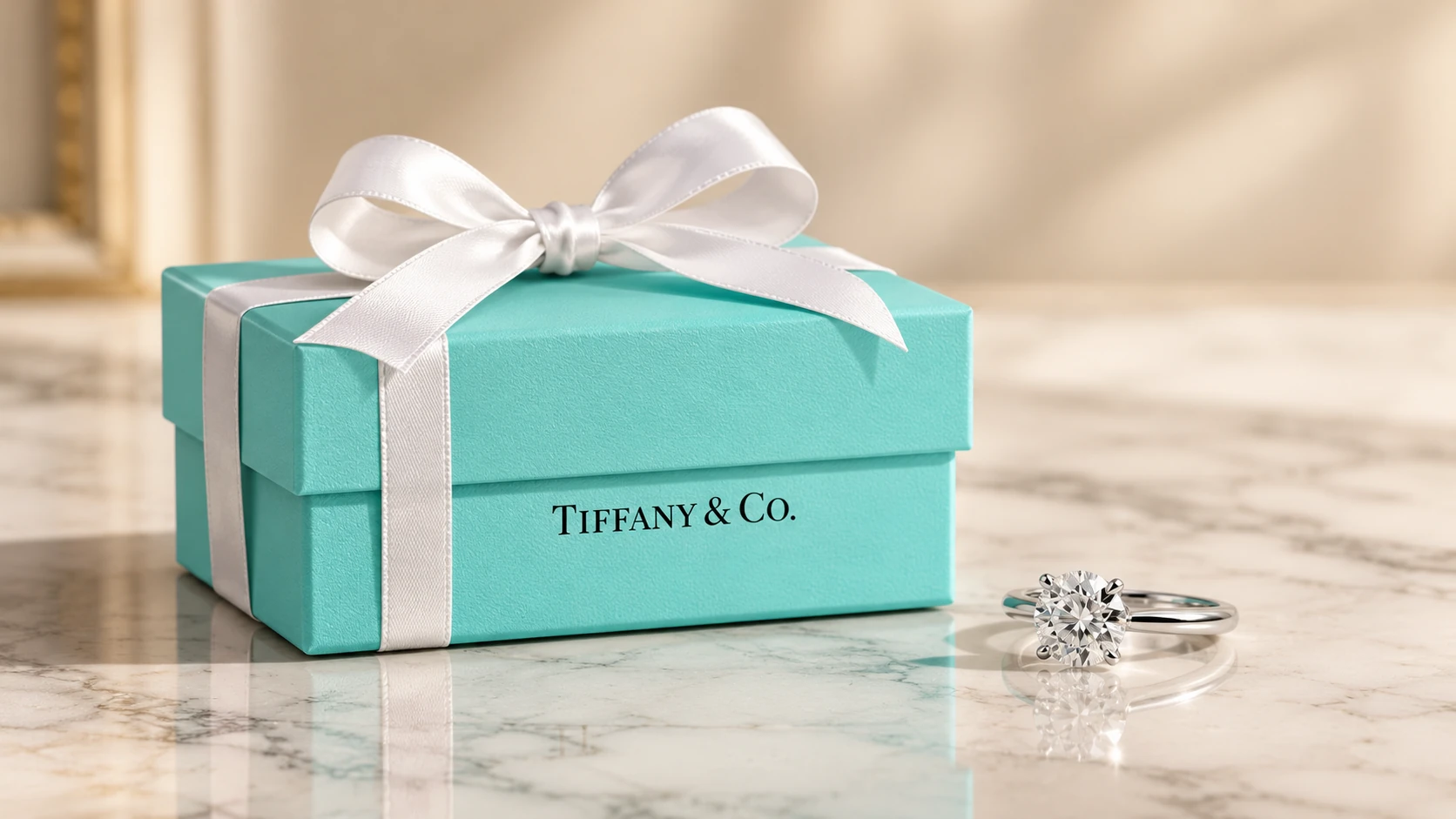
The Tiffany Blue Box may be the most powerful piece of packaging ever created, a small robin’s egg colored cube so charged with meaning that the company has legally protected the color itself and famously refuses to sell an empty one. A box, given away free with every purchase, became the message: whatever is inside matters, because Tiffany & Co. does not put ordinary things in blue boxes.
That alchemy, turning packaging into promise, is the distilled genius of a house founded in 1837, when a twenty five year old Connecticut Yankee named Charles Lewis Tiffany opened a stationery and fancy goods store on lower Broadway with a thousand dollars borrowed from his father.
From that modest counter grew the definitive American luxury house, the jeweler of presidents and movie stars, the guardian of the most famous yellow diamond on earth, and eventually the prize in the largest acquisition in luxury industry history. This is how the Blue Box conquered the world.
The Stationery Store That Declared American Luxury
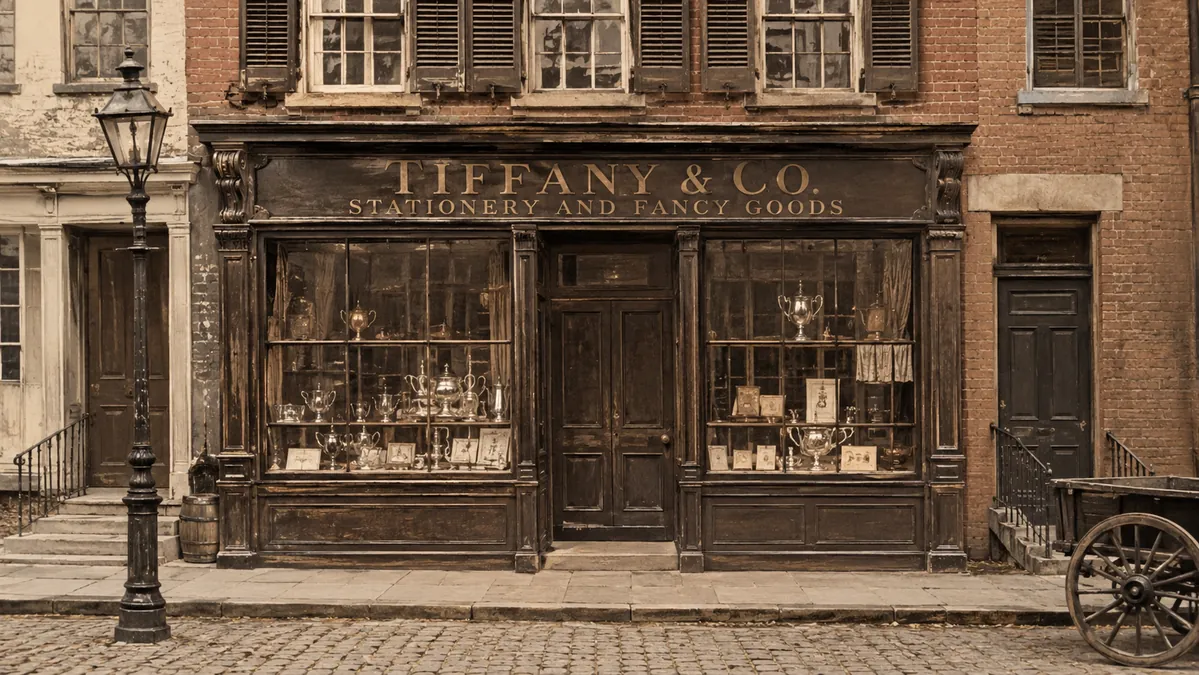
Charles Lewis Tiffany’s founding insight was audacity dressed as discipline. In an era when American wealth looked to Europe for everything precious, Tiffany declared that his store would sell only the finest, with prices clearly marked and cash only, no haggling, a radical transparency that built instant trust. When silver discoveries flooded the market, he bought strategically.
When the French crown jewels were auctioned in 1887, he purchased a third of the collection, earning the nickname the King of Diamonds and announcing that American money now competed for Europe’s treasures.
The institutional achievements piled up. Tiffany adopted the British sterling standard of 925 silver, which Congress later adopted as the American standard. The house won the grand prize for silver craftsmanship at the 1867 Paris Exposition, the first American company ever so honored.
And in 1886, Charles Tiffany introduced the Tiffany Setting, the six prong solitaire that lifts a diamond into the light, which remains the definitive engagement ring design nearly a century and a half later, a cornerstone of the world’s most storied jewelry houses.
The Diamond, the Book, and the Blue
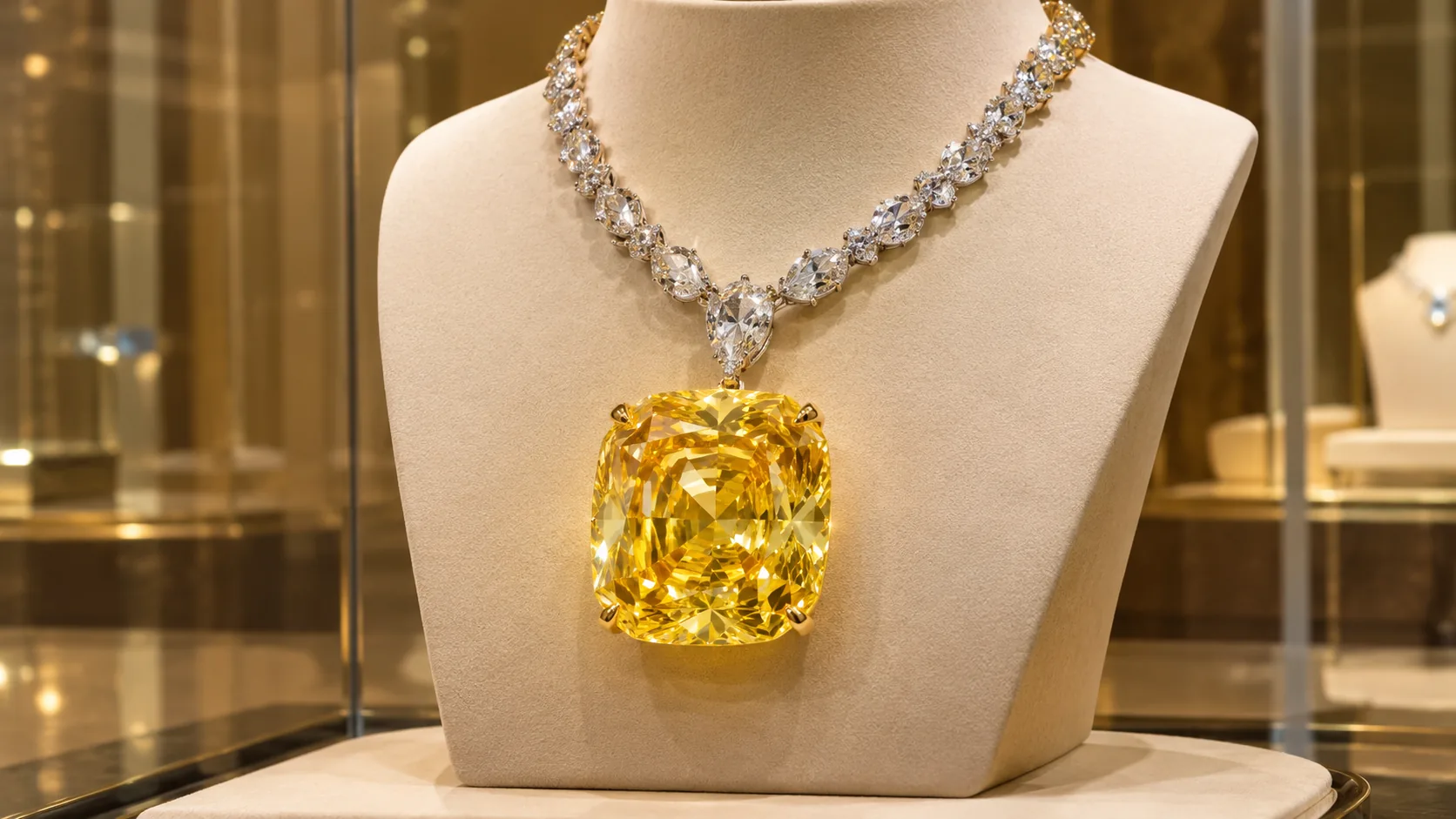
Three creations cemented the mythology. The Tiffany Diamond, a 128.54 carat fancy yellow diamond acquired in 1878, became the house’s crown jewel and one of the largest yellow diamonds ever discovered, worn publicly only a handful of times, by a handful of women, across a century and a half.
The Blue Book, first published in 1845 as America’s first mail order catalog, established the house’s direct relationship with customers nationwide. And the Blue Box itself, in the trademarked shade known as Tiffany Blue, codified the brand’s promise into an object so desirable that counterfeiting it became its own small industry.
The house’s design bench deepened the legend across generations. Jean Schlumberger, the mid century genius, created fantastical jeweled birds and the famous Sixteen Stone ring. Elsa Peretti, arriving in 1974, revolutionized jewelry with her fluid, sensual forms, the Bone cuff, the Open Heart, and Diamonds by the Yard, which made diamonds an everyday pleasure rather than a vault occasion.
Paloma Picasso brought bold color and graffiti energy. Together they gave Tiffany something no competitor could copy: a design language that was unmistakably modern and unmistakably American, standing distinct within the hierarchy of the world’s most prestigious jewelry brands.
Breakfast at Tiffany’s and the Fifth Avenue Myth
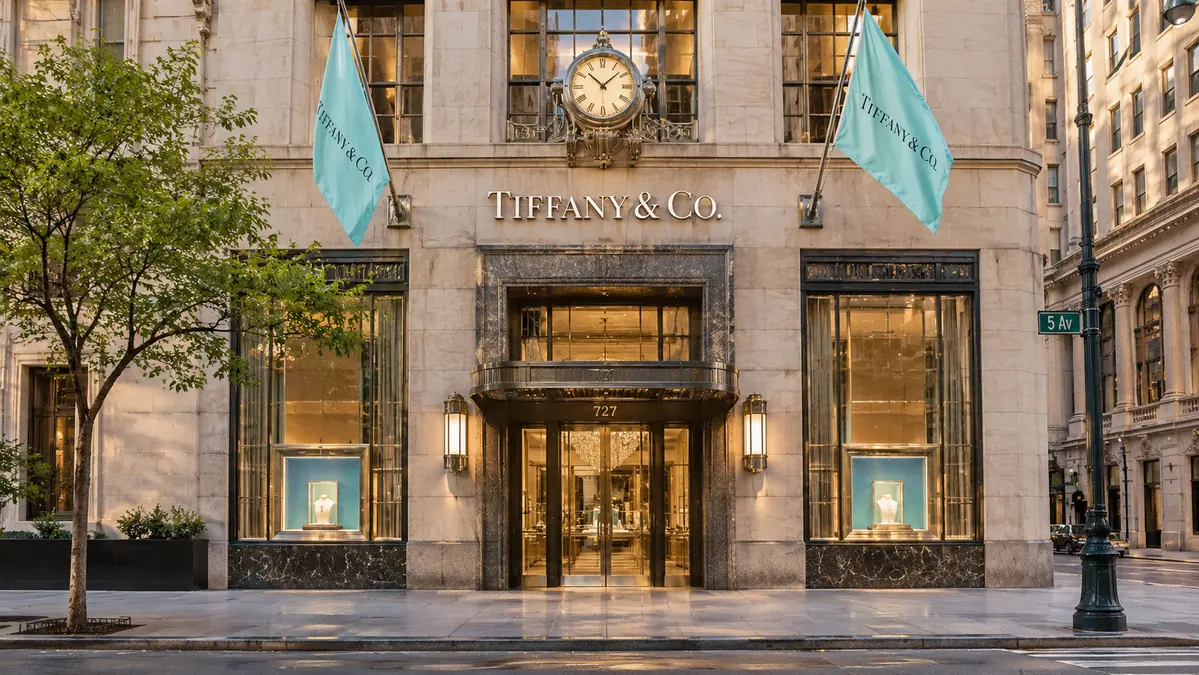
In 1961, Audrey Hepburn stood outside the Fifth Avenue flagship at dawn in a black dress, eating a pastry from a paper bag while gazing at diamonds, and Breakfast at Tiffany’s gave the house the most valuable piece of marketing in luxury history, for which Tiffany paid nothing.
The film crystallized what the store already represented: a place where nothing very bad could happen to you, a cathedral of calm and beauty in the middle of a chaotic city. Hepburn’s Holly Golightly made the pilgrimage permanent, and the flagship at 57th and Fifth became one of the most visited retail addresses on earth.
The flagship’s recent history added a new chapter. After a multi year transformation, the store reopened in 2023 as The Landmark, a ten story temple of retail theater with immersive installations, museum quality jewels, and a restaurant where breakfast at Tiffany’s finally became literally possible.
The renovation, among the most expensive retail projects ever undertaken, declared that the house intended to lead American luxury for another century. For visitors building a New York itinerary around the landmark addresses, the flagship belongs alongside the entries in our guide to the top things to do in NYC.
The LVMH Era
In January 2021, LVMH completed its acquisition of Tiffany & Co. for approximately 15.8 billion dollars, the largest deal in luxury history, after a negotiation that survived a pandemic, a lawsuit, and a renegotiated price.
The acquisition logic was clear: Tiffany gave LVMH dominance in American jewelry and a brand with pricing headroom, while LVMH gave Tiffany the capital, distribution discipline, and product elevation strategy it had perfected elsewhere.
The results arrived quickly. The house elevated its assortments, retired lower price entry points, pushed high jewelry to new prominence, and repositioned icons like the Tiffany T, HardWear, and Knot collections for a younger global client.
The Tiffany Diamond itself took star turns, worn by Beyoncé in a campaign that connected the stone’s history to a new generation. Under LVMH, Tiffany has grown both grander and more exclusive, a trajectory visible across the fine jewelry landscape we cover, and the Blue Box has only gained power as the house climbs.
Why the Box Still Matters

Tiffany’s endurance rests on a paradox few brands manage: it is simultaneously a mass recognized symbol and a genuinely exclusive product. Everyone knows the Blue Box; very few receive one.
The house has protected this tension across 187 years by understanding that the symbol must always promise more than the ordinary, which is why every era’s leadership, from Charles Tiffany’s cash only audacity to LVMH’s elevation strategy, has ultimately made the same decision: protect the promise, and the price will follow.
For anyone who has ever been handed that small blue cube, the experience explains the strategy better than any analysis. The box is light, the ribbon is white, and for a moment before it opens, it contains every beautiful thing you can imagine. No other object in American retail performs that trick, and none has performed it longer.
FAQs
When was Tiffany & Co. founded?
Tiffany & Co. was founded in New York City in 1837 by Charles Lewis Tiffany and John B. Young as a stationery and fancy goods store, funded with a one thousand dollar loan from Tiffany’s father. It evolved into America’s definitive luxury jeweler within a generation.
Why is the Tiffany Blue Box so famous?
The Blue Box, in the trademarked shade Tiffany Blue, became the symbol of the brand’s promise because it is never sold empty and accompanies every purchase. Its consistent use since the nineteenth century, reinforced by Breakfast at Tiffany’s, made it the most recognized packaging in luxury.
What is the Tiffany Diamond?
The Tiffany Diamond is a 128.54 carat fancy yellow diamond acquired by Charles Tiffany in 1878, one of the largest yellow diamonds ever found. It has been worn publicly on only a handful of occasions, including by Audrey Hepburn in 1961 publicity photos and by Beyoncé in a 2021 campaign.
What is the Tiffany Setting?
Introduced in 1886, the Tiffany Setting is a six prong engagement ring design that lifts the diamond above the band to maximize its light. It remains the world’s most influential engagement ring design and the template for the modern solitaire.
Who owns Tiffany & Co. today?
LVMH Moët Hennessy Louis Vuitton acquired Tiffany & Co. in January 2021 for approximately 15.8 billion dollars, the largest acquisition in luxury industry history. The deal followed a renegotiation during the pandemic and has driven a major elevation of the brand’s positioning.
What is The Landmark in New York?
The Landmark is Tiffany’s transformed Fifth Avenue flagship, reopened in 2023 after a multi year renovation. The ten story store features immersive art installations, extraordinary jewels, and the Blue Box Cafe, where guests can literally have breakfast at Tiffany’s.
Who are Tiffany’s famous designers?
The house’s legendary designers include Jean Schlumberger, creator of fantastical mid century jewels; Elsa Peretti, whose fluid modern forms like the Bone cuff and Open Heart revolutionized jewelry from 1974; and Paloma Picasso, known for bold color and graphic strength.
Can you visit the Tiffany flagship without buying anything?
Absolutely. The Landmark on Fifth Avenue welcomes visitors to explore its installations, exhibitions, and floors of jewelry, and the Blue Box Cafe accepts dining reservations. The store functions as a genuine New York cultural destination as much as a boutique.