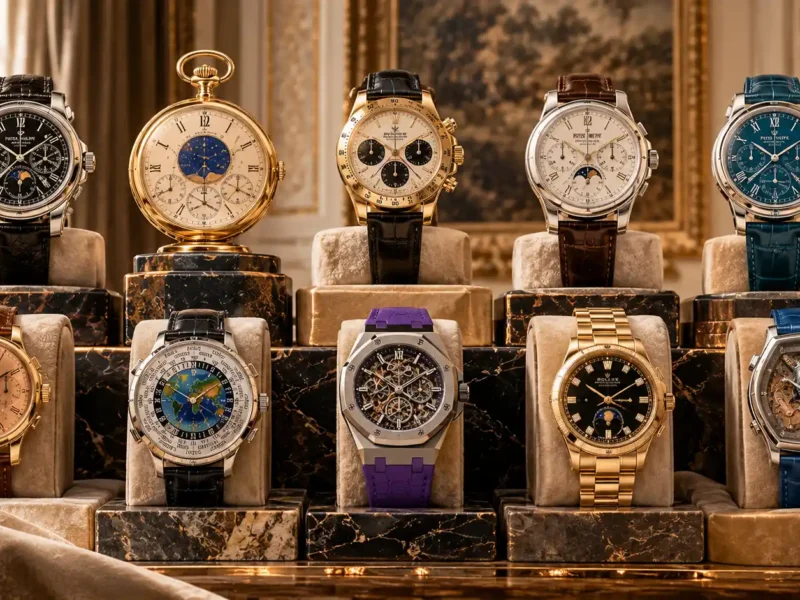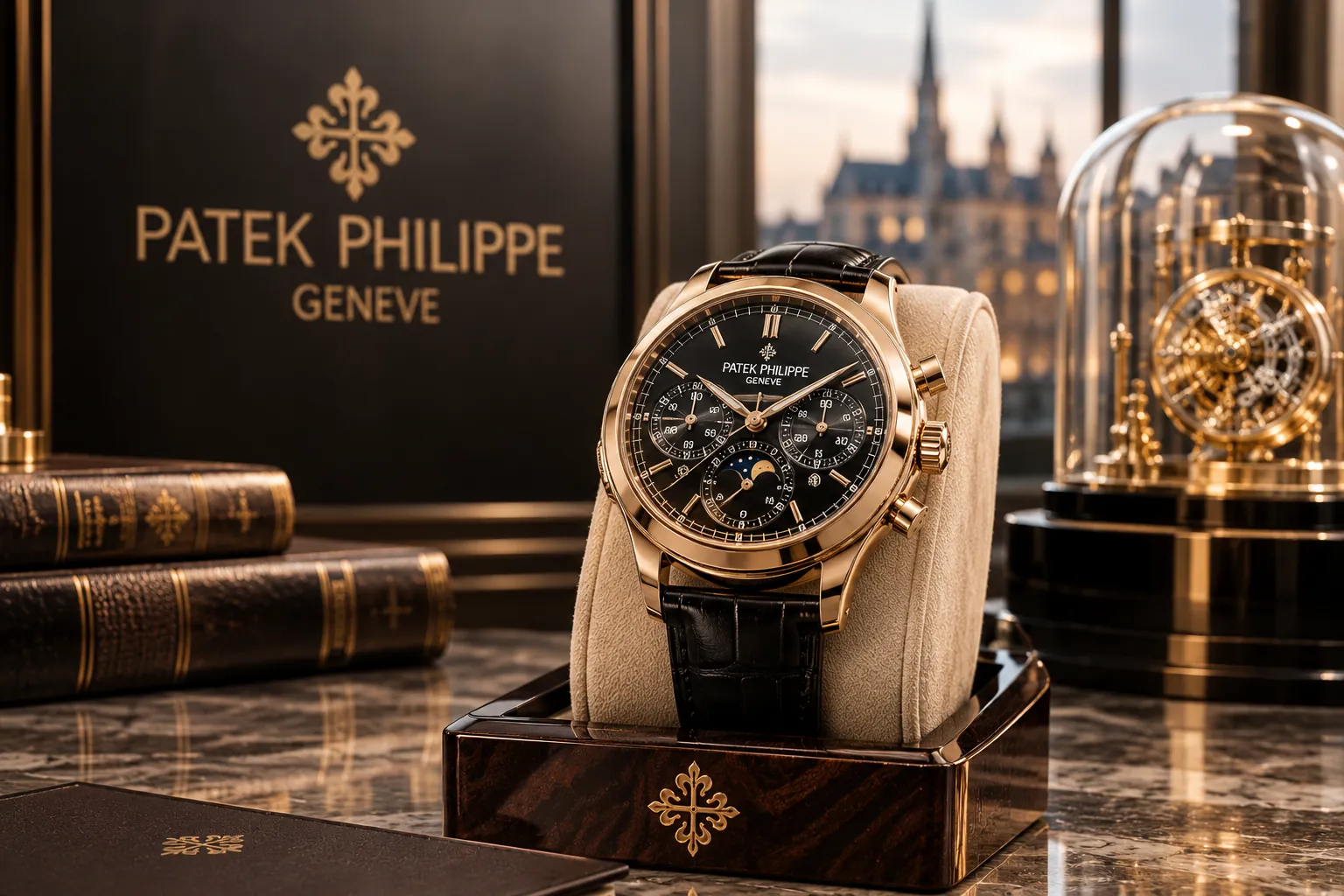
Patek Philippe is the most revered watchmaker in the world, a Geneva house founded in 1839 that has produced the most complicated, most coveted, and most expensive timepieces in auction history. Its advertising slogan, telling owners that they never actually own a Patek Philippe but merely look after it for the next generation, is the most successful line ever written about a watch, and it happens to be true.
The slogan works because it describes a philosophy rather than a marketing position. To understand the house, you must understand the two families whose names it carries, and the third family that saved it.
A Polish Count and a French Genius
The story begins in exile. Antoni Patek was a Polish nobleman and soldier who fought in the failed November Uprising against Russia and fled to Geneva in the 1830s, one of thousands of Polish refugees who washed up in the Swiss city.
Geneva was then, as now, the capital of fine watchmaking, and Patek found his way into the trade as a dealer, joining forces with a watchmaker named Franciszek Czapek to found Patek, Czapek and Company in 1839.
The partnership dissolved in 1844, and in its place arrived one of the great fortuitous meetings in industrial history. At a Paris exhibition, Patek encountered Adrien Philippe, a French watchmaker who had just invented a mechanism for winding and setting a watch through the crown, eliminating the separate key that watches had always required.
The invention seems modest until you consider that every wristwatch worn today uses it. Philippe joined the firm, the company became Patek Philippe in 1851, and the partnership of the exile and the inventor set the technical and aesthetic course the house has followed ever since.
Royal clients arrived quickly. Queen Victoria purchased a Patek Philippe at the Great Exhibition of 1851, and the courts of Europe followed, establishing the house at the summit of nineteenth-century watchmaking. The tradition of royal and aristocratic patronage that began there has never entirely ended.
The Complication Kings
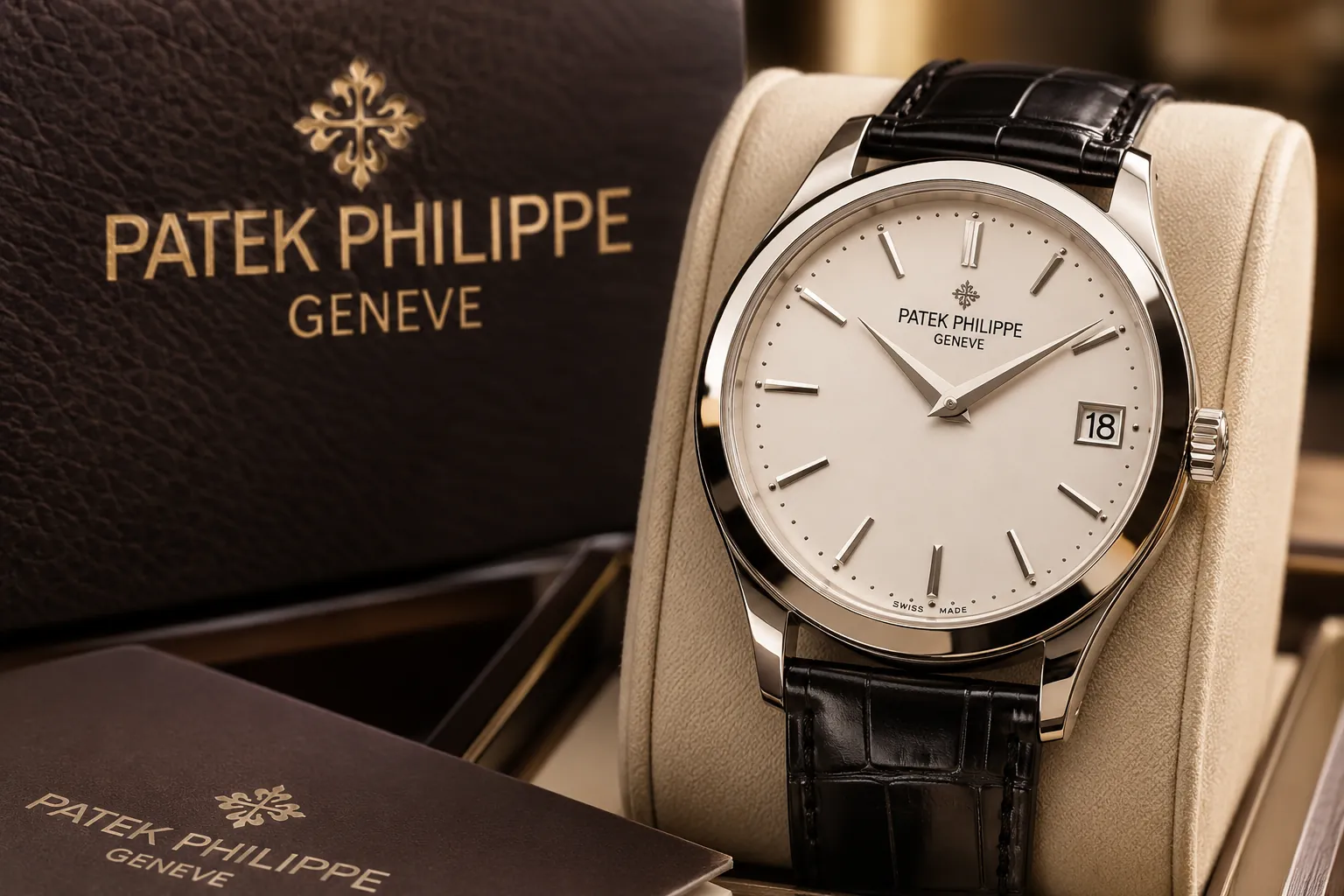
Through the late nineteenth and early twentieth centuries, Patek Philippe built its legend on complications, the mechanical functions beyond simple timekeeping that represent the summit of the watchmaker’s art. Perpetual calendars that account for leap years. Minute repeaters that chime the time on tiny gongs. Chronographs, split-seconds, moon phases, and astronomical displays, all achieved with wheels and springs in an age before electricity.
The apex of this era was the competition between two American collectors, the banker Henry Graves Jr. and the automaker James Ward Packard, who spent the early twentieth century commissioning ever more complicated watches from Geneva’s houses in a private arms race of horological one-upmanship.
The Graves Supercomplication, delivered by Patek Philippe in 1933 after eight years of work, contained twenty-four complications, including a celestial chart of the New York sky as seen from Graves’s apartment. It remained the most complicated mechanical watch in the world for half a century and sold at auction in 2014 for approximately 24 million dollars, a record for a pocket watch that still stands.
The lesson the house drew from that era shapes it still: true luxury in watchmaking is measured not in gold or gems but in mechanical intelligence, patiently accumulated.
The Family That Saved the House
The third family enters in 1932, and with them the modern Patek Philippe. The Stern family of Geneva were dial makers, suppliers to the house, who purchased the company as the Great Depression brought even great watchmakers to their knees.
The acquisition began a stewardship now in its fourth generation, with Thierry Stern currently serving as president, and it explains the house’s most distinctive trait: continuity of purpose across nearly a century of single-family ownership.
The Sterns’ greatest test came in the 1970s and 1980s, when the quartz crisis devastated Swiss watchmaking. Cheap, accurate quartz movements from Asia destroyed hundreds of mechanical houses, and the industry around Geneva hollowed out.
Patek Philippe’s response became legend: rather than abandoning mechanical watchmaking, the house doubled down on it, investing in the complications and craftsmanship that quartz could never replicate.
The bet, that mechanical watches would survive as objects of art and inheritance rather than instruments was vindicated completely, and the house emerged from the crisis as the undisputed summit of the industry.
That same era produced two designs that define modern luxury sport watches. The Nautilus of 1976, drawn by Gérald Genta with its porthole case, and the Aquanaut of 1997 created a second pillar for the house alongside its classical complications, and today both rank among the most sought-after watches on earth, with waiting lists measured in years.
They appear inevitably in any serious ranking of the most iconic luxury watches.
The Slogan That Tells the Truth
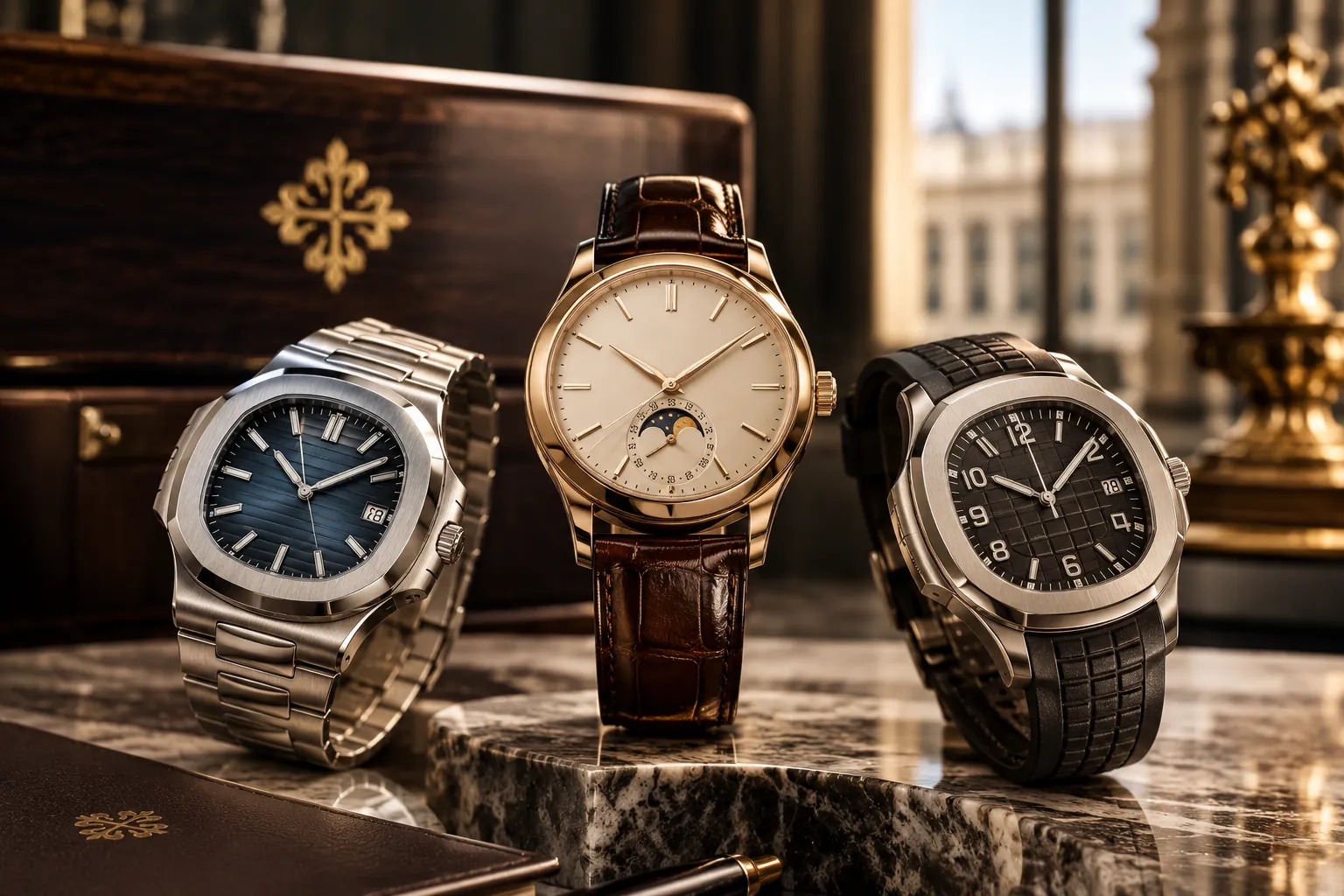
In 1996, Patek Philippe launched the advertising campaign that reframed luxury ownership: you never actually own a Patek Philippe, you merely look after it for the next generation. The line succeeded because it articulated what the house’s clients already experienced.
A Patek is bought with one eye on the child or grandchild who will wear it next, and the company supports that passage with a restoration department that accepts any watch it has ever made, back to 1839, and a archive that can document every piece.
The policy is not sentimentality. It is strategy executed with decades-long patience, and it explains the house’s auction dominance. When a collector knows that a watch can be serviced by its maker forever, and that its provenance can be certified by the same hands that built it, the object becomes something between a possession and a trust.
Our guide to starting a vintage watch collection returns to this principle repeatedly: buy from houses that will still exist to honor their work.
The Modern Summit
Today’s Patek Philippe occupies a position no rival has managed to dislodge. Production remains deliberately limited, roughly seventy thousand watches a year, a fraction of the volume of larger competitors, and the house’s grand complications continue to set auction records with metronomic regularity.
The Grandmaster Chime, the most complicated wristwatch the house has built, exists in versions that have sold for figures once reserved for great paintings.
Yet the more telling measure is quieter. Among the great houses ranked in our survey of luxury watch brands, Patek Philippe is the one that collectors, dealers, and rival watchmakers themselves name as the summit, the standard by which the rest are judged. That consensus, sustained across generations and immune to fashion, is the rarest complication the house has ever achieved.
What the Three Families Teach
Patek Philippe’s story is really three stories welded together: the exile who brought the name, the inventor who brought the crown winding system, and the dial makers who brought a century of stewardship. Each contributed what the others lacked, and the fusion produced a house that measures time not in quarters or seasons but in generations.
The slogan, in the end, is simply a description. You never actually own a Patek Philippe. The Polish count, the French genius, and the Sterns understood that the owner is only the latest guardian of a machine built to outlive its maker, and everyone who winds one joins, briefly, the chain of custody of something meant to last forever.
FAQs
When was Patek Philippe founded?
The house traces its founding to 1839 in Geneva, when Antoni Patek and Franciszek Czapek established their company. Adrien Philippe joined in the 1840s, and the firm took the name Patek Philippe in 1851.
Who owns Patek Philippe today?
The Stern family of Geneva has owned the house since 1932, with Thierry Stern currently serving as president, the fourth generation of the family to lead the company.
What is the most expensive Patek Philippe ever sold?
The unique stainless steel Grandmaster Chime reference 6300A sold for approximately 31 million dollars at the Only Watch charity auction in 2019, the highest price ever paid for any watch at auction.
What is the Henry Graves Supercomplication?
A pocket watch delivered in 1933 after eight years of work, containing twenty-four complications including a celestial chart of the New York sky. It sold for approximately 24 million dollars in 2014, a record for a pocket watch.
What is the Nautilus?
The Nautilus is Patek Philippe’s luxury sport watch, designed by Gérald Genta and introduced in 1976. Its porthole-inspired case and integrated bracelet made it one of the most coveted watches in the world, with waiting lists measured in years.
Will Patek Philippe service old watches?
Yes. The house maintains a restoration department that accepts any watch it has ever produced since 1839, a policy unmatched in the industry and central to the brand’s generational philosophy.
How many watches does Patek Philippe make each year?
Production is deliberately limited to roughly seventy thousand watches annually, a fraction of the output of larger luxury watchmakers, sustaining exclusivity and quality control.
Why is Patek Philippe considered the best watchmaker?
A combination of uninterrupted operation since 1839, mastery of grand complications, single-family stewardship, complete service support for every historical piece, and consistent auction records has made it the industry’s consensus summit.