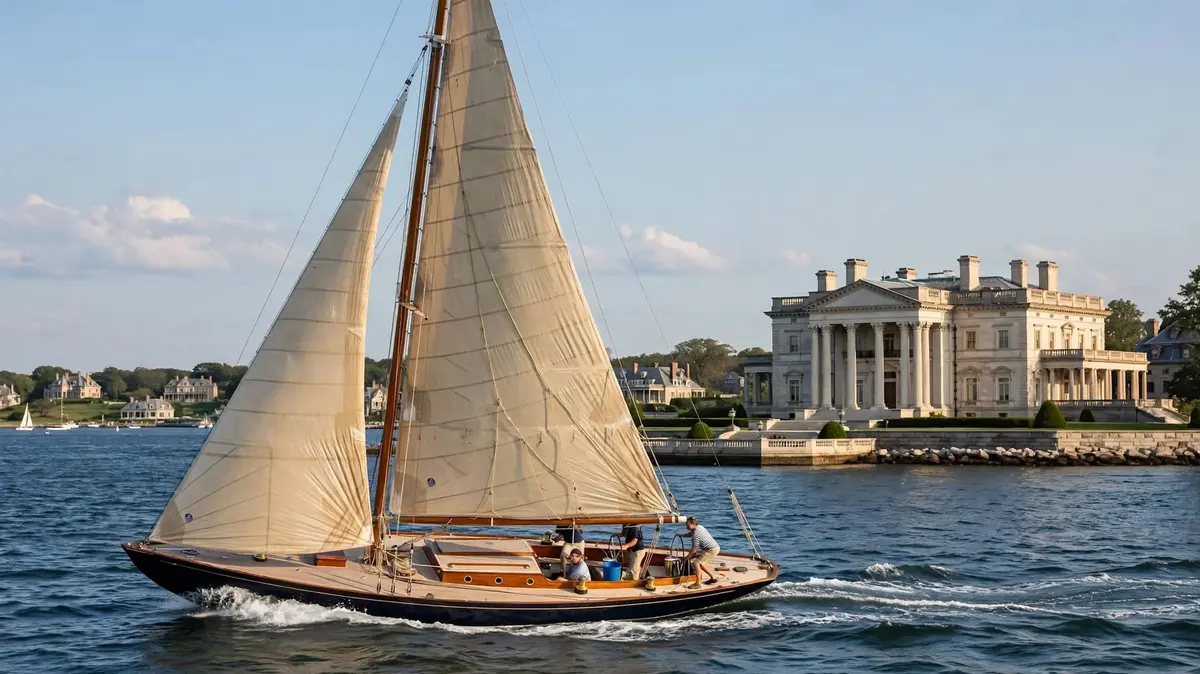
On a summer afternoon in Narragansett Bay, a twelve metre sloop heels hard to a sea breeze and her crew, amateurs and professionals mixed, hikes out over the rail in a single practiced motion.
The boat is seventy years old, her hull shaped by the same hands that shaped the defenders of the America’s Cup, and the mansion on the point behind her, Marble House, its gilded gates facing the sea like a throne room of the water, was built by a Vanderbilt to watch exactly this.
Newport is the only place in America where the history of sailing and the history of spectacular wealth occupy the same acre, and on a good July day the two are so interwoven that you cannot tell where the sport ends and the architecture begins.
Every great American yachting city has a claim. Fort Lauderdale has the tonnage, the yards, and the boat show. Palm Beach has the winter colony.
The Hamptons have the season’s social altitude. Newport’s claim is older and stranger: it is the place where American yachting was invented as a competitive religion, and where the families who financed that religion built their temples on the cliffs to watch the rites.
A century and a half after the first Cup race in these waters, Newport remains the spiritual home of the American sail, and its waterfront is the most historically dense in the country.
Here is why the sailing capital still matters, and how to experience it properly.
The Cup That Built the City
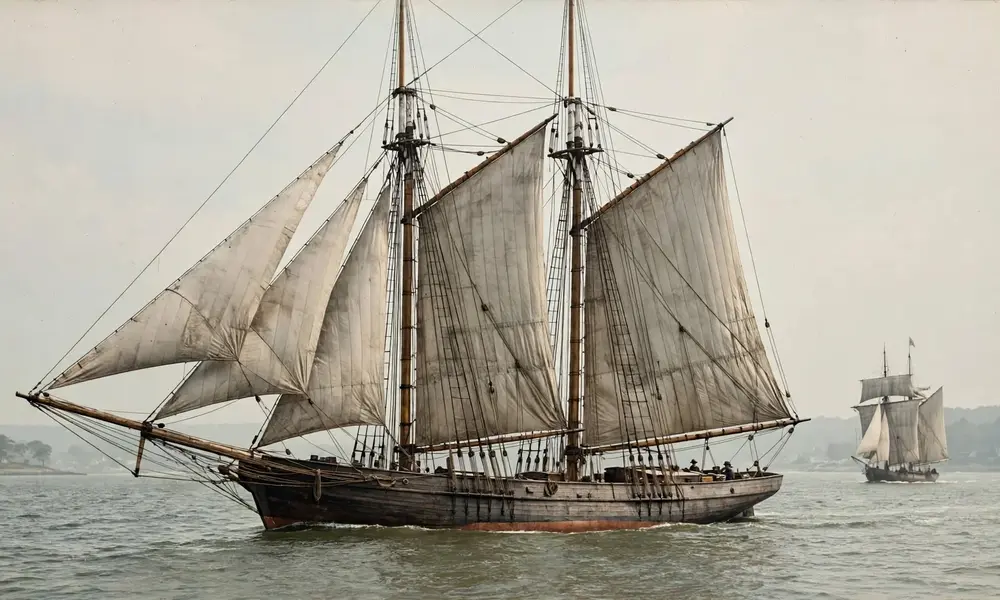
Newport’s identity was decided by a single event: the first defense of the America’s Cup on American waters, sailed off Newport in 1870.
The Cup itself, the oldest trophy in international sport, had been won by the schooner America in 1851 and defended around New York for two decades before the New York Yacht Club brought its matches to the Bay, whose steady sea breezes and open water suited the big schooners of the era.
From 1870 to 1983, every America’s Cup match sailed on American water was sailed off Newport, and for most of that stretch the New York Yacht Club’s defenders were effectively unbeatable, a winning streak of 132 years that no team sport has ever matched.
The names of those defenders are the history of yacht design itself: the sloops and schooners of the Gilded Age, the towering J Class yachts of the 1930s, Endeavour and Ranger and Rainbow, and finally the twelve metres, Intrepid, Courageous, and Freedom, whose match races in the 1960s and 1970s turned sailing into television.
When Australia II finally broke the streak in 1983, ending the longest winning run in sporting history, the Cup left Newport for Fremantle and never returned as a regular venue. But the architecture of the era remained, and the sailing culture the Cup created never left.
The Cottages and the Watchers
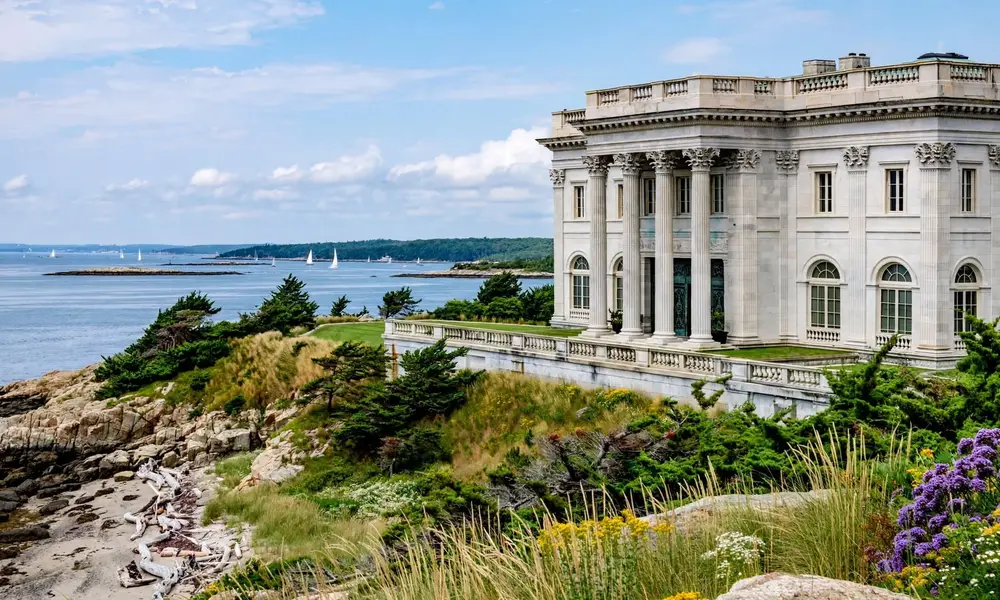
The mansions of Newport’s Bellevue Avenue, the Breakers, Marble House, the Elms, Rosecliff, were built in the 1880s and 1890s as summer cottages, seasonal houses, for families whose fortunes ran to the railroads, shipping, and banking empires of the Gilded Age.
Their orientation tells you everything: nearly all of them face the water, and several were designed with cupolas, terraces, and pavilions specifically for watching the yacht races. The Vanderbilt Marble House cost, in today’s dollars, well over a hundred million, and its GothicRoom and grand staircase exist in service of a social season whose centerpiece was the fleet on the Bay.
That marriage of fleet and facade made Newport the prototype of the American luxury waterfront, the ancestor of every exclusive zip code and gated harbor that followed. What distinguishes Newport is that the fleet never retired.
The twelve metres built for the Cup defenses still race off the mansion coast every summer through the 12 Metre Class association, and a visitor standing on the Cliff Walk, the public path that threads the mansions’ ocean front, can watch a seventy year old America’s Cup defender beating to windward beneath a flagstone terrace built to admire her. No other waterfront in America offers that continuity.
The Modern Season: 12 Metres, Classic Yachts, and the Bucket
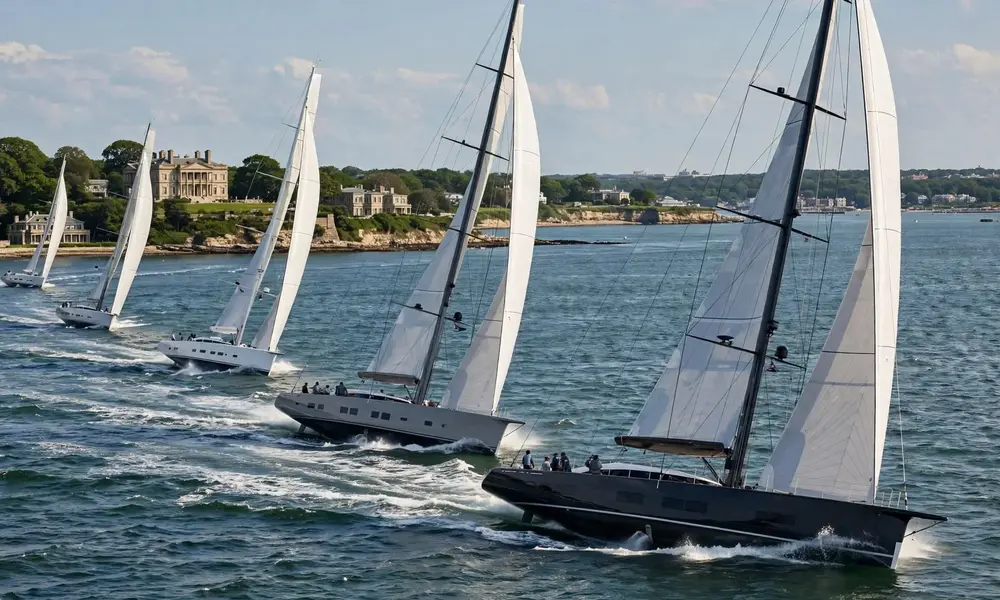
Newport’s sailing calendar concentrates in high summer. The headline is the 12 Metre Worlds and class regattas, which in anniversary years bring a dozen or more of the historic Cup boats to the starting line together, a sight that sailors travel continents to see.
The Classic Yacht Regatta and the Newport to Bermuda Race, one of ocean racing’s oldest events, founded in 1906, anchor the traditional calendar.
And the superyacht set, which anchored its larger gatherings elsewhere for decades, has returned through events like the Newport Bucket, where modern sailing yachts over a hundred feet race around the Bay with the same mansion backdrop their Gilded Age predecessors had.
The supporting infrastructure has kept pace. Safe Harbor New England Boatyard and the Newport Shipyard service the visiting fleet, the mooring field off Goat Island fills each July, and the waterfront’s restaurants, from the classic Clarke Cooke House to the dockside bars of Bowen’s Wharf, run at full season pitch.
For charter guests, Newport is among the finest bases on the East Coast: a week out of Newport can take in Block Island, Martha’s Vineyard, and Nantucket, the islands we covered in our island hopper’s guide, with the Bay’s afternoon sea breeze making the sailing itself the point of the trip.
The Institutions: Museum, Club, and Cup
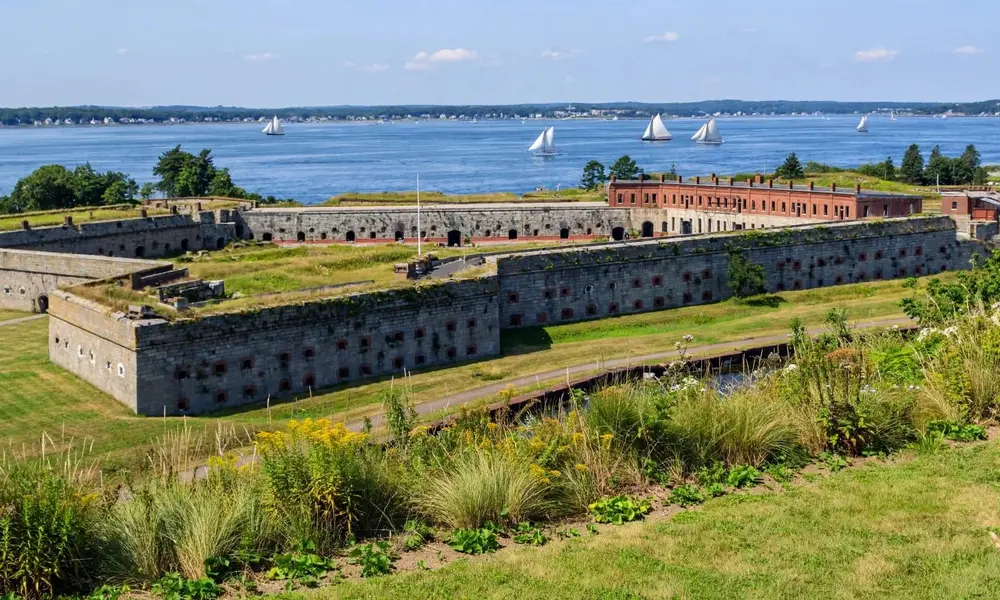
Newport preserves its sailing memory with an intensity few sporting cities match.
The Museum of Yachting, long housed at Fort Adams, and the Herreshoff Marine Museum across the Bay in Bristol, which holds the design archive of the greatest American yacht design dynasty, together document the craft behind the legend: the lines drawings, the tank models, the half hulls of boats whose names are still spoken with reverence.
Fort Adams itself, the great coastal fortification that hosts the Newport Folk and Jazz festivals, wraps the America’s Cup-era anchorage and gives the modern visitor the same panorama the Cup crowds had.
The social architecture survives as well. The New York Yacht Club’s Harbour Court, its Newport station, stands on the point at Brenton Cove, and the Ida Lewis Yacht Club, named for the famous lighthouse keeper who rowed to so many rescues, keeps the working waterfront’s humbler tradition alive.
Between them, the Lipton Cup and the countless club regattas of a normal July weekend continue the competitive culture that made the city, proof that in Newport the America’s Cup is not nostalgia. It is infrastructure.
How to Experience Newport on the Water
The essential Newport day begins on the water, because the mansions were built to be seen from the sea. Harbor cruises and the classic sailing charters aboard the local twelve metres, some of which take guests for an afternoon aboard actual America’s Cup veterans, deliver the view the architects intended.
The timing matters: the sea breeze fills in mid morning and the Bay is at its best from late morning to late afternoon. Come during a 12 Metre regatta weekend in July and the harbor becomes a living museum under sail.
And if the regatta brings the superyachts, as the Bucket years do, the mooring field off Goat Island becomes an exhibition of the modern sailing giants in their own right, the steel and carbon heirs of the J Class.
On land, the Cliff Walk is non negotiable, and the mansions reward at least one interior visit, the Breakers above all, whose scale recalibrates what you thought wealth meant. Book sailing first, mansions second, dinner third, and let the breeze decide the rest. Newport has been running that program since 1870, and it has never once lost the recipe.
FAQs
Why is Newport associated with the America’s Cup?
Newport hosted every America’s Cup match sailed on American water from 1870 to 1983, the era in which the New York Yacht Club defended the trophy for 132 consecutive years, the longest winning streak in sports history. The twelve metre defenders of the 1960s and 1970s raced in these waters, and the historic boats still sail here today.
Can you sail on an America’s Cup twelve metre in Newport?
Yes. Several of Newport’s historic twelve metres, including actual America’s Cup veterans, offer guest sailing experiences in season, typically from May through October. Sessions range from two hour harbor sails to longer afternoon outings, and no sailing experience is required; the professional crew handles the boat while guests participate as much or as little as they like.
When is the best time to visit Newport for sailing?
July and August offer the most reliable sea breezes and the fullest calendar, including 12 Metre regattas and classic yacht events. June and September are quieter with good sailing. The season effectively closes from November through April, when the charter fleet scatters south to Florida and the Caribbean.
What are the Newport mansions and why do they face the water?
The Breakers, Marble House, the Elms, and Rosecliff were built in the 1880s and 1890s as summer cottages for Gilded Age fortunes in railroads, shipping, and banking. They face the sea because the social season’s centerpiece was the yacht racing on the Bay, and the houses were designed, with terraces, cupolas, and pavilions, as grandstands for the fleet.
Is Newport a good base for a yacht charter?
Among the best on the East Coast. Newport offers a deepwater harbor, full service yards, a strong charter fleet, and itineraries reaching Block Island, Martha’s Vineyard, Nantucket, and the islands of Buzzards Bay within a week’s comfortable sailing. The afternoon sea breeze is reliable in season and the harbor’s restaurants and facilities are walkable from most docks.
What is the Newport Bucket?
The Newport Bucket is a regatta for superyachts, modern sailing yachts typically over one hundred feet, racing around Narragansett Bay with the mansion coast as backdrop. Revived in recent years, it brings the modern superyacht fleet back to the waters the Gilded Age giants raced, linking the contemporary scene directly to its Newport ancestors.
How do I watch the 12 Metre regattas?
Regattas are visible free from the Cliff Walk, Brenton Cove, Fort Adams, and the public piers of downtown Newport, and harbor cruises position guests among the fleet for close viewing. Championship years, when the full international class gathers, are announced well in advance and worth planning around. The sight of a dozen Cup veterans starting together is the single best sailing spectacle in America.
What is the Herreshoff Marine Museum?
Across the Bay in Bristol, Rhode Island, the Herreshoff Marine Museum preserves the design archive and legacy of the Herreshoff Manufacturing Company, the most successful American yacht design and building dynasty, which produced eight consecutive America’s Cup defenders between 1893 and 1934. Its collection of half hulls, tank models, and restored yachts is the essential companion to any Newport visit.