In 1986, NetJets applied a simple insight to private aviation: most owners use their aircraft a few dozen hours a year, most of the cost is fixed, and the asset sits depreciating at the airport ninety percent of the time. Fractional ownership, buying a share of an aircraft with guaranteed availability, turned that waste into an industry.
Four decades later, the same logic has finally reached the water, and fractional yacht programs now promise the NetJets answer to the oldest question in yachting: how do I own the experience without owning the headache?
The answer, as in aviation, is complicated, honest, and occasionally transformative. Here is how fractional yacht ownership actually works, who offers it, what it costs, and where the model breaks down against the alternatives of charter, clubs, and whole ownership.
How the Model Works

The structure borrows directly from aviation’s playbook. A buyer purchases a share, typically between one eighth and one half, of a specific yacht. This entitles them to a proportional number of usage days each year. An eighth share commonly provides thirty to sixty days.
The program operator often builds or sources the yacht. They manage everything, including crew, maintenance, insurance, berthing, and scheduling. Owners pay a share of the purchase price, along with annual management fees. They also cover operating costs allocated according to usage.
At the end of a fixed term, usually five to eight years, the yacht is sold. Owners receive their proportionate share of the proceeds, minus refurbishment costs.
The guarantees matter most. Programs promise availability within specified notice windows. This means an eighth share does not leave you competing with seven other owners for the same summer weekends. The operator must either provide your yacht or arrange an equivalent one from the fleet.
This availability guarantee is the entire value proposition. It is what separates fractional ownership from the informal boat-sharing arrangements that have existed for centuries.
The Players
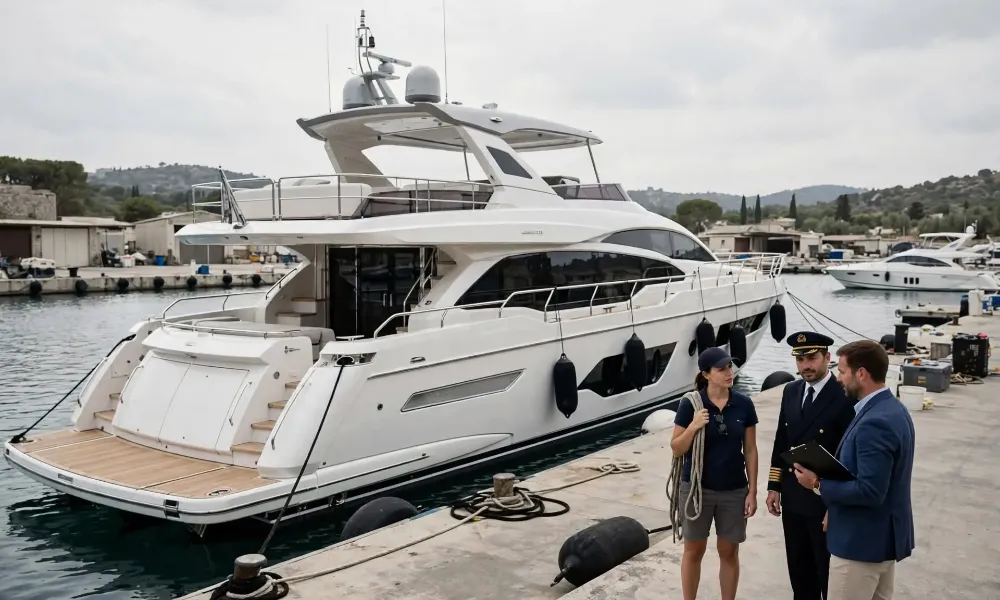
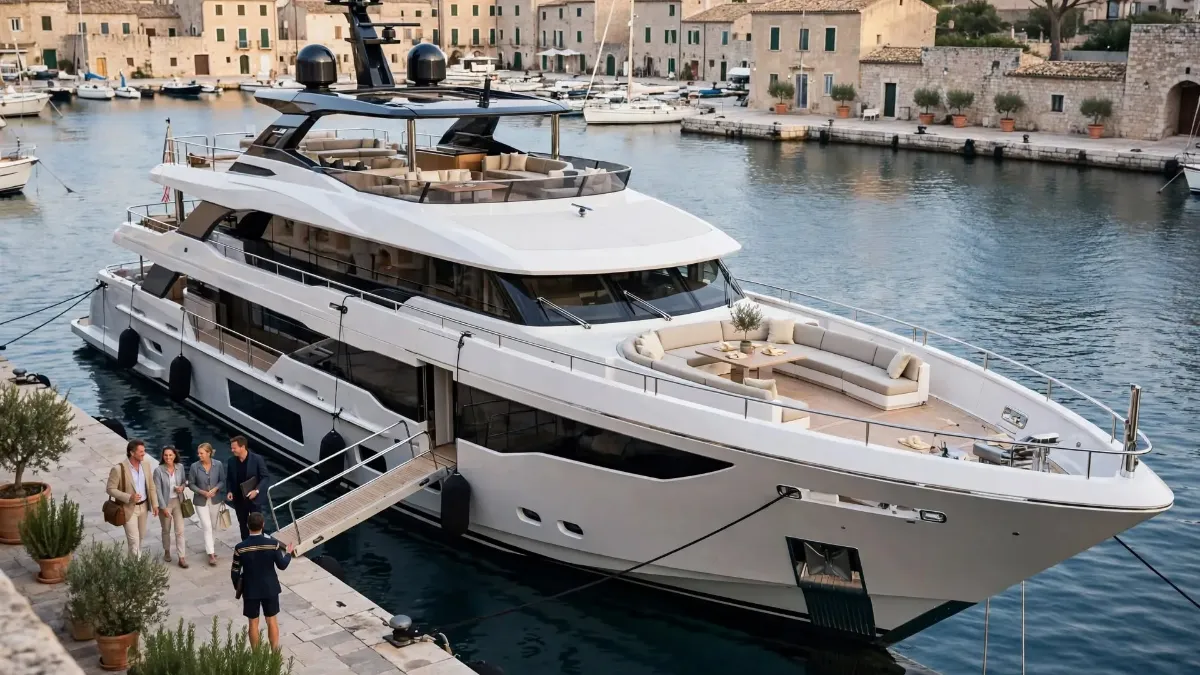
The market has consolidated around several different models. SeaNet, the pioneer, operates fractional programs on Sunseeker and Benetti yachts. Its programs cover the Mediterranean, Florida, and the Northeast. Buyers purchase shares in specific vessels with professional management.
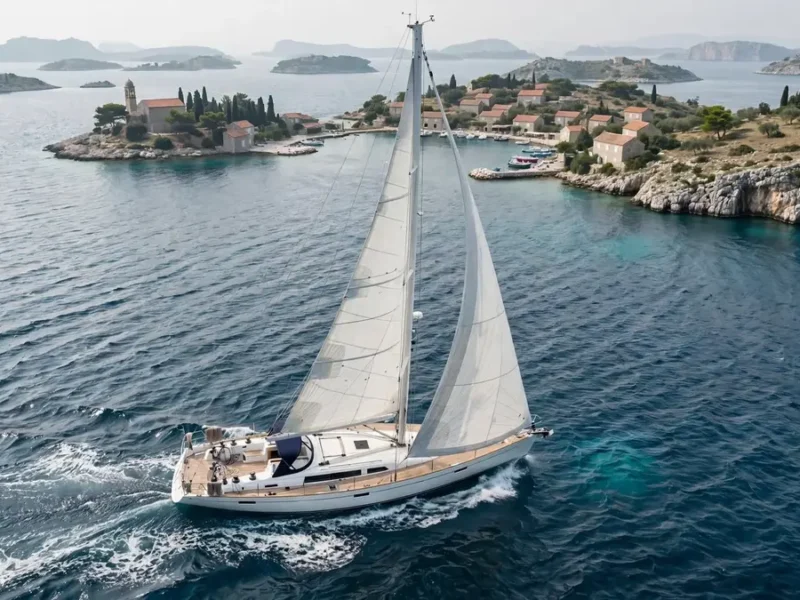
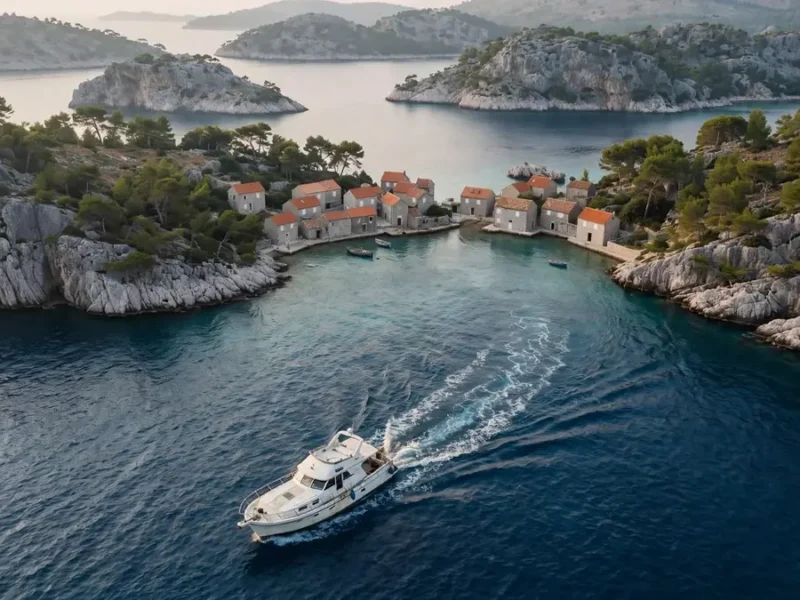
Yacht share programs in the 40-to-70-foot range offer smaller entry points. These often include sailing yachts and trawlers.
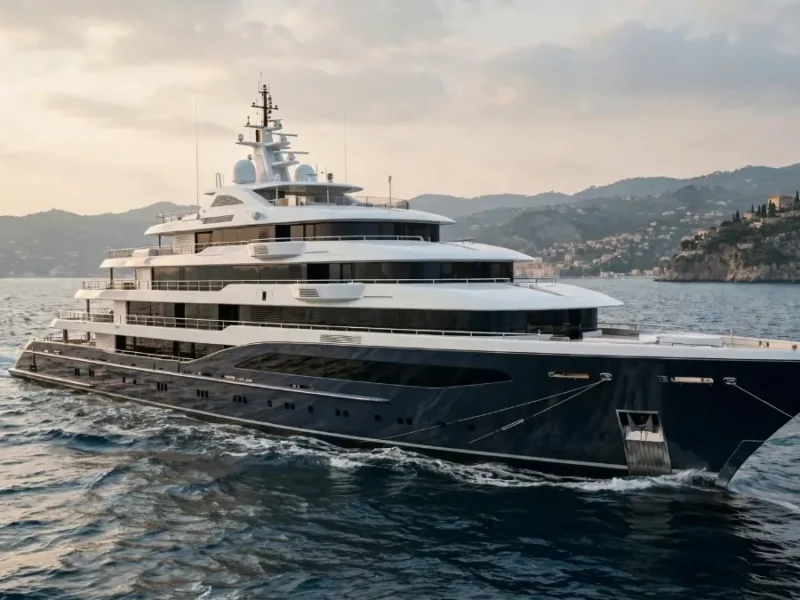
At the top end, a handful of programs offer shares in superyachts above 30 metres. Here, the fractional ownership model becomes genuinely compelling. The fixed costs can be enormous. Crew payroll alone on a 35-metre yacht can exceed a million dollars annually. These costs would overwhelm a sole owner using the yacht for just six weeks a year.
Every buyer also makes a comparison with the aircraft market. NetJets and Flexjet have proven the model at every scale, as our aviation comparison explains.
The Honest Math
The arithmetic only works at the extremes.
Consider a $2 million yacht used for six weeks a year. Chartering the same weeks often costs less than buying a fractional share and paying the associated fees. This is because charter pricing already absorbs the same fixed costs. You also avoid putting your capital at risk.
With a $10 million yacht, the equation reverses. A quarter share costs $2.5 million, plus perhaps $300,000 annually in fees. Chartering an equivalent yacht for the same number of weeks could exceed that amount over just a few seasons. With fractional ownership, you also hold an asset rather than simply paying for charters.
The break-even point comes when fixed costs become so substantial that sharing them with three partners costs less than renting the same experience.
Our ownership cost breakdown, although written for helicopters, explains the same fixed-cost structure that governs the yacht ownership equation.
The Risks
Fractional yacht programs have a thinner history than their aviation cousins, and the risks are real. Operator solvency matters enormously. You own a share of a yacht administered by a company, and several programs have failed over the past two decades. These failures have left owners with shares in managed assets and disputed access.
Depreciation on motor yachts is steep, often reaching forty to sixty percent over the ownership term. The resale distribution rarely delights. Scheduling friction, particularly the gap between guaranteed availability and preferred dates, appears in every program during peak season.
The yacht’s character, its crew, its home berth, and its quirks are shared. That is the point and the compromise at once.
Against the Alternatives
Charter remains the benchmark. It requires no capital investment and carries no asset risk. It also offers total flexibility. Pricing has softened following the post-pandemic normalization.
Yacht clubs and membership programs provide access without ownership. Whole ownership offers complete control, but at the full cost of owning a yacht.
Fractional ownership sits between these options. It offers equity, guaranteed access, and professional management. All this comes at a fraction of the cost of whole ownership.
It often makes sense for owners who use the yacht six to ten weeks a year. This is particularly true for yachts above roughly 25 metres. Below that size, chartering usually wins. Above it, fractional ownership often becomes more attractive.
The question is never which model is best. It is which model matches your calendar and your capital. The same principle applies to aircraft, as our own versus charter versus jet card analysis explains.
FAQs
1. What is fractional yacht ownership?
The purchase of a share, typically one eighth to one half, of a specific yacht through a program operator, entitling the owner to proportional annual usage with guaranteed availability, professional management, and a share of the proceeds when the yacht is sold at the end of the term.
2. How much does a fractional yacht share cost?
Eighth shares in 20 metre yachts begin around $300,000 to $500,000 plus annual fees, while shares in 30 metre plus superyachts run from $1 million upward depending on the share size, with annual management and operating fees of 10 to 20 percent of the share value.
3. How many days do I get with an eighth share?
Typically 30 to 40 days per year, varying by program, with guaranteed availability windows and the possibility of additional days at preferential rates when other owners’ allocations go unused.
4. Is fractional yacht ownership a good investment?
It is a usage product with residual value, not an investment: yachts depreciate, fees are substantial, and the return is measured in days on the water. Buyers who frame it as an investment are usually disappointed; buyers who frame it as pre purchased, managed holidays at a discount to charter often conclude it works.
5. What are the main risks?
Operator solvency, scheduling friction at peak season, depreciation steeper than aviation comparables, and the legal complexity of co owning an asset through a program structure. Due diligence on the operator’s history and the ownership documents matters more than the yacht itself.
6. How does fractional compare to charter?
Charter wins below roughly 25 metres and for flexible schedules; fractional wins at larger sizes and for owners with predictable, substantial usage. Charter has no capital at risk; fractional builds equity and guarantees availability.
7. Can I sell my share?
Most programs permit share transfers with operator approval and right of first refusal, and a secondary market exists, though liquidity is limited and pricing reflects the program’s health more than the yacht’s condition.
8. Who should buy a fractional yacht share?
Owners who realistically use a yacht six to ten weeks annually, want sizes above 25 metres, value professional management, and prefer equity over receipts. Occasional users should charter; constant users should consider whole ownership.