
Private Jet Charter New York to Miami costs between roughly 15,000 and 50,000 dollars one way in 2026, depending on the aircraft you choose and the week you choose to fly it, and that enormous range is exactly why this route deserves a proper breakdown.
This is the most important private aviation corridor in North America, a thousand nautical miles of coastline connecting the financial capital of the country with its winter capital of leisure. Every December the migration begins: finance chiefs heading to Brickell, collectors bound for Art Basel, families relocating to Palm Beach until spring.
A charter broker who works the corridor year round told me the route has its own seasons, its own psychology, and its own pricing weather, and that clients who understand all three pay dramatically less than those who simply call and book. Here is what the route really costs, aircraft by aircraft and month by month.
The Route Itself

New York to Miami covers approximately 1,100 nautical miles, translating to flight times of about two hours and forty minutes in a light jet and as little as two hours and twenty minutes in the fastest large cabin aircraft.
The overwhelming majority of departures leave from Teterboro Airport in New Jersey, twelve miles from Manhattan and purpose built for private aviation, with Westchester County Airport serving flyers based north of the city.
On the Florida end, the choices shape the experience: Miami International’s private terminals, Opa-locka Executive closer to the Design District, and Palm Beach International for those whose Miami trip is really a Palm Beach trip, all detailed in the context of the best private jets and aviation options in New York.
The route’s maturity works in the flyer’s favor. Dozens of operators base aircraft at both ends, competition is fierce, and one way pricing is common because the corridor’s traffic flows in both directions. Unlike thin routes where you pay for the aircraft’s empty return, New York to Miami often prices as a genuine one way trip, which makes it one of the most cost efficient long routes in the country.
Light Jets: The Efficient Entry Point
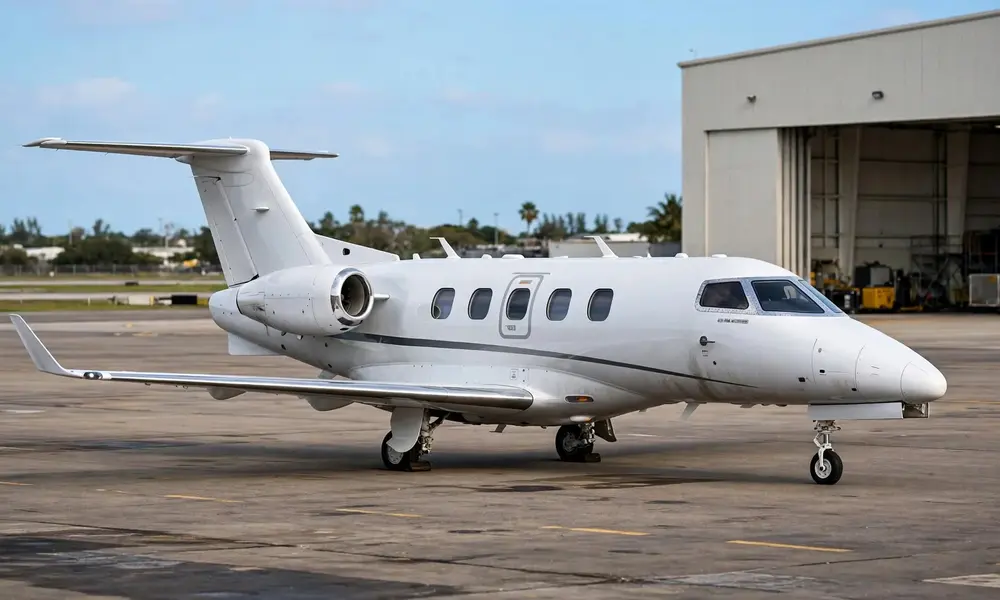
Light jets like the Phenom 300, the Citation CJ4, and the Learjet 75 remain the route’s value leaders. Expect one way pricing in the range of 15,000 to 22,000 dollars in normal market conditions for an aircraft seating six to seven passengers.
Flight time runs toward the longer end of the range, cabin height requires some stooping, and baggage capacity demands discipline, but for two to four travelers with standard luggage the economics are compelling.
The honest limitations matter on this specific route. Light jets sit at the edge of comfortable range for the full distance, and winter headwinds on northbound returns occasionally force fuel stops on lighter loads. Savvy flyers book light jets southbound with confidence and consider sizing up for the winter northbound leg, when headwinds are strongest and the aircraft works hardest.
Midsize and Super Midsize Jets: The Corridor’s Sweet Spot

This is where most experienced New York to Miami flyers land, and for good reason. Midsize jets like the Hawker 900XP and Citation Latitude typically price between 20,000 and 28,000 dollars one way, while super midsize aircraft, the Challenger 350, the Citation Longitude, the Praetor 600, and the Gulfstream G280, generally run 26,000 to 35,000 dollars.
What the premium buys is meaningful: stand up cabins, enclosed lavatories, generous baggage holds for golf clubs and winter wardrobes, and nonstop range that laughs at headwinds in both directions.
Super midsize jets also transform the onboard experience into productive or genuinely restful time. High speed internet, proper galley service, and cabin heights that let six foot passengers stand straight turn the two and a half hours into a flying office or a quiet lounge. For travelers comparing options across the corridor, current benchmarks in our private jet charter prices guide provide the broader context for evaluating any quote.
Heavy Jets: When the Journey Is the Point

At the top of the market, large cabin aircraft like the Gulfstream G650, the Global 6000, and the Falcon 8X command one way pricing between roughly 40,000 and 60,000 dollars for the route, a premium that makes sense only in specific circumstances.
Those circumstances exist more often than outsiders assume. A full cabin of eight to twelve passengers traveling together, a schedule requiring a conference ready cabin, or a same day round trip where the aircraft becomes a mobile headquarters can all justify the heavy jet on arithmetic rather than indulgence.
The heavy jet experience on this route borders on the surreal. You depart Teterboro, finish a working lunch over Virginia, hold a video conference over the Carolinas, and step off in Miami before a commercial traveler has cleared the terminal. When ten passengers split the cabin, per person economics approach premium first class while the experience belongs to a different category entirely.
The Calendar Effect: When Prices Surge and When They Dip
No factor moves New York to Miami pricing like the calendar. The corridor has three surge seasons. Thanksgiving week and the December holidays see demand spike as entire households migrate south.
Art Basel week in early December compresses a year’s worth of art world traffic into five days. And late March through April brings the northbound return, when spring breaks and season endings reverse the flow. During these windows, expect premiums of twenty to fifty percent and reduced availability at any price.
The countervailing secret is positioning. Every surge one direction creates discounted aircraft moving the other way. When the world flies south for Basel, northbound seats empty out.
Flexible travelers who monitor one way availability during these windows, or who structure trips against the flow, access the corridor at its softest pricing. Understanding how private jet charter costs are built reveals exactly why repositioning flights price the way they do.
Making the Numbers Work for You
Three habits separate smart corridor flyers from expensive ones. First, quote the route as a round trip even when flying one way, because round trip pricing on this corridor often beats the sum of two one ways when an aircraft would otherwise wait or reposition.
Second, match aircraft size to actual passenger count ruthlessly: a couple paying for a super midsize cabin is buying empty seats, while eight passengers in a light jet is a false economy that fails on baggage alone. Third, consider the total journey.
Ground transport at both ends, handled well, costs a fraction of the flight and determines whether the day feels effortless. Travelers departing Manhattan often stage from hotels near the East Side heliport and private terminals, the same logistics covered in our guide to the best hotels in New York, before a short drive to Teterboro.
The route rewards regulars. Fly it four or more times a year and a jet card on a super midsize category starts beating ad hoc charter on both price and sanity. Fly it twice a year and charter cleanly, quote three brokers, and let the corridor’s deep competition work for you.
Either way, New York to Miami remains what it has been since the first business jets opened the route: the single most useful private flight in America, priced honestly for those who bother to understand it.
FAQs
How much is a private jet from New York to Miami?
In 2026, one way charter from New York to Miami typically costs 15,000 to 22,000 dollars in a light jet, 20,000 to 35,000 dollars in midsize and super midsize jets, and 40,000 to 60,000 dollars in large cabin heavy jets. Seasonal demand can add twenty to fifty percent during peak weeks.
How long is the private flight from New York to Miami?
Flight time runs approximately two hours and twenty minutes to two hours and fifty minutes depending on aircraft type and winds. Total door to door time, including a fifteen minute boarding process at a private terminal, typically beats commercial travel by three to four hours each way.
Which airport do private jets use in New York?
Teterboro Airport in New Jersey handles the vast majority of New York area private departures, located twelve miles from Manhattan with multiple private terminals. Westchester County Airport serves flyers based in Connecticut and the northern suburbs, while Republic Airport on Long Island suits eastern departures.
Which Miami airport is best for private jets?
Miami International’s private terminals serve most arrivals, while Opa-locka Executive Airport sits closer to the Design District and northern Miami Beach. Palm Beach International suits travelers whose final destination is Palm Beach, and Opa-locka often offers faster ground handling during event weeks.
When is private jet travel to Miami most expensive?
Peak pricing hits during Thanksgiving week, the December holidays, Art Basel week in early December, and the late March northbound migration. Booking outside these windows, or flying against the seasonal flow, can reduce costs meaningfully on the identical aircraft.
Can I find empty leg deals from New York to Miami?
Yes. The corridor’s heavy two way traffic generates regular empty leg availability, especially flying against seasonal surges, at discounts of 30 to 75 percent. The tradeoff is rigidity: empty legs follow another client’s schedule and cancel if their plans change.
How many passengers can fly New York to Miami on a private jet?
Light jets seat six to seven, midsize jets seven to nine, super midsize jets eight to ten, and heavy jets twelve or more. Baggage capacity often matters more than seat count on this route, where golf clubs and seasonal wardrobes travel in quantity.
Is it cheaper to charter round trip from New York to Miami?
Often yes. Round trip quotes on this corridor frequently beat two separate one ways because operators avoid repositioning costs. Same day and overnight returns price especially well, while longer stays may favor two one way bookings, so always quote both structures.