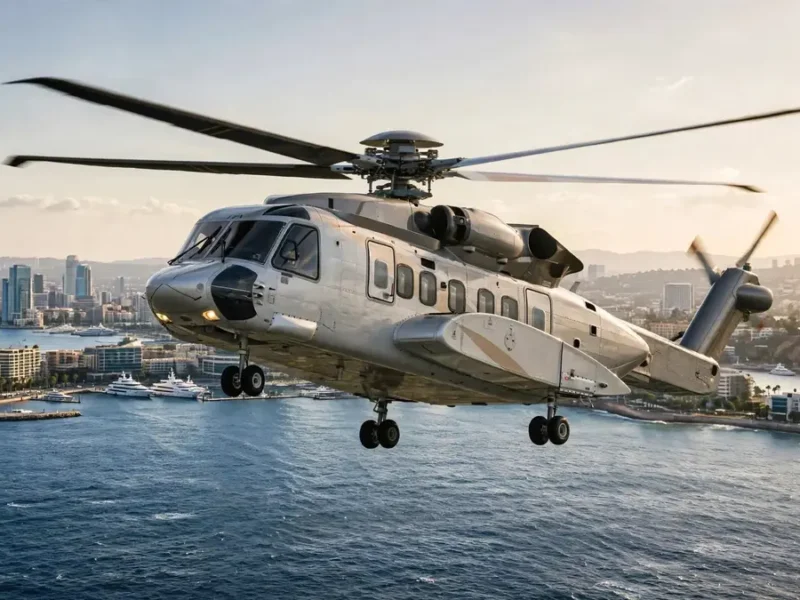
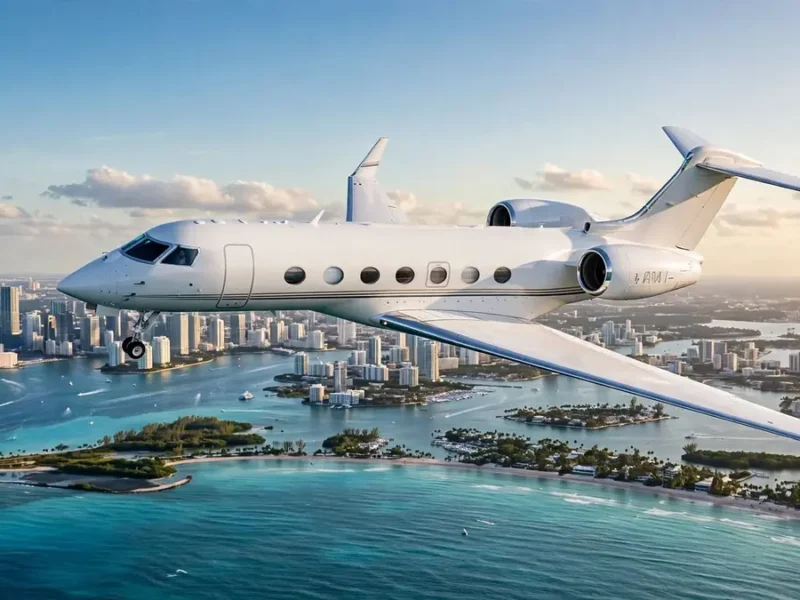
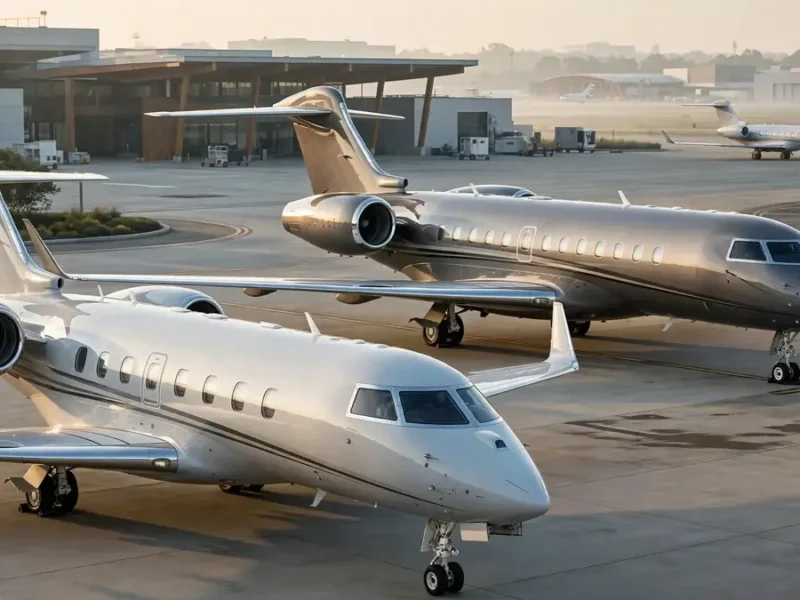
Helicopter airport transfers between Manhattan and JFK solve the most hated equation in New York travel: the thirty mile crawl between the island’s heliports and the terminals of Kennedy Airport, a journey that can take forty minutes on a blessed morning and two hours on a cursed one.
Every frequent flyer in this city owns a personal horror story about the Van Wyck Expressway, mine involves a missed connection to Milan and a driver who kept apologizing to his steering wheel. The helicopter removes the variable entirely.
From the moment the rotors spin up at the East 34th Street heliport to touchdown at JFK’s general aviation facilities, the flight takes roughly five minutes, and the entire door to door experience, including ground handling at both ends, routinely completes in under twenty minutes.
For a city that sells time as its ultimate luxury, the airport helicopter transfer is the most honest luxury purchase New York offers. Here is how it works, what it costs, and who should be booking it.
Why the Manhattan to Airport Problem Is Uniquely Painful
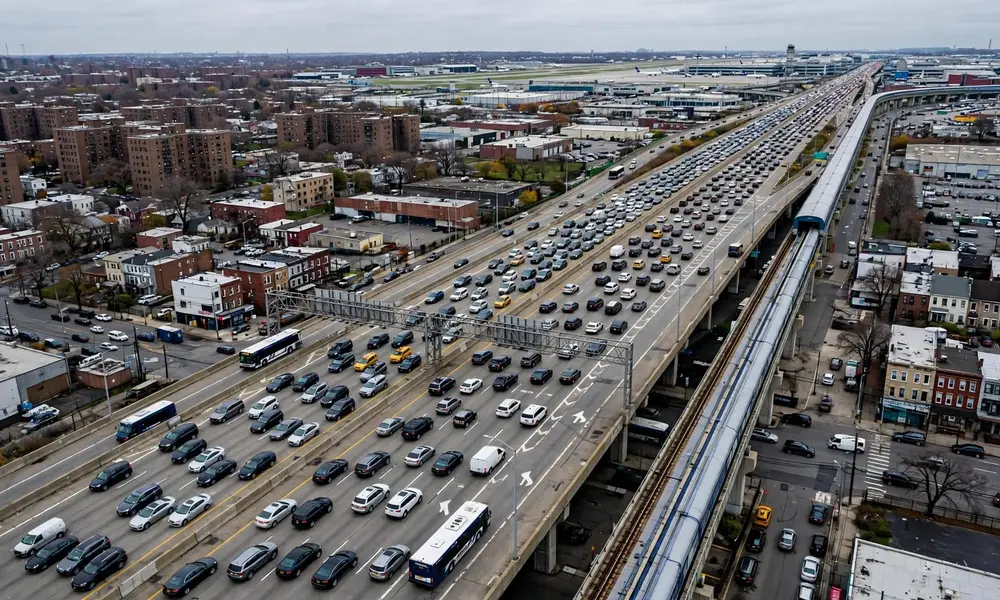
New York’s airport access problem is structural, not incidental. Manhattan is an island with limited crossings, and all three major airports, JFK, Newark, and LaGuardia, sit beyond those bottlenecks.
JFK compounds the challenge by sitting at the far southeastern edge of Queens, reachable only through corridors that share space with the daily commute of millions. The result is a transfer time with no reliable average: a black car to JFK is simultaneously a forty minute ride and a two hour ordeal, and the traveler never knows which version they have purchased until the brake lights appear.
This uncertainty carries real costs. Missed international flights trigger rebooking fees, lost hotel nights, and missed meetings that dwarf any transfer price. Business travelers pad their departures with hours of buffer time, which is simply a different way of paying: with the workday instead of the wallet.
The helicopter’s value proposition begins not with the flight itself but with the elimination of variance. A five minute flight is five minutes every time, in every season, at every hour.
How the Transfer Actually Works
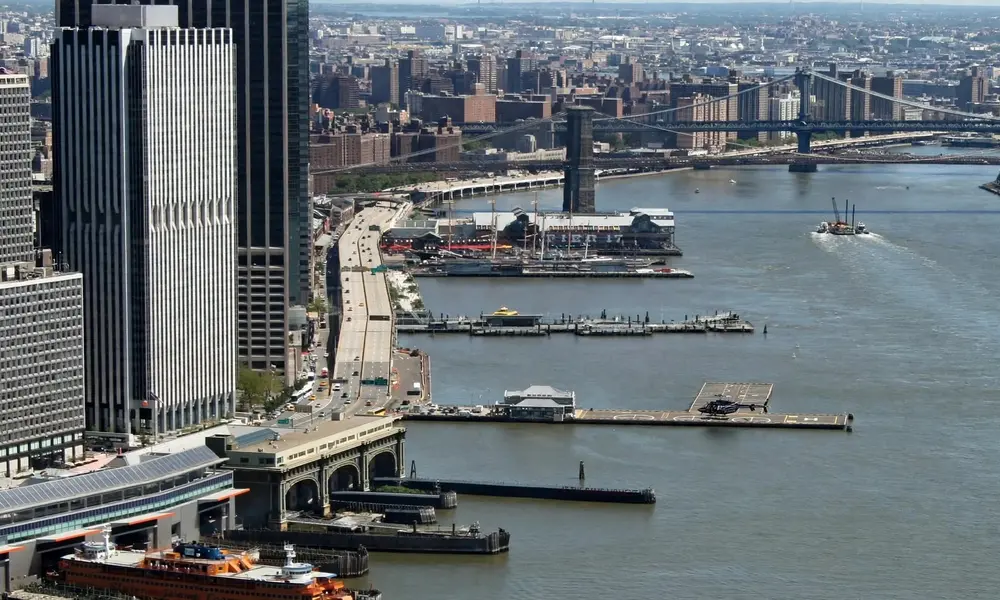
The modern airport helicopter transfer runs on a choreography refined over years of operation. Passengers arrive at one of Manhattan’s heliports, principally the Downtown Manhattan Heliport at Pier 6, the East 34th Street heliport, or the West 30th Street heliport, depending on their operator and neighborhood.
Check-in is measured in minutes rather than hours: identification, a brief safety overview, a weight declaration, and boarding. There are no security lines, no gates, and no boarding groups.
The flight itself is brief and spectacular. Lifting off from the East River or the Hudson, the helicopter climbs to a few hundred feet, and Manhattan performs its magic trick of becoming a map of itself: the bridges strung like jewelry, the towers of Midtown sliding past at eye level, the green rectangle of Central Park giving way to Queens.
Then, almost immediately, the runways of JFK appear, and the helicopter settles onto the general aviation apron where ground transport waits to deliver passengers directly to their terminal or to connect with a departing private jet.
Travelers already familiar with the private aviation landscape of New York will recognize the rhythm: it is the same swift dignity that defines the city’s private terminals, compressed into the final mile of a commercial trip.
What It Costs, Honestly
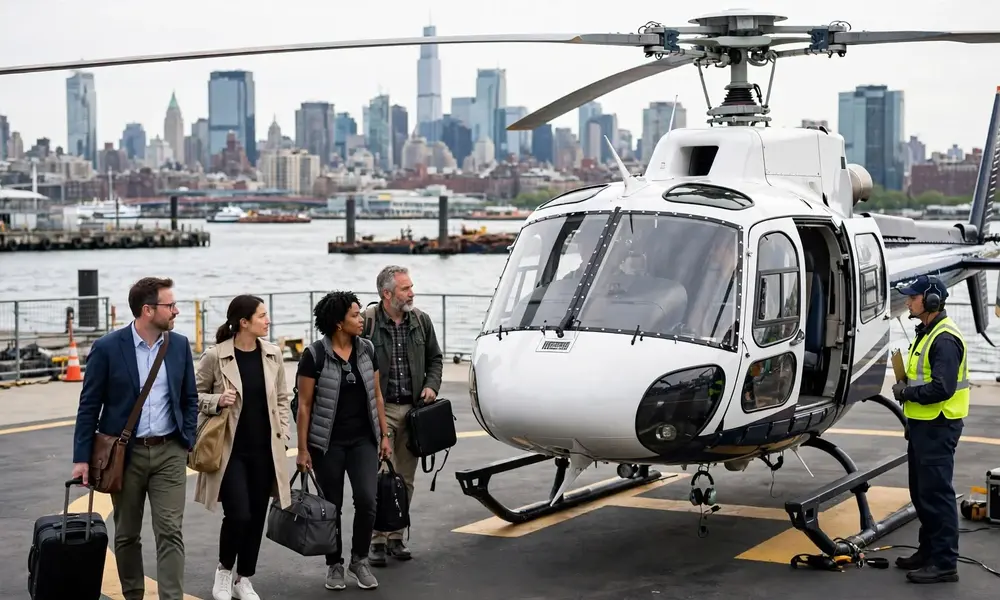
Pricing for Manhattan to airport helicopter transfers has become remarkably approachable as operators have scaled.
Shared by-the-seat transfers on established routes typically run in the range of two to three hundred dollars per person each way, a figure that invites a revealing comparison: a premium black car to JFK at peak hours often approaches or exceeds half that amount while delivering none of the certainty.
For two passengers traveling together, the arithmetic tilts further toward the sky.
Private charters of the entire aircraft, typically a Bell 407 or Airbus H125 seating four to six passengers, run from roughly one thousand to two thousand dollars depending on operator, aircraft, and time of day.
For a family of five or a deal team of four, the per person cost of a private charter can undercut the per seat shared price while adding privacy and schedule control. The premium tiers of luxury helicopter models, including twin engine machines, price higher still but bring smoother cabins and all weather confidence.
The honest advice: compare the helicopter against the fully loaded cost of the car alternative, including your buffer hours, and the helicopter wins more often than New Yorkers assume.
Luggage, Timing, and the Practical Details
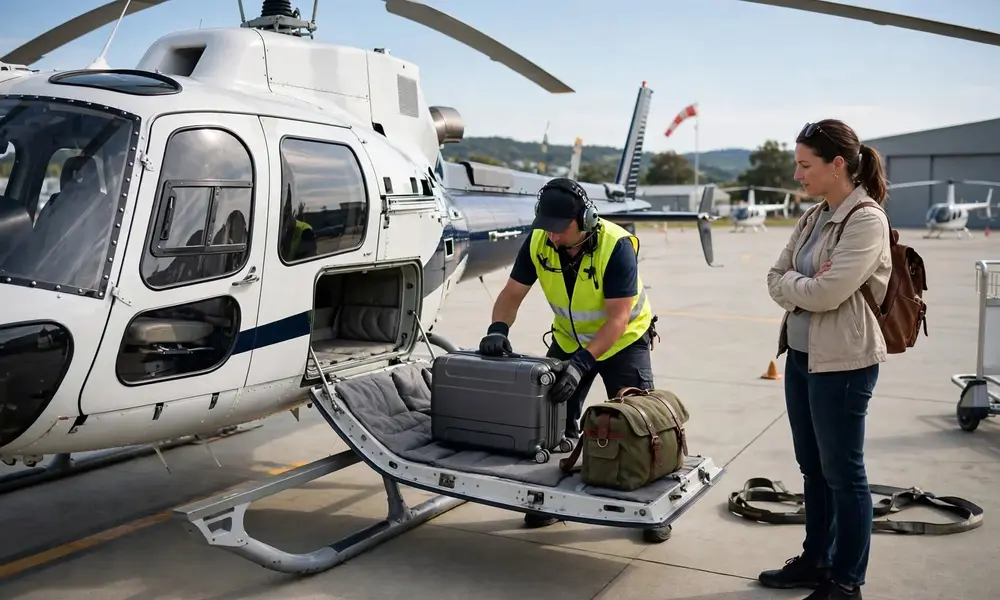
The airport transfer’s one genuine constraint is baggage. Light helicopters calculate weight and balance precisely, and operators typically limit passengers to one checked size bag plus a personal item, with strict weight caps per passenger.
Travelers with steamer trunks, ski equipment, or trade show materials need to discuss loads with the operator in advance, and some services arrange separate ground transport for excess luggage, an elegant solution where the bags take the tunnel while you take the sky.
Timing deserves equal care. The helicopter eliminates traffic variance but not airline procedures: international departures still demand arrival at the terminal well before departure, and the helicopter simply converts the uncertain road journey into a predictable block of reclaimed time.
Morning flights offer the smoothest air, and operators build weather contingencies into their schedules, rescheduling or refunding when conditions genuinely prevent safe flight.
Book through established operators with FAA Part 135 certification, and confirm the ground connection at the airport end, because the seamless handoff from helicopter to terminal is where the experience either sings or stumbles.
Who Should Fly, and Who Should Drive
The transfer serves three profiles beautifully. First, the international business traveler whose schedule prices a missed flight in five figures; for this flyer, the helicopter is insurance that occasionally provides a skyline view.
Second, the leisure traveler heading to a long haul trip who wants the vacation to begin at the heliport rather than the hotel checkout; few journeys launch with more style than lifting off beside the East River.
Third, groups whose combined car costs approach charter pricing, for whom the private cabin turns the transfer into the trip’s first shared memory.
The car still wins in specific circumstances: very heavy luggage loads, travel with large pets, late night arrivals when heliport operations wind down, and budgets where every hundred dollars matters.
There is no shame in the black car; there is only the honest matching of tool to mission. The same logic governs every choice in the city’s mobility menu, from the sedans outside the best hotels in New York to the seaplanes and helicopters that serve the summer migration to the Hamptons.
The Future Is Already Boarding
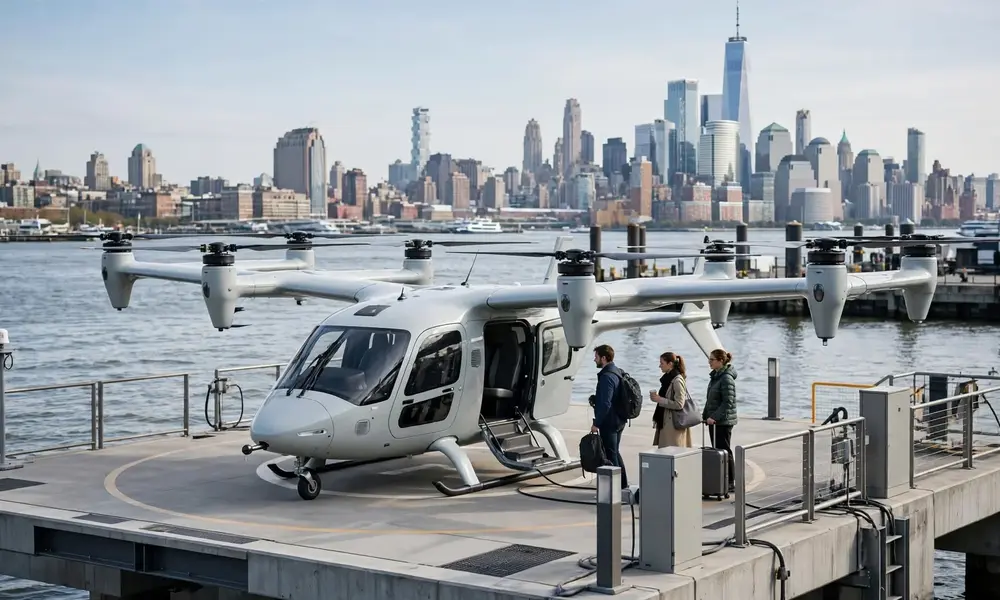
The airport helicopter transfer is also the preview of a larger shift. Electric vertical takeoff aircraft are advancing through certification with airport shuttle as their flagship mission, promising quieter cabins, lower operating costs, and eventually lower prices on exactly these short urban hops.
Airlines have partnered with electric aircraft developers specifically to own the premium airport transfer of the next decade. When those aircraft enter service, the five minute Manhattan to JFK flight will likely become faster, cheaper, and available to far more travelers.
Until then, the turbine helicopter remains the working solution, and it works superbly.
New York has always been a city that converts money into time more efficiently than anywhere else on earth, and the airport transfer helicopter is that conversion at its purest: a few hundred dollars traded for certainty, calm, and a farewell view of the skyline that no departure lounge can match.
The next time the calendar shows a flight out of JFK and the map shows red across every bridge, remember that the sky above the Van Wyck is empty, fast, and waiting.
FAQs
How long is the helicopter flight from Manhattan to JFK?
The helicopter flight from Manhattan to JFK takes approximately five minutes. Including check-in and ground transportation to the terminal, the entire journey typically takes less than 20 minutes.
How much does a helicopter transfer to JFK cost?
Shared helicopter transfers typically cost $200 to $300 per person each way. Private charters for four to six passengers generally range from $1,000 to $2,000, depending on the operator and aircraft.
Which Manhattan heliports serve airport transfers?
Three main heliports serve Manhattan airport transfers: Downtown Manhattan Heliport near Wall Street, East 34th Street Heliport, and West 30th Street Heliport. The departure location depends on the operator and flight route.
How much luggage can I bring on an airport helicopter transfer?
Most helicopter transfers allow one checked-size bag and one personal item per passenger, subject to weight restrictions. Oversized or additional luggage should be arranged with the operator before departure.
Are helicopter airport transfers safe?
Established helicopter operators follow FAA Part 135 safety regulations, which cover pilot qualifications, aircraft maintenance, and operating procedures. Always check the operator’s certification and safety credentials before booking.
What happens if bad weather cancels my transfer?
If weather conditions make flying unsafe, operators may cancel or reschedule the flight and offer refunds according to their policies. Always check the cancellation and refund terms before booking.
Can helicopters transfer me to Newark or LaGuardia too?
Yes, helicopter operators also provide transfers between Manhattan and Newark or LaGuardia airports. LaGuardia is generally the closest, while Newark requires crossing the Hudson River. Prices vary depending on the airport and operator.
Is the helicopter transfer worth it for leisure travelers?
Yes, a helicopter transfer can save travel time while offering impressive views of the New York skyline. It can also make the journey more memorable for couples, families, and visitors who want a combination of transportation and sightseeing.