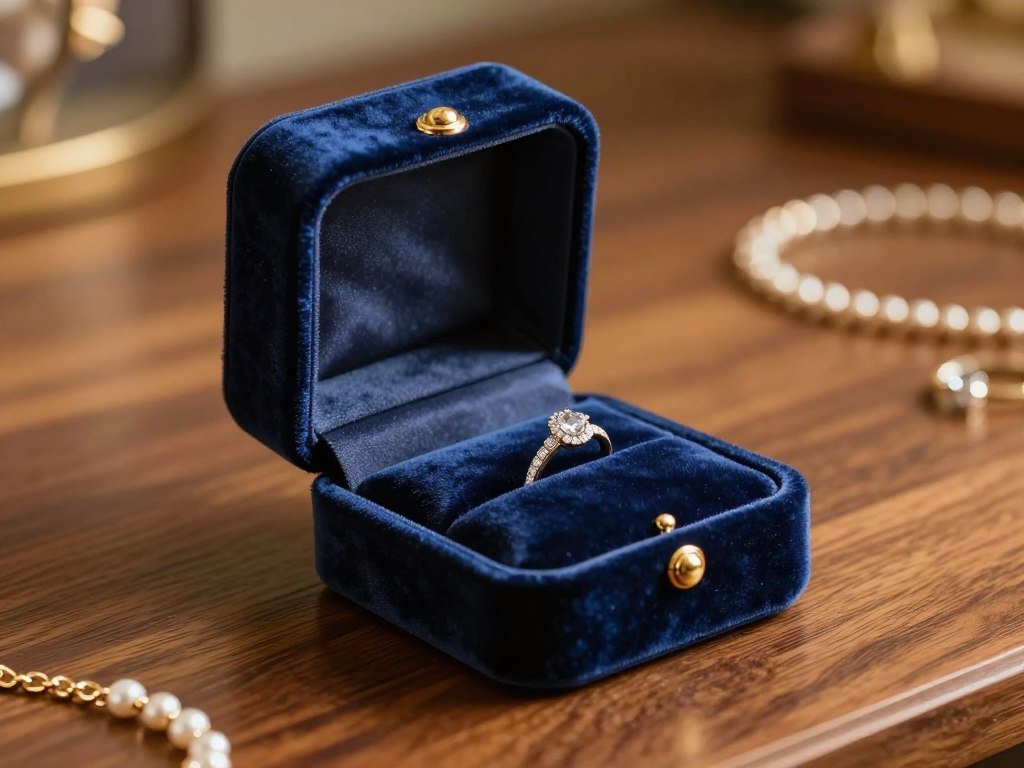
A thoughtful presentation can make a jewelry purchase feel personal before the customer even opens the box. For independent jewelers and retail teams, that moment can show customers the care behind a piece. A well-chosen box also gives a gift a sense of occasion without taking attention from the jewelry.
The experience matters whether you sell a single ring or prepare a full collection for a busy retail season. You want packaging that protects the item, feels right for your brand, and suits the way customers receive it. This page offers practical choices to help you create that kind of presentation.
Key Takeaways
- Match the box format to the jewelry and its size.
- Use an insert that holds the piece without making it hard to remove.
- Choose branding details that support, rather than crowd, the jewelry.
- Check order terms and delivery timing before you approve production.
- Make environmental claims that you can support with clear facts.
A good starting point is to match the presentation to both the piece and the moment it is meant to mark.
What Styles Fit Each Jewelry Type?
A single ring needs a compact, secure format, while a necklace needs enough interior room to sit without crowding. A luxury jewelry packaging box should suit the item’s dimensions and presentation needs, not just its appearance. An insert is the fitted interior support that holds a jewelry piece in place.
Choose a box that keeps the jewelry steady during handling. A box that is too large can let a piece shift, tangle, or knock against its sides. For a gift or a retail display, the format should also make the item easy to see and remove.
A box that leaves too much open space can let jewelry slide around during handling.
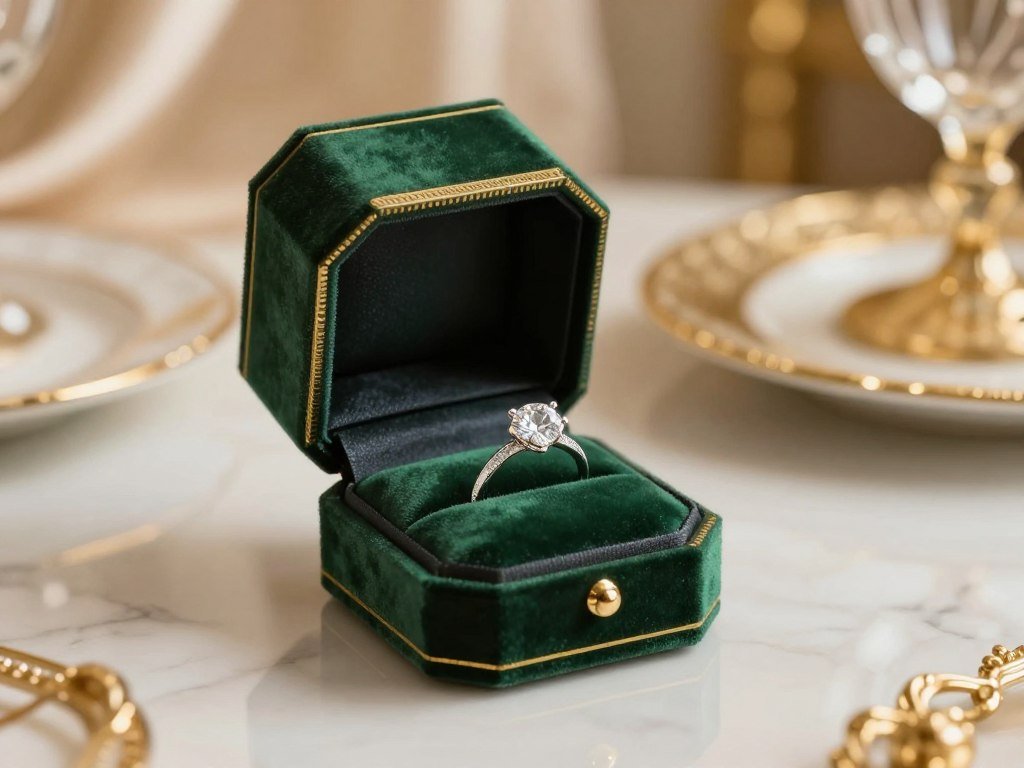
Ring and Earring Boxes
Ring boxes have a narrow slot or shaped support to hold a band upright. Earring boxes often use paired holes or a small padded area, keeping both pieces together. A single ring box may measure 2-1/4″ x 2-1/4″ x 1-5/8″, but that is one example, not a standard size.
For bands with a wide setting, check the height as well as the width. Some rings need extra space above the band so the lid does not press on a stone or raised detail. Earring styles also vary, so compare the box to the full piece rather than its post alone.
Necklace, Pendant, and Bracelet Boxes
Necklace and pendant boxes need space for the full chain and a place for the pendant to rest. A sample necklace box measures 7-1/4″ x 7-1/2″ x 1-7/8″. That example can help you picture proportions, but it does not suit every necklace.
Bracelet boxes often need a wider interior than ring boxes, especially for rigid or broad designs. Watch boxes are another format, with room shaped for a watch rather than a loose chain or band. If your jewelry store sells varied pieces, check whether one box style can serve more than one product.
Sets, Pouches, and Gift Bags
Boxes made for jewelry sets can hold several items together for coordinated collections or special gifts. A box should keep each item in its own place, so pieces do not rub against one another. For luxury pieces chosen for personal meaning, thoughtful presentation can add to the gifting moment.
Pouches work well for travel, gifting, and giveaway needs when a full box is not required. Gift bags can complete a retail handoff, while leatherette boxes offer a dressier look for premium products. Measure the longest point of the piece, including its pendant or clasp, before settling on a box size.
Which Materials and Inserts Suit the Piece?
A rigid shell gives a box its structure, while the covering and insert determine much of its look and feel. Both parts matter: the shell protects the jewelry, and the insert holds it in place. The right materials should match the piece and the way your customers will handle it.
Test the whole box with the actual jewelry before choosing a final design. A smooth cover may look refined, but the insert still needs to hold the item without making removal awkward.
Outer Materials and Coverings
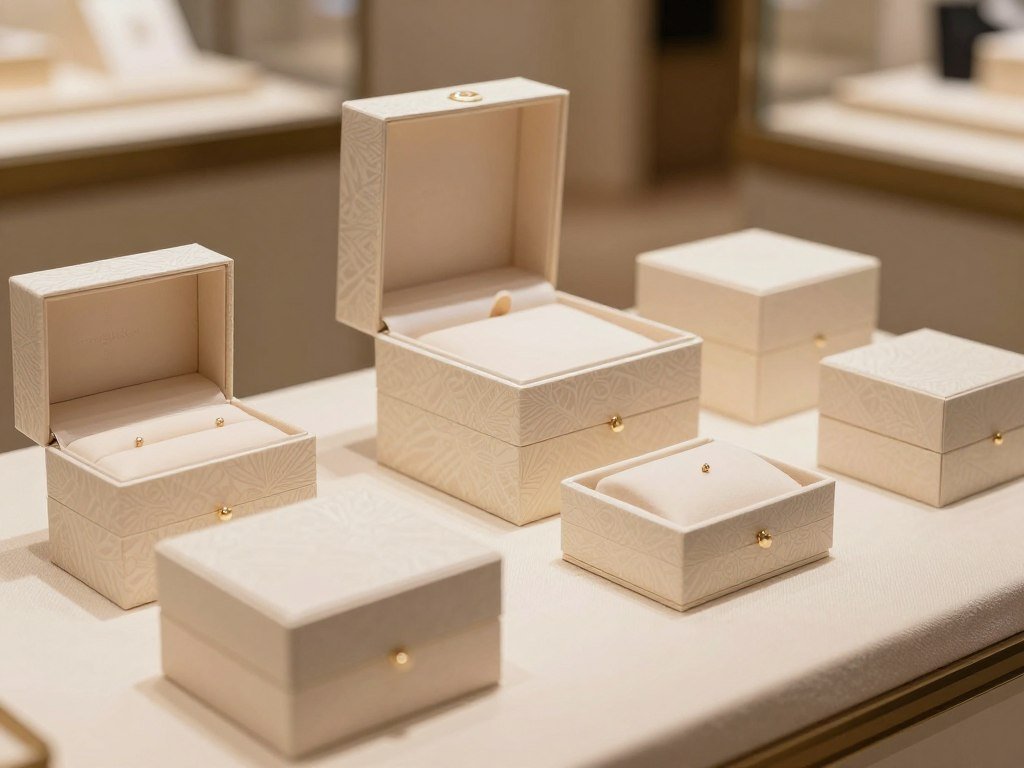
Luxury boxes can use rigid paperboard or chipboard wrapped in specialty art paper. Other choices include wood, cardboard, fabric, paper, Nappan, Saffiano, velvet, and nappa leather. Leatherette can give a leather-like look, while paper coverings offer many textures and shades.
The outer shell and its covering do different jobs. A firm shell shapes and supports the box; its covering gives the surface its color and feel. Custom sizes are available for rings, necklaces, bracelets, earrings, and jewelry sets.
Inserts That Hold Jewelry Securely
Insert options include die-cut foam, velvet flocking, satin lining, and elastic loops. Foam can be shaped to fit a specific piece, while loops can help restrain a chain. A jewelry box may look finished on the outside, yet a poorly chosen insert can let the item slip.
Try a working prototype with your jewelry, then check four points:
- The piece sits securely.
- The closure works as intended.
- The lid clears the jewelry.
- Chains stay restrained without pressure.
A chain-gripping insert can be too tight, making a necklace difficult to remove. Check that the jewelry can be lifted out smoothly without loosening the support that holds it in place.
How Can a Jewelry Box Limit Tarnish and Scratches?
Sterling silver can darken when sulfur compounds in the air react with its surface, and moisture speeds that reaction. Silver needs care because sulfur compounds in the air can affect it over time. An anti-tarnish jewelry box can help reduce exposure to those pollutants, but it cannot promise to stop tarnish completely.
Use a dry storage place, a lining made for tarnish control, and separate compartments. These choices can limit contact with pollutants and help keep pieces from scratching each other. Tight construction may also reduce the flow of air into the box.
Why Silver and Gold Behave Differently
Sterling silver is especially prone to reacting with sulfur compounds. The reaction forms black silver sulfide, while moisture can make tarnishing happen faster. A silver sulfidation study found that different sulfur exposure methods can form tarnish layers with different structures.
Pure gold does not tarnish, but other metals in gold alloys can react and discolor. That means a gold piece may change color even though pure gold itself does not tarnish. The alloy’s mix of metals affects how its surface behaves.
Linings and Construction That Help
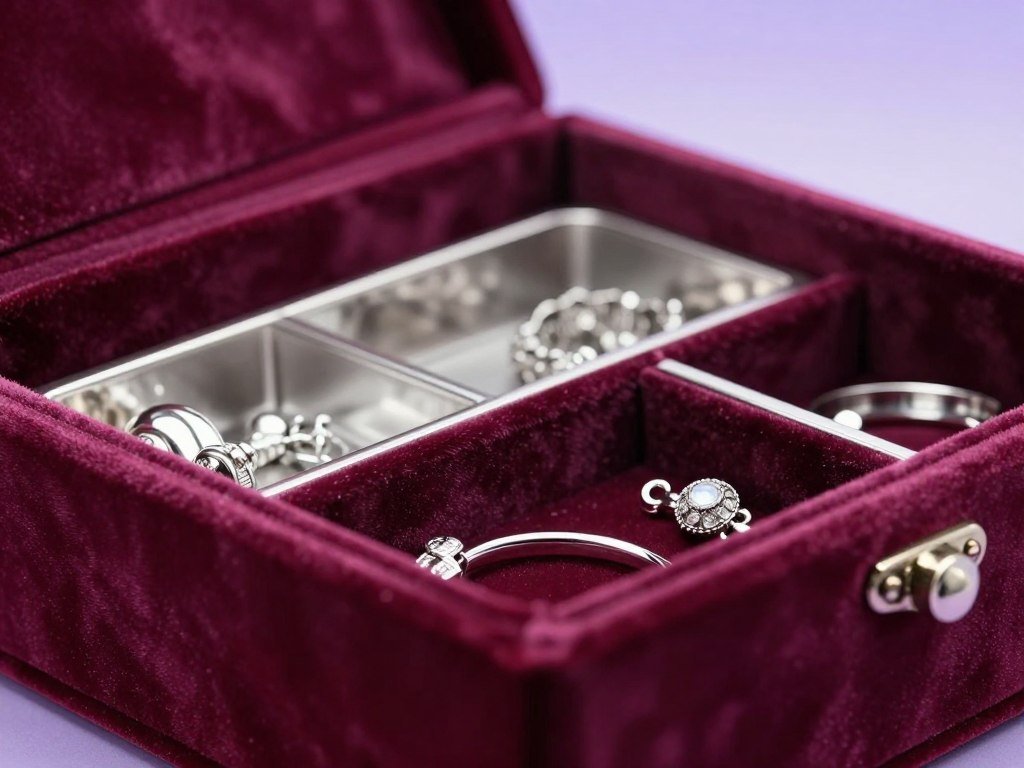
Treated Pacific Silvercloth and specialized anti-tarnish microsuedes are made to trap or neutralize pollutants that cause tarnish. Standard felt and some velvets can release sulfurous gases over time, so a soft lining alone does not ensure silver-safe storage. Ask what lining the box uses when you select one for silver.
Separate compartments also keep chains, settings, and bands from rubbing together. A snugly built box can help limit exposure, though it is not a sealed guarantee against tarnish. Store silver in a dry place and keep separate pieces from rubbing against one another.
Which Branding Details Make the Packaging Feel Like Your Brand?
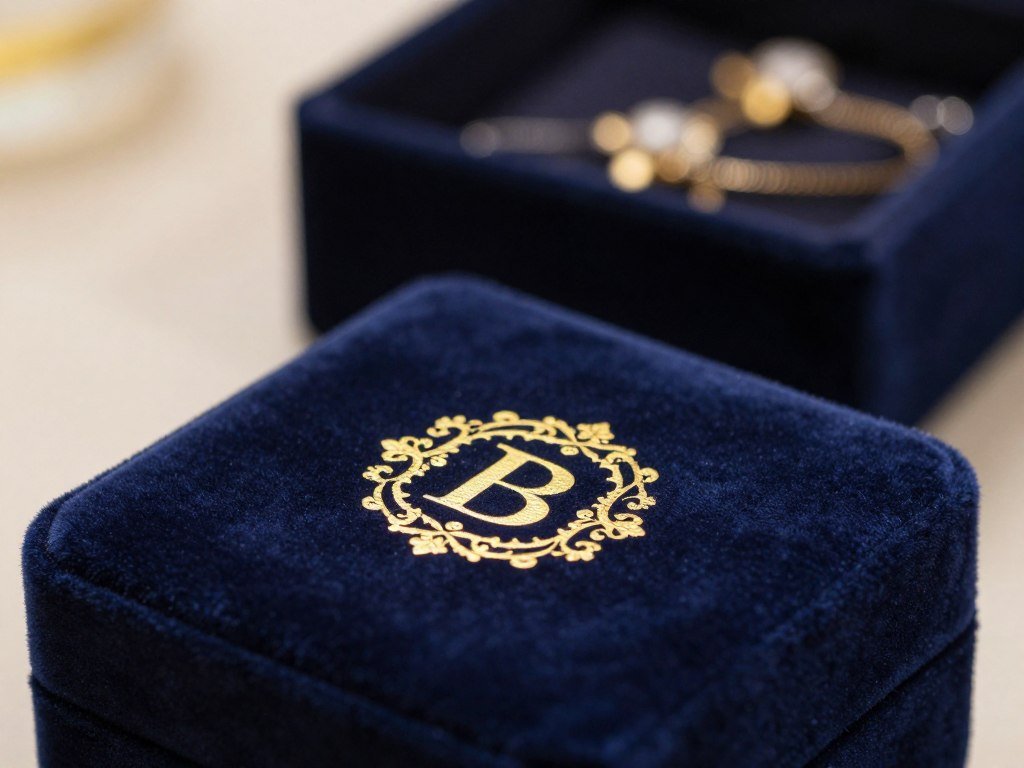
A logo is easiest to recognize when its color, placement, and finish feel consistent with the rest of the retail experience. A light touch can give luxury jewelry packaging an elegant look without drawing attention from the piece. Choose branding finishes that fit your brand and the products inside.
Use one main logo treatment, then add smaller details with care. The table compares common methods by the effect they create and where they tend to fit.
| Method | Visual effect | Suitable use |
|---|---|---|
| CMYK printing | Full-color artwork | Detailed logos and images |
| PMS spot-color printing | Set brand color | Repeatable color across collections |
| Foil stamping | Metallic gold or silver shine | Small logos and formal gift boxes |
| Embossing or debossing | Raised or pressed surface | Simple marks with texture |
| Spot UV | Gloss on selected areas | Contrast against a matte surface |
CMYK printing uses four ink colors, while PMS spot-color printing can target a set brand shade. Foil stamping adds a metallic look; embossing raises a mark, and debossing presses it into the surface. Custom RAL or Pantone color matching is available on request.
Interior printing can carry a message beyond the lid, and a coordinated ribbon can tie the presentation together. A logo tag is another way to mark gift boxes or selected products. Approve a final artwork proof with the logo at its intended size before production.
How to Order Luxury Jewelry Packaging Wholesale
Wholesale packaging works best when the order quantity, customization level, and delivery window all match the retail plan. Luxury jewelry packaging wholesale orders suit retailers who need a consistent presentation across a collection. Compare the routes before deciding how much customization your order needs.
Selected styles start at a 100-piece MOQ, while fully custom projects usually start at 500 pieces. MOQ means minimum order quantity. The table shows how common order routes differ in minimums, timing, and logo options.
| Order route | MOQ | Timing | Logo or customization detail |
|---|---|---|---|
| Selected U.S.-warehouse styles | 100 pieces | Ships in 5-7 days | Free logo printing |
| Richpack fully custom projects | Usually 500 pieces | Set by project | Custom size and design |
| Rush Custom Boxes custom luxury boxes | 50 units | 8-10 business days, including production and U.S. shipping | Custom luxury box options |
Selected premium styles stocked in a U.S. warehouse also have a 100-piece MOQ, ship in 5-7 days, and include free logo printing. Rush Custom Boxes lists an 8-10-business-day turnaround that includes production and U.S. shipping.
Price depends on quantity, materials, dimensions, insert, branding method, and delivery requirements. A larger run may change the per-box price, while custom materials or a tight delivery window can affect the quote. Give the seller your product type, box style, size, quantity, logo method, material preference, and target delivery date.
Ask for a physical sample when you need to judge how the design feels in hand. Approve a physical sample before mass production so the finished structure, fit, color, and logo can be checked.
What Sustainability Choices Keep Packaging Credible?
A more responsible package can still feel premium when the materials and design choices suit the brand. Clear details help customers understand what makes the packaging a lower-impact choice. Options include FSC-certified paper, recycled materials, reusable structures, and other lower-impact design choices.
Make environmental claims specific and backed by facts. The Federal Trade Commission’s Green Guides address environmental marketing claims. A vague promise can confuse customers if it does not say which part of the package has the stated benefit.
Describe only an environmental benefit you can support with clear details.
Use this checklist when reviewing packaging for your products:
- Identify the paper certification and which parts it covers.
- Check which materials contain recycled content.
- Consider whether customers can reuse the structure.
- Check the full package and local rules before claiming it is recyclable.
Paper certification does not automatically describe every part of a box. A ribbon, insert, or coating may use different materials, so state which part your claim covers. Recycling rules can also differ by location.
Choose one environmental benefit you can verify and describe it precisely to customers.
Conclusion
The right choice is the one that presents the piece well, holds it securely, and fits the way your business sells. Good luxury jewelry packaging can make a gift feel considered and help your brand deliver a consistent customer experience. Fit and presentation deserve more weight than decoration alone.
Before requesting a sample or quote, have the jewelry type, dimensions, preferred materials, logo method, quantity, and target delivery date ready. Those details give a packaging partner a clear starting point for a useful reply. Gather the product dimensions and branding details, then request a sample or quote for the packaging that best fits your next collection.
FAQ
Can one jewelry box hold more than one type of jewelry?
How can I keep a necklace from tangling inside its box?
Is a velvet-lined box safe for sterling silver?
Does leatherette packaging suit a brand seeking lower-impact options?
Should I request a sample before ordering custom jewelry boxes?
How do I choose a box for a jewelry gift set?